
Navigate the complexities of driving in Great Britain with this comprehensive unit. You'll master essential skills for various challenging conditions, including adverse weather, low visibility at night, high-speed motorways, hazardous rural routes, and temporary roadworks. This unit is crucial for building confidence and passing your Category B theory test.
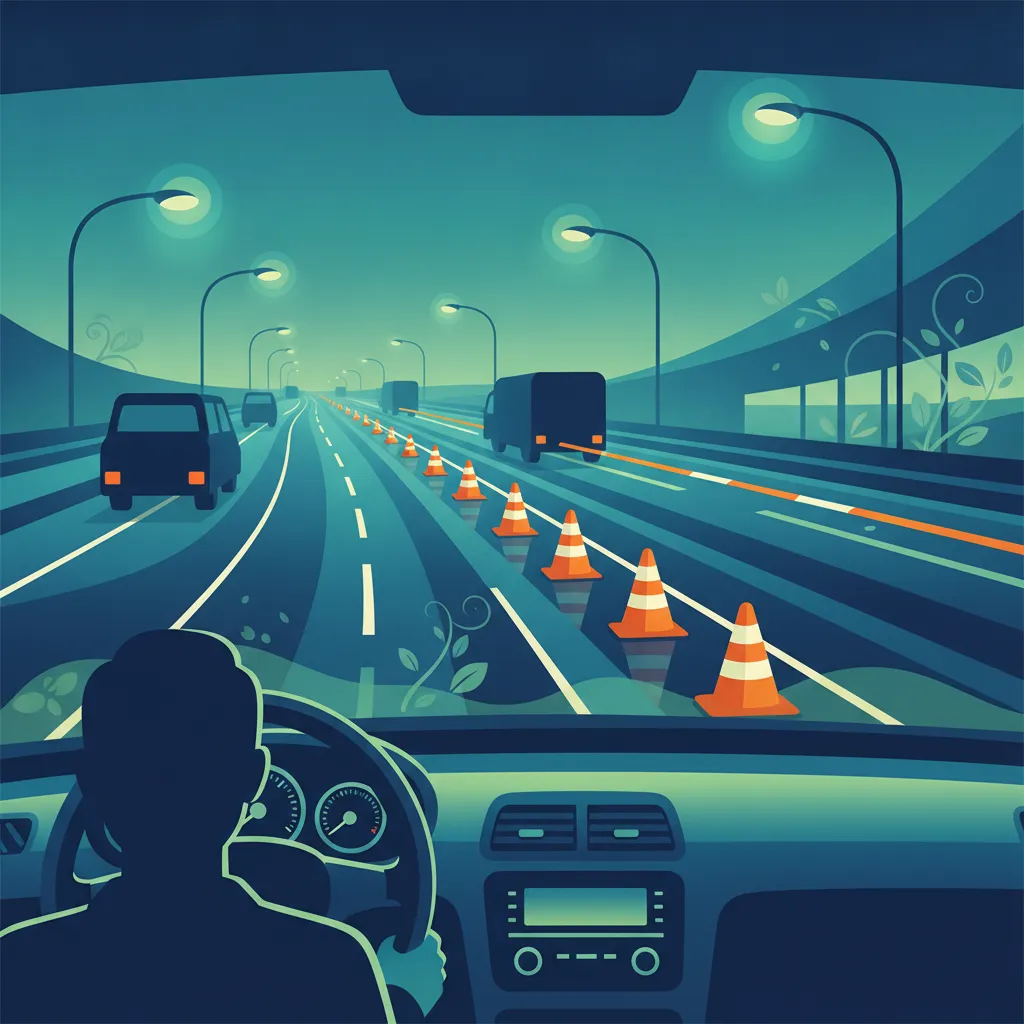
Browse all lessons that make up Weather, Night Driving, Motorways, Rural Roads and Roadworks. Each lesson focuses on specific topics, learning objectives, and core concepts, helping you build essential knowledge and follow a clear, structured progression toward your study goals in Great Britain.
This lesson provides essential advice for driving when weather conditions are poor. It explains how rain can cause aquaplaning and why you must double your following distance. You will also learn techniques for driving in icy conditions, including gentle use of controls to avoid skidding, and the correct use of lights in fog.
This lesson addresses the increased risks associated with driving after dark. It explains when to switch between dipped and main beam headlights to maximise your own vision without dazzling other drivers. Techniques for reducing glare and spotting hazards like cyclists or pedestrians with poor visibility are also covered.
This lesson covers the unique aspects of motorway driving, from joining and leaving the carriageway to the strict lane discipline of keeping to the left unless overtaking. It explains the features of smart motorways, such as variable speed limits and the meaning of a Red X symbol above a lane. The safe procedure for handling a breakdown is also a key topic.
This lesson prepares you for the challenges of countryside driving. It emphasizes that the national speed limit on these roads is often too fast for the conditions. You will learn how to approach sharp bends, use passing places on single-track roads, and anticipate hazards like slow-moving tractors, horse riders, or mud on the road surface.
This lesson explains how to drive safely through areas where roadworks are taking place. It stresses the importance of obeying all temporary signs, especially mandatory speed limits, which are in place for your safety and the safety of road workers. You will learn about navigating narrow lanes, contraflow systems, and how to follow official diversion signs.
Explore high-intent keywords and long-tail search topics learners use when researching Weather, Night Driving, Motorways, Rural Roads and Roadworks. These terms reflect how people search for reliable study materials, structured explanations, and unit-level theory preparation support in Great Britain.
Find clear answers to the most common questions learners ask about Weather, Night Driving, Motorways, Rural Roads and Roadworks. Understand how the unit is organized, what learning goals it supports, and how it contributes to your study progression with structured explanations and practical guidance tailored for learners in Great Britain.
The most crucial rule for driving in fog is to reduce your speed significantly and ensure you can stop safely within the distance you can see clearly. Always use your fog lights if visibility is below 100 metres, but remember to switch them off when visibility improves to avoid dazzling other drivers. Maintain a greater following distance and be extra vigilant for unexpected hazards.
Smart motorways often use variable speed limits displayed on overhead signs and may open the hard shoulder as a normal traffic lane. Always adhere to the speed limits shown on the overhead gantries. If the hard shoulder is open, treat it as any other lane, but be aware that it might be closed suddenly. Pay close attention to signs and signals, and never stop in a live lane unless directed to do so by emergency services or traffic officers.
Rural roads often present unique challenges such as narrow, winding lanes, blind bends, hidden entrances, and limited visibility. You may also encounter slower-moving vehicles like tractors and animal-drawn carts, as well as livestock. Be prepared to slow down, anticipate hazards, and use your horn appropriately on blind bends. Always maintain a safe position on the road and be aware of passing places.
You should only use your rear fog light when visibility is seriously reduced, specifically when it is less than 100 metres. This is to make your vehicle more visible to drivers behind you in dense fog, heavy rain, or snow. It's essential to switch it off as soon as visibility improves to avoid dazzling drivers following you.
When approaching roadworks, expect reduced speed limits, temporary lane closures, and diversions. Always follow the temporary traffic signs and signals provided by the road workers or temporary traffic lights. Reduce your speed well in advance, maintain a safe distance from the vehicle in front, and be prepared for sudden stops or changes in the road layout. Never ignore temporary signage.
Driving at night can be more dangerous due to reduced visibility, making it harder to see hazards, pedestrians, and other vehicles. Glare from oncoming headlights can also be a problem. It's important to use your headlights correctly, adjust your speed according to visibility, and be extra vigilant. Ensuring your headlights are clean and correctly aligned is also critical.
All included lessons
Lessons in Weather, Night Driving, Motorways, Rural Roads and Roadworks
See who benefits most from studying Weather, Night Driving, Motorways, Rural Roads and Roadworks. This overview explains how the unit supports different learning needs, what level of knowledge is helpful before starting, and how it fits into the overall study path in Great Britain.
This unit is ideal for all Category B learner drivers in Great Britain preparing for their theory test. It is particularly beneficial for those who may lack experience in adverse weather, night driving, or are unfamiliar with the specific demands of motorway and rural road driving.

Ready to prepare effectively for your DVSA driving theory test? Explore our structured courses and guided study paths. They cover every topic of the Great Britain Highway Code and official exam requirements, ensuring systematic learning and success.
Explore Driving Theory CoursesExplore all units and lessons included in this driving theory course.
Ready to prepare effectively for your DVSA driving theory test? Explore our structured courses and guided study paths. They cover every topic of the Great Britain Highway Code and official exam requirements, ensuring systematic learning and success.
Explore Driving Theory Courses