
Prepare for the challenging country lane and vulnerable road user questions in the GB DVSA driving theory test. This set helps you master Highway Code Rule 215 on passing horse riders at a maximum of 10 mph with a 2-metre gap, managing single-track roads with passing places, and reacting safely to unpredictable livestock and slow agricultural machinery.
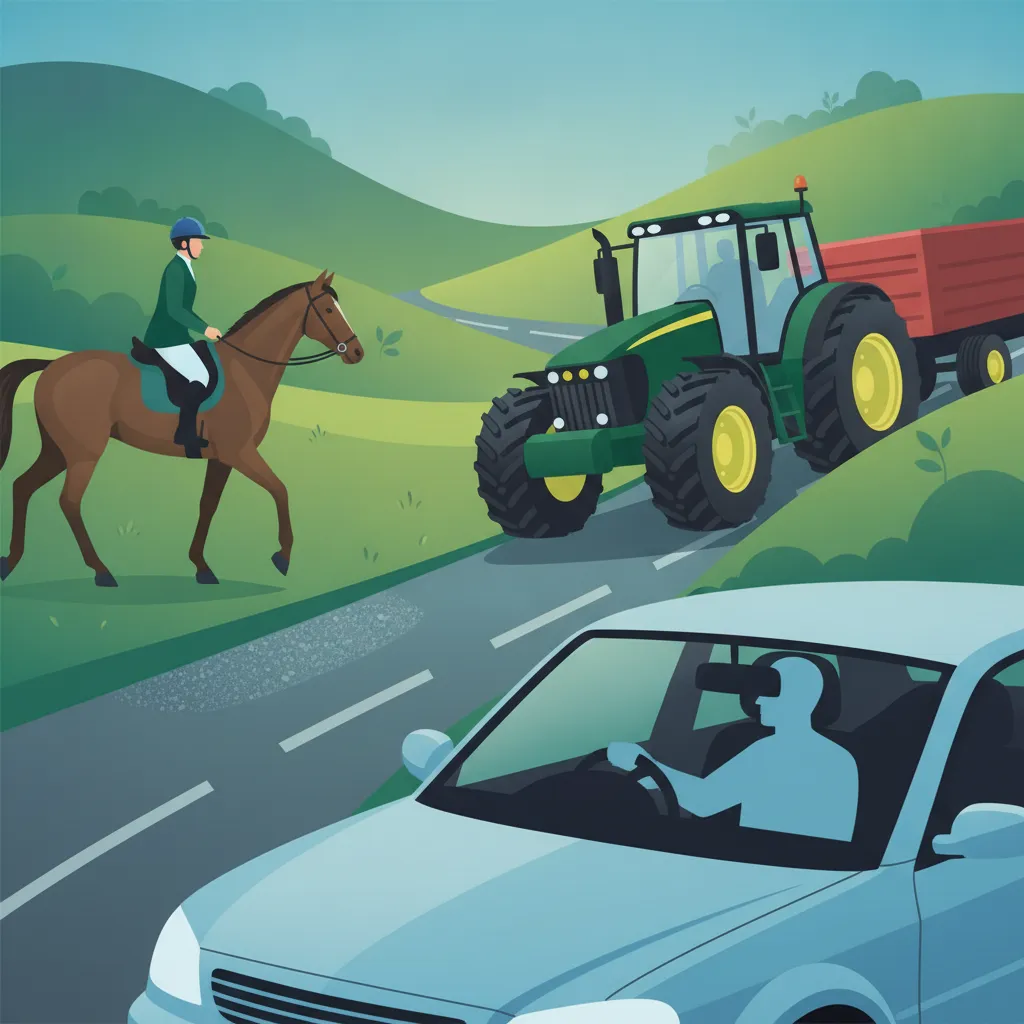
Improve your driving theory practice by mastering how to navigate narrow country lanes and pass horse riders with caution. Completing these practice questions is vital for your exam preparation as you learn to identify potential road hazards that appear in the official DVSA theory test.
This advanced practice set tests your knowledge on high-risk rural driving scenarios in Great Britain. Learn to handle blind bends, horse riders, single-track roads, and oncoming tractors while spotting the deceptive traps commonly found in the official DVSA theory test.
Preview sample questions from the Horses & Rural Hazards practice set to see how they help you prepare for the driving theory exam in Great Britain.
Learners choose Horses & Rural Hazards to improve accuracy and understanding of key exam themes in Great Britain. It offers realistic driving theory questions and targeted revision for effective preparation.
Find answers to the most common queries learners have when practising Horses & Rural Hazards, including how questions match the official theory exam in Great Britain, how scoring works, and how this practice improves exam readiness.
According to Highway Code Rule 215, you must slow down to a maximum of 10 mph when approaching or passing a horse on the road.
You must allow at least 2 metres (6.5 feet) of clearance space when passing horse riders or horse-drawn vehicles, ensuring you pass wide and slow.
No, motorways in Great Britain must not be used by horse riders, horse-drawn vehicles, pedestrians, cyclists, or agricultural vehicles.
Pedestrians are advised to walk on the right-hand side of the road facing oncoming traffic, meaning they may be walking towards you on your side of the road.
If a road is blocked by a herd of animals, you should stop, switch off your engine to avoid scaring them, and wait patiently until they have fully left the road.
By completing Horses & Rural Hazards, you will gain stronger rule knowledge, faster recognition of signs and situations, better decision making in traffic scenarios, and increased accuracy on exam style questions used in Great Britain. These outcomes directly support higher scoring exam performance.
Strengthen your exam preparation by reviewing related practice questions that mirror the specific risks of country lanes and rural settings found in the official test. Building momentum with these supplementary topics ensures you fully grasp the Highway Code rules for safe overtaking.
Navigate rural roads confidently and protect vulnerable horse riders.
Master safe driving on country roads and around vulnerable road users.
Navigate Great Britain's Tricky Rural Roads with Confidence.

Master challenging rural roads and avoid common test traps for your GB driving theory test.

Mastering GB Country Lanes: Navigate with Confidence and Skill.
Master Complex Cyclist Interactions for the Great Britain Theory Test
Questions in Horses & Rural Hazards
Exam focused questionss
Horses & Rural Hazards offers quick, focused exam style practice to boost your British knowledge for the driving theory exam in Great Britain.
Horses & Rural Hazards helps learners in Great Britain with clear explanations and targeted British practice to improve essential driving theory topics.
Designed for intermediate and advanced learner drivers in Great Britain who want to eliminate mistakes on vulnerable road users and rural hazards. Ideal for those struggling with the specific dimensions, speed limits, and defensive driving techniques required on narrow country lanes during the DVSA theory test.
Explore more topics for the British driving theory exam in Great Britain.
Explore specific Great Britain driving theory practice categories to master key subjects. Identify your weak areas and focus your revision on road signs, hazard perception, or traffic laws. Begin your targeted preparation now and build confidence for your official DVSA exam.
Browse Practice Categories