
Understanding low bridge signs is crucial for drivers, especially those operating larger vehicles or carrying equipment. These signs warn you about upcoming restricted headroom due to bridges, tunnels, or overhanging structures. Failing to recognise and react to these warnings can lead to serious damage and dangerous situations. This section will equip you with the knowledge to identify these signs, understand the height limits, and plan your route safely, which is vital for both your theory exam and everyday driving.
An explanation of how Great Britain Low Bridge Signs road signs apply in real traffic situations in Great Britain. Learn where these signs are typically placed, what drivers are expected to do when they appear, and how correct reactions help you stay safe, avoid fines, and succeed in your British driving theory exam.
Low bridge warning signs are typically encountered on routes where vehicle height is a potential hazard. You'll see them before bridges, underpasses, tunnels, or other structures that have a reduced clearance. These signs are particularly important for drivers of lorries, buses, motorhomes, vans, and vehicles with high roof loads or roof racks. Before setting off on a journey, especially on unfamiliar routes, drivers of such vehicles must know their vehicle's exact height. When you see a low bridge sign, you must immediately assess if your vehicle can safely pass underneath. If you are unsure or if your vehicle exceeds the stated limit, you must find an alternative route before reaching the hazard.
An overview of the key learning outcomes when studying the Great Britain Low Bridge Signs road sign category. Understand the main concepts, sign meanings, and traffic situations covered here so you can recognise patterns, answer theory questions more confidently, and build a solid foundation for safe driving in Great Britain.
Understand Great Britain's low bridge signs, crucial for vehicles with restricted headroom like lorries and caravans. Studying these specific warning signs helps avoid costly damage and route disruptions. Master their meanings for your theory test revision and safe driving.

Understand the Maximum Headroom Warning sign (530A) and ensure your vehicle fits!

This supplementary plate warns of an overhanging building affecting your vehicle's height.
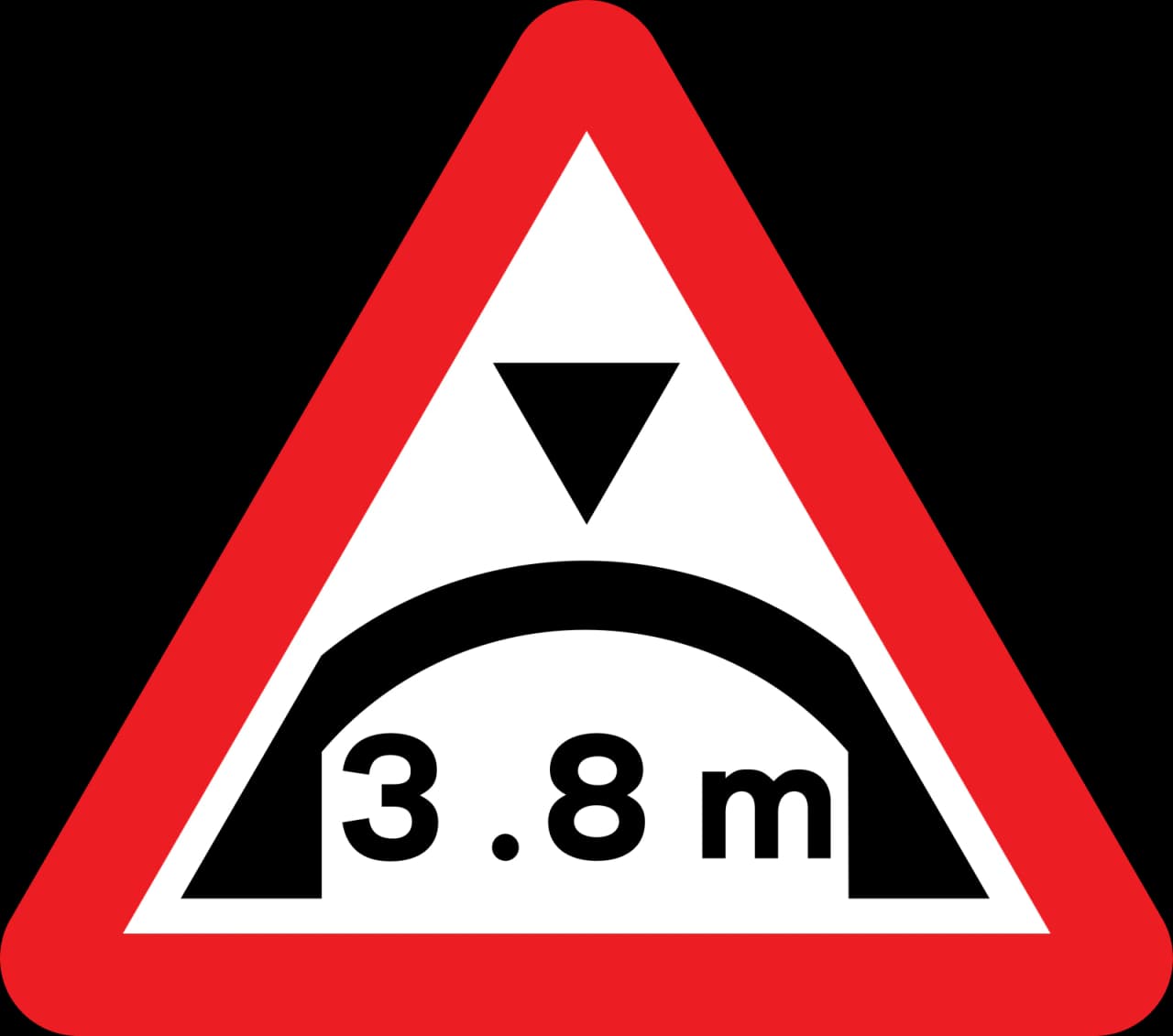
Heed the Maximum Headroom Directly Ahead sign to avoid height collisions.

Watch out for low bridges with the 'Maximum Headroom Directly Ahead' imperial sign!

Understand Height Restrictions with Arch Bridge Warning Signs
Clear answers to common questions about the Great Britain Low Bridge Signs road sign category. Use this FAQ to review tricky rules, understand how these signs appear in exam scenarios, and remove confusion that often leads to mistakes in the British driving theory exam in Great Britain.
The main purpose of low bridge signs is to warn drivers of upcoming structures with restricted headroom. This is to prevent vehicles that are too tall from attempting to pass and causing damage to themselves, the structure, or the road, and to avoid potential accidents.
Vehicles most affected are those with a significant height, such as lorries, buses, vans, motorhomes, and vehicles carrying tall equipment or roof loads. Even some cars with roof boxes can be at risk if the bridge clearance is very low.
If you are unsure whether your vehicle will fit under the bridge, you must not risk it. Look for alternative routes indicated by other signs or plan your route in advance using maps or navigation apps that show vehicle restrictions. It's always better to take a longer route than to cause an accident or damage.
Low bridge signs can show the maximum headroom in metres (e.g., sign 531.1) or, in some cases, in imperial units like feet and inches (e.g., sign 531.1-IMP). Supplementary plates, such as 531.2, might also be used with other bridge warning signs to specify the height limit. Always pay attention to the units shown.
A supplementary plate indicating an overhanging building (sign 530.1) means that the reduced headroom is not due to a standard bridge or tunnel, but rather a building that extends over the road. This still signifies a height restriction that you must adhere to, just like any other low bridge warning.
Ready to master Great Britain road signs? Explore organized categories and groups for structured learning. Understanding signs by type improves recall and comprehension, ensuring thorough preparation for your DVSA theory test.
Great Britain Road Sign Groups