
Prepare for the diverse and challenging conditions professional HGV drivers face. This unit covers adapting your driving for adverse weather, navigating motorways, handling rural roads, safely managing roadworks, and responding effectively to emergencies like breakdowns or accidents. Mastering these skills is crucial for your Category C theory exam and for ensuring safety on Great Britain's roads.
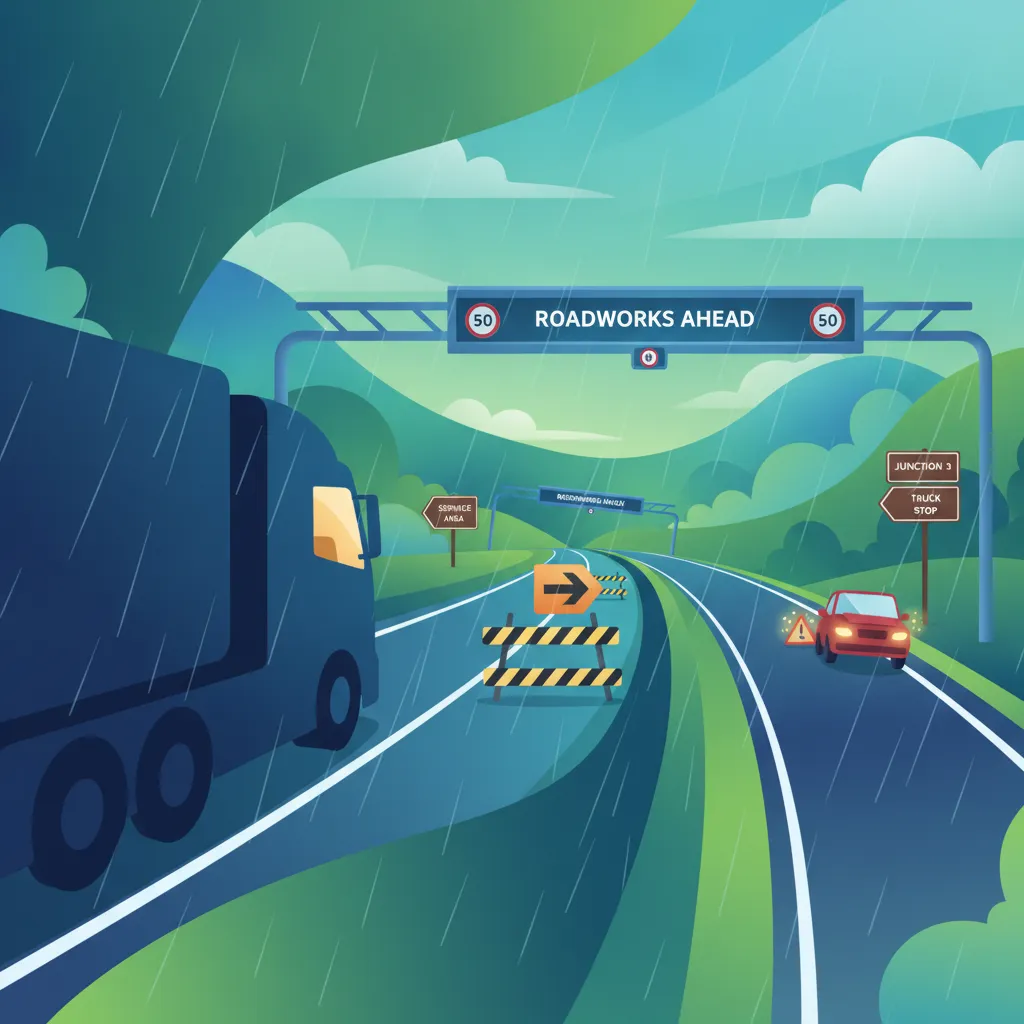
Browse all lessons that make up Weather, Motorways, Rural Roads, Roadworks and Emergency Situations. Each lesson focuses on specific topics, learning objectives, and core concepts, helping you build essential knowledge and follow a clear, structured progression toward your study goals in Great Britain.
This lesson details how different adverse weather conditions uniquely affect the handling and stability of a heavy goods vehicle. It covers the increased stopping distances in rain, reduced visibility in fog, severe traction loss on ice, and the dangerous effect of strong crosswinds on high-sided vehicles. You will learn specific techniques for adjusting speed, increasing following distances, and using vehicle controls smoothly to maintain safety in challenging weather.
This lesson focuses on the specific rules and best practices for driving HGVs on motorways in Great Britain. It covers mandatory speed limits for goods vehicles, lane discipline including restrictions on using the outside lane, and procedures for safely joining and leaving the motorway. The lesson also includes up-to-date information on driving on smart motorways, including understanding the signs and using emergency refuge areas correctly.
This lesson addresses the unique set of challenges that rural roads present to HGV drivers. It covers how to safely navigate narrow and winding lanes, the importance of anticipating hazards like slow-moving agricultural machinery, mud on the road, and wildlife. You will learn how the national speed limit applies to your vehicle on these roads and why it is often necessary to travel at a much lower speed to ensure safety.
This lesson provides guidance on how to safely and compliantly navigate through roadworks, which are a common feature of the road network. It covers the interpretation of temporary signs, strict adherence to reduced speed limits, and how to maneuver through narrow lanes and contraflow systems. The paramount importance of protecting road workers by driving with extra care and attention is a central theme of this lesson.
This lesson equips drivers with the knowledge to manage on-road emergencies effectively and safely. It provides clear, step-by-step procedures for vehicle breakdowns, including where to stop and how to use warning devices. It also covers initial actions at the scene of an accident, fire safety protocols including the use of an extinguisher, and the correct way to report incidents to emergency services and the transport office.
Explore high-intent keywords and long-tail search topics learners use when researching Weather, Motorways, Rural Roads, Roadworks and Emergency Situations. These terms reflect how people search for reliable study materials, structured explanations, and unit-level theory preparation support in Great Britain.
Find clear answers to the most common questions learners ask about Weather, Motorways, Rural Roads, Roadworks and Emergency Situations. Understand how the unit is organized, what learning goals it supports, and how it contributes to your study progression with structured explanations and practical guidance tailored for learners in Great Britain.
Heavy goods vehicles have significantly longer stopping distances and are more susceptible to crosswinds and aquaplaning due to their size, weight, and higher centre of gravity. This unit details specific techniques for maintaining control, such as reducing speed, increasing following distance, and using engine braking effectively in conditions like heavy rain, snow, or ice.
Motorways require specific attention to lane discipline, especially for HGVs which are often restricted to certain lanes. Drivers must be aware of higher speeds, maintain adequate following distances, and plan overtakes carefully. This unit covers merging safely, understanding speed limits for HGVs, and the specific rules governing their use of motorway lanes.
Rural roads often feature narrow lanes, sharp bends with limited visibility, steep gradients, and unpredictable surfaces or animals. Drivers need to anticipate reduced visibility around bends, use appropriate gears for hills, and be prepared for encountering slower-moving traffic or agricultural machinery. This unit provides strategies for managing these challenges safely.
Navigating roadworks requires extra vigilance. Pay close attention to temporary traffic lights, signs, speed limits, and any instructions from traffic management personnel. The width and length of your HGV necessitate careful maneuvering through narrow lanes or around obstacles. This unit teaches how to interpret temporary signage and maintain a safe path.
Your immediate priority is to ensure your safety and the safety of other road users. If possible, move the vehicle to a safe location away from traffic, such as the hard shoulder of a motorway or a lay-by. Activate hazard warning lights, and if on a motorway, consider exiting the vehicle only if it is safe to do so and standing behind a safety barrier well away from the carriageway. This unit details the full emergency response protocol.
Yes, while many general rules apply, HGVs often have specific lane restrictions. Typically, they should use the left-hand lane or the lane immediately to its right. Overtaking can only be done if traffic in the right-hand lanes is moving slower. This unit clarifies these specific requirements for Category C licence holders.
All included lessons
Lessons in Weather, Motorways, Rural Roads, Roadworks and Emergency Situations
See who benefits most from studying Weather, Motorways, Rural Roads, Roadworks and Emergency Situations. This overview explains how the unit supports different learning needs, what level of knowledge is helpful before starting, and how it fits into the overall study path in Great Britain.
This unit is essential for all drivers preparing for their Category C, C1, C1E, or CE HGV theory test in Great Britain. It's particularly important for those new to driving large vehicles who need to understand how different environments and unexpected situations affect vehicle control and safety.

Ready to prepare effectively for your DVSA driving theory test? Explore our structured courses and guided study paths. They cover every topic of the Great Britain Highway Code and official exam requirements, ensuring systematic learning and success.
Explore Driving Theory CoursesExplore all units and lessons included in this driving theory course.
Ready to prepare effectively for your DVSA driving theory test? Explore our structured courses and guided study paths. They cover every topic of the Great Britain Highway Code and official exam requirements, ensuring systematic learning and success.
Explore Driving Theory Courses