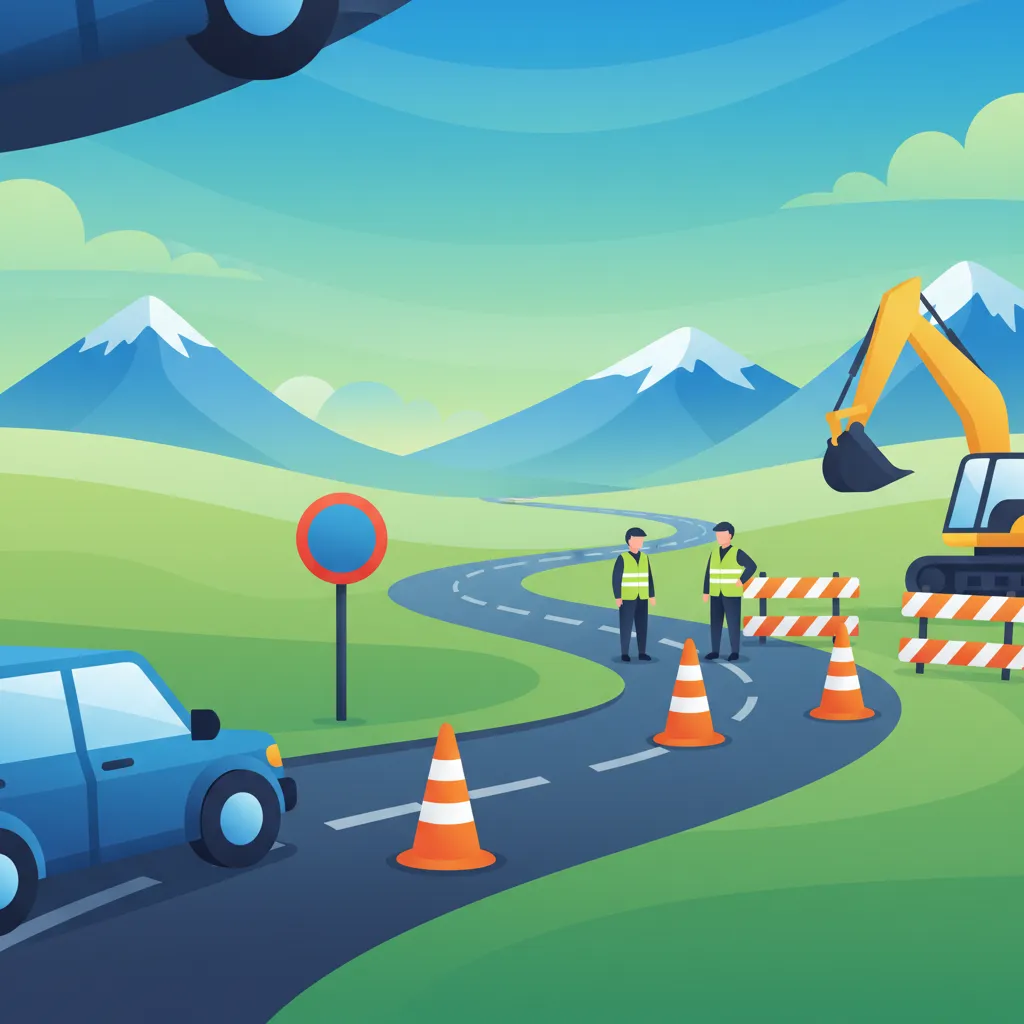
When driving in Iceland, you will encounter road work zones where construction, maintenance, or repair activities are underway. These areas temporarily alter the road environment, introducing new risks and requiring drivers to adjust their behavior significantly. Understanding and respecting the temporary traffic controls and dangers in these zones is crucial for safety and passing your driving theory exam.
Theory topic content overview
Read the full theory topic guide for Road Work Zones with structured, easy-to-scan content built for learners in Iceland. This detailed section explains the exact rule, meaning, traffic context, comparison points, and exam logic behind this Icelandic driving theory topic so you can study faster, understand the concept more clearly, and avoid common interpretation mistakes on the theory test.
Road work zones (or construction zones, in Icelandic often referred to as vegaframkvæmdir) are designated areas on or near the roadway where maintenance, construction, or repair activities are actively taking place. These zones are temporary and are established to allow crews to improve or maintain the road infrastructure. Due to the presence of workers, heavy machinery, altered road surfaces, and temporary traffic controls, they represent a dynamic and high-risk environment for drivers.
Navigating road work zones in Iceland requires a heightened level of awareness and adherence to specific rules, not just for passing your driving theory exam, but primarily for safety. These zones are critical for several reasons:
When you approach a road work zone, you will encounter a variety of temporary traffic control devices designed to guide you safely through the area. These devices override any permanent signs or markings that might usually apply to that stretch of road.
verktakar): In some busy or complex zones, trained personnel may be present to manually direct traffic, especially during peak hours or specific construction activities. Always follow their instructions.Driving through vegaframkvæmdir demands proactive and defensive driving. Here’s a step-by-step approach:
It's crucial to understand the difference between the legal speed limit and the safe speed within a road work zone. The posted speed limit is the maximum legal speed, but it may not always be a safe speed. Factors like heavy rain, snow, poor visibility, or particularly hazardous road conditions (common in Iceland) may require you to drive even slower than the posted limit to maintain full control and react to hazards. Always prioritize safety over speed.
Icelandic learners and drivers often make several key mistakes when encountering vegaframkvæmdir:
In Iceland, road work zones can be particularly challenging due to:
varúðarljós (warning lights) intended to draw special attention to a vehicle disrupting traffic or assisting, and you should always treat them as an indication of a potential hazard ahead.When you see signs for road work zones in Iceland, adopt a mindset of heightened caution and patience. Your primary goal is to navigate the area safely, protecting yourself, your passengers, and especially the workers who are maintaining our roads. Reduce your speed, stay focused, follow all temporary instructions, and be prepared for the unexpected. Safe driving in these zones contributes directly to overall road safety and ensures smoother traffic flow for everyone.
Start with a short, direct summary of Road Work Zones before reading the full explanation below.
When entering a road work zone in Iceland, drivers must immediately reduce speed, follow all temporary traffic signs and markings, and be exceptionally alert for workers and equipment. Expect sudden lane shifts, uneven road surfaces, and potential delays. The primary goal is to pass through the zone safely without endangering workers or other road users.
Review the most important terms, rule signals, and traffic concepts linked to Road Work Zones.
Explore related theory topic pages connected to Road Work Zones and continue with the next useful rule explanation.
See the common search queries learners use when trying to understand Road Work Zones in Iceland.

Ready to master Icelandic driving theory? Explore our comprehensive sections. Review road rules, traffic signs, and critical concepts. Build essential knowledge for confident and safe driving in Iceland. Start studying today.
Explore Icelandic Driving TheoryTheory topic content overview
Start with a short, direct summary of Road Work Zones before reading the full explanation below.
When entering a road work zone in Iceland, drivers must immediately reduce speed, follow all temporary traffic signs and markings, and be exceptionally alert for workers and equipment. Expect sudden lane shifts, uneven road surfaces, and potential delays. The primary goal is to pass through the zone safely without endangering workers or other road users.
Review the most important terms, rule signals, and traffic concepts linked to Road Work Zones.
Explore related theory topic pages connected to Road Work Zones and continue with the next useful rule explanation.
See the common search queries learners use when trying to understand Road Work Zones in Iceland.
Ready to master Icelandic driving theory? Explore our comprehensive sections. Review road rules, traffic signs, and critical concepts. Build essential knowledge for confident and safe driving in Iceland. Start studying today.
Explore Icelandic Driving TheoryUse this exam-focused revision tip to understand how Road Work Zones is likely to appear in theory questions for learners in Iceland. This section helps you identify the most testable part of the rule, avoid common traps, and remember the concept more effectively during Icelandic driving theory exam preparation.
In the Icelandic driving theory exam, questions about road work zones often test your understanding of temporary signs overriding permanent ones, the importance of reduced speed, and driver responsibility towards workers. Remember that flexibility and heightened attention are key, as these areas are dynamic and unpredictable. Always prioritize safety above all else.
Read direct answers to the most common learner questions about Road Work Zones in Iceland. This FAQ focuses on rule confusion, practical meaning, comparison with similar concepts, and the exact uncertainties that appear most often in Icelandic driving theory revision and exam preparation.
A road work zone is any section of the road or its immediate vicinity where construction, maintenance, or repair work is taking place. These areas are typically marked by temporary signs, cones, barriers, and sometimes flashing lights to alert drivers.
The most important rule is to reduce your speed significantly and remain highly alert. Always follow the temporary speed limits and instructions provided by signs or traffic controllers, prioritizing the safety of workers and other road users.
Temporary signs and road markings in a road work zone always take precedence over permanent signs and markings. Drivers must obey these temporary controls, which may include new speed limits, lane closures, or altered traffic patterns.
Road workers are often operating close to active traffic lanes, sometimes unexpectedly stepping into traffic, or using heavy machinery. Reduced speed and increased awareness give you more time to react to their movements and ensure their safety.
Yellow flashing lights indicate a vehicle or area disrupting normal traffic, such as a maintenance vehicle or an accident scene. You must exercise extreme caution, slow down, and be prepared to stop or adjust your path as necessary, as indicated by Icelandic traffic regulations.
Overtaking is generally discouraged and often prohibited in road work zones due to reduced lane widths, unexpected movements, and worker presence. Always check for signs indicating 'no overtaking' (framúrakstur bannaður) and avoid it unless explicitly safe and permitted.
Common hazards include uneven road surfaces, loose gravel, open trenches, narrow lanes, sudden lane shifts, construction equipment, and the unpredictable movements of workers. Reduced visibility due to dust or machinery can also be a factor.
Utilize our advanced practice set search to pinpoint the exact Icelandic driving theory topics you need to review. Filter by subject, difficulty, or question type to create a highly effective study plan and ensure you are fully prepared for your official driving licence test in Iceland.