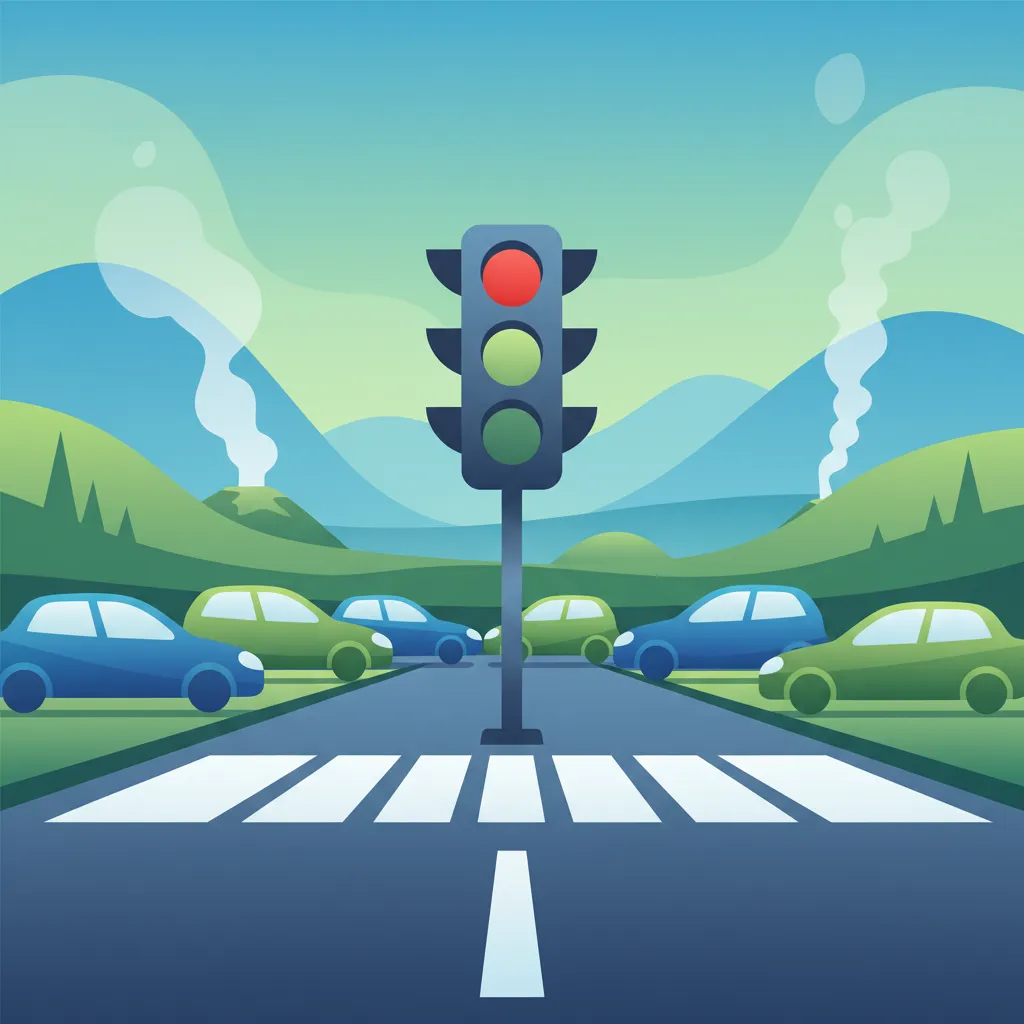
Traffic lights are fundamental for controlling vehicle and pedestrian flow at busy intersections across Iceland. This section explains the precise meaning of red, yellow, and green signals, including how to react safely to changing lights and directional arrows. Mastering these rules ensures smooth traffic and reduces collision risks.
Theory topic content overview
Read the full theory topic guide for Traffic Light Signals with structured, easy-to-scan content built for learners in Iceland. This detailed section explains the exact rule, meaning, traffic context, comparison points, and exam logic behind this Icelandic driving theory topic so you can study faster, understand the concept more clearly, and avoid common interpretation mistakes on the theory test.
Traffic lights, also known as traffic signals, are crucial electrical devices positioned at intersections and other road junctions to manage the flow of vehicles and pedestrians. In Iceland, just like in most parts of the world, they use a universal colour code to communicate instructions to road users: red, yellow, and green. Their primary purpose is to assign the right of way, preventing collisions, reducing congestion, and ensuring orderly movement across busy points in Icelandic towns and cities.
Understanding the precise meaning of each signal and how to react is fundamental for safe driving in Iceland and is a significant part of the Icelandic driving theory exam.
Correctly interpreting traffic lights is not just about passing your exam; it's about road safety and efficiency in everyday Icelandic driving. Misunderstanding a signal can lead to:
For the Icelandic driving theory test, questions frequently involve diagrams of intersections with specific traffic light scenarios, including interactions with turning lanes, pedestrians, and different signal types like flashing yellow or directional arrows.
Each colour of a traffic light conveys a specific instruction that drivers and pedestrians must follow.
To avoid common mistakes on the Icelandic driving theory exam, distinguish these crucial points:
Consider these common situations when dealing with traffic lights:
Learners frequently make these errors regarding traffic lights, which are often tested:
The Icelandic Transport Authority (Samgöngustofa) places significant emphasis on correct traffic light interpretation due to its direct impact on road safety, especially given varying traffic densities across Iceland. The theory test often includes scenarios that reflect common Icelandic road layouts and potential hazards, such as:
Traffic lights are fundamental to safe and orderly driving. Always approach them with anticipation, ready to adjust your speed and be prepared to stop. Remember the core principle: Red means stop, yellow means prepare to stop (or clear the intersection if unsafe to stop), and green means proceed only when safe. Never assume an automatic right of way; actively scan the intersection, especially for pedestrians and cross-traffic, even on a green light. Mastering these rules is vital for navigating Iceland's roads and succeeding in your driving theory exam.
Traffic lights use standard colour codes to assign right of way at intersections: red means stop and remain stopped, yellow means prepare to stop or clear the intersection if you cannot stop safely, and green means proceed only when the path is clear of pedestrians and other vehicles. In Iceland, right turns on red are prohibited, and drivers must check for pedestrians even on a green light. A flashing yellow light functions as a yield sign requiring extreme caution, while a steady yellow warns that the light is about to change to red. When signals malfunction or operate in flashing mode, treat the intersection as uncontrolled and apply standard priority rules.
A short set of high-value points that capture the most important ideas from this theory explanation.
Red light means stop before the stop line or crossing, and turning right on red is not permitted in Iceland
Steady yellow means prepare to stop; only proceed through the intersection if you are already too close to brake safely
Green means you may proceed only when the intersection is clear of pedestrians, cyclists, and vehicles
Flashing yellow means yield and treat the intersection as uncontrolled, similar to a give way sign
Operating traffic lights override most other priority rules; only a police officer can override them
Steady yellow and flashing yellow have completely different meanings and require different responses
Green does not guarantee right of way—you must actively verify the intersection is safe before moving
Always check for pedestrians crossing even when you have a green light
Stop before the stop line or pedestrian crossing, not beyond it
If traffic lights are dark or only showing flashing yellow, treat the intersection as uncontrolled and apply the right-hand rule
Confusing flashing yellow with steady yellow and either stopping inappropriately or failing to yield
Accelerating on green without checking for pedestrians or vehicles that may still be crossing
Assuming automatic priority on green and not scanning for hazards
Entering the intersection on yellow when it would have been safer to stop, or braking too late for steady yellow
Ignoring directional arrows or lane-specific signals and making incorrect turns
Start with a short, direct summary of Traffic Light Signals before reading the full explanation below.
Traffic lights regulate movement at intersections using standard red, yellow, and green signals. Red means stop, yellow means prepare to stop or clear the intersection if unsafe to stop, and green means proceed when safe. Always be prepared for changes and ensure the intersection is clear before moving, especially in Icelandic traffic conditions.
Review the most important terms, rule signals, and traffic concepts linked to Traffic Light Signals.
Explore related theory topic pages connected to Traffic Light Signals and continue with the next useful rule explanation.
See the common search queries learners use when trying to understand Traffic Light Signals in Iceland.

Ready to master Icelandic driving theory? Explore our comprehensive sections. Review road rules, traffic signs, and critical concepts. Build essential knowledge for confident and safe driving in Iceland. Start studying today.
Explore Icelandic Driving TheoryTheory topic content overview
A short set of high-value points that capture the most important ideas from this theory explanation.
Red light means stop before the stop line or crossing, and turning right on red is not permitted in Iceland
Steady yellow means prepare to stop; only proceed through the intersection if you are already too close to brake safely
Green means you may proceed only when the intersection is clear of pedestrians, cyclists, and vehicles
Flashing yellow means yield and treat the intersection as uncontrolled, similar to a give way sign
Operating traffic lights override most other priority rules; only a police officer can override them
Steady yellow and flashing yellow have completely different meanings and require different responses
Green does not guarantee right of way—you must actively verify the intersection is safe before moving
Always check for pedestrians crossing even when you have a green light
Stop before the stop line or pedestrian crossing, not beyond it
If traffic lights are dark or only showing flashing yellow, treat the intersection as uncontrolled and apply the right-hand rule
Confusing flashing yellow with steady yellow and either stopping inappropriately or failing to yield
Accelerating on green without checking for pedestrians or vehicles that may still be crossing
Assuming automatic priority on green and not scanning for hazards
Entering the intersection on yellow when it would have been safer to stop, or braking too late for steady yellow
Ignoring directional arrows or lane-specific signals and making incorrect turns
Start with a short, direct summary of Traffic Light Signals before reading the full explanation below.
Traffic lights regulate movement at intersections using standard red, yellow, and green signals. Red means stop, yellow means prepare to stop or clear the intersection if unsafe to stop, and green means proceed when safe. Always be prepared for changes and ensure the intersection is clear before moving, especially in Icelandic traffic conditions.
Review the most important terms, rule signals, and traffic concepts linked to Traffic Light Signals.
Explore related theory topic pages connected to Traffic Light Signals and continue with the next useful rule explanation.
See the common search queries learners use when trying to understand Traffic Light Signals in Iceland.
Ready to master Icelandic driving theory? Explore our comprehensive sections. Review road rules, traffic signs, and critical concepts. Build essential knowledge for confident and safe driving in Iceland. Start studying today.
Explore Icelandic Driving TheoryUse this exam-focused revision tip to understand how Traffic Light Signals is likely to appear in theory questions for learners in Iceland. This section helps you identify the most testable part of the rule, avoid common traps, and remember the concept more effectively during Icelandic driving theory exam preparation.
Pay close attention to diagrams showing traffic light sequences and specific lane signals in your Icelandic theory exam. Learners often confuse the response to a steady yellow light versus a flashing yellow, or forget to check for pedestrians before turning on a green light.
Read direct answers to the most common learner questions about Traffic Light Signals in Iceland. This FAQ focuses on rule confusion, practical meaning, comparison with similar concepts, and the exact uncertainties that appear most often in Icelandic driving theory revision and exam preparation.
A red traffic light means you must stop your vehicle before the stop line, pedestrian crossing, or intersection, and remain stopped until the light changes to green.
A yellow light indicates the signal is about to change to red. You must stop if it is safe to do so. If you are too close to stop safely, you should proceed through the intersection with caution.
On a green light, you may proceed straight or turn, but only if the intersection is clear and it is safe to do so. Always yield to pedestrians and emergency vehicles, even with a green light.
Yes, many intersections have pedestrian signals that use specific symbols (like a walking person) or colors (red/green) to indicate when pedestrians can safely cross. Always follow these signals.
A flashing yellow light means you should proceed with caution and be prepared to yield, as other traffic may have priority or be entering the intersection, and the regular signal is not in effect.
Beyond the standard red, yellow, green, Icelandic traffic lights may include directional arrows (green or flashing yellow) which indicate permitted turns or specific lanes, clarifying right-of-way for those movements.
Driving through a red light is a serious traffic violation in Iceland and can result in significant fines and penalty points, as it poses a high risk of collisions and is strictly enforced by Samgöngustofa.
Utilize our advanced practice set search to pinpoint the exact Icelandic driving theory topics you need to review. Filter by subject, difficulty, or question type to create a highly effective study plan and ensure you are fully prepared for your official driving licence test in Iceland.