
School zones are designated areas around educational facilities where children frequently walk, cycle, and cross roads. These areas demand heightened driver awareness and adapted speeds to account for vulnerable road users who may not fully understand traffic hazards. It is crucial to anticipate unexpected movements and always be prepared to stop quickly.
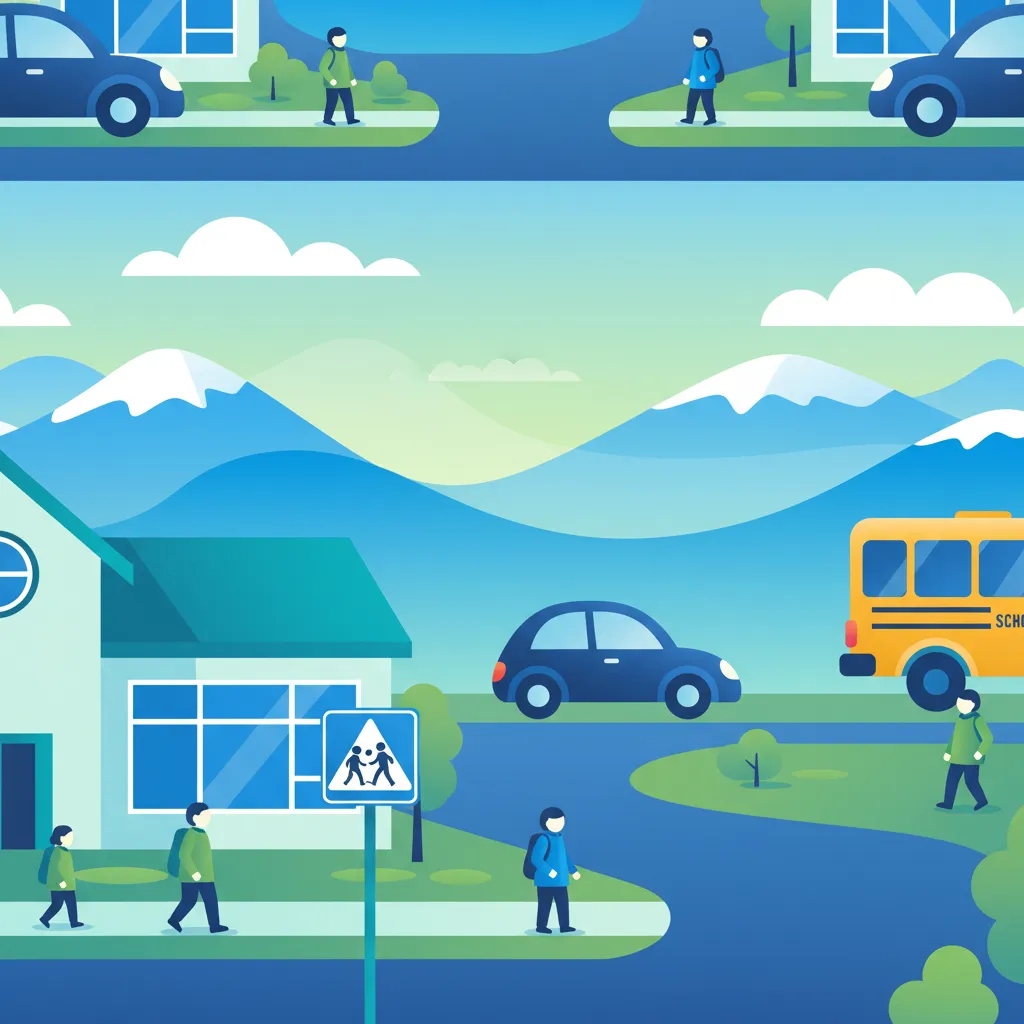
Theory topic content overview
Read the full theory topic guide for School Zone Driving Safety with structured, easy-to-scan content built for learners in Iceland. This detailed section explains the exact rule, meaning, traffic context, comparison points, and exam logic behind this Icelandic driving theory topic so you can study faster, understand the concept more clearly, and avoid common interpretation mistakes on the theory test.
School zones are areas around educational facilities specifically designated to protect children, who are among our most vulnerable road users. In Iceland, as elsewhere, these zones demand a unique and heightened level of awareness from drivers. They are not merely areas with advisory signs; they represent a fundamental shift in driving priority, placing the safety of children above all else. Understanding and adhering to the special rules in these areas is crucial for every driver, and a key component of the Icelandic driving theory examination.
The primary reason for special rules in school zones is the unpredictable nature of children. Unlike adult pedestrians, children may:
For these reasons, the responsibility for safety in school zones lies almost entirely with the driver. Failing to adapt your driving can have severe, lifelong consequences.
Navigating school zones safely involves a combination of reduced speed, heightened observation, and proactive hazard anticipation.
Significantly Reduce Your Speed:
island.is specifically highlights the danger of exceeding 30 km/h in areas where children may be playing, reinforcing this critical Icelandic emphasis.Maintain Extreme Vigilance (Scanning):
Anticipate the Unpredictable:
Yield to Pedestrians:
Samgöngustofa guidelines, drivers must stop and yield to pedestrians who are waiting to cross or are already crossing, particularly at marked crosswalks.Watch for School Buses and Crossing Guards:
Several factors can increase the risk in school zones:
The Icelandic Transport Authority (Samgöngustofa) places significant emphasis on driver responsibility for vulnerable road users, and this is heavily reflected in driving theory education and examinations. The dangers of driving too fast in areas with children are highlighted, with specific attention to the 30 km/h zones common around schools in towns and villages. Drivers are expected to not only know the rules but also to demonstrate a deep understanding of the why behind them – the inherent vulnerability and unpredictability of children in traffic.
When driving near schools or where children are present, adopt a mindset of extreme caution. Always assume the unexpected, reduce your speed to a point where you can stop instantly, and maintain unwavering vigilance. Your primary goal is to ensure the safety of every child, making their unpredictable movements your highest priority. This proactive approach is not just a rule; it's a fundamental aspect of safe and responsible driving in Iceland.
School zones in Iceland require drivers to exercise heightened vigilance and reduced speeds, typically maxing at 30 km/h, to protect children who are among the most vulnerable road users. The primary reason for these strict rules is children's unpredictable behavior—they may not perceive traffic dangers, act impulsively, or be obscured by parked vehicles. Drivers bear primary responsibility for safety and must anticipate unexpected road crossings, watch for school buses with flashing lights and crossing guards, and always yield to pedestrians. Iceland's weather conditions demand even greater caution, and posted speed limits represent maximums rather than targets, meaning drivers should slow further based on visibility, weather, and child activity levels.
A short set of high-value points that capture the most important ideas from this theory explanation.
School zone speed limits of 30 km/h are maximum speeds, not targets; actual safe speed should be lower depending on conditions
Children are unpredictable pedestrians who may not perceive traffic danger, making driver responsibility paramount
Drivers must stop for school buses with flashing lights and obey crossing guard instructions
Icelandic weather conditions require even greater speed reduction and increased following distance in school zones
Yield to pedestrians waiting to cross or already crossing, especially at marked crosswalks
30 km/h is the legal maximum; in poor weather or high child activity, slow down further
Cover your brake pedal when passing parked cars or areas where children may emerge
School buses with flashing lights require you to stop and wait until they move on
Peak risk times are morning arrival and afternoon dismissal periods
Scan continuously: sidewalks, parked vehicles, driveways, and roads for children
Driving at exactly 30 km/h assuming this is always safe when conditions may demand slower speeds
Tunnel vision focusing only on the road directly ahead and missing children on sidewalks or emerging from parked cars
Underestimating child unpredictability by assuming children will look before crossing
Failing to yield to pedestrians at crosswalks who are waiting to cross
Not reducing speed sufficiently in adverse weather despite clear visibility and road conditions
Start with a short, direct summary of School Zone Driving Safety before reading the full explanation below.
When driving in Icelandic school zones, always reduce your speed significantly and be extremely vigilant. Children are unpredictable and may dart into the road without warning. Drivers must prioritize their safety by scanning for pedestrians, cyclists, and school buses, especially during school arrival and dismissal times. Expect increased activity and be prepared to react instantly to ensure everyone's safety.
Review the most important terms, rule signals, and traffic concepts linked to School Zone Driving Safety.
Explore related theory topic pages connected to School Zone Driving Safety and continue with the next useful rule explanation.
See the common search queries learners use when trying to understand School Zone Driving Safety in Iceland.

Ready to master Icelandic driving theory? Explore our comprehensive sections. Review road rules, traffic signs, and critical concepts. Build essential knowledge for confident and safe driving in Iceland. Start studying today.
Explore Icelandic Driving TheoryTheory topic content overview
A short set of high-value points that capture the most important ideas from this theory explanation.
School zone speed limits of 30 km/h are maximum speeds, not targets; actual safe speed should be lower depending on conditions
Children are unpredictable pedestrians who may not perceive traffic danger, making driver responsibility paramount
Drivers must stop for school buses with flashing lights and obey crossing guard instructions
Icelandic weather conditions require even greater speed reduction and increased following distance in school zones
Yield to pedestrians waiting to cross or already crossing, especially at marked crosswalks
30 km/h is the legal maximum; in poor weather or high child activity, slow down further
Cover your brake pedal when passing parked cars or areas where children may emerge
School buses with flashing lights require you to stop and wait until they move on
Peak risk times are morning arrival and afternoon dismissal periods
Scan continuously: sidewalks, parked vehicles, driveways, and roads for children
Driving at exactly 30 km/h assuming this is always safe when conditions may demand slower speeds
Tunnel vision focusing only on the road directly ahead and missing children on sidewalks or emerging from parked cars
Underestimating child unpredictability by assuming children will look before crossing
Failing to yield to pedestrians at crosswalks who are waiting to cross
Not reducing speed sufficiently in adverse weather despite clear visibility and road conditions
Start with a short, direct summary of School Zone Driving Safety before reading the full explanation below.
When driving in Icelandic school zones, always reduce your speed significantly and be extremely vigilant. Children are unpredictable and may dart into the road without warning. Drivers must prioritize their safety by scanning for pedestrians, cyclists, and school buses, especially during school arrival and dismissal times. Expect increased activity and be prepared to react instantly to ensure everyone's safety.
Review the most important terms, rule signals, and traffic concepts linked to School Zone Driving Safety.
Explore related theory topic pages connected to School Zone Driving Safety and continue with the next useful rule explanation.
See the common search queries learners use when trying to understand School Zone Driving Safety in Iceland.
Ready to master Icelandic driving theory? Explore our comprehensive sections. Review road rules, traffic signs, and critical concepts. Build essential knowledge for confident and safe driving in Iceland. Start studying today.
Explore Icelandic Driving TheoryUse this exam-focused revision tip to understand how School Zone Driving Safety is likely to appear in theory questions for learners in Iceland. This section helps you identify the most testable part of the rule, avoid common traps, and remember the concept more effectively during Icelandic driving theory exam preparation.
In the Icelandic driving theory exam, questions on school zones often focus on hazard perception and proper speed adjustment. Remember that children's behavior is unpredictable; always choose the safest option that allows you maximum reaction time. Look for clues like parked school buses, crossing guards, or groups of children to anticipate potential hazards early.
Read direct answers to the most common learner questions about School Zone Driving Safety in Iceland. This FAQ focuses on rule confusion, practical meaning, comparison with similar concepts, and the exact uncertainties that appear most often in Icelandic driving theory revision and exam preparation.
School zones are areas around schools and kindergartens, often marked by specific signage and sometimes lower speed limits (e.g., 30 km/h in urban areas), where child presence is expected.
Children can be unpredictable, making sudden movements or having limited awareness of traffic. Drivers must compensate for this by being extra vigilant and reducing speed.
While not always explicitly signed differently, the general urban speed limit is 50 km/h, but many school zones have reduced limits of 30 km/h. Always adjust speed to conditions and be prepared to stop.
Reduce your speed, cover your brake, and be prepared to stop. Maintain extra space, make eye contact if possible, and never assume they will see you or follow traffic rules.
Yes, school zones are often indicated by warning signs (e.g., triangular signs with children crossing) and regulatory signs indicating lower speed limits.
Be extra cautious around school buses. When a school bus is stopped with flashing lights, it is usually picking up or dropping off children, and you must stop and wait until it moves.
Utilize our advanced practice set search to pinpoint the exact Icelandic driving theory topics you need to review. Filter by subject, difficulty, or question type to create a highly effective study plan and ensure you are fully prepared for your official driving licence test in Iceland.