
Learners often misunderstand that the posted speed limit represents the maximum speed under ideal conditions, not a mandate to travel at that pace regardless of the environment. This guide explains how to identify hidden dangers on rural routes and why you must always maintain a speed that allows you to stop within the distance you can see to be clear. Mastering this concept is vital for the RSA theory exam and your lifelong safety as a driver.
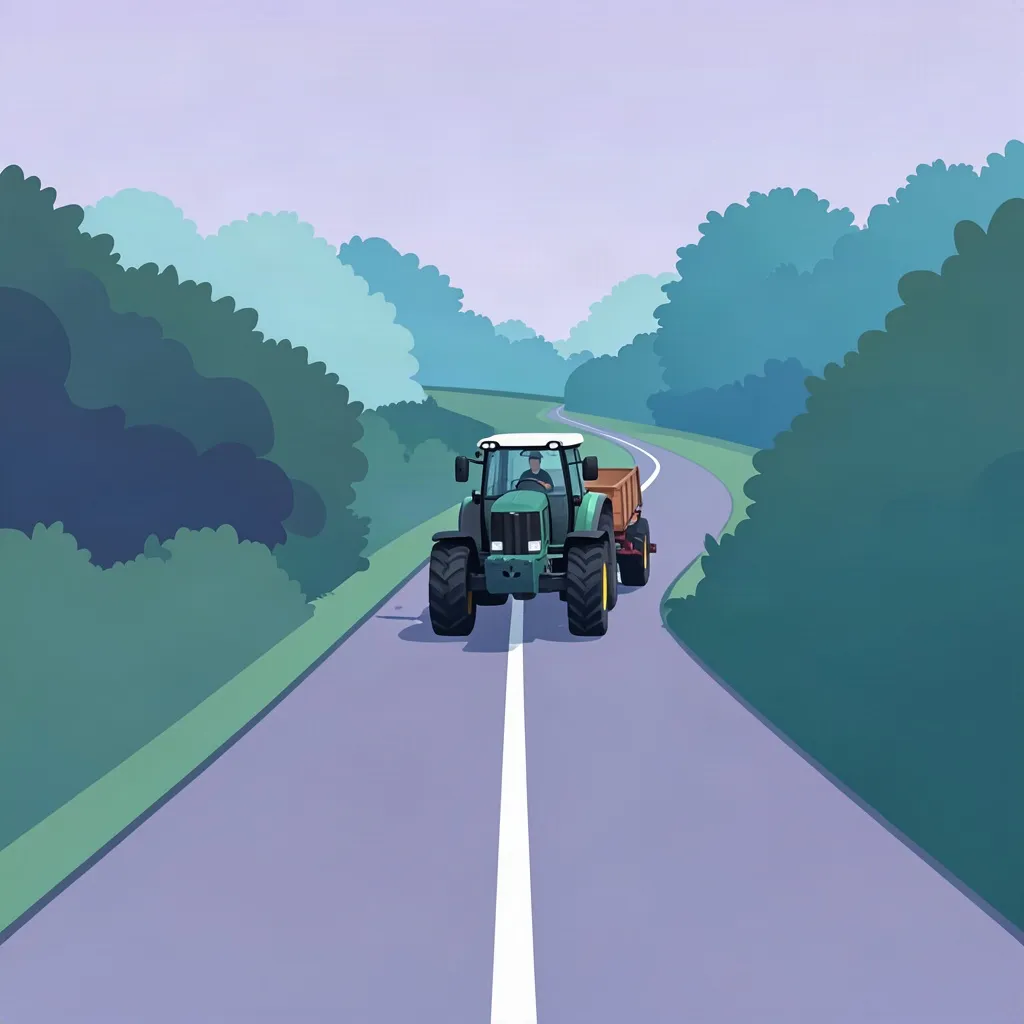
Article content overview
Driving on Ireland’s rural network presents unique challenges that every learner must master before taking the Driver Theory Test. While the posted speed limit might indicate 80 km/h or even 100 km/h on certain secondary roads, these figures are legal maximums under ideal conditions—not targets for every situation. According to the Rules of the Road, you are responsible for maintaining a speed that allows you to stop your vehicle safely within the distance you can see to be clear. Failure to adjust your speed for environmental factors is a leading cause of collisions on winding, narrow Irish roads.
The Irish road network is diverse, featuring everything from modern national roads to narrow, twisting boreens in rural areas. When you encounter a national speed limit sign, it is easy to assume that traveling at that speed is always appropriate. However, the RSA emphasizes that your primary duty is to match your speed to the road conditions, which include weather, traffic density, visibility, and road surface quality.
The legal speed limit is the absolute maximum speed allowed for a particular road; it is not a recommendation. On rural roads with poor surfaces, sharp bends, or high volumes of agricultural machinery, you must often drive significantly below the posted limit to ensure you can stop in an emergency.
In many rural parts of Ireland, the road may be too narrow for two vehicles to pass comfortably, or there may be hidden hazards such as farm entrances, loose gravel, or wandering livestock. If you enter a blind bend at the maximum legal speed, you may not have enough time or road space to avoid an oncoming vehicle or a stationary obstacle. Effective hazard perception requires you to constantly scan the road ahead and anticipate these hidden dangers before they become immediate threats.
Rural driving requires a heightened state of vigilance because the environment is less predictable than urban or motorway settings. You should be prepared for various road signs that warn of specific hazards, such as dangerous bends, crossroads, or loose chippings. Understanding what these signs imply is essential for both your safety and your success in the theory exam.
When navigating rural roads, consider the following environmental factors that necessitate a reduction in speed:
The fundamental rule of safe driving is that you must always be able to stop your vehicle within the distance you can see to be clear. This concept is central to the RSA theory syllabus and is frequently tested through hazard awareness scenarios. If you are driving on a road where the visibility is obscured by hedges or hills, you must reduce your speed to a point where, if a blockage appeared around the next turn, you could bring your vehicle to a complete, controlled stop.
Many questions in the Driver Theory Test focus on your understanding of road signs and the appropriate reaction to rural hazards. You will often be presented with images of rural roads and asked to identify the safest course of action. Remember that the exam looks for the safest, most cautious answer. If a question asks how to handle a blind bend, the correct answer will almost always involve slowing down and staying well to the left, rather than maintaining speed or attempting to overtake.
Rural Irish roads demand that you match your speed to actual conditions rather than the posted limit, which represents only the legal maximum under ideal circumstances. The core principle is that you must always be able to stop within the distance you can see to be clear, requiring constant scanning ahead and anticipation of hidden hazards such as blind bends, farm machinery, and narrow sections. Environmental factors including weather, road surface quality, visibility, and the presence of vulnerable road users all justify speed reductions below the posted limit. For the RSA theory test, remember that the correct answer to hazard scenarios is always the safest, most cautious course of action, typically involving slowing down and staying well to the left.
A short set of high-value points that capture the most important ideas from this article.
The posted speed limit is the legal maximum under ideal conditions, not a target speed you should always travel at
You must always drive at a speed that allows you to stop safely within the distance you can see to be clear
Rural roads require heightened vigilance due to unpredictable hazards like farm machinery, blind bends, and wandering livestock
Environmental factors such as fog, rain, poor road surface, and narrow lanes all necessitate speed reductions
The RSA theory exam expects the safest, most cautious response to hazard scenarios
Speed limits are absolute maximums; adjust down for weather, visibility, and road conditions
Scan the road well ahead for warning signs and hidden hazards before they become immediate threats
On narrow rural roads, keep left and be prepared to use passing spaces for wider vehicles
Reduce speed on blind bends and approach crossroads with caution due to restricted visibility
Anticipate vulnerable road users including cyclists, pedestrians, and slow-moving agricultural vehicles
Treating the speed limit as a target speed rather than a ceiling under ideal conditions
Failing to reduce speed when visibility is obscured by hedges, hills, or weather
Braking while already in a turn rather than reducing speed before the bend
Not scanning far enough ahead to identify hidden hazards like farm gates or emerging tractors
Attempting to maintain speed through junctions instead of yielding and proceeding with caution
Article content overview
A short set of high-value points that capture the most important ideas from this article.
The posted speed limit is the legal maximum under ideal conditions, not a target speed you should always travel at
You must always drive at a speed that allows you to stop safely within the distance you can see to be clear
Rural roads require heightened vigilance due to unpredictable hazards like farm machinery, blind bends, and wandering livestock
Environmental factors such as fog, rain, poor road surface, and narrow lanes all necessitate speed reductions
The RSA theory exam expects the safest, most cautious response to hazard scenarios
Speed limits are absolute maximums; adjust down for weather, visibility, and road conditions
Scan the road well ahead for warning signs and hidden hazards before they become immediate threats
On narrow rural roads, keep left and be prepared to use passing spaces for wider vehicles
Reduce speed on blind bends and approach crossroads with caution due to restricted visibility
Anticipate vulnerable road users including cyclists, pedestrians, and slow-moving agricultural vehicles
Treating the speed limit as a target speed rather than a ceiling under ideal conditions
Failing to reduce speed when visibility is obscured by hedges, hills, or weather
Braking while already in a turn rather than reducing speed before the bend
Not scanning far enough ahead to identify hidden hazards like farm gates or emerging tractors
Attempting to maintain speed through junctions instead of yielding and proceeding with caution
Explore related topics, search based questions, and concepts that learners often look up when studying Rural Road Safety in Ireland. These themes reflect real search intent and help you understand how this topic connects to wider driving theory knowledge in Ireland.
Find clear and practical answers to common questions learners often have about Rural Road Safety in Ireland. This section helps explain difficult points, remove confusion, and reinforce the key driving theory concepts that matter for learners in Ireland.
No. The speed limit is the maximum legal speed under ideal conditions. You must always adjust your speed based on weather, road surface, visibility, and traffic density.
You must always be able to stop your vehicle within the distance you can see to be clear. If you cannot see far enough ahead due to bends or obstructions, you must drive slowly enough to stop suddenly if needed.
Common hazards include slow-moving farm machinery, livestock on the road, narrow verges, blind crests, loose gravel, and unexpected wildlife.
After searching, continue your DTT preparation by exploring related articles, practicing questions, or reviewing specific road sign categories. Deepen your understanding of Irish road rules and ensure you're fully prepared for your Driver Theory Test.