
Learners will discover how to apply eco-driving techniques to minimize their environmental impact while ensuring their vehicle remains safe and roadworthy. This article bridges the gap between official Rules of the Road requirements and practical, everyday driving habits that help you prepare for theory test questions on vehicle safety and responsible operation.
Article content overview
As you prepare for your Irish Driver Theory Test, understanding eco-driving and vehicle maintenance is not just about passing the exam; it is a fundamental pillar of being a safe, responsible, and economical driver on Irish roads. The Road Safety Authority (RSA) emphasises these concepts because they directly impact vehicle emissions, fuel consumption, and, crucially, road safety. By adopting these habits early in your journey as a learner permit holder, you reduce your environmental footprint while ensuring your vehicle remains in peak condition for everyday travel.
Eco-driving refers to a style of driving that optimises fuel efficiency, reduces carbon emissions, and lessens wear and tear on your vehicle. It is not about driving slowly; rather, it is about driving smoothly and anticipating the flow of traffic. The RSA encourages drivers to avoid harsh acceleration and sudden braking, as both habits waste fuel and increase the release of harmful particulates.
In the context of the Driver Theory Test, remember that smooth gear changes are essential. Driving in the highest suitable gear for your speed helps the engine run efficiently, which significantly lowers your fuel consumption during urban and motorway driving.
When you approach traffic lights or junctions, look far ahead to plan your speed. If you see a red signal in the distance, ease off the accelerator early and allow the vehicle to slow down naturally rather than braking late. This technique, often referred to as coasting in gear, is a key component of the Rules of the Road and is frequently assessed in terms of your hazard awareness and defensive driving capabilities.
A vehicle that is poorly maintained is more likely to break down, emit excessive pollutants, and pose a danger to other road users. As a learner, you must be familiar with basic vehicle checks, including the condition of your tyres, fluid levels, and lighting systems. Failing to maintain your vehicle according to manufacturer guidelines can lead to higher fuel costs and potential failures during the National Car Test (NCT).
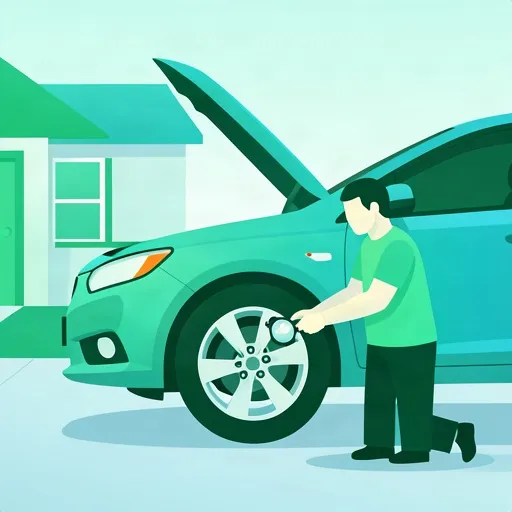
The level of air inside your tyres, measured in PSI or bar, which must be kept at the level recommended by the vehicle manufacturer. Incorrect pressure increases fuel consumption, affects handling, and causes uneven or rapid tyre wear.
Checking your tyre pressure regularly is one of the most effective ways to improve fuel efficiency. Under-inflated tyres create more rolling resistance, forcing the engine to work harder to maintain speed. Conversely, over-inflated tyres reduce grip, which can be particularly dangerous on Ireland’s damp and winding roads.
Beyond maintenance, your daily driving choices contribute to the overall environmental impact of transport in Ireland. Idling is a common issue that contributes to unnecessary air pollution; if you are stuck in a queue or waiting for someone, switching off your engine is a simple, effective action. Additionally, planning your routes in advance can save time and fuel, helping you avoid congested urban areas where stop-start driving consumes the most fuel.
While eco-driving is about efficiency, safety always remains the top priority. Certain road signs dictate the flow of traffic, and understanding these is essential for efficient travel.
Eco-driving and vehicle maintenance are key components of the Irish Driver Theory Test that combine environmental responsibility with safe driving practices. The RSA emphasises smooth driving techniques such as maintaining appropriate tyre pressure, using the correct gear for your speed, and anticipating traffic flow by coasting to junctions rather than braking late. Essential vehicle maintenance includes regular checks of tyres, fluid levels, and lighting systems to ensure roadworthiness and pass the NCT. Learners should also understand that idling contributes to unnecessary pollution, and that planning routes to avoid peak-hour congestion significantly reduces fuel consumption. Adopting these habits early helps both for passing the theory test and becoming a responsible road user.
A short set of high-value points that capture the most important ideas from this article.
Eco-driving focuses on smooth, anticipatory driving rather than slow driving to maximize fuel efficiency
Tyre pressure directly affects rolling resistance and fuel consumption; check it regularly against manufacturer specifications
Coasting in gear when approaching junctions or red lights reduces fuel waste and brake wear
Vehicle maintenance requirements include regular checks of tyres, fluid levels, and lighting systems for roadworthiness
Planning routes to avoid congested areas and turning off the engine when stationary for over a minute minimizes unnecessary emissions
Drive in the highest suitable gear for your speed to help the engine run efficiently
Under-inflated tyres increase fuel consumption; over-inflated tyres reduce grip and are dangerous on wet Irish roads
Look ahead when driving to anticipate traffic signals and ease off the accelerator early instead of braking late
Regular service schedules help prevent emissions-related issues and NCT failures
Unnecessary weight in the vehicle increases engine load and fuel consumption
Assuming eco-driving means driving slowly rather than driving smoothly and efficiently
Harsh acceleration and sudden braking waste fuel and increase harmful emissions
Neglecting tyre pressure checks, leading to increased rolling resistance and higher fuel costs
Leaving the engine running while stationary for extended periods unnecessarily contributes to air pollution
Failing to plan routes, resulting in stop-start driving through congested areas that consumes the most fuel
Article content overview
A short set of high-value points that capture the most important ideas from this article.
Eco-driving focuses on smooth, anticipatory driving rather than slow driving to maximize fuel efficiency
Tyre pressure directly affects rolling resistance and fuel consumption; check it regularly against manufacturer specifications
Coasting in gear when approaching junctions or red lights reduces fuel waste and brake wear
Vehicle maintenance requirements include regular checks of tyres, fluid levels, and lighting systems for roadworthiness
Planning routes to avoid congested areas and turning off the engine when stationary for over a minute minimizes unnecessary emissions
Drive in the highest suitable gear for your speed to help the engine run efficiently
Under-inflated tyres increase fuel consumption; over-inflated tyres reduce grip and are dangerous on wet Irish roads
Look ahead when driving to anticipate traffic signals and ease off the accelerator early instead of braking late
Regular service schedules help prevent emissions-related issues and NCT failures
Unnecessary weight in the vehicle increases engine load and fuel consumption
Assuming eco-driving means driving slowly rather than driving smoothly and efficiently
Harsh acceleration and sudden braking waste fuel and increase harmful emissions
Neglecting tyre pressure checks, leading to increased rolling resistance and higher fuel costs
Leaving the engine running while stationary for extended periods unnecessarily contributes to air pollution
Failing to plan routes, resulting in stop-start driving through congested areas that consumes the most fuel
Explore related topics, search based questions, and concepts that learners often look up when studying Eco-Driving and Vehicle Maintenance. These themes reflect real search intent and help you understand how this topic connects to wider driving theory knowledge in Ireland.
Find clear and practical answers to common questions learners often have about Eco-Driving and Vehicle Maintenance. This section helps explain difficult points, remove confusion, and reinforce the key driving theory concepts that matter for learners in Ireland.
Eco-driving reduces fuel consumption and harmful exhaust emissions while promoting smoother, safer driving habits that help you pass the RSA theory test.
Under-inflated tyres increase rolling resistance, which forces the engine to work harder, consumes more fuel, and leads to faster tyre wear.
Idling wastes fuel and contributes to unnecessary air pollution without moving the vehicle, which goes against the principles of responsible driving.
Learners should regularly check tyre condition and pressure, engine oil levels, coolant, lights, and ensure the vehicle is serviced according to manufacturer guidelines.
After searching, continue your DTT preparation by exploring related articles, practicing questions, or reviewing specific road sign categories. Deepen your understanding of Irish road rules and ensure you're fully prepared for your Driver Theory Test.