
Transitioning from a learner to a novice driver in Ireland requires not just vehicle control, but the mental discipline to remain in charge of your own safety environment. This guide examines how social dynamics inside the car can impact your hazard perception and decision-making, emphasizing why you must uphold RSA standards regardless of passenger influence. Understanding these psychological barriers is essential for passing the test and developing long-term, safe driving habits.
Article content overview
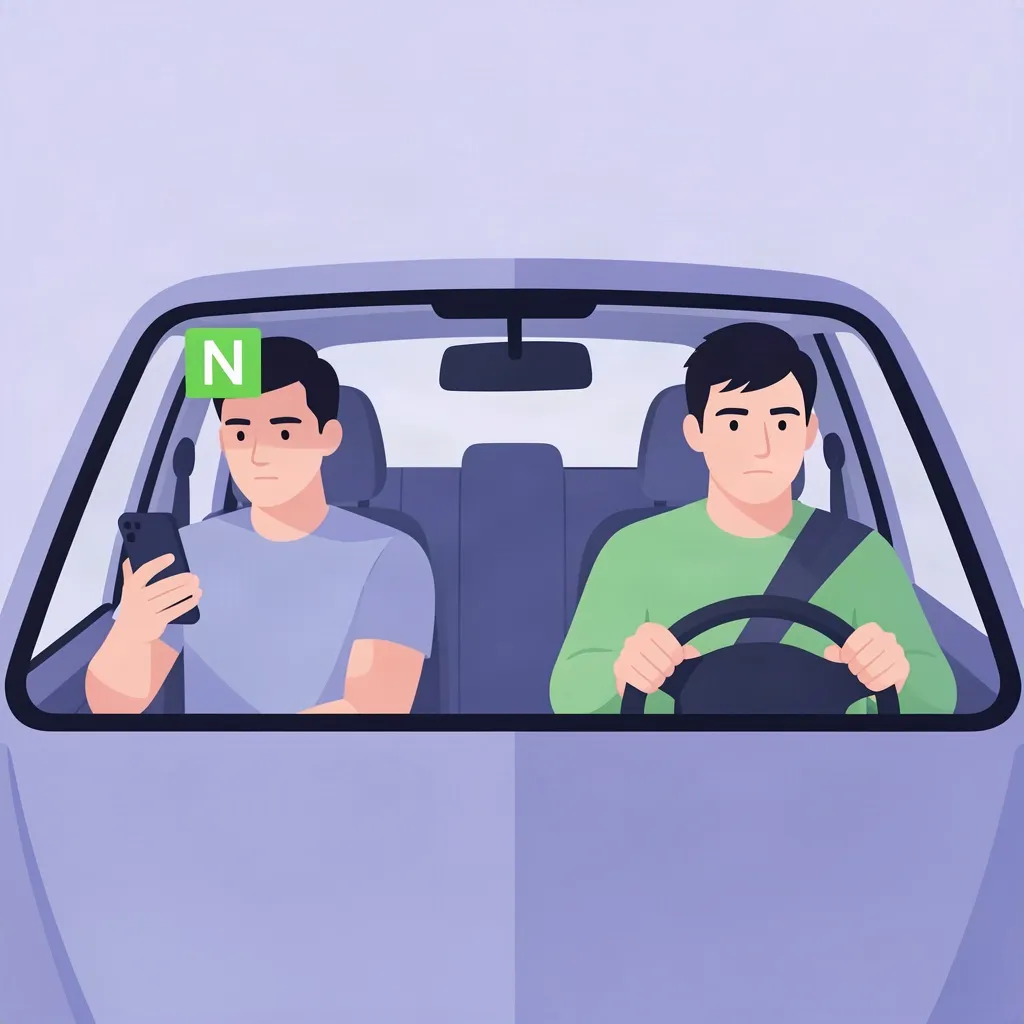
The transition from holding a learner permit to achieving your full driving licence is a significant milestone in Ireland. However, the period immediately following your test, often characterized by the display of N-plates, introduces a new set of psychological challenges. Beyond simply mastering vehicle control, you must now navigate the social dynamics of having passengers in your vehicle. For many new drivers, the pressure to conform to the expectations of friends or family can lead to compromised decision-making, distraction, and an increased risk of incident.
Succumbing to passenger pressure is a major exam trap and a severe safety risk. RSA standards dictate that the driver, not the passengers, is solely responsible for the safety of the vehicle and everyone inside it. Never prioritize a passenger's desire for speed or specific route choices over the Rules of the Road.
In the Irish context, displaying N-plates signifies that you are a newly qualified driver. This period is designed to allow you to build confidence, but it is also a time when you are most susceptible to external influence. When friends or family members occupy the passenger seats, they may inadvertently—or intentionally—create a "co-pilot" environment where they offer directions, question your speed, or express impatience at your cautious driving style.
Understanding that you are the sole decision-maker is critical. If a passenger encourages you to ignore a road sign or accelerate beyond a safe speed, you must remain firm. Treating these moments as a live hazard decision rather than a social negotiation is essential for maintaining your safety record. Failure to resist this pressure can lead to dangerous habits, such as late braking or poor hazard perception, which can eventually lead to penalty points or, worse, a serious road traffic collision.
Your primary duty as a driver is to ensure that you, your passengers, and all other road users are protected. When you are behind the wheel, the interior of the car must remain a focused space. Distraction is not just about mobile phones or loud music; it is also about the emotional and psychological noise generated by passengers.
The legal and moral obligation of a driver to operate a vehicle in compliance with the Rules of the Road, maintaining full attention to the environment regardless of external or internal distractions, including the influence of passengers.
When you allow a passenger to dictate your driving style, you effectively shift your focus away from critical tasks like scanning for road markings, identifying traffic signs, or anticipating the movements of other road users. A common mistake among novice drivers is treating their new driving status as a mere paperwork milestone rather than a commitment to ongoing hazard perception. If you find yourself speeding up because a passenger is in a hurry, you are violating the core tenets of safe driving advocated by the RSA.
To be a truly safe driver in Ireland, you must develop the mental discipline to filter out passenger influence. The Rules of the Road exist to keep you and others safe, not to accommodate the schedules of those in your car. If you feel pressured, take a moment to breathe and return your focus to the road environment. Remember, the legal status of your licence does not change the physics of the road or the importance of your reaction times.
Acknowledge the pressure as a secondary distraction.
Prioritize the RSA Rules of the Road over the request.
Maintain a safe speed that matches road conditions rather than passenger demands.
Communicate clearly that your priority is safe arrival.
Increase your scanning frequency to regain focus on road hazards.
Developing the right mindset takes time. The more you practice independent decision-making, the more natural it will become. By viewing every trip as an exercise in hazard awareness, you effectively inoculate yourself against the pressure of passengers. Your goal is to reach a level of competence where you navigate Irish roads with confidence, regardless of who is sitting in the passenger seat.
This article addresses the psychological challenges new drivers face when managing passengers after passing their test in Ireland. It emphasises that displaying N-plates means you are a novice driver for two years and must maintain full responsibility for vehicle safety regardless of external pressure. The content explains that passenger influence is a genuine hazard that compromises hazard perception and decision-making, and provides a structured five-step approach to handle such situations by prioritising RSA Rules of the Road. Key concepts include driver-only authority, the definition of distraction as including psychological pressure, and the importance of maintaining scanning frequency to counteract passenger-induced distraction.
A short set of high-value points that capture the most important ideas from this article.
As the driver, you are solely responsible for the safety of everyone in the vehicle regardless of passenger demands
Passenger pressure is a psychological hazard that must be treated the same as any road hazard
The Rules of the Road exist to protect lives, not to accommodate passenger schedules or impatience
Your N-plate status means you are still building experience and must remain especially vigilant
Distraction includes emotional and psychological noise from passengers, not just mobile phones or loud music
N-plates must be displayed for two years after passing your driving test in Ireland
Resisting passenger pressure is a legal and safety obligation, not a social choice
Maintain full scanning frequency for road markings and traffic signs even when pressured
The RSA holds drivers accountable for all decisions made while behind the wheel
Increasing your hazard awareness is the most effective defence against passenger distraction
Treating the driving test as a paperwork milestone rather than the start of ongoing hazard awareness
Allowing passengers to influence speed decisions based on their urgency or impatience
Viewing passenger requests as social negotiations rather than safety decisions
Reducing focus or scanning frequency when a passenger seems impatient
Prioritizing a passenger's preferred route over safer, Rule-of-the-Road-compliant choices
Article content overview
A short set of high-value points that capture the most important ideas from this article.
As the driver, you are solely responsible for the safety of everyone in the vehicle regardless of passenger demands
Passenger pressure is a psychological hazard that must be treated the same as any road hazard
The Rules of the Road exist to protect lives, not to accommodate passenger schedules or impatience
Your N-plate status means you are still building experience and must remain especially vigilant
Distraction includes emotional and psychological noise from passengers, not just mobile phones or loud music
N-plates must be displayed for two years after passing your driving test in Ireland
Resisting passenger pressure is a legal and safety obligation, not a social choice
Maintain full scanning frequency for road markings and traffic signs even when pressured
The RSA holds drivers accountable for all decisions made while behind the wheel
Increasing your hazard awareness is the most effective defence against passenger distraction
Treating the driving test as a paperwork milestone rather than the start of ongoing hazard awareness
Allowing passengers to influence speed decisions based on their urgency or impatience
Viewing passenger requests as social negotiations rather than safety decisions
Reducing focus or scanning frequency when a passenger seems impatient
Prioritizing a passenger's preferred route over safer, Rule-of-the-Road-compliant choices
Explore related topics, search based questions, and concepts that learners often look up when studying N-Plate Passenger Safety. These themes reflect real search intent and help you understand how this topic connects to wider driving theory knowledge in Ireland.
Find clear and practical answers to common questions learners often have about N-Plate Passenger Safety. This section helps explain difficult points, remove confusion, and reinforce the key driving theory concepts that matter for learners in Ireland.
Novice drivers often lack the experience to quickly manage dual tasks of driving and social interaction, which can lead to reduced hazard perception, delayed reaction times, and risky decisions made to appease passengers.
Yes. According to the Rules of the Road, the driver is legally responsible for the safe operation of the vehicle at all times, regardless of the demands or expectations placed upon them by passengers.
In theory and practical tests, examiners look for your ability to remain in full control and follow road laws independently; failing to resist distractions or unsafe requests demonstrates a lack of critical decision-making skills.
After searching, continue your DTT preparation by exploring related articles, practicing questions, or reviewing specific road sign categories. Deepen your understanding of Irish road rules and ensure you're fully prepared for your Driver Theory Test.