
Learning how to share the road with slow-moving traffic is a critical component of the Irish driving theory curriculum. This guide clarifies the specific legal obligations for tractors and horse-drawn vehicles, ensuring you know how to react safely and legally when encountering them on rural roads.
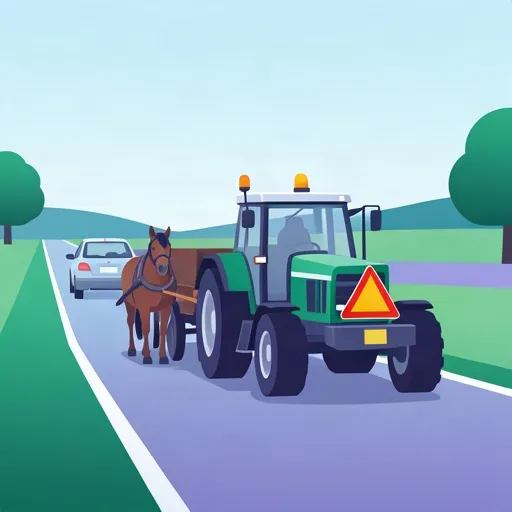
Article content overview
Driving on rural Irish roads requires more than just mastering standard traffic conventions; it demands a high level of situational awareness regarding non-standard road users. Whether you are navigating a narrow country lane or a regional road, you will frequently encounter agricultural vehicles and horse-drawn carriages. Understanding the specific legal obligations for these road users is not only essential for your safety but is also a core requirement for passing the Irish Driver Theory Test.
Agricultural vehicles, particularly tractors, are a common sight in rural Ireland, especially during harvesting seasons. A tractor used in a public place must strictly obey the laws governing road traffic, including speed limits and signaling requirements. If you are operating a tractor, or sharing the road with one, remember the fundamental rule: you must keep to the left and allow faster traffic to pass when it is safe to do so.
It is a common error to assume that slow-moving vehicles have no specific safety obligations. On the contrary, drivers of these vehicles must ensure their driving mirrors provide an adequate view of the road behind them. Furthermore, you must never carry a passenger on a tractor unless it is specifically equipped to carry one. For the learner driver, observing these vehicles requires patience; never force a pass unless you have a clear, unobstructed view of the road ahead.
Horse-drawn vehicles are treated with the same priority as other road users, and the standard Rules of the Road apply to them. Drivers of horse-drawn carriages must adhere to the general rule to keep left. Because these vehicles lack motorized signals, the driver is required to use hand signals that mirror those used by cyclists.
Safety at night is of paramount importance for horse-drawn traffic. By law, these vehicles must be equipped with two red rear reflectors. Additionally, during hours of darkness, they must carry a lamp on the right-hand side of the vehicle that displays a white light to the front and a red light to the back. It is also important to note that the Road Safety Authority (RSA) strictly prohibits anyone from driving a horse-drawn vehicle while under the influence of alcohol or drugs, carrying the same legal weight as driving a motor vehicle.
The Irish Driver Theory Test often features scenarios involving Category W work vehicles and other slow-moving traffic. The goal of these questions is to ensure you prioritize safety over speed. You should always slow down early, observe all relevant road users, and only proceed with a manoeuvre—such as overtaking—when it is lawful and safe.
Distractors in these exam questions often suggest that you should rely on the slow vehicle to "make space" for you or that you should maintain speed until signaled to pass. These approaches are incorrect. The RSA expects learners to take personal responsibility for road safety by adjusting their driving behavior to suit the conditions, rather than treating these hazards as rote memorization tasks.
Understanding the specific language used by the RSA helps clarify your legal responsibilities on the road. The following terms are frequently tested and are essential for your theoretical understanding of rural traffic management.
This article covers the specific legal obligations for operating and sharing the road with agricultural machinery and horse-drawn vehicles in Ireland. Tractors and Category W work vehicles must obey standard road traffic laws, keep left, and ensure adequate mirror visibility, while passengers are only permitted if the vehicle is equipped for carrying them. Horse-drawn vehicles require two red rear reflectors at all times and a side lamp showing white to the front and red to the back during darkness, with drivers subject to the same drink-driving prohibitions as motor vehicle operators. When encountering horses or horse-drawn traffic, drivers must slow down, provide ample space, and avoid sounding the horn. The safe overtaking procedure involves assessing the road ahead, checking mirrors and blind spots, signaling clearly, maintaining safe distance, and returning to the left only when it is safe to do so.
A short set of high-value points that capture the most important ideas from this article.
Agricultural vehicles like tractors must obey all road traffic laws, including speed limits, signaling requirements, and keeping to the left
Horse-drawn vehicles must display two red rear reflectors and, during darkness, a lamp showing white to the front and red to the back
It is illegal to drive a horse-drawn vehicle while under the influence of alcohol or drugs, carrying the same legal weight as driving a motor vehicle
Passengers cannot be carried on a tractor unless it is specifically equipped to do so
When encountering horses or horse-drawn vehicles, you must slow down significantly, give plenty of space, and avoid using your horn
Hand signals for horse-drawn vehicles mirror those used by cyclists since these vehicles lack motorized signals
Category W is the licensing category for work vehicles such as tractors used in agriculture
You must have a clear, unobstructed view of the road ahead before attempting to overtake any slow-moving vehicle
Agricultural vehicle mirrors must provide adequate view of the road behind them
Only pass slow-moving vehicles when it is lawful and safe to do so—never force a pass
Assuming that slow-moving vehicles have no specific safety obligations and can be treated as obstacles
Attempting to force a pass on a tractor without ensuring a clear, unobstructed view of oncoming traffic
Relying on the slow vehicle to make space for you instead of taking personal responsibility for safe overtaking
Maintaining normal speed when approaching slow-moving agricultural traffic instead of adjusting to conditions
Using the horn near horses or horse-drawn vehicles, which may startle the animals and cause an accident
Article content overview
A short set of high-value points that capture the most important ideas from this article.
Agricultural vehicles like tractors must obey all road traffic laws, including speed limits, signaling requirements, and keeping to the left
Horse-drawn vehicles must display two red rear reflectors and, during darkness, a lamp showing white to the front and red to the back
It is illegal to drive a horse-drawn vehicle while under the influence of alcohol or drugs, carrying the same legal weight as driving a motor vehicle
Passengers cannot be carried on a tractor unless it is specifically equipped to do so
When encountering horses or horse-drawn vehicles, you must slow down significantly, give plenty of space, and avoid using your horn
Hand signals for horse-drawn vehicles mirror those used by cyclists since these vehicles lack motorized signals
Category W is the licensing category for work vehicles such as tractors used in agriculture
You must have a clear, unobstructed view of the road ahead before attempting to overtake any slow-moving vehicle
Agricultural vehicle mirrors must provide adequate view of the road behind them
Only pass slow-moving vehicles when it is lawful and safe to do so—never force a pass
Assuming that slow-moving vehicles have no specific safety obligations and can be treated as obstacles
Attempting to force a pass on a tractor without ensuring a clear, unobstructed view of oncoming traffic
Relying on the slow vehicle to make space for you instead of taking personal responsibility for safe overtaking
Maintaining normal speed when approaching slow-moving agricultural traffic instead of adjusting to conditions
Using the horn near horses or horse-drawn vehicles, which may startle the animals and cause an accident
Explore related topics, search based questions, and concepts that learners often look up when studying Agricultural and Horse-Drawn Vehicle Rules. These themes reflect real search intent and help you understand how this topic connects to wider driving theory knowledge in Ireland.
Find clear and practical answers to common questions learners often have about Agricultural and Horse-Drawn Vehicle Rules. This section helps explain difficult points, remove confusion, and reinforce the key driving theory concepts that matter for learners in Ireland.
At night, a horse-drawn vehicle must be equipped with two red rear reflectors and carry a lamp on the right-hand side showing a white light to the front and a red light to the back.
Yes, drivers of horse-drawn vehicles should use the same hand signals as those used by cyclists when indicating their intentions on the road.
No, it is strictly prohibited to drive or be in charge of a horse-drawn vehicle on a public road while under the influence of alcohol or drugs.
A tractor driver must keep left where possible to allow faster traffic to safely overtake.
After searching, continue your DTT preparation by exploring related articles, practicing questions, or reviewing specific road sign categories. Deepen your understanding of Irish road rules and ensure you're fully prepared for your Driver Theory Test.