
Mastering the rules regarding speed limits is a fundamental requirement for the Driver Theory Test and responsible driving. This guide explores how speed detection is enforced across Ireland, the role of national authorities, and the importance of maintaining safe speeds for all road users.
Article content overview
Understanding speed limits and the mechanics of traffic enforcement is a cornerstone of the Irish Driver Theory Test. Beyond simply memorizing numbers for the exam, grasping why these limits exist and how An Garda Síochána enforces them is vital for your development as a safe, responsible driver on Irish roads. In Ireland, the Rules of the Road provide the framework for these regulations, and mastery of this topic is essential to ensure you pass your theory test and avoid penalty points in the future.
In Ireland, speed limits are not merely suggestions; they are maximum legal thresholds designed to manage traffic flow and reduce the risk of collisions. A common point of confusion for learner drivers is the distinction between national, urban, and regional speed limits. It is important to remember that the presence of a speed limit sign indicates the maximum speed allowed under ideal conditions. If weather conditions are poor, visibility is low, or traffic is heavy, you are legally and morally required to drive at a lower speed that is appropriate for the road environment.
When preparing for your exam, always keep in mind that driving at the limit is not always driving safely. Defensive driving requires you to constantly adjust your speed based on the presence of pedestrians, cyclists, and the physical characteristics of the road surface.
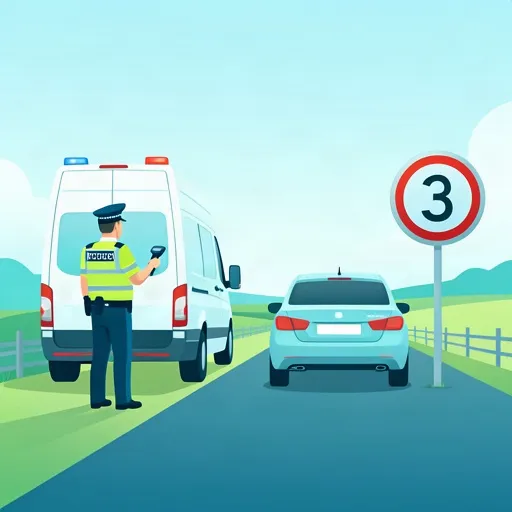
An Garda Síochána is responsible for the enforcement of all road traffic legislation in Ireland. Enforcement is carried out through various methods, including stationary patrols, mandatory impairment testing checkpoints, and the use of sophisticated speed detection technology. One of the most prominent enforcement tools you will encounter is the use of GoSafe vans. These are mobile speed detection units operated under contract for An Garda Síochána, strategically positioned in high-risk areas identified by collision data.
Speed enforcement is designed to save lives, not just to catch drivers. Expect to see speed detection in areas with a history of collisions or near schools, where safety is paramount.
It is a common misconception that there are "gaps" in enforcement. In reality, An Garda Síochána can conduct speed checks at any time and on any road. Relying on technology or apps to avoid speed traps is both dangerous and contrary to the principles of responsible driving taught in the Rules of the Road.
Exceeding the speed limit in Ireland carries significant consequences that extend beyond an immediate fine. Drivers who are caught speeding face the imposition of penalty points on their driving licence. For a learner permit holder, accumulating penalty points can lead to the disqualification of your permit, effectively stalling your progress toward a full driving licence. Furthermore, repeated or severe speeding offences can result in a court appearance, substantial fines, and potential imprisonment for dangerous driving.
| Offence Category | Potential Penalty |
|---|---|
| Speeding (Fixed Charge) | Fine and 3 penalty points |
| Speeding (Court Conviction) | Higher fine and 5 penalty points |
| Careless Driving | Fine, points, or disqualification |
When you sit your Driver Theory Test, you will likely encounter questions regarding stopping distances and the effect of speed on reaction time. Remember that your stopping distance increases exponentially with speed; if you double your speed, your stopping distance quadruples. This scientific reality is why the RSA emphasizes safe speed management as the most effective way to prevent fatal and serious injury collisions.
Always read each question carefully during your exam. Pay attention to whether a question asks for the "legal limit" or the "appropriate speed" for a given scenario. The latter will almost always depend on factors like road conditions, light levels, and the presence of hazards.
This article explains how Irish speed limits function as maximum legal thresholds under the Rules of the Road, emphasizing that drivers must adjust speed based on conditions rather than treating limits as targets. An Garda Síochána enforces speed limits through patrols, checkpoints, and GoSafe vans positioned strategically in high-risk areas, and enforcement can occur on any road at any time. The consequences of speeding include fixed charge fines with 3 penalty points or court convictions with 5 penalty points, with learner permit holders risking disqualification. The RSA highlights that stopping distance increases exponentially with speed, making speed management critical for road safety. For the Driver Theory Test, remember that questions distinguish between the 'legal limit' and the 'appropriate speed'—always read carefully to determine which applies.
A short set of high-value points that capture the most important ideas from this article.
Speed limits are maximum legal thresholds, not targets—always adjust speed for weather, visibility, and traffic conditions
An Garda Síochána can conduct speed enforcement anywhere on any road at any time
Learner permit holders face permit disqualification if they accumulate penalty points for speeding
Your stopping distance quadruples if you double your speed—speed management is the most effective collision prevention
GoSafe vans are positioned in high-risk areas based on collision data, often near schools
Posted speed limit signs indicate the maximum allowed speed under ideal conditions only
Fixed charge speeding offences carry 3 penalty points; court convictions carry 5 penalty points
Distinguish between 'legal limit' and 'appropriate speed'—exam questions test this difference
GoSafe vans operate under contract for An Garda Síochána and are not the only enforcement method
Poor conditions, pedestrians, cyclists, and road surface all legally require you to drive below the posted limit
Believing there are predictable 'gaps' in speed enforcement to exploit
Assuming the posted limit is always the correct speed for any given situation
Confusing the legal speed limit with the appropriate speed for conditions in exam answers
Using apps or technology to avoid detection rather than focusing on safe driving
Forgetting that learner permit holders face stricter consequences for penalty point accumulation
Article content overview
A short set of high-value points that capture the most important ideas from this article.
Speed limits are maximum legal thresholds, not targets—always adjust speed for weather, visibility, and traffic conditions
An Garda Síochána can conduct speed enforcement anywhere on any road at any time
Learner permit holders face permit disqualification if they accumulate penalty points for speeding
Your stopping distance quadruples if you double your speed—speed management is the most effective collision prevention
GoSafe vans are positioned in high-risk areas based on collision data, often near schools
Posted speed limit signs indicate the maximum allowed speed under ideal conditions only
Fixed charge speeding offences carry 3 penalty points; court convictions carry 5 penalty points
Distinguish between 'legal limit' and 'appropriate speed'—exam questions test this difference
GoSafe vans operate under contract for An Garda Síochána and are not the only enforcement method
Poor conditions, pedestrians, cyclists, and road surface all legally require you to drive below the posted limit
Believing there are predictable 'gaps' in speed enforcement to exploit
Assuming the posted limit is always the correct speed for any given situation
Confusing the legal speed limit with the appropriate speed for conditions in exam answers
Using apps or technology to avoid detection rather than focusing on safe driving
Forgetting that learner permit holders face stricter consequences for penalty point accumulation
Explore related topics, search based questions, and concepts that learners often look up when studying Irish Speed Limits and Enforcement. These themes reflect real search intent and help you understand how this topic connects to wider driving theory knowledge in Ireland.
Find clear and practical answers to common questions learners often have about Irish Speed Limits and Enforcement. This section helps explain difficult points, remove confusion, and reinforce the key driving theory concepts that matter for learners in Ireland.
An Garda Síochána is responsible for enforcing road traffic legislation, including speed enforcement, monitoring driver compliance, and conducting mandatory testing for alcohol and drugs to ensure road safety.
GoSafe vans are speed enforcement vehicles deployed by a private operator on behalf of the state in areas identified as high-risk for speed-related collisions, helping to reduce fatalities on Irish roads.
Knowledge of speed limits is critical because it demonstrates an understanding of the Rules of the Road, helps prevent accidents, and is frequently tested in the official RSA Driver Theory Test.
Yes, speed limits vary depending on the road type, such as urban areas, regional roads, national roads, and motorways, and they are clearly indicated by signage that all drivers must obey.
After searching, continue your DTT preparation by exploring related articles, practicing questions, or reviewing specific road sign categories. Deepen your understanding of Irish road rules and ensure you're fully prepared for your Driver Theory Test.