
Learners often mistake the legal speed limit for a target speed that must be maintained at all times. However, on narrow, winding rural Irish roads, driving at the posted limit can be dangerous or even reckless. This guide clarifies how to assess hazards such as soft verges, blind corners, and narrow lanes to determine a truly safe speed.
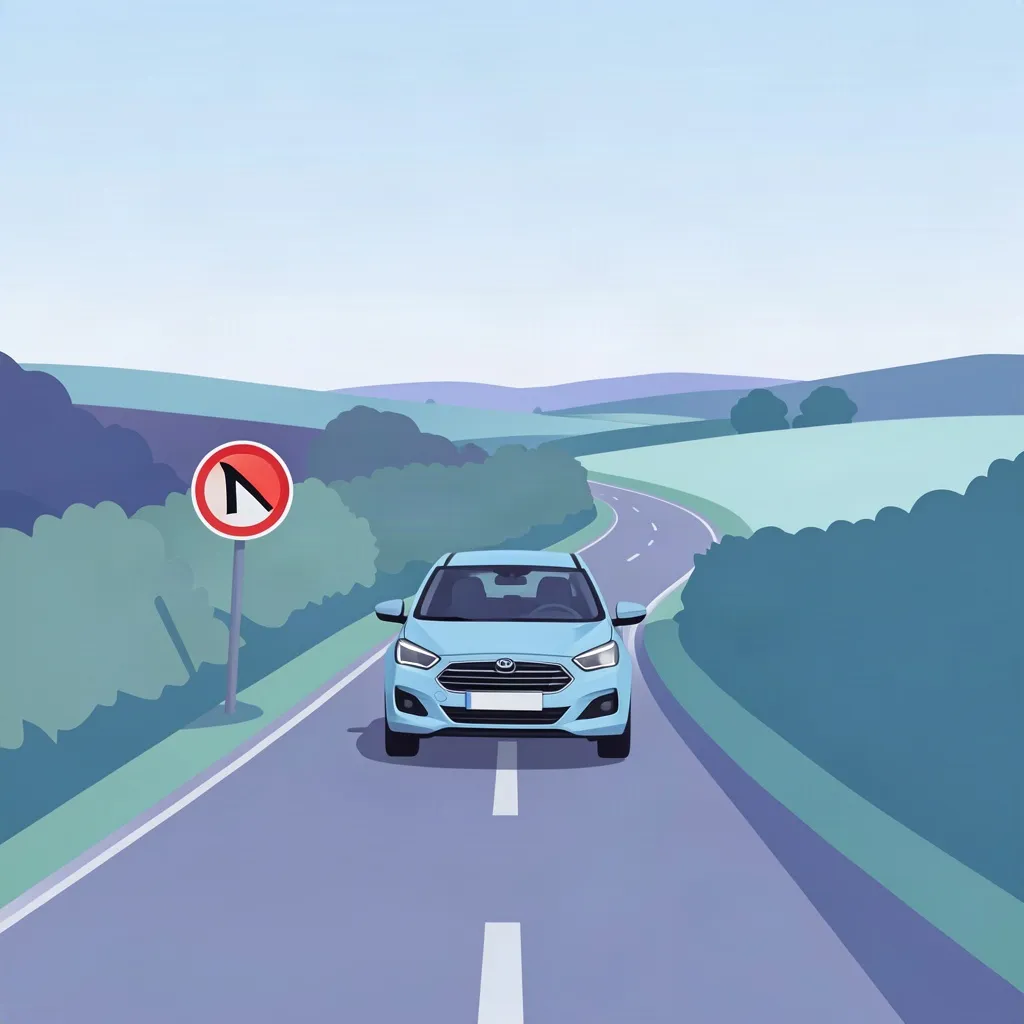
Article content overview
When preparing for the Driver Theory Test in Ireland, many learners focus heavily on memorizing the speed limits for different road classifications. It is common to believe that if a road is signed for 80 km/h, that speed is the standard to maintain regardless of the circumstances. However, the Road Safety Authority (RSA) emphasizes that the posted limit is a maximum legal threshold, not an obligation or a recommended target. On rural Irish roads, driving at the maximum limit when conditions are poor is often considered reckless and fails to account for the unique hazards prevalent in the Irish countryside.
In Ireland, default speed limits vary based on the road type, but they are set with "ideal" conditions in mind. A dry, clear day on a straight stretch of road is vastly different from a rainy, dark evening on a winding country lane. Hazard awareness, a core component of the Driver Theory Test, requires you to actively assess your surroundings and adjust your speed downward whenever necessary. You are legally required to be able to stop your vehicle safely within the distance you can see to be clear.
Irish rural roads present specific challenges that you must learn to identify early. Unlike motorways or major national roads, secondary roads are frequently narrow and lack proper lane markings. You must remain vigilant for soft verges that can become unstable under the weight of a vehicle, as well as blind corners that hide oncoming tractors, cyclists, or livestock.
When you encounter these obstacles, the legal speed limit becomes irrelevant; the priority shifts to your ability to react to sudden changes. If the road is too narrow to safely pass another vehicle, you must be prepared to slow down or pull into a passing place if one is available. Never force a path through a narrow gap at speed, as this significantly increases the risk of a collision.
In areas where accident risk is high—such as near schools, housing estates, or tight village centres—the RSA may implement "Slow Zones." These are designated areas with special lower speed limits designed to manage traffic flow and protect vulnerable road users. When you see signage indicating you are entering such a zone, you must reduce your speed immediately, as the environment is specifically engineered to be less conducive to high-speed driving.
Before setting off on a journey through the Irish countryside, you should ensure that you are prepared for the specific requirements of rural road networks. Familiarity with your vehicle and the road ahead is critical.
| Road Type | Typical Condition | Driver Strategy |
|---|---|---|
| Rural Secondary | Narrow, winding | Speed below limit; focus on visibility |
| Regional Road | Moderate width | Maintain safe distance; expect variations |
| Motorway | Wide, segregated | Adhere to 120 km/h max; scan for long-distance hazards |
This article clarifies the essential distinction that speed limits on Irish roads are legal maximums, not recommended speeds. On rural secondary roads, learners must identify specific hazards such as blind corners, soft verges, and narrow lanes, then adjust their speed below the limit accordingly. The RSA requires drivers to always be able to stop within their visible clear distance, meaning weather, visibility, and road conditions directly impact what speed is actually safe. Slow Zones near schools and residential areas demand immediate speed reduction, and pre-drive preparation—including checking vehicle documents and safety equipment—supports safer rural journeys. Mastering this concept is vital for both hazard awareness in the Driver Theory Test and practical safety on Irish roads.
A short set of high-value points that capture the most important ideas from this article.
The posted speed limit is a legal maximum, not a target speed to maintain at all times.
You must always be able to stop your vehicle safely within the distance you can see to be clear.
Rural Irish roads present unique hazards including blind corners, soft verges, and narrow lanes that require speed adjustments below the limit.
Entering a Slow Zone near schools, housing estates, or village centres requires immediate speed reduction.
Hazard awareness means actively identifying and responding to potential dangers before they become emergencies.
Speed limits are set for ideal conditions; rain, fog, darkness, or poor visibility require slower speeds.
Soft verges on rural roads can collapse under the weight of a vehicle if you drive too close to the edge.
When a road is too narrow to pass another vehicle safely, slow down or use a passing place rather than forcing through.
Slow Zones are specially designed areas where high speed is unsafe; reduce speed immediately when you see the signage.
Before driving rural roads, ensure your vehicle documents (tax, insurance, NCT) are current and you have safety equipment on board.
Treating the speed limit as a target speed that must be maintained regardless of conditions.
Assuming it is safe to drive at the posted limit in poor weather or reduced visibility.
Failing to slow down appropriately for blind corners where hidden hazards may exist.
Not adjusting speed when approaching narrow sections or passing places on single-lane roads.
Overlooking Slow Zone signage and failing to reduce speed in high-risk areas near schools or villages.
Article content overview
A short set of high-value points that capture the most important ideas from this article.
The posted speed limit is a legal maximum, not a target speed to maintain at all times.
You must always be able to stop your vehicle safely within the distance you can see to be clear.
Rural Irish roads present unique hazards including blind corners, soft verges, and narrow lanes that require speed adjustments below the limit.
Entering a Slow Zone near schools, housing estates, or village centres requires immediate speed reduction.
Hazard awareness means actively identifying and responding to potential dangers before they become emergencies.
Speed limits are set for ideal conditions; rain, fog, darkness, or poor visibility require slower speeds.
Soft verges on rural roads can collapse under the weight of a vehicle if you drive too close to the edge.
When a road is too narrow to pass another vehicle safely, slow down or use a passing place rather than forcing through.
Slow Zones are specially designed areas where high speed is unsafe; reduce speed immediately when you see the signage.
Before driving rural roads, ensure your vehicle documents (tax, insurance, NCT) are current and you have safety equipment on board.
Treating the speed limit as a target speed that must be maintained regardless of conditions.
Assuming it is safe to drive at the posted limit in poor weather or reduced visibility.
Failing to slow down appropriately for blind corners where hidden hazards may exist.
Not adjusting speed when approaching narrow sections or passing places on single-lane roads.
Overlooking Slow Zone signage and failing to reduce speed in high-risk areas near schools or villages.
Explore related topics, search based questions, and concepts that learners often look up when studying Safe Rural Driving Speeds. These themes reflect real search intent and help you understand how this topic connects to wider driving theory knowledge in Ireland.
Find clear and practical answers to common questions learners often have about Safe Rural Driving Speeds. This section helps explain difficult points, remove confusion, and reinforce the key driving theory concepts that matter for learners in Ireland.
No. The speed limit is the absolute maximum legal speed under ideal conditions. You must always drive at a speed that allows you to stop within the distance you can see to be clear.
You should consider road width, the presence of soft verges, blind corners, potential farm traffic, hidden junctions, and weather conditions that may affect road surface grip.
The theory test emphasizes hazard awareness. Understanding that you must adapt your speed to current hazards is a fundamental principle of the RSA's Rules of the Road.
After searching, continue your DTT preparation by exploring related articles, practicing questions, or reviewing specific road sign categories. Deepen your understanding of Irish road rules and ensure you're fully prepared for your Driver Theory Test.