
Proper tyre care is a fundamental skill for every driver, directly impacting your vehicle's handling, braking distance, and fuel consumption. By following RSA-approved maintenance practices, including regular pressure monitoring and tread depth checks, you ensure your car remains safe in diverse Irish weather conditions. Mastery of these vehicle safety concepts is vital for both practical driving and successfully answering vehicle maintenance questions in your theory test.
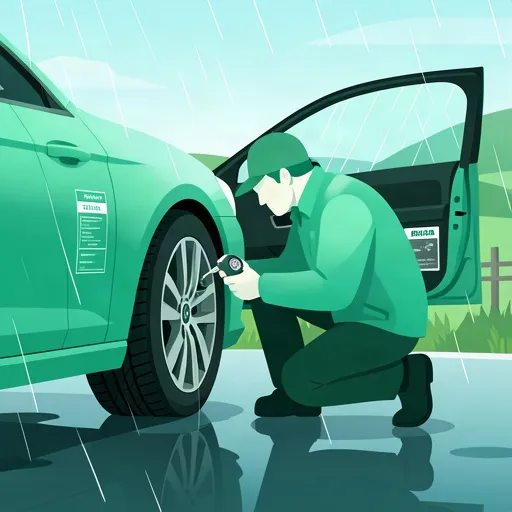
Article content overview
Proper tyre maintenance is one of the most critical aspects of vehicle safety, directly influencing your car's handling, braking distance, and overall performance on Irish roads. For any learner permit holder preparing for the Driver Theory Test, understanding how your tyres interact with the road surface is not just about passing an exam—it is about developing the habits that will keep you safe in the diverse and often challenging weather conditions found throughout Ireland. Neglecting your tyres can lead to reduced fuel efficiency, compromised safety, and potential legal issues, making regular checks a vital part of your routine.
Many drivers underestimate how much their tyre pressure impacts their vehicle's fuel consumption. When tyres are under-inflated, the increased rolling resistance means your engine must work significantly harder to move the vehicle forward, which directly translates into higher fuel costs. Furthermore, under-inflated tyres flex more during rotation, leading to excessive heat build-up. This not only causes premature wear on the tyre structure but can also lead to sudden tyre failure or a dangerous "blow-out" while driving at higher speeds.
Maintaining the correct pressure is an essential "Rules of the Road" practice. Consistent monitoring ensures your vehicle remains stable, particularly when cornering or performing emergency braking. Remember to check your pressure when the tyres are cold, as heat generated from driving can give you a false, higher-than-actual reading.
In Ireland, the Road Safety Authority (RSA) and the "Rules of the Road" mandate that your tyres must be in a roadworthy condition at all times. While the legal minimum tread depth for passenger cars is 1.6 mm across the central three-quarters of the breadth of the tyre, the RSA strongly recommends replacing your tyres once they reach a tread depth of 3 mm.
Driving with worn tyres is dangerous because they cannot effectively clear water from beneath the contact patch, significantly increasing the risk of aquaplaning. During your theory test, you may encounter questions regarding the indicators of a tyre's condition, including how to spot cracks, bulges, or uneven wear patterns that suggest alignment issues or structural damage.
Developing a systematic approach to vehicle maintenance is key to long-term safety. Beyond checking pressure and tread, you should visually inspect your tyres for any signs of damage such as cuts, cracks, or embedded objects like stones or glass. If you discover such damage, it is essential to have the tyre inspected by a professional.
If you have a temporary "space saver" spare wheel, remember that these are designed only to get you to the nearest tyre dealer. Never exceed the speed limit stamped on the spare tyre, and avoid long-distance travel while using it.
The Driver Theory Test often features questions related to vehicle maintenance to ensure that future drivers understand the risks of driving with poorly maintained equipment. You might be asked about the consequences of under-inflation, the legal minimum tread depths, or the hazards of using second-hand tyres. Always remember that second-hand tyres can be high-risk, as their history of use—or abuse—is often unknown. For your safety and the safety of other road users, it is always best to purchase new, reputable, and properly marked tyres.
Proper tyre maintenance is essential for safety, fuel efficiency, and RSA compliance on Irish roads. Tyre pressure directly affects fuel consumption and tyre longevity—always verify pressure against manufacturer specifications when tyres are cold and check valve caps are secure. Irish law requires a minimum tread depth of 1.6mm, though the RSA recommends replacing tyres at 3mm to maintain adequate wet-weather grip and prevent aquaplaning. Regular visual inspections should check for sidewall bulges, cuts, cracks, and embedded objects that could cause sudden failures. Space saver spare tyres are temporary solutions only, and learners should never mix tyre construction types on the same axle or rely on second-hand tyres of unknown history.
A short set of high-value points that capture the most important ideas from this article.
Under-inflated tyres increase rolling resistance, causing higher fuel consumption and dangerous heat build-up that can lead to blow-outs
The legal minimum tread depth in Ireland is 1.6mm across the central three-quarters of the tyre, but the RSA recommends replacement at 3mm
Always check tyre pressure when tyres are cold to get accurate readings; heat from driving gives false high readings
Inspect tyres regularly for cuts, cracks, bulges, and embedded objects—damage can cause sudden failure
Never mix different tyre types (radial vs non-radial) on the same axle as this affects vehicle handling and safety
Manufacturer's recommended pressure is found in the owner's manual, on the driver's door pillar, or near the fuel filler cap
Aquaplaning risk increases significantly when tread depth is worn, as tyres cannot displace water effectively
Space saver spare tyres are temporary—never exceed the speed limit stamped on them and get proper tyres fitted as soon as possible
E-marked tyres meet EU safety standards; always verify this certification when purchasing new tyres
Tyre valve caps must be securely in place to prevent dirt and moisture entering the valve mechanism
Checking tyre pressure after driving instead of when cold, resulting in over-inflation based on false readings
Assuming the 1.6mm legal minimum is a safe operating tread depth rather than the absolute floor limit
Neglecting to check the spare tyre during routine inspections until it is needed in an emergency
Purchasing second-hand tyres without knowing their full history of use and potential hidden damage
Forgetting to check valve caps, which can lead to slow pressure loss and compromised tyre performance
Article content overview
A short set of high-value points that capture the most important ideas from this article.
Under-inflated tyres increase rolling resistance, causing higher fuel consumption and dangerous heat build-up that can lead to blow-outs
The legal minimum tread depth in Ireland is 1.6mm across the central three-quarters of the tyre, but the RSA recommends replacement at 3mm
Always check tyre pressure when tyres are cold to get accurate readings; heat from driving gives false high readings
Inspect tyres regularly for cuts, cracks, bulges, and embedded objects—damage can cause sudden failure
Never mix different tyre types (radial vs non-radial) on the same axle as this affects vehicle handling and safety
Manufacturer's recommended pressure is found in the owner's manual, on the driver's door pillar, or near the fuel filler cap
Aquaplaning risk increases significantly when tread depth is worn, as tyres cannot displace water effectively
Space saver spare tyres are temporary—never exceed the speed limit stamped on them and get proper tyres fitted as soon as possible
E-marked tyres meet EU safety standards; always verify this certification when purchasing new tyres
Tyre valve caps must be securely in place to prevent dirt and moisture entering the valve mechanism
Checking tyre pressure after driving instead of when cold, resulting in over-inflation based on false readings
Assuming the 1.6mm legal minimum is a safe operating tread depth rather than the absolute floor limit
Neglecting to check the spare tyre during routine inspections until it is needed in an emergency
Purchasing second-hand tyres without knowing their full history of use and potential hidden damage
Forgetting to check valve caps, which can lead to slow pressure loss and compromised tyre performance
Explore related topics, search based questions, and concepts that learners often look up when studying Tyre Safety and Maintenance. These themes reflect real search intent and help you understand how this topic connects to wider driving theory knowledge in Ireland.
Find clear and practical answers to common questions learners often have about Tyre Safety and Maintenance. This section helps explain difficult points, remove confusion, and reinforce the key driving theory concepts that matter for learners in Ireland.
The legal minimum tread depth for cars in Ireland is 1.6 mm, but the RSA strongly recommends changing your tyres when the tread reaches 3 mm for improved safety.
Under-inflated tyres increase rolling resistance, which forces your engine to work harder and consumes more fuel, ultimately leading to lower fuel efficiency and higher costs.
Under-inflated tyres have reduced contact with the road surface and poor water drainage capabilities, significantly increasing the risk of aquaplaning and reducing your braking effectiveness.
You should check the pressure of all tyres, including the spare, regularly. Refer to your vehicle manufacturer’s specifications for the correct inflation pressure.
After searching, continue your DTT preparation by exploring related articles, practicing questions, or reviewing specific road sign categories. Deepen your understanding of Irish road rules and ensure you're fully prepared for your Driver Theory Test.