
Warning signs are a critical component of the Rules of the Road in Ireland, designed to alert drivers to hazards that are not immediately obvious. This guide explains how to identify these yellow diamond-shaped signs and why adjusting your speed and driving behavior is a legal and safety requirement in the context of the Driver Theory Test.
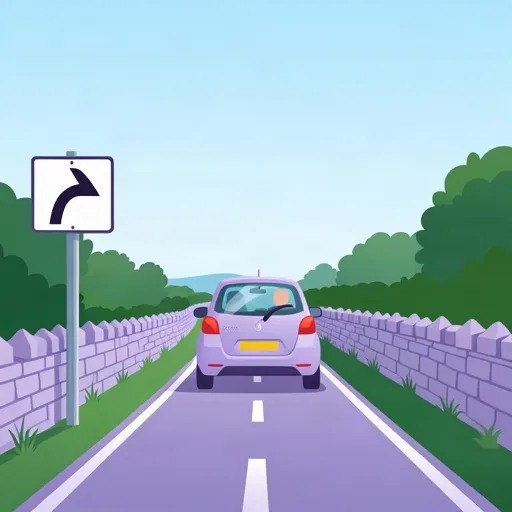
Article content overview
Navigating rural Ireland requires a high level of vigilance, especially for learner drivers who are more accustomed to the predictable patterns of urban streets. Country roads present a variety of unique challenges, from narrow lanes and sharp bends to unexpected animal crossings and hidden junctions. The Road Safety Authority (RSA) uses a specific system of warning signs to help drivers identify these hazards well in advance. Understanding these signs is not just a requirement for passing your Driver Theory Test; it is a fundamental skill for keeping yourself and other road users safe.
In Ireland, all warning signs are designed to capture your attention and prompt you to adjust your driving behavior. They serve as a vital communication tool between the road authority and the driver, signaling that the road ahead has changed in nature or presents a specific risk. According to the Rules of the Road, you should treat these signs as an instruction to slow down and prepare for potential hazards that may not be immediately visible.
Warning signs are typically diamond or rectangular in shape, featuring a distinct yellow background with a black border and a black symbol. This color scheme is intentionally bold to ensure visibility, even in poor weather or low light conditions. It is important to note that these signs are always mounted upright on posts or walls, rather than painted on the road surface, which helps them stand out against the landscape.
When you encounter a warning sign on a rural route, the legal and safety expectation is that you will proactively manage your speed. Many learners fail to realize that simply noticing the sign is not enough; you must translate that information into a physical action, such as lifting your foot off the accelerator or braking gently before entering the hazard. Excessive speed on a narrow, winding road is a leading cause of loss-of-control accidents in Ireland.
Always remember that a warning sign is a signal to drive more carefully. Failing to respond to these warnings can create a significant hazard, particularly in areas with limited visibility like blind summits or narrow bridge approaches.
Rural roads in Ireland often feature "hidden" dangers. A junction might be obscured by high hedges, or a road may narrow suddenly to cross an old stone bridge. The RSA has established a comprehensive set of signs to alert you to these specific scenarios.
| Sign Meaning | Hazard Type | Recommended Action |
|---|---|---|
| Series of Bends | Winding road | Reduce speed, maintain lane position |
| Narrow Road | Reduced width | Check for oncoming traffic, slow down |
| Cattle / Animal Crossing | Livestock | Be prepared to stop fully |
| Roadworks Ahead | Obstruction | Observe speed limits, be alert for workers |
It is worth noting that roadworks signs are an exception to the standard yellow warning format. These are designed to be even more urgent and are typically orange with black borders and symbols. Because roadworks often involve heavy machinery, temporary lane shifts, and personnel working in close proximity to traffic, the requirement for caution is exceptionally high. You should always scan for these signs when traveling on national or regional roads where maintenance is frequent.
In the context of the Driver Theory Test, you will be expected to identify these signs from a visual representation and explain the correct course of action. Exam questions often present scenarios where you must choose the safest response to a warning sign, such as "What should you do when you see a 'Dangerous Bend' sign?" The correct answer will always emphasize reducing your speed and exercising increased caution.
Warning signs on Irish rural roads are yellow diamond or rectangular indicators that alert drivers to hidden hazards such as sharp bends, crossroads, narrow passages, and animal crossings. These signs require you to proactively reduce your speed before reaching the hazard, as rural roads often have reduced visibility due to hedges, walls, and blind summits. The RSA expects drivers to treat warning signs as legal instructions to drive more carefully. For the Driver Theory Test, you must be able to identify specific signs and explain the correct response, which always involves speed reduction and increased caution. Remember that roadwork signs use orange backgrounds to distinguish them from standard yellow warning signs.
A short set of high-value points that capture the most important ideas from this article.
Irish warning signs are yellow diamond or rectangular shapes with black borders and symbols designed for high visibility
Encountering a warning sign legally requires you to reduce speed and prepare for hazards before you can see them
The Dangerous Bend sign (W 001) specifically prohibits overtaking and mandates speed reduction
Roadwork signs are orange (not yellow) to signal heightened urgency due to workers and machinery nearby
The Driver Theory Test will require you to identify signs visually and select the safest response action
Always treat warning signs as instructions to slow down, not just informational notices
Follow the four-step response: Observe the sign, Identify the hazard, Adjust your speed appropriately, Maintain focus until cleared
Rural hazards are often hidden by hedges, walls, or blind summits—signs alert you to what you cannot yet see
Different sign colors mean different urgency levels: yellow for general hazards, orange specifically for roadworks
Narrow bridges, animal crossings, and sharp bends all require full speed adjustment before reaching them
Assuming that simply seeing a warning sign is sufficient without physically reducing speed
Confusing roadwork warning signs (orange) with standard warning signs (yellow)
Only studying a few well-known signs while ignoring others that may appear on the test
Failing to anticipate that rural junctions and narrow passages may have limited visibility
Believing that rural roads require less caution than urban roads when the opposite is often true
Article content overview
A short set of high-value points that capture the most important ideas from this article.
Irish warning signs are yellow diamond or rectangular shapes with black borders and symbols designed for high visibility
Encountering a warning sign legally requires you to reduce speed and prepare for hazards before you can see them
The Dangerous Bend sign (W 001) specifically prohibits overtaking and mandates speed reduction
Roadwork signs are orange (not yellow) to signal heightened urgency due to workers and machinery nearby
The Driver Theory Test will require you to identify signs visually and select the safest response action
Always treat warning signs as instructions to slow down, not just informational notices
Follow the four-step response: Observe the sign, Identify the hazard, Adjust your speed appropriately, Maintain focus until cleared
Rural hazards are often hidden by hedges, walls, or blind summits—signs alert you to what you cannot yet see
Different sign colors mean different urgency levels: yellow for general hazards, orange specifically for roadworks
Narrow bridges, animal crossings, and sharp bends all require full speed adjustment before reaching them
Assuming that simply seeing a warning sign is sufficient without physically reducing speed
Confusing roadwork warning signs (orange) with standard warning signs (yellow)
Only studying a few well-known signs while ignoring others that may appear on the test
Failing to anticipate that rural junctions and narrow passages may have limited visibility
Believing that rural roads require less caution than urban roads when the opposite is often true
Explore related topics, search based questions, and concepts that learners often look up when studying Irish Rural Warning Signs. These themes reflect real search intent and help you understand how this topic connects to wider driving theory knowledge in Ireland.
Find clear and practical answers to common questions learners often have about Irish Rural Warning Signs. This section helps explain difficult points, remove confusion, and reinforce the key driving theory concepts that matter for learners in Ireland.
The primary function of a warning sign is to alert the driver to a hazard ahead that may not be immediately visible, requiring them to reduce speed and exercise increased caution.
Most warning signs are diamond or rectangular in shape, feature a yellow background with a black border, and display a black symbol to represent the specific hazard.
Roadwork signs are distinct because they are orange with a black border and black symbols or words, rather than the yellow background used for standard permanent warning signs.
No, warning signs are always upright, meaning they are located at the side of the road or mounted on a wall, rather than painted on the road surface.
After searching, continue your DTT preparation by exploring related articles, practicing questions, or reviewing specific road sign categories. Deepen your understanding of Irish road rules and ensure you're fully prepared for your Driver Theory Test.