
This lesson details the critical professional responsibilities and legal obligations you must uphold as a Category C commercial driver in Ireland. By understanding these mandates under the Road Traffic Act, you will ensure your compliance and prepare effectively for the official theory test.

Lesson content overview
Operating a commercial heavy goods vehicle (HGV) within Category C requires more than just technical steering proficiency. Because of the sheer mass, physical dimensions, and kinetic energy of large vehicles, the law holds professional drivers to an exceptionally high standard of safety and accountability.
This lesson details the legal frameworks, operational protocols, and ethical duties that govern commercial driving in the Republic of Ireland. Understanding these regulations is essential not only to pass the Irish Goods Vehicle Driver Theory Test but also to protect yourself from severe legal penalties, civil liability, and road traffic incidents.
The "Professional Duty of Care" is a foundational legal and ethical concept. It dictates that as an operator of a heavy commercial vehicle, you must take all active, reasonable measures to prevent harm to yourself, your cargo, and other road users. This duty is far more stringent than the standard expected of a private car driver.
The elevated legal and moral obligation imposed on commercial drivers to operate heavy vehicles with maximum vigilance, ensuring ongoing mechanical fitness, safe cargo containment, and strict compliance with traffic laws to protect public safety.
Under Section 20 of the Road Traffic Act 1994, drivers can be held criminally liable if they operate a vehicle without due care and attention, or without reasonable consideration for other persons. For HGV drivers, this responsibility extends to several distinct areas:
The consequences of neglecting this duty are severe. Should an unsecured load or a mechanical failure lead to a serious crash, the driver may face charges of dangerous driving, heavy financial penalties, or custodial sentences under Irish criminal law.
Overloading a commercial vehicle is one of the most common and dangerous legal infractions in the haulage industry. Irish legislation, specifically the Road Traffic (Construction, Equipment and Use of Vehicles) Regulations, defines absolute maximum weight thresholds for vehicles, axle configurations, and combined units.
Overloading seriously degrades a vehicle's braking capability, alters its steering geometry, accelerates tyre wear, and causes catastrophic damage to Irish road infrastructure (bridges, pavements, and regional roads).
To comply with statutory load limits, you must understand the distinction between different weight ratings:
Even if a vehicle's total weight is below its maximum Gross Vehicle Weight, the vehicle can still be illegal if a single axle is overloaded due to poor cargo distribution.
When a vehicle is loaded beyond its legal capacity, the physics of its handling change dramatically:
Achieving a Certificate of Roadworthiness (CRW) during an annual vehicle test does not absolve the driver of their daily responsibilities. Under Irish law, the driver has a continuous, non-delegable duty to ensure the vehicle remains in a roadworthy state every single time it is driven on a public road.
Before commencing any journey, the driver must conduct a comprehensive, systematic walk-around check of the vehicle and any attached trailer. This is a mandatory requirement enforced by the Road Safety Authority (RSA) and An Garda Síochána.
External Structure and Mirrors: Check the cab, bodywork, windscreen, and mirrors for cracks, obstructions, or structural damage. Ensure all mirrors are clean and adjusted correctly to minimize blind spots.
Lights, Reflectors, and Indicators: Confirm that all headlights, brake lights, indicators, hazard lights, and retro-reflective markings are fully functional and free of dirt.
Tyres and Wheels: Inspect tyres for adequate tread depth (minimum legal limit of 1.6 mm, though higher is recommended for HGVs), proper inflation, and visible cuts or bulges. Ensure all wheel nuts are secure and wheel-nut indicators (if fitted) are aligned.
Braking Systems and Air Pressure: Listen closely for any air leaks. Ensure the air pressure gauges charge correctly and that the low-pressure warning devices (buzzers or dashboard lights) deactivate as pressure builds.
Coupling and Load Security: For combinations, verify the physical security of the kingpin/fifth wheel coupling. Confirm that all cargo straps, chains, or sideboards are tight, undamaged, and structurally sound.
Fluids and Under-Vehicle Leaks: Look beneath the engine bay and chassis for active leaks of oil, coolant, fuel, or hydraulic fluid.
If any safety-critical defect is discovered during the daily inspection, the driver must record it in the vehicle defect book and report it to management. The vehicle must not be driven on public roads until the defect has been professionally repaired.
A shifting load is one of the most hazardous scenarios an HGV driver can encounter. Under EU Directive 96/53/EC and corresponding Irish regulations, all cargo carried by a commercial vehicle must be secured so that it cannot shift, slide, fall, or cause the vehicle to become unstable during transit.
When an HGV turns, accelerates, or brakes, forces of inertia act upon the cargo. If the cargo is not fully secured:
Drivers must employ professional-grade securement equipment and techniques tailored to the specific type of load:
Always inspect your securement equipment (straps, ratchets, and chains) for wear, fraying, or structural rust before use. Worn straps must be discarded immediately.
Non-compliance with your professional obligations carries severe legal penalties. The Irish road traffic enforcement framework, coordinated by An Garda Síochána and the RSA, targets both the driver and the operator to ensure systemic compliance.
Under Section 229 of the Road Traffic Act 1994 (as amended), HGV drivers can accumulate penalty points on their driving licence for specific vehicle and conduct offences:
For professional drivers, the accumulation of 12 penalty points within a rolling three-year period results in an automatic disqualification from driving for six months. Because driving is your livelihood, maintaining a clean licence is a core professional requirement.
RSA transport officers and Gardaí have the legal authority to stop any commercial vehicle for a roadside inspection. During these inspections, they may check:
Professional duties require adjusting your driving behavior to suit prevailing environmental conditions and specific road layouts. The physical dynamics of an HGV change significantly under different external influences.
Rain, high winds, ice, and fog pose a severe risk to heavy vehicles:
Professional drivers must actively plan their routes to avoid physical hazards:
To contextualize these legal duties, let us analyze two common real-world scenarios.
A driver is tasked with transporting a pallet of loose building bricks on a flatbed trailer. Pressed for time, the driver places the pallet on the bed but fails to use securing straps, assuming the heavy weight of the bricks will hold them in place.
During a morning walk-around, a driver notices a faint hissing sound near the rear axle, indicating a minor air leak in the brake line. Eager to meet a strict delivery deadline, the driver ignores the leak and starts the journey.
To operate successfully and legally as a Category C driver in Ireland, you must commit to three core pillars of professional conduct:
By adhering to these rules, you protect other road users, preserve your professional driving licence, and uphold the high standards of the Irish transport industry.
This lesson covers the elevated legal and ethical obligations of Category C professional drivers in Ireland under the Road Traffic Act 1994, emphasising that HGV drivers face stricter criminal liability than private car drivers. Key areas include mandatory daily walk-around inspections covering tyres, brakes, lights, couplings, and fluid leaks, plus strict compliance with statutory load limits where GVW, MAM, and individual axle weight limits must all be respected. The lesson details approved cargo securing methods—frictional lashing, direct lashing, and blocking—to prevent dangerous load shifting during braking, cornering, and acceleration. Enforcement is rigorous, with roadside inspections by An Garda Síochána and RSA officers, and professional drivers face automatic six-month disqualification at 12 penalty points within three years.
A short set of high-value points that capture the most important learning from this lesson.
As a Category C driver, your Professional Duty of Care under Section 20 of the Road Traffic Act 1994 is significantly more stringent than for private car drivers, holding you criminally liable for negligence
Gross Vehicle Weight (GVW) and Maximum Authorised Mass (MAM) are distinct limits; a vehicle can be illegal even if total weight is compliant if axle weight limits are exceeded due to poor cargo distribution
The daily walk-around inspection is a mandatory, non-delegable legal requirement enforced by the RSA and An Garda Síochána before every journey
All cargo must be secured against forward, sideways, and rearward shifting using approved methods such as frictional lashing, direct lashing, or blocking and bracing
Accumulating 12 penalty points within three years triggers automatic six-month disqualification, making licence protection a core professional priority
Explore all units and lessons included in this driving theory course.
Section 20 of the Road Traffic Act 1994 imposes criminal liability for operating without due care; Section 229 governs the penalty point system for professional drivers
Overloading exponentially increases braking distance, causes tyre heat buildup leading to blowouts, and raises rollover risk on corners due to altered centre of gravity
A faint air leak during the walk-around can escalate to complete brake failure on long downhills as the air reservoir depletes faster than the compressor can replenish
High-sided vehicles act like sails in crosswinds; reduce speed and hold the steering firmly when crossing exposed bridges or motorways
Any discovered safety defect must be recorded in the vehicle defect book and reported to management before the vehicle can be driven on public roads
Assuming heavy cargo does not need securing because of its weight,忽视了惯性力在制动和转弯时可以使货物滑动甚至导致翻车
Believing that passing the annual Certificate of Roadworthiness absolves daily responsibility; roadworthiness is a continuous duty for every journey
Ignoring minor defects such as a small air leak or slight hissing sound when under delivery pressure, leading to serious safety failures
Failing to check individual axle weights when loading, which can result in illegal operation even if total GVW is within limits
Using worn, frayed, or rusted straps and chains for cargo securement instead of inspecting and replacing damaged equipment before each trip
Lesson content overview
A short set of high-value points that capture the most important learning from this lesson.
As a Category C driver, your Professional Duty of Care under Section 20 of the Road Traffic Act 1994 is significantly more stringent than for private car drivers, holding you criminally liable for negligence
Gross Vehicle Weight (GVW) and Maximum Authorised Mass (MAM) are distinct limits; a vehicle can be illegal even if total weight is compliant if axle weight limits are exceeded due to poor cargo distribution
The daily walk-around inspection is a mandatory, non-delegable legal requirement enforced by the RSA and An Garda Síochána before every journey
All cargo must be secured against forward, sideways, and rearward shifting using approved methods such as frictional lashing, direct lashing, or blocking and bracing
Accumulating 12 penalty points within three years triggers automatic six-month disqualification, making licence protection a core professional priority
Explore all units and lessons included in this driving theory course.
Section 20 of the Road Traffic Act 1994 imposes criminal liability for operating without due care; Section 229 governs the penalty point system for professional drivers
Overloading exponentially increases braking distance, causes tyre heat buildup leading to blowouts, and raises rollover risk on corners due to altered centre of gravity
A faint air leak during the walk-around can escalate to complete brake failure on long downhills as the air reservoir depletes faster than the compressor can replenish
High-sided vehicles act like sails in crosswinds; reduce speed and hold the steering firmly when crossing exposed bridges or motorways
Any discovered safety defect must be recorded in the vehicle defect book and reported to management before the vehicle can be driven on public roads
Assuming heavy cargo does not need securing because of its weight,忽视了惯性力在制动和转弯时可以使货物滑动甚至导致翻车
Believing that passing the annual Certificate of Roadworthiness absolves daily responsibility; roadworthiness is a continuous duty for every journey
Ignoring minor defects such as a small air leak or slight hissing sound when under delivery pressure, leading to serious safety failures
Failing to check individual axle weights when loading, which can result in illegal operation even if total GVW is within limits
Using worn, frayed, or rusted straps and chains for cargo securement instead of inspecting and replacing damaged equipment before each trip
Explore search topics learners often look for when studying Professional Duties and Legal Obligations. These topics reflect common questions about road rules, driving situations, safety guidance, and lesson level theory preparation for learners in Ireland.
Browse additional driving theory lessons that cover connected traffic rules, road signs, and common driving situations related to this topic. Improve your understanding of how different rules interact across everyday traffic scenarios.
Learn the statutory regulations for safely securing loads on commercial vehicles. This guide explains the physics of load distribution, the importance of correct lashing methods, and how to prevent dangerous shifts that affect vehicle stability and steering control on Irish roads.

This lesson reviews the legal definitions and safety guidelines for various categories of cargo, ranging from standard palletized goods to hazardous materials. It highlights the specific documentation, labelling, and safety equipment required by Irish and European laws for specialized transport. Drivers will learn their legal liabilities and the mandatory safety protocols corresponding to each load type.

This lesson focuses on the practical mechanics of securing goods to prevent kinetic shift during sudden braking or evasive steering manoeuvres. It teaches the correct use of tensioning straps, chains, blocking bars, and friction-increasing mats according to Irish safety guidelines. Drivers will learn to perform rigorous pre-trip and en-route checks to guarantee that cargo remain secure throughout the transit.
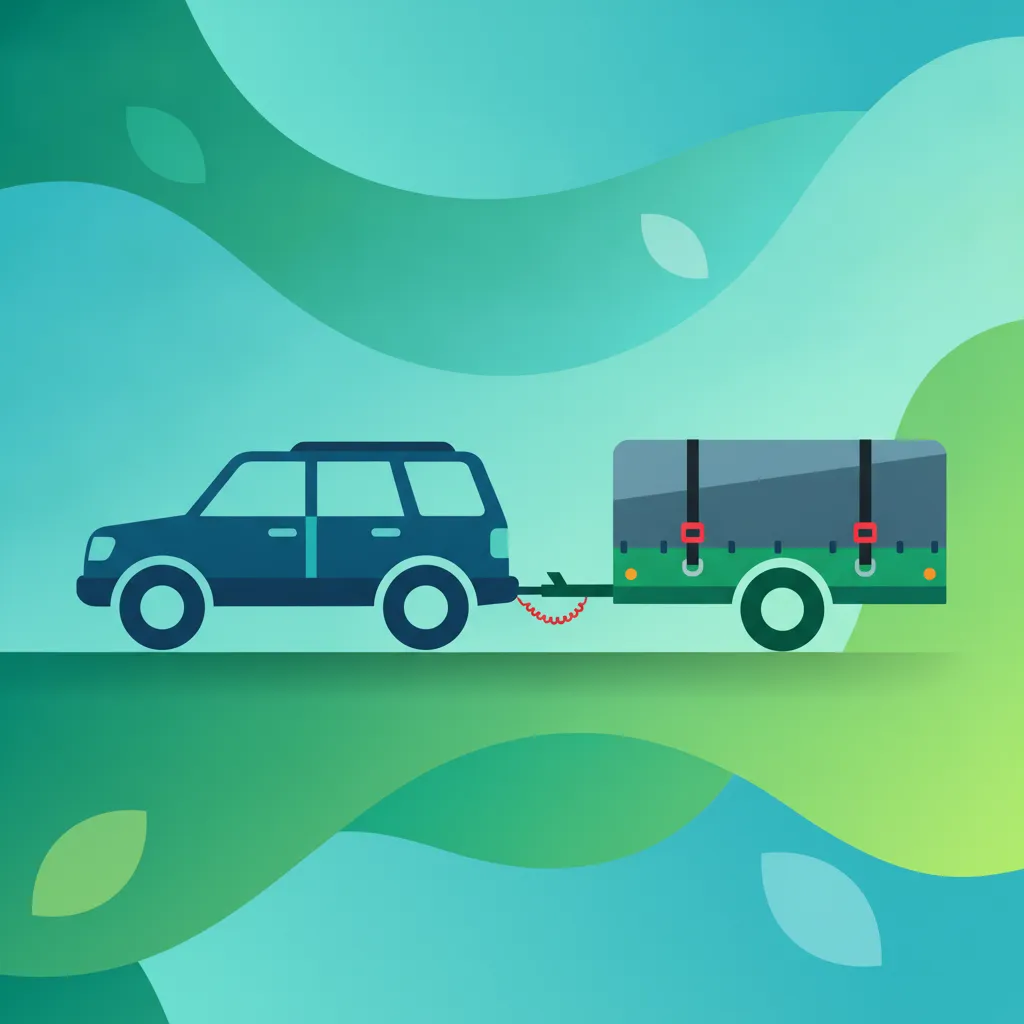
Carrying heavy loads or towing trailers significantly alters a car's handling, acceleration, and braking characteristics. This lesson outlines the physics of load distribution, explaining why you must secure cargo to prevent shifting and keep the vehicle's centre of gravity low. You will learn about legal roof rack weight limits, safe trailer coupling practices, and how to adjust your driving style when towing.

This lesson covers the absolute legal requirement for professional drivers to keep, update, and display essential transit and driver paperwork. It details the role of the Driver Certificate of Professional Competence, vehicle registration documents, transport logs, and insurance certs. Drivers will learn how to present clear records to Irish Road Safety Authority officers and Gardai during compliance inspections.

Drivers bear the legal responsibility of ensuring that all passengers under seventeen years of age are properly secured in the vehicle. This lesson covers Ireland's strict seatbelt laws and the requirement to use an EU-approved child restraint system appropriate for the child's height and weight. You will learn how to locate ISOFIX anchorage points, fit child seats correctly, and deactivate passenger airbags when using rear-facing seats.
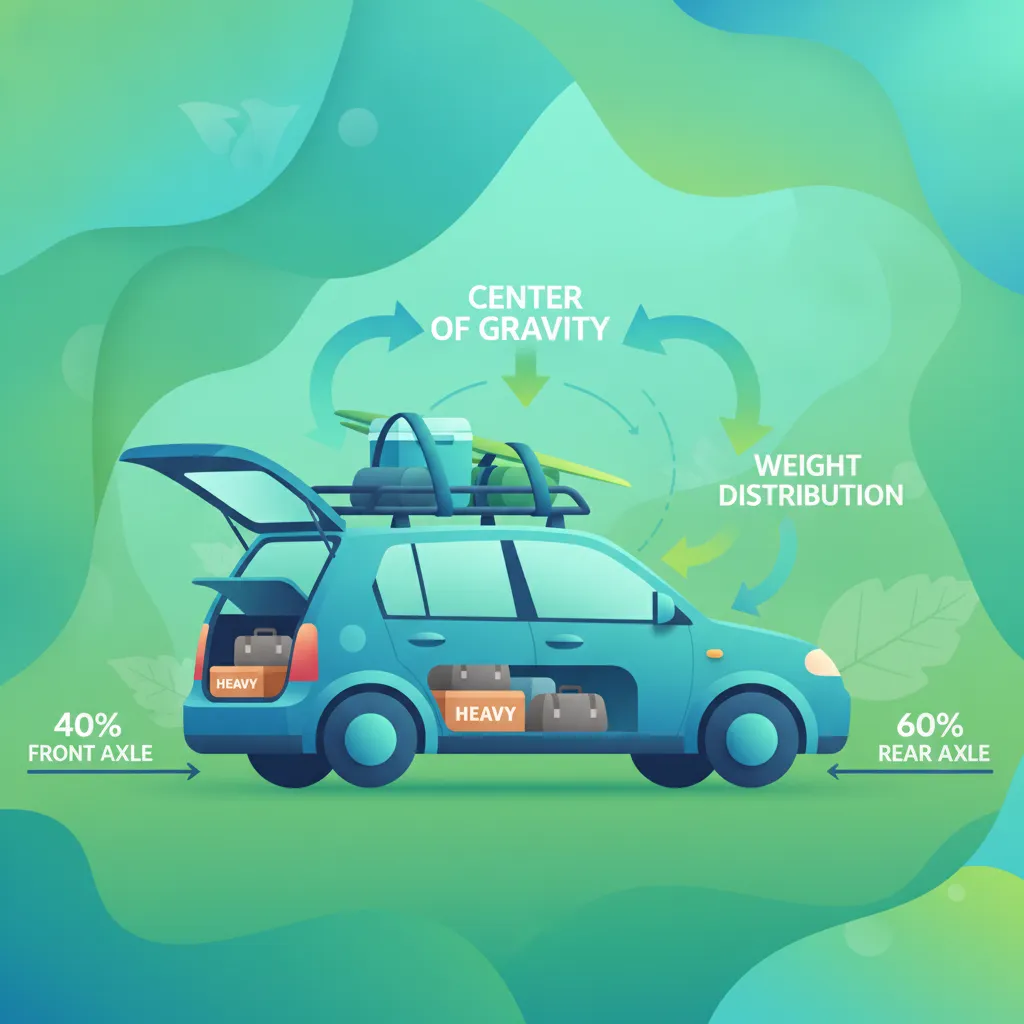
This lesson explains the physical principles of weight distribution and axle overloading on heavy commercial vehicles. It examines how a high centre of gravity increases tipping risks during cornering and alters overall braking effectiveness. Drivers will discover methods for positioning cargo to distribute weight evenly, ensuring optimal steering control and stable vehicle dynamics.

This lesson details the statutory limits on width, height, and length that apply to heavy goods vehicles under Irish transport laws. It explains the mathematical calculation of gross vehicle weight and maximum permissible axle loads to prevent infrastructure damage. Drivers will learn the practical significance of these numbers when passing low bridges or entering height-restricted tunnels.

Securing passengers and luggage properly is essential to prevent injury during emergency braking, sudden steering inputs, or traffic collisions. This lesson provides instructions on passenger restraint systems, seatbelt laws in Ireland, and wheelchair ramp deployment processes. Drivers will study weight distribution guidelines for luggage compartments to protect the physical stability of the passenger vehicle.

This lesson details the specific classifications for goods vehicles including Category C, C1, CE, and C1E in Ireland. It explains the core eligibility requirements, necessary medical fitness evaluations, and the sequential steps for theory and practical testing. Professional drivers will also understand when the Driver Certificate of Professional Competence is legally mandatory.
Understand the legal duty of HGV drivers to conduct systematic daily walk-around checks. This lesson details how to inspect critical components like braking systems, tyre condition, and lighting to ensure continuous compliance with Irish road safety standards and avoid common mechanical failure penalties.

This lesson explains the location, depth, and angle of the severe blind spots surrounding a standard heavy goods vehicle. It provides step-by-step guidance on setting up primary side mirrors, wide-angle lenses, and close-proximity front-view mirrors to eliminate blind areas. Drivers will learn systematic visual checking routines to ensure complete situational awareness before initiating any maneuver, lane shift, or turn.

This lesson teaches professional drivers how to systematically map out travel routes that are compatible with heavy vehicle dimensions. It covers the limitations of consumer-grade GPS systems and emphasizes the use of specialized truck navigation systems that account for low bridges and load restrictions. Drivers will also learn to plan for congestion, access timing regulations, and proper entrance paths into commercial zones.
This lesson covers the absolute legal requirement for professional drivers to keep, update, and display essential transit and driver paperwork. It details the role of the Driver Certificate of Professional Competence, vehicle registration documents, transport logs, and insurance certs. Drivers will learn how to present clear records to Irish Road Safety Authority officers and Gardai during compliance inspections.
Find clear answers to common questions learners have about Professional Duties and Legal Obligations. Learn how the lesson is structured, which driving theory objectives it supports, and how it fits into the overall learning path of units and curriculum progression in Ireland. These explanations help you understand key concepts, lesson flow, and exam focused study goals.
The theory test includes questions on legal compliance to ensure you understand that driving a commercial vehicle carries a higher duty of care than a standard car. Failing to understand these obligations can lead to significant penalties, including points on your licence or loss of your professional standing.
Yes. You will be tested on the principles of load distribution and securing cargo to prevent shifting. In the eyes of the law, the driver is responsible for ensuring the load does not endanger other road users or compromise vehicle stability.
Professional drivers are legally required to ensure their vehicle is in a safe condition before every journey. This includes conducting pre-trip checks for defects; ignoring these requirements is a breach of your duty of care under the Road Traffic Act.
Negligence can result in heavy fines, penalty points, vehicle impoundment, or even prosecution in the event of an incident. Understanding these consequences is a key component of the professional conduct section of the theory test.
Use the practice question search tool to pinpoint specific topics, road signs, or rules you need to master for your official Driver Theory Test. Refine your study strategy and ensure comprehensive preparation for all aspects of the Irish driving exam. Start your focused revision now and build confidence for your learner permit test.