
This lesson details the penalty points system and enforcement protocols specifically for heavy goods vehicle drivers in Ireland. You will learn how the Road Safety Authority and Garda Síochána monitor compliance and the legal consequences of common commercial driving offences.

Lesson content overview
Operating a heavy commercial vehicle comes with a heightened level of legal and social responsibility. Because of the sheer mass, volume, and complex handling characteristics of vehicles in Category C (rigid goods vehicles exceeding 3,500 kg), any traffic violation or safety oversight carries significantly higher risks than those associated with standard passenger cars.
To maintain safety standards across the national road network, Ireland relies on a comprehensive, dual-agency enforcement framework. This system utilizes a structured penalty points regime, on-the-spot financial penalties, and mandatory roadside inspections.
As a professional driver preparing for the official examination, understanding the mechanics of this system is not just a requirement for passing your theory test—it is essential for preserving your driving licence, protecting your career, and ensuring public safety.
The Irish penalty points system is a legal mechanism designed to deter hazardous driving behaviors by systematically penalizing traffic offences. When a driver commits a specified road traffic violation, a predetermined number of penalty points is recorded against their driving licence record.
If you commit a driving offence that incurs penalty points, you will receive an official notification detailing the infraction. These points do not simply disappear at the end of the calendar year. Under the Road Traffic Acts, penalty points remain active on your driving licence for a continuous period of three years. This three-year clock begins on the date of the offence or, if you pay a Fixed Penalty Notice, from the date the points are formally recorded on your record.
If you accumulate points from multiple independent offences, they are added together. Professional drivers must manage their driving records with extreme care, as point accumulation directly threatens their professional status and employability.
If you are driving on a foreign licence in Ireland, the authorities maintain a shadow record in the National Driver File. If you accumulate the threshold of penalty points on this record, you will be disqualified from driving in Ireland just like any Irish licence holder.
For full Category C driving licence holders, the mandatory threshold for automatic licence suspension is 12 penalty points accumulated within any rolling three-year window.
The temporary withdrawal of a driver's legal entitlement to operate motor vehicles on public roads for a specified duration (typically a minimum of six months) after reaching the statutory limit of 12 accumulated penalty points.
If you reach or exceed this 12-point limit:
For professional goods vehicle drivers, this suspension results in an immediate loss of livelihood. Operating a commercial vehicle while under disqualification is a severe criminal offense that can result in immediate arrest, vehicle impoundment, substantial court fines, and potential imprisonment.
Road traffic and commercial transport laws are enforced by two main bodies in Ireland: An Garda Síochána (the national police force) and the Road Safety Authority (RSA). While they frequently collaborate at joint roadside checkpoints, they hold distinct operational mandates and powers.
An Garda Síochána is responsible for general road traffic law enforcement, public safety, and detecting criminal activity on the road network. Garda officers possess broad powers of detaining, arresting, and prosecuting drivers who violate the Road Traffic Acts.
Key enforcement areas for Gardai include:
Gardaí have the legal authority to stop any vehicle at any time. Under Section 41 of the Road Traffic Act, they also possess the power to seize and impound vehicles that are uninsured, untaxed, or driven by an unlicensed driver.
The RSA focus is on transport regulations, vehicle safety standards, and operational compliance. RSA Transport Officers do not have powers of arrest, but they possess specialized authority to inspect commercial goods vehicles, evaluate operator records, and enforce EU and national road transport rules.
Key enforcement areas for RSA Officers include:
When a minor or moderate road traffic offence is detected, the driver is typically issued a Fixed Penalty Notice (FPN). This system serves as an administrative alternative to direct prosecution in the District Court, designed to settle minor violations efficiently.
When an FPN is issued, the driver has a set period to pay the fine and accept the associated penalty points. If the driver pays the fine promptly, they avoid a court appearance and receive a lower number of penalty points.
The First 28-Day Window: The driver must pay the base fine amount (for example, €120 for a speeding offence) within 28 days of the date on the notice. Paying during this period applies the standard lower penalty point value (e.g., 2 points for speeding) to the driver’s record.
The Second 28-Day Window (Days 29 to 56): If the fine is not paid within the first 28 days, the driver has an additional 28 days to pay. However, the fine increases by 50% (e.g., from €120 to €180). The penalty points accrued remain the same.
Court Summons: If the fine remains unpaid after day 56, the system automatically triggers a court summons. The driver must appear in the District Court to face prosecution.
If your case proceeds to the District Court, the consequences of a conviction are significantly more severe than paying the initial FPN:
To successfully pass the Irish Goods Vehicle Driver Theory Test (Category C), you must memorize the specific penalties, fines, and points associated with common HGV offences. Heavy vehicles are held to stricter operational standards, and violations carry immediate legal consequences.
| Offence Category | Detection Method | Standard FPN Fine | Points (FPN / Court) | Professional Implications |
|---|---|---|---|---|
| Speeding (Exceeding limit in HGV) | Garda laser, GoSafe vans | €120 | 2 / 4 | HGVs over 3.5 tonnes are subject to strict speed limiters (90 km/h on motorways). |
| Using a Mobile Phone while driving | Garda visual observation | €120 | 3 / 5 | Substantially increases reaction times; dangerous for heavy loads. |
| Unsecured Cargo / Load securement failure | RSA roadside check, Garda stop | Variable/Court Summons | 3 / 6 | Immediate prohibition of vehicle movement until the load is secured. |
| Tachograph / Drivers' Hours violations | Tachograph download, RSA check | Variable up to €250+ | Points vary / Court | Manipulation of tachograph records can result in criminal prosecution and heavy fines. |
| Overloaded Vehicle (Axle or Gross weight) | Weighbridge, portable pads | Variable based on excess | Court Summons | Excessive weight damages infrastructure, extends stopping distances, and reduces steering control. |
Under Irish law, the Road Safety Authority has the power to establish mobile and static checkpoints specifically targeting commercial vehicles. As a professional driver, you must cooperate fully with RSA officers and Gardaí during these inspections.
Understanding the steps of an RSA inspection will help you remain calm, organized, and compliant.
The Stop Signal: An RSA officer or Garda will signal you to pull over into a designated safe inspection area. You must safely bring your vehicle to a halt, apply the parking brake, and switch off the engine.
Credential Verification: The officer will request your physical driving licence (confirming your Category C entitlement), your Driver CPC (Certificate of Professional Competence) card, and any relevant transport documentation (such as a tachograph card or delivery manifests).
Tachograph Download: The officer will insert an enforcement card into your digital tachograph unit to download and analyze your recent driving history. They will check for mandatory rest period violations, driving-time limits, and any speed-limiter tampering.
Physical Vehicle Inspection: The inspector will conduct a visual check of your vehicle's mechanical components. This includes measuring tyre tread depths (the minimum legal limit is 1.6 mm, though higher is recommended for safety), checking brake components, looking for suspension damage, and testing your lights.
Load Securement Evaluation: The officer will inspect your cargo. They will check that the tension of your ratchet straps is sufficient, that your headboards are intact, and that there is no risk of the load shifting during transit.
Outcome and Documentation: If your vehicle passes, you are permitted to proceed. If minor defects are found, you may receive a "Defect Notification" requiring repair within a specified timeframe. For serious safety violations, the inspector may issue an immediate prohibition notice, stopping your journey until the issue is resolved on-site.
Attempting to bypass, ignore, or flee an RSA or Garda checkpoint is a serious criminal offence. It results in immediate prosecution, heavy court fines, and a direct referral to the transport commissioner, which can put your operator's haulage licence at risk.
There are several persistent myths regarding penalty points and enforcement that often lead professional HGV drivers into legal trouble.
This is a dangerous misconception. Paying the fine simply prevents you from having to appear in court. The penalty points associated with the offence are still fully recorded against your driving licence. The only way to avoid the points is to successfully contest the ticket in court, which is only advisable if you have proof of your innocence.
Points do not reset annually. Each individual point allocation has a lifespan of exactly three years from the date of payment or conviction. For example, if you receive 3 points in June 2024 and another 3 points in December 2025, you will hold a total of 6 active points until June 2027, at which point the first 3 points will expire.
All penalty points are recorded against your single, master driver record. There is no separation between your private passenger car driving record and your professional Category C HGV driving record. If you accumulate 12 points while driving your personal vehicle on weekends, your entire driving licence—including your professional Category C entitlement—is suspended.
The strict enforcement of road transport law in Ireland is designed to protect all road users. Understanding the physics and dynamics of heavy vehicles highlights why these rigorous rules are necessary.
A fully loaded Category C vehicle has immense kinetic energy.
Because kinetic energy increases with the square of your speed, a small increase in speed results in a dramatic increase in your stopping distance. If an HGV exceeds its speed limit, its braking systems can quickly overheat, leading to brake fade and a catastrophic loss of stopping power.
An unsecured load can shift rapidly during sudden braking or evasive steering maneuvers. When a heavy load slides to one side, it drastically shifts the vehicle's center of gravity. This imbalance can cause a rollover accident, even at relatively low speeds, or cause cargo to spill onto the roadway, endangering nearby traffic.
Maintaining a clean driving record is a core requirement of professional driving. By understanding the legal framework, cooperating with enforcement authorities, and prioritizing vehicle compliance, you protect both your livelihood and the safety of the public.
To continue preparing for your Irish Goods Vehicle Driver Theory Test, you should study how these enforcement concepts apply to more specialized topics, such as vehicle dimensions, cargo management, and road positioning.
The Irish penalty points system remains active for three years per offence and triggers automatic licence suspension at 12 accumulated points within any rolling three-year window for professional drivers. An Garda Síochána enforces general traffic law and holds arrest powers, while the Road Safety Authority monitors commercial compliance including tachograph records, vehicle weight, and load securement. Paying an FPN within 28 days reduces the financial penalty and point value compared to court conviction, but points are always recorded. Drivers must cooperate fully with roadside inspections, as attempting to flee a checkpoint constitutes a serious criminal offence that can jeopardise both personal and operator licences.
A short set of high-value points that capture the most important learning from this lesson.
Penalty points remain active on your licence for exactly three years from the offence date, not the calendar year end.
Accumulating 12 penalty points within any rolling three-year period triggers automatic licence suspension for Category C drivers.
All penalty points recorded on your driving record apply to your entire licence regardless of which vehicle category was used when the offence occurred.
An Garda Síochána handles traffic law enforcement and prosecution, while the Road Safety Authority focuses on commercial vehicle compliance, tachograph monitoring, and roadworthiness inspections.
Paying a Fixed Penalty Notice within 28 days results in fewer penalty points than a court conviction, but the points are still recorded.
Explore all units and lessons included in this driving theory course.
The two-tier FPN payment window: standard fine within 28 days, or 50% increased fine within 56 days before court summons.
If disqualified, you must surrender your licence to the NDLS within 14 days and cannot drive any vehicle on public roads.
RSA officers cannot arrest drivers but can issue immediate prohibition notices that halt your journey until serious safety defects are remedied on-site.
HGVs exceeding 3.5 tonnes have strict speed limiters (90 km/h on motorways), and speeding violations carry specific higher penalties for commercial drivers.
Unsecured cargo can cause a vehicle rollover even at low speeds by shifting the centre of gravity, and inspection failure results in immediate vehicle movement prohibition.
Assuming that paying an FPN fine removes the associated penalty points from your licence record, when in fact points are always recorded regardless of payment method.
Believing that penalty points reset to zero at the start of each calendar year; in reality, each point allocation expires individually three years from its offence date.
Thinking that points received while driving a private passenger car do not affect your Category C professional entitlement, when all points are recorded against a single driving record.
Assuming that hiring a solicitor to contest a ticket automatically removes points, when points are only avoided if you successfully prove innocence in court.
Underestimating the severity of a court conviction, which can double the penalty points and result in discretionary disqualification regardless of total point count.
Lesson content overview
A short set of high-value points that capture the most important learning from this lesson.
Penalty points remain active on your licence for exactly three years from the offence date, not the calendar year end.
Accumulating 12 penalty points within any rolling three-year period triggers automatic licence suspension for Category C drivers.
All penalty points recorded on your driving record apply to your entire licence regardless of which vehicle category was used when the offence occurred.
An Garda Síochána handles traffic law enforcement and prosecution, while the Road Safety Authority focuses on commercial vehicle compliance, tachograph monitoring, and roadworthiness inspections.
Paying a Fixed Penalty Notice within 28 days results in fewer penalty points than a court conviction, but the points are still recorded.
Explore all units and lessons included in this driving theory course.
The two-tier FPN payment window: standard fine within 28 days, or 50% increased fine within 56 days before court summons.
If disqualified, you must surrender your licence to the NDLS within 14 days and cannot drive any vehicle on public roads.
RSA officers cannot arrest drivers but can issue immediate prohibition notices that halt your journey until serious safety defects are remedied on-site.
HGVs exceeding 3.5 tonnes have strict speed limiters (90 km/h on motorways), and speeding violations carry specific higher penalties for commercial drivers.
Unsecured cargo can cause a vehicle rollover even at low speeds by shifting the centre of gravity, and inspection failure results in immediate vehicle movement prohibition.
Assuming that paying an FPN fine removes the associated penalty points from your licence record, when in fact points are always recorded regardless of payment method.
Believing that penalty points reset to zero at the start of each calendar year; in reality, each point allocation expires individually three years from its offence date.
Thinking that points received while driving a private passenger car do not affect your Category C professional entitlement, when all points are recorded against a single driving record.
Assuming that hiring a solicitor to contest a ticket automatically removes points, when points are only avoided if you successfully prove innocence in court.
Underestimating the severity of a court conviction, which can double the penalty points and result in discretionary disqualification regardless of total point count.
Explore search topics learners often look for when studying Penalty Points and Enforcement for Goods Vehicles. These topics reflect common questions about road rules, driving situations, safety guidance, and lesson level theory preparation for learners in Ireland.
Browse additional driving theory lessons that cover connected traffic rules, road signs, and common driving situations related to this topic. Improve your understanding of how different rules interact across everyday traffic scenarios.
Learn about the core professional responsibilities for Category C licence holders in Ireland. This guide explains how regulatory compliance, documentation standards, and legal requirements impact a driver's professional status and long-term career in the commercial transport sector.

This lesson defines the professional duties and high duty of care that drivers must maintain while operating commercial heavy vehicles. It details the legal responsibilities regarding ongoing vehicle fitness, safe cargo securement, and statutory load limits under Irish legislation. Drivers will learn the consequences of neglecting these safety standards under the Irish Road Traffic Act.
This lesson reinforces the moral, ethical, and legal expectations of commercial drivers on the Irish public road network. It highlights the most frequent compliance violations, including weight infractions, speed, and incorrect logging, which result in heavy operator fines. By embracing a positive safety culture, professional drivers preserve their career standing, safeguard their licences, and protect all citizens.
Operating commercial passenger vehicles requires strict adherence to Irish road laws to prevent heavy fines, penalty points, or disqualification. This lesson outlines the primary motoring offences, the mechanics of the Irish penalty points system, and active enforcement by An Garda Síochána. Drivers will learn the serious operational and professional consequences of non-compliance, encouraging long-term safe driving habits.
Violating passenger transport laws can lead to severe operator penalties, heavy fines, and the immediate suspension of driving privileges. This lesson examines common operational infractions, including tachograph violations, overloading offences, and driving with defective tires. Drivers will understand their personal legal liabilities under Irish legislation, supporting long-term safety compliance.

This lesson details the specific classifications for goods vehicles including Category C, C1, CE, and C1E in Ireland. It explains the core eligibility requirements, necessary medical fitness evaluations, and the sequential steps for theory and practical testing. Professional drivers will also understand when the Driver Certificate of Professional Competence is legally mandatory.

This lesson reviews the legal definitions and safety guidelines for various categories of cargo, ranging from standard palletized goods to hazardous materials. It highlights the specific documentation, labelling, and safety equipment required by Irish and European laws for specialized transport. Drivers will learn their legal liabilities and the mandatory safety protocols corresponding to each load type.

This lesson covers the absolute legal requirement for professional drivers to keep, update, and display essential transit and driver paperwork. It details the role of the Driver Certificate of Professional Competence, vehicle registration documents, transport logs, and insurance certs. Drivers will learn how to present clear records to Irish Road Safety Authority officers and Gardai during compliance inspections.
This lesson details the legal consequences of failing to adhere to the Irish Rules of the Road as a Category AM rider. It explains the structure of financial fines, penalty points, and situations that trigger immediate license suspension or disqualification. Understanding these severe penalties emphasizes the importance of consistent compliance and safe road use.
Understand the operational procedures followed during RSA and Garda roadside checks for commercial goods vehicles. This lesson details the technical focus of inspectors, including load securement checks, tachograph analysis, and vehicle roadworthiness standards to ensure full compliance on Irish roads.
The Road Safety Authority establishes clear operational frameworks to ensure maximum safety in the Irish commercial passenger transport sector. This lesson covers critical guidelines regarding daily vehicle walkaround checks, scheduled maintenance records, and ongoing driver CPC compliance. By studying these official recommendations, drivers will understand how to maintain total legal compliance while elevating transport safety.
Operating commercial passenger vehicles requires strict adherence to Irish road laws to prevent heavy fines, penalty points, or disqualification. This lesson outlines the primary motoring offences, the mechanics of the Irish penalty points system, and active enforcement by An Garda Síochána. Drivers will learn the serious operational and professional consequences of non-compliance, encouraging long-term safe driving habits.

The regulatory framework in Ireland imposes strict standards of operation, dimension limits, and speed boundaries on heavy passenger fleets. This lesson reviews vehicle registration tax context, commercial operator licensing laws, and mandatory annual vehicle roadworthiness testing. By understanding these statutory regulations, drivers avoid severe legal infractions and maintain their professional driving credentials.
Violating passenger transport laws can lead to severe operator penalties, heavy fines, and the immediate suspension of driving privileges. This lesson examines common operational infractions, including tachograph violations, overloading offences, and driving with defective tires. Drivers will understand their personal legal liabilities under Irish legislation, supporting long-term safety compliance.
This lesson covers the absolute legal requirement for professional drivers to keep, update, and display essential transit and driver paperwork. It details the role of the Driver Certificate of Professional Competence, vehicle registration documents, transport logs, and insurance certs. Drivers will learn how to present clear records to Irish Road Safety Authority officers and Gardai during compliance inspections.
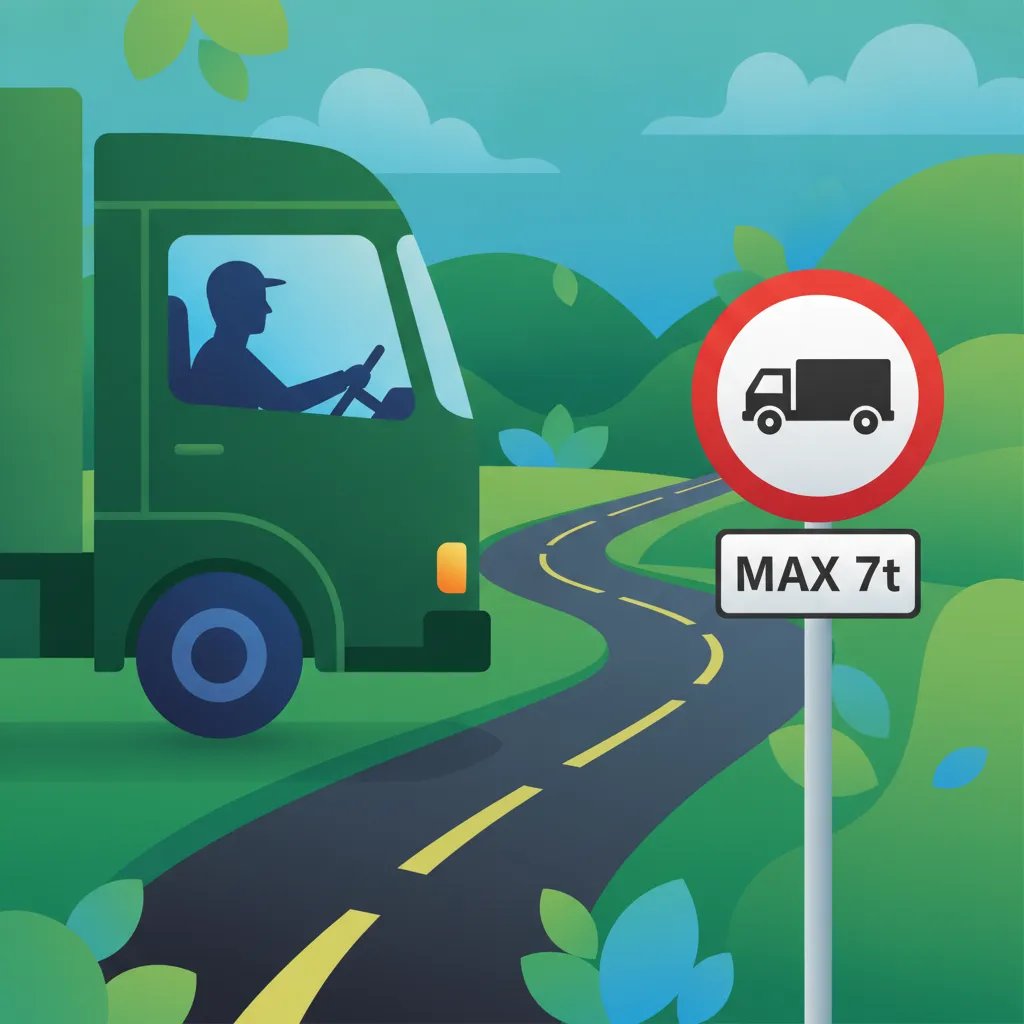
This lesson details the exact visual indicators, symbols, and text used on Irish traffic signs to communicate regulatory restrictions for heavy vehicles. It covers signs denoting height clearances, narrow bridges, and width-limited streets that require immediate driver diversion. By recognizing these specialized warnings early, professional drivers prevent costly structural collisions and traffic offences.
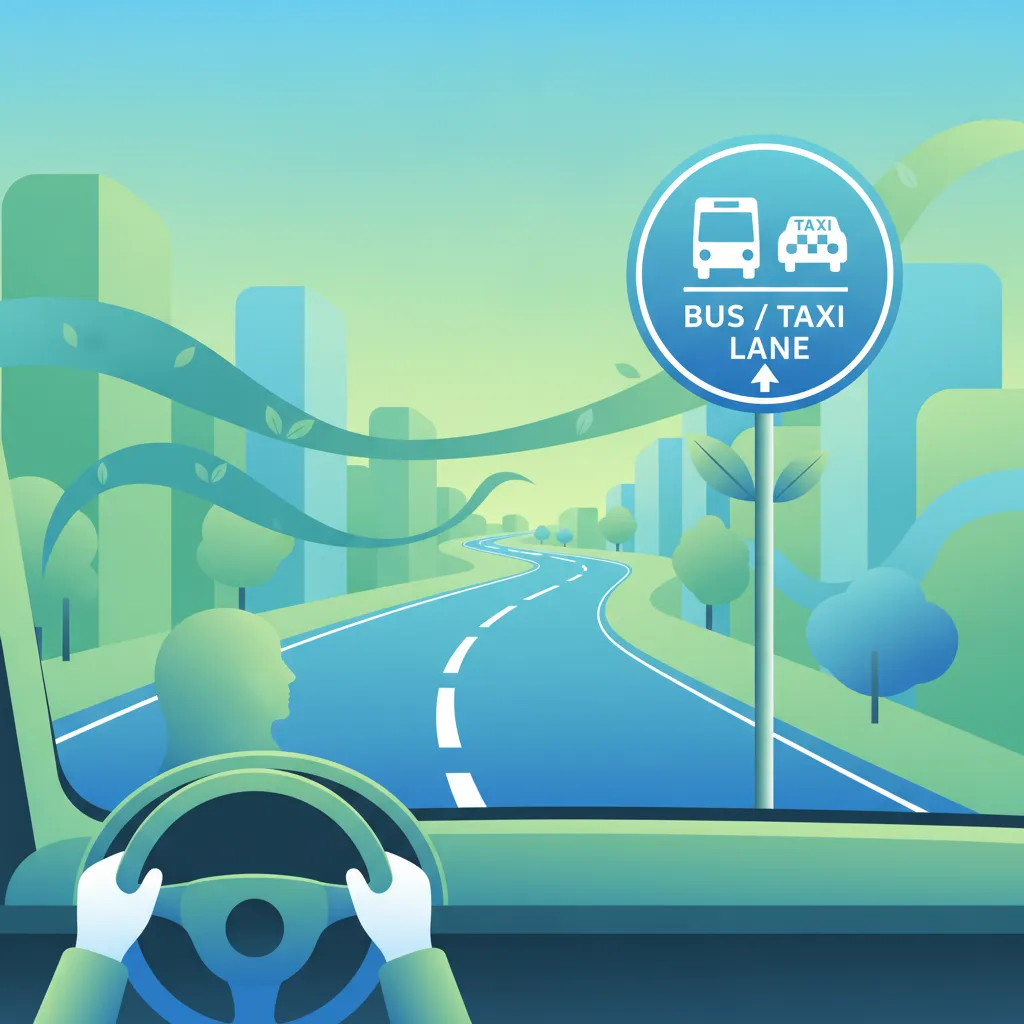
Operating large passenger vehicles requires instant, accurate interpretation of general and specialized Irish road signage to prevent regulatory violations. This lesson covers the precise meanings of clearway signs, bus corridor indicators, low bridge warnings, and weight restriction zones. Drivers will examine how school zone beacons and specific roundabout indicators apply to large vehicle dimensions.

Irish rural routes are often narrow, lacking central markings, and bordered by tall hedges that restrict forward visibility on sharp bends. This lesson teaches drivers how to negotiate blind curves, anticipate slow-moving agricultural machinery, and respond to wandering farm animals. Drivers will learn to regulate vehicle speed proactively, maintaining a safe stopping margin in rural areas.

Drivers bear the legal responsibility of ensuring that all passengers under seventeen years of age are properly secured in the vehicle. This lesson covers Ireland's strict seatbelt laws and the requirement to use an EU-approved child restraint system appropriate for the child's height and weight. You will learn how to locate ISOFIX anchorage points, fit child seats correctly, and deactivate passenger airbags when using rear-facing seats.
Find clear answers to common questions learners have about Penalty Points and Enforcement for Goods Vehicles. Learn how the lesson is structured, which driving theory objectives it supports, and how it fits into the overall learning path of units and curriculum progression in Ireland. These explanations help you understand key concepts, lesson flow, and exam focused study goals.
Yes, penalty points are attached to your personal driver number, regardless of whether you are driving a private car or a commercial Category C goods vehicle at the time of the offence.
If you accumulate 12 penalty points within a three-year period, you face an automatic six-month disqualification from driving, which applies to all licence categories you hold.
Yes, the RSA and Garda Síochána conduct specialized roadside checks on goods vehicles to verify documentation, load security, and compliance with tachograph and driving time regulations.
You must report any incident that results in injury or significant damage to property. It is a legal requirement under the Rules of the Road to provide specific details after a collision.
Use the practice question search tool to pinpoint specific topics, road signs, or rules you need to master for your official Driver Theory Test. Refine your study strategy and ensure comprehensive preparation for all aspects of the Irish driving exam. Start your focused revision now and build confidence for your learner permit test.