
This lesson introduces the specific licence categories for goods vehicles in Ireland, including C, C1, CE, and C1E. It provides a foundational understanding of the legal requirements, medical fitness criteria, and the testing pathway you must follow to become a professional goods vehicle driver.

Lesson content overview
Operating heavy goods vehicles (HGVs) or medium-sized commercial vehicles in Ireland requires a high level of specialized skill, responsibility, and physical fitness. The Road Safety Authority (RSA) establishes strict licensing and qualification standards to ensure that commercial drivers can safely manage the immense weight, size, and unique dynamics of large vehicles.
Whether you are seeking to drive a rigid truck for urban deliveries or operate a massive articulated transporter on national motorways, you must obtain the correct driving licence category. This lesson provides a complete overview of the HGV licensing framework, the specific vehicle classifications (Category C, C1, CE, and C1E), eligibility criteria, medical standards, and the path to becoming a fully certified professional driver.
In Ireland, driving licence categories are structured systematically based on the vehicle's Maximum Authorised Mass (MAM) and whether a trailer is coupled to the towing vehicle.
Maximum Authorised Mass (MAM), also known as the Gross Vehicle Weight (GVW), is the maximum weight of the vehicle including its load, passengers, fuel, and the driver, as specified by the manufacturer. It is the legal operating limit of the vehicle.
A common misconception among newer drivers is that a standard car licence (Category B) allows them to operate light-to-medium commercial vans and trucks. In reality, a Category B licence only permits you to drive vehicles with a MAM of up to 3,500 kg (with a maximum of 8 passenger seats). Any vehicle exceeding this weight threshold requires a specific goods vehicle licence category.
If you plan to operate a rigid truck (a vehicle where the cab and cargo area are permanently joined on a single rigid chassis) without a heavy trailer, you will fall under either Category C or Category C1.
Category C is the primary standard for professional truck drivers. It permits you to drive rigid goods vehicles with a MAM exceeding 3,500 kg. There is no upper weight limit for a Category C licence, meaning you can operate large multi-axle tippers, concrete mixers, and heavy distribution trucks.
Category C1 is a subcategory designed for medium-sized commercial vehicles. It permits you to drive rigid vehicles with a MAM between 3,500 kg and 7,500 kg.
Licence Scope Misconception: Holding a Category C licence automatically covers your Category C1 entitlement. However, holding a Category C1 licence does not permit you to drive vehicles over 7,500 kg MAM. Attempting to drive a heavier rigid truck on a C1 licence is an offence equivalent to driving without a valid licence.
Towing a heavy trailer (over 750 kg MAM) significantly changes the handling, braking, and stability of a commercial vehicle. Therefore, the RSA requires separate practical testing and licensing categories for towing combinations.
Category CE is the highest class of goods vehicle licence. It authorizes you to drive a Category C vehicle towing a trailer where the MAM of the trailer exceeds 750 kg. This category covers both articulated lorries (where the semi-trailer rests directly on the tractor unit) and drawbar combinations (rigid trucks towing heavy trailers).
Category C1E allows you to drive a Category C1 vehicle towing a trailer with a MAM exceeding 750 kg. However, this category is subject to strict combined weight limits:
Towing Safety Dynamics: Towing heavy trailers introduces hazards such as jackknifing, trailer swing, and increased braking distances. The CE and C1E training processes focus heavily on safe reversing, coupling procedures, and managing the articulated joint.
Before you can begin training or take a driving test for any of these commercial categories, you must meet several core eligibility requirements.
The minimum age to hold these licences depends on the specific category and whether you have completed professional training under the Driver CPC (Certificate of Professional Competence) framework.
| Licence Category | Minimum Age (Without CPC Qualification) | Minimum Age (With CPC Qualification) |
|---|---|---|
| Category C1 | 18 Years | 18 Years |
| Category C | 21 Years | 18 Years |
| Category C1E | 21 Years | 18 Years |
| Category CE | 24 Years | 21 Years (or 18 with full CPC)* |
* Note: Accelerated minimum age rules apply to those undergoing formal professional driver training. Ensure you verify the exact age and CPC program entry rules with your training provider.
To apply for a learner permit in any goods vehicle category (C, C1, CE, C1E), you must already hold a full, valid Category B (car) driving licence for a minimum of 2 years. This ensures that you have fundamental on-road experience and hazard awareness before upgrading to a significantly larger and more dangerous vehicle class.
Operating a heavy commercial vehicle carries a higher risk profile than driving a standard passenger car. Therefore, HGV drivers are subject to Group 2 Medical Standards in Ireland.
When applying for your first commercial learner permit or renewing your HGV driving licence, you must submit a completed Medical Report Form (D501). This form must be filled out by a registered medical practitioner following an in-person physical assessment.
The medical assessment evaluates:
Obtaining your professional rigid truck licence involves a structured, sequential testing and administrative process overseen by the RSA and the National Driver Licence Service (NDLS).
Pass the Category C Driver Theory Test: This computer-based exam tests your knowledge of heavy vehicle dynamics, regulations, drivers' hours, and load security.
Obtain a Group 2 Medical Report: Visit a GP to undergo the physical examination and receive your signed Medical Report Form (D501).
Apply for a Category C Learner Permit: Submit your theory test pass certificate, medical report, and current Category B licence to the NDLS to receive your learner permit.
Complete Professional Driver Training: Undertake practical driving tuition with an RSA-approved HGV driving instructor to learn vehicle control, safe driving practices, and hazard perception.
Pass the Practical Driving Test and Walkaround Test: Demonstrate your ability to manage the vehicle safely on public roads, perform low-speed manoeuvres, and conduct the mandatory pre-trip vehicle safety walkaround check.
Complete Driver CPC Requirements (if driving professionally): Pass the CPC case study theory tests and the practical CPC demonstration test (Step 5) to legally drive for hire or reward.
The Driver CPC was introduced across the European Union to establish and maintain high standards of safety, driving skill, and environmental awareness among professional drivers of buses and trucks.
Driver CPC is a mandatory qualification for all professional drivers of commercial heavy goods vehicles. It consists of an initial qualification (theory and practical exams) followed by ongoing periodic training (35 hours of classroom instruction every 5 years) to maintain the professional entitlement.
You must hold a valid Driver CPC if you drive a vehicle in category C, C1, CE, or C1E for work, which is legally defined as driving "for hire or reward." This includes:
Operating an HGV professionally without a valid Driver CPC card is a serious legal offence in Ireland, resulting in heavy fines for both the driver and the employer, as well as potential prosecution.
While most commercial operations require a CPC, exemptions exist for drivers of vehicles that are:
Failing to understand licensing and eligibility rules can have severe professional and legal consequences. Commercial drivers must be aware of several high-risk areas:
Large commercial vehicles behave very differently from passenger cars. Their weight dictates that stopping distances are significantly longer, and their high centre of gravity makes them susceptible to rollovers if speeds are not managed carefully on bends or roundabouts.
When towing (CE or C1E), you must account for the pivot point of the trailer, which increases your blind spots and requires you to take wider paths on tight turns to avoid mounting kerbs or striking street furniture.
Furthermore, poor weather conditions—such as heavy rain, wind, or ice—exacerbate these physical limitations. A professional driver must match their theoretical understanding of licence categories with an acute awareness of the dynamic physical forces at play every time they sit behind the wheel of a heavy goods vehicle.
This lesson covers the Irish HGV licensing framework for goods vehicles, distinguishing between Category C (rigid vehicles over 3,500 kg MAM), Category C1 (vehicles 3,500–7,500 kg MAM), and their trailer-towing counterparts CE and C1E. Eligibility requires a full Category B licence held for at least 2 years, meeting Group 2 Medical Standards via D501 form, and meeting minimum age thresholds that vary by category and CPC status. The path to full licensure involves passing the theory test, obtaining a learner permit, completing professional training, and passing the practical test, with Driver CPC mandatory for all professional driving for hire or reward. Common pitfalls include misjudging weight limits, confusing licence entitlements, and neglecting CPC periodic training requirements.
A short set of high-value points that capture the most important learning from this lesson.
Category C covers rigid vehicles over 3,500 kg MAM; Category C1 covers vehicles between 3,500 kg and 7,500 kg MAM, and holding Category C automatically includes C1 entitlement
Category CE is required to tow any trailer exceeding 750 kg MAM with a Category C vehicle; Category C1E tows heavy trailers with Category C1 vehicles, with a strict 12,000 kg combined limit
A full Category B licence held for a minimum of 2 years is mandatory before applying for any goods vehicle learner permit
Group 2 Medical Standards are significantly stricter than standard car licence requirements, requiring D501 form completion with higher visual acuity and cardiovascular standards
Driver CPC is legally mandatory for driving any Category C vehicle for hire or reward, including delivery driving, tipper operation, and long-haul logistics
Explore all units and lessons included in this driving theory course.
The MAM (Maximum Authorised Mass) is the legal weight limit including load, passengers, fuel, and driver as specified by the manufacturer
Age thresholds drop significantly with CPC qualification (e.g., Category C drops from 21 to 18 years; CE drops from 24 to 21 years)
C1E combined weight must not exceed 12,000 kg total of vehicle and trailer MAM
CPC requires initial theory and practical tests plus 35 hours of periodic training every 5 years to maintain professional entitlement
Visual acuity requirements under Group 2 include minimum standards in each eye and specific field of vision; corrective lenses are permitted but strict limits apply
Assuming Category C1 licence covers vehicles over 7,500 kg—it does not; this would be driving without a valid licence
Overloading under C1E by exceeding the 12,000 kg combined weight limit when the trailer MAM approaches or exceeds the towing vehicle weight
Believing CPC is optional for all HGV driving—CPC is mandatory for any driving done for hire or reward, even in a small rigid truck
Allowing a commercial learner permit or licence to expire; commercial licences typically have shorter validity periods (5 years) and driving on expired documents voids insurance
Assuming personal use of an HGV does not require the same licence category—licence requirements apply regardless of whether the driving is commercial or personal
Lesson content overview
A short set of high-value points that capture the most important learning from this lesson.
Category C covers rigid vehicles over 3,500 kg MAM; Category C1 covers vehicles between 3,500 kg and 7,500 kg MAM, and holding Category C automatically includes C1 entitlement
Category CE is required to tow any trailer exceeding 750 kg MAM with a Category C vehicle; Category C1E tows heavy trailers with Category C1 vehicles, with a strict 12,000 kg combined limit
A full Category B licence held for a minimum of 2 years is mandatory before applying for any goods vehicle learner permit
Group 2 Medical Standards are significantly stricter than standard car licence requirements, requiring D501 form completion with higher visual acuity and cardiovascular standards
Driver CPC is legally mandatory for driving any Category C vehicle for hire or reward, including delivery driving, tipper operation, and long-haul logistics
Explore all units and lessons included in this driving theory course.
The MAM (Maximum Authorised Mass) is the legal weight limit including load, passengers, fuel, and driver as specified by the manufacturer
Age thresholds drop significantly with CPC qualification (e.g., Category C drops from 21 to 18 years; CE drops from 24 to 21 years)
C1E combined weight must not exceed 12,000 kg total of vehicle and trailer MAM
CPC requires initial theory and practical tests plus 35 hours of periodic training every 5 years to maintain professional entitlement
Visual acuity requirements under Group 2 include minimum standards in each eye and specific field of vision; corrective lenses are permitted but strict limits apply
Assuming Category C1 licence covers vehicles over 7,500 kg—it does not; this would be driving without a valid licence
Overloading under C1E by exceeding the 12,000 kg combined weight limit when the trailer MAM approaches or exceeds the towing vehicle weight
Believing CPC is optional for all HGV driving—CPC is mandatory for any driving done for hire or reward, even in a small rigid truck
Allowing a commercial learner permit or licence to expire; commercial licences typically have shorter validity periods (5 years) and driving on expired documents voids insurance
Assuming personal use of an HGV does not require the same licence category—licence requirements apply regardless of whether the driving is commercial or personal
Explore search topics learners often look for when studying Licence Categories and Eligibility. These topics reflect common questions about road rules, driving situations, safety guidance, and lesson level theory preparation for learners in Ireland.
Browse additional driving theory lessons that cover connected traffic rules, road signs, and common driving situations related to this topic. Improve your understanding of how different rules interact across everyday traffic scenarios.
Understand the legal framework for the Driver CPC in Ireland. This guide explains the mandatory training modules for professional HGV drivers, the implications for working in the transport industry, and how professional conduct is monitored by the Road Safety Authority through periodic training and documentation.

This lesson covers the absolute legal requirement for professional drivers to keep, update, and display essential transit and driver paperwork. It details the role of the Driver Certificate of Professional Competence, vehicle registration documents, transport logs, and insurance certs. Drivers will learn how to present clear records to Irish Road Safety Authority officers and Gardai during compliance inspections.
This lesson defines the professional duties and high duty of care that drivers must maintain while operating commercial heavy vehicles. It details the legal responsibilities regarding ongoing vehicle fitness, safe cargo securement, and statutory load limits under Irish legislation. Drivers will learn the consequences of neglecting these safety standards under the Irish Road Traffic Act.
This lesson reinforces the moral, ethical, and legal expectations of commercial drivers on the Irish public road network. It highlights the most frequent compliance violations, including weight infractions, speed, and incorrect logging, which result in heavy operator fines. By embracing a positive safety culture, professional drivers preserve their career standing, safeguard their licences, and protect all citizens.
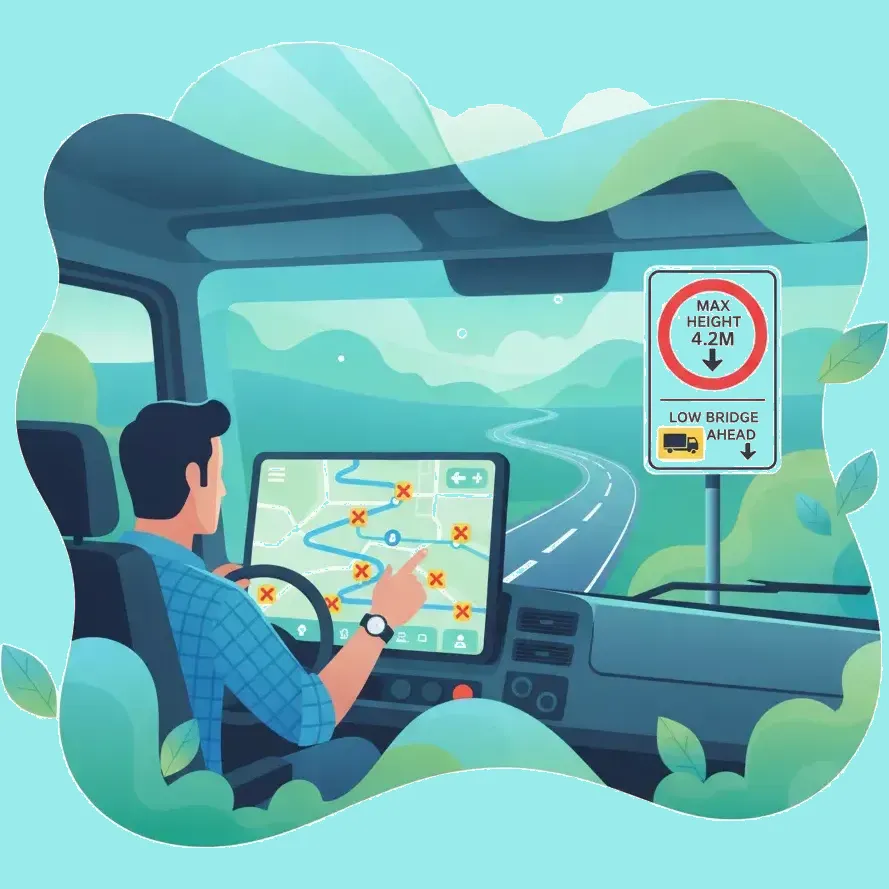
This lesson teaches professional drivers how to systematically map out travel routes that are compatible with heavy vehicle dimensions. It covers the limitations of consumer-grade GPS systems and emphasizes the use of specialized truck navigation systems that account for low bridges and load restrictions. Drivers will also learn to plan for congestion, access timing regulations, and proper entrance paths into commercial zones.

The regulatory framework in Ireland imposes strict standards of operation, dimension limits, and speed boundaries on heavy passenger fleets. This lesson reviews vehicle registration tax context, commercial operator licensing laws, and mandatory annual vehicle roadworthiness testing. By understanding these statutory regulations, drivers avoid severe legal infractions and maintain their professional driving credentials.

This lesson reviews the legal definitions and safety guidelines for various categories of cargo, ranging from standard palletized goods to hazardous materials. It highlights the specific documentation, labelling, and safety equipment required by Irish and European laws for specialized transport. Drivers will learn their legal liabilities and the mandatory safety protocols corresponding to each load type.
This lesson provides a comprehensive overview of the Irish penalty points system with a specific focus on commercial goods vehicles. It details how enforcement agencies like the Road Safety Authority and Garda Síochána monitor driver compliance and conduct roadside checks. Learners will examine the specific heavy vehicle offences that result in severe fines, penalty points, or immediate licence suspension.
This lesson examines the physiology of sleep deprivation and the absolute safety risks associated with commercial driver fatigue. It outlines the specific European Union and Irish tachograph regulations governing daily driving limits, mandatory break times, and weekly rest periods. Drivers will learn to properly record work and rest logs, spot warning signs of cognitive tiredness, and apply healthy sleep hygiene.
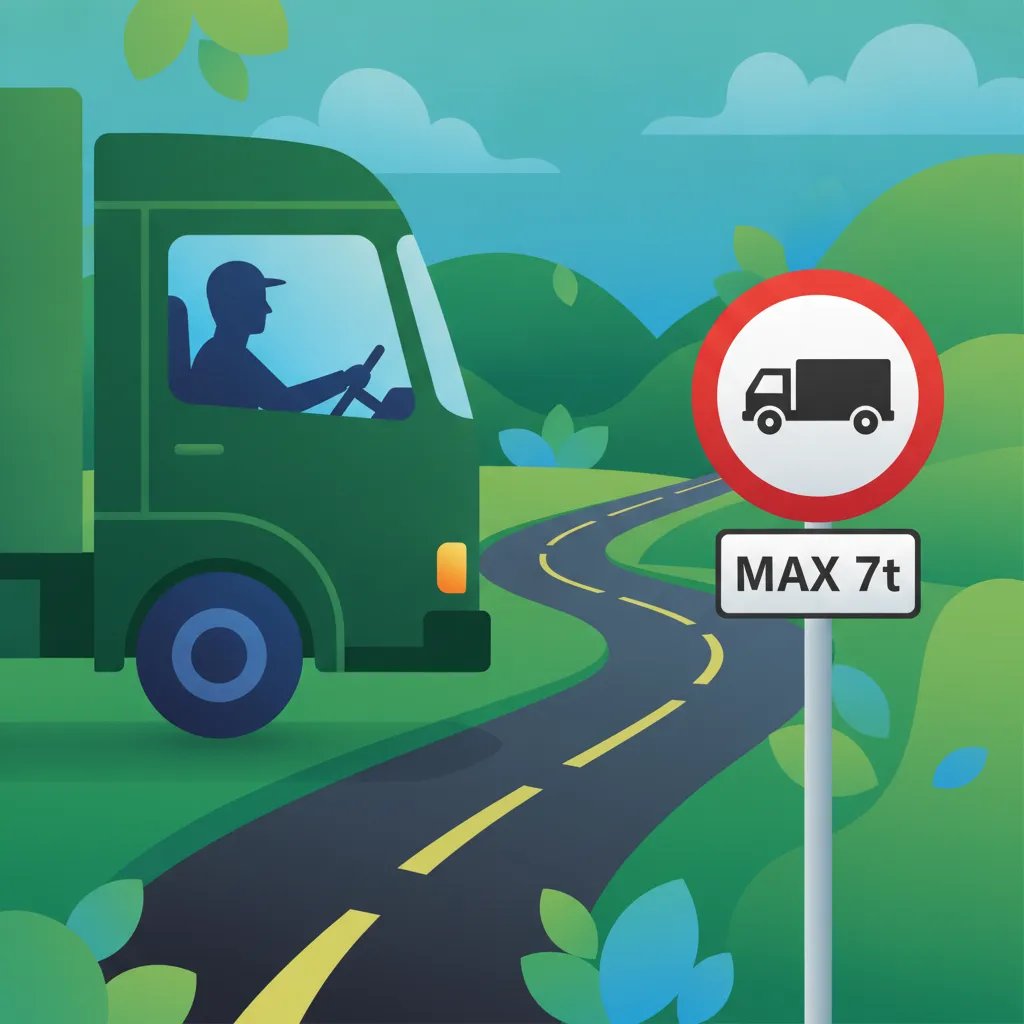
This lesson details the exact visual indicators, symbols, and text used on Irish traffic signs to communicate regulatory restrictions for heavy vehicles. It covers signs denoting height clearances, narrow bridges, and width-limited streets that require immediate driver diversion. By recognizing these specialized warnings early, professional drivers prevent costly structural collisions and traffic offences.
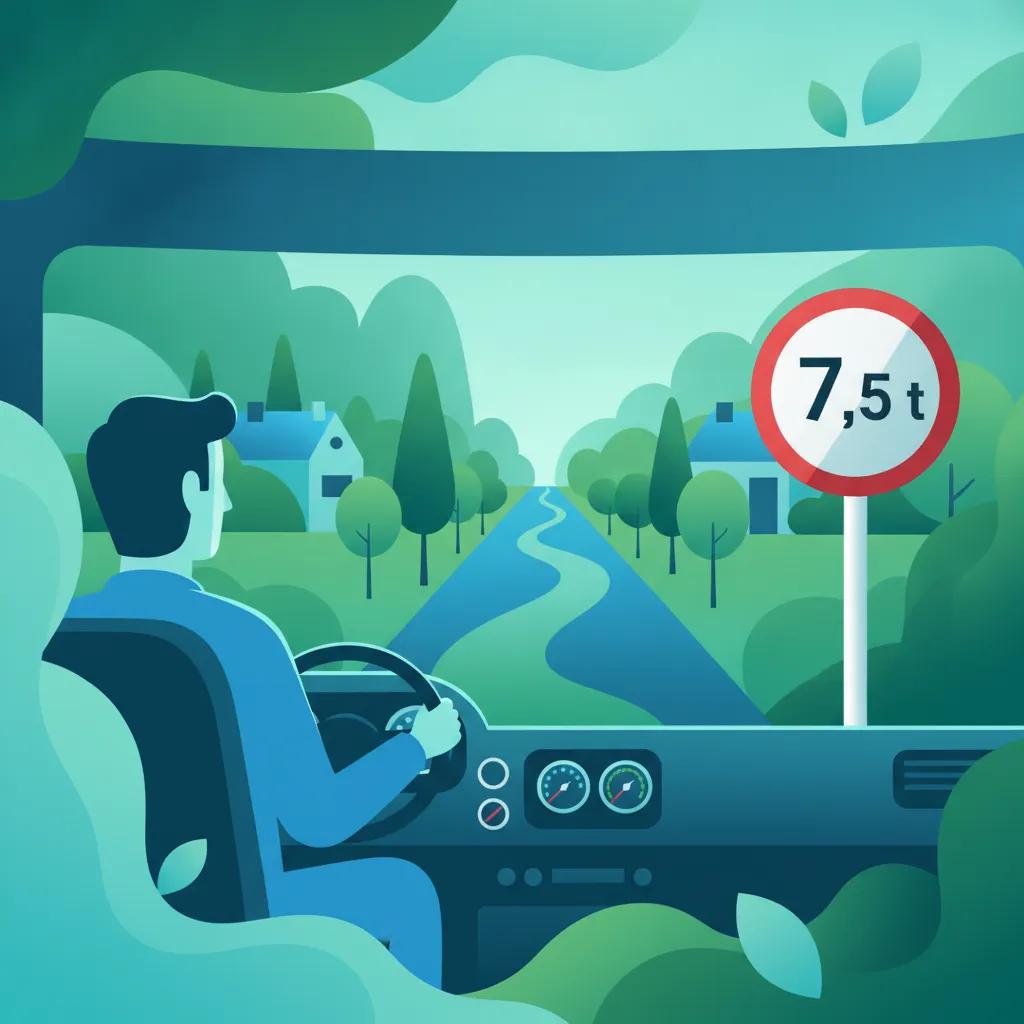
This lesson explores the legal frameworks and structural limitations that govern maximum vehicle weights on specific bridges and underground routes. It explains local authority by-laws, city-centre heavy vehicle exclusion zones, and environmental restrictions across major urban centres in Ireland. Drivers will learn to identify safe alternative bypass routes when encountering weight-restrictive public structures.
Explore the relationship between heavy goods vehicle dimensions and road infrastructure in Ireland. Learn how maximum authorised mass affects braking distances, turning radius, and vehicle stability, providing a better understanding of the physical challenges involved in operating large articulated trucks safely on national roads.

This lesson investigates the relationship between heavy goods vehicle dimensions and the physical constraints of Irish road networks. It highlights how vehicle length and weight contribute to pavement wear and stress on aging bridges and tunnels. Drivers will analyze specific high-risk zones, such as narrow lanes and gauntlet points, where extreme spatial awareness is mandatory.
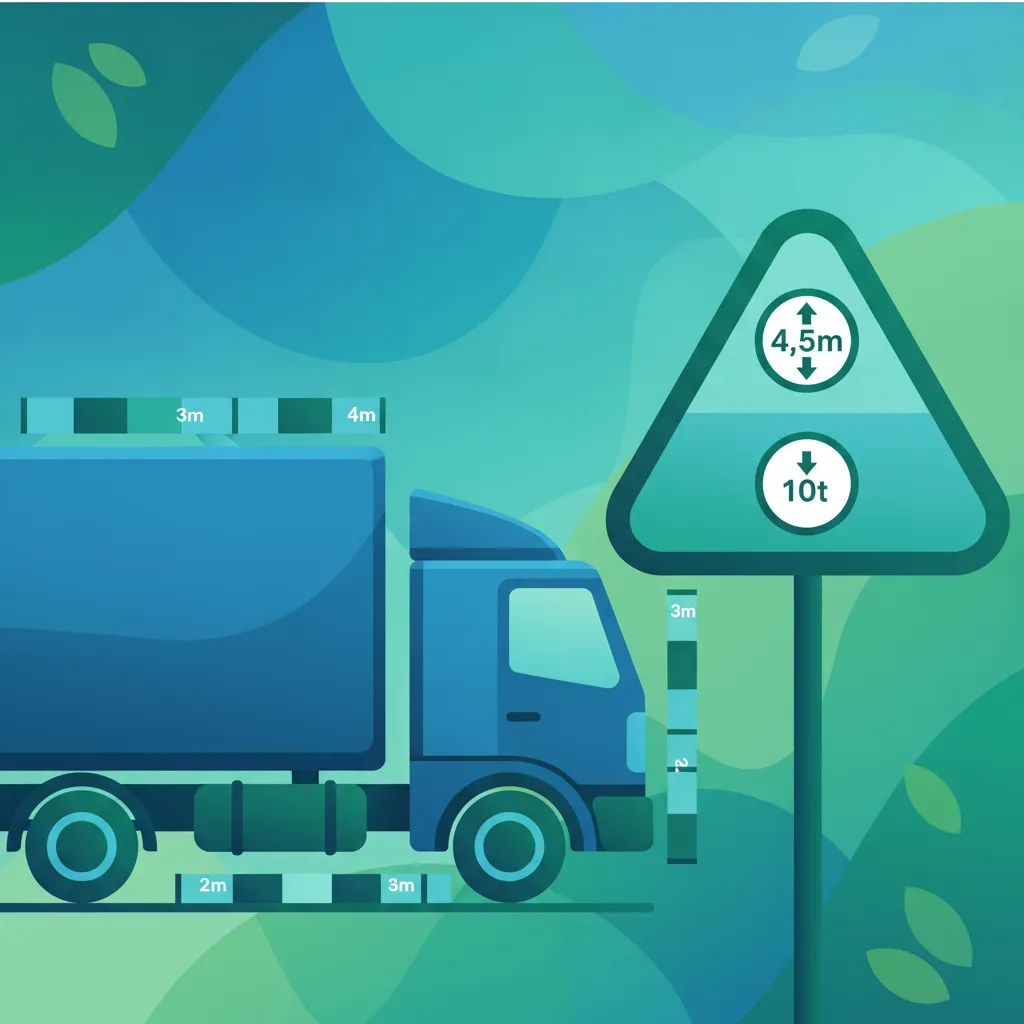
This lesson details the statutory limits on width, height, and length that apply to heavy goods vehicles under Irish transport laws. It explains the mathematical calculation of gross vehicle weight and maximum permissible axle loads to prevent infrastructure damage. Drivers will learn the practical significance of these numbers when passing low bridges or entering height-restricted tunnels.
The physical scale of a coach or bus generates significant momentum that demands extensive space to bring the vehicle to a safe stop. This lesson explains vehicle weight mechanics, the physics of kinetic energy, and how center of gravity affects chassis stability during stops. Drivers will learn to assess braking capacity, accounting for wet road conditions and high passenger counts.
This lesson reviews the legal definitions and safety guidelines for various categories of cargo, ranging from standard palletized goods to hazardous materials. It highlights the specific documentation, labelling, and safety equipment required by Irish and European laws for specialized transport. Drivers will learn their legal liabilities and the mandatory safety protocols corresponding to each load type.
This lesson teaches professional drivers how to systematically map out travel routes that are compatible with heavy vehicle dimensions. It covers the limitations of consumer-grade GPS systems and emphasizes the use of specialized truck navigation systems that account for low bridges and load restrictions. Drivers will also learn to plan for congestion, access timing regulations, and proper entrance paths into commercial zones.
This lesson explores the legal frameworks and structural limitations that govern maximum vehicle weights on specific bridges and underground routes. It explains local authority by-laws, city-centre heavy vehicle exclusion zones, and environmental restrictions across major urban centres in Ireland. Drivers will learn to identify safe alternative bypass routes when encountering weight-restrictive public structures.

This lesson focuses on the physical mechanics of long-wheelbase and articulated vehicles when executing turns in restricted spaces. It explains concepts like swept path, rear overhang, and turning circles, which must be accounted for to prevent side-swiping collisions. Drivers will discover strategic route-planning techniques to avoid congested urban layouts and unsuitable rural corridors.
This lesson details the exact visual indicators, symbols, and text used on Irish traffic signs to communicate regulatory restrictions for heavy vehicles. It covers signs denoting height clearances, narrow bridges, and width-limited streets that require immediate driver diversion. By recognizing these specialized warnings early, professional drivers prevent costly structural collisions and traffic offences.

This lesson explains the extensive blind spots of heavy goods vehicles, buses, and other large trucks on Irish roads. It teaches Category AM riders how to maintain safe following distances and position themselves where truck drivers can see them. Proper space cushion management is emphasized to protect riders from the wind turbulence of passing trucks.

As passenger numbers change throughout a service shift, a heavy vehicle suspension, center of gravity, and steering responsiveness adapt dynamically. This lesson covers load balancing, the physical risks of overloading, and how uneven weight distribution compromises stability during turns. Drivers will learn to perform regular axle weight assessments to comply with Irish transport safety rules.
Find clear answers to common questions learners have about Licence Categories and Eligibility. Learn how the lesson is structured, which driving theory objectives it supports, and how it fits into the overall learning path of units and curriculum progression in Ireland. These explanations help you understand key concepts, lesson flow, and exam focused study goals.
Category C allows you to drive vehicles with a gross vehicle weight exceeding 3,500kg, while Category C1 is restricted to vehicles between 3,500kg and 7,500kg. Understanding this distinction is vital for choosing the correct training path.
Yes, all applicants for a Category C group learner permit must submit a medical report form completed by a registered medical practitioner to the NDLS to confirm fitness to drive heavy vehicles.
The Driver CPC is mandatory for professional drivers who drive vehicles of Category C1 or C for commercial purposes. It ensures that drivers maintain the necessary professional standards and knowledge.
Yes, once you pass the appropriate tests for each, your licence can reflect both categories. Category CE specifically allows you to drive a Category C vehicle coupled with a trailer that exceeds 750kg.
Use the practice question search tool to pinpoint specific topics, road signs, or rules you need to master for your official Driver Theory Test. Refine your study strategy and ensure comprehensive preparation for all aspects of the Irish driving exam. Start your focused revision now and build confidence for your learner permit test.