
This lesson details the critical documentation you must carry as a professional Category C driver in Ireland. You will learn how to maintain compliance with RSA and Garda regulations regarding your vehicle and professional status, ensuring you are prepared for both the theory exam and real-world roadside inspections.

Lesson content overview
Operating a heavy goods vehicle (HGV) under a Category C licence in Ireland places you inside one of the most strictly regulated sectors of the transport industry. Regulatory compliance is not just an administrative task; it is a fundamental pillar of road safety and professional transport operations. Ensuring that you possess, update, and properly display all mandatory documentation is a critical legal responsibility for every professional driver.
During roadside inspections conducted by the Road Safety Authority (RSA) or members of An Garda Síochána, the presentation of clear, accurate, and valid paperwork is mandatory. Failing to produce these documents on demand can result in severe consequences, ranging from on-the-spot fixed charge penalties and penalty points to vehicle impoundment and the suspension of your commercial operator's licence. This lesson covers the essential driver, vehicle, and transit records required to keep your operations fully legal on Irish roads.
The Driver Certificate of Professional Competence (Driver CPC) is a mandatory qualification established across Europe to maintain high standards of safety, professional competence, and driving behavior among commercial vehicle operators. Under the Road Traffic (Professional Drivers) Regulations 2009, any driver operating a vehicle in Category C, C1, CE, or C1E for professional purposes must hold a valid Driver CPC.
A mandatory certification for professional drivers of goods vehicles (Category C and subcategories) indicating that the holder has met rigorous initial qualification standards and continues to engage in regular professional training.
There is a common misunderstanding that Driver CPC is only required for long-distance haulage or international transport. In reality, unless you qualify for a specific, narrow legal exemption (such as driving an emergency vehicle or a vehicle used for non-commercial personal use), you must hold and carry a Driver CPC if you drive a Category C vehicle for work. This includes short-haul urban deliveries, construction site transit, and municipal services.
To obtain and maintain your Driver CPC, you must progress through two distinct phases:
Upon completing your training, you will be issued a Driver Qualification Card (DQC), commonly referred to as the CPC card. You must carry this card with you whenever you are operating a goods vehicle.
If you are stopped at an RSA or Garda checkpoint, you must be prepared to present this card immediately. If you have recently completed your training and are awaiting the physical card, you must still have proof of your status, although the physical card remains the primary legal standard for roadside verification.
Operating a Category C vehicle commercially without a valid Driver CPC, or failing to carry your CPC card while driving, is a serious regulatory offence. It can lead to prosecution, hefty fines for both you and your employer, and a prohibition on further driving until a valid card is produced.
Every goods vehicle operating on Irish roads must be officially registered with the Department of Transport. The physical proof of this registration is the Vehicle Registration Certificate (VRC). This document serves as the official legal link between the vehicle, its registered owner or operator, and its designated tax and technical classifications.
The official document issued by the Irish Department of Transport that proves a vehicle's registration, contains its technical specifications (such as weights and dimensions), and establishes legal ownership.
The VRC contains critical technical data that enforcement officers use to verify if a vehicle is operating safely and legally. This includes:
A common operational error is leaving the VRC in an office drawer or at a fleet depot. While operators often prefer to keep original documents in a central administrative file to prevent loss, professional drivers must have access to the vehicle's registration details during transport.
At a roadside checkpoint, an inspector will compare the weights listed on the VRC against the vehicle's physical manufacturer's plate and the actual weight measured on a portable or static weighbridge. Any discrepancy can indicate illegal modifications, incorrect tax classification, or overloading.
Managing driver fatigue is one of the most critical aspects of heavy vehicle safety. To enforce compliance with EU Drivers’ Hours Rules, goods vehicles exceeding 3.5 tonnes must be fitted with an approved recording device. For modern vehicles, this is a digital or smart tachograph, while some older vehicles may still operate using analogue paper charts.
Every professional Category C driver must possess a personal Digital Tachograph Driver Card. This smart card records all of your daily activities, including driving time, active work (such as loading and securing cargo), periods of availability, and rest breaks.
Insert the Card Correctly: Always insert your personal driver card into the correct slot of the tachograph unit at the very start of your working day, before operating any controls.
Maintain Manual Inputs: If you perform work away from the vehicle (such as office work or loading at a depot before taking over the truck), you must record these activities manually on the tachograph unit using the manual entry function.
Carry Historical Records: You must carry your digital driver card and any manual records or printouts for the current day and the preceding 28 days.
Facilitate Regular Downloads: Ensure your driver card data is downloaded at least every 28 days, and the vehicle's tachograph unit data is downloaded at least every 90 days for operator analysis and record-keeping.
In rare circumstances where a vehicle is exempt from tachograph regulations but still subject to domestic Irish driving limits, drivers must maintain a manual transport logbook. This logbook must contain clear, handwritten entries of all start times, driving intervals, rest breaks, and finish times. Falsifying or failing to maintain these records is a severe breach of road safety law.
Falsifying tachograph records, using another driver's card, or operating a vehicle with a device designed to manipulate tachograph data are criminal offences. These actions lead to immediate vehicle detention, court prosecution, and potentially a permanent ban from holding a professional driving licence.
It is a strict legal requirement under the Road Traffic Act 1961 (as amended) that every motor vehicle operated in a public place in Ireland must be covered by a valid policy of insurance. For commercial goods vehicles, standard private motor insurance is entirely invalid; operators must secure specialized commercial motor insurance.
When verifying your insurance documentation, you must understand the distinction between the legally mandatory road traffic cover and optional operational cover:
As a driver, you must ensure that a valid insurance disc is clearly displayed on the passenger side of the front windscreen. Additionally, you should know where the full Insurance Certificate is located within the vehicle cab or how to access it digitally if requested by a Garda.
To maintain safety standards and ensure fair competition in the transport sector, both An Garda Síochána and RSA transport inspectors conduct targeted and random roadside inspections at strategic locations across Ireland, including motorways, national routes, and ports.
During an inspection, officers are legally authorized to check:
If you cannot produce the required documentation during a roadside check, the consequences will depend on the nature of the missing document and the officer's assessment of safety risks:
Before turning the key and beginning any commercial journey, a professional driver should perform a comprehensive document check alongside their physical walkaround inspection. Incorporating this routine into your daily schedule protects your licence, your livelihood, and your safety.
Check Your Personal Cards: Confirm that your Category C driving licence and your Driver CPC card are in your wallet, are physically undamaged, and are fully within their validity dates.
Verify the Tachograph Card: Ensure your digital tachograph driver card is active, undamaged, and inserted into the vehicle's tachograph unit.
Confirm Windscreen Discs: Walk to the front of the cab and verify that a valid commercial insurance disc, a valid motor tax disc, and a current Certificate of Roadworthiness (CRW) disc are clearly visible and legible on the windscreen.
Locate the VRC: Ensure that the Vehicle Registration Certificate (or an approved clear copy/digital portal access permitted by your operator) is accessible within the cab.
Review Transit Paperwork: Check that your delivery notes, waste transfer notes, or international transport permits (if applicable) are complete, accurate, and match the physical cargo loaded on the vehicle.
By maintaining high standards of administrative organization and keeping your documentation updated, you demonstrate the professionalism expected of a Category C driver. Clear records protect you during regulatory checks, prevent costly delays, and ensure that your focus remains safely on navigating the road ahead.
This lesson covers the mandatory documentation requirements for operating Category C heavy goods vehicles in Ireland, focusing on Driver CPC qualifications, Vehicle Registration Certificates, digital tachograph records, and commercial motor insurance. Drivers must understand that CPC applies to all professional Category C driving unless a specific exemption applies, and must complete 35 hours of periodic training every five years. Roadside inspections by RSA officers or Gardai verify driver entitlement, tachograph compliance (with 28/90-day download rules), vehicle condition, and weight limits. Failing to produce valid documentation can result in fixed charge penalties, vehicle impoundment, and operator licence suspension. The practical pre-drive checklist helps drivers develop professional habits for daily document verification.
A short set of high-value points that capture the most important learning from this lesson.
Driver CPC is mandatory for all professional Category C vehicle operation in Ireland, not just long-distance haulage, unless a specific legal exemption applies.
You must carry your Driver Qualification Card (DQC) at all times when driving; operating without it is a serious regulatory offence with fines for both driver and employer.
Digital tachograph driver cards must be inserted at the start of each working day, and data must be downloaded every 28 days for driver cards and every 90 days for vehicle units.
Commercial motor insurance is legally mandatory under the Road Traffic Act 1961; private motor insurance does not cover goods vehicle operations.
Vehicle Registration Certificates must be accessible in the cab because roadside officers compare listed weights against physical plates and weighbridge measurements.
Explore all units and lessons included in this driving theory course.
CPC initial qualification requires passing theory tests, case study, practical driving test, and practical demonstration; then 35 hours periodic training (five 7-hour modules) every 5 years.
The VRC contains the VIN, registered owner details, and permissible maximum weights (axle and GVW) that officers verify at checkpoints.
Manual transport logbooks (for exempt vehicles) require handwritten entries of start times, driving intervals, rest breaks, and finish times; falsification is a criminal offence.
Roadside inspections check four areas: driver entitlement, drivers' hours compliance via tachograph data, vehicle condition, and weight limits.
Goods in Transit Insurance is commercially recommended but not a statutory roadside requirement; the compulsory cover is third-party motor insurance.
Assuming Driver CPC is only needed for international routes; it applies to all professional Category C driving including short-haul urban deliveries and construction work.
Leaving the VRC at a fleet depot or office because operators prefer centralized storage; drivers must have vehicle registration details accessible during transport.
Failing to manually record activities performed away from the vehicle (loading, depot work) on the tachograph unit before taking over driving.
Not verifying that tachograph driver cards and physical documents are undamaged and within validity dates before starting a journey.
Confusing compulsory motor insurance with optional Goods in Transit cover; only the former is legally required at roadside checks.
Lesson content overview
A short set of high-value points that capture the most important learning from this lesson.
Driver CPC is mandatory for all professional Category C vehicle operation in Ireland, not just long-distance haulage, unless a specific legal exemption applies.
You must carry your Driver Qualification Card (DQC) at all times when driving; operating without it is a serious regulatory offence with fines for both driver and employer.
Digital tachograph driver cards must be inserted at the start of each working day, and data must be downloaded every 28 days for driver cards and every 90 days for vehicle units.
Commercial motor insurance is legally mandatory under the Road Traffic Act 1961; private motor insurance does not cover goods vehicle operations.
Vehicle Registration Certificates must be accessible in the cab because roadside officers compare listed weights against physical plates and weighbridge measurements.
Explore all units and lessons included in this driving theory course.
CPC initial qualification requires passing theory tests, case study, practical driving test, and practical demonstration; then 35 hours periodic training (five 7-hour modules) every 5 years.
The VRC contains the VIN, registered owner details, and permissible maximum weights (axle and GVW) that officers verify at checkpoints.
Manual transport logbooks (for exempt vehicles) require handwritten entries of start times, driving intervals, rest breaks, and finish times; falsification is a criminal offence.
Roadside inspections check four areas: driver entitlement, drivers' hours compliance via tachograph data, vehicle condition, and weight limits.
Goods in Transit Insurance is commercially recommended but not a statutory roadside requirement; the compulsory cover is third-party motor insurance.
Assuming Driver CPC is only needed for international routes; it applies to all professional Category C driving including short-haul urban deliveries and construction work.
Leaving the VRC at a fleet depot or office because operators prefer centralized storage; drivers must have vehicle registration details accessible during transport.
Failing to manually record activities performed away from the vehicle (loading, depot work) on the tachograph unit before taking over driving.
Not verifying that tachograph driver cards and physical documents are undamaged and within validity dates before starting a journey.
Confusing compulsory motor insurance with optional Goods in Transit cover; only the former is legally required at roadside checks.
Explore search topics learners often look for when studying Essential Documentation for Goods Vehicles. These topics reflect common questions about road rules, driving situations, safety guidance, and lesson level theory preparation for learners in Ireland.
Browse additional driving theory lessons that cover connected traffic rules, road signs, and common driving situations related to this topic. Improve your understanding of how different rules interact across everyday traffic scenarios.
Understand the legal requirements for managing driving time and rest breaks for goods vehicle operators in Ireland. This guide explains the function of tachographs in monitoring compliance with safety regulations and maintaining professional standards during daily transport operations.

This lesson examines the physiology of sleep deprivation and the absolute safety risks associated with commercial driver fatigue. It outlines the specific European Union and Irish tachograph regulations governing daily driving limits, mandatory break times, and weekly rest periods. Drivers will learn to properly record work and rest logs, spot warning signs of cognitive tiredness, and apply healthy sleep hygiene.

This lesson details the specific classifications for goods vehicles including Category C, C1, CE, and C1E in Ireland. It explains the core eligibility requirements, necessary medical fitness evaluations, and the sequential steps for theory and practical testing. Professional drivers will also understand when the Driver Certificate of Professional Competence is legally mandatory.

The regulatory framework in Ireland imposes strict standards of operation, dimension limits, and speed boundaries on heavy passenger fleets. This lesson reviews vehicle registration tax context, commercial operator licensing laws, and mandatory annual vehicle roadworthiness testing. By understanding these statutory regulations, drivers avoid severe legal infractions and maintain their professional driving credentials.
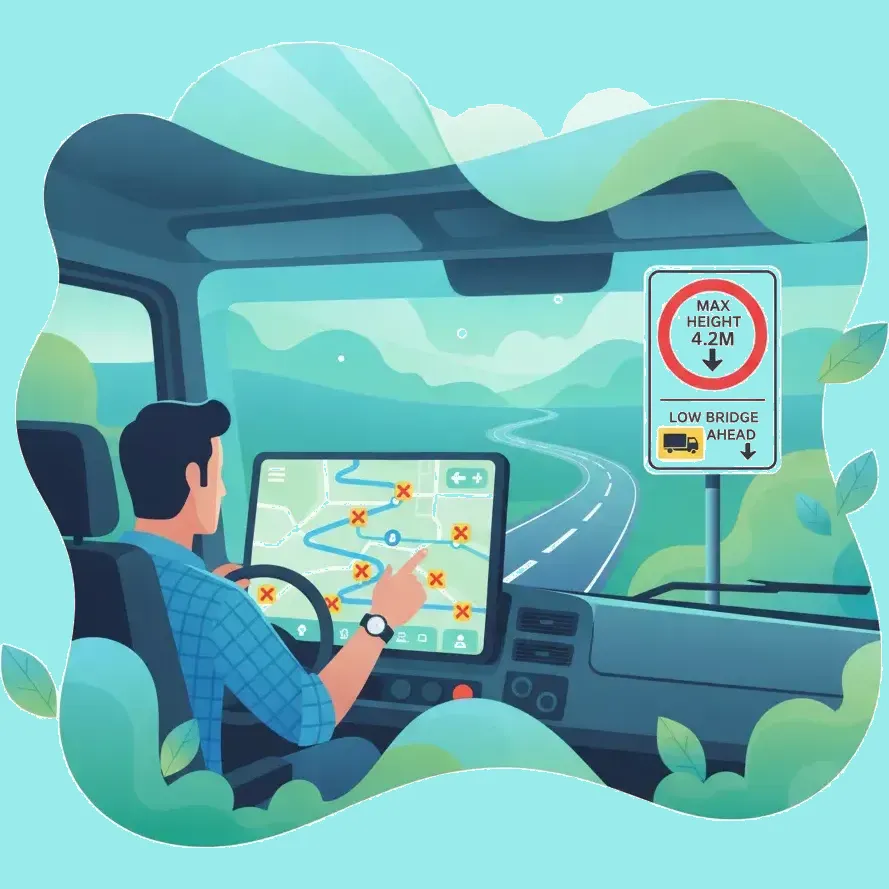
This lesson teaches professional drivers how to systematically map out travel routes that are compatible with heavy vehicle dimensions. It covers the limitations of consumer-grade GPS systems and emphasizes the use of specialized truck navigation systems that account for low bridges and load restrictions. Drivers will also learn to plan for congestion, access timing regulations, and proper entrance paths into commercial zones.
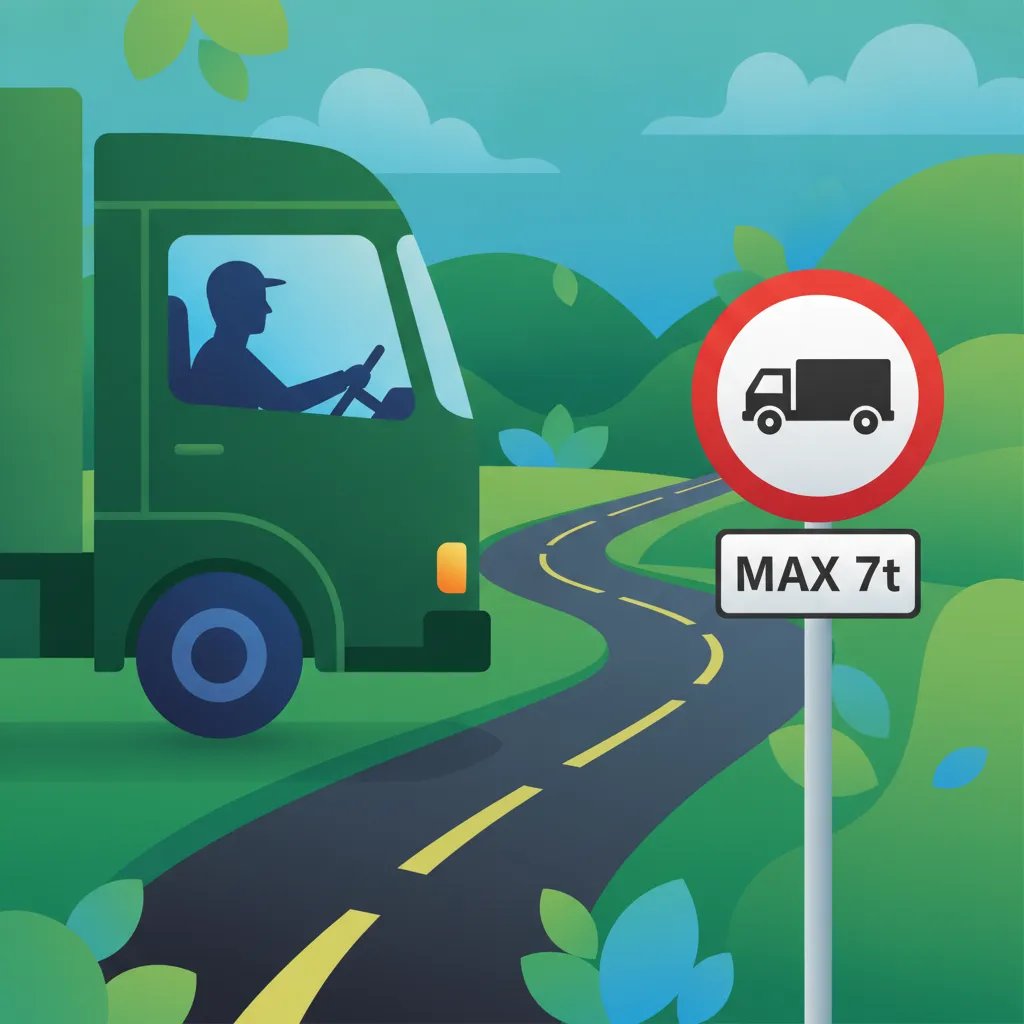
This lesson details the exact visual indicators, symbols, and text used on Irish traffic signs to communicate regulatory restrictions for heavy vehicles. It covers signs denoting height clearances, narrow bridges, and width-limited streets that require immediate driver diversion. By recognizing these specialized warnings early, professional drivers prevent costly structural collisions and traffic offences.

This lesson explores the legal frameworks and structural limitations that govern maximum vehicle weights on specific bridges and underground routes. It explains local authority by-laws, city-centre heavy vehicle exclusion zones, and environmental restrictions across major urban centres in Ireland. Drivers will learn to identify safe alternative bypass routes when encountering weight-restrictive public structures.

This lesson provides a comprehensive overview of the Irish penalty points system with a specific focus on commercial goods vehicles. It details how enforcement agencies like the Road Safety Authority and Garda Síochána monitor driver compliance and conduct roadside checks. Learners will examine the specific heavy vehicle offences that result in severe fines, penalty points, or immediate licence suspension.

This lesson reviews the legal definitions and safety guidelines for various categories of cargo, ranging from standard palletized goods to hazardous materials. It highlights the specific documentation, labelling, and safety equipment required by Irish and European laws for specialized transport. Drivers will learn their legal liabilities and the mandatory safety protocols corresponding to each load type.
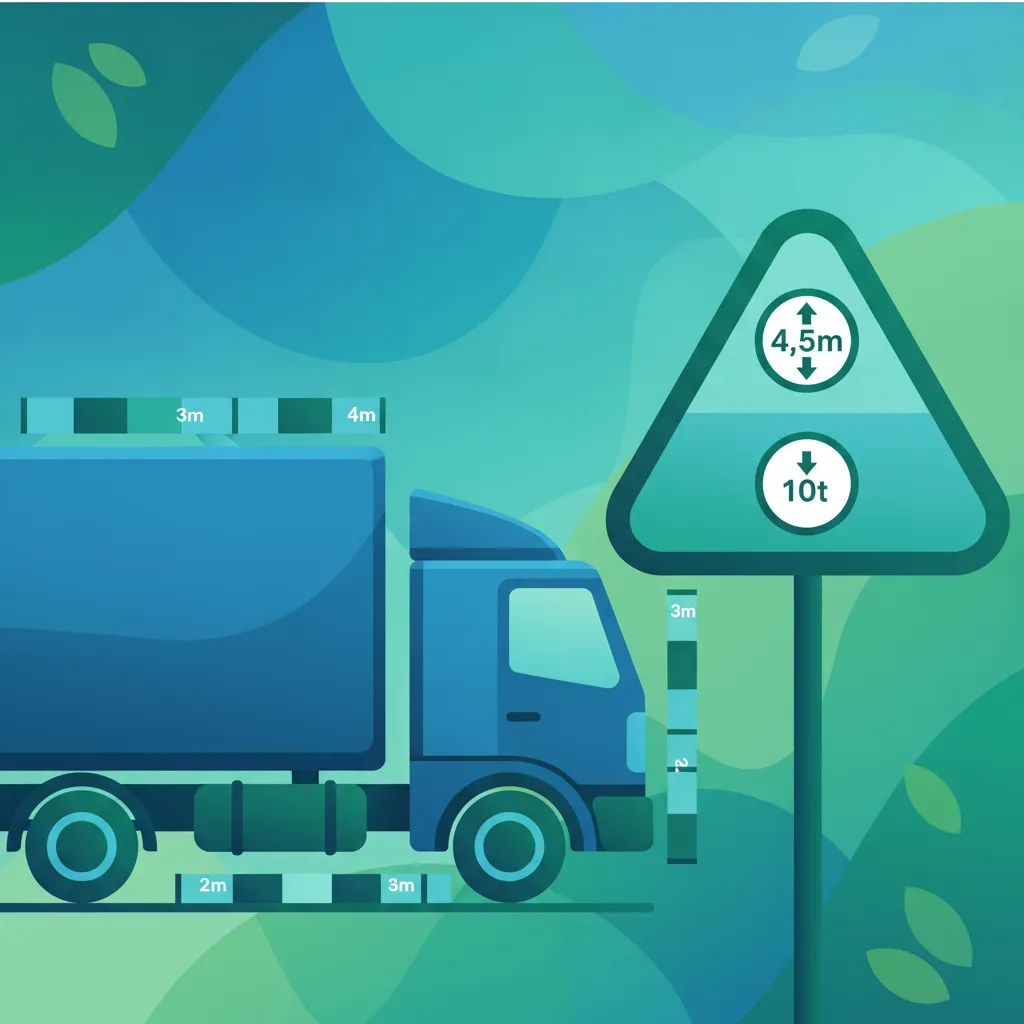
This lesson details the statutory limits on width, height, and length that apply to heavy goods vehicles under Irish transport laws. It explains the mathematical calculation of gross vehicle weight and maximum permissible axle loads to prevent infrastructure damage. Drivers will learn the practical significance of these numbers when passing low bridges or entering height-restricted tunnels.
Learn the procedures and legal powers involved in roadside vehicle and documentation checks in Ireland. This overview covers what inspectors look for regarding vehicle roadworthiness, weight limits, and required transit paperwork to ensure your goods vehicle operations remain compliant with Irish road safety laws.
The Road Safety Authority establishes clear operational frameworks to ensure maximum safety in the Irish commercial passenger transport sector. This lesson covers critical guidelines regarding daily vehicle walkaround checks, scheduled maintenance records, and ongoing driver CPC compliance. By studying these official recommendations, drivers will understand how to maintain total legal compliance while elevating transport safety.
This lesson details the exact visual indicators, symbols, and text used on Irish traffic signs to communicate regulatory restrictions for heavy vehicles. It covers signs denoting height clearances, narrow bridges, and width-limited streets that require immediate driver diversion. By recognizing these specialized warnings early, professional drivers prevent costly structural collisions and traffic offences.
This lesson provides a comprehensive overview of the Irish penalty points system with a specific focus on commercial goods vehicles. It details how enforcement agencies like the Road Safety Authority and Garda Síochána monitor driver compliance and conduct roadside checks. Learners will examine the specific heavy vehicle offences that result in severe fines, penalty points, or immediate licence suspension.
The regulatory framework in Ireland imposes strict standards of operation, dimension limits, and speed boundaries on heavy passenger fleets. This lesson reviews vehicle registration tax context, commercial operator licensing laws, and mandatory annual vehicle roadworthiness testing. By understanding these statutory regulations, drivers avoid severe legal infractions and maintain their professional driving credentials.

Operating large passenger vehicles requires instant, accurate interpretation of general and specialized Irish road signage to prevent regulatory violations. This lesson covers the precise meanings of clearway signs, bus corridor indicators, low bridge warnings, and weight restriction zones. Drivers will examine how school zone beacons and specific roundabout indicators apply to large vehicle dimensions.

Violating passenger transport laws can lead to severe operator penalties, heavy fines, and the immediate suspension of driving privileges. This lesson examines common operational infractions, including tachograph violations, overloading offences, and driving with defective tires. Drivers will understand their personal legal liabilities under Irish legislation, supporting long-term safety compliance.

This lesson focuses on riding techniques suited for gravel, loose surfaces, and rural roads. Learners will understand how to maintain stability, adjust braking and cornering approaches, and anticipate hazards such as potholes and farm vehicles, following RSA guidance for safe riding in the Irish countryside.

Irish rural routes are often narrow, lacking central markings, and bordered by tall hedges that restrict forward visibility on sharp bends. This lesson teaches drivers how to negotiate blind curves, anticipate slow-moving agricultural machinery, and respond to wandering farm animals. Drivers will learn to regulate vehicle speed proactively, maintaining a safe stopping margin in rural areas.
Entering busy coach terminals and motorway service stations requires slow speeds and close monitoring of passenger walking paths. This lesson addresses safe parking bay entry, utilizing public facilities during breaks, and coordinating with terminal dispatchers. Drivers will learn safety rules for securing the vehicle, ensuring passenger boarding areas remain free of physical hazards.

This lesson covers the specific categories of Irish traffic signs, including regulatory, warning, and information signs under official RSA rules. It teaches riders to instantly recognize speed limits, prohibited directions, and upcoming road hazards based on sign shapes and colors. Motorcyclists will understand how to adjust their speed and lane positioning proactively when reading signs in advance.
Find clear answers to common questions learners have about Essential Documentation for Goods Vehicles. Learn how the lesson is structured, which driving theory objectives it supports, and how it fits into the overall learning path of units and curriculum progression in Ireland. These explanations help you understand key concepts, lesson flow, and exam focused study goals.
Yes, you must be able to produce your valid Driver CPC card or proof of qualification during roadside inspections by the Gardai or RSA officers to confirm your professional status.
Failing to produce required transport or tachograph logs can lead to significant penalties, including fines and potential penalty points on your licence. Accurate documentation is a mandatory part of professional compliance.
Goods vehicles in Ireland typically require a Certificate of Roadworthiness (CRW) rather than an NCT certificate. You must ensure your vehicle's CRW is valid and the disc is displayed correctly.
Yes, transporting dangerous goods (ADR) requires specialized additional documentation, such as transport emergency cards and specific hazardous load manifests, which are in addition to your standard professional driving papers.
Use the practice question search tool to pinpoint specific topics, road signs, or rules you need to master for your official Driver Theory Test. Refine your study strategy and ensure comprehensive preparation for all aspects of the Irish driving exam. Start your focused revision now and build confidence for your learner permit test.