
This lesson provides a comprehensive guide to the pre-ride safety checks required for Category AM moped and light quadricycle riders. By mastering these vital checks, you ensure your vehicle meets Road Safety Authority standards, keeping you safe and compliant on Irish roads.
Lesson content overview
Operating a moped or a light quadricycle in Ireland requires more than just understanding the rules of the road and holding a valid Category AM licence. Before you ever start the engine or set off on a journey, you have a legal and moral responsibility to ensure that your vehicle is in a safe, roadworthy condition.
Under Irish road traffic legislation, driving or riding an unroadworthy vehicle is an offence. Regular pre-ride inspections—often referred to as "vitals checks"—minimize the risk of mechanical failure, protect you from severe weather hazards, and ensure your vehicle complies with the strict standards monitored by the Road Safety Authority (RSA) and enforced by An Garda Síochána.
This lesson provides an exhaustive, practical guide to performing these pre-ride safety checks. By mastering these routines, you ensure your vehicle remains legal, safe, and highly responsive in all driving conditions.
Mopeds and light quadricycles are lightweight, low-exposure vehicles. Unlike passenger cars, they do not feature protective crumple zones or heavy metal cages to shield occupants during a collision. Consequently, even a minor mechanical failure—such as a failing brake cable or a sudden tyre deflation—can lead directly to a serious incident.
Conducting a systematic check before every single ride serves three primary functions:
Your tyres are the only points of contact between your vehicle and the road surface. Because a moped relies on just two tyres to maintain balance, grip, and cornering stability, tyre condition is arguably the most critical safety factor on Irish roads.
In Ireland, all mopeds and light quadricycles must maintain a minimum tyre tread depth of 1.6 mm across the central three-quarters of the tread pattern, around the entire circumference of the tyre.
The depth of the grooves on a tyre's surface designed to expel water and maintain grip on wet roads. In Ireland, the legal minimum depth for Category AM vehicles is 1.6 mm.
Riding with tyres that fall below this legal threshold is highly dangerous, particularly in wet weather. Without adequate tread depth, your tyres cannot effectively disperse surface water, leading to a loss of grip and a high risk of aquaplaning.
The Aquaplaning Risk: When water builds up between your tyre and the road surface, the tyre can lose contact with the road and ride on a thin film of water. This is called aquaplaning, and it renders steering and braking completely ineffective.
Checking your tyres should be a daily habit. Follow this step-by-step procedure to verify both tread depth and general condition:
Inspect Tread Depth: Use a dedicated tread depth gauge to measure the grooves across the central section of both the front and rear tyres. Ensure the depth is comfortably above the 1.6 mm limit.
Check for Physical Damage: Visually inspect the sidewalls and the tread area for cuts, bulges, cracks, or embedded objects such as nails, glass, or gravel.
Monitor Tyre Pressure: Use a reliable pressure gauge to check the inflation levels when the tyres are cold. Correct pressure values are listed in your vehicle manual and must be adjusted if carrying heavy loads.
Evaluate Tyre Age and Wear: Look for signs of dry rot (cracking along the sidewall) which indicates the rubber has degraded over time, even if the tread is still deep.
Your vehicle's braking system must be in perfect working order. Any delay or reduction in braking responsiveness increases your stopping distance, which can be the difference between a safe stop and a severe collision.
Most mopeds are equipped with two independent braking systems: a front brake (usually operated by the right handlebar lever) and a rear brake (operated by either the left handlebar lever or a foot pedal). Light quadricycles feature a foot-operated service brake acting on all wheels, alongside a mechanical parking brake.
Both front and rear systems must function perfectly. If one system fails, the remaining brake will not have sufficient stopping power to bring the vehicle to a safe, rapid halt.
Never wait until you are moving at speed to find out if your brakes work. Perform a stationary and low-speed check before every journey:
Squeaking or Grinding Noises: These sounds typically indicate worn-out brake pads or shoes. If the friction material has worn down to the metal backing plate, your stopping power is severely compromised and your brake discs or drums will suffer permanent damage.
Because of their small profile, mopeds and light quadricycles can easily be overlooked by other motorists, particularly at junctions or in poor visibility conditions. Functional lighting is your primary tool for ensuring you are visible to others and that your driving intentions are clearly communicated.
Under Irish law, your vehicle must be fitted with functional, clean lighting. When riding, you must ensure the following are fully operational:
Turn on your ignition and systematically check each light:
Rear-view mirrors are your eyes to the rear and sides. Correctly positioned mirrors allow you to monitor traffic behind you and make safe decisions when merging, overtaking, or turning.
Mirrors must be adjusted before you start moving. Once you are riding, adjusting your mirrors is highly dangerous as it takes your hands off the controls and your eyes off the road.
Payload and Passenger Adjustments: If you add heavy luggage, a top box, or (if permitted by your licence and vehicle) a passenger, the rear suspension will compress. This alters the angle of the vehicle and will throw off your mirror alignment. Always re-adjust your mirrors once the load or passenger is in place.
Your pre-ride checks must adapt to changing external conditions. Factors like weather, road types, and carrying capacity heavily influence how your vehicle performs.
In wet or wintry Irish weather, road surfaces become slippery, and visibility is severely reduced.
Mopeds and light quadricycles have low maximum payload limits. Overloading your vehicle impacts its handling characteristics, stopping distances, and tyre integrity.
Failure to complete vital pre-ride checks frequently leads to common compliance errors. Being aware of these situations helps you avoid safety hazards and legal penalties.
To appreciate the necessity of these daily checks, consider the direct mechanical causes and their immediate safety outcomes on the road:
[Neglected tyre tread check] ──> [Tread wears below 1.6 mm] ──> [Failure to clear water on wet road] ──> [Loss of control / Aquaplaning]
[Ignoring spongy brake lever] ──> [Air pocket in hydraulic lines] ──> [Brake pedal/lever pulls to limit without stopping] ──> [Severe collision]
[Failing to clean rear light lens] ──> [Road grime dims brake light] ──> [Following driver fails to see you slowing] ──> [Rear-end collision]
Before you begin any journey on an Irish road with a Category AM moped or light quadricycle, remember the core checks:
Maintaining your vehicle is a legal mandate that directly affects your safety. Consistently performing these vitals checks protects you, your licence, and other road users.
Explore all units and lessons included in this driving theory course.
Lesson content overview
Explore all units and lessons included in this driving theory course.
Explore search topics learners often look for when studying Vitals Checks and Vehicle Compliance. These topics reflect common questions about road rules, driving situations, safety guidance, and lesson level theory preparation for learners in Ireland.
Browse additional driving theory lessons that cover connected traffic rules, road signs, and common driving situations related to this topic. Improve your understanding of how different rules interact across everyday traffic scenarios.
Understand how adverse weather conditions like rain and fog affect your braking distance and vehicle grip. This guide explains how to manage road risks and maintain high visibility standards for your moped or light quadricycle when riding in challenging Irish traffic environments.

This lesson focuses on the critical techniques required to ride safely during severe rain or heavy fog in Ireland. It teaches riders how to handle aquaplaning risks, use headlights correctly, and significantly increase their following distances. Adapting speed to visibility ensures that riders can brake safely when road conditions deteriorate.
Adverse weather severely compromises tyre traction and forward visibility, demanding immediate speed reductions and extra space. This lesson focuses on the physics of aquaplaning in heavy rain, driving safely on black ice, and navigating thick fog using designated fog lamps. You will learn how to manage your windshield defoggers, adjust wipers, and handle high crosswinds that can destabilise your vehicle.

This lesson explains how to modify riding techniques when navigating wet tarmac, focusing on the heightened risk of hydroplaning and reduced tire grip. It details the necessity of increasing following distances, avoiding painted road markings, and executing smoother control inputs. Riders will understand how surface water accumulates in ruts, presenting severe hazards during heavy rainstorms.

This lesson teaches riders how to manage extreme weather conditions such as high crosswinds, thick fog, and low sun glare. It details how wind forces can push a motorcycle off course and how to use minor body adjustments and lane placement to maintain stability. Riders will learn how to manage visibility limits in dense fog, utilizing specialized riding gear and reducing speeds safely.
Wet roads, heavy winter fog, and strong lateral winds present major safety challenges for high-sided passenger vehicles in Ireland. This lesson explains how to prevent aquaplaning, double following distances on wet surfaces, and use fog lights correctly to maintain visibility. Drivers will learn handling adjustments to counteract sudden wind gusts when crossing exposed bridges or motorways.
This lesson focuses on practical strategies for maximizing a motorcyclist's visibility to other road users in day and night scenarios. It details the effective placement of retro-reflective materials, high-visibility jackets, and the constant use of dipped headlights. Riders will examine how road positioning within their lane dramatically reduces the likelihood of being obscured by other vehicles.
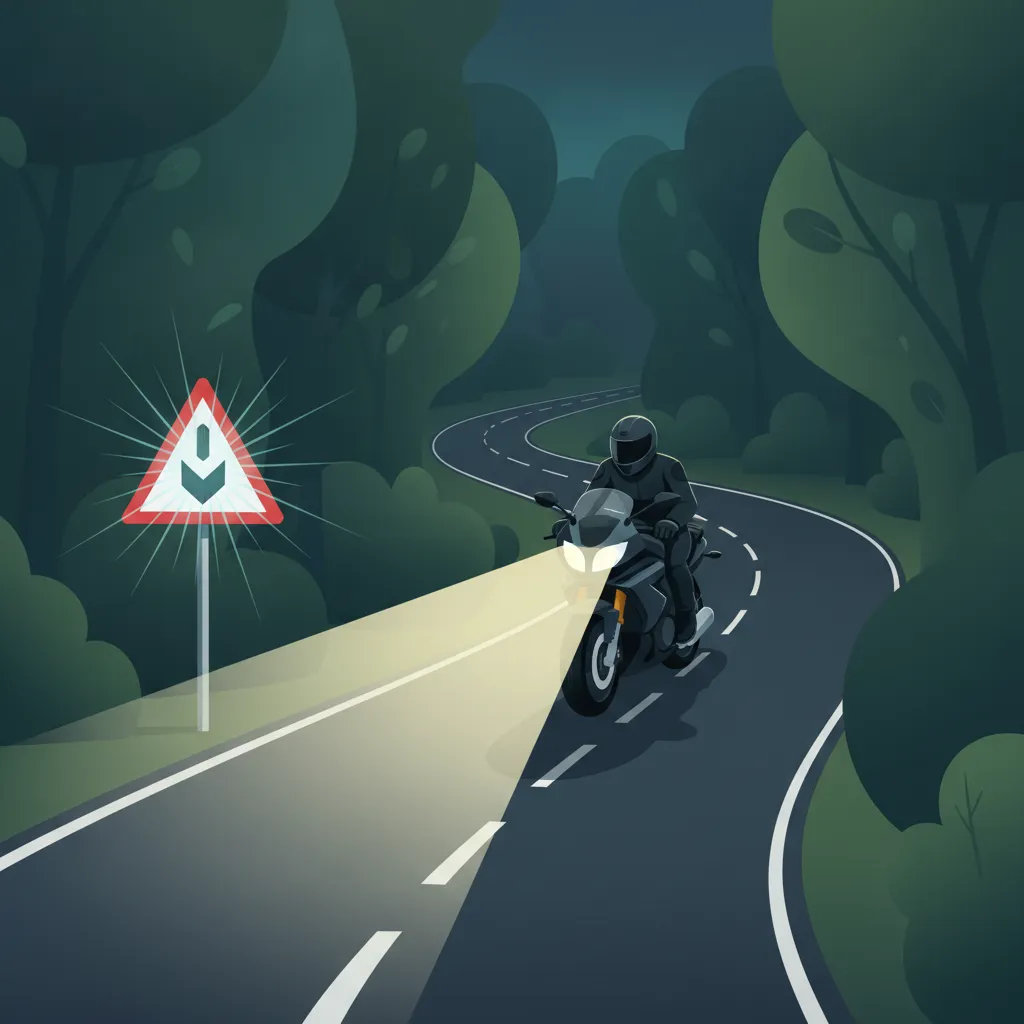
This lesson details safety strategies for riding in dark or poorly illuminated environments, focusing on headlight management and visibility limits. It explains when to use dipped and high beams to avoid blinding other motorists while maximizing your own view of the road. Riders will learn how to scan for reflective markers, manage oncoming glare, and adapt their speed to their headlight range.

Driving at night presents severe challenges due to reduced visibility, driver fatigue, and headlight glare from oncoming vehicles. This lesson teaches you how to manage your headlights, use road edge markers to steer through dark curves, and look away from oncoming bright lights. You will learn to drive within the range of your headlights and remain highly alert for pedestrians or cyclists not wearing reflective gear.

This lesson explores the safe operation of heavy transport vehicles during severe meteorological hazards typical of the Irish climate. It teaches techniques for adjusting speed and doubling following distances to prevent loss of steering traction and control on waterlogged or icy roadways. Drivers will understand how to manage lateral aerodynamic forces from crosswinds on high-sided goods vehicles.
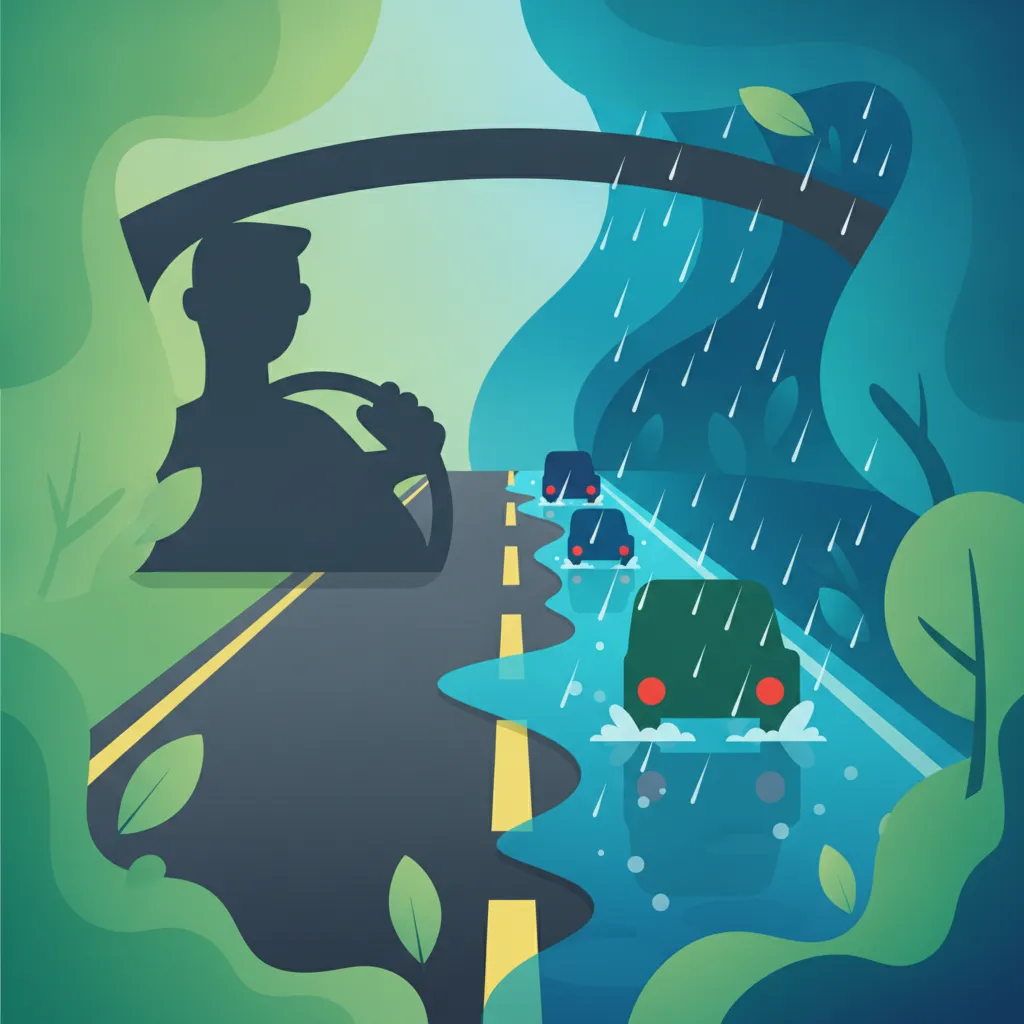
Adhering to legal speed limits is not always sufficient; you must continuously adapt your speed to match real-world hazards. This lesson teaches you how to reduce speed when encountering rain, fog, heavy traffic, or narrow winding rural roads with restricted visibility. You will learn the importance of matching your speed to your range of clear vision, ensuring you can stop safely within the distance you can see ahead.
Learn the mechanics of effective braking and how to manage grip on different road surfaces. This lesson explores the relationship between speed, vehicle maintenance, and safe stopping distances for Category AM vehicles, helping you understand how to control your bike securely in various road scenarios.
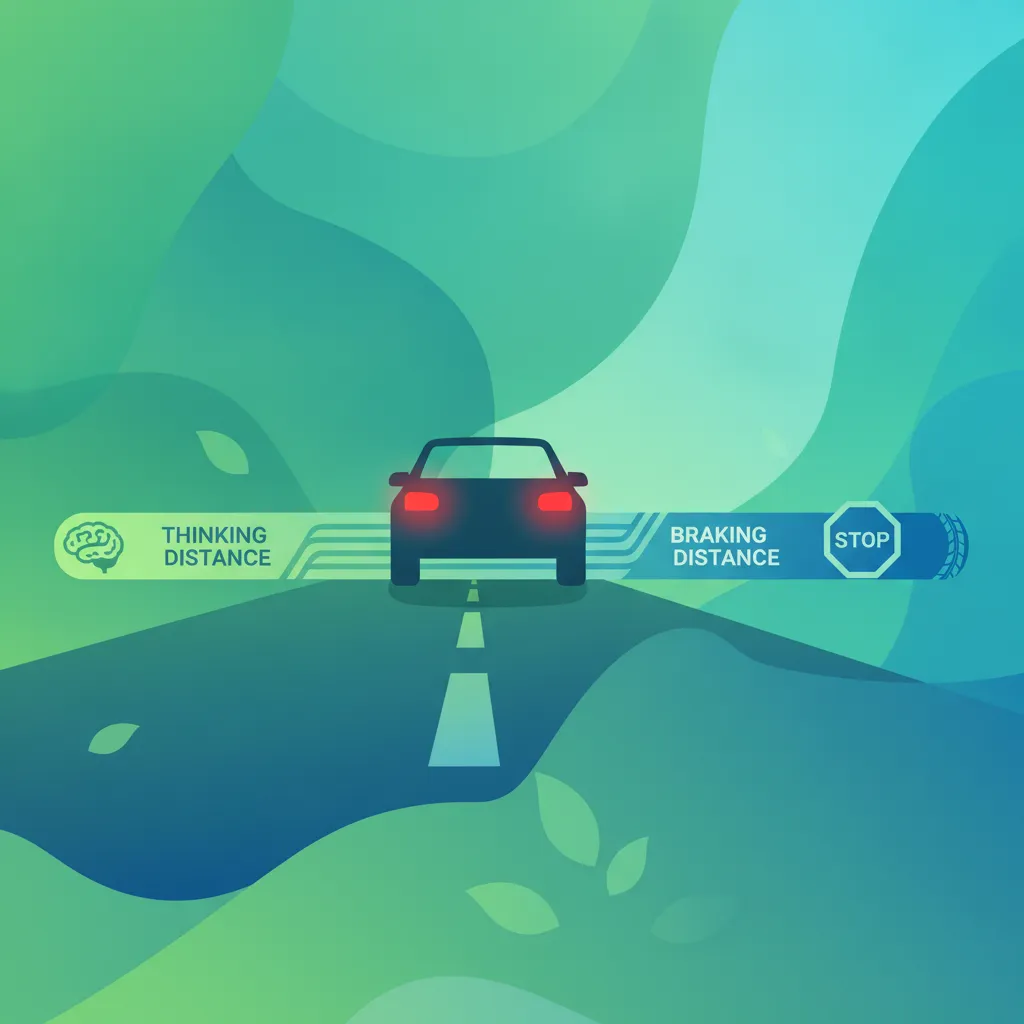
This lesson instructs riders on the correct application of the front and rear brakes to achieve smooth, controlled stopping. It explains how factors such as speed, reaction time, and tyre traction combine to determine total stopping distance. Learners will also study methods to prevent dangerous wheel lock-ups and skidding, especially in wet conditions.
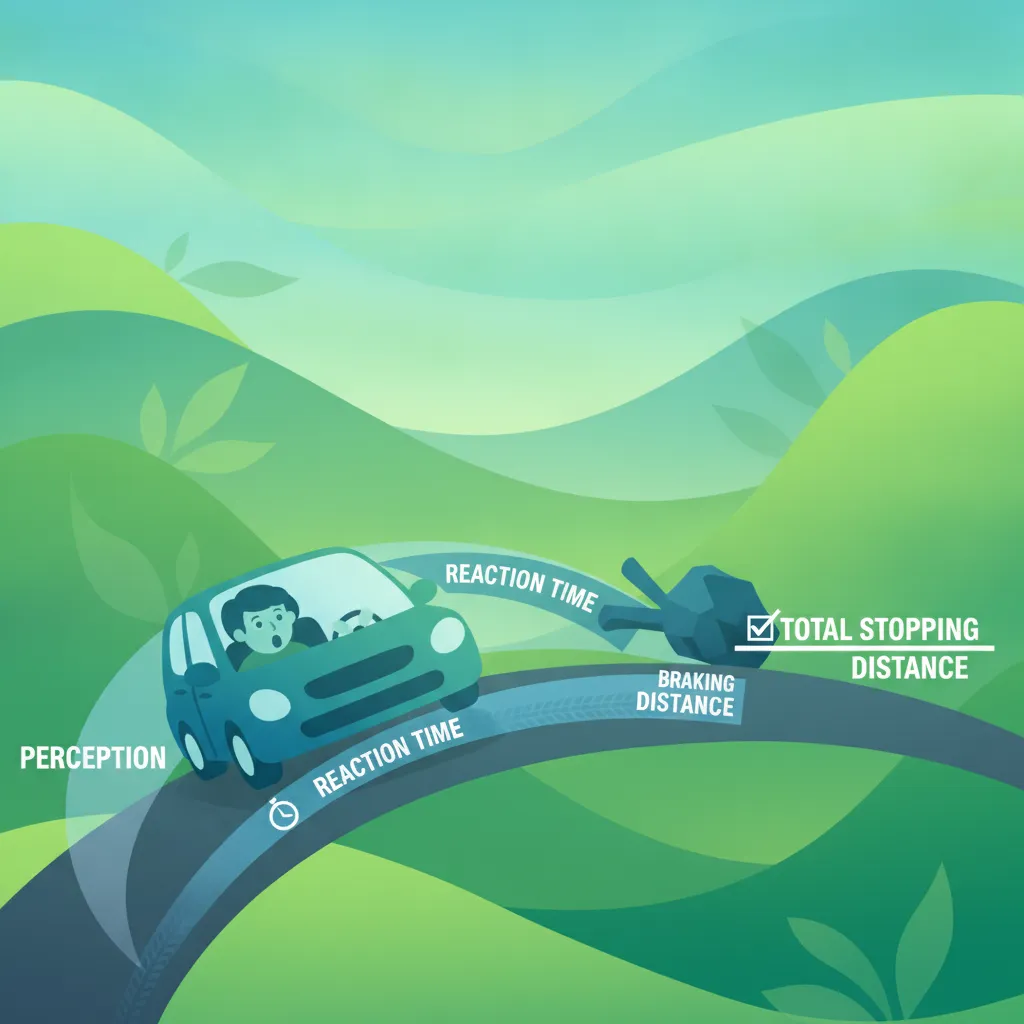
A vehicle's total stopping distance is the sum of your thinking (reaction) distance and the mechanical braking distance. This lesson explains how reaction times are slowed by fatigue, distraction, or health, and how braking distance scales exponentially with your vehicle's speed. You will understand how factors like worn tyres, bad brakes, or slippery asphalt can dramatically increase your overall stopping distance.
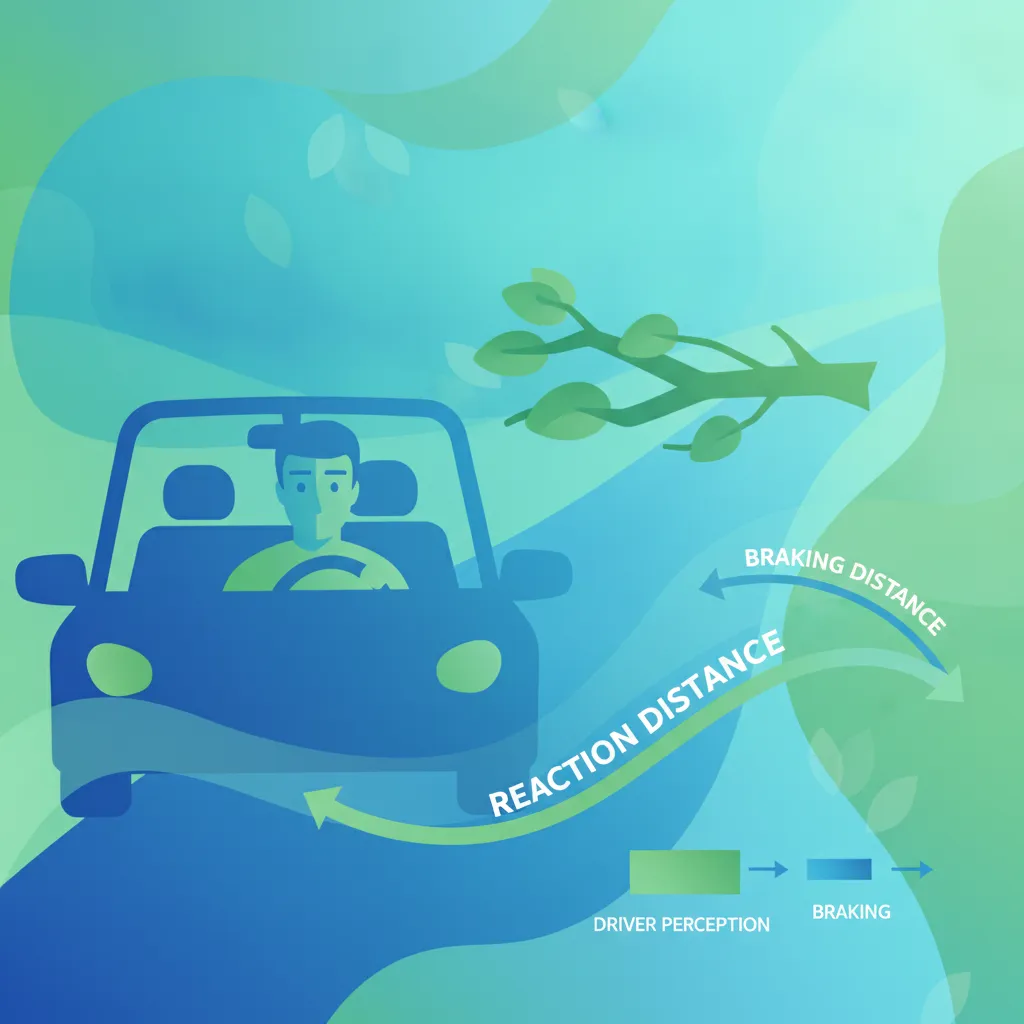
This lesson details how total stopping distance scales with vehicle mass, explaining the critical combination of perception-reaction delay and mechanical braking time. It covers the operation of main air-brake systems, auxiliary engine retarders, and trailer-coupling brake setups. Drivers will learn to maintain safe following distances and apply progressive braking patterns to avoid dangerous brake fade.
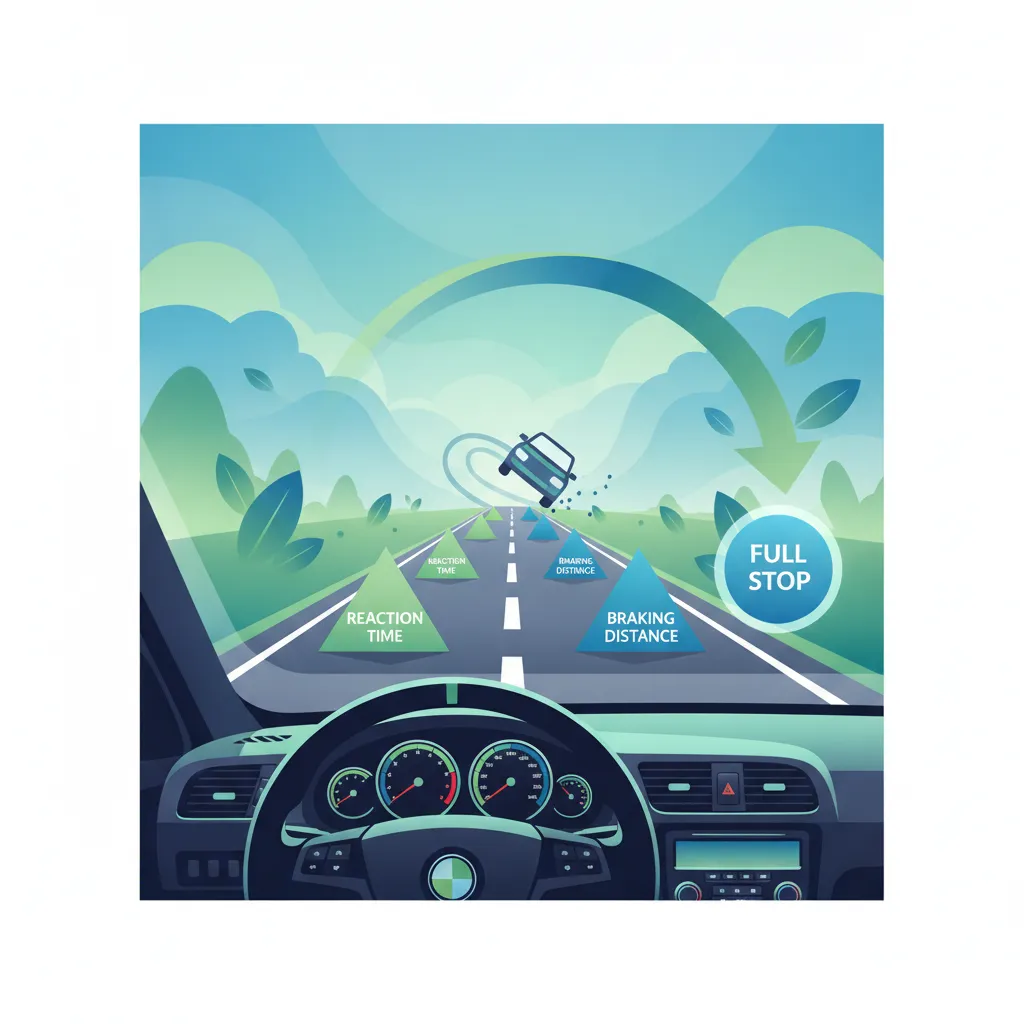
This lesson describes the physics of stopping a motorcycle, analyzing the distinct roles of the front and rear brakes during deceleration. It details how speed, road surface conditions, and vehicle weight distribution affect overall stopping distance and reaction times. Riders will learn how Anti-lock Braking Systems function and how to maximize braking force without locking the wheels.
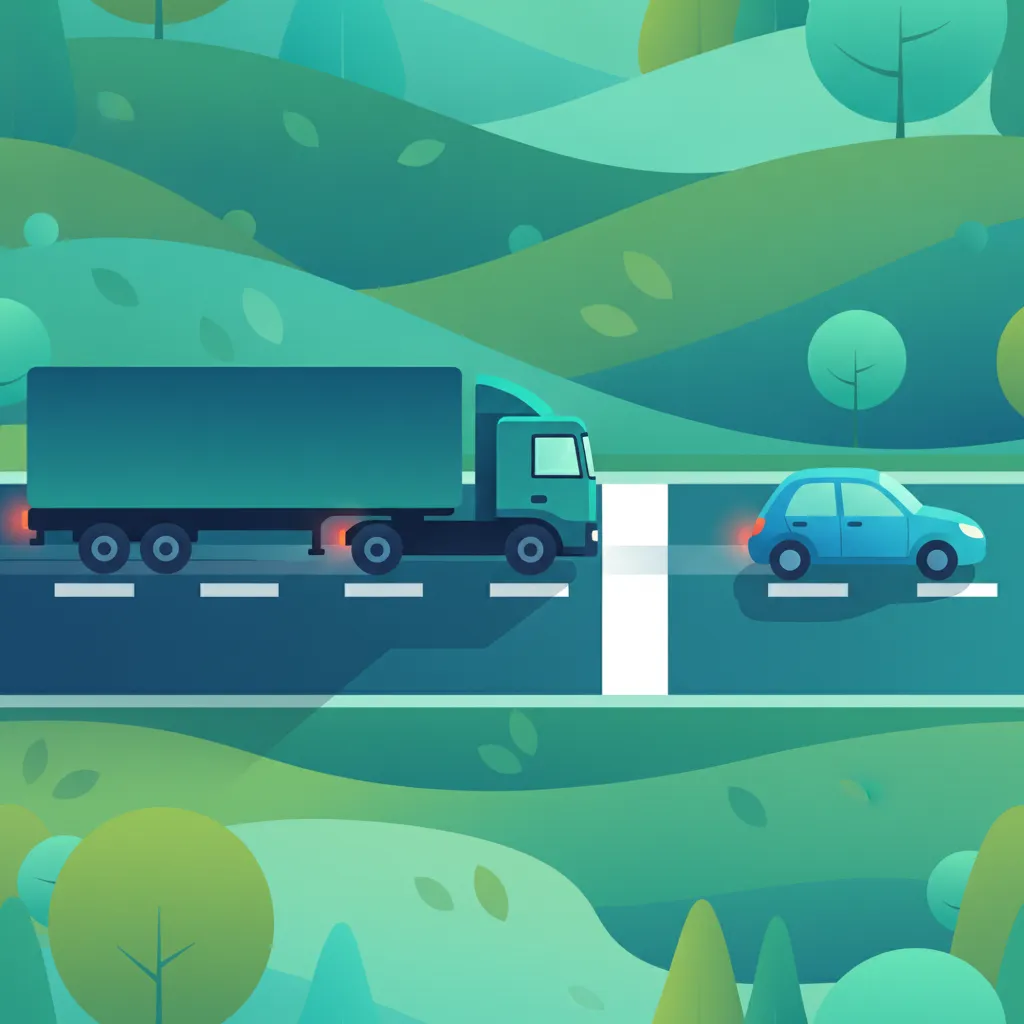
The physical scale of a coach or bus generates significant momentum that demands extensive space to bring the vehicle to a safe stop. This lesson explains vehicle weight mechanics, the physics of kinetic energy, and how center of gravity affects chassis stability during stops. Drivers will learn to assess braking capacity, accounting for wet road conditions and high passenger counts.

This lesson covers the causes of front and rear-wheel skids and teaches the correct physical responses to regain control and stability. It describes how to recover from lockups caused by excessive braking or sudden downshifts on low-traction surfaces. Motorcyclists will learn how to react calmly during sudden deceleration events, maintaining straight-line stability under extreme pressure.

Sudden or jerky vehicle movements can cause immediate discomfort or direct physical injuries to onboard passengers, particularly standing occupants. This lesson teaches progressive throttle control, gradual gear shifts, and smooth steering inputs that stabilize the heavy vehicle body. Drivers will master the technique of progressive braking to ensure comfortable, safe slowing actions at junctions.
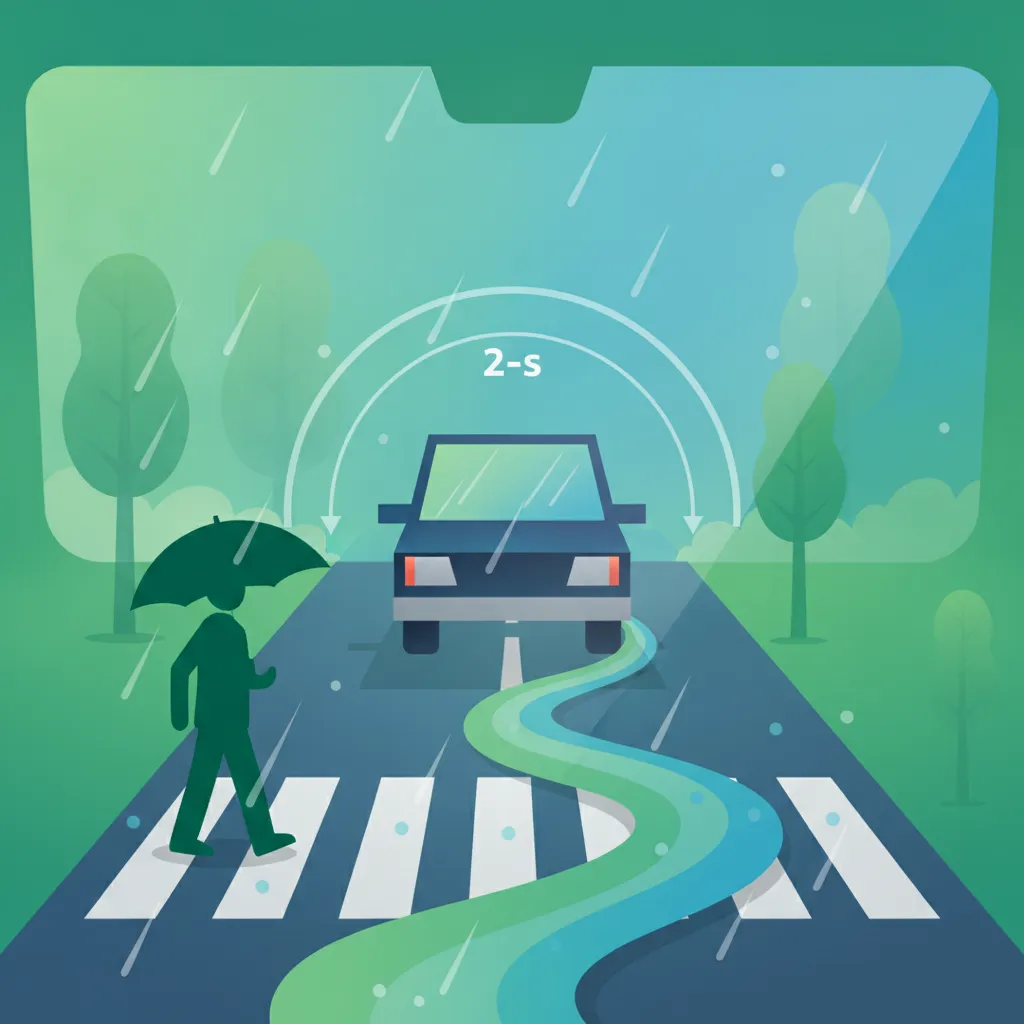
Maintaining an extensive buffer zone ahead of a large passenger vehicle is critical to ensuring enough space for emergency maneuvers. This lesson teaches the time-gap method, detailing how following distances must double on wet roads or increase with full passenger loads. It builds hazard anticipation skills, teaching drivers to read distant traffic cues and react early to hazards.

Defensive driving prepares you to react safely when facing unexpected mechanical failures or immediate road hazards. This lesson explains how to execute an emergency stop using Anti-lock Braking Systems (ABS) and how to recover from front and rear-wheel skids on slippery roads. You will learn the importance of remaining calm, avoiding panic-steering, and applying controlled evasive actions to prevent collisions.
Find clear answers to common questions learners have about Vitals Checks and Vehicle Compliance. Learn how the lesson is structured, which driving theory objectives it supports, and how it fits into the overall learning path of units and curriculum progression in Ireland. These explanations help you understand key concepts, lesson flow, and exam focused study goals.
Regular checks are essential to ensure the moped is roadworthy and complies with Irish law. Failure to maintain a safe vehicle can lead to mechanical failure, accidents, and penalties for operating an unroadworthy vehicle.
Always check for adequate tread depth, proper inflation as recommended by your manufacturer, and any visible signs of damage, cracks, or embedded objects that could cause a blowout.
Yes, mirrors must be securely fitted, clean, and adjusted to give you the widest possible view of the road behind you. Always check them before you begin your journey to minimize blind spots.
The Driver Theory Test includes questions on vehicle safety and maintenance. Understanding these basics ensures you can correctly identify safe versus unsafe vehicle conditions in exam scenarios.
Use the practice question search tool to pinpoint specific topics, road signs, or rules you need to master for your official Driver Theory Test. Refine your study strategy and ensure comprehensive preparation for all aspects of the Irish driving exam. Start your focused revision now and build confidence for your learner permit test.