
This lesson explores the vital skill of matching your speed to ever-changing road and environmental conditions. As part of our Category B preparation, you will learn why legal speed limits are maximums rather than targets and how to adjust your pace to maintain control in challenging Irish driving scenarios.
Lesson content overview
A critical mark of a competent Category B driver is the ability to recognize that legal speed limits represent the absolute maximum speed permitted under ideal conditions, not a target speed to be maintained at all times. On public roads, conditions are rarely perfect. Whether you are navigating a wet national road, driving through dense fog on a motorway, or handling a winding rural lane, safety demands that you dynamically adjust your speed to the hazards around you.
Under Irish road traffic regulations, failing to adapt your speed to the prevailing environmental, traffic, or road conditions can lead to prosecutions for careless or dangerous driving, regardless of the posted speed limit. This lesson covers how to evaluate external hazards and safely modulate your speed to ensure you always maintain complete control of your vehicle.
Safe driving requires a proactive approach to speed control rather than a reactive one. To protect yourself and other road users, you must understand three core safety concepts: the Safety Margin, Vision Range Matching, and Graduated Speed Reduction.
A safety margin is the extra time and space you deliberately maintain around your vehicle beyond the bare minimum legal requirements. When conditions deteriorate, your physical grip on the road decreases and your reaction time may be challenged. By choosing a lower speed, you actively expand this buffer zone, giving yourself more time to perceive a hazard, decide on a course of action, and execute a safe maneuver.
The most fundamental rule of speed selection is that you must always drive at a speed that allows you to stop safely within the distance you can see to be clear ahead.
On a straight motorway in bright daylight, your vision range may extend hundreds of metres. On a narrow, high-hedged rural road or in dense fog, that range may drop to less than twenty metres. If your stopping distance at a given speed is greater than your clear line of sight, you are driving blindly into potential disaster.
Abrupt, panic-induced braking is a primary cause of skids and multi-vehicle collisions. Graduated speed reduction is the practice of systematically and smoothly lowering your speed in anticipation of changing hazards. By releasing the accelerator early and using engine braking before gently applying the footbrake, you signal your intentions clearly to vehicles behind you and maintain maximum stability.
Ireland's weather is notoriously changeable. Rain, fog, wind, and frost can dramatically alter the driving environment within minutes.
Rain affects your drive in two distinct ways: it severely reduces visibility and it reduces tyre grip on the road surface.
A dangerous driving condition where a layer of water prevents a vehicle's tyres from contacting the road surface, leading to a complete loss of traction, steering, and braking control.
If you feel the steering become light or unresponsive due to standing water:
Fog is one of the most hazardous conditions a driver can face because it severely distorts your perception of speed and distance.
Never use your high-beam (full-beam) headlights in fog. The intense light will reflect off the tiny water droplets in the air directly back into your eyes, creating a blinding white glare that completely ruins your night vision.
Reduce Speed Drastically: Slow down to a speed where your stopping distance is well within your restricted vision range. If you can only see 20 metres ahead, you must drive slowly enough to stop within 20 metres.
Use Dipped Headlights: Switch on your dipped headlights so other drivers can see you without causing back-glare.
Deploy Fog Lights: If visibility is reduced to less than 100 metres, switch on your front and rear fog lights. You must switch them off immediately when visibility improves to avoid dazzling other drivers.
Turn Off Distractions: Roll down your window slightly at junctions to listen for oncoming traffic that you may not be able to see.
Winter driving requires extreme caution. Ice, black ice (a transparent layer of ice on the road surface), and packed snow can reduce tyre grip to near zero, increasing your stopping distance by up to ten times compared to dry conditions.
Selecting a safe speed is not just about the weather; it also depends on the volume and behavior of surrounding traffic.
In heavy, congested traffic, maintaining the posted speed limit is often impossible and highly dangerous. You must match the general flow of traffic while preserving your safety margins:
The physical layout of the road should dictate your maximum speed. Ireland has a vast network of regional and local rural roads where speed limits are set nationally but are frequently unsafe to maintain.
Many rural local roads carry an 80 km/h speed limit, yet they are narrow, winding, poorly surfaced, and bordered by stone walls or high hedges.
In urban areas, lower speeds (such as 30 km/h or 50 km/h) are legally mandated because of the high density of vulnerable road users.
To understand why a small increase in speed requires a massive adjustment in driving behavior, you must look at the physical forces acting on your vehicle.
Kinetic energy is the energy an object possesses due to its motion. The formula for kinetic energy is:
Where is the vehicle mass and is the velocity (speed). Because velocity is squared (), any increase in speed has an exponential impact on kinetic energy:
Your total stopping distance is comprised of two distinct components:
On wet or icy surfaces, while your thinking distance remains unchanged, the braking distance increases dramatically due to a lower coefficient of friction between the rubber tyre and the road.
Your vehicle’s mechanical state directly affects how safe it is to drive at higher speeds.
| Environmental / Traffic Condition | Recommended Speed Adjustment | Primary Safety Action |
|---|---|---|
| Normal Dry Conditions | Up to the posted legal speed limit. | Maintain the Two-Second Rule gap. |
| Wet Road Surface / Rain | Reduce speed below the limit. | Double your following gap to at least four seconds. Watch for aquaplaning. |
| Dense Fog / Mist | Drastic speed reduction (e.g., 20-40 km/h or lower). | Switch on dipped headlights and fog lights; stop within visible distance. |
| Snow and Ice | Extreme speed reduction (drive very slowly, high gears). | Increase your following distance up to ten times the normal gap. |
| Narrow Rural Roads | Drive at a speed appropriate for sightlines (often 40-50 km/h). | Prepare to stop within the visible distance on your side of the road. |
| Heavy Traffic / Congestion | Match traffic flow; maintain safety margin. | Increase gap if being tailgated; avoid stop-and-go acceleration. |
This lesson teaches Category B drivers to move beyond speed limit compliance and actively manage speed based on real-world conditions. The core principle is Vision Range Matching: you must always drive slowly enough to stop within your visible distance. Key adaptations include doubling your following gap to four seconds in rain, using dipped headlights and fog lights in fog, and reducing speed dramatically in snow or ice where stopping distances can increase tenfold. Understanding that kinetic energy increases with the square of speed explains why even modest speed increases dramatically extend braking distances, reinforcing why graduated speed reduction and proactive hazard anticipation are essential skills for safe Irish driving.
A short set of high-value points that capture the most important learning from this lesson.
Legal speed limits are maximums under ideal conditions, not targets to drive at all the time
You must always drive at a speed that allows you to stop safely within the distance you can see ahead (Vision Range Matching)
Wet roads double your following distance requirement to at least four seconds, while icy conditions can extend stopping distance up to ten times
Aquaplaning causes complete loss of steering and braking control; ease off the accelerator smoothly without sudden braking or steering
Kinetic energy increases with the square of speed, meaning doubling your speed quadruples your braking distance
Explore all units and lessons included in this driving theory course.
Two-Second Rule applies on dry roads; Four-Second Rule applies on wet roads due to halved tyre friction
In fog, use dipped headlights (never high-beam) and fog lights when visibility drops below 100 metres
Black ice forms first on bridges, overpasses, and sheltered rural stretches and is nearly invisible
If your vehicle begins to skid, steer into the direction of the skid to regain control
Heavy loads increase braking distance; compensate by reducing speed and increasing following gap
Assuming that driving at the posted speed limit is always safe regardless of conditions
Believing that small increases in speed have only a minor impact on stopping distance (they have an exponential impact)
Using high-beam headlights in fog, which reflects light back and worsens visibility
Braking abruptly or turning sharply when aquaplaning, which causes loss of vehicle control
Speeding up when tailgated instead of increasing distance to the vehicle ahead
Lesson content overview
A short set of high-value points that capture the most important learning from this lesson.
Legal speed limits are maximums under ideal conditions, not targets to drive at all the time
You must always drive at a speed that allows you to stop safely within the distance you can see ahead (Vision Range Matching)
Wet roads double your following distance requirement to at least four seconds, while icy conditions can extend stopping distance up to ten times
Aquaplaning causes complete loss of steering and braking control; ease off the accelerator smoothly without sudden braking or steering
Kinetic energy increases with the square of speed, meaning doubling your speed quadruples your braking distance
Explore all units and lessons included in this driving theory course.
Two-Second Rule applies on dry roads; Four-Second Rule applies on wet roads due to halved tyre friction
In fog, use dipped headlights (never high-beam) and fog lights when visibility drops below 100 metres
Black ice forms first on bridges, overpasses, and sheltered rural stretches and is nearly invisible
If your vehicle begins to skid, steer into the direction of the skid to regain control
Heavy loads increase braking distance; compensate by reducing speed and increasing following gap
Assuming that driving at the posted speed limit is always safe regardless of conditions
Believing that small increases in speed have only a minor impact on stopping distance (they have an exponential impact)
Using high-beam headlights in fog, which reflects light back and worsens visibility
Braking abruptly or turning sharply when aquaplaning, which causes loss of vehicle control
Speeding up when tailgated instead of increasing distance to the vehicle ahead
Explore search topics learners often look for when studying Adjusting Speed for Weather, Traffic and Road Conditions. These topics reflect common questions about road rules, driving situations, safety guidance, and lesson level theory preparation for learners in Ireland.
Browse additional driving theory lessons that cover connected traffic rules, road signs, and common driving situations related to this topic. Improve your understanding of how different rules interact across everyday traffic scenarios.
Understand the technical relationship between speed, driver reaction time, and braking distance. This guide explains how physical forces and vehicle momentum impact your ability to stop safely in various road conditions as required by the Rules of the Road.
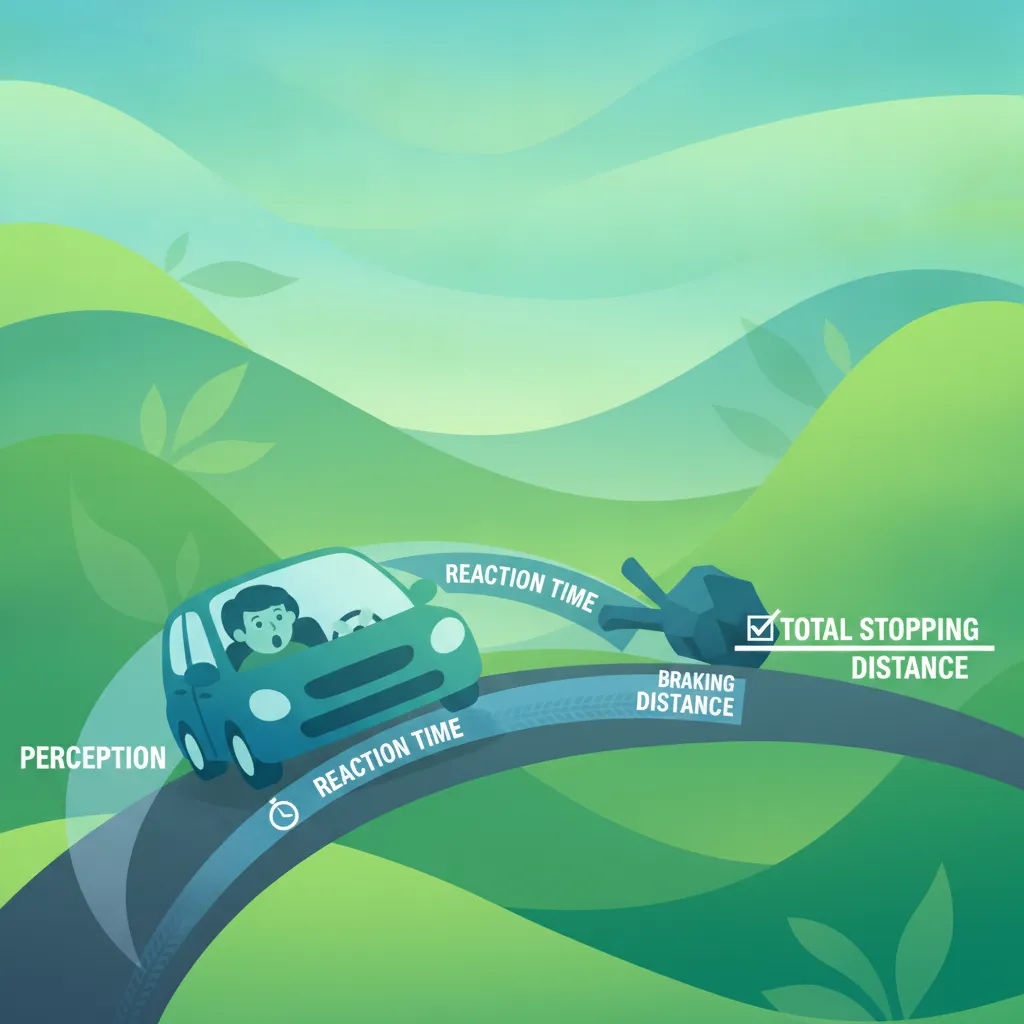
A vehicle's total stopping distance is the sum of your thinking (reaction) distance and the mechanical braking distance. This lesson explains how reaction times are slowed by fatigue, distraction, or health, and how braking distance scales exponentially with your vehicle's speed. You will understand how factors like worn tyres, bad brakes, or slippery asphalt can dramatically increase your overall stopping distance.
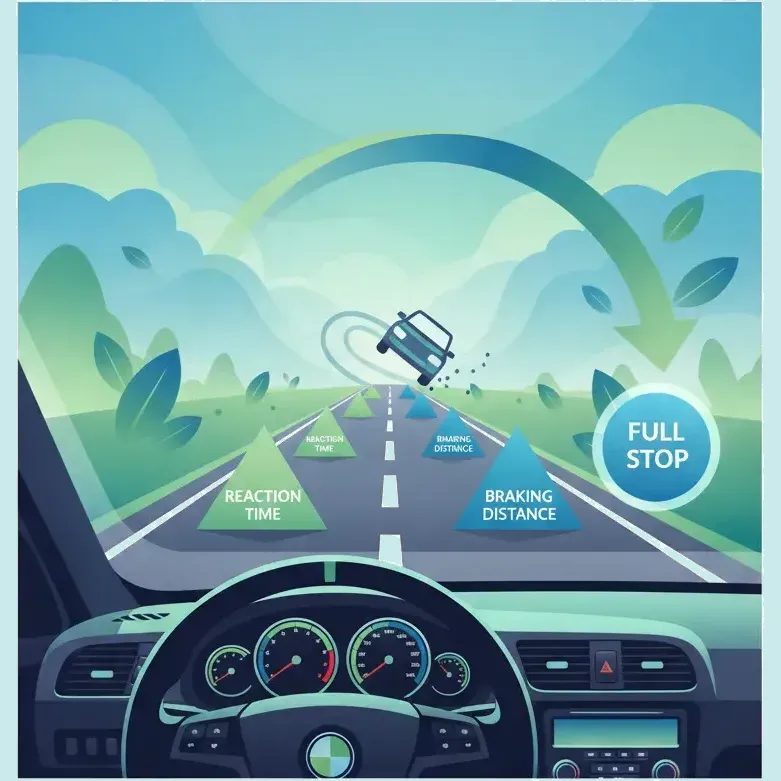
This lesson describes the physics of stopping a motorcycle, analyzing the distinct roles of the front and rear brakes during deceleration. It details how speed, road surface conditions, and vehicle weight distribution affect overall stopping distance and reaction times. Riders will learn how Anti-lock Braking Systems function and how to maximize braking force without locking the wheels.
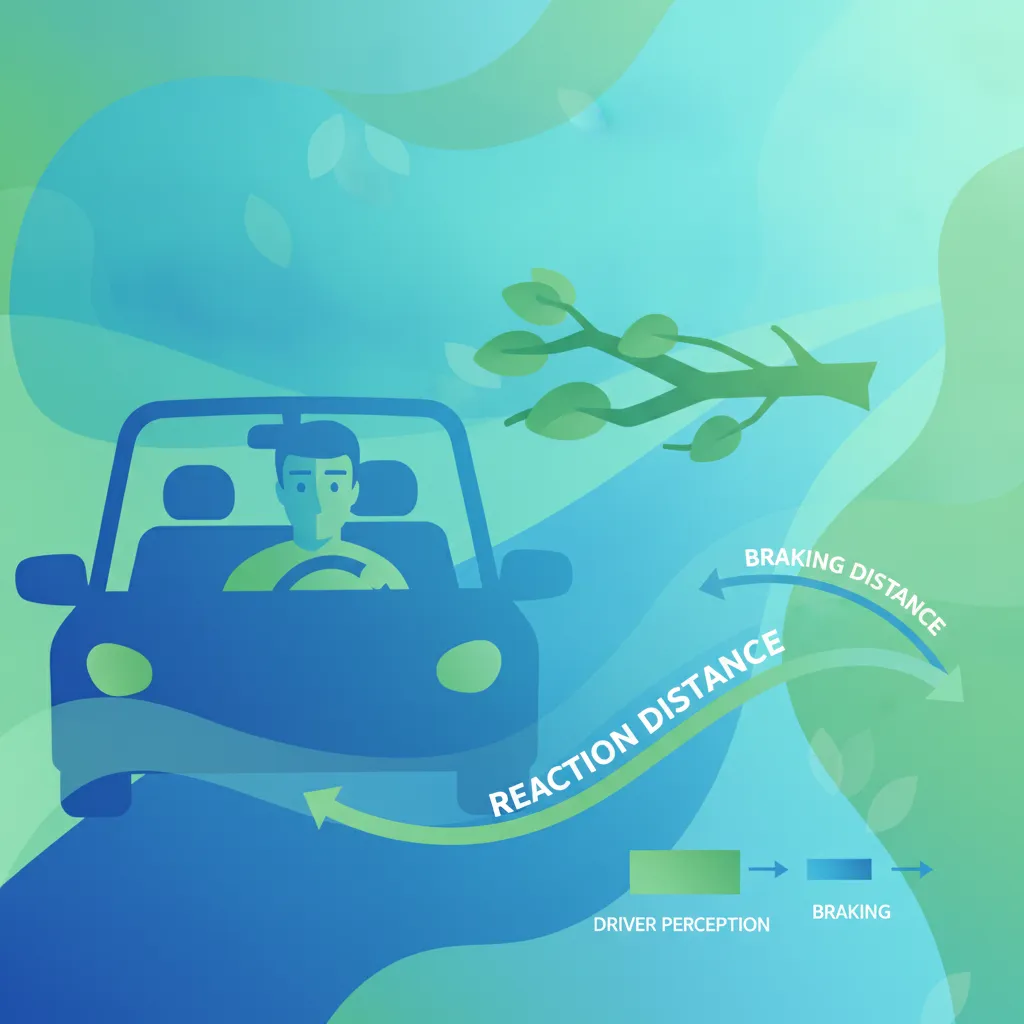
This lesson details how total stopping distance scales with vehicle mass, explaining the critical combination of perception-reaction delay and mechanical braking time. It covers the operation of main air-brake systems, auxiliary engine retarders, and trailer-coupling brake setups. Drivers will learn to maintain safe following distances and apply progressive braking patterns to avoid dangerous brake fade.
The physical scale of a coach or bus generates significant momentum that demands extensive space to bring the vehicle to a safe stop. This lesson explains vehicle weight mechanics, the physics of kinetic energy, and how center of gravity affects chassis stability during stops. Drivers will learn to assess braking capacity, accounting for wet road conditions and high passenger counts.
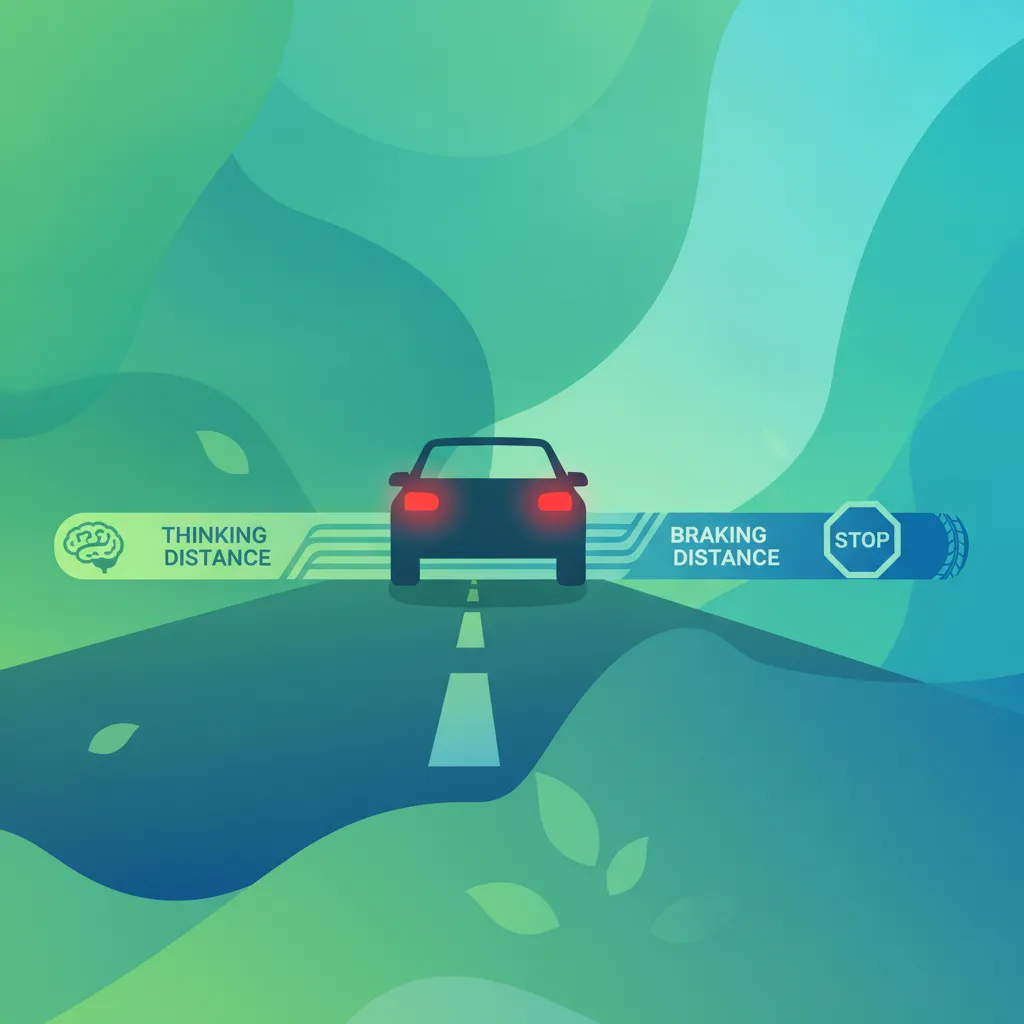
This lesson instructs riders on the correct application of the front and rear brakes to achieve smooth, controlled stopping. It explains how factors such as speed, reaction time, and tyre traction combine to determine total stopping distance. Learners will also study methods to prevent dangerous wheel lock-ups and skidding, especially in wet conditions.
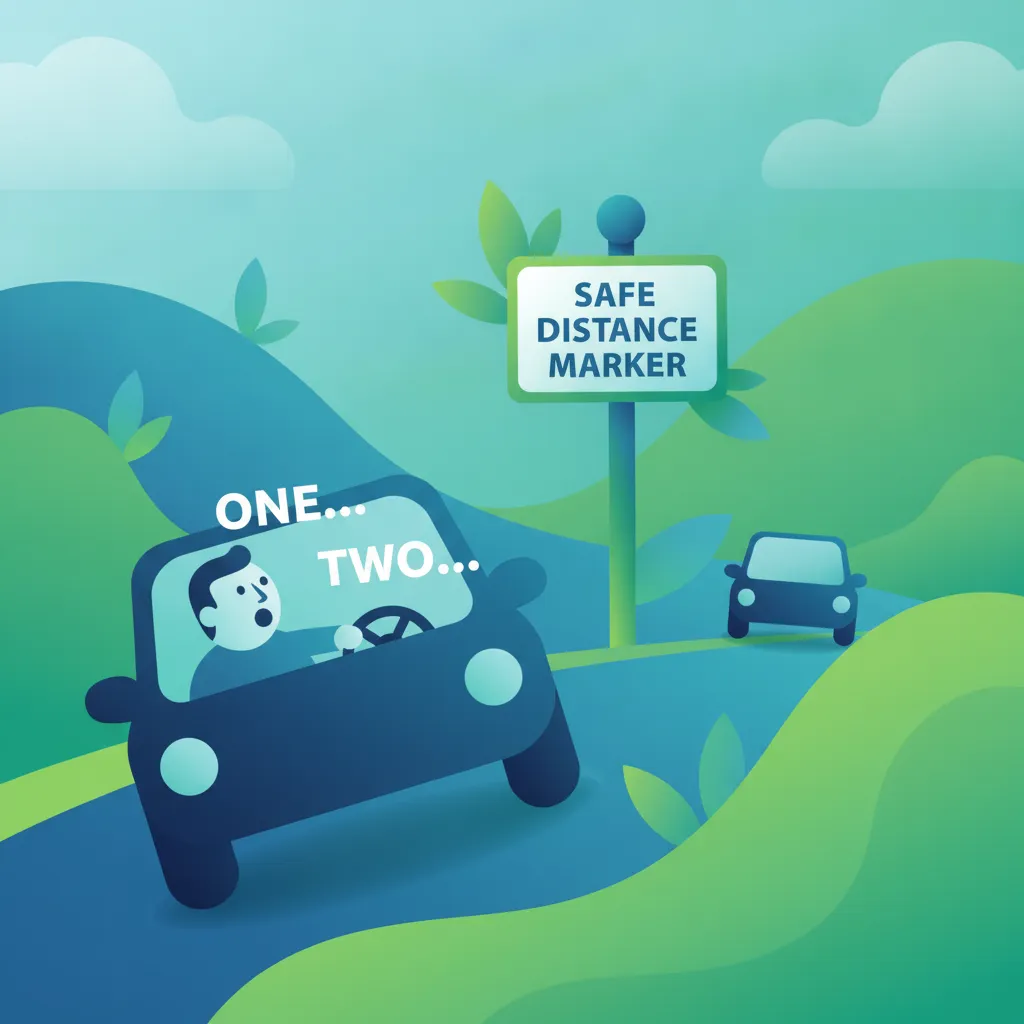
Maintaining an adequate following distance provides you with the crucial time and space needed to react if the leading vehicle stops suddenly. This lesson teaches the 'two-second rule' for dry road conditions, and why you must double this gap to at least four seconds on wet or greasy road surfaces. You will learn how to use stationary roadside markers to calculate this distance and avoid the severe dangers of tailgating.
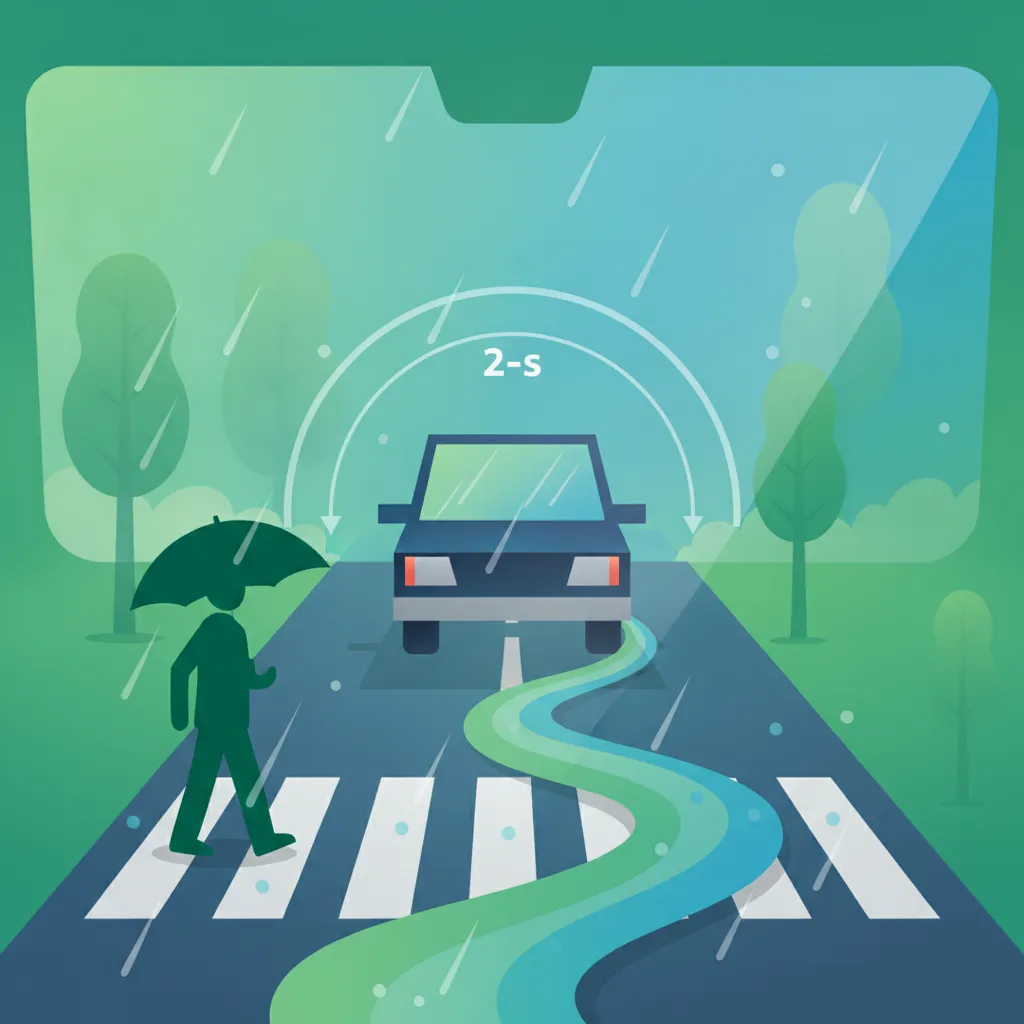
Maintaining an extensive buffer zone ahead of a large passenger vehicle is critical to ensuring enough space for emergency maneuvers. This lesson teaches the time-gap method, detailing how following distances must double on wet roads or increase with full passenger loads. It builds hazard anticipation skills, teaching drivers to read distant traffic cues and react early to hazards.
Ireland enforces strict blood alcohol concentration (BAC) limits, with a near zero-tolerance policy of 20 milligrams for learner and novice drivers. This lesson explains how alcohol impairs your cognitive functions, slows your reaction times, and distorts your depth perception. You will learn about mandatory Garda breathalyser checkpoints, the severe penalties for refusal, and the safety rule that only time eliminates alcohol.
Defensive driving prepares you to react safely when facing unexpected mechanical failures or immediate road hazards. This lesson explains how to execute an emergency stop using Anti-lock Braking Systems (ABS) and how to recover from front and rear-wheel skids on slippery roads. You will learn the importance of remaining calm, avoiding panic-steering, and applying controlled evasive actions to prevent collisions.
School zones and pedestrian crossings require high driver alertness and strict compliance with local speed limits in Ireland. This lesson details the legal rules of zebra and pelican crossings, explaining driver requirements when amber warning beacons are flashing. Drivers will study safety procedures for dropping off or picking up children, preventing common blind-spot accidents near schools.
Learn to identify specific risks associated with narrow rural roads, blind bends, and farm vehicle interactions. This lesson details how to anticipate hazards in environments with restricted visibility and explains the necessary adjustments for safer driving in the Irish countryside.
Irish rural roads are often narrow, winding, and bordered by high hedges, presenting unique hazards compared to urban streets. This lesson focuses on scanning for hidden hazards such as slow-moving farm machinery, mud on the road surface, and loose livestock. You will learn how to adjust your speed before entering blind bends, sound your horn at blind crests, and safely share the road with local agricultural traffic.
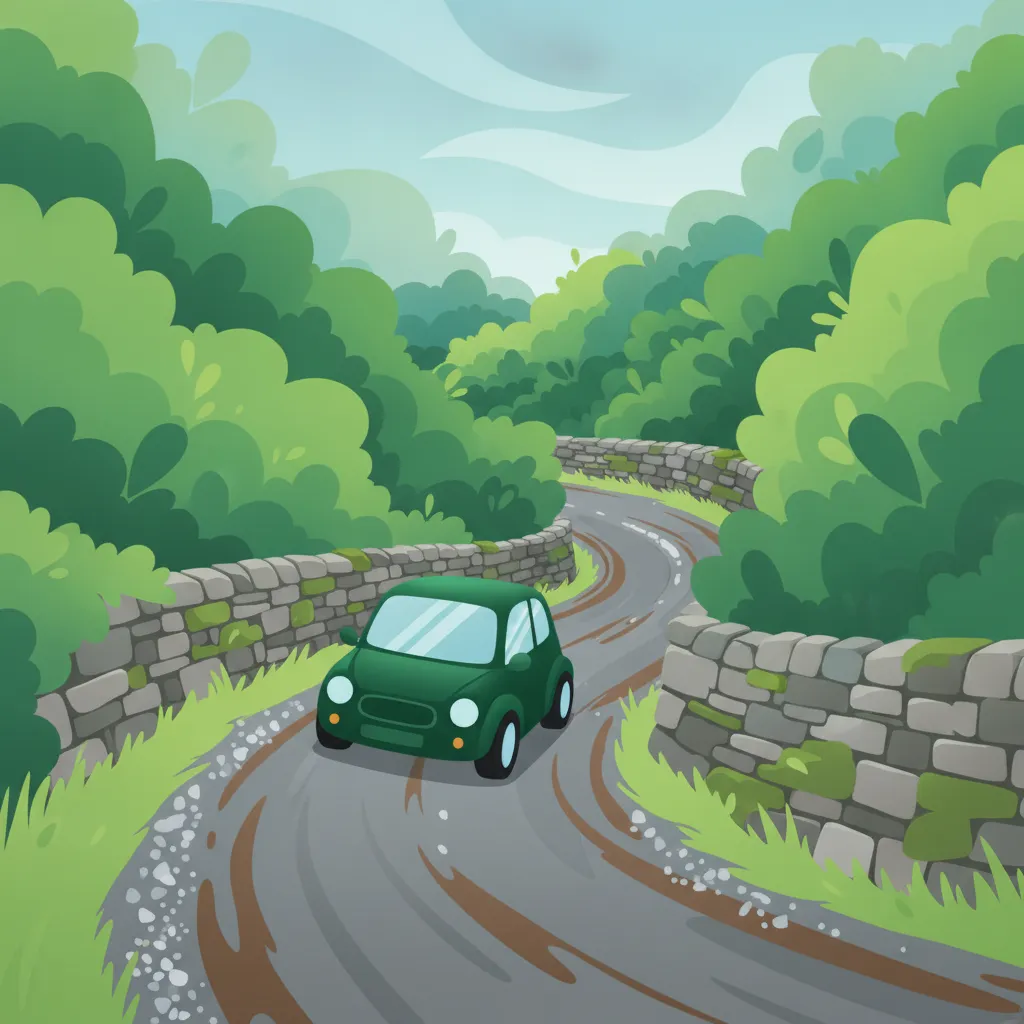
Irish rural routes are often narrow, lacking central markings, and bordered by tall hedges that restrict forward visibility on sharp bends. This lesson teaches drivers how to negotiate blind curves, anticipate slow-moving agricultural machinery, and respond to wandering farm animals. Drivers will learn to regulate vehicle speed proactively, maintaining a safe stopping margin in rural areas.
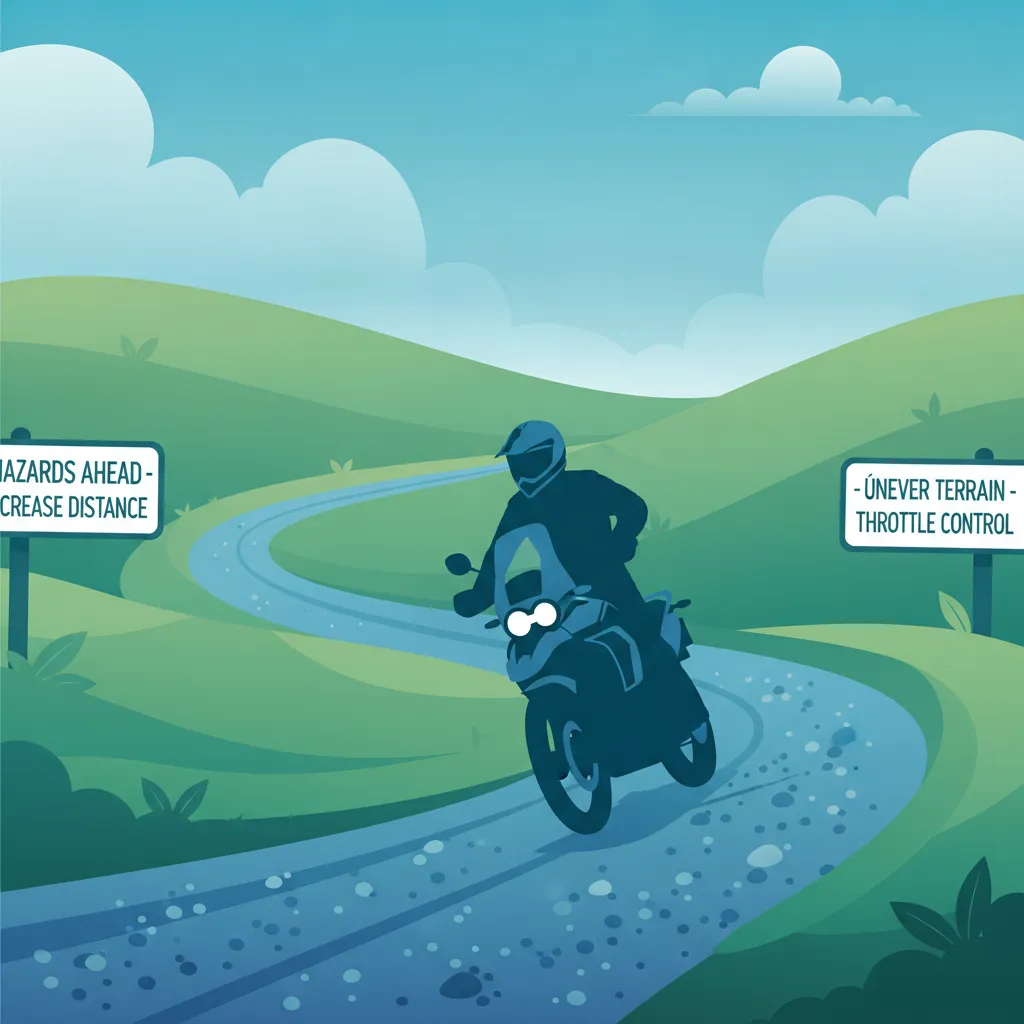
This lesson focuses on riding techniques suited for gravel, loose surfaces, and rural roads. Learners will understand how to maintain stability, adjust braking and cornering approaches, and anticipate hazards such as potholes and farm vehicles, following RSA guidance for safe riding in the Irish countryside.
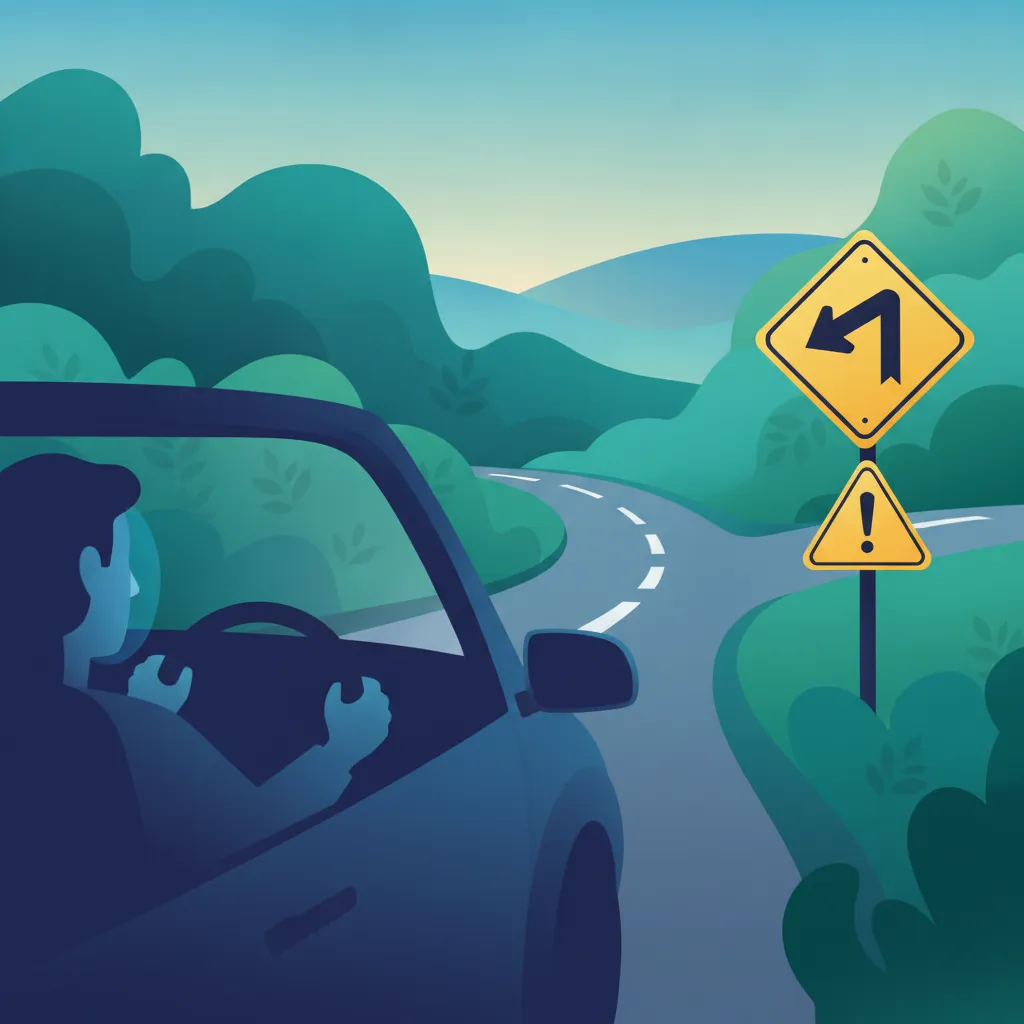
Warning signs in Ireland are typically diamond-shaped with yellow backgrounds and black symbols, indicating potential dangers on the road ahead. This lesson details signs for upcoming sharp bends, narrow roads, steep hills, pedestrian activity, and animal hazards. Learning to spot these warning indicators early allows you to reduce speed safely and adjust your vehicle positioning before encountering the hazard itself.
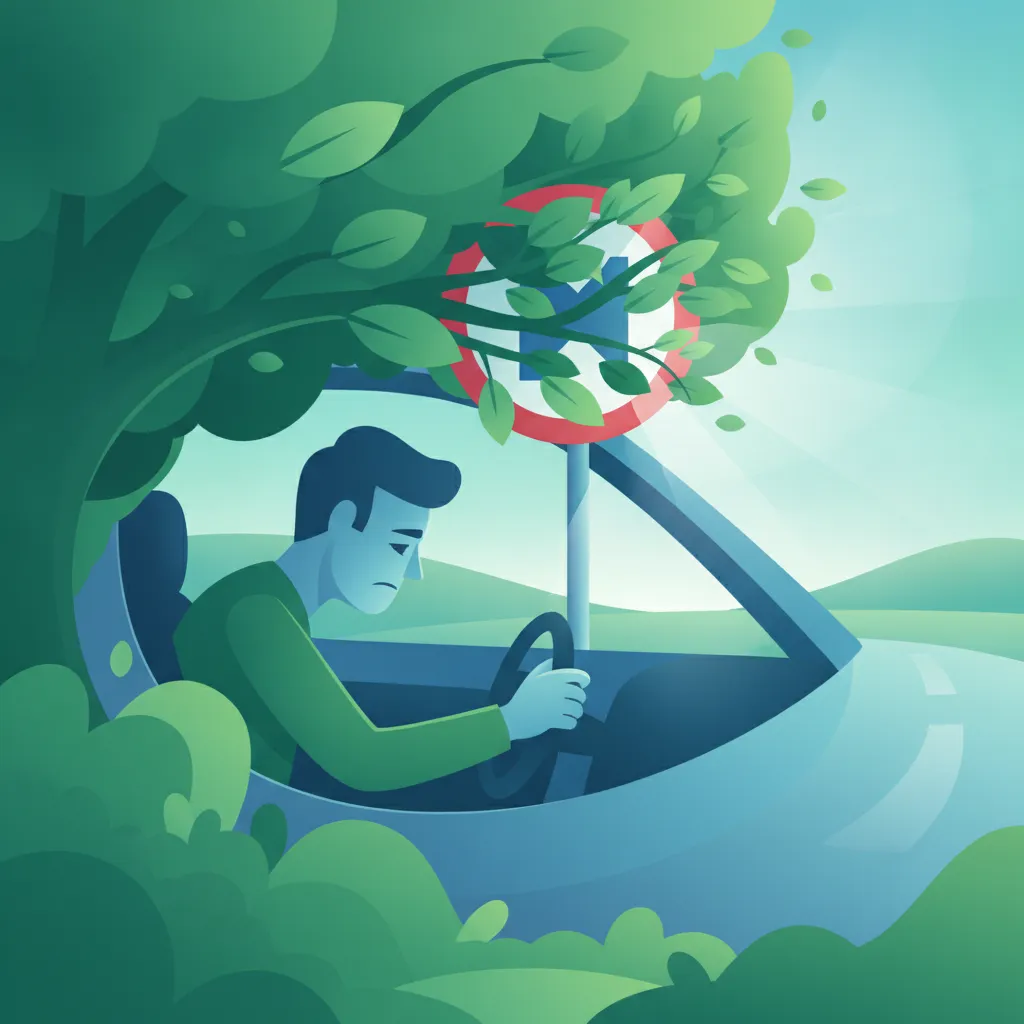
This lesson outlines how motorcyclists should respond when permanent road signs are dirty, damaged, or hidden by overgrown trees and hedges. It introduces the temporary signage, warning cones, and detour markers commonly deployed at active roadwork zones in Ireland. Riders will learn to read the road ahead defensively, reducing speed when visual information is incomplete or compromised.
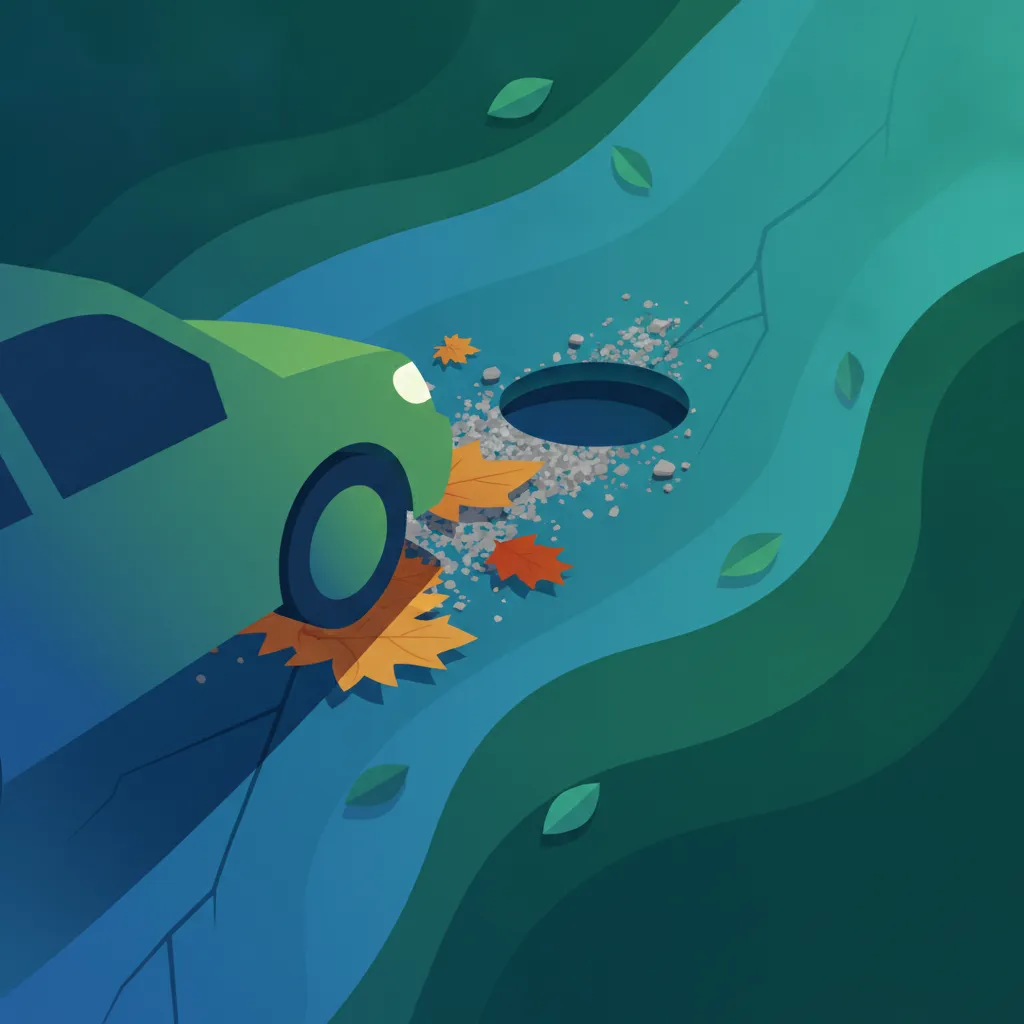
This lesson explores common surface hazards encountered on municipal and rural Irish roads, including loose gravel and wet leaves. It explains how these surface conditions rapidly reduce tyre traction and affect overall handling and braking control. Riders will learn visual scanning techniques to identify these hazards early and execute safe evasion maneuvers.
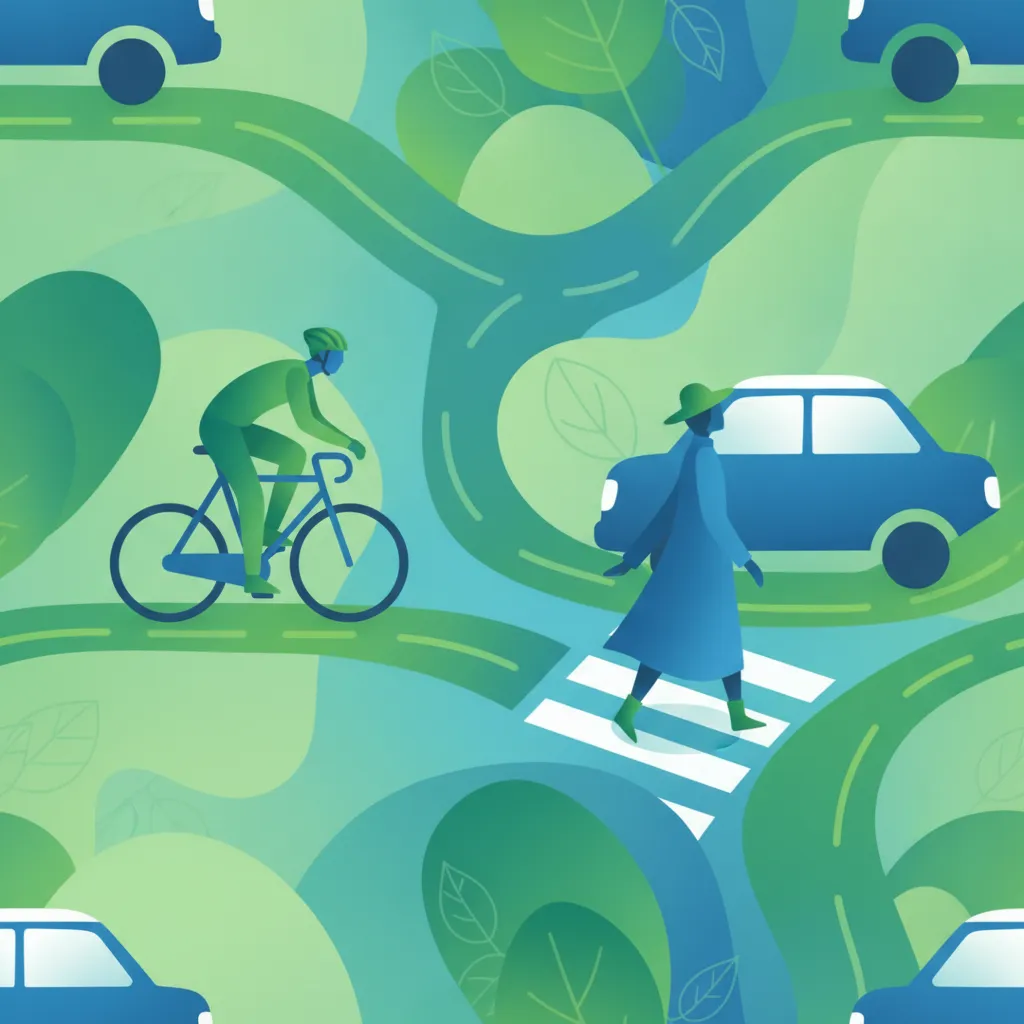
Heavy vehicles require continuous visual scanning to identify small or slow-moving road users who may enter the path of travel. This lesson explores the typical behaviors of young children, elderly pedestrians, and visually impaired road users. Drivers will build strong hazard perception skills to anticipate sudden movements, ensuring they can brake safely and avoid serious accidents.
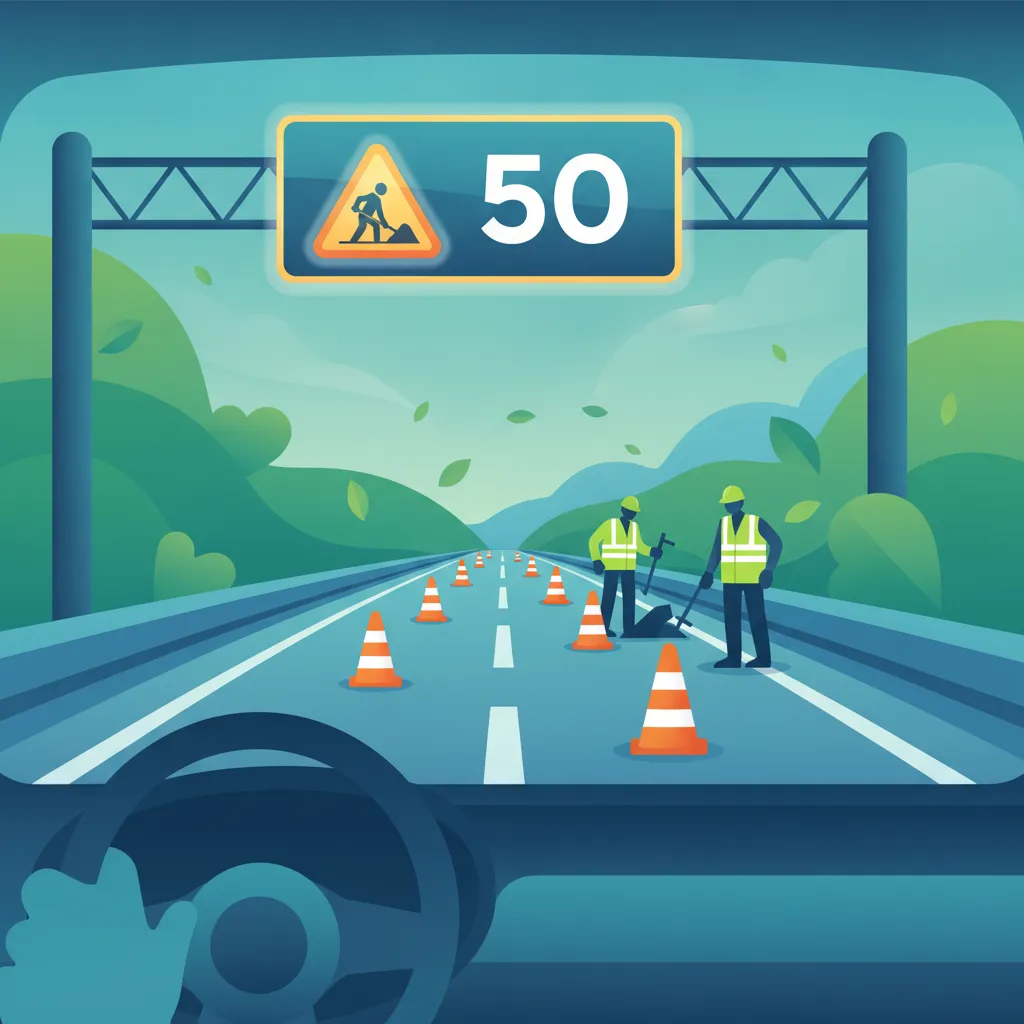
Variable Message Signs and roadwork indicators communicate temporary safety conditions, such as lane closures, heavy delays, or dynamic speed restrictions. This lesson teaches you how to interpret digital overhead gantries, temporary hazard cones, and specific detour layouts often encountered on Irish motorways and regional routes. Adhering to these real-time instructions protects both you and the vulnerable road crews working ahead.
Find clear answers to common questions learners have about Adjusting Speed for Weather, Traffic and Road Conditions. Learn how the lesson is structured, which driving theory objectives it supports, and how it fits into the overall learning path of units and curriculum progression in Ireland. These explanations help you understand key concepts, lesson flow, and exam focused study goals.
The theory exam tests your understanding that speed limits are the legal maximum for ideal conditions. You must always adjust your speed downward if weather, traffic, or road visibility make the posted limit unsafe to maintain control.
You should reduce your speed whenever you cannot see clearly ahead, such as in heavy rain, fog, or when approaching a sharp bend on a rural road. Always ensure you can stop your vehicle within the distance you can clearly see to be empty.
No, you must increase your following distance in bad weather. In wet conditions, it is recommended to double your following distance to at least four seconds, and even more in icy or snowy conditions to account for longer stopping distances.
Yes, many questions present a scenario where you are driving at the speed limit but the conditions are poor. The correct answer will often involve slowing down to ensure safety, even if you are currently within the legal limit.
Use the practice question search tool to pinpoint specific topics, road signs, or rules you need to master for your official Driver Theory Test. Refine your study strategy and ensure comprehensive preparation for all aspects of the Irish driving exam. Start your focused revision now and build confidence for your learner permit test.