
This lesson guides you through essential techniques for maintaining stability and control during challenging Irish weather conditions. You will learn how to adjust your riding style for crosswinds, fog, and low sun glare to stay safe and pass your Category A, A1, or A2 theory exam.
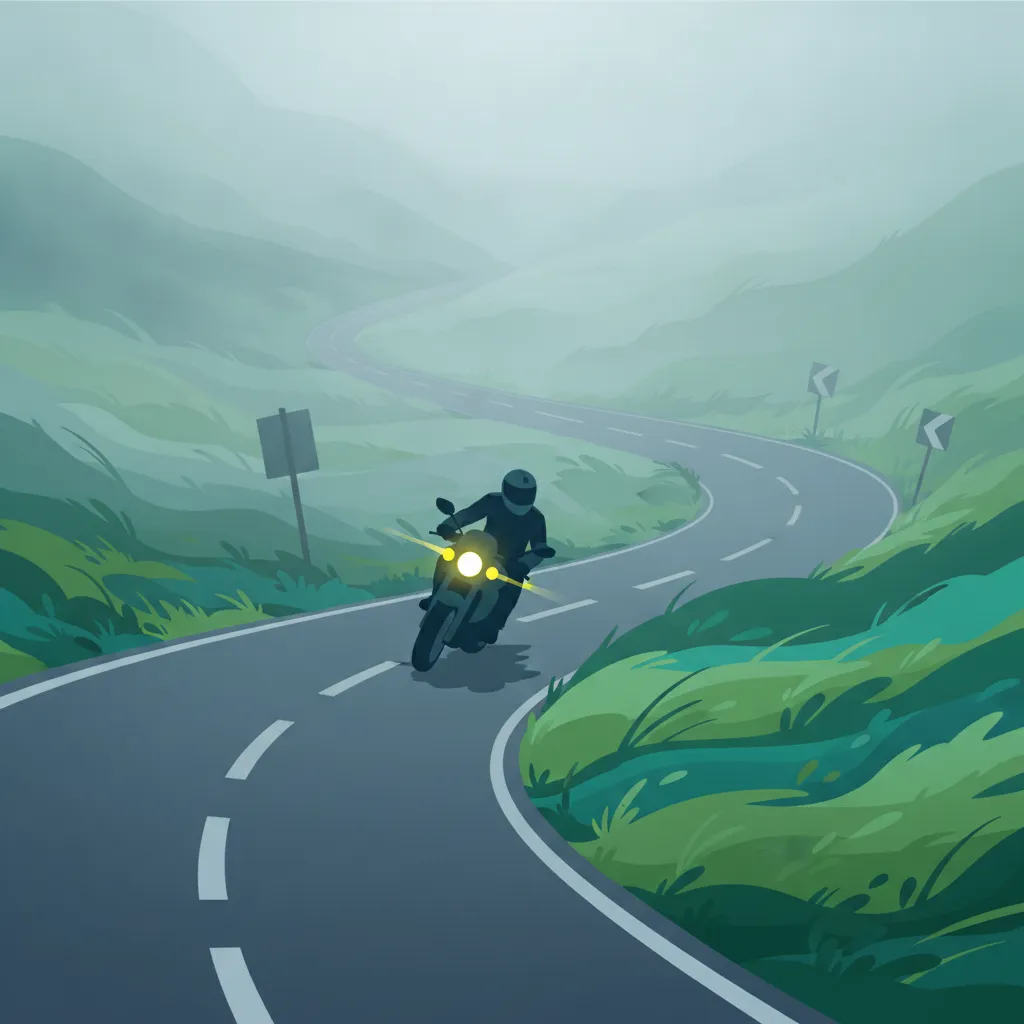
Lesson content overview
Navigating the roads of Ireland on a motorcycle offers incredible freedom, but it also exposes riders to some of the most unpredictable and challenging weather conditions in Europe. Whether you are preparing for your Category A, A1, or A2 motorcycle theory test, or seeking to refine your practical on-road survival skills, mastering the physics of riding in high winds, dense fog, and blinding glare is essential.
Unlike car drivers, who are shielded by a steel passenger cabin and stabilized by four wheels, motorcyclists must actively use physical inputs, spatial awareness, and specialized gear to maintain control when the elements conspire against them. This lesson details the defensive riding strategies and legal regulations required to handle reduced visibility and severe weather safely.
A crosswind is any wind blowing perpendicular to your direction of travel. Because a motorcycle presents a distinct profile to the side, lateral wind forces can push both the machine and the rider sideways, threatening lane discipline and tyre grip.
Wind force does not increase linearly; it increases exponentially with speed. This means that a gust of wind at 80 km/h exerts far more force on your motorcycle than the same gust at 50 km/h. Furthermore, your motorcycle’s own forward velocity combines with the lateral wind speed to create a "relative wind vector" that alters how the bike handles.
When you pass a large vehicle in high winds, the vehicle temporarily blocks the crosswind, creating a sudden vacuum (or "wind shadow"). As you pull alongside, the wind suddenly drops, which can cause you to veer toward the vehicle if you are leaning into the wind. Once you clear the front of the vehicle, the wind hits you again with sudden, full force, pushing you outward.
To counteract lateral forces without destabilizing the steering geometry of your motorcycle, you must make minor, deliberate adjustments to your body position.
The "Death Grip" Trap: When hit by a strong gust of wind, many novice riders instinctively freeze and grip the handlebars tightly. This tight grip transfers the wind buffeting from the rider's upper body directly into the front forks, causing the front wheel to wobble and making the motorcycle highly unstable.
To maintain stability in high winds:
In high winds, you must adjust your lane positioning to maximize your safety margin.
Fog is one of the most hazardous environmental conditions a motorcyclist can face. It severely limits your hazard perception, distorts your depth perception, and makes you nearly invisible to other road users.
Your safety in reduced visibility is governed by a fundamental physical law: You must always be able to stop safely within the distance you can see to be clear ahead.
In dense fog, your sightline might be reduced to 30 metres or less. If you are travelling at 100 km/h, your total stopping distance (including perception, reaction, and braking distances) is roughly 70 metres. If a hazard appears in your lane, you will crash before you can even begin to apply maximum braking force.
Assess your visible distance: Constantly evaluate how far ahead you can clearly see the road surface or lane markings.
Calculate your safe speed: Reduce your speed so that your absolute stopping distance is well within that visible zone. In heavy fog, this often means dropping to 40 km/h or lower, even on main national roads.
Increase your following distance: Double or triple your gap to the vehicle ahead. A four-second or even six-second following distance is highly recommended in fog, giving you a vital buffer if the vehicle ahead brakes suddenly.
Under Irish road traffic regulations, you must use your motorcycle's lighting systems correctly to see and be seen, without blinding other road users.
To ensure you remain dry, warm, and highly conspicuous to others, your riding gear must be adapted for fog:
Reduced visibility is not always caused by dark skies or heavy weather; the blinding effects of bright light can be just as dangerous.
In Ireland, particularly during autumn and winter, the sun remains low on the horizon for much of the day. This creates severe glare that can completely blind you to oncoming traffic, pedestrians, or stationary obstacles.
The transition periods of dawn and dusk are statistically some of the most dangerous times on Irish roads. Human vision adapts slowly to changing light levels, and hazards can easily blend into the shadows.
When riding in adverse weather, making a tactical error can result in an immediate loss of control or a serious collision. Below are the most common violations and mistakes riders make in these conditions:
Imagine you are riding your Category A motorcycle at 100 km/h on an exposed section of the M8 motorway when you encounter a strong crosswind blowing from your left.
You are riding on a winding R-road (regional road) in County Kerry when you descend into a valley and encounter a sudden, dense fog bank that reduces visibility to 30 metres.
You are riding home at 17:00 in October, heading west directly into a blinding, low-setting sun.
To ensure you are fully prepared for both your Irish theory test and your daily commutes, remember these key concepts:
This lesson covers essential techniques for managing high winds, dense fog, and glare as a motorcycle rider in Ireland. Riders must understand that wind forces increase exponentially with speed and use body positioning—relaxed arms, knee anchoring, and gentle counter-steering—rather than death-gripping the handlebars. In fog, the critical rule is matching your speed to your visible stopping distance, typically requiring speeds of 40 km/h or lower, while dipped headlights remain mandatory and high beams must never be used. Fog lights are conditional equipment, permitted only when visibility drops below 50 metres, and must be switched off as conditions improve. The lesson includes practical scenarios demonstrating correct versus incorrect responses to crosswinds and sudden fog banks, directly supporting preparation for the Category A, A1, and A2 Irish theory test.
A short set of high-value points that capture the most important learning from this lesson.
Wind force on a motorcycle increases exponentially with speed, making speed reduction the most effective way to regain stability in crosswinds.
Maintain a relaxed upper body and anchor your knees on the fuel tank to prevent wind buffeting from translating into dangerous handlebar inputs.
You must always be able to stop safely within the distance you can see ahead—in dense fog, this often requires speeds of 40 km/h or lower.
Dipped headlights are mandatory in fog, heavy rain, dusk, and dawn; high beams create a blinding glare by reflecting off water droplets.
Fog lights must only be used when visibility is below 50 metres and must be switched off immediately once conditions improve.
Explore all units and lessons included in this driving theory course.
Gripping the handlebars tightly ('death grip') in wind transfers rider movement into the front forks, causing dangerous front-wheel wobble.
In crosswinds, ride on the windward side of your lane and use the left lane on multi-lane roads to create a safety buffer.
The 'relative wind vector' combines your forward speed with lateral wind speed, altering handling unpredictably.
High-visibility clothing with retro-reflective strips is essential in fog so other road users can see you.
Keep your visor pristine—scratches act as prisms that multiply glare from sun or oncoming headlights.
Maintaining normal road speeds in dense fog, believing brakes will compensate for reduced visibility.
Using high beams in fog or heavy rain, which causes light to reflect off water droplets and blinds the rider.
Leaving fog lights on after exiting a fog bank, dazzling oncoming drivers in violation of Irish road rules.
Following vehicles too closely in fog, eliminating reaction time if the vehicle ahead brakes suddenly.
Riding in the outer lane during high crosswinds on motorways or dual carriageways, exposing yourself to maximum wind exposure.
Lesson content overview
A short set of high-value points that capture the most important learning from this lesson.
Wind force on a motorcycle increases exponentially with speed, making speed reduction the most effective way to regain stability in crosswinds.
Maintain a relaxed upper body and anchor your knees on the fuel tank to prevent wind buffeting from translating into dangerous handlebar inputs.
You must always be able to stop safely within the distance you can see ahead—in dense fog, this often requires speeds of 40 km/h or lower.
Dipped headlights are mandatory in fog, heavy rain, dusk, and dawn; high beams create a blinding glare by reflecting off water droplets.
Fog lights must only be used when visibility is below 50 metres and must be switched off immediately once conditions improve.
Explore all units and lessons included in this driving theory course.
Gripping the handlebars tightly ('death grip') in wind transfers rider movement into the front forks, causing dangerous front-wheel wobble.
In crosswinds, ride on the windward side of your lane and use the left lane on multi-lane roads to create a safety buffer.
The 'relative wind vector' combines your forward speed with lateral wind speed, altering handling unpredictably.
High-visibility clothing with retro-reflective strips is essential in fog so other road users can see you.
Keep your visor pristine—scratches act as prisms that multiply glare from sun or oncoming headlights.
Maintaining normal road speeds in dense fog, believing brakes will compensate for reduced visibility.
Using high beams in fog or heavy rain, which causes light to reflect off water droplets and blinds the rider.
Leaving fog lights on after exiting a fog bank, dazzling oncoming drivers in violation of Irish road rules.
Following vehicles too closely in fog, eliminating reaction time if the vehicle ahead brakes suddenly.
Riding in the outer lane during high crosswinds on motorways or dual carriageways, exposing yourself to maximum wind exposure.
Explore search topics learners often look for when studying Adjusting Riding for Wind, Fog and Reduced Visibility. These topics reflect common questions about road rules, driving situations, safety guidance, and lesson level theory preparation for learners in Ireland.
Browse additional driving theory lessons that cover connected traffic rules, road signs, and common driving situations related to this topic. Improve your understanding of how different rules interact across everyday traffic scenarios.
Understand the core principles of hazard awareness and proactive observation required for motorcycle safety in Ireland. Learn how to anticipate dangerous traffic situations and respond to potential threats before they escalate into emergencies, ensuring a higher level of safety on all road types.
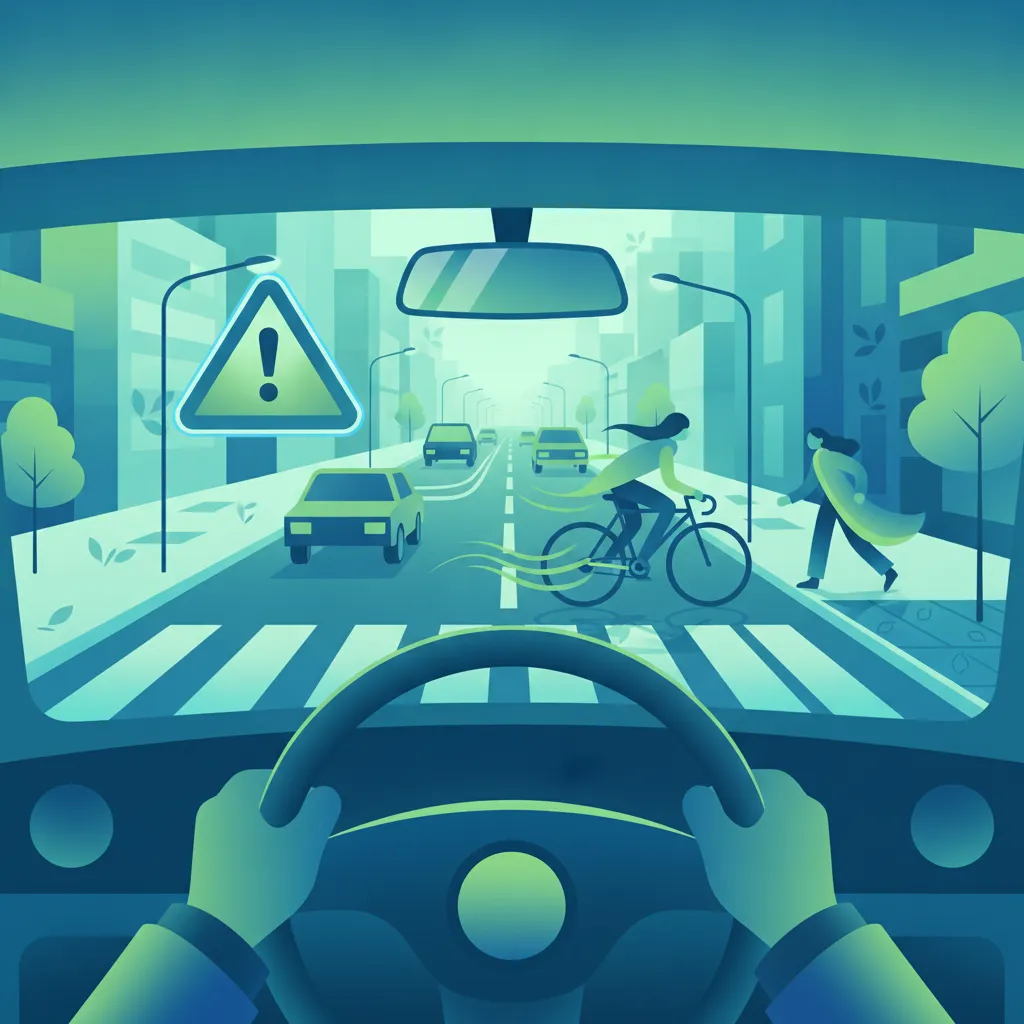
Proactive hazard perception involves constantly scanning the road ahead to identify potential dangers before they turn into actual emergencies. This lesson covers active scanning techniques, helping you look far ahead, check mirrors regularly, and identify subtle risk clues such as exhaust smoke from parked cars or children playing near kerbs. Anticipating these developments gives you the time to adjust speed and position safely.
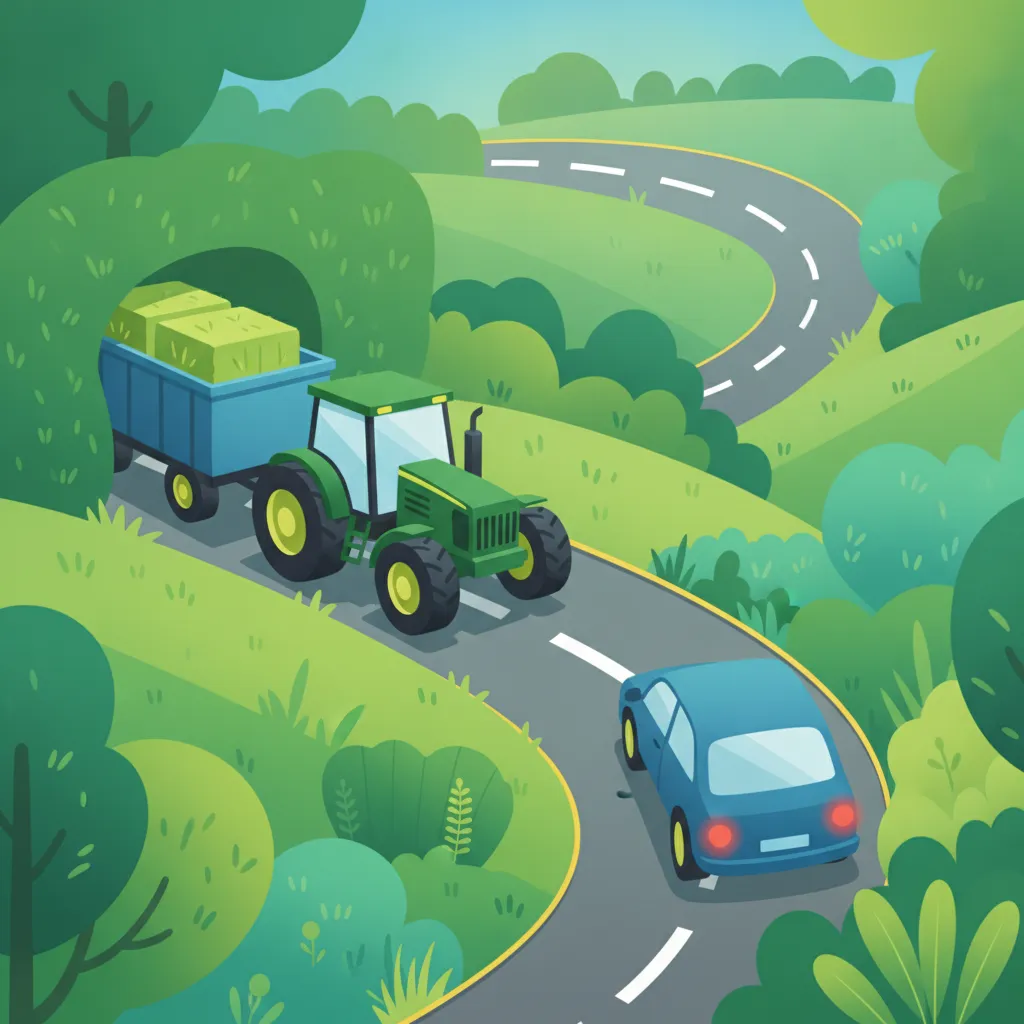
Irish rural roads are often narrow, winding, and bordered by high hedges, presenting unique hazards compared to urban streets. This lesson focuses on scanning for hidden hazards such as slow-moving farm machinery, mud on the road surface, and loose livestock. You will learn how to adjust your speed before entering blind bends, sound your horn at blind crests, and safely share the road with local agricultural traffic.
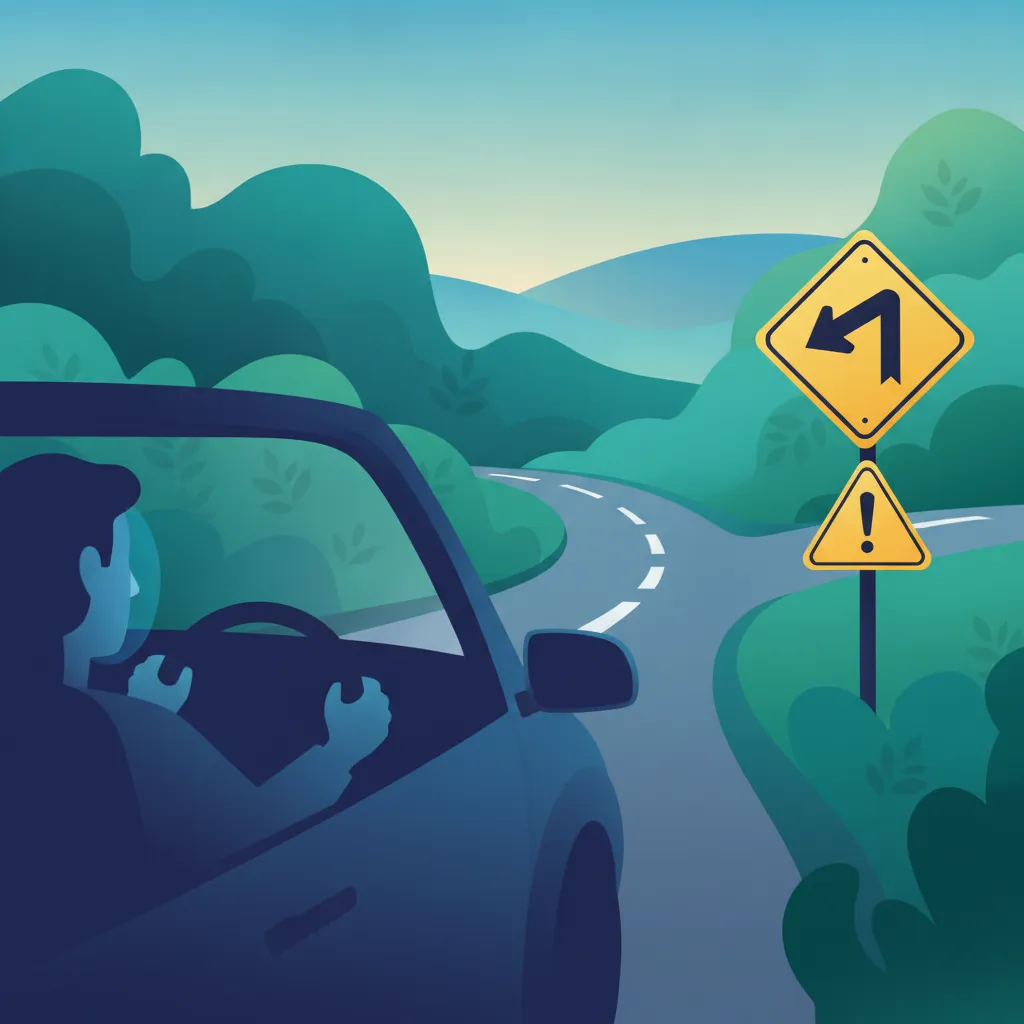
Warning signs in Ireland are typically diamond-shaped with yellow backgrounds and black symbols, indicating potential dangers on the road ahead. This lesson details signs for upcoming sharp bends, narrow roads, steep hills, pedestrian activity, and animal hazards. Learning to spot these warning indicators early allows you to reduce speed safely and adjust your vehicle positioning before encountering the hazard itself.
Safeguarding vulnerable road users requires more than simple obedience to traffic signs; it demands a defensive driving mindset. This lesson summarizes safe practices, including scanning far ahead in urban areas, keeping massive safety margins in wet weather, and executing thorough blind spot checks before reversing. By anticipating the unpredictable movements of others, you can prevent accidents and support a safe road culture.

Heavy vehicles require continuous visual scanning to identify small or slow-moving road users who may enter the path of travel. This lesson explores the typical behaviors of young children, elderly pedestrians, and visually impaired road users. Drivers will build strong hazard perception skills to anticipate sudden movements, ensuring they can brake safely and avoid serious accidents.
Irish rural routes are often narrow, lacking central markings, and bordered by tall hedges that restrict forward visibility on sharp bends. This lesson teaches drivers how to negotiate blind curves, anticipate slow-moving agricultural machinery, and respond to wandering farm animals. Drivers will learn to regulate vehicle speed proactively, maintaining a safe stopping margin in rural areas.

This lesson teaches how to cultivate a proactive defensive riding mindset, focusing on situational awareness and constant hazard scanning. It describes the system of motorcycle control, encouraging riders to anticipate potential mistakes from other drivers, pedestrians, and cyclists. Motorcyclists will learn to position themselves defensively, leaving clear escape routes in all driving environments.
Defensive driving prepares you to react safely when facing unexpected mechanical failures or immediate road hazards. This lesson explains how to execute an emergency stop using Anti-lock Braking Systems (ABS) and how to recover from front and rear-wheel skids on slippery roads. You will learn the importance of remaining calm, avoiding panic-steering, and applying controlled evasive actions to prevent collisions.

Driving at night presents severe challenges due to reduced visibility, driver fatigue, and headlight glare from oncoming vehicles. This lesson teaches you how to manage your headlights, use road edge markers to steer through dark curves, and look away from oncoming bright lights. You will learn to drive within the range of your headlights and remain highly alert for pedestrians or cyclists not wearing reflective gear.

This lesson outlines how motorcyclists should respond when permanent road signs are dirty, damaged, or hidden by overgrown trees and hedges. It introduces the temporary signage, warning cones, and detour markers commonly deployed at active roadwork zones in Ireland. Riders will learn to read the road ahead defensively, reducing speed when visual information is incomplete or compromised.
Explore the physics of motorcycle grip on various Irish road surfaces including gravel and wet tarmac. This guide explains how to adapt your cornering and braking techniques to maintain vehicle stability when traction is compromised, essential for safe riding in diverse weather and road environments.
This lesson analyzes how tyre contact patches generate grip and how different road surfaces affect stability. It explains the dangers of diesel spills, loose gravel, fallen leaves, and cold tyres, which drastically reduce traction limits. Motorcyclists will learn to identify these surface hazards early and modify their throttle, braking, and lean inputs to prevent loss of control.
This lesson explains how to modify riding techniques when navigating wet tarmac, focusing on the heightened risk of hydroplaning and reduced tire grip. It details the necessity of increasing following distances, avoiding painted road markings, and executing smoother control inputs. Riders will understand how surface water accumulates in ruts, presenting severe hazards during heavy rainstorms.

This lesson explains the physics of cornering, focusing on lean angles, speed selection, and body positioning on a moped. It teaches riders how to assess road curves, adjust their speed prior to entering a turn, and handle slippery cambers. Mastering these cornering principles is essential for avoiding lose-of-control accidents on winding rural Irish roads.

This lesson details the critical role of tyres in maintaining grip and vehicle stability on diverse road surfaces. It provides guidance on measuring tread depth, checking inflation levels, and identifying signs of tyre wear and damage. Additionally, it presents techniques for maintaining balance and executing tight, low-speed turns safely.
This lesson focuses on riding techniques suited for gravel, loose surfaces, and rural roads. Learners will understand how to maintain stability, adjust braking and cornering approaches, and anticipate hazards such as potholes and farm vehicles, following RSA guidance for safe riding in the Irish countryside.

This lesson explores common surface hazards encountered on municipal and rural Irish roads, including loose gravel and wet leaves. It explains how these surface conditions rapidly reduce tyre traction and affect overall handling and braking control. Riders will learn visual scanning techniques to identify these hazards early and execute safe evasion maneuvers.
Find clear answers to common questions learners have about Adjusting Riding for Wind, Fog and Reduced Visibility. Learn how the lesson is structured, which driving theory objectives it supports, and how it fits into the overall learning path of units and curriculum progression in Ireland. These explanations help you understand key concepts, lesson flow, and exam focused study goals.
In strong crosswinds, keep your motorcycle in the middle or slightly to the windward side of the lane. This gives you extra space to compensate if a sudden gust pushes you toward the edge of your lane, but avoid riding too close to the centre line or the shoulder.
On a motorcycle, only use hazard lights if you are forced to stop and are creating a hazard. While riding in fog, ensure your dipped headlights are on to be visible, but do not use hazard lights while in motion as they cancel out your turn signals.
Low sun glare can severely limit your ability to see hazards ahead. You should increase your following distance significantly, use a tinted visor or sunglasses, and be prepared to slow down early if you are riding directly into the sun.
If you cannot see far enough ahead to stop within your clear view, you must slow down until you can. If conditions become too dangerous, the safest option is to pull over at a safe, legal location away from the flow of traffic until the fog lifts.
Use the practice question search tool to pinpoint specific topics, road signs, or rules you need to master for your official Driver Theory Test. Refine your study strategy and ensure comprehensive preparation for all aspects of the Irish driving exam. Start your focused revision now and build confidence for your learner permit test.