
This lesson guides you through the physics of braking and how to control your Category AM vehicle effectively. You will learn how to calculate stopping distances and apply front and rear brakes correctly to maintain stability, preparing you for both practical road scenarios and your official Irish theory test.
Lesson content overview
Mastering the physics of deceleration is one of the most critical safety skills for any Category AM rider in Ireland. Whether you are operating a moped, a light scooter, or a light quadricycle, understanding how to stop safely can mean the difference between a controlled halt and a serious collision.
Under the Irish Rules of the Road, riders must share the street with larger, heavier vehicles, making defensive riding and precise braking skills absolute necessities. This lesson covers the mechanics of stopping, the biological and mechanical factors that influence stopping distances, and the correct progressive and two-stage braking techniques required to maintain control under all road conditions.
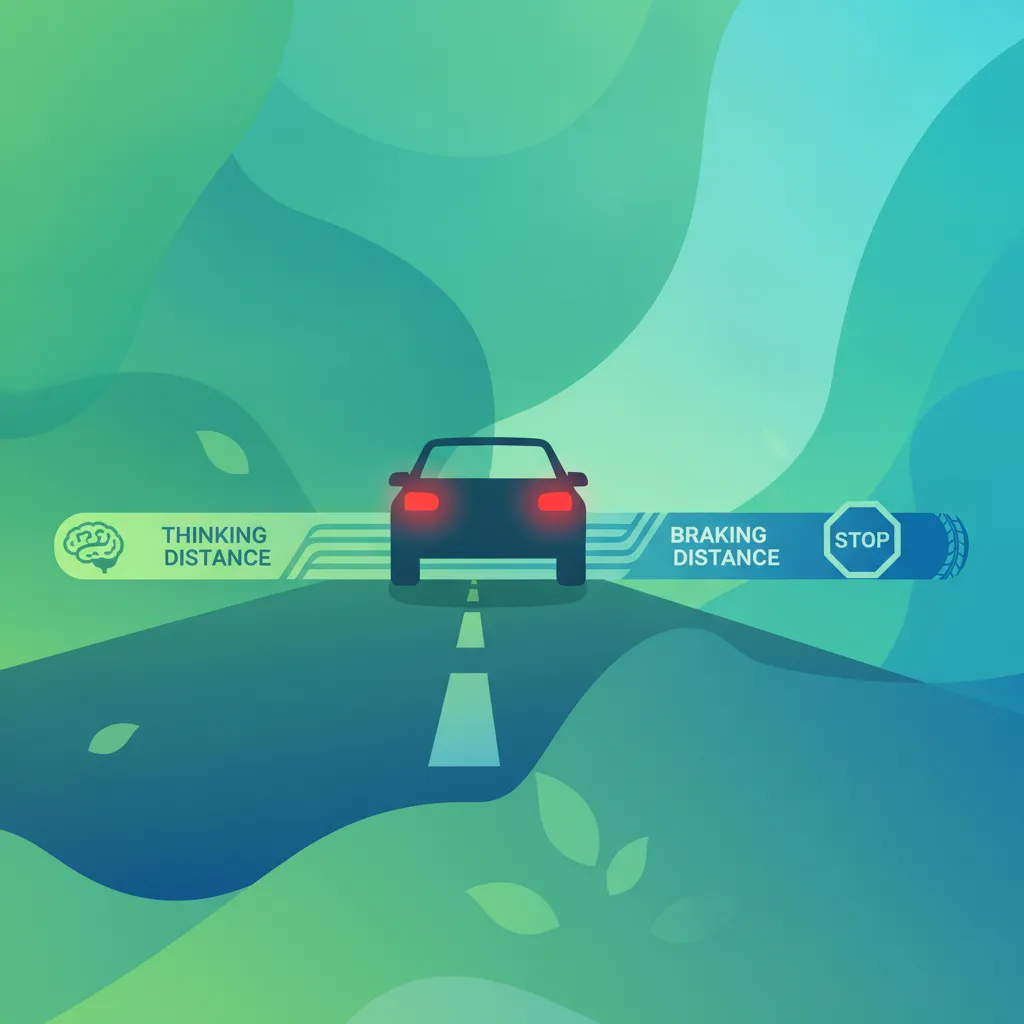
Stopping distance is not a single, instantaneous action. It is the total distance your vehicle travels from the exact moment you first perceive a hazard on the road to the point where your vehicle comes to a complete, motion-free stop.
Total stopping distance is calculated by adding two distinct phases: Thinking Distance (also known as Reaction Distance) and Braking Distance.
Thinking distance is the distance your moped travels during your personal reaction time. This is the split second it takes for your brain to recognise a hazard (such as a car door opening or a pedestrian stepping off a kerb) and for your physical body to begin squeezing the brake levers.
For the average, alert rider, the reaction time is between 0.7 and 1.5 seconds. While this may sound instantaneous, your vehicle is still moving forward at full speed during this window.
This means that if you react in 1 second at 45 km/h, you will travel 12.5 metres before your brakes even begin to slow the vehicle down.
Your reaction time is highly sensitive to human factors. It increases dramatically—and dangerously—if you are fatigued, distracted, unwell, or under the influence of alcohol or prescription medications. Minimising distractions and maintaining a scanning path far ahead of your front wheel are essential to keeping your thinking distance as short as possible.
Braking distance is the physical distance your moped travels after you have actually applied the brakes. During this phase, mechanical friction between the brake pads and the discs (or drums) converts the vehicle's kinetic energy into heat, while the tyres rely on friction against the road surface to slow you down.
Unlike thinking distance, which increases proportionally with speed, braking distance increases exponentially.
The kinetic energy of a moving vehicle is proportional to the square of its speed (). Consequently, if you double your speed, your braking distance does not simply double—it increases by a factor of four.
A wide range of variables can alter your stopping distance, turning what is normally a safe gap into an imminent hazard. Category AM riders must constantly assess these factors and adjust their riding speed and following distances accordingly:
Always remember the "General Duty of Care" under Irish road traffic law: you must always ride at a speed that enables you to stop safely within the distance you can see to be clear ahead of you.
To stop a two-wheeled vehicle safely, you cannot simply grab the brakes as hard as possible. Because a moped has a short wheelbase and a high centre of gravity relative to its weight, sudden or improper braking can easily cause a loss of balance or lead to a dangerous fall.
When you apply the brakes on a moped, the vehicle's weight shifts dynamically forward. This compresses the front forks and pushes the front tyre firmly into the road surface, which increases the grip available at the front wheel.
Because of this weight transfer, the front brake is your primary stopping tool, providing up to 70% to 80% of your total stopping power in dry conditions. The rear brake provides the remaining 20% to 30%, serving primarily to stabilise and balance the vehicle.
Progressive braking is the technique of applying brake pressure smoothly and gradually, rather than abruptly snatching the levers.
Stage 1 (Set): Gently squeeze the brake lever to take up any slack in the mechanism and lightly press the brake pads against the discs. This initiates a gentle weight transfer to the front tyre, spreading its contact patch on the asphalt.
Stage 2 (Squeeze): Progressively increase the squeezing force on the lever as the weight shifts forward. As the tyre's grip increases, you can apply significantly more braking force safely without locking the wheel.
Stage 3 (Ease): As the vehicle comes to a stop and its speed drops to zero, gently ease off the brake pressure to prevent a sudden back-and-forth jolt, ensuring a smooth, stable halt.
To achieve the shortest possible stopping distance while keeping the moped upright, you must use both brakes in harmony. This is known as two-stage braking.
First, initiate deceleration by applying the front brake progressively. A split second later, apply the rear brake to settle the rear suspension and prevent the back of the moped from lifting or fishtailing.
On automatic "twist-and-go" mopeds, the right handlebar lever operates the front brake, while the left handlebar lever operates the rear brake. On manual gear mopeds, the right lever operates the front brake, while a foot pedal on the right side operates the rear brake. Practice coordinating these controls until balanced braking becomes an automatic physical reflex.
A skid occurs when the braking force applied to a wheel exceeds the physical grip available between the tyre and the road. This causes the wheel to lock up (stop rotating) while the vehicle is still moving forward.
Excessive Brake Force > Available Tyre Grip = Wheel Lock-up & Skidding
Some modern Category AM mopeds and light quadricycles are equipped with an Antilock Braking System (ABS). ABS uses electronic wheel-speed sensors to detect when a wheel is about to lock up during heavy braking. The system automatically modulates (releases and reapplies) the brake pressure hundreds of times per second to keep the wheel rotating at the threshold of maximum grip.
If your vehicle has ABS and you must perform an emergency stop:
Under the Irish Road Traffic (Construction and Use) Regulations, all Category AM vehicles operated on public roads must be equipped with two independent, fully functional braking systems—one acting on the front wheel and one on the rear.
Irish road safety guidelines state that riders must not brake so harshly that their wheels lock up, except in an absolute emergency. Under Irish law, riding with defective brakes, bald tyres, or braking in an intentionally reckless manner that causes a loss of control can lead to prosecution for careless or dangerous driving, resulting in heavy fines, penalty points on your driving record, or a court appearance.
Your braking technique must adapt dynamically to changes in your environment. What works perfectly on warm, dry tarmac can cause an immediate crash on a cold, damp morning.
Rain combines with dust, oil drippings, and rubber residue on the road surface to create a highly slippery film, especially during the first few minutes of a rainfall.
In rural Ireland, you will frequently encounter roads with loose gravel, sand, or agricultural mud.
If you are carrying a passenger (where legally permitted on your specific vehicle and licence category) or carrying heavy cargo, your stopping distance will increase due to the added momentum.
Never brake hard while cornering! Your tyres have a limited amount of total grip. If you use up all that grip to turn the moped, there is no grip left for braking. Always complete your braking in a straight line before you lean into a corner or turn.
Let's look at three practical scenarios that demonstrate how to apply these concepts on Irish roads.
You are riding your moped at 40 km/h down a wet street in Dublin when a pedestrian steps onto a zebra crossing ahead.
You are riding on a rural L-road (local road) at 30 km/h and round a bend to find loose gravel spread across the lane.
You are riding in winter at 20 km/h on an icy suburban road when a car suddenly reverses out of a driveway in front of you.
This lesson covers the physics of stopping distances for Category AM mopeds, explaining how thinking distance (affected by reaction time and speed) combines with braking distance (affected by road surface, tyre condition, and brake mechanics) to determine total stopping distance. Learners are taught progressive and two-stage braking techniques that utilise the front brake as the primary stopping tool while maintaining vehicle stability, and must understand how weather, road surface, and load conditions require dynamic adjustment of braking force. The lesson also addresses wheel lock-up prevention, ABS operation, and specific hazardous conditions common in Ireland such as wet roads, loose gravel, and winter ice.
A short set of high-value points that capture the most important learning from this lesson.
Stopping distance is the sum of Thinking Distance (reaction time) and Braking Distance, not a single event
Braking distance increases exponentially with speed because kinetic energy is proportional to the square of velocity
The front brake provides 70-80% of total stopping power due to dynamic weight transfer during deceleration
Progressive braking applies brake pressure gradually in stages to prevent wheel lock-up and maintain control
Environmental conditions like wet roads, gravel, and ice dramatically increase stopping distances and require adjusted techniques
Explore all units and lessons included in this driving theory course.
Average reaction time is 0.7 to 1.5 seconds; at 45 km/h a rider travels 12.5 metres before brakes even engage
Always brake in a straight line before entering a corner—tyres have limited total grip
If front wheel locks, immediately release the brake to regain steering control
Never pump ABS brakes—squeeze firmly and let the system modulate automatically
On wet roads, double your following gap to four seconds and apply brakes with significantly less force
Over-relying on rear brake only due to fear of flipping, resulting in long stopping distances and constant skidding
Snatching the front brake lever abruptly without allowing weight to transfer forward first
Braking while cornering, which uses up all available tyre grip and causes loss of control
Failing to scan far enough ahead, leaving insufficient distance to brake safely when hazards appear
Riding with worn tyres below legal tread depth, reducing water clearance and causing aquaplaning
Lesson content overview
A short set of high-value points that capture the most important learning from this lesson.
Stopping distance is the sum of Thinking Distance (reaction time) and Braking Distance, not a single event
Braking distance increases exponentially with speed because kinetic energy is proportional to the square of velocity
The front brake provides 70-80% of total stopping power due to dynamic weight transfer during deceleration
Progressive braking applies brake pressure gradually in stages to prevent wheel lock-up and maintain control
Environmental conditions like wet roads, gravel, and ice dramatically increase stopping distances and require adjusted techniques
Explore all units and lessons included in this driving theory course.
Average reaction time is 0.7 to 1.5 seconds; at 45 km/h a rider travels 12.5 metres before brakes even engage
Always brake in a straight line before entering a corner—tyres have limited total grip
If front wheel locks, immediately release the brake to regain steering control
Never pump ABS brakes—squeeze firmly and let the system modulate automatically
On wet roads, double your following gap to four seconds and apply brakes with significantly less force
Over-relying on rear brake only due to fear of flipping, resulting in long stopping distances and constant skidding
Snatching the front brake lever abruptly without allowing weight to transfer forward first
Braking while cornering, which uses up all available tyre grip and causes loss of control
Failing to scan far enough ahead, leaving insufficient distance to brake safely when hazards appear
Riding with worn tyres below legal tread depth, reducing water clearance and causing aquaplaning
Explore search topics learners often look for when studying Braking Techniques and Stopping Distances. These topics reflect common questions about road rules, driving situations, safety guidance, and lesson level theory preparation for learners in Ireland.
Browse additional driving theory lessons that cover connected traffic rules, road signs, and common driving situations related to this topic. Improve your understanding of how different rules interact across everyday traffic scenarios.
Understand how to identify road hazards early and apply defensive riding techniques in diverse traffic conditions. This guide covers scanning strategies, maintaining space cushions, and making safe decisions to prevent accidents according to Irish Rules of the Road standards for Category AM moped and light vehicle operators.
Driving at night presents severe challenges due to reduced visibility, driver fatigue, and headlight glare from oncoming vehicles. This lesson teaches you how to manage your headlights, use road edge markers to steer through dark curves, and look away from oncoming bright lights. You will learn to drive within the range of your headlights and remain highly alert for pedestrians or cyclists not wearing reflective gear.
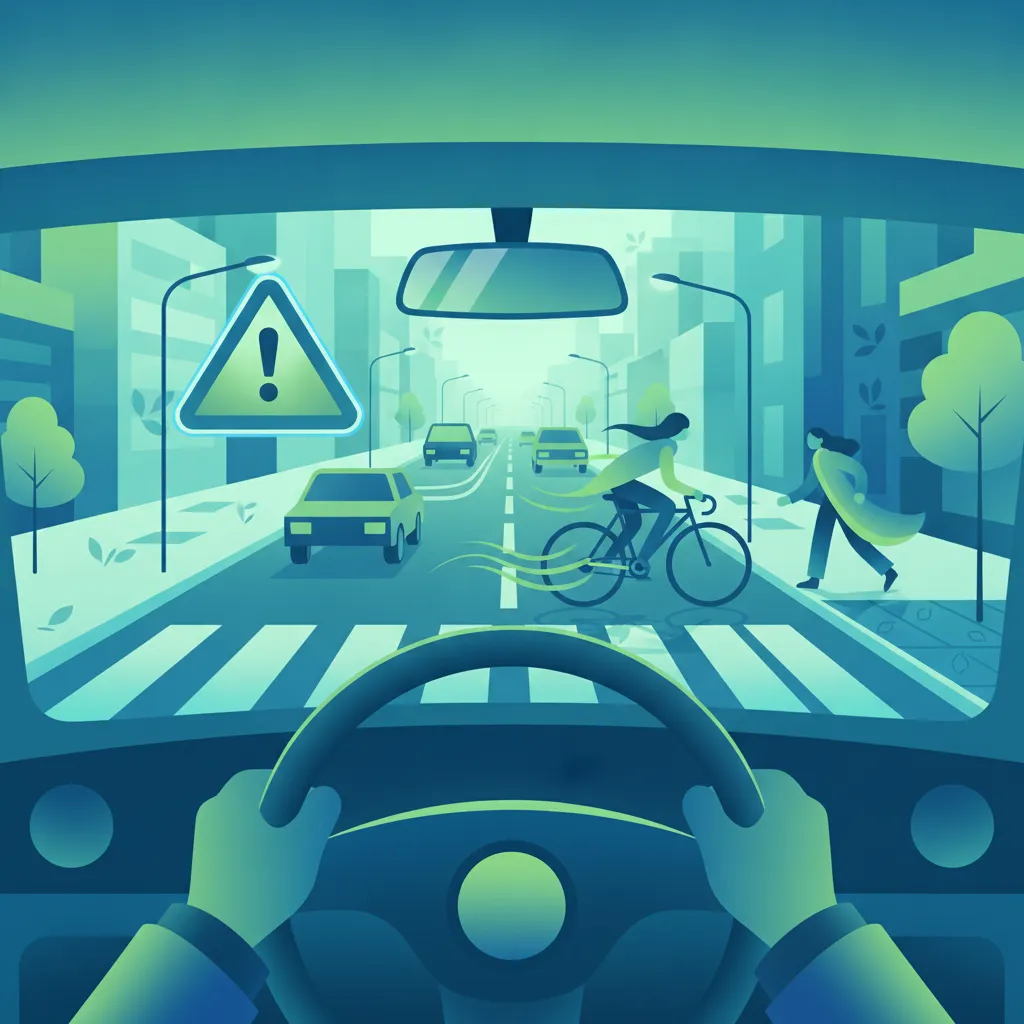
Proactive hazard perception involves constantly scanning the road ahead to identify potential dangers before they turn into actual emergencies. This lesson covers active scanning techniques, helping you look far ahead, check mirrors regularly, and identify subtle risk clues such as exhaust smoke from parked cars or children playing near kerbs. Anticipating these developments gives you the time to adjust speed and position safely.
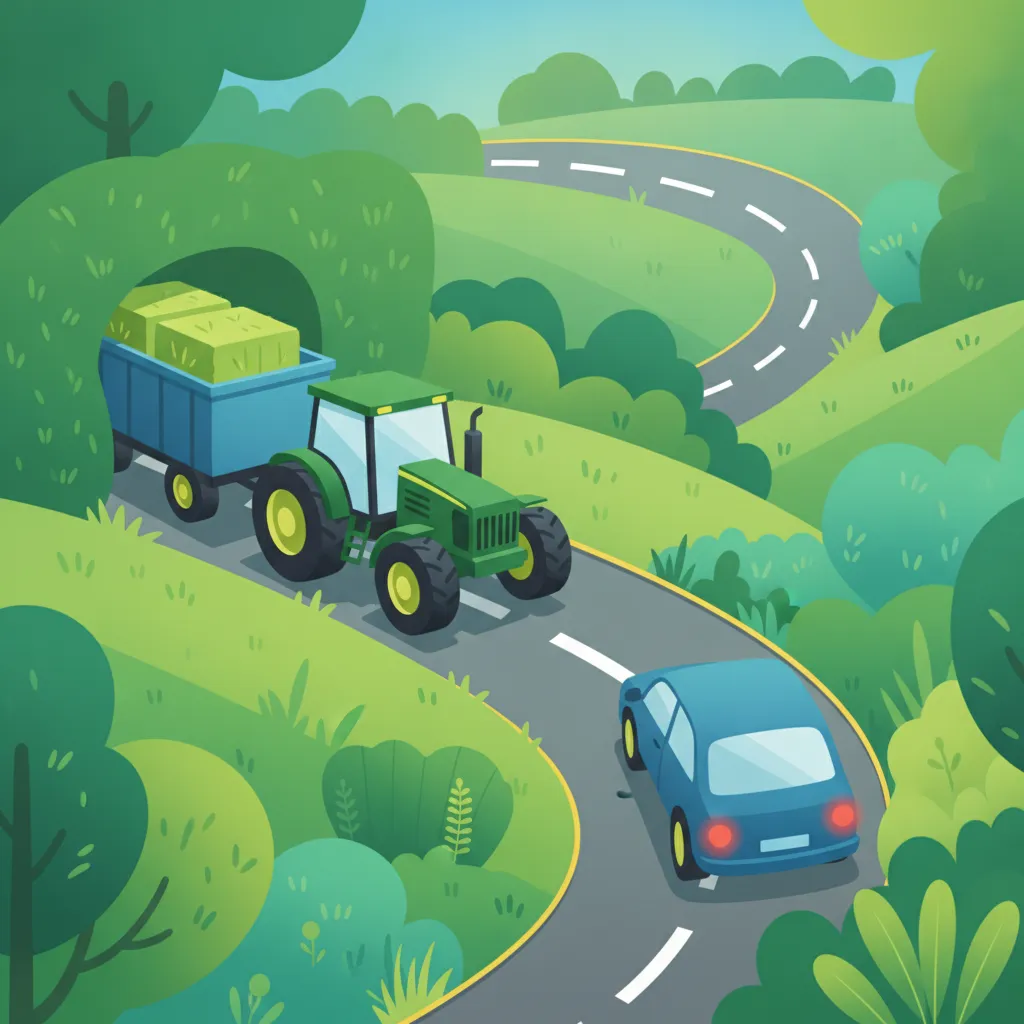
Irish rural roads are often narrow, winding, and bordered by high hedges, presenting unique hazards compared to urban streets. This lesson focuses on scanning for hidden hazards such as slow-moving farm machinery, mud on the road surface, and loose livestock. You will learn how to adjust your speed before entering blind bends, sound your horn at blind crests, and safely share the road with local agricultural traffic.
Safeguarding vulnerable road users requires more than simple obedience to traffic signs; it demands a defensive driving mindset. This lesson summarizes safe practices, including scanning far ahead in urban areas, keeping massive safety margins in wet weather, and executing thorough blind spot checks before reversing. By anticipating the unpredictable movements of others, you can prevent accidents and support a safe road culture.
Irish rural routes are often narrow, lacking central markings, and bordered by tall hedges that restrict forward visibility on sharp bends. This lesson teaches drivers how to negotiate blind curves, anticipate slow-moving agricultural machinery, and respond to wandering farm animals. Drivers will learn to regulate vehicle speed proactively, maintaining a safe stopping margin in rural areas.
Adverse weather severely compromises tyre traction and forward visibility, demanding immediate speed reductions and extra space. This lesson focuses on the physics of aquaplaning in heavy rain, driving safely on black ice, and navigating thick fog using designated fog lamps. You will learn how to manage your windshield defoggers, adjust wipers, and handle high crosswinds that can destabilise your vehicle.
Heavy vehicles require continuous visual scanning to identify small or slow-moving road users who may enter the path of travel. This lesson explores the typical behaviors of young children, elderly pedestrians, and visually impaired road users. Drivers will build strong hazard perception skills to anticipate sudden movements, ensuring they can brake safely and avoid serious accidents.
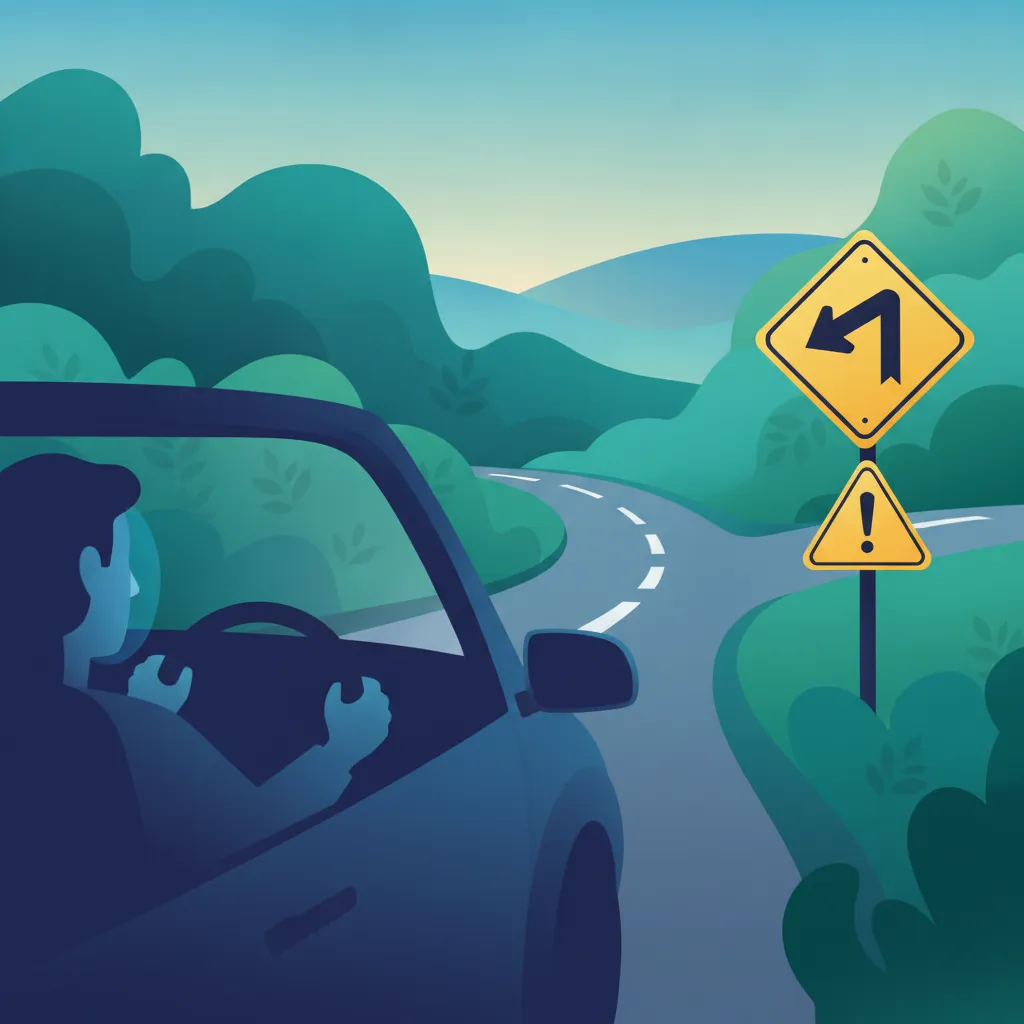
Warning signs in Ireland are typically diamond-shaped with yellow backgrounds and black symbols, indicating potential dangers on the road ahead. This lesson details signs for upcoming sharp bends, narrow roads, steep hills, pedestrian activity, and animal hazards. Learning to spot these warning indicators early allows you to reduce speed safely and adjust your vehicle positioning before encountering the hazard itself.
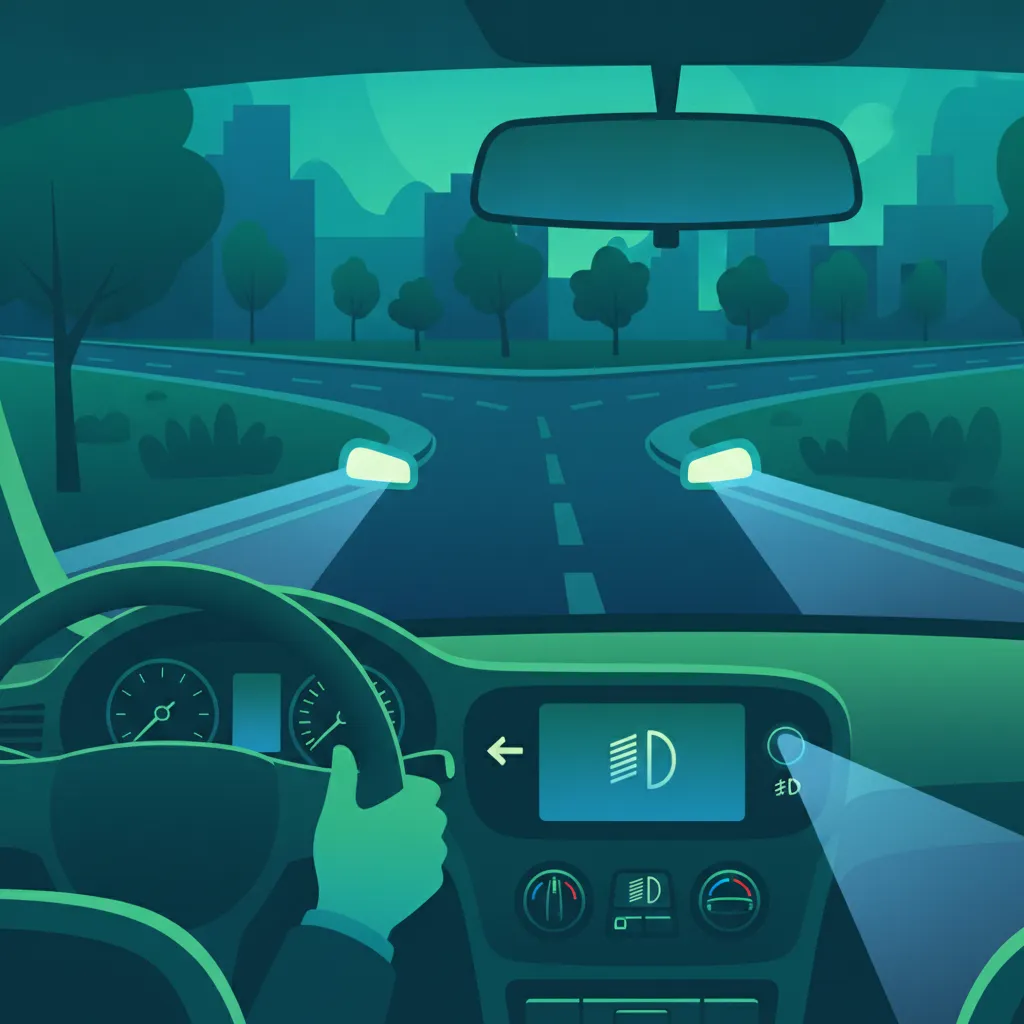
Your vehicle's lighting system is crucial for illuminating your path and making your presence and intentions clear to other road users. This lesson explains the legal requirements for using dipped headlights, full beams, fog lights, and hazard signals in Ireland. You will learn when to switch from full to dipped beams to avoid blinding oncoming drivers, and how to perform simple checks to ensure all bulbs are working.
This lesson covers the strategic aspects of journey management, emphasizing the safety benefits of proactive route planning and weather checks. It teaches riders how to select safer roads, avoid high-congestion zones during rush hour, and schedule regular rest intervals. Motorcyclists will learn to pack essential tools, emergency contacts, and spare safety gear to remain prepared for any roadside situation.
Explore how weather and road surface quality impact vehicle control and stability. Learn about the dangers posed by wet roads, loose gravel, oil spills, and fallen leaves, and how to adjust your speed and riding technique to maintain traction and safety in varying environmental conditions on Irish roads.
Adverse weather severely compromises tyre traction and forward visibility, demanding immediate speed reductions and extra space. This lesson focuses on the physics of aquaplaning in heavy rain, driving safely on black ice, and navigating thick fog using designated fog lamps. You will learn how to manage your windshield defoggers, adjust wipers, and handle high crosswinds that can destabilise your vehicle.
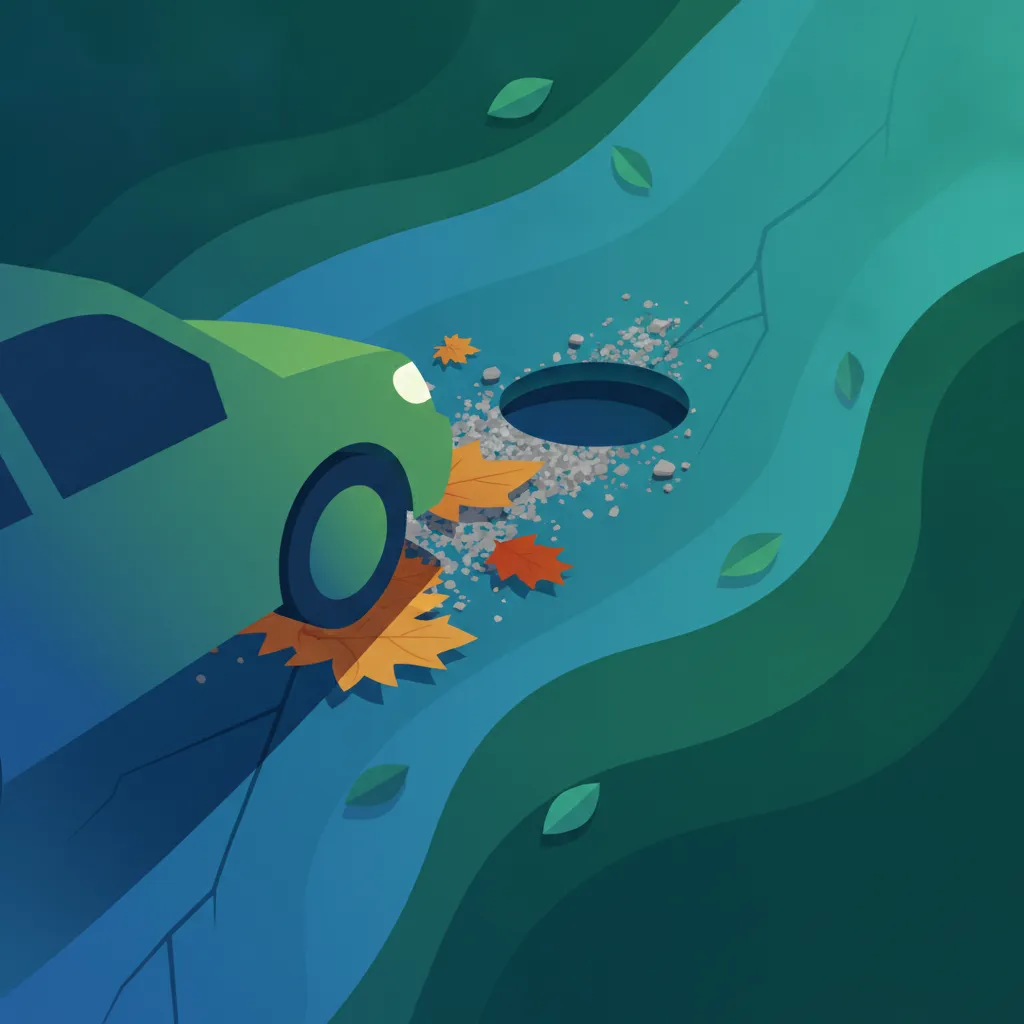
This lesson explores common surface hazards encountered on municipal and rural Irish roads, including loose gravel and wet leaves. It explains how these surface conditions rapidly reduce tyre traction and affect overall handling and braking control. Riders will learn visual scanning techniques to identify these hazards early and execute safe evasion maneuvers.
This lesson explains how to modify riding techniques when navigating wet tarmac, focusing on the heightened risk of hydroplaning and reduced tire grip. It details the necessity of increasing following distances, avoiding painted road markings, and executing smoother control inputs. Riders will understand how surface water accumulates in ruts, presenting severe hazards during heavy rainstorms.
This lesson analyzes how tyre contact patches generate grip and how different road surfaces affect stability. It explains the dangers of diesel spills, loose gravel, fallen leaves, and cold tyres, which drastically reduce traction limits. Motorcyclists will learn to identify these surface hazards early and modify their throttle, braking, and lean inputs to prevent loss of control.
Adhering to legal speed limits is not always sufficient; you must continuously adapt your speed to match real-world hazards. This lesson teaches you how to reduce speed when encountering rain, fog, heavy traffic, or narrow winding rural roads with restricted visibility. You will learn the importance of matching your speed to your range of clear vision, ensuring you can stop safely within the distance you can see ahead.
Wet roads, heavy winter fog, and strong lateral winds present major safety challenges for high-sided passenger vehicles in Ireland. This lesson explains how to prevent aquaplaning, double following distances on wet surfaces, and use fog lights correctly to maintain visibility. Drivers will learn handling adjustments to counteract sudden wind gusts when crossing exposed bridges or motorways.
This lesson explores the safe operation of heavy transport vehicles during severe meteorological hazards typical of the Irish climate. It teaches techniques for adjusting speed and doubling following distances to prevent loss of steering traction and control on waterlogged or icy roadways. Drivers will understand how to manage lateral aerodynamic forces from crosswinds on high-sided goods vehicles.
Safeguarding vulnerable road users requires more than simple obedience to traffic signs; it demands a defensive driving mindset. This lesson summarizes safe practices, including scanning far ahead in urban areas, keeping massive safety margins in wet weather, and executing thorough blind spot checks before reversing. By anticipating the unpredictable movements of others, you can prevent accidents and support a safe road culture.
Driving at night presents severe challenges due to reduced visibility, driver fatigue, and headlight glare from oncoming vehicles. This lesson teaches you how to manage your headlights, use road edge markers to steer through dark curves, and look away from oncoming bright lights. You will learn to drive within the range of your headlights and remain highly alert for pedestrians or cyclists not wearing reflective gear.
Children often struggle to judge heavy vehicle speeds accurately, while elderly pedestrians may possess limited mobility or hearing impairments. This lesson addresses these unique risks, explaining how to adjust driving patterns in residential neighborhoods and near shopping districts. Drivers will learn to maintain a high safety margin, ensuring they can yield quickly to vulnerable road users.
Find clear answers to common questions learners have about Braking Techniques and Stopping Distances. Learn how the lesson is structured, which driving theory objectives it supports, and how it fits into the overall learning path of units and curriculum progression in Ireland. These explanations help you understand key concepts, lesson flow, and exam focused study goals.
Thinking distance is the distance your vehicle travels while you react to a hazard, while braking distance is the distance travelled once you have applied the brakes. Combined, they form your total stopping distance.
Applying only the front brake too hard can cause the front wheel to lock, potentially causing a loss of steering control or a fall. You must learn to apply both brakes progressively and proportionally for stability.
Water on the road reduces tyre grip significantly, meaning your braking distance can double or even triple compared to dry conditions. You must increase your following distance to allow for this extra stopping time.
The exam focuses on the principles of how factors like speed and road surface influence stopping distances rather than complex math. You need to understand that higher speeds and poor conditions require much more space to stop.
Use the practice question search tool to pinpoint specific topics, road signs, or rules you need to master for your official Driver Theory Test. Refine your study strategy and ensure comprehensive preparation for all aspects of the Irish driving exam. Start your focused revision now and build confidence for your learner permit test.