
Navigate Great Britain's roads with confidence by mastering road markings, lane discipline, and traffic direction rules. This unit covers everything from crossing white lines to understanding box junctions and dedicated lanes, ensuring you're well-prepared for both your theory test and real-world driving.
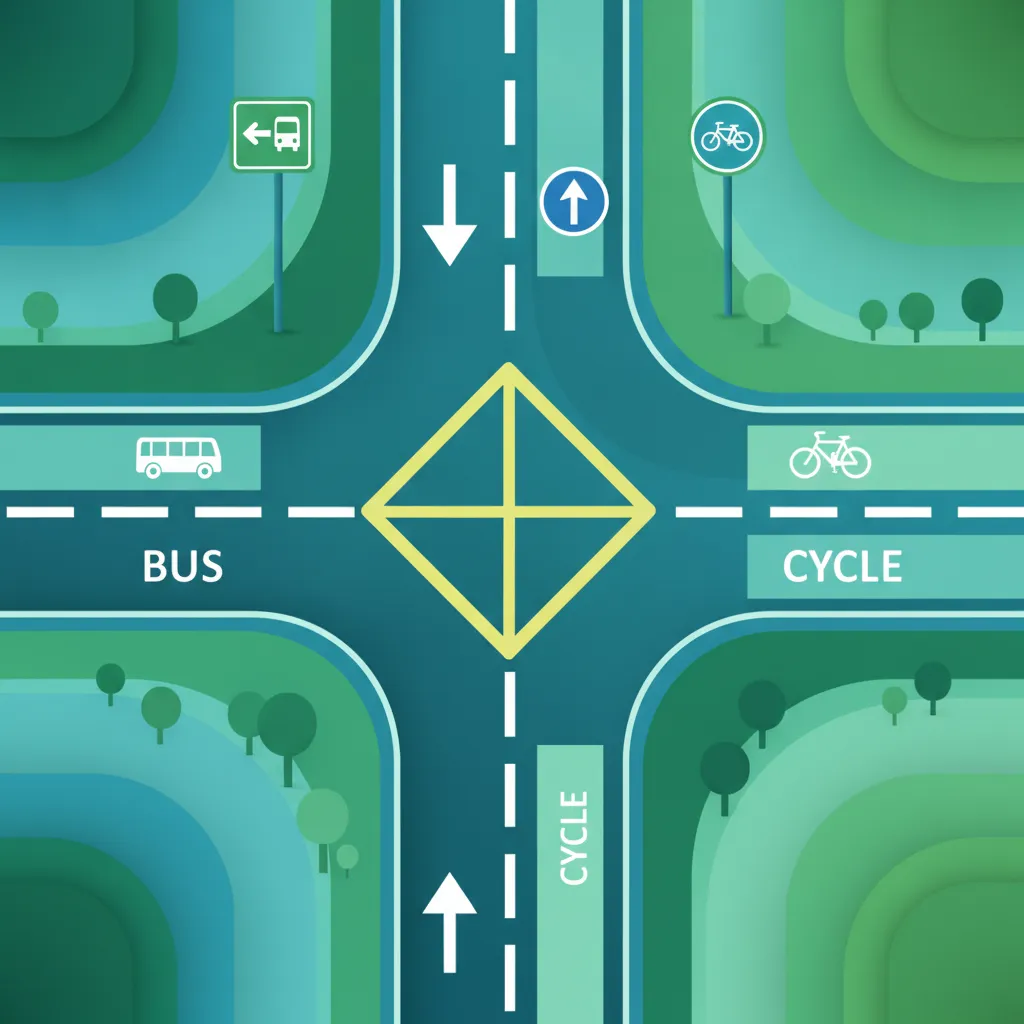
Browse all lessons that make up Road Markings, Lane Use and Traffic Directions. Each lesson focuses on specific topics, learning objectives, and core concepts, helping you build essential knowledge and follow a clear, structured progression toward your study goals in Great Britain.
This lesson explains how lines running parallel to the kerb control traffic movement. You will learn that broken white lines divide lanes, while solid white lines generally prohibit crossing them. The specific rules for double white lines, including when you are permitted to cross, are also covered in detail to ensure safe overtaking.
This lesson focuses on the markings and rules at designated pedestrian crossing points. It details the legal requirement to give way to pedestrians on a zebra crossing and explains the light sequences at signal-controlled crossings. You will also learn the meaning of the white zig-zag lines on the approach to all crossings.
This lesson covers lanes designated for specific types of traffic to improve flow and safety. You will learn to identify mandatory and advisory cycle lanes, and understand the signs indicating the operational hours of bus lanes. The rules governing these lanes are critical for avoiding penalties and ensuring the safety of all road users.
This lesson focuses on the markings that control traffic at intersections. It explains the primary rule of a yellow box junction: do not enter unless your exit is clear. You will also learn the difference between the solid white 'Stop' line and the broken 'Give Way' line, which dictate your priority over other traffic.
This lesson explains markings found at the side of the road that regulate parking and stopping. You will learn the meaning of single and double yellow lines, and the stricter rules associated with red lines on 'Red Routes'. The lesson also covers markings for parking bays, loading zones, and hatched areas that are designed to separate traffic.
Explore high-intent keywords and long-tail search topics learners use when researching Road Markings, Lane Use and Traffic Directions. These terms reflect how people search for reliable study materials, structured explanations, and unit-level theory preparation support in Great Britain.
Find clear answers to the most common questions learners ask about Road Markings, Lane Use and Traffic Directions. Understand how the unit is organized, what learning goals it supports, and how it contributes to your study progression with structured explanations and practical guidance tailored for learners in Great Britain.
A single white line, whether broken or solid, indicates the division between traffic lanes. Broken lines mean you may cross to overtake or change lanes when safe, whereas a solid white line means you must not cross it unless turning or overtaking a stationary vehicle. Double white lines, with the solid white line closest to you, mean you must not cross them under any circumstances, except in specific emergency situations or when directed by a police officer.
You can enter a box junction if your exit is clear, meaning you can drive through without stopping. You are only permitted to wait in a box junction if you are waiting to turn right, and your path is blocked by oncoming traffic or other vehicles. Crucially, you must not enter the box junction if you are likely to have to stop and wait within it.
Single yellow lines at the side of the road indicate waiting restrictions, typically applying during specific hours shown on nearby signs. Double yellow lines mean no waiting at any time. Yellow zig-zag lines, often found near pedestrian crossings, indicate no stopping or waiting at any time, even to pick up or drop off passengers, to ensure visibility and safety for all road users.
Yes, cycle lanes are exclusively for cyclists and should not be used by motor vehicles, except when turning across them when safe. Bus lanes are for buses, but may also be used by other vehicles like taxis or cycles at certain times, as indicated by signs. Always check the signs for specific restrictions and times of operation before entering or crossing these lanes.
Road edge markings, often a solid white line or a coloured kerb, mark the edge of the carriageway. They are crucial for guiding drivers, especially in poor visibility or at night, and indicate the boundary of the safe driving area. Coloured kerb markings, such as yellow or red, may indicate specific parking or stopping restrictions.
All included lessons
Lessons in Road Markings, Lane Use and Traffic Directions
See who benefits most from studying Road Markings, Lane Use and Traffic Directions. This overview explains how the unit supports different learning needs, what level of knowledge is helpful before starting, and how it fits into the overall study path in Great Britain.
This unit is designed for all learner drivers in Great Britain preparing for their Category B theory test. It's particularly beneficial for those who find road markings confusing or struggle with lane discipline during practical driving, helping to build a solid foundation for safe navigation.

Ready to prepare effectively for your DVSA driving theory test? Explore our structured courses and guided study paths. They cover every topic of the Great Britain Highway Code and official exam requirements, ensuring systematic learning and success.
Explore Driving Theory CoursesExplore all units and lessons included in this driving theory course.
Ready to prepare effectively for your DVSA driving theory test? Explore our structured courses and guided study paths. They cover every topic of the Great Britain Highway Code and official exam requirements, ensuring systematic learning and success.
Explore Driving Theory Courses