
This lesson details how to safely identify and use lanes designated for specific traffic, such as cyclists, buses, and high-occupancy vehicles. Understanding these markings and time-restricted signals is essential for avoiding fines and improving road safety within the Category B licence framework.
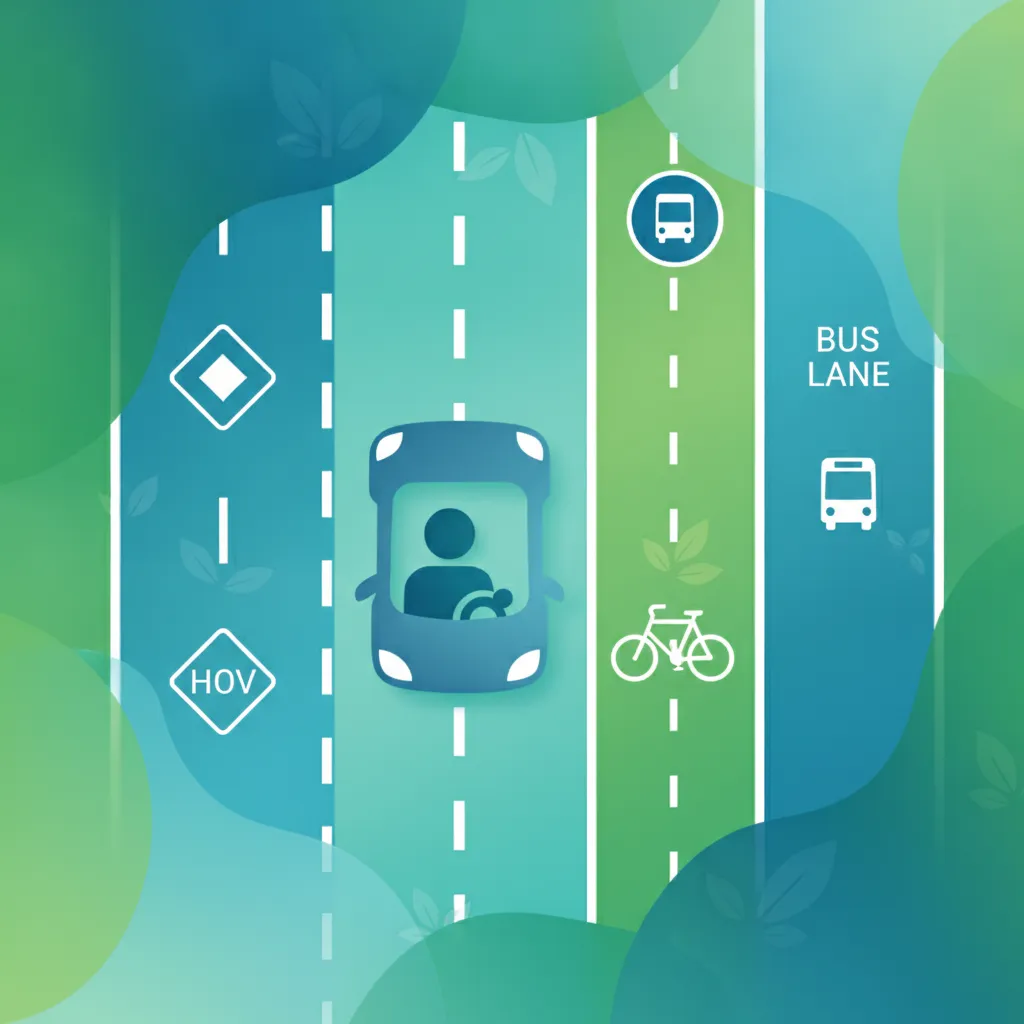
Lesson content overview
Understanding how to identify, interpret, and correctly use special traffic lanes is fundamental for safe and legal driving in Great Britain. These dedicated lanes—specifically cycle lanes, bus lanes, and High-Occupancy Vehicle (HOV) lanes—are designed to improve traffic flow, enhance safety for vulnerable road users, and promote more sustainable modes of transport. As a Category B learner driver, mastering the rules associated with these lanes is crucial for your theory test and for becoming a responsible driver.
Special purpose lanes allocate specific sections of the road to particular types of traffic. This strategy is a key part of modern traffic management, aiming to make our roads more efficient, safer, and less congested. By separating different road users, particularly vulnerable ones, and prioritising certain transport methods, these lanes contribute significantly to the overall effectiveness of the road network.
The primary goal of creating special lanes is multifaceted. Firstly, they help reduce congestion by giving priority to high-capacity vehicles like buses, ensuring public transport remains reliable and attractive. Secondly, they significantly enhance safety for vulnerable road users, such as cyclists, by providing dedicated space away from faster-moving motor traffic. Lastly, HOV lanes encourage car-pooling, which reduces the number of vehicles on the road, lowers emissions, and makes commutes more efficient.
Several core principles underpin the operation and enforcement of special lanes:
Cycle lanes are a common feature on many roads in Great Britain, designed to provide a safer and more direct route for cyclists. They are distinguishable by specific road markings and signs.
A Mandatory Cycle Lane (MCL) is a dedicated part of the carriageway for cyclists, clearly demarcated by a continuous, solid white line and often marked with a bicycle symbol on the road surface.
A dedicated lane for cyclists, marked by a solid white line and a bicycle symbol; motor vehicles must not use it except for specific right-turn maneuvers or to access/egress a side road.
Motor vehicles are prohibited from entering or driving in a mandatory cycle lane during its operational hours. The only exceptions are:
Even when these exceptions apply, you must give way to any cyclists already in the lane. Cyclists, conversely, are generally required to use mandatory cycle lanes where present and safe, as outlined in Highway Code Rule 207. They may only leave the lane if there is a hazard that makes it unsafe to continue within it.
Never park or stop in a mandatory cycle lane. Doing so obstructs cyclists, creates a hazard, and is a violation.
An Advisory Cycle Lane (ACL) is indicated by a dashed white line and a bicycle symbol. While not strictly mandatory for cyclists to use, it strongly advises them to do so for their safety.
A lane indicated by a dashed white line and a bicycle symbol; cyclists are encouraged to use it, and motor vehicles should not drive within it unless absolutely necessary.
Motorists should avoid driving in an advisory cycle lane. Although the dashed line signifies that crossing is permissible under certain circumstances (e.g., to pass a stationary vehicle or avoid an obstruction), you should only do so if it is safe and there are no cyclists present. Always check your mirrors and blind spots carefully before entering an advisory cycle lane.
Drivers often make mistakes when interacting with cycle lanes:
Bus lanes are a critical component of urban transport networks, designed to give public buses priority, improve their punctuality, and encourage their use. They are easily identifiable by distinct markings and signage.
Bus lanes are typically marked by a wide red line or coloured tarmac, a solid white border, and a prominent bus symbol painted on the road surface. Roadside signs, often featuring a white bus on a blue circle, specify the operational hours and which vehicles are permitted to use the lane.
A small supplementary sign usually placed below a main road sign, indicating the specific days and/or hours when a particular traffic restriction, such as a bus lane, is in force.
Most bus lanes are time-restricted, meaning they are only active during specific periods, such as morning and evening peak hours (e.g., 7 am – 10 am and 4 pm – 7 pm). Outside of these hours, the lane may revert to being a general traffic lane, though this is not always the case; some bus lanes are active 24/7. Always check the time plate carefully to confirm when the restrictions apply.
While the general rule is to keep out of bus lanes during active hours, there are a few specific exceptions:
Always assume a bus lane is active unless the accompanying signs clearly indicate otherwise, or you are outside the specified operational hours. When in doubt, stay out.
Misusing a bus lane can result in a Penalty Charge Notice (PCN), typically a fine of £100, though this may vary. Common violations include:
High-Occupancy Vehicle (HOV) lanes, also known as car-pool lanes, are designed to reduce congestion and promote car-pooling by reserving a lane for vehicles carrying a minimum number of occupants.
HOV lanes are identified by a diamond symbol painted on the road surface and accompanied by roadside signs. These signs specify the minimum number of occupants required, often "HOV 2+" (meaning two or more people) or "HOV 3+" (three or more people). Like bus lanes, HOV lanes may also have time plates indicating their operational hours.
A lane reserved for vehicles carrying a minimum number of occupants (e.g., 2+ or 3+), indicated by a diamond symbol and specific signage.
HOV lanes are less common than cycle or bus lanes but can be found on certain motorways or major arterial routes in the UK. They are part of wider strategies to manage traffic demand and reduce environmental impact.
The primary rule for HOV lanes is straightforward: only vehicles meeting the specified occupancy minimum may use the lane during its active times. The driver counts as one occupant. So, for an HOV 2+ lane, you need at least one driver and one passenger.
Certain vehicles may be exempt from the occupancy rule, such as motorcycles, buses, or taxis, but this will always be clearly indicated by specific signage. Do not assume exemptions.
Using an HOV lane with fewer occupants than required during active hours is a violation. Penalties typically involve a fine and may include penalty points on your licence.
Several misunderstandings surround HOV lane usage:
Accurate identification of special lanes relies on understanding both the markings painted on the road surface and the accompanying roadside signs. These visual cues work together to convey the rules.
Road signs provide crucial regulatory information that complements road markings. They often specify the type of lane, the vehicles permitted, and, most importantly, the operational hours.
Buses Only (Road Sign 606) or Cycle Lane typically fall into this category, signifying a mandatory instruction.HOV Lane 2+ Occupants or specific exemptions.Mon-Fri 7am-10am, 4pm-7pm). Ignoring a time plate can lead to a violation even if the lane appears clear.Beyond the specific rules for each lane type, there are overarching principles for interacting with special lanes and navigating transitional zones where these lanes begin or end.
In general, drivers of non-authorised vehicles must:
Stopping in a special lane for any reason that isn't an emergency (e.g., breakdown) is usually considered a parking offence or obstruction, even if the lane is not actively enforcing its primary use at that moment.
When entering a road that has a special lane from a side street or driveway, you may need to cross the special lane. You must always:
Check for authorised users: Look carefully for cyclists, buses, or HOV vehicles already using the lane.
Give way: Yield to any vehicles or cyclists in the special lane.
Cross quickly and safely: Enter the main traffic flow without undue hesitation once it is clear.
When a special lane ends, the markings will typically change from solid to dashed, or the lane may merge back into general traffic. Follow standard lane discipline rules, signal your intentions, and check mirrors and blind spots before merging.
Understanding the rules is one thing; applying them correctly in dynamic driving situations is another. Here are some common violations and how to correctly handle challenging scenarios:
HOV 2+ Occupants during the active hours.The effectiveness and safety implications of special lanes can be influenced by various external factors. Drivers must adjust their behaviour accordingly.
Special lanes are not just arbitrary rules; they are carefully planned interventions with significant benefits for road safety and traffic management.
This lesson covers the identification and rules for three types of special lanes: mandatory cycle lanes (solid white line), advisory cycle lanes (dashed white line), and bus lanes (red tarmac with bus symbol), along with HOV lanes marked by diamonds requiring minimum occupancy. Motorists must recognize that solid-line cycle lanes prohibit vehicle entry except for specific turning maneuvers, while bus lanes restrict usage during hours shown on time plates. Common violations include driving in bus lanes to overtake, parking in cycle lanes, and solo drivers using HOV lanes. Understanding these markings, signage, and time restrictions is essential for avoiding PCN penalties and ensuring safety for vulnerable road users in urban environments.
A short set of high-value points that capture the most important learning from this lesson.
Mandatory cycle lanes (solid white line + bicycle symbol) prohibit motor vehicles except for specific right-turn maneuvers or accessing side roads
Bus lanes are typically marked with red tarmac and active only during specified hours shown on accompanying time plates
HOV lanes require a minimum occupant count (e.g., 2+ or 3+) including the driver, indicated by diamond road markings and signs
Advisory cycle lanes (dashed white line) allow vehicles to cross if necessary but should be avoided when cyclists are present
General prohibitions apply: do not drive, park, stop, or use special lanes for overtaking during active hours
Explore all units and lessons included in this driving theory course.
Solid white line = mandatory cycle lane (cyclists must use it, vehicles prohibited); dashed white line = advisory cycle lane (vehicles may cross if safe)
Always check the time plate beneath bus and HOV lane signs to confirm active hours before entering
Motorists may only enter a bus lane to turn right if signage explicitly permits it or to access a side road or property safely
The driver counts as one occupant for HOV lane eligibility; a solo driver always fails a 2+ requirement
Parking or stopping in any special lane, even briefly, is a violation unless signage explicitly permits it
Confusing mandatory and advisory cycle lanes—both should be avoided by vehicles, but only mandatory lanes require cyclists to use them
Assuming electric vehicles have automatic HOV lane exemption without checking for specific signage indicating EV rights
Entering a bus lane during active hours to overtake slower traffic rather than remaining in general traffic lanes
Believing that 'brief stops' in cycle or bus lanes are permissible for deliveries or passenger drops
Misinterpreting occupancy count by not counting the driver as one of the required occupants in an HOV lane
Lesson content overview
A short set of high-value points that capture the most important learning from this lesson.
Mandatory cycle lanes (solid white line + bicycle symbol) prohibit motor vehicles except for specific right-turn maneuvers or accessing side roads
Bus lanes are typically marked with red tarmac and active only during specified hours shown on accompanying time plates
HOV lanes require a minimum occupant count (e.g., 2+ or 3+) including the driver, indicated by diamond road markings and signs
Advisory cycle lanes (dashed white line) allow vehicles to cross if necessary but should be avoided when cyclists are present
General prohibitions apply: do not drive, park, stop, or use special lanes for overtaking during active hours
Explore all units and lessons included in this driving theory course.
Solid white line = mandatory cycle lane (cyclists must use it, vehicles prohibited); dashed white line = advisory cycle lane (vehicles may cross if safe)
Always check the time plate beneath bus and HOV lane signs to confirm active hours before entering
Motorists may only enter a bus lane to turn right if signage explicitly permits it or to access a side road or property safely
The driver counts as one occupant for HOV lane eligibility; a solo driver always fails a 2+ requirement
Parking or stopping in any special lane, even briefly, is a violation unless signage explicitly permits it
Confusing mandatory and advisory cycle lanes—both should be avoided by vehicles, but only mandatory lanes require cyclists to use them
Assuming electric vehicles have automatic HOV lane exemption without checking for specific signage indicating EV rights
Entering a bus lane during active hours to overtake slower traffic rather than remaining in general traffic lanes
Believing that 'brief stops' in cycle or bus lanes are permissible for deliveries or passenger drops
Misinterpreting occupancy count by not counting the driver as one of the required occupants in an HOV lane
Explore search topics learners often look for when studying Cycle Lanes, Bus Lanes, and HOV Lanes. These topics reflect common questions about road rules, driving situations, safety guidance, and lesson level theory preparation for learners in Great Britain.
Browse additional driving theory lessons that cover connected traffic rules, road signs, and common driving situations related to this topic. Improve your understanding of how different rules interact across everyday traffic scenarios.
Understand the specific rules for mandatory and advisory cycle lanes, bus lanes with time restrictions, and High-Occupancy Vehicle (HOV) lanes. Essential knowledge for safe driving and passing the Great Britain theory test.
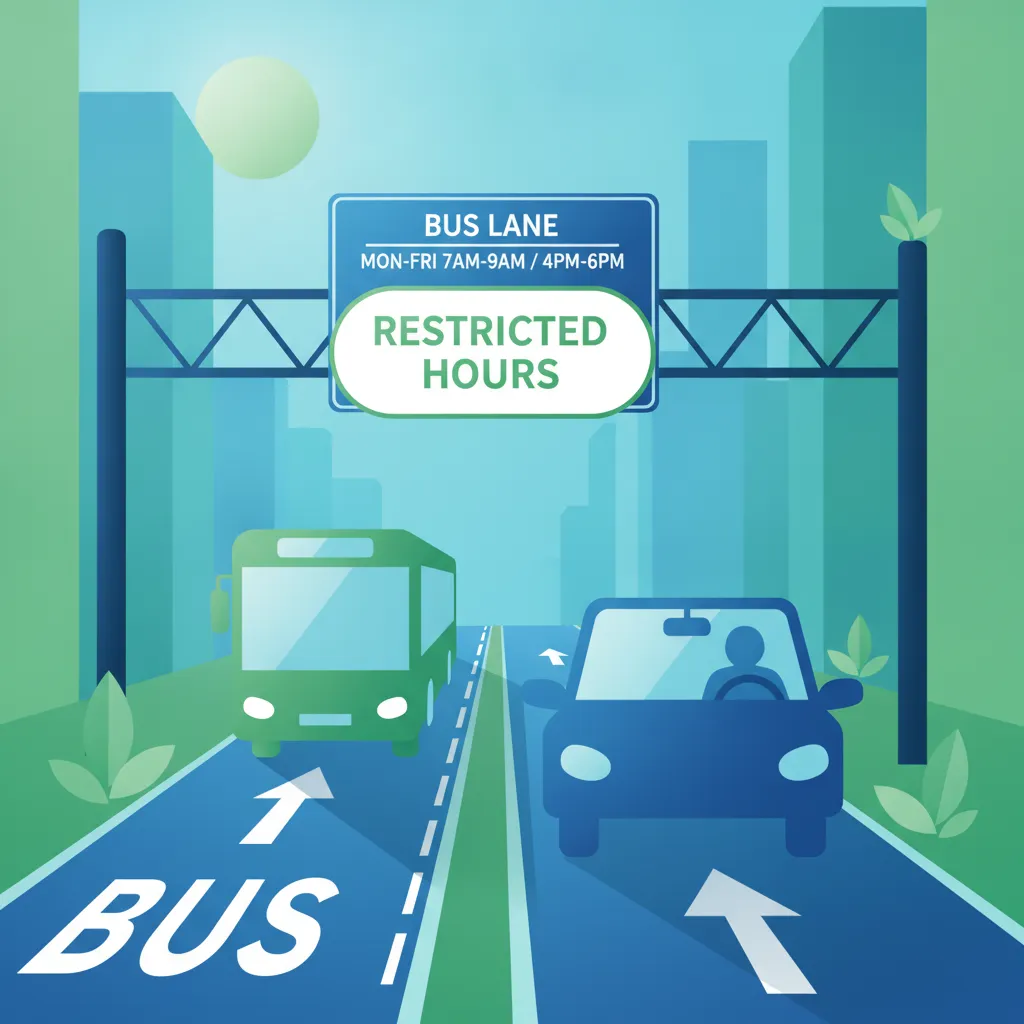
This lesson covers the importance of maintaining correct lane discipline when driving a large passenger vehicle. It details how to position your vehicle safely within a lane on various road types, including multi-lane carriageways and motorways. You will learn the specific rules governing bus lanes, including how to interpret markings, adhere to operating times, and understand the exemptions and penalties associated with their use to ensure legal and efficient driving.
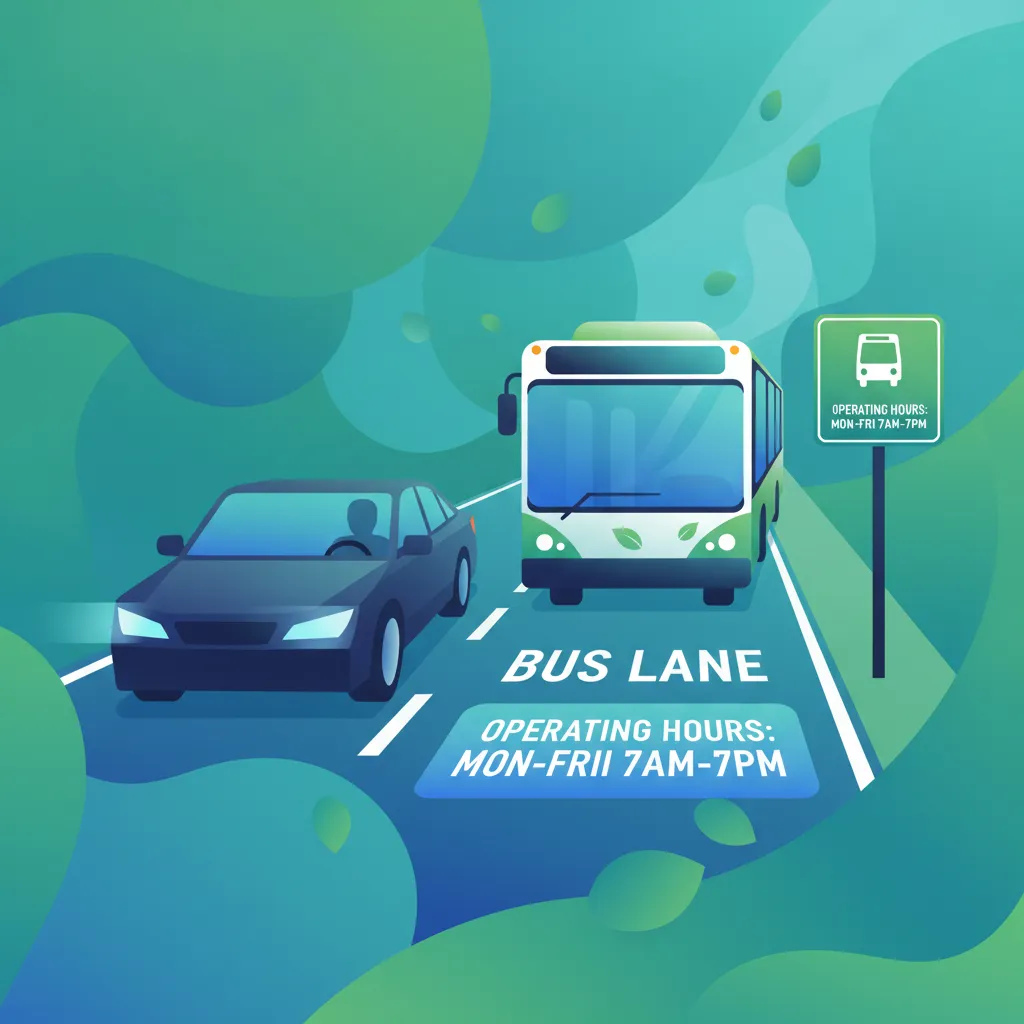
This lesson explores the specifics of bus lane markings, operating times, and priority situations where buses have precedence over other traffic. It emphasizes correct lane discipline, lawful entry and merging practices, and the exemptions granted to designated passenger vehicles. Learners will also understand how bus lane enforcement works and what penalties may be incurred for non-compliance, ensuring safe and efficient movement through urban traffic systems.
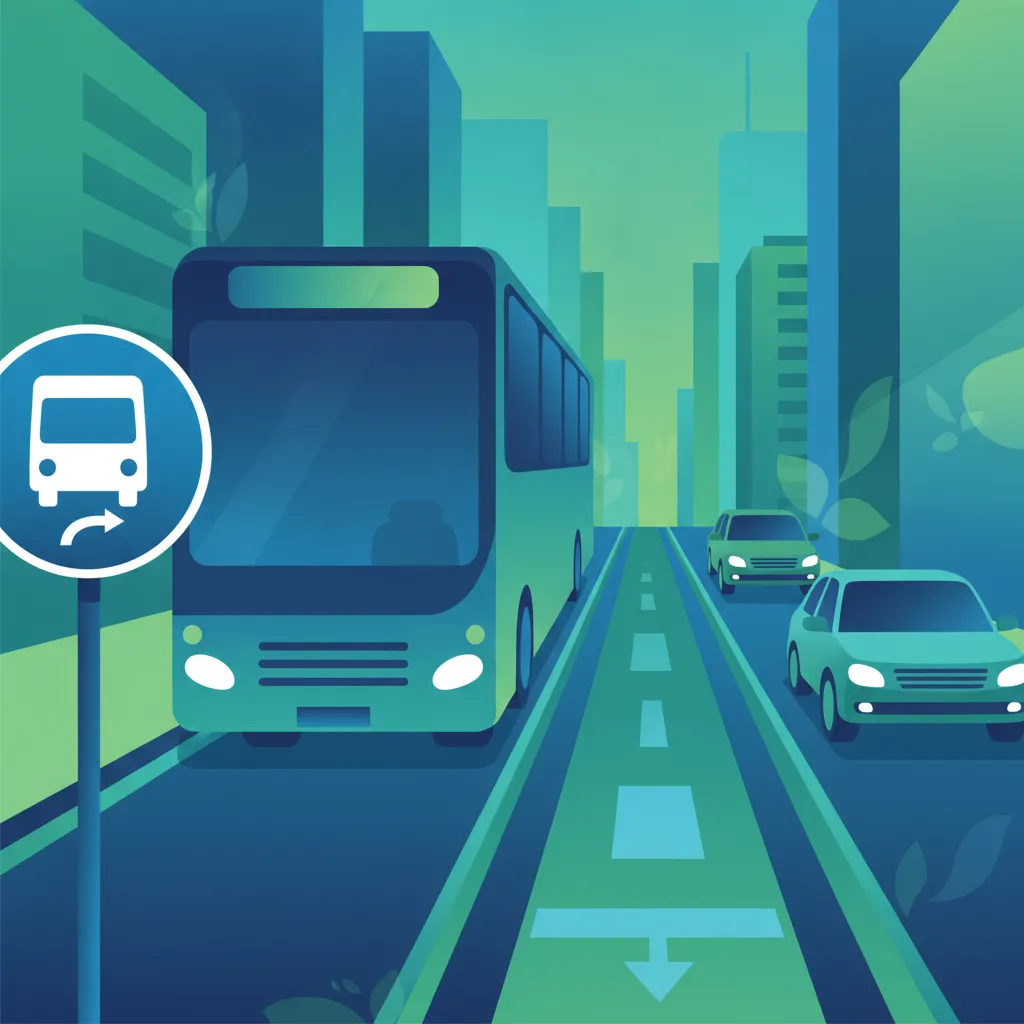
This lesson examines the unique rules and restrictions governing buses and coaches, focusing on bus lane priority, time-based restrictions, and loading zone limitations. Learners will explore the criteria for using bus-only routes and understand the legal consequences of non-compliance. The content also reviews signage indicating bus gate operation and areas where passenger vehicles are prohibited from stopping or loading outside of designated zones, ensuring lawful and efficient urban navigation.
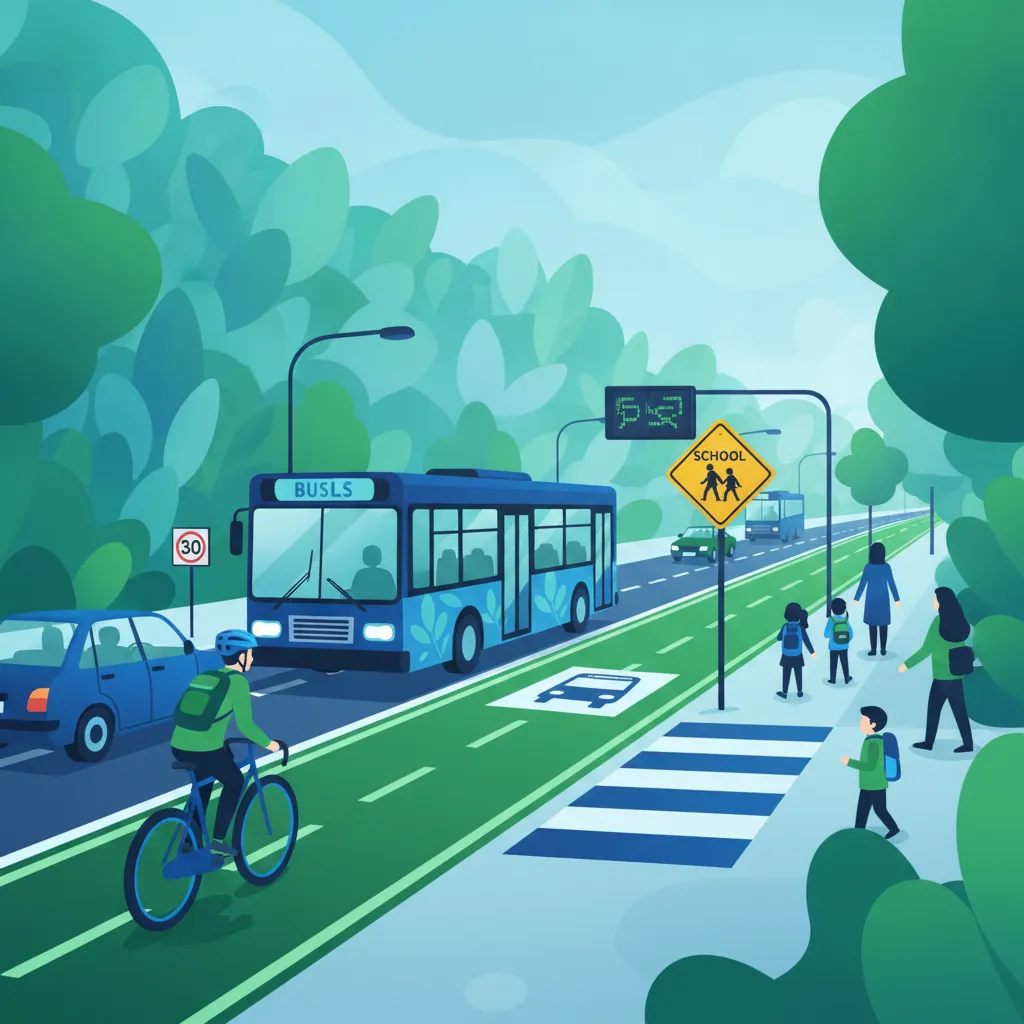
This lesson explains the regulations for special road zones common in urban areas. You will learn about speed restrictions near schools, how to read signs indicating if and when motorcycles can use bus lanes, and how to safely interact with cyclist infrastructure such as advanced stop lines. Compliance with these specific rules is crucial for legal and safe urban riding.

This lesson details how to safely navigate junctions controlled by traffic signals. It explains the meaning of filter arrows, which allow you to proceed in a specific direction even if the main light is red. You will also learn about respecting advanced stop lines for cyclists and how to approach a junction when the traffic lights are not working.
This lesson focuses on the regulations and best practices for driving a bus or coach on motorways. It details the specific speed limits applicable to PCVs and reinforces strict lane discipline. The content covers the correct procedures for safely joining from a slip road, overtaking other vehicles, and exiting the motorway. It also explains the features of smart motorways and the correct safety procedures to follow in the event of a breakdown, including the use of the hard shoulder.
This lesson focuses on the rules conveyed by road markings, such as solid and broken white lines that dictate overtaking rules and lane boundaries. You will learn to interpret waiting and stopping restrictions indicated by yellow and red lines, and understand markings for specific road users like bus and cycle lanes. Maintaining correct lane discipline based on these markings is a fundamental skill for safe navigation and compliance with the Highway Code.
This lesson explains how lines running parallel to the kerb control traffic movement. You will learn that broken white lines divide lanes, while solid white lines generally prohibit crossing them. The specific rules for double white lines, including when you are permitted to cross, are also covered in detail to ensure safe overtaking.
This lesson provides specific techniques for safely navigating the two main types of roundabouts in Great Britain. For multi-lane roundabouts, it covers how to choose the correct lane on approach, maintain your lane while circulating, and signal your exit correctly. It also explains the unique rules for mini-roundabouts, emphasizing the importance of giving way to traffic from the right and navigating them with caution due to their small size.

This lesson focuses on safe interaction with cyclists, a key aspect of urban driving for PCV operators. It details the rules for cycle lanes and advanced stop lines, and the correct procedure for overtaking cyclists, emphasizing the need to provide ample space. The content stresses the importance of frequent mirror checks to manage blind spots where cyclists can be hidden, especially when turning at junctions, to ensure their safety and comply with the Highway Code's road user hierarchy.
Learn about frequent errors drivers make with cycle, bus, and HOV lanes. This lesson clarifies exceptions, understanding time plates, and avoiding penalties for incorrect usage in Great Britain.
This lesson covers the importance of maintaining correct lane discipline when driving a large passenger vehicle. It details how to position your vehicle safely within a lane on various road types, including multi-lane carriageways and motorways. You will learn the specific rules governing bus lanes, including how to interpret markings, adhere to operating times, and understand the exemptions and penalties associated with their use to ensure legal and efficient driving.
This lesson explores the specifics of bus lane markings, operating times, and priority situations where buses have precedence over other traffic. It emphasizes correct lane discipline, lawful entry and merging practices, and the exemptions granted to designated passenger vehicles. Learners will also understand how bus lane enforcement works and what penalties may be incurred for non-compliance, ensuring safe and efficient movement through urban traffic systems.
This lesson examines the unique rules and restrictions governing buses and coaches, focusing on bus lane priority, time-based restrictions, and loading zone limitations. Learners will explore the criteria for using bus-only routes and understand the legal consequences of non-compliance. The content also reviews signage indicating bus gate operation and areas where passenger vehicles are prohibited from stopping or loading outside of designated zones, ensuring lawful and efficient urban navigation.
This lesson explains the regulations for special road zones common in urban areas. You will learn about speed restrictions near schools, how to read signs indicating if and when motorcycles can use bus lanes, and how to safely interact with cyclist infrastructure such as advanced stop lines. Compliance with these specific rules is crucial for legal and safe urban riding.
This lesson focuses on safe interaction with cyclists, a key aspect of urban driving for PCV operators. It details the rules for cycle lanes and advanced stop lines, and the correct procedure for overtaking cyclists, emphasizing the need to provide ample space. The content stresses the importance of frequent mirror checks to manage blind spots where cyclists can be hidden, especially when turning at junctions, to ensure their safety and comply with the Highway Code's road user hierarchy.

This lesson examines strategies for managing congestion in city centres, focusing on effective bus lane usage, understanding priority signalling, and route optimisation. It covers best practices for avoiding traffic jams while maintaining passenger loading efficiency and service reliability. Additionally, the lesson discusses how bus stop timing and adherence to specific urban traffic regulations directly affect overall congestion and passenger flow, helping drivers make informed decisions in dense traffic.
Find clear answers to common questions learners have about Cycle Lanes, Bus Lanes, and HOV Lanes. Learn how the lesson is structured, which driving theory objectives it supports, and how it fits into the overall learning path of units and curriculum progression in Great Britain. These explanations help you understand key concepts, lesson flow, and exam focused study goals.
Generally, you must avoid bus lanes during the times shown on the signs. However, you may enter one to avoid an obstruction, to turn into a side road if road markings permit, or to access a property if there is no alternative, provided you do not obstruct buses.
A mandatory cycle lane is marked by a solid white line and motorised vehicles must not enter it during its hours of operation. An advisory cycle lane is marked by a broken white line; drivers should avoid it but may enter if necessary, provided it is safe to do so.
HOV lanes are restricted to vehicles with a certain number of occupants, often indicated by specific signage. As a learner driver, you must check the signage to see if your vehicle meets the occupancy requirement before entering.
Check the upright signs at the start of the bus lane. They will clearly state the times of operation. If no times are displayed, the lane may be operational 24 hours a day, so always treat it as restricted unless signs indicate otherwise.
Dive into our comprehensive question bank to find exactly what you need for your Great Britain theory test. Use our advanced filters to pinpoint specific subjects or test your knowledge on challenging areas, ensuring you're fully prepared for success.