
Navigate complex intersections with confidence. This unit focuses on the critical rules governing priority at junctions and roundabouts across Great Britain. Master how to approach, react, and proceed safely at crossroads, T-junctions, mini-roundabouts, and large roundabouts to ensure smooth traffic flow and prepare thoroughly for your Category B theory test.
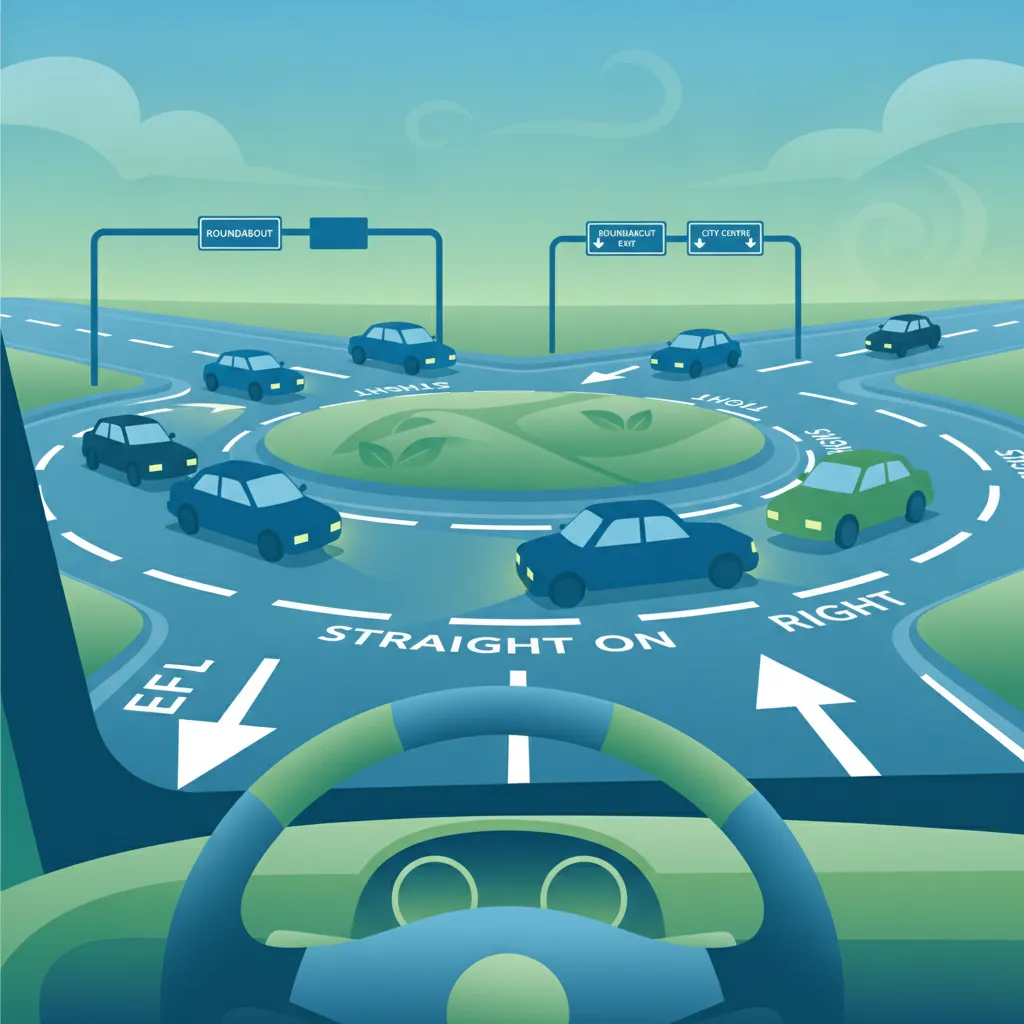
Browse all lessons that make up Priority Rules, Junctions and Roundabouts. Each lesson focuses on specific topics, learning objectives, and core concepts, helping you build essential knowledge and follow a clear, structured progression toward your study goals in Great Britain.
This lesson covers the explicit priority instructions given by signs and markings at junctions. It explains that at a 'Give Way' line, you must yield to traffic on the major road but can proceed if it is safe. At a 'Stop' sign, you must come to a complete halt before the line, assess the traffic, and only proceed when safe.
This lesson details the priority rules for turning manoeuvres. When turning left, you generally have priority over traffic waiting to emerge from the side road. However, when turning right, you must give way to all oncoming traffic, positioning your vehicle safely in the centre of the road while you wait for a safe gap.
This lesson explains how to handle mini-roundabouts, which are common in urban and residential areas. The primary rule is to approach with caution and give priority to any traffic approaching from your right. You will also learn about correct signalling and the importance of being aware of cyclists and motorcyclists who may be harder to see.
This lesson tackles the complexities of large roundabouts, which often have multiple lanes and exits. It stresses the importance of reading signs on the approach to select the correct lane for your destination. You will learn about maintaining lane discipline while on the roundabout and signalling correctly as you pass exits and prepare to leave.
This lesson details how to safely navigate junctions controlled by traffic signals. It explains the meaning of filter arrows, which allow you to proceed in a specific direction even if the main light is red. You will also learn about respecting advanced stop lines for cyclists and how to approach a junction when the traffic lights are not working.
Explore high-intent keywords and long-tail search topics learners use when researching Priority Rules, Junctions and Roundabouts. These terms reflect how people search for reliable study materials, structured explanations, and unit-level theory preparation support in Great Britain.
Find clear answers to the most common questions learners ask about Priority Rules, Junctions and Roundabouts. Understand how the unit is organized, what learning goals it supports, and how it contributes to your study progression with structured explanations and practical guidance tailored for learners in Great Britain.
At an unmarked crossroads where there are no signs or road markings, the general rule is to give way to traffic approaching from the right. Always approach with caution, observe other vehicles, and be prepared to stop if necessary.
When approaching a roundabout, you must indicate left if taking the first exit. For any exit past the first, you should indicate right when passing the exit before the one you intend to take, and then indicate left as you pass your intended exit. For the last exit (directly opposite), you must indicate right when approaching and left as you pass the exit before yours.
Mini-roundabouts are smaller and often have a central island that you only drive around if the traffic flow dictates. You do not need to signal when entering a mini-roundabout unless you are turning left or right from the start. Large roundabouts are more complex, usually with multiple lanes, and require clear signalling and lane discipline as described in the Highway Code.
At a T-junction, if you are turning left or right, you must give way to traffic on the major road (the road that continues across the junction). If you are emerging straight ahead, you must still give way to traffic on the major road. Always check for signs and road markings which will indicate the primary road.
Overtaking on a roundabout is generally not advised and often prohibited by road markings or layout, especially on multi-lane roundabouts. Focus on maintaining your position, signalling correctly, and safely exiting. If you need to overtake, it should be done before entering or after exiting the roundabout, adhering to all other rules.
At traffic light controlled junctions, you must obey the signals. Red means stop, amber means stop if safe to do so before the line, and green means proceed if the way is clear. You must also respect any associated signs, such as 'no entry' or specific lane directions, even when the light is green.
All included lessons
Lessons in Priority Rules, Junctions and Roundabouts
See who benefits most from studying Priority Rules, Junctions and Roundabouts. This overview explains how the unit supports different learning needs, what level of knowledge is helpful before starting, and how it fits into the overall study path in Great Britain.
This unit is crucial for all learner drivers in Great Britain preparing for their Category B theory test. It's particularly beneficial for those who find complex junctions and multi-lane roundabouts challenging, or for anyone needing to solidify their understanding of UK priority rules.

Ready to prepare effectively for your DVSA driving theory test? Explore our structured courses and guided study paths. They cover every topic of the Great Britain Highway Code and official exam requirements, ensuring systematic learning and success.
Explore Driving Theory CoursesExplore all units and lessons included in this driving theory course.
Ready to prepare effectively for your DVSA driving theory test? Explore our structured courses and guided study paths. They cover every topic of the Great Britain Highway Code and official exam requirements, ensuring systematic learning and success.
Explore Driving Theory Courses