
This lesson provides a comprehensive guide to understanding priority rules at junctions, focusing on the correct actions at Give Way and Stop signs. It is an essential component of the Category B theory course, helping you make safe, legally compliant decisions at intersections. Mastering these concepts is fundamental for both your upcoming theory exam and your practical driving test success.
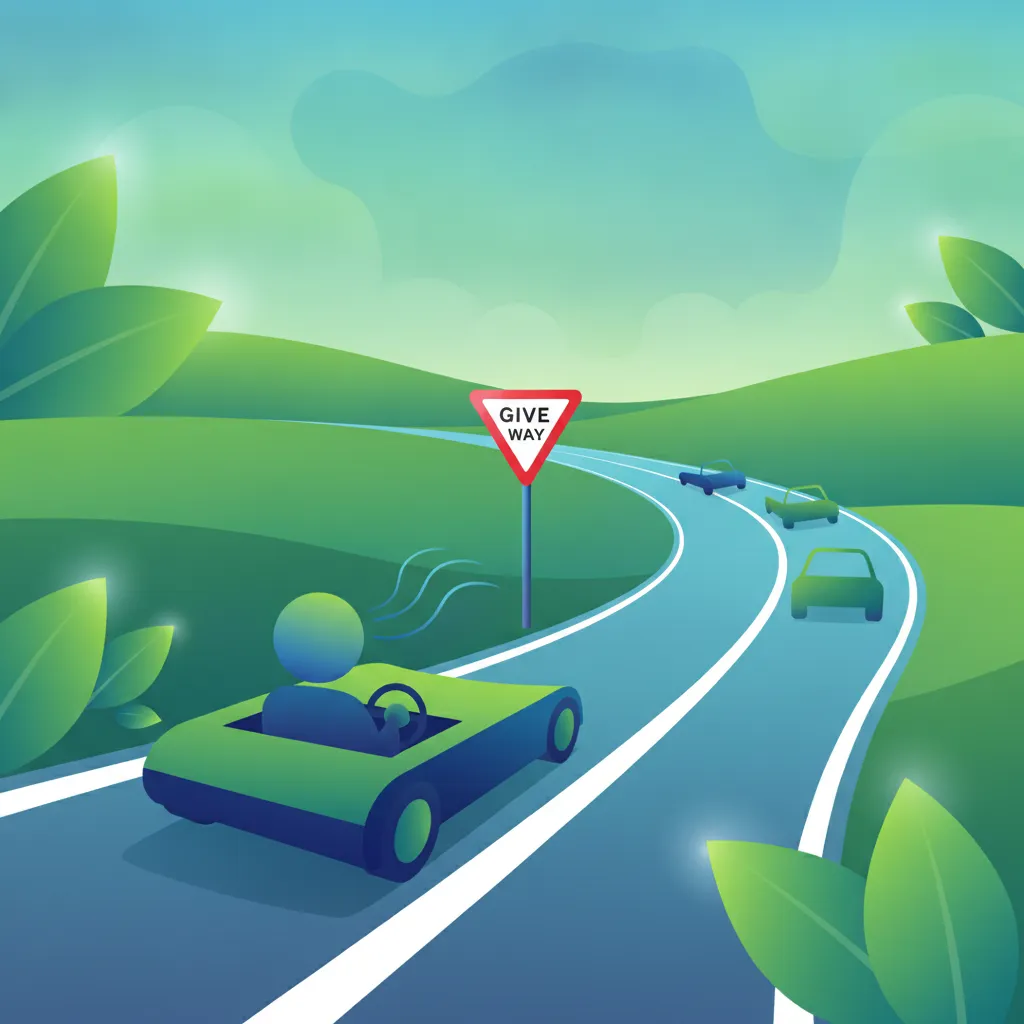
Lesson content overview
Navigating intersections safely and efficiently is a fundamental skill for any driver. For Great Britain Category B learner drivers, a clear understanding of "Give Way" and "Stop" rules is not just crucial for passing your driving theory test, but for ensuring the safety of yourself and other road users. This comprehensive lesson, part of your Complete Theory for Great Britain Category B Learner Drivers course, will delve into the explicit priority instructions provided by signs and road markings at junctions. You will learn the critical differences between yielding at a "Give Way" line and coming to a complete halt at a "Stop" sign, enabling you to make informed, safe decisions every time you approach an intersection.
Intersections are common points of conflict on our roads, where paths of various vehicles and road users converge. To manage these potential conflicts and maintain orderly traffic flow, a clear system of priority rules is established through road signs, traffic signals, and road markings. Understanding these rules is paramount for predicting the actions of others and making your own intentions clear. Failure to observe priority rules is a significant cause of collisions, making mastery of this topic essential for safe driving and passing your driving theory test.
The underlying logic behind these rules is twofold: safety and legal intent. Drivers must have sufficient time to perceive hazards and react safely to avoid collisions. The legal framework codifies these yielding behaviours, creating a predictable and safe order at both uncontrolled and partially controlled junctions. This lesson will focus specifically on explicit priority instructions given by "Give Way" lines and "Stop" signs, which are vital components of the overall hierarchy of road user priority.
The "Give Way" rule is one of the most frequently encountered priority instructions, requiring drivers on a minor road to yield to traffic on a major or priority road.
A "Give Way" line is a continuous white broken line (two short white lines with gaps) marked across the carriageway, typically found at the entry to a junction or roundabout. It signifies that you must give way to traffic on the intersecting road. This line is often accompanied by a triangular "Give Way" sign.
The sign serves as an advance warning and reinforcement of the line's meaning, particularly important where visibility might be limited or speed high. Sometimes, an "advanced Give Way line" might be placed earlier on the approach to a junction, giving drivers more time to slow down and assess the situation, especially on faster roads or where the view is restricted.
The practical meaning of a "Give Way" line is that you must not proceed if doing so would cause any vehicle on the major road to slow down, stop, or change direction. Your primary duty is to ensure that your entry into the junction is safe and does not impede the flow of traffic that has priority.
You must be prepared to stop at the Give Way line if necessary. If traffic is approaching on the major road, you must stop and wait until there is a safe gap before proceeding. However, if the road is completely clear, and you can safely enter or cross the junction without causing any other vehicle to adjust its speed or direction, you may proceed without stopping. This crucial distinction differentiates a "Give Way" from a "Stop" requirement.
Correct behaviour at a Give Way line involves carefully assessing the traffic on the priority road. As you approach, reduce your speed and be prepared to stop. Look both left and right for approaching vehicles, and also straight ahead if you intend to cross. If there is traffic, wait patiently behind the line until a safe gap appears.
Common mistakes include approaching too fast, assuming the other driver will slow down, or rolling across the line without properly checking for a safe gap. Even if the road appears clear, always proceed with caution and be ready to stop if an unforeseen hazard arises.
The "Stop" sign imposes an even stricter requirement than a "Give Way" line, demanding a complete halt of your vehicle before entering the junction.
A "Stop" sign is an unmistakable octagonal red sign with the word "STOP" in white capital letters. It is typically positioned at junctions where visibility is severely restricted, or where the consequences of failing to yield would be particularly hazardous, such as at railway crossings (though these often have their own specific signals) or busy main road entrances.
The Stop sign is always accompanied by a solid white "Stop" line marked across the carriageway. This line indicates the exact point where your vehicle must come to a complete halt.
The most critical aspect of a Stop sign is the requirement for a "complete stop." This means your vehicle's wheels must come to a standstill behind the stop line. Simply slowing down and rolling through (often called a "rolling stop") is illegal and unsafe. The purpose of a complete stop is to give you ample time to thoroughly assess traffic from all directions before cautiously proceeding.
Even if the road appears clear, you must still come to a full stop. This ensures that you develop the habit of pausing and checking, which is vital for situations where an unexpected vehicle or vulnerable road user might appear. After stopping, you must then check for a safe gap in traffic before moving off.
Once you have come to a complete stop behind the stop line, take your time to look left, right, and if applicable, ahead. Lean forward slightly if your view is obstructed, or creep forward slowly until you have a clear view, but do not cross the stop line until it is safe. Only when you are absolutely certain that you can proceed without causing danger or obstruction to traffic with priority, should you move off. Be mindful of your acceleration, especially if turning across traffic.
While Give Way and Stop signs instruct you to yield, "Priority Road" signs inform you when you have the right of way.
A priority road is one that has the right-of-way at junctions over intersecting roads. When driving on a priority road, you can generally expect to continue without needing to yield to traffic emerging from side roads, unless otherwise indicated by specific signals (like traffic lights or other signs).
The sign indicating that you are on a priority road is a distinctive white diamond shape with a thick black border.
This sign confirms your right of way and helps ensure smooth traffic flow on main routes. Typically, roads entering a priority road will have "Give Way" or "Stop" signs to instruct drivers to yield to you.
You may also encounter supplementary signs related to priority roads:
Understanding these signs allows you to anticipate your right of way and that of others, contributing to safer and more predictable driving.
Whether at a Give Way line or after a Stop sign, the ultimate decision to proceed hinges on your ability to accurately assess a "safe gap" in traffic.
A safe gap is the time and distance interval between your vehicle and approaching traffic that allows you to complete your manoeuvre (entering, crossing, or turning into the main road) safely and without causing others to take evasive action. This assessment is not static; it is influenced by several factors:
Effective gap assessment relies on constant visual scanning. Look far down the road in both directions, not just at the immediate vicinity of the junction. Pay attention to the headlights or daytime running lights of approaching vehicles. Try to anticipate their speed and trajectory. After an initial quick scan, pause, and then scan again. This "left, right, left" or "right, left, right" sequence helps confirm your initial assessment and detect any vehicles that may have appeared during your first scan.
Consider also the psychological aspect: other drivers expect you to give way at a Give Way or Stop sign. Violating this expectation can lead to sudden reactions and increase the risk of a collision.
Compliance with Give Way and Stop rules is not merely a suggestion for smooth traffic flow; it is a legal requirement with serious implications for safety and potential penalties for non-compliance. These rules are enshrined in the Highway Code and the Road Traffic Act 1988.
Rule: All vehicles approaching a "Stop" sign must come to a complete halt behind the stop line. Applicability: This rule applies regardless of road type, traffic speed, or visibility conditions. Legal Status: Mandatory (e.g., Highway Code Rule 131, supported by Road Traffic Act 1988). Rationale: To guarantee that drivers have a fixed point to assess intersecting traffic, especially in situations where visibility might be poor or traffic heavy. Consequence of Violation: Failure to stop can result in a fixed penalty notice, points on your driving licence, and potentially a serious collision.
Rule: Vehicles approaching a "Give Way" line on a non-priority road must give way to any intersecting traffic on the priority road. Applicability: This applies when traffic is present or approaching on the priority road within a distance that would cause a conflict. Legal Status: Mandatory (Highway Code Rule 131). Rationale: Ensures traffic on the priority road can flow safely and uninterrupted, promoting orderly merging and preventing conflicts. Consequence of Violation: Failing to give way when traffic has priority can lead to a fixed penalty, points, and a high risk of side-impact collisions. If the road is clear, you may proceed without stopping, but only if absolutely safe.
Rule: After stopping at a Give Way line or Stop sign, drivers must not proceed in a manner that blocks the junction or obstructs the flow of traffic on the major road. Applicability: Applies after any required stop or yield manoeuvre. Legal Status: Mandatory (e.g., Highway Code Rule 138). Rationale: Prevents congestion and reduces the risk of rear-end collisions or trapping vehicles in the middle of a junction. Consequence of Violation: Obstructing a junction can result in penalties and contributes to traffic delays and frustration.
Understanding the rules is one thing; consistently applying them correctly is another. Many common driving errors at intersections stem from misjudgement or lack of attention.
One of the most frequent violations is failing to make a complete stop at a Stop sign. Drivers might slow down considerably, but allow their vehicle to creep forward without the wheels coming to a full standstill. This "rolling stop" or "California stop" is dangerous because it significantly reduces the time available for thorough observation and reaction, dramatically increasing collision risk. The correct behaviour is to bring the vehicle to zero forward motion behind the white line, then proceed only when safe.
At a Give Way line, a common mistake is underestimating the speed or distance of approaching traffic, leading to drivers pulling out when a gap is insufficient. This forces priority traffic to brake sharply or swerve. Another error is assuming you can proceed if a vehicle on the major road appears to be stationary but still has priority (e.g., waiting to turn right, but traffic behind it has priority over you). Always ensure you yield to all traffic with priority.
Violations of these rules not only carry legal penalties but significantly elevate the risk of collisions, which can result in serious injuries, vehicle damage, and increased insurance premiums.
Safe driving is highly contextual. Your approach to Give Way and Stop rules must adapt to various environmental and traffic conditions.
Let's consider a few practical situations to solidify your understanding.
Setting: You are driving on a narrow, winding rural lane that meets a fast A-road. There is a "Stop" sign and a solid white "Stop" line at the junction. It's daylight, but the sun is low in the sky, causing some glare. Correct Behaviour: You approach slowly, braking progressively. You bring your vehicle to a complete halt just behind the white Stop line. You lean forward slightly to improve your view around a hedge, checking carefully for traffic on the A-road, which might be travelling at high speed. You wait until there is a large, obvious gap, then accelerate smoothly onto the A-road. Incorrect Behaviour: You slow down but don't quite stop, rolling past the Stop line. The low sun obscures an approaching car, which you then pull out in front of, causing them to brake sharply.
Setting: You are on a minor residential street approaching a busy city main road. There's a Give Way sign and a broken white Give Way line. Traffic on the main road is constant, but slow-moving. Correct Behaviour: You slow right down as you approach the Give Way line. Seeing the constant flow of traffic, you stop behind the line. You patiently wait, looking for a break in traffic. When a car on the main road flashes its headlights, indicating you can go, you double-check it's truly safe and then smoothly pull out into the main road, maintaining a safe speed. Incorrect Behaviour: You try to 'force' your way into a small gap, causing a car on the main road to sound its horn and brake suddenly. You also fail to notice a cyclist approaching from the right, requiring them to swerve.
Setting: You're entering a small mini-roundabout in a shopping district. Your entry lane has a Give Way line painted across it. Correct Behaviour: You reduce speed significantly on approach. You look to your right, giving way to any traffic already on the roundabout or approaching from your immediate right. If the roundabout is clear, you proceed carefully without stopping, observing any pedestrians near the crossing points. Incorrect Behaviour: You accelerate into the roundabout, cutting off a driver who is already circulating, causing them to brake sharply. You also neglect to check your mirrors and blind spots for cyclists.
Setting: You are at a Stop sign on a side street. Just after the Stop line, but before the main road, is a zebra crossing. A pedestrian is waiting to cross. Correct Behaviour: You stop fully at the Stop line. You then see the pedestrian waiting at the zebra crossing. You remain stopped, giving the pedestrian time to cross safely. Once the pedestrian has cleared the crossing, you then check the main road for vehicle traffic, and proceed when safe. Incorrect Behaviour: You stop at the Stop line, but then seeing no vehicle traffic, you immediately creep forward, forcing the pedestrian to wait longer or even step back from the crossing.
Setting: You are driving a delivery van with a heavy load on an icy morning, approaching a Give Way line at an intersection with a moderately busy road. Correct Behaviour: Aware of the icy conditions and your vehicle's weight, you reduce your speed much earlier than usual. You gently apply the brakes, stopping well behind the Give Way line to ensure maximum grip. You take extra time to assess the speed of approaching vehicles, knowing your acceleration will be slower on ice. You wait for a significantly larger gap than normal before slowly and carefully pulling out. Incorrect Behaviour: You approach at a similar speed to dry conditions, slide slightly on the ice, and overshoot the Give Way line. Panicked, you then pull out quickly into an insufficient gap, risking a collision with an oncoming vehicle.
To ensure safety and compliance at junctions, remember these fundamental principles:
By consistently applying these rules, you will not only increase your safety but also contribute to smoother traffic flow, pass your theory test for your Category B licence, and become a more responsible and confident driver in Great Britain.
This lesson distinguishes between Give Way and Stop requirements at intersections: Give Way signs require yielding but allow proceeding if safe, while Stop signs demand an absolute halt behind the solid white line. Learners must correctly identify the broken white Give Way line and inverted triangle sign versus the solid white Stop line and octagonal red sign. Safe gap assessment involves considering approaching vehicle speed, your vehicle's acceleration capability, road conditions, and visibility. Common violations include rolling stops at Stop signs, failing to yield properly at Give Way lines, and obstructing junctions after stopping. Vulnerable road users such as pedestrians at crossings and cyclists must always be given priority when present, and gap assessment must be adjusted for weather, darkness, and vehicle loading conditions.
A short set of high-value points that capture the most important learning from this lesson.
Give Way signs require yielding to priority traffic but allow proceeding without stopping if the road is clear; Stop signs always require a complete halt regardless of conditions.
Give Way lines are broken white lines paired with inverted red triangle signs, while Stop lines are solid white lines paired with octagonal red STOP signs.
Safe gap assessment must account for approaching vehicle speed, your vehicle's acceleration, road surface conditions, visibility, and the type of manoeuvre being attempted.
Obstructing a junction after yielding is illegal under Highway Code Rule 138 and can result in penalties and rear-end collisions.
Priority Road signs (white diamond shape) confirm your right of way at junctions, while Priority Road Ends signs alert you to upcoming changes in priority status.
Explore all units and lessons included in this driving theory course.
A complete stop means all wheels must be stationary behind the white line; a rolling stop is illegal at Stop signs.
When assessing a gap, assume approaching vehicles may be travelling faster than they appear, especially on rural roads.
Pedestrians on zebra crossings and cyclists have their own priority rights that must be observed even when you have priority over vehicle traffic.
Heavily loaded vehicles or trailers require larger gaps due to slower acceleration and increased stopping distances.
At Give Way lines, you must yield to ALL traffic on the priority road, including vehicles waiting to turn right that still have priority over you.
Rolling through a Stop sign by slowing considerably but never bringing the vehicle to a complete standstill with all wheels stationary.
Underestimating the speed or distance of approaching traffic at Give Way lines, forcing priority vehicles to brake or swerve.
Stopping partially on the major road after giving way, causing an obstruction to traffic that has priority.
Failing to adjust gap assessment for adverse weather conditions such as rain, ice, fog, or poor lighting.
Assuming priority continues after passing a Priority Road Ends sign without checking for new give way arrangements at subsequent junctions.
Lesson content overview
A short set of high-value points that capture the most important learning from this lesson.
Give Way signs require yielding to priority traffic but allow proceeding without stopping if the road is clear; Stop signs always require a complete halt regardless of conditions.
Give Way lines are broken white lines paired with inverted red triangle signs, while Stop lines are solid white lines paired with octagonal red STOP signs.
Safe gap assessment must account for approaching vehicle speed, your vehicle's acceleration, road surface conditions, visibility, and the type of manoeuvre being attempted.
Obstructing a junction after yielding is illegal under Highway Code Rule 138 and can result in penalties and rear-end collisions.
Priority Road signs (white diamond shape) confirm your right of way at junctions, while Priority Road Ends signs alert you to upcoming changes in priority status.
Explore all units and lessons included in this driving theory course.
A complete stop means all wheels must be stationary behind the white line; a rolling stop is illegal at Stop signs.
When assessing a gap, assume approaching vehicles may be travelling faster than they appear, especially on rural roads.
Pedestrians on zebra crossings and cyclists have their own priority rights that must be observed even when you have priority over vehicle traffic.
Heavily loaded vehicles or trailers require larger gaps due to slower acceleration and increased stopping distances.
At Give Way lines, you must yield to ALL traffic on the priority road, including vehicles waiting to turn right that still have priority over you.
Rolling through a Stop sign by slowing considerably but never bringing the vehicle to a complete standstill with all wheels stationary.
Underestimating the speed or distance of approaching traffic at Give Way lines, forcing priority vehicles to brake or swerve.
Stopping partially on the major road after giving way, causing an obstruction to traffic that has priority.
Failing to adjust gap assessment for adverse weather conditions such as rain, ice, fog, or poor lighting.
Assuming priority continues after passing a Priority Road Ends sign without checking for new give way arrangements at subsequent junctions.
Explore search topics learners often look for when studying Give Way and Stop Rules at Intersections. These topics reflect common questions about road rules, driving situations, safety guidance, and lesson level theory preparation for learners in Great Britain.
Browse additional driving theory lessons that cover connected traffic rules, road signs, and common driving situations related to this topic. Improve your understanding of how different rules interact across everyday traffic scenarios.
Explore intricate priority rules at multi-lane roundabouts, staggered junctions, and other complex intersections. Understand advanced scenarios beyond basic Give Way and Stop signs for safe navigation in Great Britain.
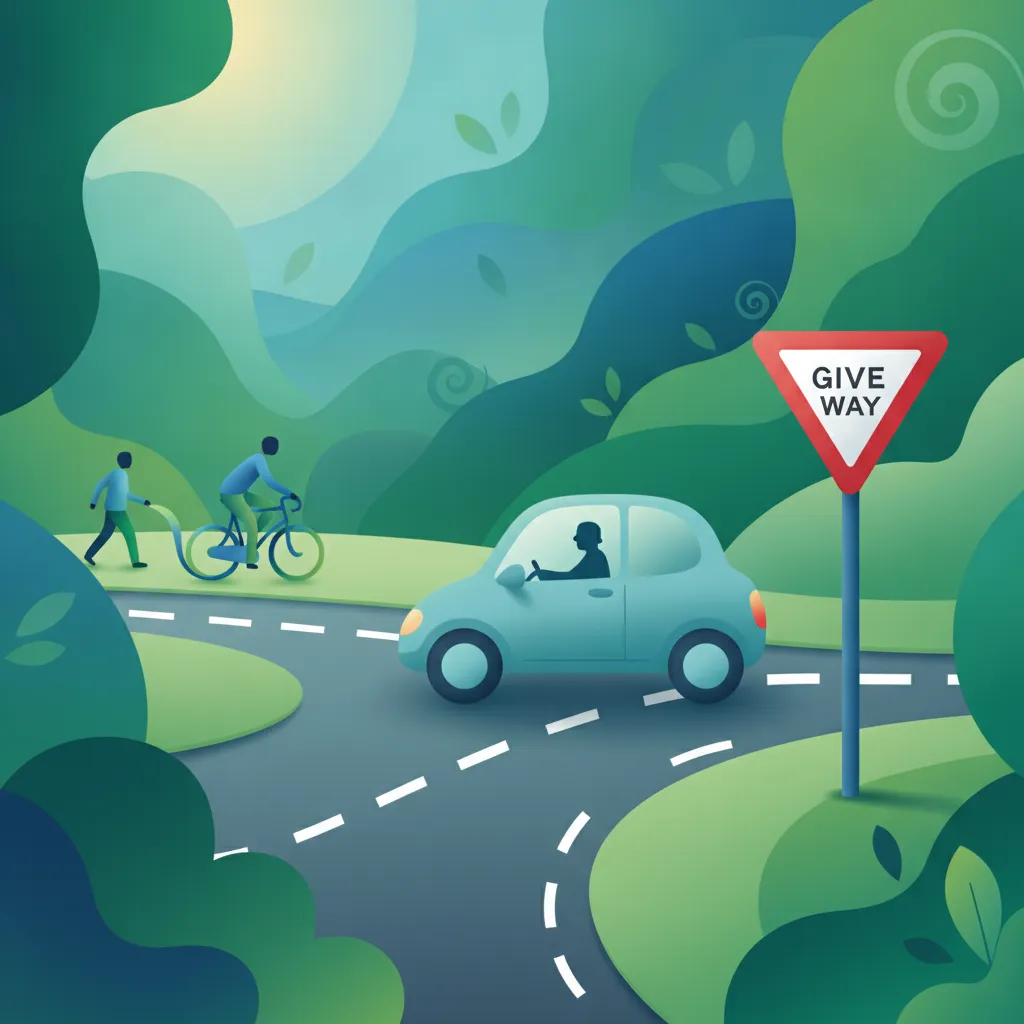
This lesson explains the critical rules of priority that govern traffic flow at junctions, roundabouts, and crossings throughout Great Britain. You will learn how to determine who has right-of-way at both marked and unmarked intersections, and the specific rules for giving way to traffic on roundabouts. The lesson also reinforces the hierarchy of road users from the Highway Code, ensuring you understand when to yield to pedestrians and other vulnerable users.
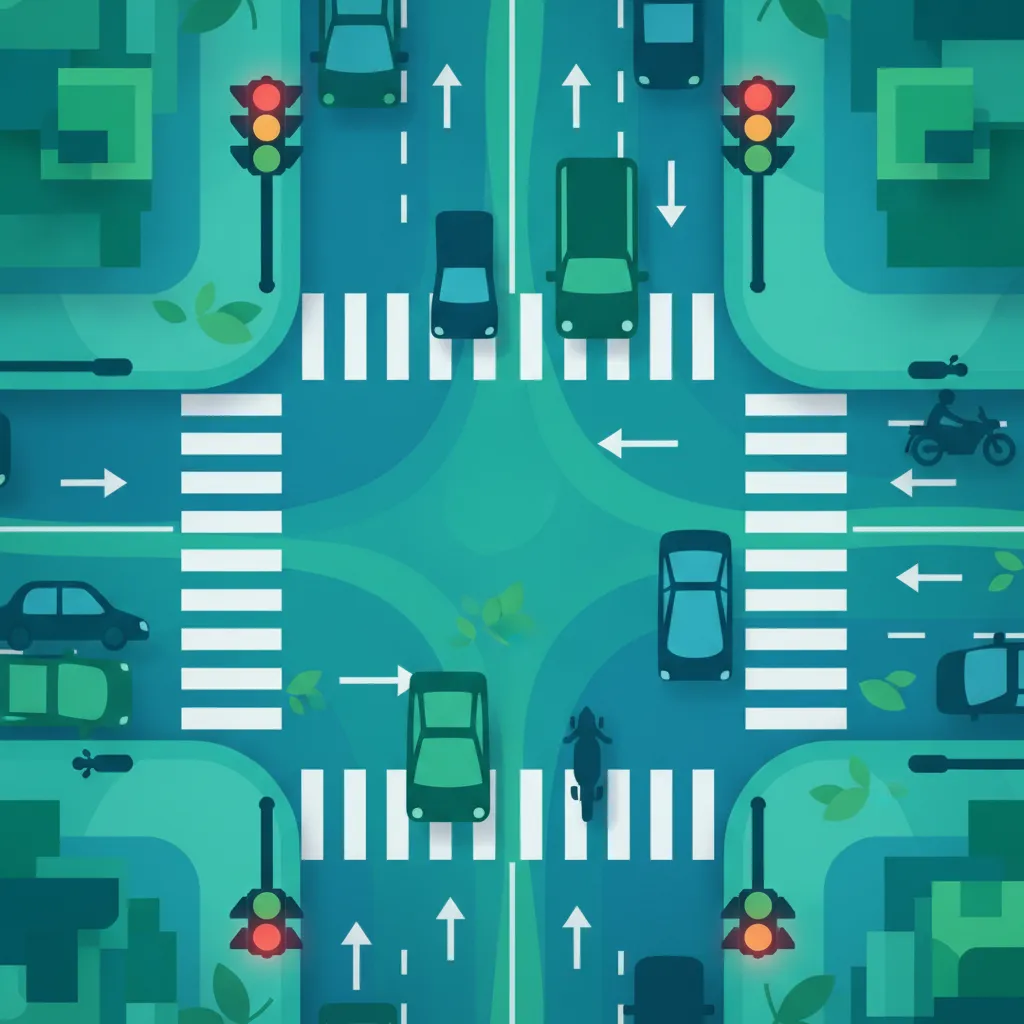
This lesson details how to safely navigate junctions controlled by traffic signals. It explains the meaning of filter arrows, which allow you to proceed in a specific direction even if the main light is red. You will also learn about respecting advanced stop lines for cyclists and how to approach a junction when the traffic lights are not working.
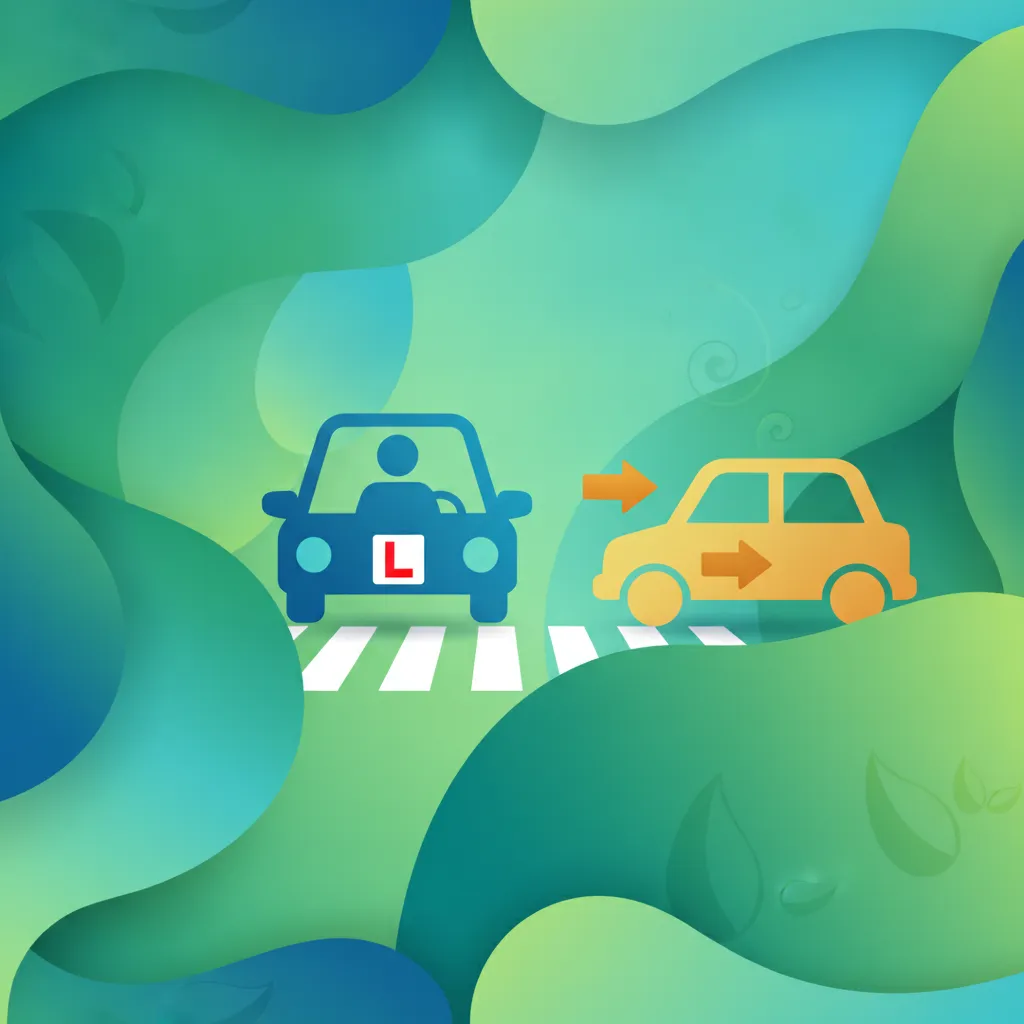
This lesson details the priority rules for turning manoeuvres. When turning left, you generally have priority over traffic waiting to emerge from the side road. However, when turning right, you must give way to all oncoming traffic, positioning your vehicle safely in the centre of the road while you wait for a safe gap.
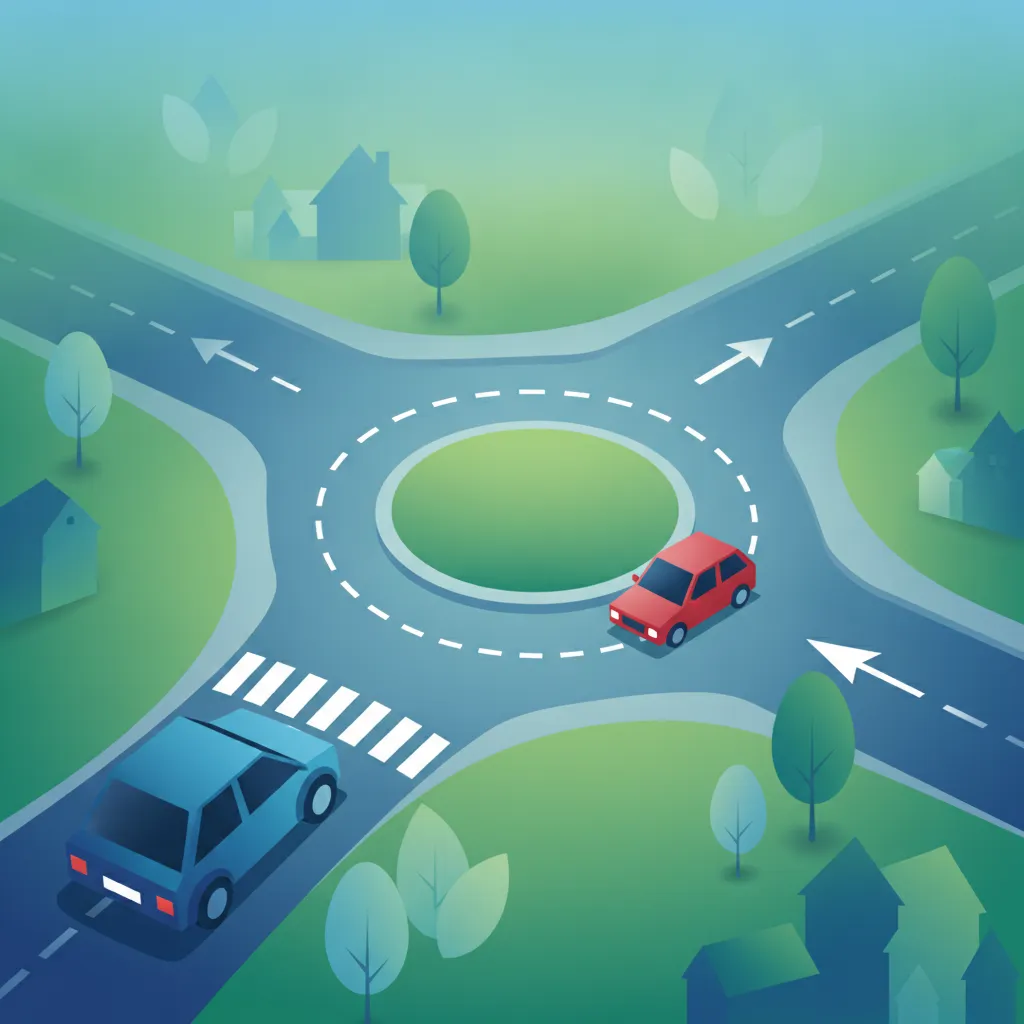
This lesson explains how to handle mini-roundabouts, which are common in urban and residential areas. The primary rule is to approach with caution and give priority to any traffic approaching from your right. You will also learn about correct signalling and the importance of being aware of cyclists and motorcyclists who may be harder to see.
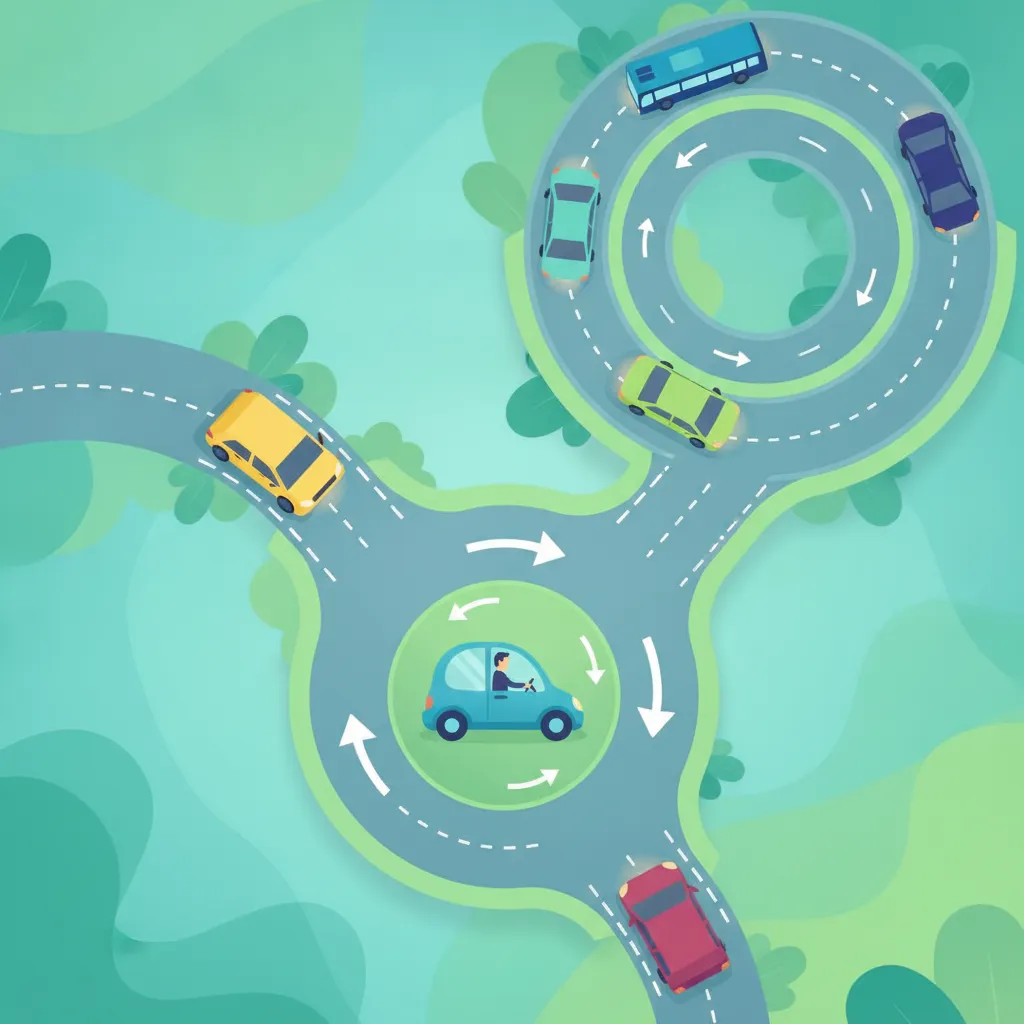
This lesson provides specific techniques for safely navigating the two main types of roundabouts in Great Britain. For multi-lane roundabouts, it covers how to choose the correct lane on approach, maintain your lane while circulating, and signal your exit correctly. It also explains the unique rules for mini-roundabouts, emphasizing the importance of giving way to traffic from the right and navigating them with caution due to their small size.
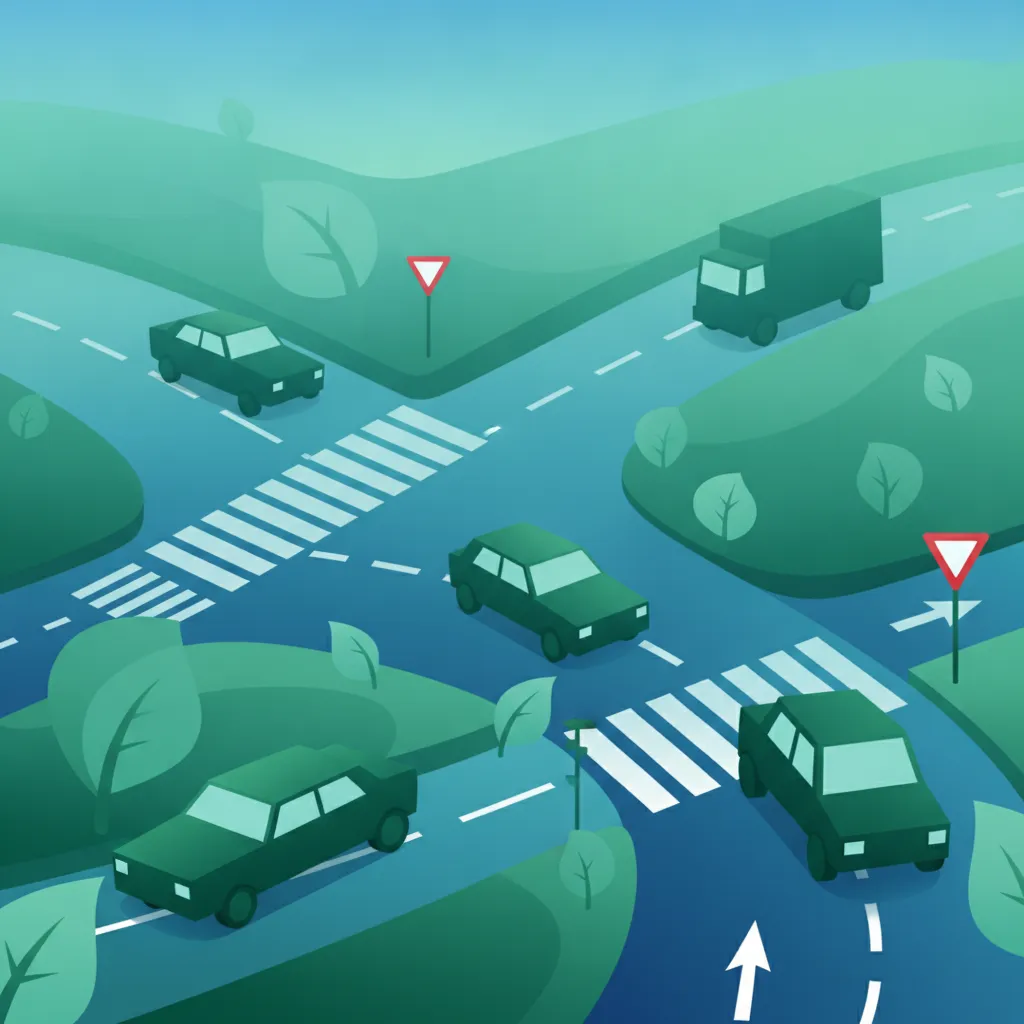
This lesson teaches the systematic approach to safely navigating junctions, emphasizing the importance of adjusting your speed and position well in advance. You will learn the 'Mirror-Signal-Manoeuvre' routine, how to perform effective all-round observation checks, and when to give way to other traffic. The content focuses on making safe judgments about gaps in traffic, a crucial skill for vulnerable AM riders when turning or emerging from a junction.
This lesson clarifies who has priority at junctions, whether they are marked with signs and lines or are unmarked. It covers the fundamental rule for roundabouts in the UK: give priority to traffic approaching from your right. You will learn the correct procedures for approaching, signalling, and choosing the appropriate lane on roundabouts and at other junctions.
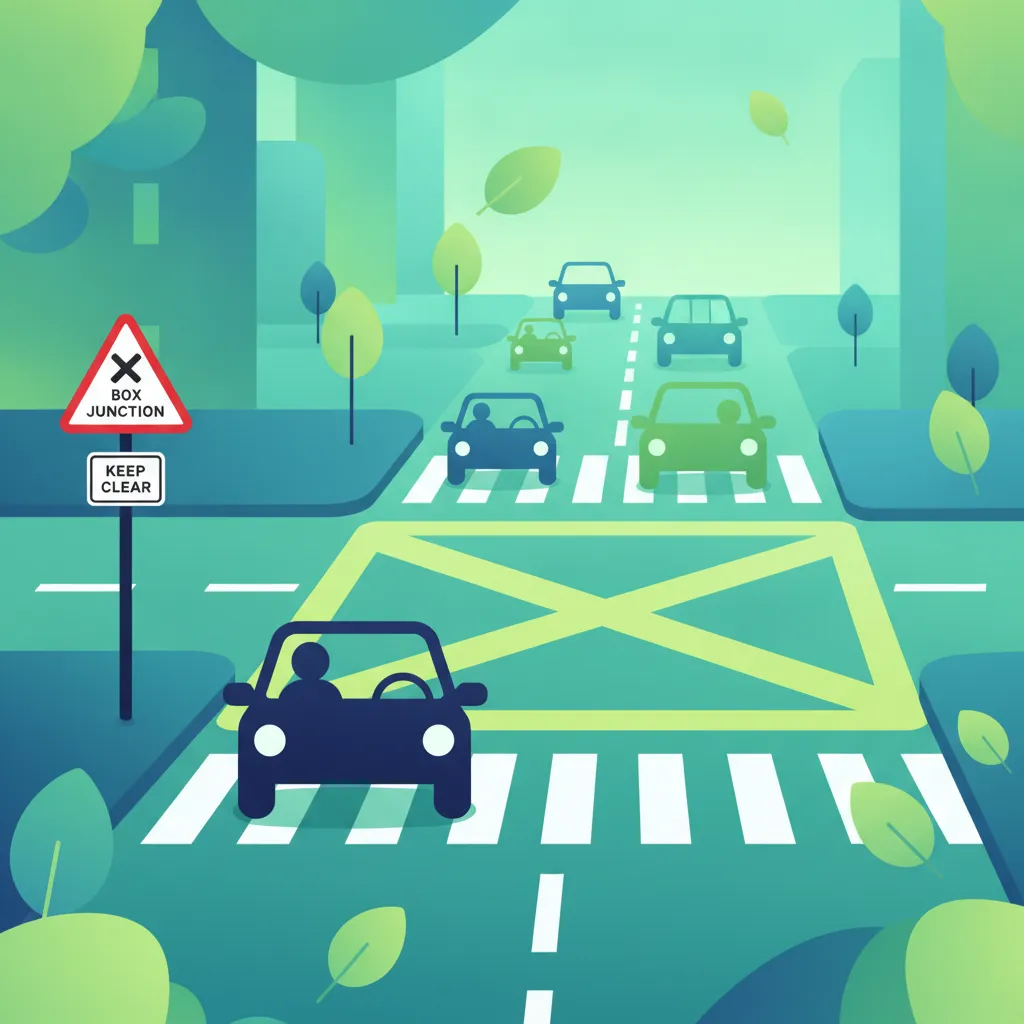
This lesson focuses on the markings that control traffic at intersections. It explains the primary rule of a yellow box junction: do not enter unless your exit is clear. You will also learn the difference between the solid white 'Stop' line and the broken 'Give Way' line, which dictate your priority over other traffic.
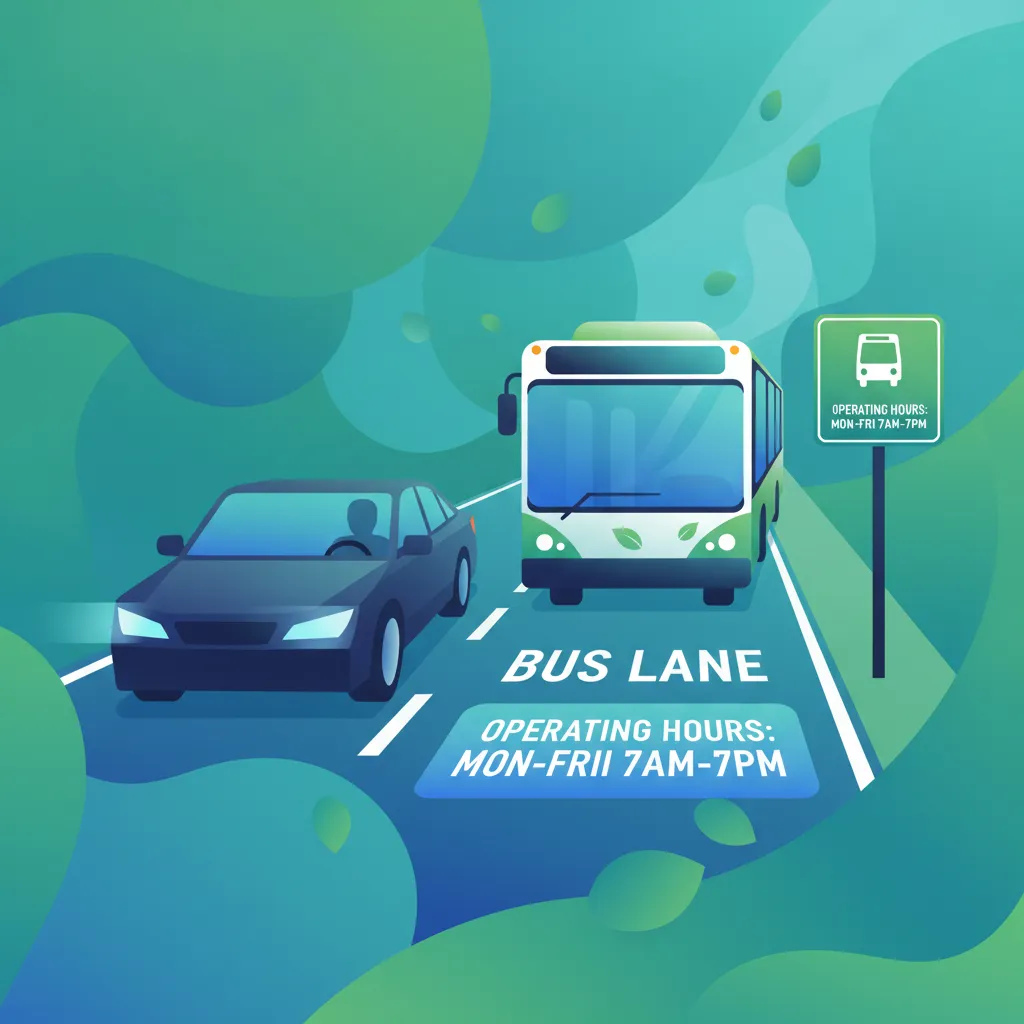
This lesson explores the specifics of bus lane markings, operating times, and priority situations where buses have precedence over other traffic. It emphasizes correct lane discipline, lawful entry and merging practices, and the exemptions granted to designated passenger vehicles. Learners will also understand how bus lane enforcement works and what penalties may be incurred for non-compliance, ensuring safe and efficient movement through urban traffic systems.
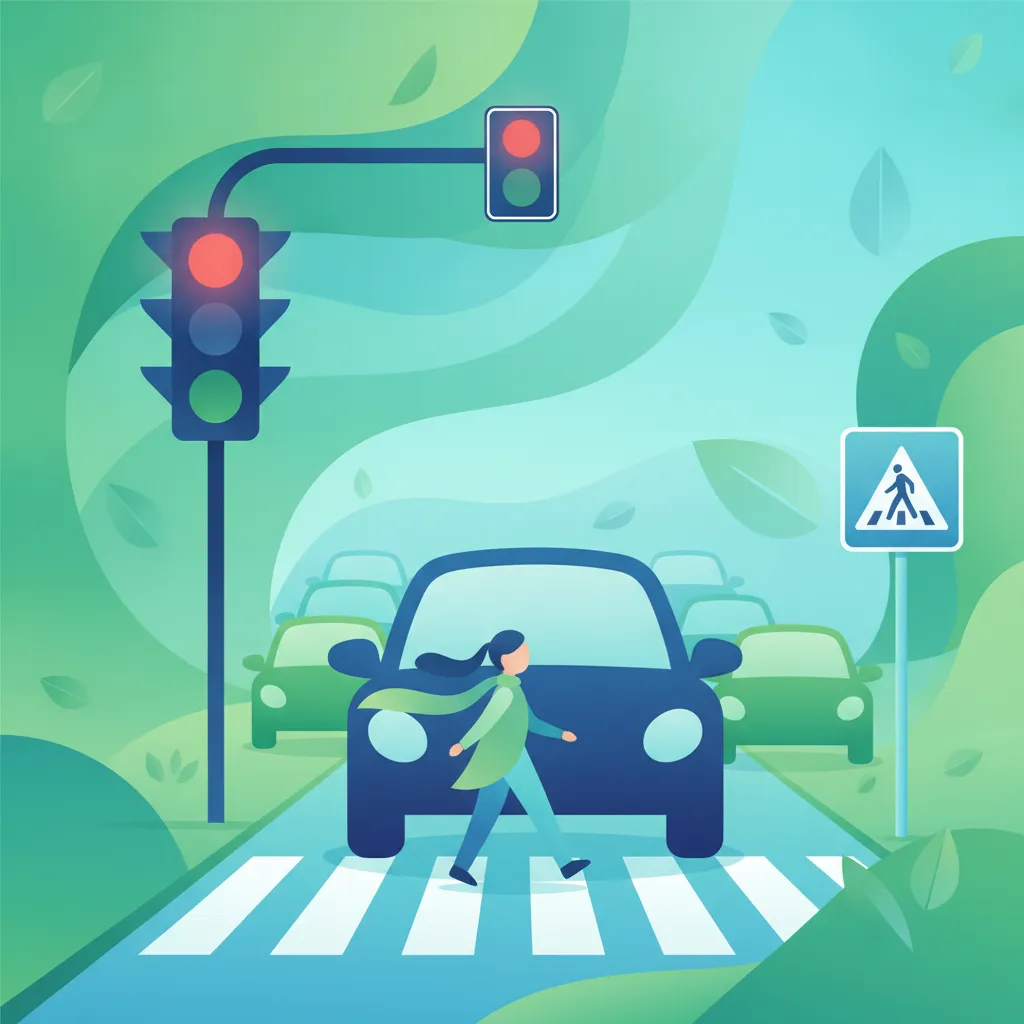
This lesson covers the operation of traffic light signals and the rules for approaching them safely. It also provides a detailed explanation of different pedestrian crossings, such as zebra, pelican, and toucan crossings, clarifying the specific rules and priority for each. You will learn to anticipate the actions of pedestrians and other vulnerable road users at these locations.
Learn about typical errors drivers make at junctions, including rolling stops and misjudging gaps. Understand how to avoid these pitfalls and ensure safe priority rule application for your theory exam.
This lesson focuses on the markings that control traffic at intersections. It explains the primary rule of a yellow box junction: do not enter unless your exit is clear. You will also learn the difference between the solid white 'Stop' line and the broken 'Give Way' line, which dictate your priority over other traffic.
This lesson explains how to handle mini-roundabouts, which are common in urban and residential areas. The primary rule is to approach with caution and give priority to any traffic approaching from your right. You will also learn about correct signalling and the importance of being aware of cyclists and motorcyclists who may be harder to see.
This lesson teaches the systematic approach to safely navigating junctions, emphasizing the importance of adjusting your speed and position well in advance. You will learn the 'Mirror-Signal-Manoeuvre' routine, how to perform effective all-round observation checks, and when to give way to other traffic. The content focuses on making safe judgments about gaps in traffic, a crucial skill for vulnerable AM riders when turning or emerging from a junction.
This lesson details how to safely navigate junctions controlled by traffic signals. It explains the meaning of filter arrows, which allow you to proceed in a specific direction even if the main light is red. You will also learn about respecting advanced stop lines for cyclists and how to approach a junction when the traffic lights are not working.
This lesson details the priority rules for turning manoeuvres. When turning left, you generally have priority over traffic waiting to emerge from the side road. However, when turning right, you must give way to all oncoming traffic, positioning your vehicle safely in the centre of the road while you wait for a safe gap.
This lesson explains the critical rules of priority that govern traffic flow at junctions, roundabouts, and crossings throughout Great Britain. You will learn how to determine who has right-of-way at both marked and unmarked intersections, and the specific rules for giving way to traffic on roundabouts. The lesson also reinforces the hierarchy of road users from the Highway Code, ensuring you understand when to yield to pedestrians and other vulnerable users.
This lesson provides specific techniques for safely navigating the two main types of roundabouts in Great Britain. For multi-lane roundabouts, it covers how to choose the correct lane on approach, maintain your lane while circulating, and signal your exit correctly. It also explains the unique rules for mini-roundabouts, emphasizing the importance of giving way to traffic from the right and navigating them with caution due to their small size.
This lesson clarifies who has priority at junctions, whether they are marked with signs and lines or are unmarked. It covers the fundamental rule for roundabouts in the UK: give priority to traffic approaching from your right. You will learn the correct procedures for approaching, signalling, and choosing the appropriate lane on roundabouts and at other junctions.
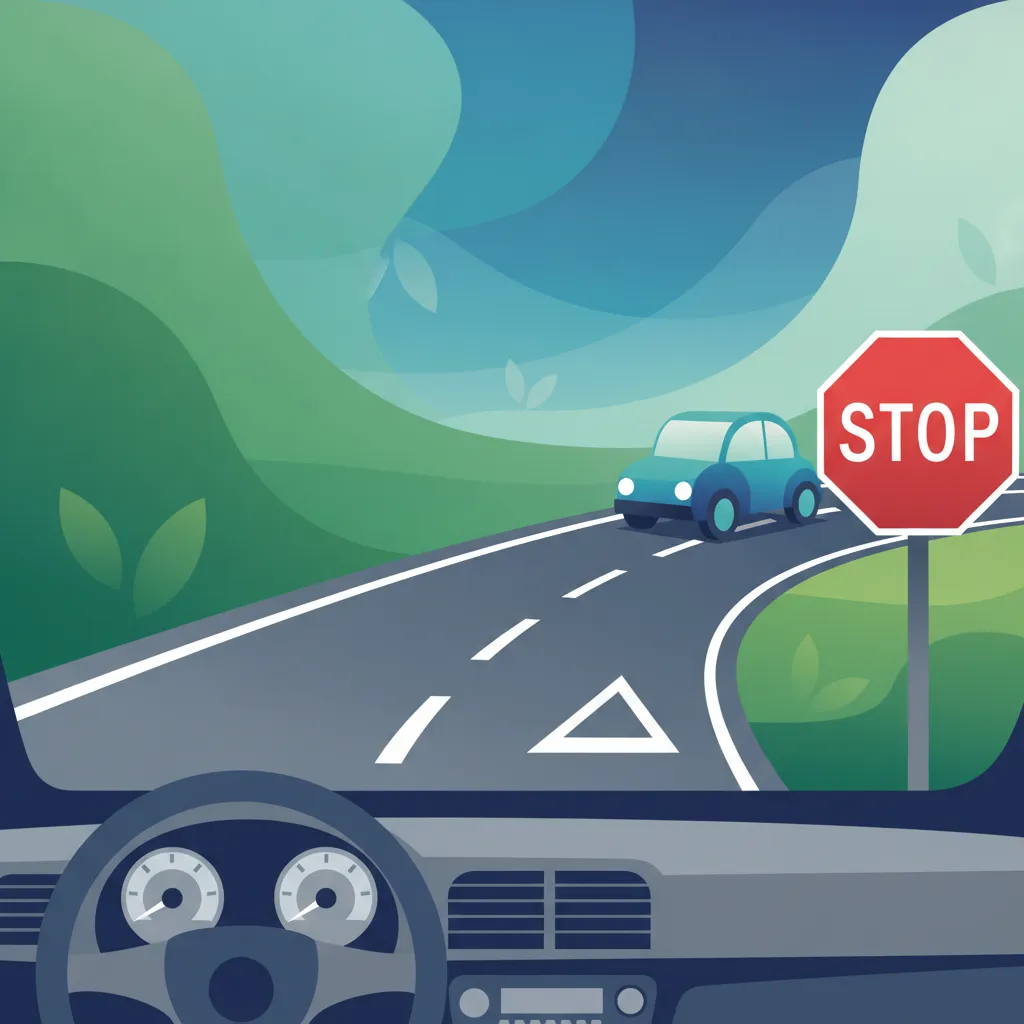
This lesson breaks down the process of navigating basic junctions. It emphasizes the importance of the Mirror-Signal-Manoeuvre (MSM) and Position-Speed-Look (PSL) routines. You will learn how to position your motorcycle correctly for turning, perform effective observation checks for traffic, and judge safe gaps before emerging.
This lesson provides guidance on where and how to park your vehicle legally and safely. It covers common manoeuvres like parallel parking and reversing into a bay, as well as specific rules for parking on a hill or at night. You will also learn to recognise locations where stopping is prohibited, such as on zig-zag lines or in clearways.
Find clear answers to common questions learners have about Give Way and Stop Rules at Intersections. Learn how the lesson is structured, which driving theory objectives it supports, and how it fits into the overall learning path of units and curriculum progression in Great Britain. These explanations help you understand key concepts, lesson flow, and exam focused study goals.
A Give Way sign or line means you must yield to traffic on the major road but do not have to stop if the way is clear. A Stop sign means you must come to a complete halt behind the line, regardless of whether traffic is visible, before proceeding when safe.
Yes. Failing to come to a complete, stationary halt at a white line marked 'STOP' is a serious fault that will result in a failure on your practical driving test, as it is a mandatory legal requirement.
If there are no signs or markings, you should generally proceed with extreme caution, assuming no one has automatic priority and always being prepared to give way to traffic already on the main road or approaching from the right on roundabouts.
No. You only need to stop at a Give Way line if there is traffic on the major road that would be forced to slow down or change course if you were to emerge. If the way is clear, you can proceed without stopping, provided you have checked your surroundings.
Dive into our comprehensive question bank to find exactly what you need for your Great Britain theory test. Use our advanced filters to pinpoint specific subjects or test your knowledge on challenging areas, ensuring you're fully prepared for success.