
This lesson guides you through the critical process of joining high-speed roads like dual carriageways and motorways. You will learn to use the slip road effectively to match traffic speeds and merge safely into the flow. This skill is essential for both your theory exam and becoming a confident, safe driver on the British road network.

Lesson content overview
Joining a high-speed road, such as a dual carriageway or motorway, is a critical skill for any driver. This manoeuvre, known as merging, requires precise control, keen observation, and an understanding of traffic dynamics. This lesson, part of your Complete Theory for Great Britain Category B Learner Drivers course, will provide you with the essential knowledge, legal requirements, and practical techniques needed to merge safely and confidently, reducing collision risk and maintaining smooth traffic flow.
Merging typically begins on a dedicated entry slip road, which leads to an acceleration lane. A slip road is a short road designed to allow vehicles to leave or join a main road safely. The acceleration lane is the portion of the slip road specifically intended for drivers to build up their speed to match the flow of traffic on the main carriageway before merging. Understanding the function of these lanes is fundamental to a successful merge.
Successful merging relies on several interconnected principles that ensure safety and efficiency. Adhering to these guidelines helps prevent dangerous situations and keeps traffic moving smoothly.
Speed matching is the critical act of accelerating on the slip road to reach a speed that is compatible with the main carriageway traffic flow before you merge. This reduces the relative speed difference between your vehicle and those already on the main road, making your entry smoother and safer.
Insufficient speed when merging can force traffic on the main road to brake sharply, increasing the risk of a rear-end collision. Conversely, excessive speed can make gap assessment difficult and lead to abrupt braking on your part. You must assess both your vehicle's capabilities and the speed of the traffic you intend to join.
When merging, aim to achieve a speed close to, or slightly less than, the main traffic flow. This provides a buffer for minor adjustments.
Gap assessment involves carefully judging the size, speed, and distance of approaching vehicles on the main carriageway to determine if there is a safe merging window. This isn't just about finding a space, but finding one that is large enough for your vehicle to enter without forcing other drivers to slow down or change lanes abruptly.
Effective gap assessment requires constant observational scanning and the ability to project where vehicles will be in the next few seconds. You must avoid underestimating the speed of fast-moving traffic, which can lead to over-optimistic merging, or overestimating the speed of slower traffic, which can cause unnecessary hesitation.
Using your vehicle's indicators to signal your intention to merge is a fundamental requirement outlined in the Highway Code. Signalling intent means activating your indicators early enough to provide clear warning to other road users, allowing them sufficient time to anticipate your manoeuvre and adjust their speed or position if necessary.
The Highway Code Rule 156 states that signals must be given in sufficient time to be observed and understood. Failing to signal, or signalling too late, can lead to confusion, unexpected braking by other drivers, and potential collisions.
Positioning refers to selecting the correct lane on the slip road (typically the acceleration lane) and aligning your vehicle's trajectory with the main traffic flow. Lane discipline ensures you stay within your designated lane markings until it is safe and appropriate to merge.
Drifting across lane markings prematurely can confuse other drivers about your intentions and may lead to side-impact collisions. On motorways, you should generally aim to merge into the leftmost lane (Lane 1 in the UK), unless traffic conditions dictate merging into another lane for immediate overtaking, which should be done with extreme caution.
Once you have identified a safe gap and matched your speed, decisiveness is crucial. This means committing to the merge without unnecessary hesitation. Indecision can cause you to miss a safe opportunity, leading to sudden braking on the slip road or causing traffic to build up behind you, creating a dangerous situation.
Never stop on an acceleration lane unless absolutely unavoidable due to an emergency. Stopping creates a significant hazard for you and following traffic.
Observational scanning is the continuous and systematic visual checking of your surroundings, including your rear-view mirror, side mirrors, and vital over-shoulder checks (also known as blind-spot checks). This provides maximum situational awareness, allowing you to identify potential hazards, such as vehicles in your blind spot, early and react accordingly. Inadequate scanning significantly increases the risk of not seeing vehicles, especially motorcycles or smaller cars, that may be hidden from your mirrors.
Merging onto a dual carriageway or motorway involves a sequence of actions designed to be smooth and safe.
Assess the Situation Early: As you approach the slip road, look for signs indicating the road type (motorway, dual carriageway) and speed limits. Begin to observe the main carriageway traffic flow.
Enter the Slip Road and Accelerate: Drive onto the slip road. Begin to accelerate progressively, using appropriate gear changes, to build up your speed. Pay attention to any speed limits posted specifically for the slip road, which can sometimes be lower than the main carriageway.
Observe Main Road Traffic: Continuously check your rear-view mirror, then your right-hand side mirror, and finally perform a quick over-shoulder (blind spot) check to your right. Look for a suitable gap in the traffic. Identify vehicles you can merge in front of and behind.
Signal Your Intent: Once you have identified a potential gap, activate your right-hand indicator. This signal should be given early – at least 3 seconds before you intend to merge – to give other drivers ample warning.
Match Speed and Position: Continue accelerating to match the speed of the traffic in your chosen gap. Adjust your position on the acceleration lane so that your vehicle is parallel to the main road traffic, preparing for a smooth transition.
Confirm Gap and Merge Decisively: Just before steering into the main carriageway, perform one final quick blind-spot check. If the gap is still safe and clear, steer smoothly and decisively into the lane. Avoid harsh steering or sudden braking.
Cancel Signal and Adjust: Once you are fully in the lane and settled, cancel your indicator. Maintain a safe following distance from the vehicle in front and adjust your speed to the prevailing flow of traffic, observing any speed limits.
Several Highway Code rules and general driving principles govern safe merging in Great Britain. Adhering to these is not only crucial for safety but also a legal requirement.
The most fundamental rule for merging is to give way to traffic already on the main road. You must not merge if it would cause other drivers to take evasive action, such as braking sharply or swerving. This rule is mandatory.
The legal requirement to allow traffic on the main carriageway to proceed before merging. This is typically indicated by road markings and/or signs at the end of a slip road.
As discussed, clear and timely signalling is mandatory. Activating your indicator in sufficient time allows other road users to anticipate your move.
You must stay within the lane markings of the slip road and acceleration lane until you are ready to merge. Crossing solid white lines or straddling lanes prematurely can lead to collisions and confuse other drivers.
Always observe any specific speed limit signs on slip roads. These limits are often lower than the main carriageway limits to ensure safe entry and sufficient acceleration distance.
On motorways and dual carriageways in Great Britain, you should generally keep to the left-hand lane (Lane 1) unless you are overtaking. When merging, you should aim for Lane 1 unless it is blocked or you intend to overtake immediately.
Driving without due care and attention or dangerous driving includes merging manoeuvres that endanger any person or property. Aggressive merging, forcing into small gaps, or failing to yield when required can lead to serious legal consequences.
The ideal merging technique can vary significantly based on different driving conditions and road types. Always be prepared to adapt your approach.
While rare on motorways, always be mindful of vulnerable road users, especially on dual carriageways or near slip road entry/exit points:
Being aware of common merging errors can help you prevent them.
Merging onto dual carriageways and motorways is a high-skill manoeuvre that integrates many aspects of safe driving. By diligently practicing speed matching, accurate gap assessment, early signalling, maintaining lane discipline, and remaining decisive, you can execute this manoeuvre safely and efficiently. Always remember your obligation to give way to traffic already on the main road and adapt your technique to prevailing conditions. Mastering merging is crucial for safe progress on Great Britain's high-speed road network.
Explore all units and lessons included in this driving theory course.
Lesson content overview
Explore all units and lessons included in this driving theory course.
Explore search topics learners often look for when studying Merging onto Dual Carriageways and Motorways. These topics reflect common questions about road rules, driving situations, safety guidance, and lesson level theory preparation for learners in Great Britain.
Browse additional driving theory lessons that cover connected traffic rules, road signs, and common driving situations related to this topic. Improve your understanding of how different rules interact across everyday traffic scenarios.
Explore complex scenarios and advanced techniques for merging onto high-speed roads in Great Britain. Understand how to adapt your merging strategy for smart motorways, adverse weather, and heavy traffic conditions.

This lesson contrasts the challenges of different road types. It covers how to handle the hidden bends, poor surfaces, and unexpected hazards of rural roads. It then details the specific procedures for using dual carriageways and motorways, including using slip roads, adhering to strict lane discipline, and safely overtaking at high speeds.
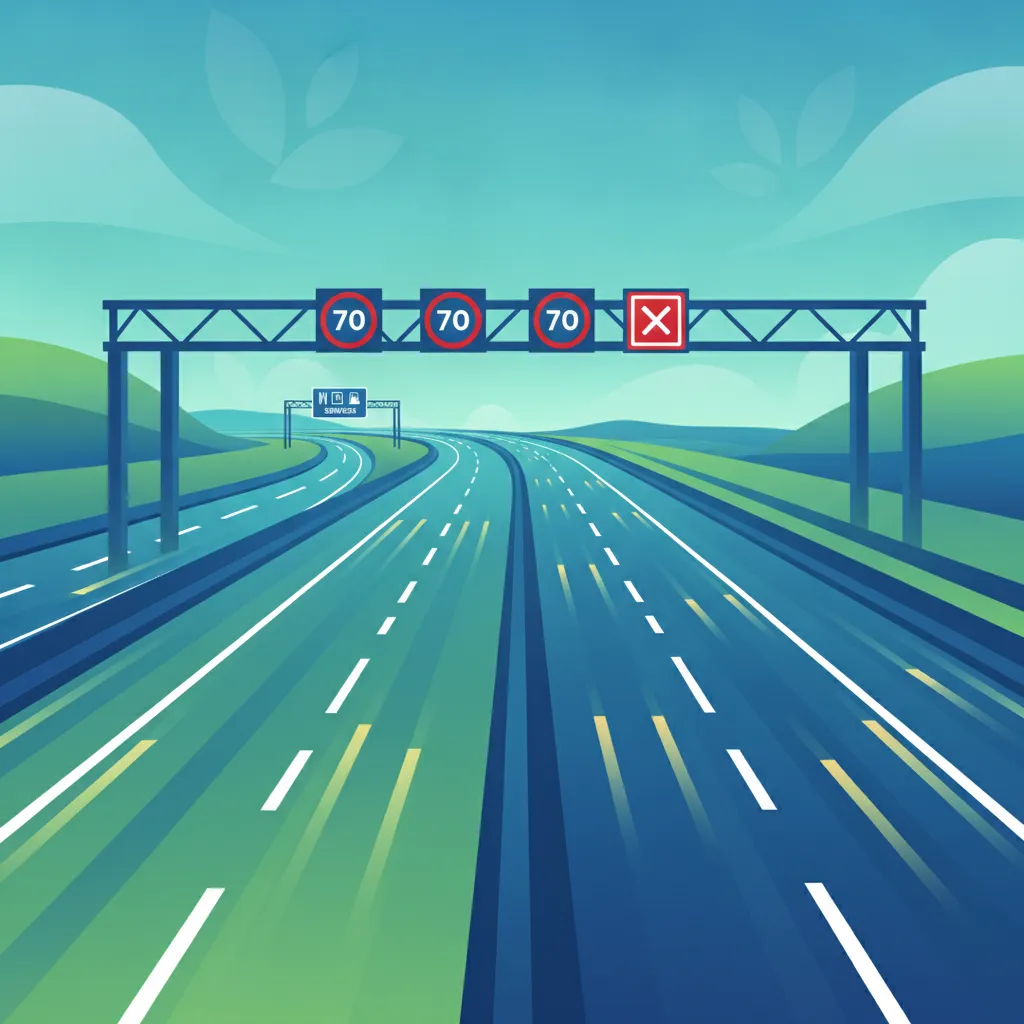
This lesson covers the unique aspects of motorway driving, from joining and leaving the carriageway to the strict lane discipline of keeping to the left unless overtaking. It explains the features of smart motorways, such as variable speed limits and the meaning of a Red X symbol above a lane. The safe procedure for handling a breakdown is also a key topic.

This lesson focuses on the specific rules and best practices for driving HGVs on motorways in Great Britain. It covers mandatory speed limits for goods vehicles, lane discipline including restrictions on using the outside lane, and procedures for safely joining and leaving the motorway. The lesson also includes up-to-date information on driving on smart motorways, including understanding the signs and using emergency refuge areas correctly.

This lesson focuses on the regulations and best practices for driving a bus or coach on motorways. It details the specific speed limits applicable to PCVs and reinforces strict lane discipline. The content covers the correct procedures for safely joining from a slip road, overtaking other vehicles, and exiting the motorway. It also explains the features of smart motorways and the correct safety procedures to follow in the event of a breakdown, including the use of the hard shoulder.
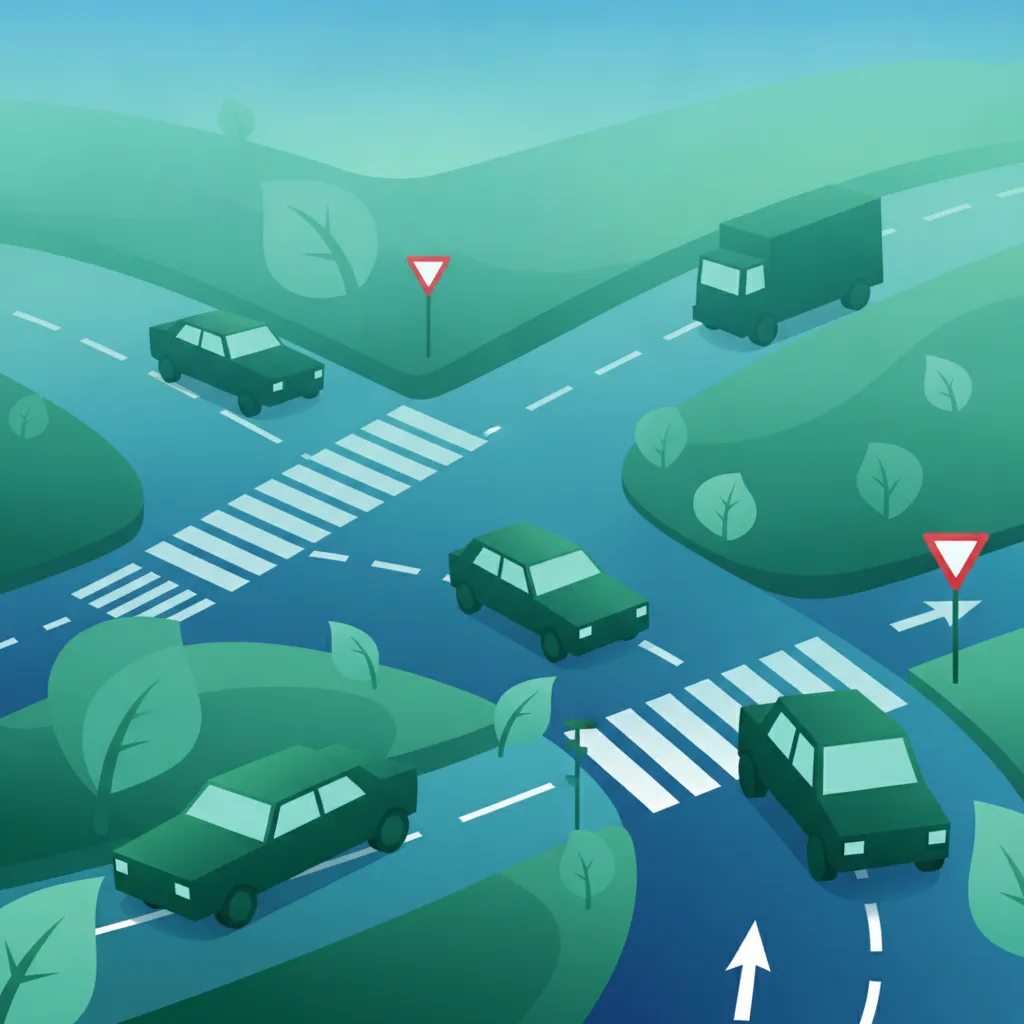
This lesson teaches the systematic approach to safely navigating junctions, emphasizing the importance of adjusting your speed and position well in advance. You will learn the 'Mirror-Signal-Manoeuvre' routine, how to perform effective all-round observation checks, and when to give way to other traffic. The content focuses on making safe judgments about gaps in traffic, a crucial skill for vulnerable AM riders when turning or emerging from a junction.

This lesson addresses the unique challenges of driving a large vehicle on rural roads. It provides techniques for positioning the vehicle through sharp bends and on narrow lanes, and for safely navigating unmarked or uncontrolled junctions. Learners will be taught to anticipate hidden hazards common in the countryside, such as slow-moving farm vehicles, animals on the road, and concealed entrances. The correct use of passing places and strategies for meeting oncoming traffic are also covered.

This lesson tackles the complexities of large roundabouts, which often have multiple lanes and exits. It stresses the importance of reading signs on the approach to select the correct lane for your destination. You will learn about maintaining lane discipline while on the roundabout and signalling correctly as you pass exits and prepare to leave.

This lesson addresses the unique challenges of mini-roundabouts and large, multi-lane or spiral roundabouts. You will learn the subtle differences in rules and approach for mini-roundabouts and the importance of strict lane discipline on larger ones. The lesson stresses the need for advanced planning and awareness when navigating these complex junctions.
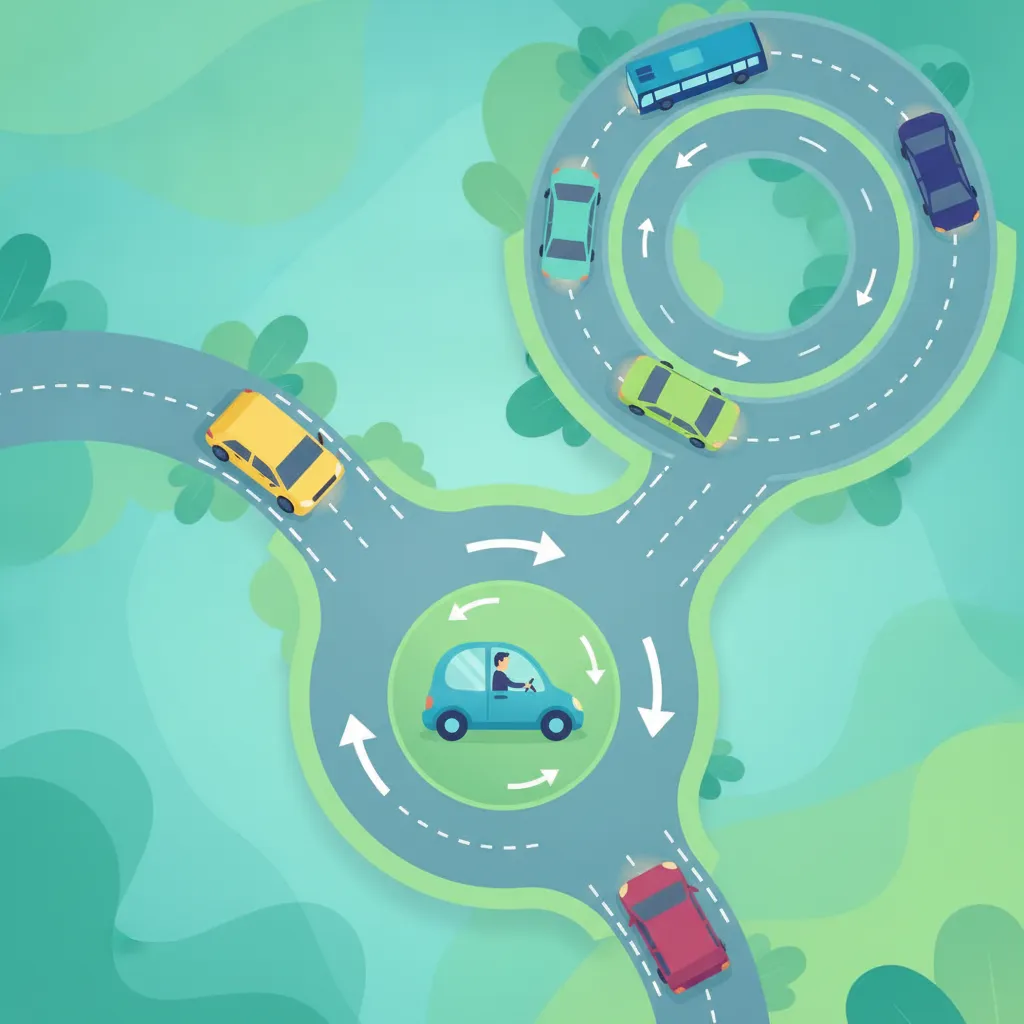
This lesson provides specific techniques for safely navigating the two main types of roundabouts in Great Britain. For multi-lane roundabouts, it covers how to choose the correct lane on approach, maintain your lane while circulating, and signal your exit correctly. It also explains the unique rules for mini-roundabouts, emphasizing the importance of giving way to traffic from the right and navigating them with caution due to their small size.
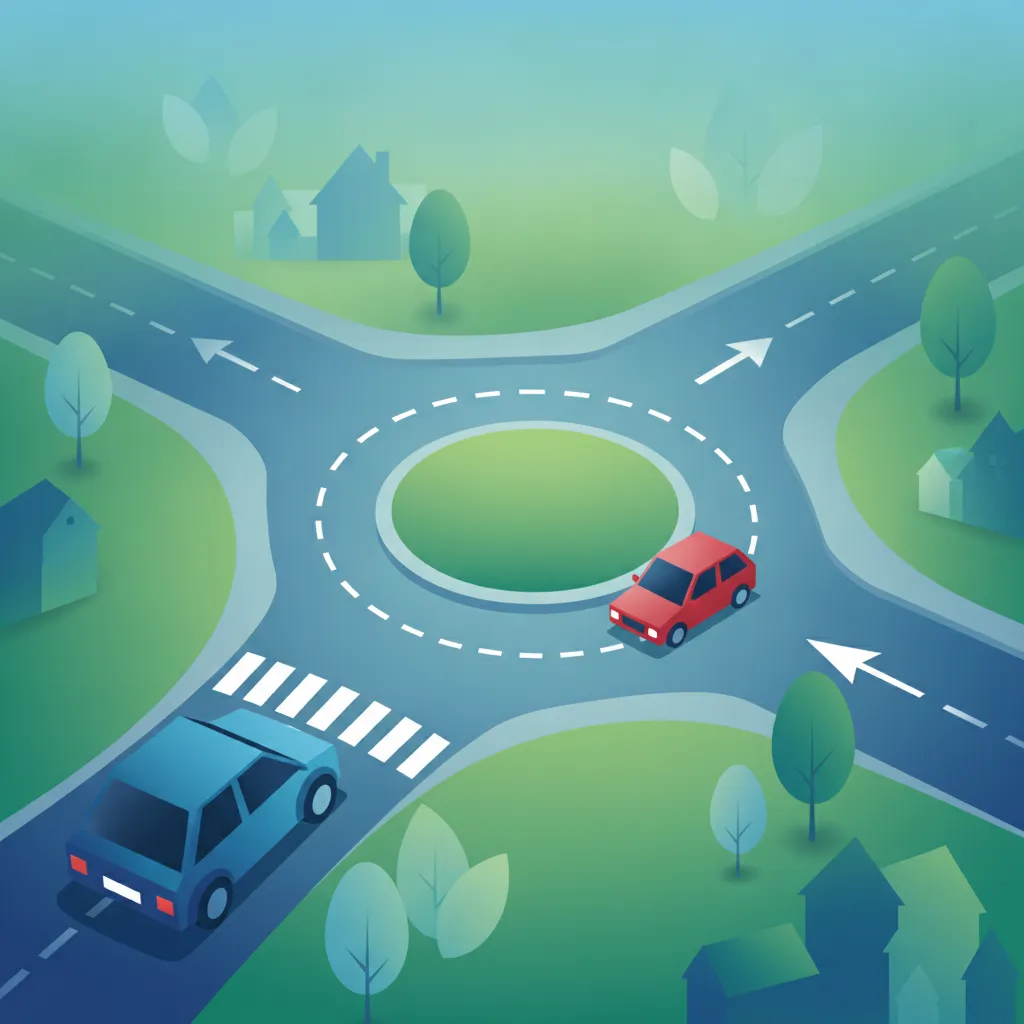
This lesson explains how to handle mini-roundabouts, which are common in urban and residential areas. The primary rule is to approach with caution and give priority to any traffic approaching from your right. You will also learn about correct signalling and the importance of being aware of cyclists and motorcyclists who may be harder to see.
Learn about frequent errors drivers make when merging onto dual carriageways and motorways. Understand the associated hazards, including speed mismatch and poor observation, and how to avoid them for safer driving.
This lesson contrasts the challenges of different road types. It covers how to handle the hidden bends, poor surfaces, and unexpected hazards of rural roads. It then details the specific procedures for using dual carriageways and motorways, including using slip roads, adhering to strict lane discipline, and safely overtaking at high speeds.
This lesson teaches the systematic approach to safely navigating junctions, emphasizing the importance of adjusting your speed and position well in advance. You will learn the 'Mirror-Signal-Manoeuvre' routine, how to perform effective all-round observation checks, and when to give way to other traffic. The content focuses on making safe judgments about gaps in traffic, a crucial skill for vulnerable AM riders when turning or emerging from a junction.
This lesson covers the unique aspects of motorway driving, from joining and leaving the carriageway to the strict lane discipline of keeping to the left unless overtaking. It explains the features of smart motorways, such as variable speed limits and the meaning of a Red X symbol above a lane. The safe procedure for handling a breakdown is also a key topic.

This lesson focuses on the correct procedure for moving from one lane to another. It highlights the critical safety steps of checking your interior and side mirrors, signalling in good time, and performing a final head check into your blind spot. This ensures the space you intend to move into is clear before you begin the manoeuvre.
This lesson addresses the unique challenges of driving a large vehicle on rural roads. It provides techniques for positioning the vehicle through sharp bends and on narrow lanes, and for safely navigating unmarked or uncontrolled junctions. Learners will be taught to anticipate hidden hazards common in the countryside, such as slow-moving farm vehicles, animals on the road, and concealed entrances. The correct use of passing places and strategies for meeting oncoming traffic are also covered.
This lesson focuses on the specific rules and best practices for driving HGVs on motorways in Great Britain. It covers mandatory speed limits for goods vehicles, lane discipline including restrictions on using the outside lane, and procedures for safely joining and leaving the motorway. The lesson also includes up-to-date information on driving on smart motorways, including understanding the signs and using emergency refuge areas correctly.

This lesson breaks down the process of navigating basic junctions. It emphasizes the importance of the Mirror-Signal-Manoeuvre (MSM) and Position-Speed-Look (PSL) routines. You will learn how to position your motorcycle correctly for turning, perform effective observation checks for traffic, and judge safe gaps before emerging.

This lesson explains how to drive safely through areas where roadworks are taking place. It stresses the importance of obeying all temporary signs, especially mandatory speed limits, which are in place for your safety and the safety of road workers. You will learn about navigating narrow lanes, contraflow systems, and how to follow official diversion signs.

This lesson focuses on the unique risks faced by motorcyclists and scooter riders when sharing the road with HGVs. It explains how their small size and rapid acceleration can make them difficult to see, especially when they are filtering through traffic. Drivers will learn the importance of making extra mirror checks—'look twice'—before any maneuver and giving motorcyclists extra space, as they can be more affected by wind buffeting and road surface imperfections.
This lesson tackles the complexities of large roundabouts, which often have multiple lanes and exits. It stresses the importance of reading signs on the approach to select the correct lane for your destination. You will learn about maintaining lane discipline while on the roundabout and signalling correctly as you pass exits and prepare to leave.
Find clear answers to common questions learners have about Merging onto Dual Carriageways and Motorways. Learn how the lesson is structured, which driving theory objectives it supports, and how it fits into the overall learning path of units and curriculum progression in Great Britain. These explanations help you understand key concepts, lesson flow, and exam focused study goals.
No, you do not have automatic priority. You must adjust your speed and timing to merge safely into a gap in the traffic. It is the responsibility of the driver joining the motorway to find a safe space to enter.
You should avoid stopping unless it is absolutely necessary for safety. The slip road is designed to allow you to build up speed; stopping forces you to accelerate from zero, which is dangerous when joining high-speed traffic.
A dual carriageway is a road which has a central reservation to separate the carriageways. It is not necessarily a road with two lanes in each direction, though it often is.
The two-second rule is the minimum gap you should maintain from the vehicle in front. When merging, you should aim to slot into a gap that allows you to maintain this safety distance from the vehicle you follow.
Dive into our comprehensive question bank to find exactly what you need for your Great Britain theory test. Use our advanced filters to pinpoint specific subjects or test your knowledge on challenging areas, ensuring you're fully prepared for success.