
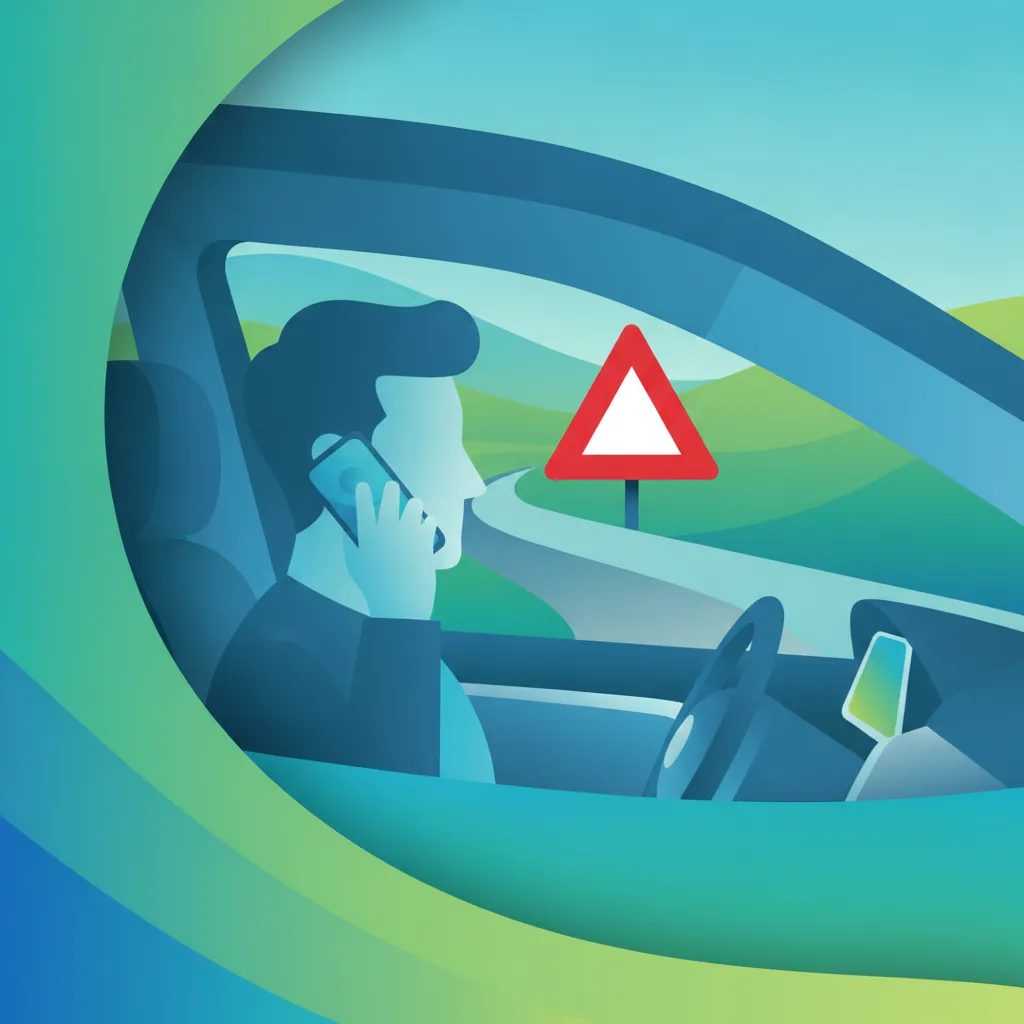
In Great Britain, the law is clear: using a hand-held mobile phone or similar device while driving or supervising a learner is strictly prohibited. This rule, outlined in Highway Code Rule 149, addresses the serious safety risks posed by driver distraction. Understanding the types of distraction and their impact on your ability to control a vehicle is vital for both your theory test and real-world road safety.
Theory topic content overview
Read the full theory topic guide for Mobile Phone Driving Rules GB with structured, easy-to-scan content built for learners in Great Britain. This detailed section explains the exact rule, meaning, traffic context, comparison points, and exam logic behind this British driving theory topic so you can study faster, understand the concept more clearly, and avoid common interpretation mistakes on the theory test.
Using a mobile phone or similar hand-held device while driving is not only illegal in Great Britain but also profoundly dangerous. The law, as outlined in Highway Code Rule 149, is designed to prevent driver distraction, which is a major contributing factor to road accidents. Understanding these strict rules and the serious risks involved is crucial for every driver and essential for passing your Great Britain driving theory test.
In Great Britain, the law is very clear and comprehensive: you MUST NOT use a hand-held mobile phone or similar device (like a tablet) for any purpose when driving or supervising a learner driver. This means:
The core principle is to ensure drivers have full control of their vehicle and undivided attention on the road, as required by the DVSA and the Highway Code.
Using a hand-held mobile phone while driving significantly compromises your ability to drive safely by causing three critical types of distraction simultaneously:
Combining these three distractions dramatically slows your reaction time and reduces your hazard perception, making you a significant danger to yourself and other road users.
The consequences of driver distraction from mobile phone use are severe:
The law regarding mobile phone use while driving in Great Britain is very strict. Highway Code Rule 149 states:
You MUST exercise proper control of your vehicle at all times. You MUST NOT use a hand-held mobile phone, or similar device, capable of interactive communication (such as a tablet) for any purpose when driving or when supervising a learner driver.
This rule is backed by legislation, meaning failure to comply can lead to significant penalties. These typically include points on your driving licence (often 6 points) and a substantial fine (often £200). New drivers could have their licence revoked if they accumulate 6 penalty points within two years of passing their test.
While the ban is extensive, there are two very limited exceptions:
These exceptions do not permit general usage or interactive communication.
It is not illegal to use a hands-free mobile phone or sat nav in Great Britain, provided it is properly secured (e.g., in a cradle) and you are not holding it. However, the Highway Code strongly advises against using hands-free devices for communication as they still cause cognitive distraction. As a safe driver, you should recognise that even hands-free conversations can impair your concentration and should be avoided or kept brief, especially in complex traffic situations.
Learners and even experienced drivers in Great Britain often make crucial mistakes or hold misconceptions about mobile phone use while driving:
To ensure safety and comply with the law in Great Britain, the most effective approach is:
The DVSA theory test will often include questions on the illegality and dangers of mobile phone use, particularly highlighting the "hand-held" aspect and the "any purpose" rule, including when stationary or supervising a learner. Prioritising full attention to the road is the hallmark of a responsible and safe driver in Great Britain.
Start with a short, direct summary of Mobile Phone Driving Rules GB before reading the full explanation below.
In Great Britain, it is illegal to use a hand-held mobile phone or similar device for any interactive communication purpose while driving, even when stationary in traffic. This ban extends to supervising a learner driver. Using a phone causes visual, manual, and cognitive distraction, severely impairing your reaction time and hazard awareness, which dramatically increases the risk of accidents.
Review the most important terms, rule signals, and traffic concepts linked to Mobile Phone Driving Rules GB.
Explore related theory topic pages connected to Mobile Phone Driving Rules GB and continue with the next useful rule explanation.
See the common search queries learners use when trying to understand Mobile Phone Driving Rules GB in Great Britain.

Continue your journey to a successful Great Britain driving theory test by delving deeper into specific topics. Enhance your understanding of complex rules, review detailed explanations, and solidify your knowledge of the Highway Code, preparing you thoroughly for all aspects of the official DVSA exam. Start mastering key concepts today.
Great Britain Driving Theory TopicsTheory topic content overview
Start with a short, direct summary of Mobile Phone Driving Rules GB before reading the full explanation below.
In Great Britain, it is illegal to use a hand-held mobile phone or similar device for any interactive communication purpose while driving, even when stationary in traffic. This ban extends to supervising a learner driver. Using a phone causes visual, manual, and cognitive distraction, severely impairing your reaction time and hazard awareness, which dramatically increases the risk of accidents.
Review the most important terms, rule signals, and traffic concepts linked to Mobile Phone Driving Rules GB.
Explore related theory topic pages connected to Mobile Phone Driving Rules GB and continue with the next useful rule explanation.
See the common search queries learners use when trying to understand Mobile Phone Driving Rules GB in Great Britain.
Continue your journey to a successful Great Britain driving theory test by delving deeper into specific topics. Enhance your understanding of complex rules, review detailed explanations, and solidify your knowledge of the Highway Code, preparing you thoroughly for all aspects of the official DVSA exam. Start mastering key concepts today.
Great Britain Driving Theory TopicsUse this exam-focused revision tip to understand how Mobile Phone Driving Rules GB is likely to appear in theory questions for learners in Great Britain. This section helps you identify the most testable part of the rule, avoid common traps, and remember the concept more effectively during British driving theory exam preparation.
Remember that the Highway Code states you MUST NOT use a hand-held phone for *any* purpose while driving, even when stopped in traffic or supervising a learner. This is a common trick question in the theory test. Focus on the word 'hand-held' and the 'any purpose' aspect.
Read direct answers to the most common learner questions about Mobile Phone Driving Rules GB in Great Britain. This FAQ focuses on rule confusion, practical meaning, comparison with similar concepts, and the exact uncertainties that appear most often in British driving theory revision and exam preparation.
In Great Britain, 'using' a hand-held phone includes holding it to make calls, text, browse the internet, or perform any interactive communication, even if the device is offline. The ban applies even if the interactive communication capability is turned off or unavailable, as stated in Highway Code Rule 149.
No, the ban on using a hand-held mobile phone applies even when you are stationary in traffic, such as at traffic lights or in a queue. You must not pick up and use your hand-held phone or similar device in these situations.
Using a hand-held mobile phone while driving in Great Britain typically results in a fine and penalty points on your licence. The exact penalties can vary, but generally include a fine of £200 and 6 penalty points. New drivers could lose their licence.
Yes, there are limited exceptions. You may use a hand-held phone to call 999 or 112 in a genuine emergency when it is unsafe or impractical to stop. You can also use it to make a contactless payment at a contactless payment terminal, such as at a drive-through.
No, Rule 149 of the Highway Code explicitly states that you MUST NOT use a hand-held mobile phone or similar device for any purpose when supervising a learner driver. You are considered to be in control of the vehicle.
Visual distraction is looking away from the road, manual distraction is taking hands off the steering wheel, and cognitive distraction is thinking about something other than driving. Mobile phone use often involves all three, compounding the danger.
Dive into our comprehensive question bank to find exactly what you need for your Great Britain theory test. Use our advanced filters to pinpoint specific subjects or test your knowledge on challenging areas, ensuring you're fully prepared for success.