
Turning safely involves more than just steering; it's a sequence of critical actions to avoid hazards. This page explains the key steps, from early observation and correct signalling to precise lane positioning and judging gaps, as required by the Highway Code. Pay close attention to interactions with pedestrians and cyclists, who are most vulnerable during these manoeuvres.
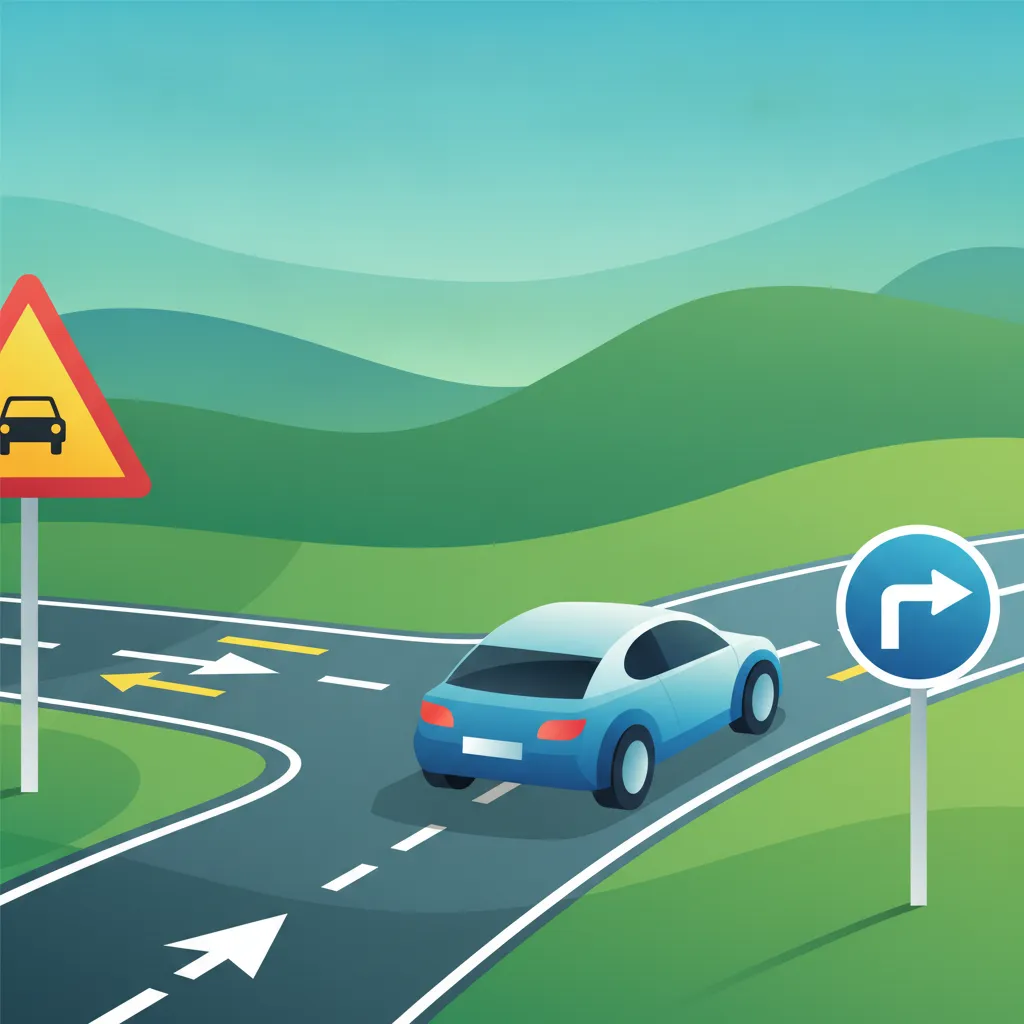
Theory topic content overview
Read the full theory topic guide for Safe Turning Techniques with structured, easy-to-scan content built for learners in Great Britain. This detailed section explains the exact rule, meaning, traffic context, comparison points, and exam logic behind this British driving theory topic so you can study faster, understand the concept more clearly, and avoid common interpretation mistakes on the theory test.
Safe turning is a fundamental driving skill in Great Britain, requiring drivers to execute a precise sequence of actions to change direction safely and efficiently. Whether turning left or right at a junction, or entering a new road, the objective is to prevent collisions, maintain traffic flow, and ensure the safety of all road users, particularly the most vulnerable.
The official guidance in the Highway Code and the requirements for the DVSA theory and practical driving tests emphasize a structured approach to turning. This ensures that your intentions are clear to others and that you can react appropriately to changing road conditions and traffic movements.
All safe turning procedures in Great Britain begin with the Mirrors – Signal – Manoeuvre (MSM) routine. This systematic approach helps drivers prepare for any change of direction, not just turns.
The MSM routine should be applied before every turn and any other change of direction or speed.
While the MSM routine is universal, the specifics of turning left versus turning right, and the local context of junctions in Great Britain, demand distinct approaches.
Turning left in Great Britain (where we drive on the left) generally follows these steps:
Turning right can be more complex due to oncoming traffic and priority considerations.
Highway Code Rule 181 addresses a common scenario at crossroads when an oncoming vehicle is also turning right. There are two methods, and understanding the safer option is vital:
Learners often lose marks in theory and practical tests due to these common errors:
Safe turning in Great Britain is about more than just steering; it's a comprehensive process of observation, communication, and careful execution guided by the Highway Code. By consistently applying the MSM routine, understanding proper lane positioning, anticipating the actions of others (especially vulnerable road users), and knowing specific rules like the 'right-side to right-side' turn, you will significantly reduce risks and become a more competent and safer driver on our roads. Mastery of these safe turning procedures is vital for passing your DVSA driving tests and for your everyday driving safety.
Safe turning in Great Britain requires the MSM (Mirrors – Signal – Manoeuvre) routine as the foundation for every turn. Left turns involve progressive left-lane positioning, timely signalling, and checking the left blind spot for cyclists, while right turns require positioning left of centre, waiting for a safe gap in oncoming traffic, and using the right-side to right-side method at crossroads. Vulnerable road users such as pedestrians and cyclists have priority and must be actively looked for before, during, and after turns. Consistent application of proper observation, positioning, and speed control prevents conflicts and is essential for passing both DVSA theory and practical driving tests.
A short set of high-value points that capture the most important ideas from this theory explanation.
Always apply the Mirrors – Signal – Manoeuvre (MSM) routine before every turn and change of direction
When turning left, move progressively toward the left side of your lane and stay close to the kerb without cutting the corner
When turning right, position just left of the road centre (Highway Code Rule 179) and wait for a safe gap in oncoming traffic (Highway Code Rule 180)
At crossroads where both vehicles are turning right, use the right-side to right-side method as it provides better visibility of approaching traffic
Pedestrians and cyclists have priority if already crossing the road you are entering; their safety always takes precedence over traffic flow
Left turns require early left mirror checks, a left signal in good time, left-lane positioning, and a final left blind spot check for cyclists before executing
Right turns require positioning left of centre, a right signal, waiting for a safe gap in oncoming traffic, and checking mirrors and blind spot before turning
Never cut corners when turning right; pass the centre point of the junction before turning to avoid conflicting with traffic from the left
Blind spot checks are mandatory before every turn, especially left turns where cyclists and motorcyclists can be hidden
Use appropriate gear (usually first or second) and reduce speed so you can stop safely if a hazard appears
Signalling too late or leaving signals on when no longer needed, which misleads other road users
Swinging wide on left turns or cutting corners on right turns, causing conflicts with other road users
Failing to check blind spots before turning, leading to collisions with cyclists and motorcyclists
Misjudging gaps in oncoming traffic and turning prematurely under pressure from following traffic
Not giving way to pedestrians already crossing the road you intend to enter
Start with a short, direct summary of Safe Turning Techniques before reading the full explanation below.
Safe turning in Great Britain requires following a precise sequence: observe traffic and road markings using your mirrors, signal your intentions well in advance, position your vehicle correctly, and then smoothly execute the turn, yielding to any road users with priority. Always prioritize the safety of pedestrians and cyclists, especially at junctions, as specified in the Highway Code.
Review the most important terms, rule signals, and traffic concepts linked to Safe Turning Techniques.
Explore related theory topic pages connected to Safe Turning Techniques and continue with the next useful rule explanation.
See the common search queries learners use when trying to understand Safe Turning Techniques in Great Britain.

Continue your journey to a successful Great Britain driving theory test by delving deeper into specific topics. Enhance your understanding of complex rules, review detailed explanations, and solidify your knowledge of the Highway Code, preparing you thoroughly for all aspects of the official DVSA exam. Start mastering key concepts today.
Great Britain Driving Theory TopicsTheory topic content overview
A short set of high-value points that capture the most important ideas from this theory explanation.
Always apply the Mirrors – Signal – Manoeuvre (MSM) routine before every turn and change of direction
When turning left, move progressively toward the left side of your lane and stay close to the kerb without cutting the corner
When turning right, position just left of the road centre (Highway Code Rule 179) and wait for a safe gap in oncoming traffic (Highway Code Rule 180)
At crossroads where both vehicles are turning right, use the right-side to right-side method as it provides better visibility of approaching traffic
Pedestrians and cyclists have priority if already crossing the road you are entering; their safety always takes precedence over traffic flow
Left turns require early left mirror checks, a left signal in good time, left-lane positioning, and a final left blind spot check for cyclists before executing
Right turns require positioning left of centre, a right signal, waiting for a safe gap in oncoming traffic, and checking mirrors and blind spot before turning
Never cut corners when turning right; pass the centre point of the junction before turning to avoid conflicting with traffic from the left
Blind spot checks are mandatory before every turn, especially left turns where cyclists and motorcyclists can be hidden
Use appropriate gear (usually first or second) and reduce speed so you can stop safely if a hazard appears
Signalling too late or leaving signals on when no longer needed, which misleads other road users
Swinging wide on left turns or cutting corners on right turns, causing conflicts with other road users
Failing to check blind spots before turning, leading to collisions with cyclists and motorcyclists
Misjudging gaps in oncoming traffic and turning prematurely under pressure from following traffic
Not giving way to pedestrians already crossing the road you intend to enter
Start with a short, direct summary of Safe Turning Techniques before reading the full explanation below.
Safe turning in Great Britain requires following a precise sequence: observe traffic and road markings using your mirrors, signal your intentions well in advance, position your vehicle correctly, and then smoothly execute the turn, yielding to any road users with priority. Always prioritize the safety of pedestrians and cyclists, especially at junctions, as specified in the Highway Code.
Review the most important terms, rule signals, and traffic concepts linked to Safe Turning Techniques.
Explore related theory topic pages connected to Safe Turning Techniques and continue with the next useful rule explanation.
See the common search queries learners use when trying to understand Safe Turning Techniques in Great Britain.
Continue your journey to a successful Great Britain driving theory test by delving deeper into specific topics. Enhance your understanding of complex rules, review detailed explanations, and solidify your knowledge of the Highway Code, preparing you thoroughly for all aspects of the official DVSA exam. Start mastering key concepts today.
Great Britain Driving Theory TopicsUse this exam-focused revision tip to understand how Safe Turning Techniques is likely to appear in theory questions for learners in Great Britain. This section helps you identify the most testable part of the rule, avoid common traps, and remember the concept more effectively during British driving theory exam preparation.
Many exam questions focus on the correct sequence for turning. Remember the "Mirrors – Signal – Manoeuvre" (MSM) routine, and always consider priority for other road users, especially pedestrians and cyclists. Failing to check blind spots or signalling incorrectly are common reasons for lost marks.
Read direct answers to the most common learner questions about Safe Turning Techniques in Great Britain. This FAQ focuses on rule confusion, practical meaning, comparison with similar concepts, and the exact uncertainties that appear most often in British driving theory revision and exam preparation.
For turning right, follow the MSM routine: check mirrors, signal right, position just left of the road's centre (or in a marked lane), wait for a safe gap in oncoming traffic, then make the turn without cutting the corner, checking blind spots.
Yes, you must always signal your intentions clearly and in good time before turning, even if there appears to be no other traffic, to inform pedestrians and other road users.
The MSM routine is a fundamental driving principle in the UK. It stands for Mirrors (check rear and side mirrors), Signal (indicate your intention), and Manoeuvre (position and execute the turn), ensuring you are aware and safe.
When turning left, you should normally keep well to the left of the road, leaving enough room for cyclists or motorcyclists who may be on your left, and position your vehicle to enter the new road in the left-hand lane.
According to the Highway Code, when both vehicles are turning right at crossroads, it is generally safer to turn "right side to right side," meaning you keep the other vehicle on your right and turn behind it, ensuring a clear view.
Checking blind spots is crucial before turning to ensure you haven't missed any cyclists, motorcyclists, or smaller vehicles that may be alongside you and not visible in your mirrors.
On busy roads, extra vigilance is needed. Be patient, wait for a large enough gap in traffic, and be prepared to stop if the situation changes. Maintain proper speed and control through the turn.
Yes, pedestrians and cyclists are highly vulnerable during turning manoeuvres. You must always look out for them, anticipate their movements, and give way if they are crossing the road you intend to enter.
Dive into our comprehensive question bank to find exactly what you need for your Great Britain theory test. Use our advanced filters to pinpoint specific subjects or test your knowledge on challenging areas, ensuring you're fully prepared for success.