
Road work zones are areas on Great Britain's roads where construction, maintenance, or repairs are taking place. These dynamic environments introduce temporary changes to traffic flow, signage, and road conditions, demanding heightened awareness from drivers. It's essential to understand the specific rules and increased risks outlined in the Highway Code to drive safely through these areas.
Theory topic content overview
Read the full theory topic guide for Road Works Driving with structured, easy-to-scan content built for learners in Great Britain. This detailed section explains the exact rule, meaning, traffic context, comparison points, and exam logic behind this British driving theory topic so you can study faster, understand the concept more clearly, and avoid common interpretation mistakes on the theory test.
Road work zones in Great Britain are dynamic sections of road where construction, maintenance, or repair work is being carried out. These areas are vital for maintaining our road network but introduce temporary changes and increased hazards that demand heightened awareness and specific driving behaviour from all road users.
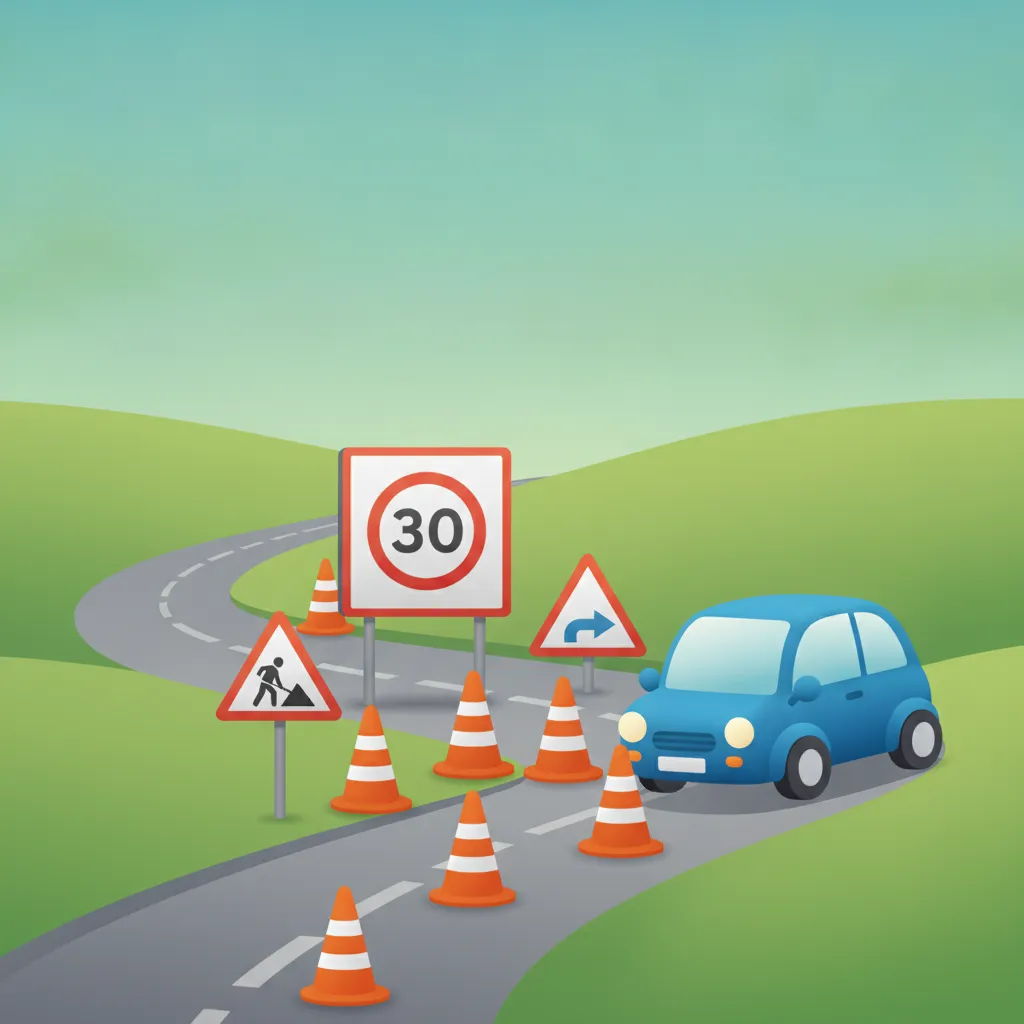
A road work zone is any area where work is taking place on or alongside the road, whether it's for a major motorway upgrade, minor pothole repair, or utility work. These zones are clearly marked by temporary traffic signs, cones, barriers, and sometimes temporary road markings, all designed to guide traffic safely through or around the working area.
The primary purpose of these temporary controls is to protect both the road users and the road workers, who are often operating in close proximity to live traffic.
Driving through road work zones in Great Britain requires a different approach than regular driving due to several factors:
When you see signs indicating road works ahead on Great Britain's roads, follow these steps to ensure a safe passage:
In Great Britain, temporary road work signs have a distinctive yellow background. Understanding these is crucial for safe navigation:
Learners and experienced drivers in Great Britain often make these errors:
Successfully and safely navigating road work zones in Great Britain boils down to vigilance and strict compliance with temporary rules. Always remember:
By adhering to these guidelines, you'll contribute to road safety and demonstrate a thorough understanding of Great Britain's driving rules, crucial for both your theory test and practical driving.
Start with a short, direct summary of Road Works Driving before reading the full explanation below.
When approaching and driving through road work zones in Great Britain, you must always obey temporary signs and speed limits, as specified in Highway Code Rule 288. Be prepared for lane changes, narrower lanes, and uneven surfaces. Maintain a safe distance from the vehicle ahead and be extra vigilant for road workers, cyclists, and debris. Never overtake queuing traffic or drive through areas marked off by cones.
Review the most important terms, rule signals, and traffic concepts linked to Road Works Driving.
Explore related theory topic pages connected to Road Works Driving and continue with the next useful rule explanation.
See the common search queries learners use when trying to understand Road Works Driving in Great Britain.

Continue your journey to a successful Great Britain driving theory test by delving deeper into specific topics. Enhance your understanding of complex rules, review detailed explanations, and solidify your knowledge of the Highway Code, preparing you thoroughly for all aspects of the official DVSA exam. Start mastering key concepts today.
Great Britain Driving Theory TopicsTheory topic content overview
Start with a short, direct summary of Road Works Driving before reading the full explanation below.
When approaching and driving through road work zones in Great Britain, you must always obey temporary signs and speed limits, as specified in Highway Code Rule 288. Be prepared for lane changes, narrower lanes, and uneven surfaces. Maintain a safe distance from the vehicle ahead and be extra vigilant for road workers, cyclists, and debris. Never overtake queuing traffic or drive through areas marked off by cones.
Review the most important terms, rule signals, and traffic concepts linked to Road Works Driving.
Explore related theory topic pages connected to Road Works Driving and continue with the next useful rule explanation.
See the common search queries learners use when trying to understand Road Works Driving in Great Britain.
Continue your journey to a successful Great Britain driving theory test by delving deeper into specific topics. Enhance your understanding of complex rules, review detailed explanations, and solidify your knowledge of the Highway Code, preparing you thoroughly for all aspects of the official DVSA exam. Start mastering key concepts today.
Great Britain Driving Theory TopicsUse this exam-focused revision tip to understand how Road Works Driving is likely to appear in theory questions for learners in Great Britain. This section helps you identify the most testable part of the rule, avoid common traps, and remember the concept more effectively during British driving theory exam preparation.
Theory test questions often focus on temporary speed limits and the importance of road signs in construction areas. Remember that these temporary rules override permanent ones. Pay close attention to signs indicating lane closures or merge points, and always prioritize the safety of road workers.
Read direct answers to the most common learner questions about Road Works Driving in Great Britain. This FAQ focuses on rule confusion, practical meaning, comparison with similar concepts, and the exact uncertainties that appear most often in British driving theory revision and exam preparation.
In Great Britain, you must always obey all temporary road work signs and speed limits. Maintain a safe distance, use mirrors for lane changes, avoid overtaking queuing traffic, and be especially careful of vulnerable road users and workers. These rules are detailed in Highway Code Rule 288.
Upon seeing a 'Road Works Ahead' sign, immediately reduce your speed, pay extra attention, and look for further specific instructions. Prepare for lane closures, narrower lanes, and temporary diversions, and be ready to adapt your driving.
Yes, temporary maximum speed limits in road work zones are legally binding and must not be exceeded. Failing to observe them can result in penalties and is a serious safety risk.
Cyclists and motorcyclists are particularly vulnerable to hazards like grit, mud, loose chippings, or uneven surfaces often found in road work zones, which can cause skidding. Drivers should leave extra space and anticipate their movements.
No, the Highway Code explicitly states you must not switch lanes to overtake queuing traffic within a road work zone. This is dangerous and disrupts the controlled flow of traffic.
Merge in turn, also known as the zipper merge, applies where lanes are restricted due to road works. It means drivers should use both lanes up to the point of merge and then take turns to filter into the single lane, promoting smoother traffic flow.
If a works vehicle is displaying amber warning lights, it indicates that it is working in the road or entering/leaving a works area. You should leave extra space, expect it to slow down or turn, and pass with caution.
Dive into our comprehensive question bank to find exactly what you need for your Great Britain theory test. Use our advanced filters to pinpoint specific subjects or test your knowledge on challenging areas, ensuring you're fully prepared for success.