
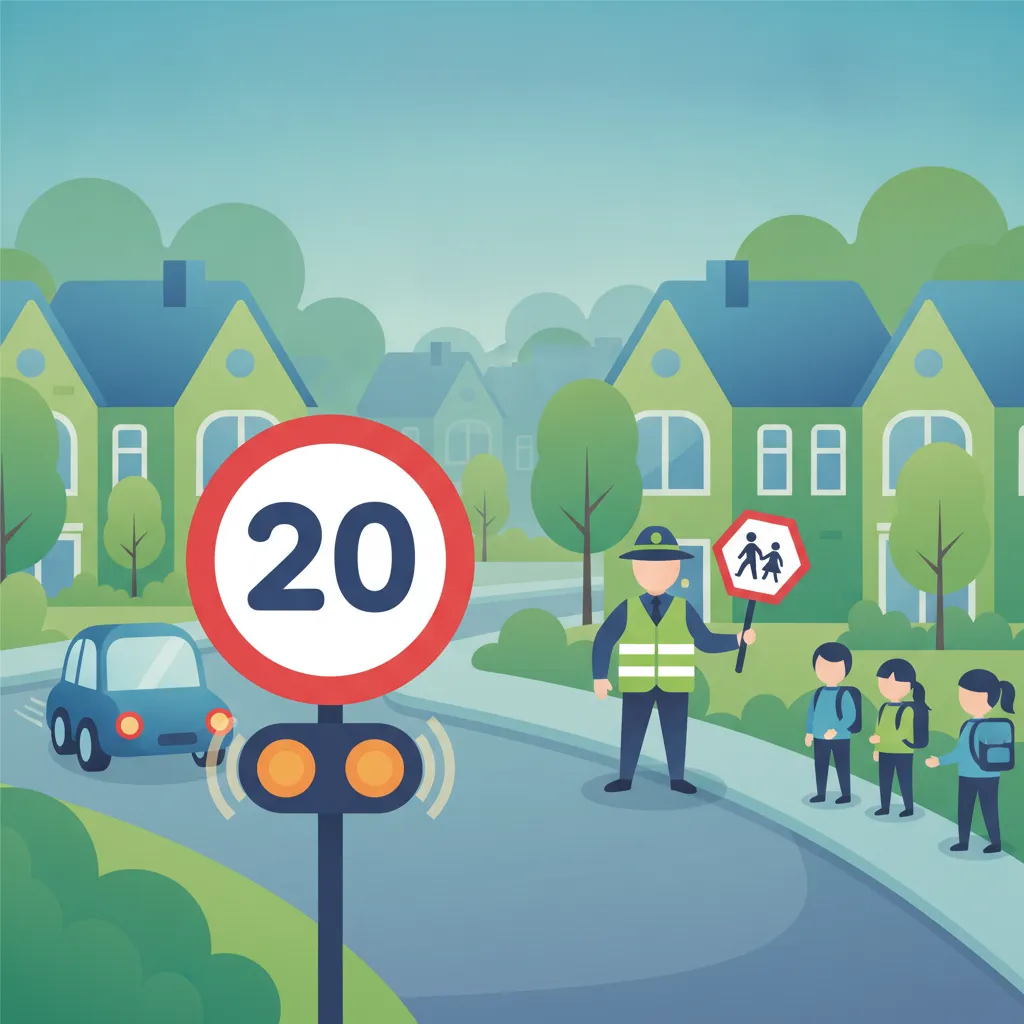
School zones are areas near educational facilities where children are frequently present, either walking, cycling, or crossing the road. Due to children's often unpredictable behaviour and limited understanding of road risks, drivers in Great Britain must adopt a highly cautious and vigilant approach. This page outlines the key responsibilities and Highway Code rules to ensure safety in these critical areas.
Theory topic content overview
Read the full theory topic guide for Driving near Schools with structured, easy-to-scan content built for learners in Great Britain. This detailed section explains the exact rule, meaning, traffic context, comparison points, and exam logic behind this British driving theory topic so you can study faster, understand the concept more clearly, and avoid common interpretation mistakes on the theory test.
Navigating school zones in Great Britain requires a specific and heightened level of awareness and caution from all drivers. These areas, typically surrounding primary and secondary schools, are designated as such due to the frequent presence of children, who are among the most vulnerable road users. Understanding and adhering to the special rules and recommendations for driving in school zones in Great Britain is not only vital for safety but also a key component of the DVSA theory test.
A school zone is not always formally signposted with a specific speed limit, unlike in some other countries. Instead, it refers to the general vicinity of a school where children are likely to be walking, cycling, or crossing the road. These areas are identified by distinct warning signs and often experience increased activity during school drop-off and pick-up times.
The core concept is to recognise an area where children's unpredictable behaviour demands extra care. Children may:
Therefore, a "school zone" is less about a legal boundary and more about a state of mind for the driver: one of constant vigilance and readiness to react.
Driving safely in school zones in Great Britain is paramount for several critical reasons:
The Highway Code provides clear instructions for driving near schools in Great Britain, encapsulated primarily in Rules 208, 209, and 210.
This is the fundamental principle. As you approach and drive through a school zone:
Often known as 'Lollipop People', school crossing patrols are authorised persons who help children cross the road safely.
Beyond specific rules, actively practice hazard perception:
You are driving down a residential street at 30 mph. Ahead, you see a triangular 'School' warning sign with a flashing amber light beneath it. A group of children are walking on the pavement, some laughing and playfully pushing each other.
You are behind a large coach displaying a 'School Bus' sign, which has just pulled over and stopped. The doors open.
You're driving past a school entrance where several cars are parked, obscuring the view of the pavement. The school bell has just rung.
Learners and even experienced drivers often make mistakes in school zones:
When driving in school zones in Great Britain, adopt the "Think Child" principle. This means:
Mastering these responsibilities is not just about passing your theory test; it's about safeguarding the most vulnerable members of our community and becoming a truly responsible driver on Great Britain's roads.
Start with a short, direct summary of Driving near Schools before reading the full explanation below.
When driving in school zones in Great Britain, you must drive slowly, be prepared to stop instantly, and be highly aware of young pedestrians and cyclists. Pay close attention to school warning signs, flashing amber signals, and be ready to obey school crossing patrols holding a 'Stop for Children' sign. Anticipate children's movements and allow extra time to react, as their actions can be unpredictable.
Review the most important terms, rule signals, and traffic concepts linked to Driving near Schools.
Explore related theory topic pages connected to Driving near Schools and continue with the next useful rule explanation.
See the common search queries learners use when trying to understand Driving near Schools in Great Britain.

Continue your journey to a successful Great Britain driving theory test by delving deeper into specific topics. Enhance your understanding of complex rules, review detailed explanations, and solidify your knowledge of the Highway Code, preparing you thoroughly for all aspects of the official DVSA exam. Start mastering key concepts today.
Great Britain Driving Theory TopicsTheory topic content overview
Start with a short, direct summary of Driving near Schools before reading the full explanation below.
When driving in school zones in Great Britain, you must drive slowly, be prepared to stop instantly, and be highly aware of young pedestrians and cyclists. Pay close attention to school warning signs, flashing amber signals, and be ready to obey school crossing patrols holding a 'Stop for Children' sign. Anticipate children's movements and allow extra time to react, as their actions can be unpredictable.
Review the most important terms, rule signals, and traffic concepts linked to Driving near Schools.
Explore related theory topic pages connected to Driving near Schools and continue with the next useful rule explanation.
See the common search queries learners use when trying to understand Driving near Schools in Great Britain.
Continue your journey to a successful Great Britain driving theory test by delving deeper into specific topics. Enhance your understanding of complex rules, review detailed explanations, and solidify your knowledge of the Highway Code, preparing you thoroughly for all aspects of the official DVSA exam. Start mastering key concepts today.
Great Britain Driving Theory TopicsUse this exam-focused revision tip to understand how Driving near Schools is likely to appear in theory questions for learners in Great Britain. This section helps you identify the most testable part of the rule, avoid common traps, and remember the concept more effectively during British driving theory exam preparation.
When approaching school zones, the DVSA theory test often assesses your hazard perception and ability to anticipate children's movements. Remember, children can behave unpredictably. Always scan ahead for warning signs, flashing lights, and school crossing patrols, and be prepared to reduce speed significantly or stop to ensure their safety.
Read direct answers to the most common learner questions about Driving near Schools in Great Britain. This FAQ focuses on rule confusion, practical meaning, comparison with similar concepts, and the exact uncertainties that appear most often in British driving theory revision and exam preparation.
A school zone refers to the area immediately surrounding a school, where there's a higher likelihood of children walking, cycling, or crossing roads. While not always explicitly marked with a specific zone sign, these areas are indicated by school warning signs, often with flashing amber lights, and sometimes have reduced speed limits.
In Great Britain, a flashing amber signal below a 'School' warning sign indicates that children may be crossing the road ahead. You must drive very slowly and be prepared to stop until you are clear of the area, remaining highly alert to children's presence.
Yes, you MUST stop when a school crossing patrol displays a 'Stop for children' sign. This is a legal requirement under the Road Traffic Regulation Act and failing to stop is a serious offence.
You should drive carefully and slowly when passing a stationary bus displaying a 'School Bus' sign. Children may be getting on or off the bus, and they might step into the road unexpectedly from behind it.
Driving slowly near schools allows you more time to react to the unpredictable movements of children, who may not fully understand traffic dangers or be easily seen. It significantly reduces the risk of accidents and helps prevent serious injuries.
While it's advised to drive slowly, not all school zones in Great Britain have a mandatory reduced speed limit posted. However, the general expectation from the Highway Code is to drive slowly and be particularly aware of young cyclists and pedestrians, regardless of the official speed limit.
If your view is blocked by queuing traffic or incorrectly parked vehicles near a school, take extra care. Assume pedestrians, especially children, might be crossing between stationary vehicles and be ready to stop immediately. Proceed very slowly and with extreme caution.
Dive into our comprehensive question bank to find exactly what you need for your Great Britain theory test. Use our advanced filters to pinpoint specific subjects or test your knowledge on challenging areas, ensuring you're fully prepared for success.