
Traffic lights are critical for maintaining orderly flow and preventing collisions at intersections throughout Great Britain. This page details the specific meaning of each signal phase – red, red and amber, green, and amber – along with special signals like green filter arrows. Learn how to respond correctly to ensure safety and compliance with the Highway Code.
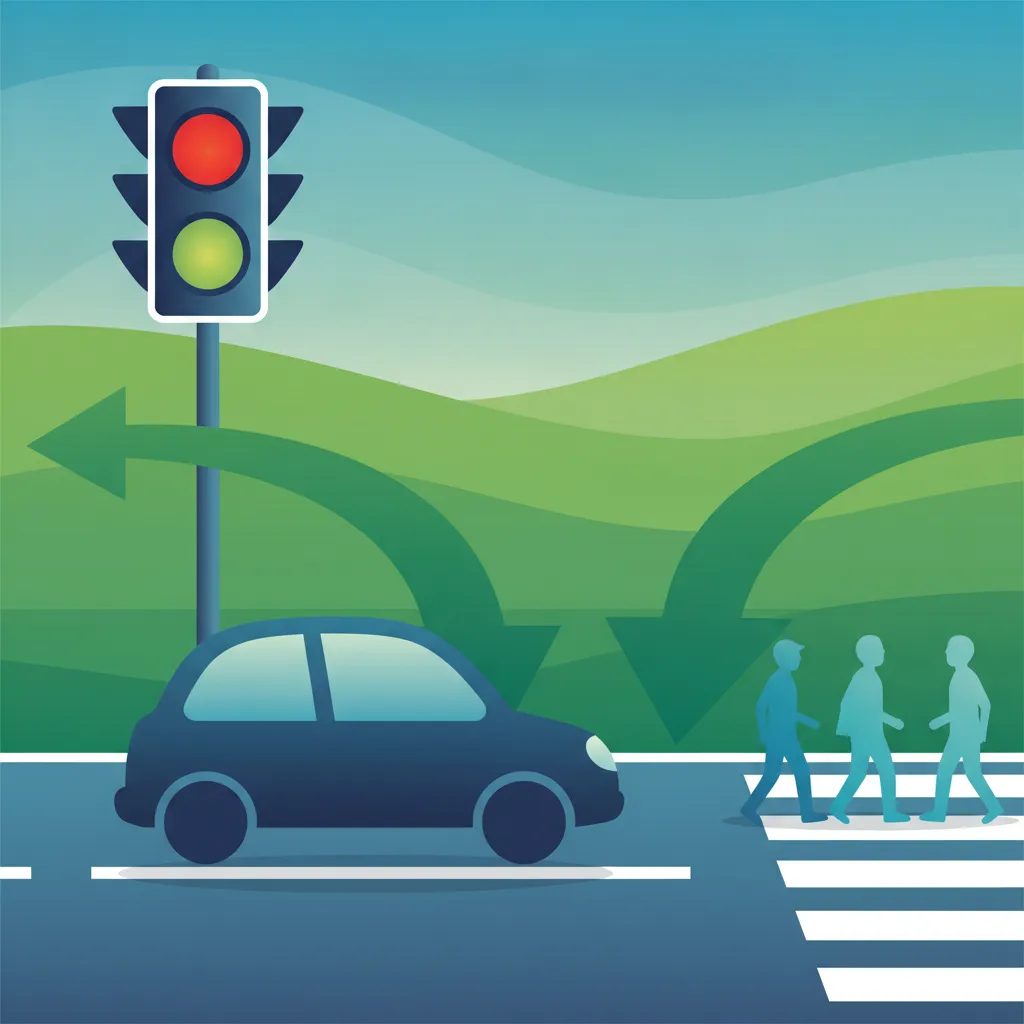
Theory topic content overview
Read the full theory topic guide for Traffic Lights Explained with structured, easy-to-scan content built for learners in Great Britain. This detailed section explains the exact rule, meaning, traffic context, comparison points, and exam logic behind this British driving theory topic so you can study faster, understand the concept more clearly, and avoid common interpretation mistakes on the theory test.
Traffic lights are essential traffic control devices found throughout Great Britain, primarily at intersections, pedestrian crossings, and other points where vehicle and pedestrian movements need to be safely managed. Governed by the Highway Code, these signals ensure an orderly flow of traffic, preventing collisions and reducing congestion. For any driver in England, Scotland, or Wales, understanding the precise meaning and required actions for each traffic light signal is not just a matter of safety, but a legal obligation and a core component of the DVSA driving theory test.
The primary role of traffic light signals is to assign right-of-way and regulate movements at complex junctions. Without them, intersections would be chaotic and highly dangerous. In Great Britain, the specific sequence and meaning of these lights are designed to:
Misinterpreting traffic lights is a serious offence that can lead to fines, penalty points, and dangerous road incidents.
The standard sequence of traffic light signals in Great Britain follows a specific pattern, distinct from some other countries, particularly the crucial Red and Amber phase.
Meaning: STOP. Action: You MUST stop behind the white solid stop line on the carriageway. You must not move forward over this line when the red light is showing. Purpose: To bring traffic to a complete halt, allowing conflicting traffic flows or pedestrians to proceed safely.
Meaning: STOP, but prepare to go. Action: You MUST remain stopped behind the white stop line. This signal indicates the lights are about to change to green. You should get ready to move, but DO NOT proceed or cross the stop line until the green light shows alone. Purpose: This preparatory phase in Great Britain allows drivers to engage gear and prepare for a smooth departure, but crucially prevents moving before the junction is completely clear from the previous phase.
Meaning: You may go on if the way is clear and safe. Action: You may proceed forward, turn left, or turn right, provided the way is clear. You MUST always give way to any pedestrians who are still crossing. If turning right, you may need to wait in the centre of the junction for a safe gap in oncoming traffic. You MUST NOT proceed if doing so would block the junction, even if the light is green. Purpose: To permit traffic to move in the indicated directions.
Meaning: STOP at the stop line, unless you are too close to do so safely. Action: You MUST stop at the white stop line. The only exception is if the amber light appears when you are already so close to the stop line that stopping suddenly would cause an accident or put other road users at risk (e.g., if a vehicle is following very closely behind you). In such a situation, you may continue with extreme caution. Purpose: To warn drivers that the signal is about to change to red, requiring them to clear the junction or stop safely.
Beyond the main sequence, you'll encounter specific signals in Great Britain designed for particular movements or road users:
Approaching traffic lights requires more than just knowing the sequence. You must consider:
Several points related to traffic lights are often confused by learners:
Learners frequently make mistakes related to traffic lights, often due to misinterpretation of the Highway Code or poor anticipation:
Mastering traffic light signals in Great Britain hinges on anticipation, precise adherence to the Highway Code, and situational awareness. Always scan ahead as you approach a junction for light changes. Understand that the Red and Amber signal is unique to GB and requires readiness, not movement. The Amber light demands a safe stop unless explicitly unsafe to do so. And a Green light always comes with the caveat to ensure the way is clear and you won't block the junction. By applying these principles, you'll navigate junctions safely, efficiently, and in full compliance with UK driving regulations.
Start with a short, direct summary of Traffic Lights Explained before reading the full explanation below.
In Great Britain, traffic lights regulate vehicle and pedestrian movement. Red means stop, Red and Amber means stop but prepare to go (do not move until green shows). Green means proceed if the way is clear and safe, while Amber means stop before the line unless you are too close to do so safely.
Review the most important terms, rule signals, and traffic concepts linked to Traffic Lights Explained.
Explore related theory topic pages connected to Traffic Lights Explained and continue with the next useful rule explanation.
See the common search queries learners use when trying to understand Traffic Lights Explained in Great Britain.

Continue your journey to a successful Great Britain driving theory test by delving deeper into specific topics. Enhance your understanding of complex rules, review detailed explanations, and solidify your knowledge of the Highway Code, preparing you thoroughly for all aspects of the official DVSA exam. Start mastering key concepts today.
Great Britain Driving Theory TopicsTheory topic content overview
Start with a short, direct summary of Traffic Lights Explained before reading the full explanation below.
In Great Britain, traffic lights regulate vehicle and pedestrian movement. Red means stop, Red and Amber means stop but prepare to go (do not move until green shows). Green means proceed if the way is clear and safe, while Amber means stop before the line unless you are too close to do so safely.
Review the most important terms, rule signals, and traffic concepts linked to Traffic Lights Explained.
Explore related theory topic pages connected to Traffic Lights Explained and continue with the next useful rule explanation.
See the common search queries learners use when trying to understand Traffic Lights Explained in Great Britain.
Continue your journey to a successful Great Britain driving theory test by delving deeper into specific topics. Enhance your understanding of complex rules, review detailed explanations, and solidify your knowledge of the Highway Code, preparing you thoroughly for all aspects of the official DVSA exam. Start mastering key concepts today.
Great Britain Driving Theory TopicsUse this exam-focused revision tip to understand how Traffic Lights Explained is likely to appear in theory questions for learners in Great Britain. This section helps you identify the most testable part of the rule, avoid common traps, and remember the concept more effectively during British driving theory exam preparation.
Pay close attention to the specific actions required for 'red and amber' vs. 'amber' lights in your theory test. Remember, 'red and amber' means prepare to go, but 'amber' means stop unless unsafe to do so. Never proceed on a red and amber signal alone.
Read direct answers to the most common learner questions about Traffic Lights Explained in Great Britain. This FAQ focuses on rule confusion, practical meaning, comparison with similar concepts, and the exact uncertainties that appear most often in British driving theory revision and exam preparation.
A red traffic light means 'Stop'. You must wait behind the white stop line on the carriageway and not proceed until the signal changes.
Red and amber showing together also means 'Stop'. It signals that the lights are about to change to green, so you should prepare to go but must not move until the green light shows.
An amber light means 'Stop' at the stop line. You may only go on if the amber light appears after you have crossed the stop line, or if you are so close to it that pulling up suddenly would cause an accident.
A green light means you may go on if the way is clear. Always take special care if turning left or right, and give way to any pedestrians who are crossing.
A green filter arrow allows movement in a specific direction (shown by the arrow) even if other lights are red. You may proceed in that direction if the way is clear, regardless of other signals.
If traffic lights are not working, you should treat the junction as an unmarked intersection. Proceed with great care, be prepared to give way, and follow the rules for priority at unmarked junctions.
Traffic lights often incorporate pedestrian signals, such as at Pelican and Puffin crossings. Drivers must adhere to the vehicle signals, which coordinate with pedestrian crossing times to ensure safety.
Dive into our comprehensive question bank to find exactly what you need for your Great Britain theory test. Use our advanced filters to pinpoint specific subjects or test your knowledge on challenging areas, ensuring you're fully prepared for success.