
Driving in fog is one of the most challenging conditions you'll encounter, as it severely limits your ability to see and be seen. This page outlines the key rules from the Great Britain Highway Code, focusing on how to adjust your speed, use your vehicle's lighting correctly, and maintain safe distances to navigate foggy roads safely.
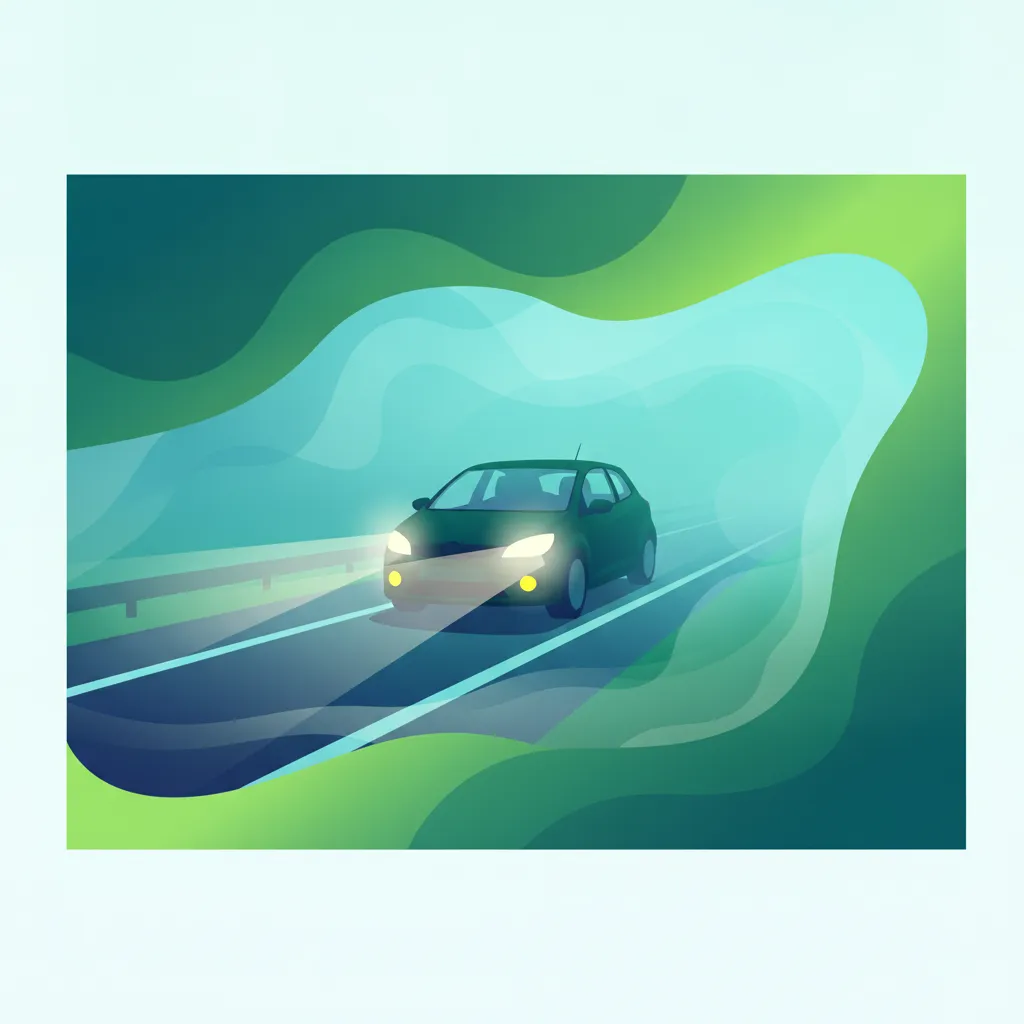
Theory topic content overview
Read the full theory topic guide for Fog Driving Rules with structured, easy-to-scan content built for learners in Great Britain. This detailed section explains the exact rule, meaning, traffic context, comparison points, and exam logic behind this British driving theory topic so you can study faster, understand the concept more clearly, and avoid common interpretation mistakes on the theory test.
Fog is one of the most hazardous weather conditions for drivers across Great Britain, severely impairing visibility and dramatically increasing the risk of accidents. Unlike rain or snow, fog can appear suddenly and vary in density, creating unpredictable and dangerous driving environments. This section breaks down the essential principles of driving in fog, focusing on how reduced visibility directly impacts your driving decisions, vehicle lighting, and overall safety as outlined in the Great Britain Highway Code.
The core principle for driving in fog is that your speed must always allow you to stop safely within the distance you can see clearly ahead.
Understanding how to drive safely in fog is not just a matter of practical skill; it's a vital part of your DVSA theory test and a legal requirement under the Highway Code in Great Britain. Misjudging conditions or failing to use appropriate lighting can lead to serious consequences, including fines, penalty points, and dangerous collisions. The challenges posed by fog, such as obscured road signs, reduced perception of speed, and the difficulty of judging distances, make it a high-risk scenario that every driver must be prepared for.
When fog descends, your ability to see and be seen is drastically reduced. This directly impacts key aspects of driving:
The Highway Code provides clear guidance for driving in fog, particularly Rule 226 regarding lighting and Rule 235 for general fog driving practices.
This is the most critical adjustment:
Correct lighting is paramount in foggy conditions.
Fog creates an illusion of greater distance, making it easy to drive too close to the vehicle in front.
Learners in Great Britain often make specific errors when driving in fog:
When driving in fog in Great Britain, remember the principle: "If you can't see, you can't go." Prioritise being able to stop within the distance you can clearly see. Use your headlights when visibility drops below 100 metres, activate fog lights only when necessary, and switch them off promptly. Maintain a significantly increased following distance and remain highly alert. These adaptations are not merely suggestions; they are crucial components of safe driving and essential knowledge for your driving theory test.
Driving in fog requires adapting your speed, lighting, and following distance to match drastically reduced visibility. The core rule is that you must always be able to stop within your visible stopping distance. Use dipped headlights when visibility falls below 100 metres, and while fog lights are permitted in these conditions, they must be switched off once visibility improves. Increase your following distance significantly beyond normal conditions and listen for approaching traffic you cannot see. These practices are essential road safety requirements under the Great Britain Highway Code and are commonly tested in the DVSA theory examination.
A short set of high-value points that capture the most important ideas from this theory explanation.
Your speed must always allow you to stop safely within the distance you can see clearly ahead
Use dipped beam headlights when visibility is seriously reduced, which the Highway Code defines as generally less than 100 metres
Fog lights are optional in seriously reduced visibility but you must switch them off when visibility improves to avoid dazzling other drivers
Significantly increase your following distance in fog as it creates an illusion of greater distance, leading to dangerously close gaps
Sidelights alone are insufficient in fog; you must use headlights to be seen and to see the road ahead
The 100-metre rule: visibility below this threshold triggers the requirement to use headlights and allows fog lights
Headlights are mandatory in seriously reduced visibility; fog lights are optional and conditional on switching off when conditions improve
The posted speed limit is the maximum for ideal conditions; in fog your safe speed is always much lower based on visible stopping distance
Fog varies in density and can appear suddenly; remain cautious even when it seems to be clearing
Listen for traffic you cannot see by opening windows slightly, especially near level crossings
Driving too fast for the conditions by not adjusting speed to match the visible distance ahead
Forgetting to switch off fog lights once visibility improves beyond 100 metres, which can dazzle other drivers
Using only sidelights instead of headlights, which provides insufficient illumination and makes you less visible
Relying on the rear lights of the vehicle ahead as a guide for speed or distance, leading to following too closely
Not keeping windscreen and windows clear with wipers and demisters, further reducing limited visibility
Start with a short, direct summary of Fog Driving Rules before reading the full explanation below.
When driving in fog in Great Britain, you must slow down significantly so you can stop within the visible distance ahead. You must use your vehicle's headlights when visibility is seriously reduced (generally less than 100 metres) and may use front or rear fog lights, but remember to switch them off when visibility improves. Always increase your following distance to allow more time to react to hazards.
Review the most important terms, rule signals, and traffic concepts linked to Fog Driving Rules.
Explore related theory topic pages connected to Fog Driving Rules and continue with the next useful rule explanation.
See the common search queries learners use when trying to understand Fog Driving Rules in Great Britain.

Continue your journey to a successful Great Britain driving theory test by delving deeper into specific topics. Enhance your understanding of complex rules, review detailed explanations, and solidify your knowledge of the Highway Code, preparing you thoroughly for all aspects of the official DVSA exam. Start mastering key concepts today.
Great Britain Driving Theory TopicsTheory topic content overview
A short set of high-value points that capture the most important ideas from this theory explanation.
Your speed must always allow you to stop safely within the distance you can see clearly ahead
Use dipped beam headlights when visibility is seriously reduced, which the Highway Code defines as generally less than 100 metres
Fog lights are optional in seriously reduced visibility but you must switch them off when visibility improves to avoid dazzling other drivers
Significantly increase your following distance in fog as it creates an illusion of greater distance, leading to dangerously close gaps
Sidelights alone are insufficient in fog; you must use headlights to be seen and to see the road ahead
The 100-metre rule: visibility below this threshold triggers the requirement to use headlights and allows fog lights
Headlights are mandatory in seriously reduced visibility; fog lights are optional and conditional on switching off when conditions improve
The posted speed limit is the maximum for ideal conditions; in fog your safe speed is always much lower based on visible stopping distance
Fog varies in density and can appear suddenly; remain cautious even when it seems to be clearing
Listen for traffic you cannot see by opening windows slightly, especially near level crossings
Driving too fast for the conditions by not adjusting speed to match the visible distance ahead
Forgetting to switch off fog lights once visibility improves beyond 100 metres, which can dazzle other drivers
Using only sidelights instead of headlights, which provides insufficient illumination and makes you less visible
Relying on the rear lights of the vehicle ahead as a guide for speed or distance, leading to following too closely
Not keeping windscreen and windows clear with wipers and demisters, further reducing limited visibility
Start with a short, direct summary of Fog Driving Rules before reading the full explanation below.
When driving in fog in Great Britain, you must slow down significantly so you can stop within the visible distance ahead. You must use your vehicle's headlights when visibility is seriously reduced (generally less than 100 metres) and may use front or rear fog lights, but remember to switch them off when visibility improves. Always increase your following distance to allow more time to react to hazards.
Review the most important terms, rule signals, and traffic concepts linked to Fog Driving Rules.
Explore related theory topic pages connected to Fog Driving Rules and continue with the next useful rule explanation.
See the common search queries learners use when trying to understand Fog Driving Rules in Great Britain.
Continue your journey to a successful Great Britain driving theory test by delving deeper into specific topics. Enhance your understanding of complex rules, review detailed explanations, and solidify your knowledge of the Highway Code, preparing you thoroughly for all aspects of the official DVSA exam. Start mastering key concepts today.
Great Britain Driving Theory TopicsUse this exam-focused revision tip to understand how Fog Driving Rules is likely to appear in theory questions for learners in Great Britain. This section helps you identify the most testable part of the rule, avoid common traps, and remember the concept more effectively during British driving theory exam preparation.
A common theory test trap involves when to use and switch off fog lights. Remember the 100-metre rule for seriously reduced visibility and the legal requirement to turn fog lights off once visibility improves to avoid dazzling others.
Read direct answers to the most common learner questions about Fog Driving Rules in Great Britain. This FAQ focuses on rule confusion, practical meaning, comparison with similar concepts, and the exact uncertainties that appear most often in British driving theory revision and exam preparation.
You MUST use your headlights when visibility is seriously reduced, which the Highway Code generally defines as when you cannot see for more than 100 metres (328 feet).
You MAY use front or rear fog lights when visibility is seriously reduced. However, you MUST switch them off once visibility improves, as they can dazzle other drivers and obscure your brake lights.
You must significantly reduce your speed so that you can always stop safely within the distance you can see clearly ahead. This is crucial on motorways and dual carriageways where vehicles travel faster.
Increased following distance gives you more time to react to vehicles ahead that may brake suddenly, as fog can obscure their brake lights and make it harder to judge their speed.
Use your windscreen wipers and demisters to keep your windows clear, be aware that other drivers might not be using their lights, and avoid accelerating to get away from a vehicle that is too close behind you.
Yes, fog can be unpredictable. Even if it seems to be clearing, you can suddenly encounter thick fog. Always remain vigilant and be prepared to adapt your driving.
Dive into our comprehensive question bank to find exactly what you need for your Great Britain theory test. Use our advanced filters to pinpoint specific subjects or test your knowledge on challenging areas, ensuring you're fully prepared for success.