
In Great Britain, a priority road is a route where traffic typically has precedence over vehicles joining or crossing from other roads. This concept is fundamental for managing traffic flow, especially at junctions. Drivers must be able to identify priority roads and understand their obligations under the Highway Code, whether they are on a priority road or entering one.
Theory topic content overview
Read the full theory topic guide for Priority Road Rules with structured, easy-to-scan content built for learners in Great Britain. This detailed section explains the exact rule, meaning, traffic context, comparison points, and exam logic behind this British driving theory topic so you can study faster, understand the concept more clearly, and avoid common interpretation mistakes on the theory test.
In Great Britain, a priority road is a designated route where traffic travelling along it generally has precedence – or the right of way – over vehicles joining or crossing from intersecting roads. This fundamental concept is crucial for managing traffic flow, especially at junctions, ensuring smoother movement on main routes and clearly defining driver responsibilities.
Understanding priority road rules means knowing when you have precedence and, more importantly, when you must give way to other traffic. This helps prevent collisions and maintains the order of traffic movement across the UK road network.
Mastering priority rules is not just about passing your DVSA theory test; it's vital for daily safe driving across England, Scotland, and Wales. Misinterpreting priority at junctions is a common cause of accidents and can lead to serious consequences.
Drivers in Great Britain identify priority roads through specific traffic signs and road markings. These visual cues are essential for making correct decisions as you approach and navigate junctions.
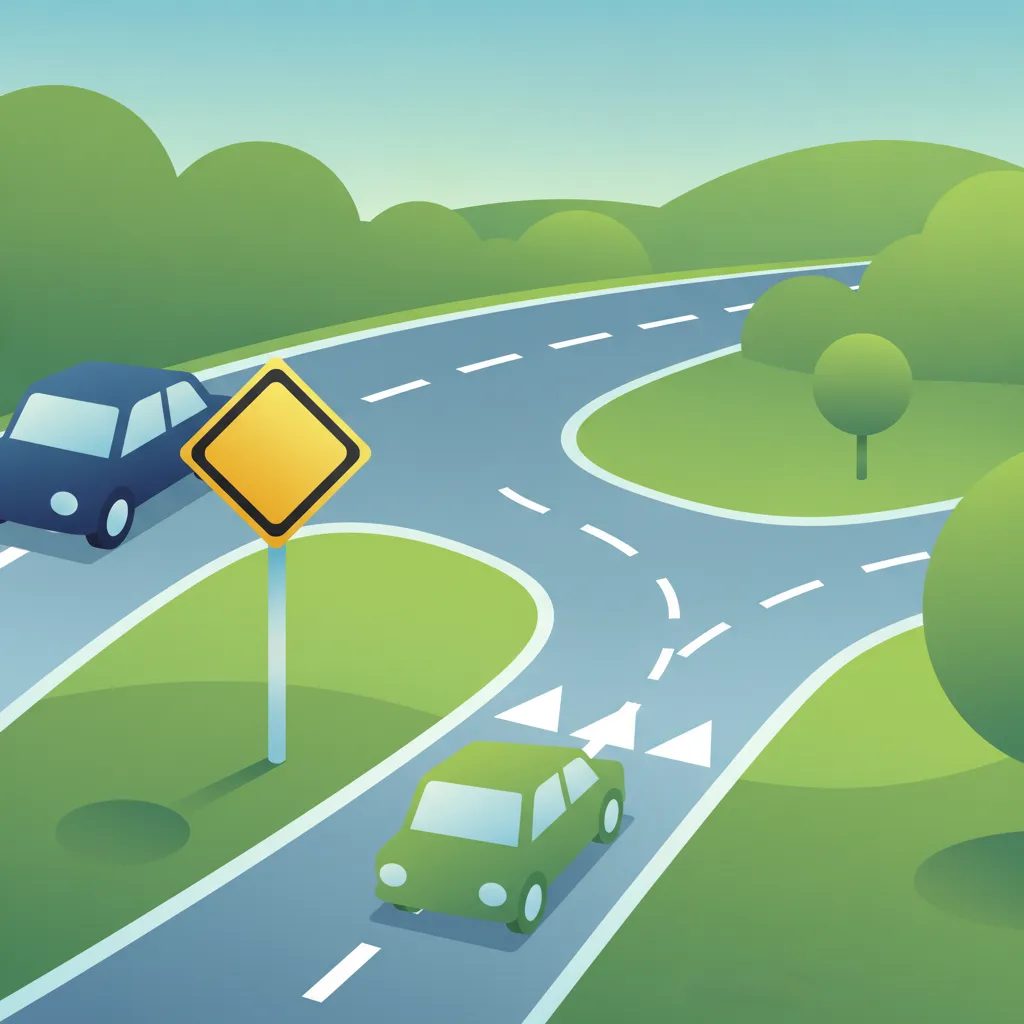
The most direct indicator that you are on a priority road is the distinctive yellow diamond sign with a black border. This sign signifies that you are on a route where you have priority over traffic at upcoming unsignalled junctions. You will see this sign after joining a priority road and often repeated periodically to confirm its continuation.
Conversely, if you are approaching a priority road from a side road, you will typically encounter:
A yellow diamond sign with a black diagonal stripe through it indicates the end of a priority road. Beyond this sign, standard junction priority rules or specific signage will apply.
The core principle of a priority road is that traffic on the priority road has precedence. This translates into the 'give way' rule for vehicles entering or crossing from side roads.
While priority roads establish a general rule, there are critical situations where standard priority can be overridden or altered:
Learners in Great Britain often confuse priority road rules with other junction scenarios.
Consider these common situations to solidify your understanding of priority road rules in the UK:
Learners frequently make these errors regarding priority road rules in the DVSA theory test and during practical driving:
The golden rule for priority roads in Great Britain is never assume. While the signs and markings clearly indicate priority, safe driving demands constant vigilance.
If you are on a priority road, be prepared for others not to yield. If you are entering one, be patient, make thorough observations, and only proceed when it is genuinely safe, ensuring you do not affect the progress of traffic already on the main road. Always remember that traffic signals, police, and vulnerable road users in specific situations can override general priority, so stay alert and adapt your driving accordingly.
A priority road in Great Britain is designated by the yellow diamond sign, giving traffic on it the right of way over vehicles entering from side roads. Drivers on side roads must slow down, observe traffic in both directions, and only proceed when there is a safe gap without affecting priority road traffic. However, priority is overridden by traffic signals, police directions, temporary signs, and the mandatory duty to give way to pedestrians at crossings and zebra crossings. Safe driving on and around priority roads requires constant vigilance and never assuming that other road users will automatically yield.
A short set of high-value points that capture the most important ideas from this theory explanation.
A priority road gives traffic on it precedence over vehicles entering from side roads, and the yellow diamond sign with black border indicates you are on a priority route.
When entering a priority road, you MUST give way to all traffic already on the main road using the Give Way or Stop signs and road markings.
Traffic signals, police directions, and temporary signs always override the general priority indicated by signs and road markings.
Even on a priority road, you must never assume other drivers will yield and should always be prepared to react to unexpected behaviour.
The yellow diamond sign with a black diagonal stripe through it marks the end of a priority road where normal junction rules then apply.
Yellow diamond sign = you are on a priority road and have precedence at upcoming unsignalled junctions.
Give Way sign (red triangle) + broken white line = you must yield to traffic on the priority road before joining or crossing.
Traffic signals always override all road signs and markings, including priority road rules.
Pedestrians crossing or waiting to cross a road you are turning into have priority over you, even if you are on a priority road (Highway Code Rule H2).
Emergency vehicles with blue lights, headlights, or sirens always take priority over you regardless of road status.
Assuming that because you are on a priority road, other drivers MUST stop for you, leading to complacency and failure to check properly.
Only checking in one direction or not looking far enough down the priority road before pulling out from a side road.
Confusing the yellow diamond priority sign with other warning signs or failing to recognise Give Way markings.
Forgetting that pedestrians and cyclists on zebra or parallel crossings have priority over you even when you are on a priority road.
Stopping beyond the white line at Give Way or Stop junctions, which obstructs your view and violates the rule.
Start with a short, direct summary of Priority Road Rules before reading the full explanation below.
A priority road in Great Britain is a road where vehicles travelling on it generally have the right of way over traffic entering from side roads. These roads are indicated by specific signs, such as the yellow diamond 'priority road' sign. Drivers on side roads must yield to traffic on the priority road before entering or crossing, unless otherwise directed by traffic signals or other road markings.
Review the most important terms, rule signals, and traffic concepts linked to Priority Road Rules.
Explore related theory topic pages connected to Priority Road Rules and continue with the next useful rule explanation.
See the common search queries learners use when trying to understand Priority Road Rules in Great Britain.

Continue your journey to a successful Great Britain driving theory test by delving deeper into specific topics. Enhance your understanding of complex rules, review detailed explanations, and solidify your knowledge of the Highway Code, preparing you thoroughly for all aspects of the official DVSA exam. Start mastering key concepts today.
Great Britain Driving Theory TopicsTheory topic content overview
A short set of high-value points that capture the most important ideas from this theory explanation.
A priority road gives traffic on it precedence over vehicles entering from side roads, and the yellow diamond sign with black border indicates you are on a priority route.
When entering a priority road, you MUST give way to all traffic already on the main road using the Give Way or Stop signs and road markings.
Traffic signals, police directions, and temporary signs always override the general priority indicated by signs and road markings.
Even on a priority road, you must never assume other drivers will yield and should always be prepared to react to unexpected behaviour.
The yellow diamond sign with a black diagonal stripe through it marks the end of a priority road where normal junction rules then apply.
Yellow diamond sign = you are on a priority road and have precedence at upcoming unsignalled junctions.
Give Way sign (red triangle) + broken white line = you must yield to traffic on the priority road before joining or crossing.
Traffic signals always override all road signs and markings, including priority road rules.
Pedestrians crossing or waiting to cross a road you are turning into have priority over you, even if you are on a priority road (Highway Code Rule H2).
Emergency vehicles with blue lights, headlights, or sirens always take priority over you regardless of road status.
Assuming that because you are on a priority road, other drivers MUST stop for you, leading to complacency and failure to check properly.
Only checking in one direction or not looking far enough down the priority road before pulling out from a side road.
Confusing the yellow diamond priority sign with other warning signs or failing to recognise Give Way markings.
Forgetting that pedestrians and cyclists on zebra or parallel crossings have priority over you even when you are on a priority road.
Stopping beyond the white line at Give Way or Stop junctions, which obstructs your view and violates the rule.
Start with a short, direct summary of Priority Road Rules before reading the full explanation below.
A priority road in Great Britain is a road where vehicles travelling on it generally have the right of way over traffic entering from side roads. These roads are indicated by specific signs, such as the yellow diamond 'priority road' sign. Drivers on side roads must yield to traffic on the priority road before entering or crossing, unless otherwise directed by traffic signals or other road markings.
Review the most important terms, rule signals, and traffic concepts linked to Priority Road Rules.
Explore related theory topic pages connected to Priority Road Rules and continue with the next useful rule explanation.
See the common search queries learners use when trying to understand Priority Road Rules in Great Britain.
Continue your journey to a successful Great Britain driving theory test by delving deeper into specific topics. Enhance your understanding of complex rules, review detailed explanations, and solidify your knowledge of the Highway Code, preparing you thoroughly for all aspects of the official DVSA exam. Start mastering key concepts today.
Great Britain Driving Theory TopicsUse this exam-focused revision tip to understand how Priority Road Rules is likely to appear in theory questions for learners in Great Britain. This section helps you identify the most testable part of the rule, avoid common traps, and remember the concept more effectively during British driving theory exam preparation.
The DVSA theory test frequently includes questions on identifying priority road signs and understanding the 'give way' rule at junctions. Remember, even on a priority road, always check for unexpected hazards and never assume other drivers will automatically yield. Pay close attention to road markings and traffic signals, which can override general priority rules.
Read direct answers to the most common learner questions about Priority Road Rules in Great Britain. This FAQ focuses on rule confusion, practical meaning, comparison with similar concepts, and the exact uncertainties that appear most often in British driving theory revision and exam preparation.
A priority road is a road where drivers generally have precedence over traffic from joining roads, helping to ensure a smoother flow of traffic on the main route.
Priority roads are typically indicated by specific road signs. The most common is the yellow diamond-shaped 'priority road' sign. At junctions, 'Give Way' or 'Stop' signs on side roads also indicate that the intersecting road is a priority road.
While you generally have precedence, priority is not absolute. You must always remain observant, anticipate hazards, and be prepared to react to other road users, especially pedestrians (Rule H2 and 170 of the Highway Code).
You must slow down, look carefully, and be prepared to stop. You are required to give way to traffic already on the priority road before proceeding, ensuring you do not cause them to change speed or direction.
The key difference is the established right of way at unmarked or sign-controlled junctions. On a priority road, you generally have right of way, whereas on a 'normal' road, you might need to apply general priority rules (e.g., traffic from the right) or follow specific signs.
Yes, alongside the 'priority road' sign, there are signs indicating the 'end of priority road' (the yellow diamond with a black diagonal line) and supplementary signs that may show the layout of the priority at complex junctions.
Dive into our comprehensive question bank to find exactly what you need for your Great Britain theory test. Use our advanced filters to pinpoint specific subjects or test your knowledge on challenging areas, ensuring you're fully prepared for success.