
Uncontrolled junctions are intersections without traffic lights, 'Stop' or 'Give Way' signs, or explicit road markings to direct priority. In Great Britain, successfully navigating these junctions depends on understanding general rules of the road, anticipating other drivers' actions, and always being prepared to give way for safety.
Theory topic content overview
Read the full theory topic guide for Uncontrolled Junctions Priority with structured, easy-to-scan content built for learners in Great Britain. This detailed section explains the exact rule, meaning, traffic context, comparison points, and exam logic behind this British driving theory topic so you can study faster, understand the concept more clearly, and avoid common interpretation mistakes on the theory test.
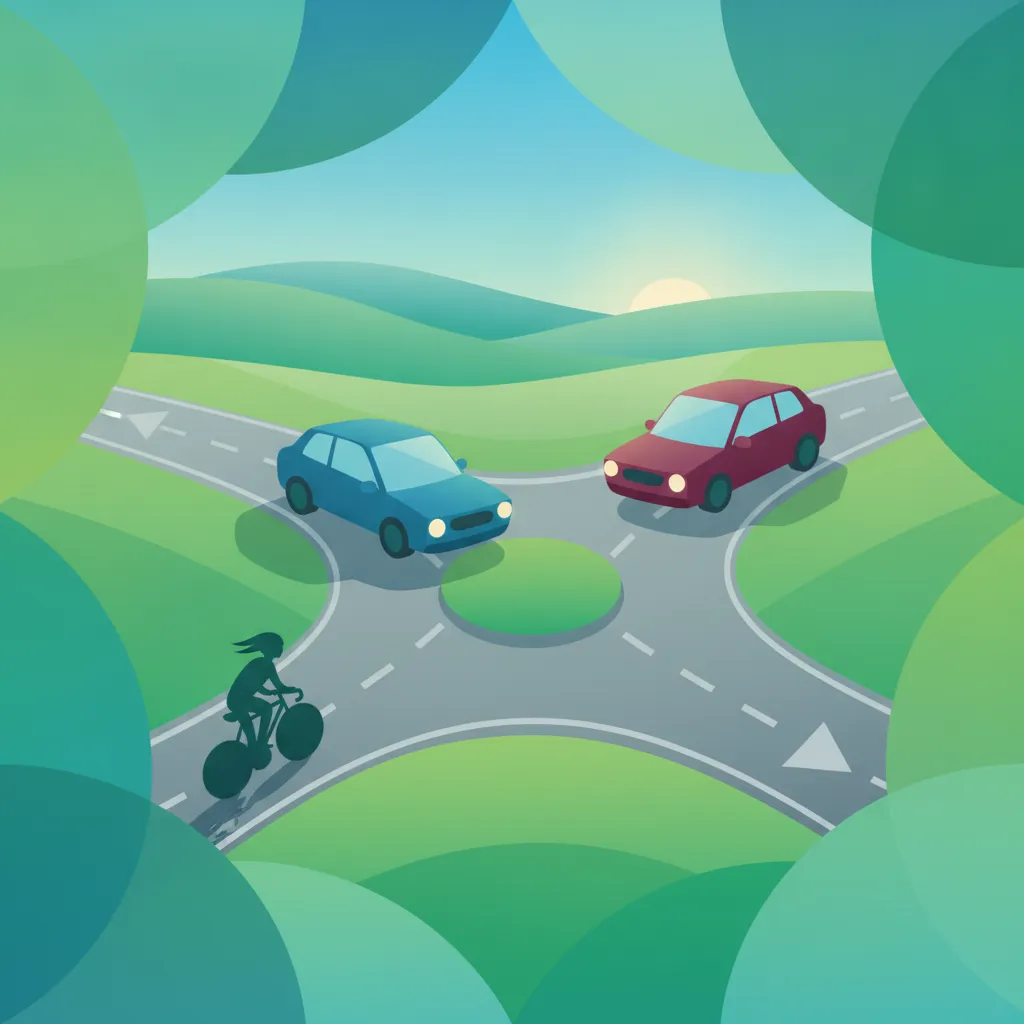
An uncontrolled junction in Great Britain is an intersection where there are no traffic lights, 'Stop' or 'Give Way' signs, or clear road markings (like 'Give Way' lines) to indicate which vehicle has priority. These junctions are often found in residential areas, rural roads, or smaller urban streets where traffic flow is typically lower, and explicit priority management is deemed unnecessary.
The absence of specific signage means drivers cannot rely on a visual signal to determine who proceeds first. Instead, they must apply general Highway Code principles, common sense, and defensive driving techniques to navigate these situations safely.
Understanding how to approach and proceed at uncontrolled junctions is critical for several reasons:
Unlike some European countries (such as the Netherlands, where a general "priority to the right" rule applies), there is no automatic "priority to the right" rule in Great Britain at unmarked junctions. Instead, the Highway Code places a strong emphasis on caution, observation, and giving way to avoid causing a hazard.
Here's how priority generally works in Great Britain:
The core principle for uncontrolled junctions in Great Britain is that the driver who can proceed safely, without causing other road users to slow down, stop, or change direction, should do so – but only after confirming it is safe. When in doubt, always give way.
The way you approach and negotiate an uncontrolled junction can be influenced by several factors:
It's vital for learner drivers in Great Britain to distinguish these rules from those in other countries and to avoid common pitfalls:
Mastering priority at uncontrolled junctions is a test of your observation skills, decision-making, and understanding of the defensive driving principles central to the Highway Code in Great Britain. Forget any "priority to the right" rules you may have heard apply elsewhere in Europe.
At an uncontrolled junction in Great Britain, your mantra should be: "Approach with extreme caution. Assume no automatic right of way. Be prepared to stop. Prioritise vulnerable road users. Give way to traffic already on a discernible main road or going straight ahead. Only proceed when it is demonstrably safe and you will not cause another road user to change their speed or direction." This vigilant approach will keep you safe and help you pass your DVSA theory test.
Uncontrolled junctions in Great Britain are intersections without traffic lights, Stop or Give Way signs, or road markings that indicate priority. Unlike many European countries, there is no automatic 'priority to the right' rule—instead, drivers must exercise extreme caution, assume no right of way, and be prepared to stop. Vulnerable road users always have priority when crossing, and traffic going straight ahead generally takes precedence over turning vehicles. Successful navigation depends on thorough observation, defensive driving, and giving way to avoid causing others to change speed or direction.
A short set of high-value points that capture the most important ideas from this theory explanation.
There is no automatic 'priority to the right' rule in Great Britain at uncontrolled junctions, unlike many European countries
Always approach uncontrolled junctions at a speed that allows you to stop safely if necessary
Vulnerable road users (pedestrians and cyclists) always have priority when crossing, regardless of signage
Traffic going straight ahead generally has priority over vehicles waiting to turn into or out of a side road
The core principle is caution and giving way to avoid causing another road user to change speed or direction
Slow down significantly and check left, right, and ahead repeatedly before proceeding
Vulnerable road users have absolute priority at all junctions, signed or unsigned
Do not assume a wider or busier-looking road has automatic priority without signs or markings
Always drive defensively and assume other drivers may not see you
When turning right at crossroads with oncoming traffic also turning right, keep the other vehicle on your right and turn behind it
Applying the European 'priority to the right' rule, which does not exist in Great Britain
Approaching too quickly without leaving enough time to react to unexpected hazards
Only checking one direction thoroughly instead of scanning all directions multiple times
Proceeding without confirming other drivers have seen you and will give way
Ignoring pedestrians or cyclists who may be crossing at unmarked junctions
Start with a short, direct summary of Uncontrolled Junctions Priority before reading the full explanation below.
At uncontrolled junctions in Great Britain, drivers must proceed with extreme caution, assuming no automatic right of way. Prioritise giving way to vulnerable road users and traffic already on the main road (if discernible). When turning, be aware of traffic already going straight ahead. Always be prepared to stop if the situation is unclear or to avoid causing a hazard.
Review the most important terms, rule signals, and traffic concepts linked to Uncontrolled Junctions Priority.
Explore related theory topic pages connected to Uncontrolled Junctions Priority and continue with the next useful rule explanation.
See the common search queries learners use when trying to understand Uncontrolled Junctions Priority in Great Britain.

Continue your journey to a successful Great Britain driving theory test by delving deeper into specific topics. Enhance your understanding of complex rules, review detailed explanations, and solidify your knowledge of the Highway Code, preparing you thoroughly for all aspects of the official DVSA exam. Start mastering key concepts today.
Great Britain Driving Theory TopicsTheory topic content overview
A short set of high-value points that capture the most important ideas from this theory explanation.
There is no automatic 'priority to the right' rule in Great Britain at uncontrolled junctions, unlike many European countries
Always approach uncontrolled junctions at a speed that allows you to stop safely if necessary
Vulnerable road users (pedestrians and cyclists) always have priority when crossing, regardless of signage
Traffic going straight ahead generally has priority over vehicles waiting to turn into or out of a side road
The core principle is caution and giving way to avoid causing another road user to change speed or direction
Slow down significantly and check left, right, and ahead repeatedly before proceeding
Vulnerable road users have absolute priority at all junctions, signed or unsigned
Do not assume a wider or busier-looking road has automatic priority without signs or markings
Always drive defensively and assume other drivers may not see you
When turning right at crossroads with oncoming traffic also turning right, keep the other vehicle on your right and turn behind it
Applying the European 'priority to the right' rule, which does not exist in Great Britain
Approaching too quickly without leaving enough time to react to unexpected hazards
Only checking one direction thoroughly instead of scanning all directions multiple times
Proceeding without confirming other drivers have seen you and will give way
Ignoring pedestrians or cyclists who may be crossing at unmarked junctions
Start with a short, direct summary of Uncontrolled Junctions Priority before reading the full explanation below.
At uncontrolled junctions in Great Britain, drivers must proceed with extreme caution, assuming no automatic right of way. Prioritise giving way to vulnerable road users and traffic already on the main road (if discernible). When turning, be aware of traffic already going straight ahead. Always be prepared to stop if the situation is unclear or to avoid causing a hazard.
Review the most important terms, rule signals, and traffic concepts linked to Uncontrolled Junctions Priority.
Explore related theory topic pages connected to Uncontrolled Junctions Priority and continue with the next useful rule explanation.
See the common search queries learners use when trying to understand Uncontrolled Junctions Priority in Great Britain.
Continue your journey to a successful Great Britain driving theory test by delving deeper into specific topics. Enhance your understanding of complex rules, review detailed explanations, and solidify your knowledge of the Highway Code, preparing you thoroughly for all aspects of the official DVSA exam. Start mastering key concepts today.
Great Britain Driving Theory TopicsUse this exam-focused revision tip to understand how Uncontrolled Junctions Priority is likely to appear in theory questions for learners in Great Britain. This section helps you identify the most testable part of the rule, avoid common traps, and remember the concept more effectively during British driving theory exam preparation.
The DVSA theory test frequently includes scenarios involving uncontrolled junctions to assess your hazard perception and decision-making skills. Remember, the core principle is caution: never assume priority, especially when turning, and always be prepared to stop or give way to avoid causing an incident. Pay extra attention to vulnerable road users.
Read direct answers to the most common learner questions about Uncontrolled Junctions Priority in Great Britain. This FAQ focuses on rule confusion, practical meaning, comparison with similar concepts, and the exact uncertainties that appear most often in British driving theory revision and exam preparation.
An uncontrolled junction is any intersection where there are no traffic lights, 'Stop' or 'Give Way' signs, or specific road markings to indicate which driver has priority.
Unlike some European countries, 'priority to the right' is not a general rule at uncontrolled junctions in Great Britain. The Highway Code emphasises situational awareness, giving way to traffic already established, and common sense to ensure safety.
At an unmarked T-junction, traffic on the main road (the 'through' road) generally has priority over traffic emerging from the side road. Vehicles turning from the main road into the side road also need to be aware of traffic on the main road.
Always approach slowly, be prepared to stop, and make sure you can see clearly in all directions. Observe other road users, make eye contact if possible, and be ready to give way to avoid causing danger.
Yes, drivers should always give way to pedestrians who are already crossing or waiting to cross at a junction. The Highway Code (Rule 8 and 170) prioritises vulnerable road users.
In Great Britain, there is no automatic rule. Both drivers should exercise extreme caution. The safest approach is for both drivers to be prepared to stop and only proceed when it is clearly safe to do so, communicating intentions if possible.
A common mistake is assuming that a larger road automatically grants priority, or expecting other drivers to give way. Always assume no one has priority and be ready to react safely.
Dive into our comprehensive question bank to find exactly what you need for your Great Britain theory test. Use our advanced filters to pinpoint specific subjects or test your knowledge on challenging areas, ensuring you're fully prepared for success.