
This lesson explores the critical importance of maintaining consistent lane positioning while operating large passenger vehicles. It builds upon foundational vehicle dynamics to ensure you can navigate complex urban environments safely and professionally in line with Irish Rules of the Road.

Lesson content overview
Maintaining proper lane discipline is one of the most critical aspects of professional driving for Category D and D1 licence holders in Ireland. Large passenger vehicles, such as buses and coaches, occupy a substantial footprint on the road. Because of their length, width, and weight, any deviation from correct lane positioning can have immediate, severe consequences for traffic flow and road safety.
This lesson provides comprehensive guidance on keeping your vehicle correctly positioned, planning lane changes well in advance, and legally navigating Ireland's dedicated public transport corridors.
Passenger vehicle drivers must maintain a high level of spatial awareness. Standard traffic lanes in Ireland, particularly in historic urban centres like Dublin, Cork, or Galway, can be narrow—sometimes leaving only a few centimetres of clearance on either side of a 2.55-metre-wide coach.
The practice of keeping a vehicle within the boundaries of a single traffic lane, avoiding unnecessary drifting, and using designated lanes correctly based on the route, vehicle type, and traffic rules.
Poor lane discipline by professional drivers leads to several immediate hazards:
Consistent lane positioning means keeping your bus or coach centred within its designated lane. This requires continuous concentration, minor steering adjustments, and highly structured mirror work.
In a large passenger vehicle, you sit much higher and further forward than in a standard passenger car. This elevated, forward seating position can distort your perception of where the vehicle is positioned relative to the road markings.
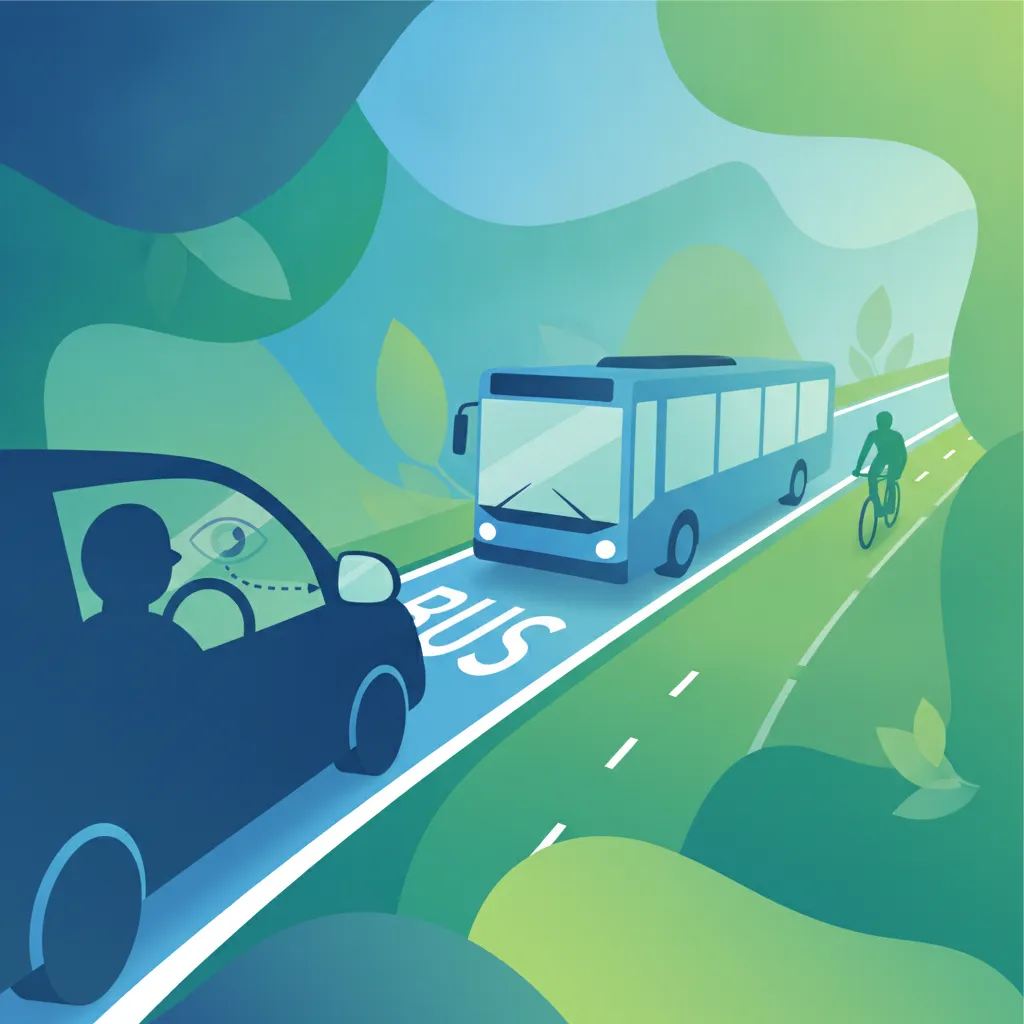
Professional drivers must use their external mirrors to verify their lateral position:
A common misunderstanding among some trainee drivers is that staying slightly off-centre (for example, hugging the right side of the lane to avoid roadside obstacles) is safer. In reality, this reduces your safety margin on the opposite side and increases the risk of side-swipes. You must always aim for a consistent, centred position unless avoiding a temporary, stationary hazard.
Because of the physical length of Category D vehicles, changing lanes cannot be done quickly or on short notice. It must always be a highly structured, planned manoeuvre.
1. Mirror: Check your interior mirror to assess the passenger area, then check your main exterior mirrors and wide-angle mirrors to evaluate the traffic situation. Identify any vehicles alongside you or approaching rapidly from behind.
2. Signal: Apply your indicators early. For a professional passenger vehicle, you should signal at least 100 metres before the lane change on urban streets, and even earlier on high-speed dual carriageways or motorways. This gives other road users sufficient time to react and create space.
3. Manoeuvre: Gently steer into the target lane only when a safe, consistent gap is established. Avoid rapid or jerky movements that could destabilise the vehicle or cause standees to lose their balance.
No matter how well-adjusted your mirrors are, large buses and coaches have significant blind spots along both sides, particularly on the left (nearside) and directly behind the vehicle.
Always perform a final physical head check (where possible) or utilise specialized blind-spot mirrors before committing to a lane change. Never assume a smaller vehicle or cyclist will yield to you simply because your indicator is on.
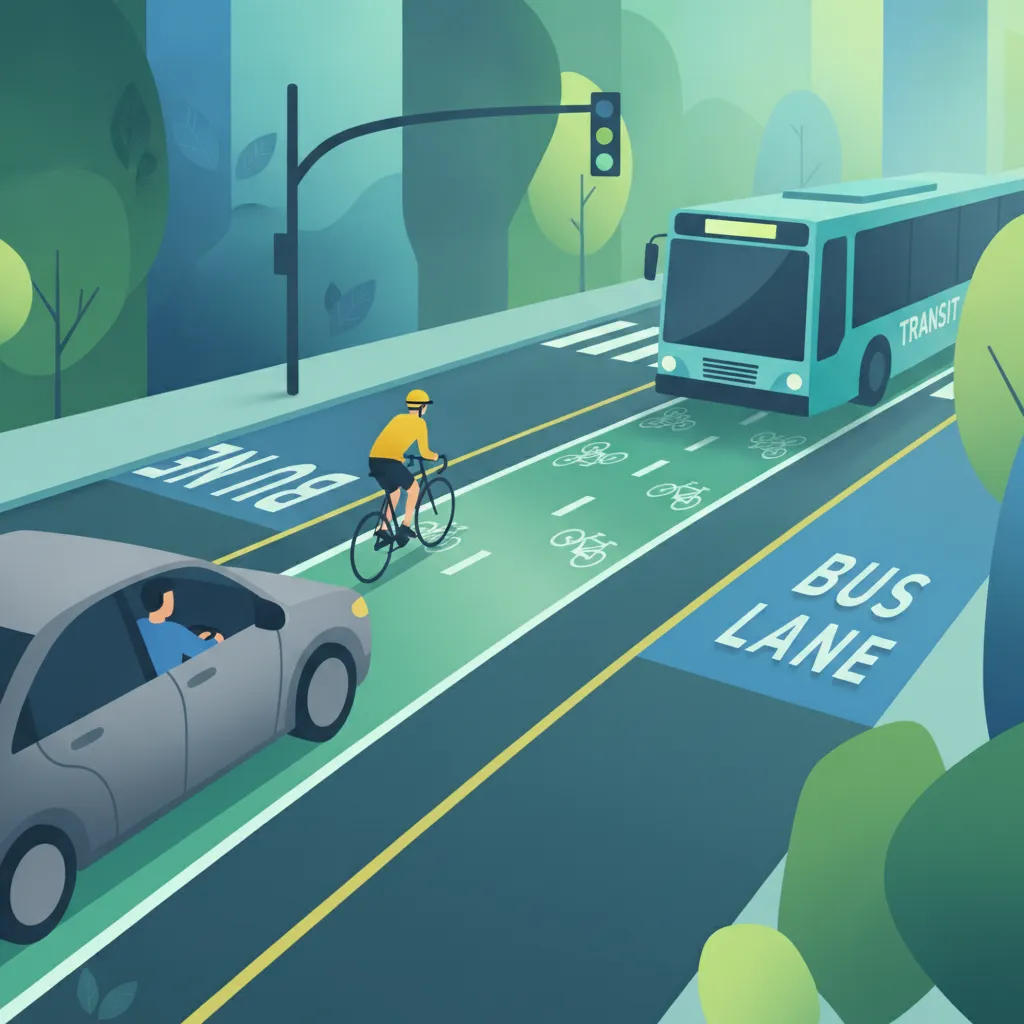
To improve public transport efficiency, Ireland utilizes dedicated bus lanes (both with-flow and contra-flow) in major urban areas. Professional Category D drivers must understand exactly when and how to use these lanes.
These lanes run in the same direction as the adjacent traffic. They are separated from the main traffic lanes by a solid white line, which transitions to a broken white line near junctions.
These lanes run in the opposite direction to the traffic flow on a one-way street.
Under the Irish Rules of the Road and RSA guidelines, professional drivers must adhere to several strict statutory requirements regarding lane discipline:
Understanding common errors can help you avoid dangerous situations during your practical test and throughout your driving career.
At large roundabouts, bus drivers sometimes straddle two lanes because they fear their rear wheels or tail swing will clip the central island or outer kerb. While minor path correction is sometimes necessary, you must plan your approach so that you maintain a clear position within your lane as much as possible. If you must occupy more than one lane, you must signal your intentions clearly and ensure adjacent traffic is aware of your position.
When a bus lane ends or transitions into a general traffic lane or turn-only lane, drivers must merge back into normal traffic flows. Failing to signal early or forcing your way into a tight gap is a frequent cause of urban minor collisions.
Driving in a restricted bus lane during its operational hours in an unauthorised vehicle is a traffic violation. Conversely, failing to use the left-hand lane outside of its operational hours can lead to lane-hogging in the right-hand lanes, which also disrupts traffic.
Your lane discipline must adapt dynamically to changes in weather, road type, and vehicle load.
A fully loaded coach has a much higher centre of gravity. Any sudden lane changes or swerving to correct poor positioning can cause severe vehicle roll, potentially resulting in passengers being thrown from their seats or, in extreme cases, vehicle rollover.
This lesson covers essential lane discipline practices for Category D passenger vehicle drivers in Ireland, emphasising that large buses and coaches require consistent centred positioning within lanes due to minimal clearance in urban streets. Learners must master the Mirror-Signal-Manoeuvre routine with early signalling of at least 100 metres, manage significant blind spots through mirror checks and head checks, and understand the specific rules for with-flow and contra-flow bus lanes including their operational hours and line markings. The content also addresses common violations such as straddling lanes at roundabouts, late lane changes, and failing to exit bus lanes correctly, while highlighting how weather conditions, vehicle load, and road type require dynamic adjustments to lane discipline. Proper lane discipline prevents side-swipe collisions, maintains traffic flow, ensures passenger comfort, and supports compliance with RSA guidelines and the Rules of the Road.
A short set of high-value points that capture the most important learning from this lesson.
Lane discipline is critical for Category D vehicles because their size leaves only centimetres of clearance in narrow Irish urban lanes
Always centre your vehicle within lane boundaries rather than offsetting to one side, as this reduces safety margins
Use the MSM (Mirror-Signal-Manoeuvre) routine before every lane change, signalling at least 100 metres in advance
Understand the difference between with-flow bus lanes (directional, time-restricted) and contra-flow bus lanes (24-hour, opposite direction)
Plan all lane changes hundreds of metres ahead because large vehicles cannot execute quick or late lane changes safely
Explore all units and lessons included in this driving theory course.
With-flow bus lanes may be open to general traffic outside operational hours; contra-flow bus lanes are strictly 24-hour restricted
Cross a solid white line to enter or exit a bus lane only where the line becomes broken near junctions
Always check wide-angle mirrors and perform head checks for blind spots before committing to any lane change
A fully loaded coach has a higher centre of gravity, making sudden lane changes a rollover risk
Bus lanes are frequently shared with cyclists; you must maintain safe distance and cannot encroach on mandatory cycle tracks
Believing offset driving (hugging one side of the lane) is safer; it actually reduces clearance on the opposite side
Making late lane changes when the turn or exit is immediately ahead, forcing abrupt cuts across traffic
Forgetting to check blind spots assuming a flashing indicator will cause other vehicles to yield
Misinterpreting bus lane hours and driving in restricted lanes during operational times
Straddling two lanes at roundabouts due to concern about rear wheel or tail swing clipping the kerb
Lesson content overview
A short set of high-value points that capture the most important learning from this lesson.
Lane discipline is critical for Category D vehicles because their size leaves only centimetres of clearance in narrow Irish urban lanes
Always centre your vehicle within lane boundaries rather than offsetting to one side, as this reduces safety margins
Use the MSM (Mirror-Signal-Manoeuvre) routine before every lane change, signalling at least 100 metres in advance
Understand the difference between with-flow bus lanes (directional, time-restricted) and contra-flow bus lanes (24-hour, opposite direction)
Plan all lane changes hundreds of metres ahead because large vehicles cannot execute quick or late lane changes safely
Explore all units and lessons included in this driving theory course.
With-flow bus lanes may be open to general traffic outside operational hours; contra-flow bus lanes are strictly 24-hour restricted
Cross a solid white line to enter or exit a bus lane only where the line becomes broken near junctions
Always check wide-angle mirrors and perform head checks for blind spots before committing to any lane change
A fully loaded coach has a higher centre of gravity, making sudden lane changes a rollover risk
Bus lanes are frequently shared with cyclists; you must maintain safe distance and cannot encroach on mandatory cycle tracks
Believing offset driving (hugging one side of the lane) is safer; it actually reduces clearance on the opposite side
Making late lane changes when the turn or exit is immediately ahead, forcing abrupt cuts across traffic
Forgetting to check blind spots assuming a flashing indicator will cause other vehicles to yield
Misinterpreting bus lane hours and driving in restricted lanes during operational times
Straddling two lanes at roundabouts due to concern about rear wheel or tail swing clipping the kerb
Explore search topics learners often look for when studying Proper Lane Discipline for Passenger Vehicles. These topics reflect common questions about road rules, driving situations, safety guidance, and lesson level theory preparation for learners in Ireland.
Browse additional driving theory lessons that cover connected traffic rules, road signs, and common driving situations related to this topic. Improve your understanding of how different rules interact across everyday traffic scenarios.
Learn the essential theory behind safe turning techniques for Category D vehicles. This guide covers how to account for vehicle dimensions, manage blind spots during tight manoeuvres, and use spotters effectively to maintain road safety in urban environments and at bus terminals.

Driving a coach through narrow urban streets or historic Irish town centers demands precise spatial judgment and low speed control. This lesson covers turning radii, rear tail-swing physics, and managing overhangs when navigating around tight, permanent obstacles. Drivers will learn to assess clearance gaps accurately, reducing damage risks to the vehicle exterior and public infrastructure.

This lesson addresses the mechanical dynamics of turning long-wheelbase and articulated commercial vehicles at intersections, junctions, and roundabouts. It covers the necessity of deep cornering lines, early mirror checks, and correct signaling to warn vulnerable road users of wide turn maneuvers. Drivers will learn how to minimize rear cut-in and ensure the entire vehicle clears urban obstacles safely.

The length of a commercial passenger vehicle creates a wide rear-wheel track offset, requiring drivers to swing wide during tight turns. This lesson teaches cornering mechanics, mirror adjustment guidelines, and how to check blind spots for cyclists on the inside lane. Drivers will master intersection control, preventing collisions with stationary street furniture or curbs.
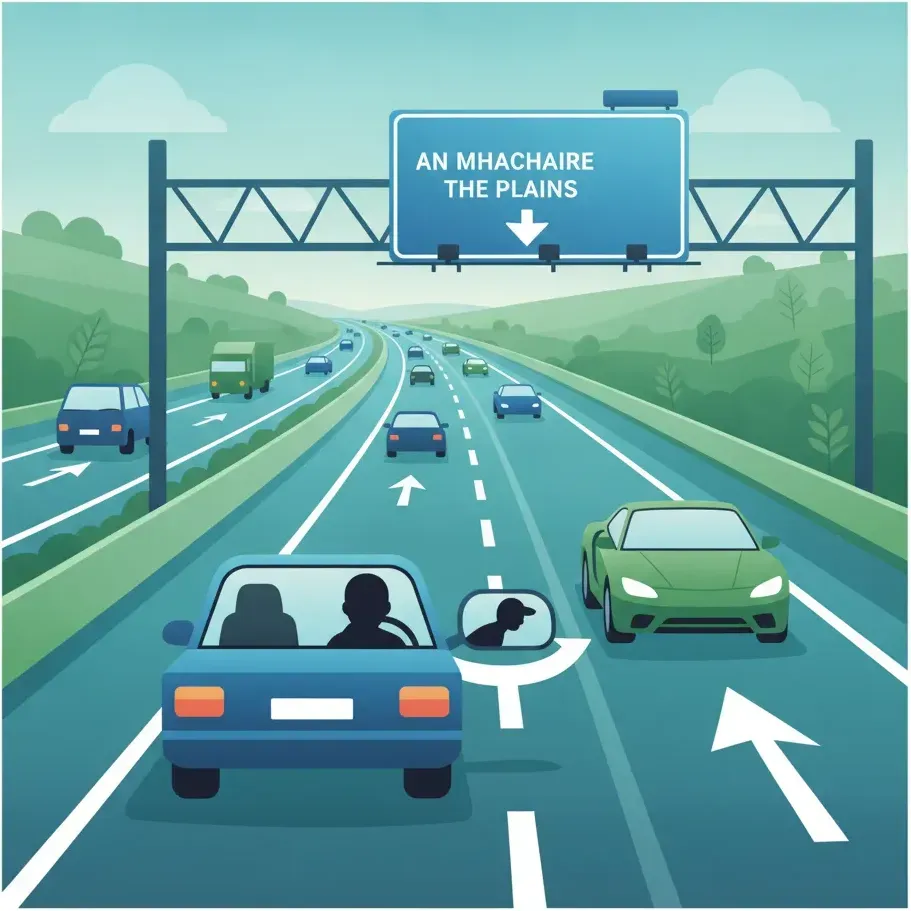
Merging a long, heavy passenger vehicle onto high-speed motorways requires matching the traffic speed within the limited length of slip lanes. This lesson covers signal timing, safe lane-merging gaps, and maintaining control during overtaking maneuvers on national routes. Drivers will learn to prioritize passenger comfort and vehicle stability, preventing sudden weight shifts during lane entries.

Sudden or jerky vehicle movements can cause immediate discomfort or direct physical injuries to onboard passengers, particularly standing occupants. This lesson teaches progressive throttle control, gradual gear shifts, and smooth steering inputs that stabilize the heavy vehicle body. Drivers will master the technique of progressive braking to ensure comfortable, safe slowing actions at junctions.

This lesson focuses on the physical mechanics of long-wheelbase and articulated vehicles when executing turns in restricted spaces. It explains concepts like swept path, rear overhang, and turning circles, which must be accounted for to prevent side-swiping collisions. Drivers will discover strategic route-planning techniques to avoid congested urban layouts and unsuitable rural corridors.

Reversing a large passenger vehicle is a high-risk maneuver that must be avoided whenever possible or performed with extreme caution. This lesson teaches correct mirror alignment, the use of rear cameras, and establishing clear hand signals with an external spotter. Drivers will study safety protocols for backing into passenger bays, ensuring all blind zones remain completely clear.

Driving large vehicles through dense city traffic requires outstanding lane discipline, spatial awareness, and consistent patience. This lesson teaches drivers how to utilize public bus corridors, manage tight yellow box intersections, and handle narrow city streets. It focuses on predicting traffic pattern shifts to maintain service timetables while minimizing fuel waste and driver stress.

This lesson provides a comprehensive guide to reversing large vehicles and backing trailer setups safely into loading docks and industrial bays. It analyzes the mechanical physics of trailer articulation, steering inputs, and how to utilize modern backup cameras, mirrors, and assistants. Drivers will examine critical safety protocols, including visual checks and slow-speed controls, to avoid collisions with fixed objects.
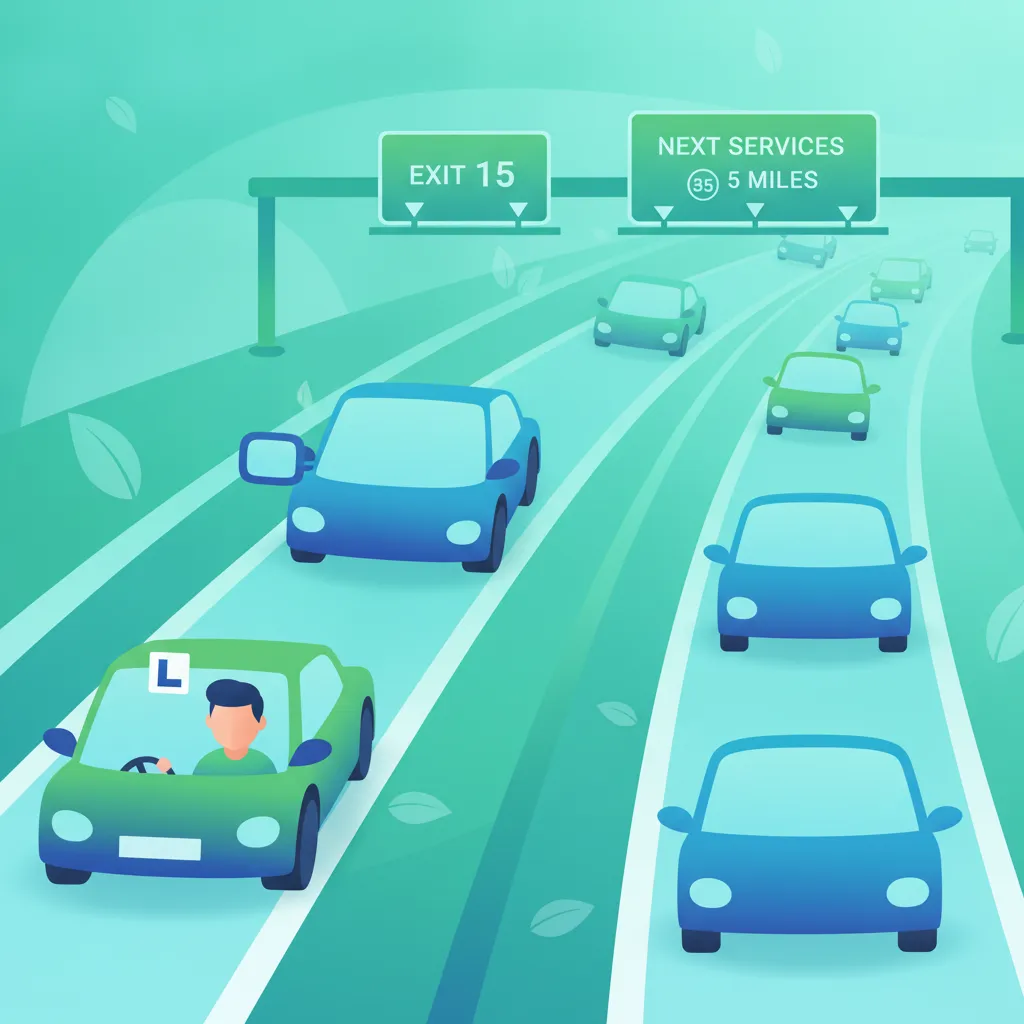
Motorway transport requires consistent forward planning, strict speed restriction compliance, and clear mirror checks before exiting lanes. This lesson details the rules of joining and leaving motorways, navigating toll plazas safely, and managing breakdowns on the hard shoulder. Drivers will learn to balance high-speed travel with passenger stability, ensuring a comfortable, secure ride.
Understand the regulations governing bus lanes, cycle tracks, and urban traffic management in Ireland. This explanation details the legal requirements for using with-flow and contra-flow lanes, as well as how to interact safely with pedestrians and cyclists in shared urban spaces.
Driving large vehicles through dense city traffic requires outstanding lane discipline, spatial awareness, and consistent patience. This lesson teaches drivers how to utilize public bus corridors, manage tight yellow box intersections, and handle narrow city streets. It focuses on predicting traffic pattern shifts to maintain service timetables while minimizing fuel waste and driver stress.

Bus stops often intersect with designated bicycle lanes and busy walking pathways, creating high-risk conflict areas for drivers. This lesson trains drivers to check blind spots for oncoming cyclists before pulling into or exiting public stop bays. It emphasizes yielding right-of-way to passengers crossing the road, preventing collision risks in active urban transport hubs.

Motorcycles and bicycles are often hidden from view in the large blind spots of passenger buses and coaches during turns. This lesson covers safe lateral clearances when overtaking cyclists, recognizing advanced stop lines, and sharing narrow lanes. Drivers will understand how to signal clearly, giving riders enough room to navigate safely near busy public transit corridors.
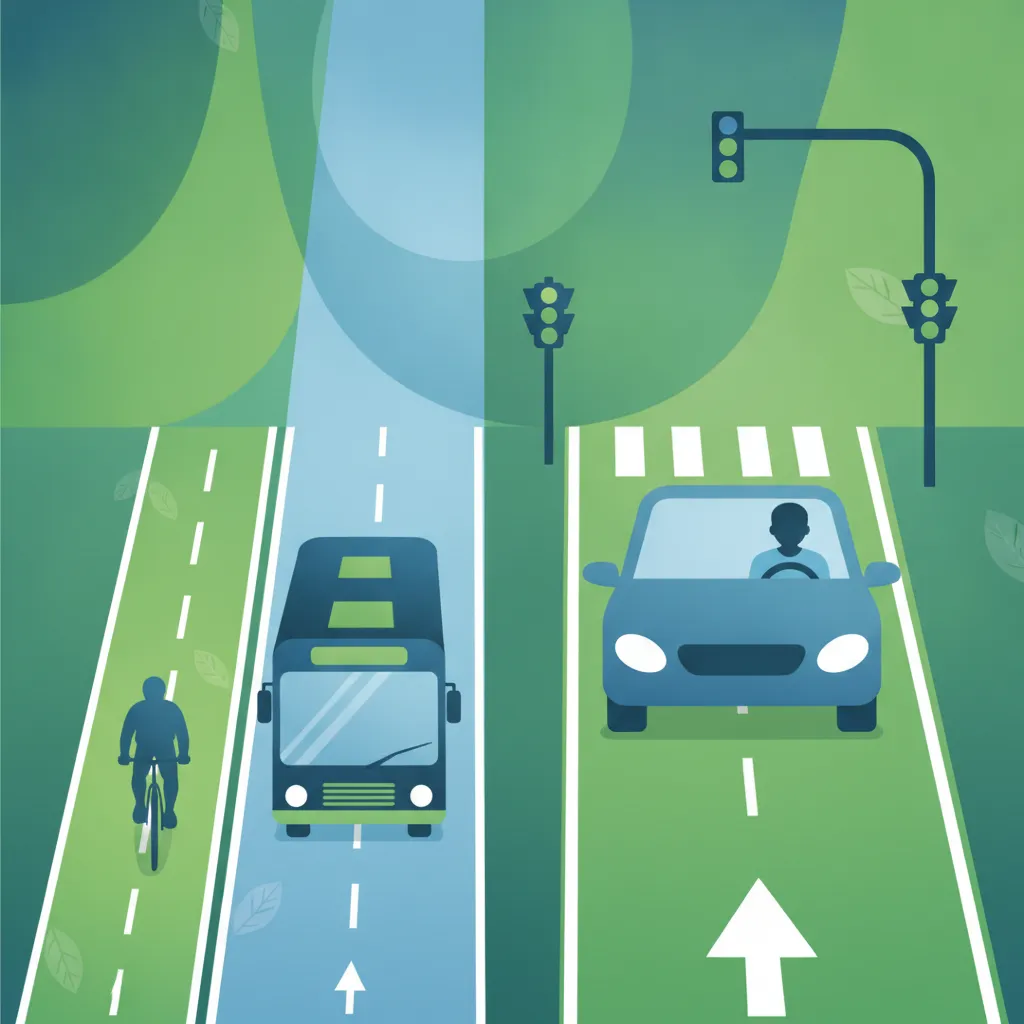
Bus lanes and cycle tracks are designed to encourage public transport and safe active travel in congested urban areas. This lesson explores the differences between with-flow and contra-flow bus lanes, detailing the restricted operating hours during which other vehicles are banned. You will understand when taxi drivers or emergency vehicles can use these lanes, and how to avoid costly traffic violations and safety risks.
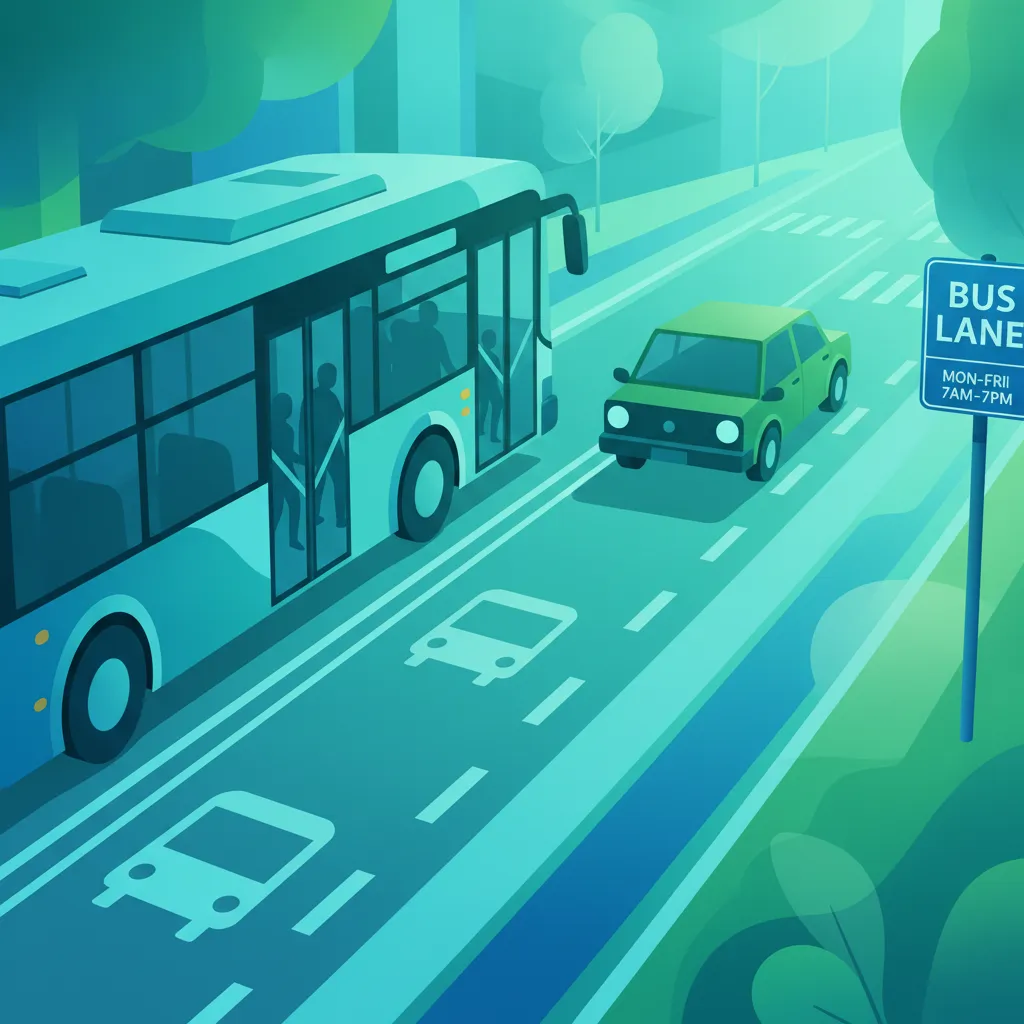
This lesson details the legal operations allowed within Irish bus lanes, including active hours, non-permitted traffic types, and exceptions. Drivers will learn safe approach trajectories for public transport stops, maintaining legal clearance, and navigating curbside hazards safely. The material highlights compliance with local bylaws to guarantee steady, uninterrupted traffic flow and passenger convenience.
This lesson investigates the specific laws regulating bus and cycle lanes on Irish municipal streets. It clarifies the operational hours of restricted lanes and explains whether Category AM vehicles are allowed access. Understanding these boundaries ensures riders avoid severe penalty fines and share space safely with public transport and cyclists.
This lesson clarifies the legal regulations surrounding bus lanes and cycle lanes in Ireland, highlighting when motorcycles are permitted to enter them. It outlines how to cross these lanes safely when turning left, and how to scan for cyclists approaching from behind. Riders will learn to respect lane markings, observe signposted operational hours, and avoid blocking designated public transit lanes.
Motorway transport requires consistent forward planning, strict speed restriction compliance, and clear mirror checks before exiting lanes. This lesson details the rules of joining and leaving motorways, navigating toll plazas safely, and managing breakdowns on the hard shoulder. Drivers will learn to balance high-speed travel with passenger stability, ensuring a comfortable, secure ride.

Heavy vehicles require continuous visual scanning to identify small or slow-moving road users who may enter the path of travel. This lesson explores the typical behaviors of young children, elderly pedestrians, and visually impaired road users. Drivers will build strong hazard perception skills to anticipate sudden movements, ensuring they can brake safely and avoid serious accidents.

Shared public spaces rely heavily on road user cooperation, low speeds, and active visual communication rather than traditional traffic signals. This lesson teaches drivers how to navigate these open zones safely, yielding priority to pedestrians and integrated cyclists. Drivers will study how traffic calming designs alter vehicle trajectories, allowing safe, stress-free transit through modern city centers.
Find clear answers to common questions learners have about Proper Lane Discipline for Passenger Vehicles. Learn how the lesson is structured, which driving theory objectives it supports, and how it fits into the overall learning path of units and curriculum progression in Ireland. These explanations help you understand key concepts, lesson flow, and exam focused study goals.
Yes, many urban areas in Ireland have designated bus lanes. You must adhere to the specific local signage and road markings that dictate when a Category D vehicle is permitted to enter or exit these lanes.
Because of the length of passenger vehicles, you must use your extended mirrors continuously and plan lane changes well in advance. Never rely on a quick glance; perform a thorough, sequential check of all mirrors before signalling your intent.
Yes, but you must only overtake when it is safe and allowed by road signs. Always consider the vehicle's weight and length, as the increased acceleration time and stopping distance significantly affect your maneuverability.
Yes, the Irish Driver Theory Test includes questions regarding road positioning, lane discipline, and the correct use of bus corridors to ensure you can operate a passenger vehicle safely within professional transport standards.
Use the practice question search tool to pinpoint specific topics, road signs, or rules you need to master for your official Driver Theory Test. Refine your study strategy and ensure comprehensive preparation for all aspects of the Irish driving exam. Start your focused revision now and build confidence for your learner permit test.