This lesson guides you through the essential right-of-way rules for Stop and Yield signs, a vital component of the Irish Rules of the Road. By understanding these regulatory signs, you will gain the confidence needed to navigate junctions safely and prepare for specific questions in your Category B Driver Theory Test.
Lesson content overview
Navigating junctions safely is one of the most critical skills you must master to pass your Category B Irish Driver Theory Test and become a safe, responsible driver. Intersections are high-risk zones where paths conflict, making clear priority rules essential for preventing collisions.
At the core of Irish junction control are two primary regulatory signs: the Stop Sign (R10) and the Yield Sign (R11). While both signs dictate that you must surrender the right-of-way to crossing traffic, they command fundamentally different physical actions and driving behaviors.
This lesson provides an in-depth analysis of these two signs, their corresponding road markings, how to handle restricted visibility, and how to safely negotiate complex junction scenarios according to the Road Safety Authority (RSA) guidelines.
Before exploring the mechanical actions required at intersections, it is vital to understand the concept of "giving way" (or yielding). To give way means to yield priority to other road users—such as vehicles, cyclists, and pedestrians—already on the major road or crossing path. Your actions must never force another road user to abruptly brake, swerve, or alter their speed or direction.
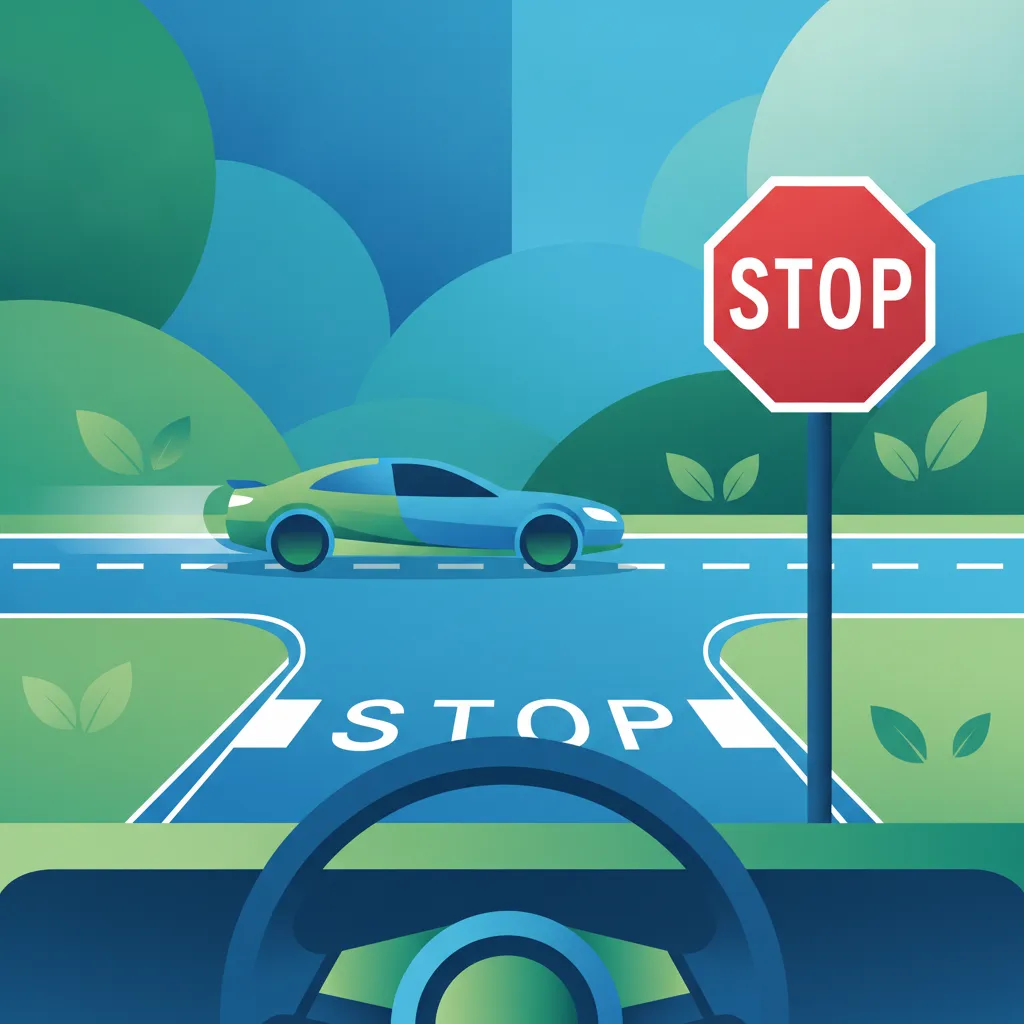
The Stop sign is one of the most recognizable traffic signs in the world. It is the only octagonal (eight-sided) sign used on Irish roads. This unique shape is highly intentional: it allows drivers approaching from the opposite direction, or looking at the back of the sign, to identify it immediately, even if the sign face is covered by dirt, snow, or foliage.
The Stop sign is positioned at junctions where visibility is severely restricted, where the minor road intersects a high-speed major carriage, or where there is a history of collisions.
The "Rolling Stop" Trap: A common mistake made by both learner and experienced drivers is the "rolling stop." This occurs when a driver slows down to a crawl (1–5 km/h) but does not bring the vehicle to a full, dead stop before proceeding. In the Irish practical driving test, a rolling stop at a Stop sign is classified as a Grade 3 (under Irish driving test standards, a critical or dangerous) fault, resulting in an immediate fail.
The Yield sign is an inverted triangle (pointing downwards) with a thick red border and a white background. In some areas, particularly near Gaeltacht (Irish-speaking) regions, you may see the words "Géill Slí" printed on the sign, which translates directly to "Yield Way."
Unlike the absolute mandate of a Stop sign, a Yield sign imposes a conditional requirement. It is placed at junctions where visibility is generally good, allowing drivers to safely assess the cross-road as they approach.
Unnecessary Stopping: While safety is paramount, stopping completely at a Yield sign when the major road is completely clear can disrupt the flow of traffic behind you and may lead to rear-end collisions. Your approach should be active and observant, allowing you to seamlessly merge or cross when it is safe to do so.
To reinforce your understanding for the Irish Driver Theory Test, review the key operational differences between these two regulatory controls:
| Feature | Stop Sign (R10) | Yield Sign / Géill Slí (R11) |
|---|---|---|
| Shape | Octagonal (8-sided) | Inverted Triangle (3-sided) |
| Primary Color | Red with white text/border | White center with a red border |
| Associated Road Marking | Single solid white line across the lane | Broken/dashed white line across the lane |
| Physical Action Required | Mandatory complete halt, regardless of traffic | Slow down; stop only if other traffic is present |
| Visibility at Junction | Typically restricted or highly hazardous | Typically moderate to good |
| Common Location | High-speed rural junctions, urban blind corners | Roundabout entries, minor suburban slip roads |
In Ireland, many rural roads and older urban layouts feature "blind junctions." Hedges, stone walls, buildings, or parked vehicles can severely limit your line of sight. When faced with restricted visibility, standard stopping procedures must be adapted to ensure safety without causing an obstruction.
When stopped at a Stop sign where the view of the major road is blocked by an obstacle, stopping at the white line will not give you a sufficient view to proceed safely. In this situation, you must use the "stop and creep" method.
Stop Completely First: Bring your vehicle to a complete stop behind the solid white stop line. This fulfills your legal obligation.
Assess Initial Visibility: Look left and right. Identify what is blocking your view (e.g., a parked delivery van or a high hedge).
Prepare the Vehicle: Engage first gear and bring the clutch to the "biting point" (the point of clutch engagement).
Creep Forward Slowly: Release the handbrake (if applied) and allow the car to edge forward millimeter by millimeter. Keep your feet prepared to depress the clutch and brake instantly.
Peep and Creep: Lean forward slightly over the steering wheel to gain a few extra inches of vision through your side windows.
Re-evaluate and Proceed: Once your vision is clear and you can confirm the road is safe in both directions, accelerate smoothly out of the junction. If you spot an oncoming vehicle during this process, stop immediately—even if your front bumper is slightly past the line.
Priority rules are not static; they must be adjusted based on real-time environmental factors, vehicle conditions, and the presence of vulnerable road users.
In Ireland, rain, sleet, ice, and mud on rural roads can drastically affect your vehicle's braking capability.
During hours of darkness, estimating the speed and distance of oncoming vehicles at junctions is significantly more difficult.
At any controlled junction, you must remain highly alert for vulnerable road users who may not be immediately obvious.
To solidify these concepts, let us look at two real-world scenarios you are likely to encounter on Irish roads and during your driving test.
You are driving on a narrow country road and approach a four-way crossroads controlled by an R10 Stop sign. Your view to the right is obstructed by a dense hedge. Another vehicle is approaching the crossroads from the opposite minor road, which also has a Stop sign.
You are approaching a multi-lane roundabout. The entrance to the roundabout is marked with an R11 Yield sign and a dashed yield line on the road.
This lesson clearly distinguishes the legal requirements of Stop signs (R10) and Yield signs (R11) in Ireland, emphasising that Stop signs mandate a complete physical halt behind the solid white line while Yield signs require only slowing and stopping if traffic is present. The content teaches the critical 'stop and creep' technique for navigating blind junctions safely, highlights the dangerous 'rolling stop' as a test-fail fault, and stresses that adverse weather and poor visibility demand earlier braking and heightened caution. Practical scenarios cover rural crossroads and roundabouts, while reminders address vulnerable road users and the importance of road markings as visual reinforcements of the signs. This knowledge is essential for passing the Irish Category B theory test and navigating junctions safely in real-world driving.
A short set of high-value points that capture the most important learning from this lesson.
Stop signs (R10) demand an absolute complete halt of the vehicle behind the solid white stop line, regardless of traffic conditions.
Yield signs (R11) require you to slow down and prepare to stop, but you may proceed through the junction without stopping if it is completely clear.
Road markings mirror the signs: a solid white line means Stop, while a broken (dashed) white line means Yield.
When visibility is restricted at a Stop sign, use the 'stop and creep' technique: halt at the line first, then edge forward in first gear to gain a clear view.
Adverse weather conditions significantly increase stopping distances, requiring earlier braking and a more conservative approach at all junctions.
Explore all units and lessons included in this driving theory course.
The Stop sign is octagonal (8-sided) with a solid white line; the Yield sign is an inverted triangle with a broken white line.
A 'rolling stop' (slowing without a complete halt) is a critical fault that results in immediate test failure.
Treat Yield signs with extra caution at night or in poor visibility by slowing significantly or stopping if needed.
Yield to pedestrians who have already stepped off the kerb, cyclists hidden in blind spots, and equestrians who may be startled by engine noise.
At four-way Stop sign junctions, both vehicles must stop completely; right-turning drivers yield to oncoming traffic going straight or turning left.
Performing a 'rolling stop' at a Stop sign by slowing to crawl speed without the wheels actually stopping—this is a critical test fault.
Stopping completely at a Yield sign when the road is clear, which disrupts traffic flow and can cause rear-end collisions.
Failing to creep forward at blind junctions and proceeding without adequate visibility of approaching traffic.
Not matching speed to conditions in bad weather, leading to overshooting the stop line on slippery surfaces.
Overlooking vulnerable road users such as motorcyclists in blind spots or pedestrians who have already begun crossing.
Lesson content overview
A short set of high-value points that capture the most important learning from this lesson.
Stop signs (R10) demand an absolute complete halt of the vehicle behind the solid white stop line, regardless of traffic conditions.
Yield signs (R11) require you to slow down and prepare to stop, but you may proceed through the junction without stopping if it is completely clear.
Road markings mirror the signs: a solid white line means Stop, while a broken (dashed) white line means Yield.
When visibility is restricted at a Stop sign, use the 'stop and creep' technique: halt at the line first, then edge forward in first gear to gain a clear view.
Adverse weather conditions significantly increase stopping distances, requiring earlier braking and a more conservative approach at all junctions.
Explore all units and lessons included in this driving theory course.
The Stop sign is octagonal (8-sided) with a solid white line; the Yield sign is an inverted triangle with a broken white line.
A 'rolling stop' (slowing without a complete halt) is a critical fault that results in immediate test failure.
Treat Yield signs with extra caution at night or in poor visibility by slowing significantly or stopping if needed.
Yield to pedestrians who have already stepped off the kerb, cyclists hidden in blind spots, and equestrians who may be startled by engine noise.
At four-way Stop sign junctions, both vehicles must stop completely; right-turning drivers yield to oncoming traffic going straight or turning left.
Performing a 'rolling stop' at a Stop sign by slowing to crawl speed without the wheels actually stopping—this is a critical test fault.
Stopping completely at a Yield sign when the road is clear, which disrupts traffic flow and can cause rear-end collisions.
Failing to creep forward at blind junctions and proceeding without adequate visibility of approaching traffic.
Not matching speed to conditions in bad weather, leading to overshooting the stop line on slippery surfaces.
Overlooking vulnerable road users such as motorcyclists in blind spots or pedestrians who have already begun crossing.
Explore search topics learners often look for when studying Giving Way at Stop and Yield Signs. These topics reflect common questions about road rules, driving situations, safety guidance, and lesson level theory preparation for learners in Ireland.
Browse additional driving theory lessons that cover connected traffic rules, road signs, and common driving situations related to this topic. Improve your understanding of how different rules interact across everyday traffic scenarios.
Learn the correct lane positioning and priority rules when entering, circulating, and exiting multi-lane roundabouts. This theory lesson explains how to safely manage interaction with other drivers and identify the right-of-way according to the official Irish Rules of the Road.
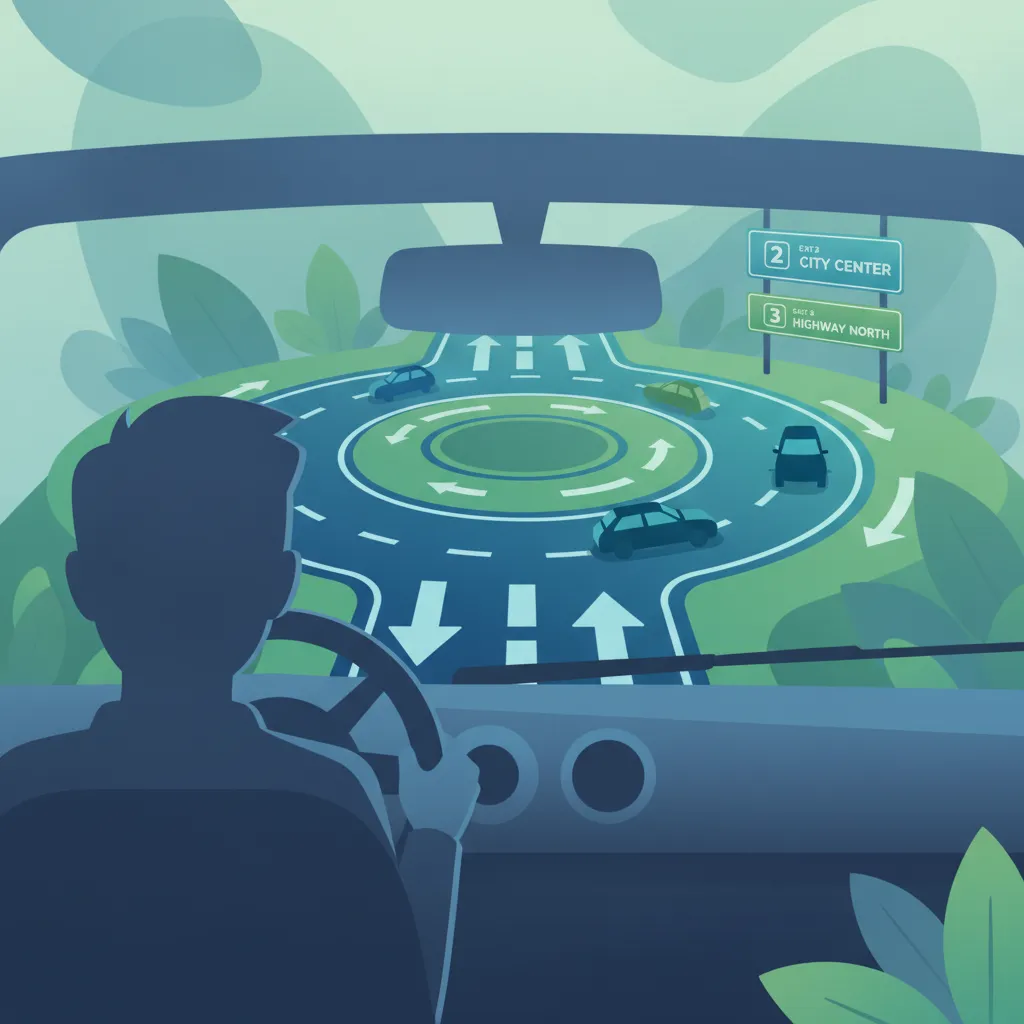
Navigating multi-lane roundabouts requires precise lane selection, continuous scanning, and timely signaling. This lesson teaches you the 'clock rule' for determining which lane to enter, how to yield to traffic already on the roundabout from your right, and when to activate your left indicator to exit. Mastering these procedures minimizes lane-drift accidents and ensures a seamless flow of traffic on busy roundabouts.
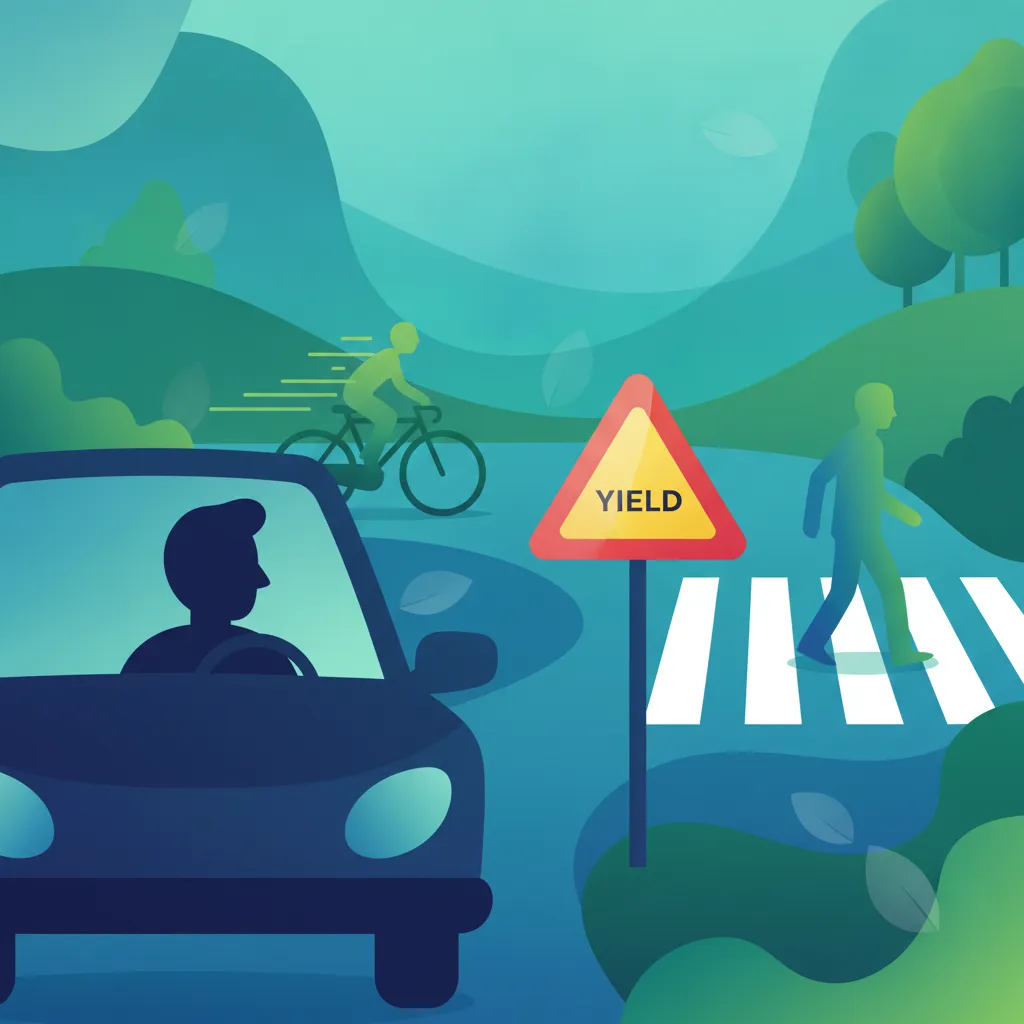
This lesson covers the absolute rules of priority that regulate junctions, roundabouts, and pedestrian crossings in Ireland. It teaches riders when they must yield, who has right-of-way, and how to read Stop and Yield signs correctly. Understanding these priority hierarchies prevents collisions and maintains orderly, predictable movement at busy junctions.

Uncontrolled junctions represent a high-risk scenario because they lack physical signs, lines, or lights to dictate priority. This lesson covers the crucial 'priority to the right' principle, where you must yield to any traffic approaching from your right-hand side. You will learn the importance of reducing your speed, preparing to stop, and verifying the intentions of other drivers at these equal-status crossings.
This lesson provides a comprehensive guide to navigating single and multi-lane roundabouts safely in accordance with the Irish Rules of the Road. It covers correct lane selection on approach, signaling rules for exiting, and maintaining a steady path through traffic. Riders will learn to anticipate lane-changing mistakes made by other drivers and manage the unique banking angles of roundabouts.
This lesson teaches the fundamental principles of priority and right-of-way at controlled and uncontrolled intersections across Ireland. It explains the legal obligations at yield signs, stop lines, and when meeting oncoming traffic turning across your lane. Motorcyclists will learn to carefully verify other drivers' intentions rather than assuming they will yield the correct right-of-way.
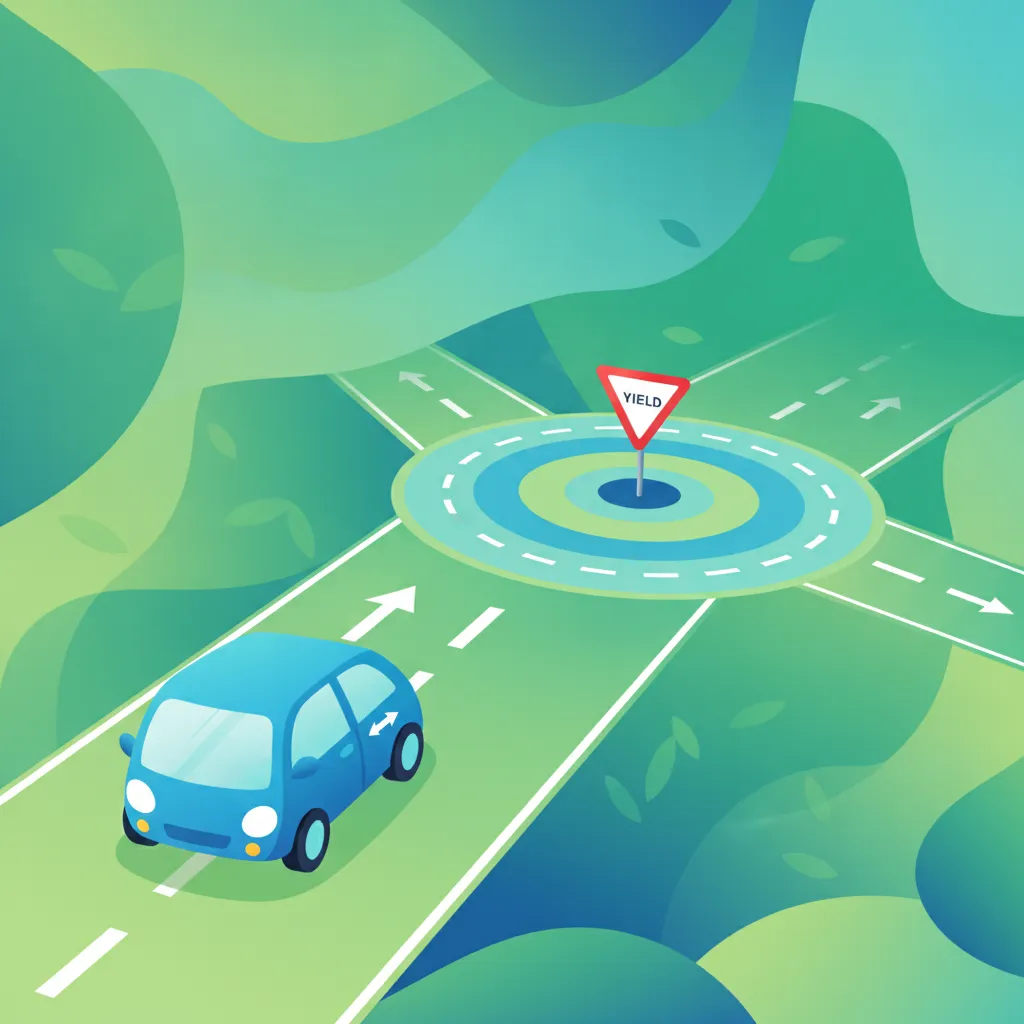
This lesson covers correct procedures for navigating roundabouts, which present significant risks for Category AM riders. It details lane selection rules, timely indicator signals for exiting, and the importance of checking blind spots before shifting lanes. Riders will learn to safely share the roundabout with large vehicles and vulnerable road users.
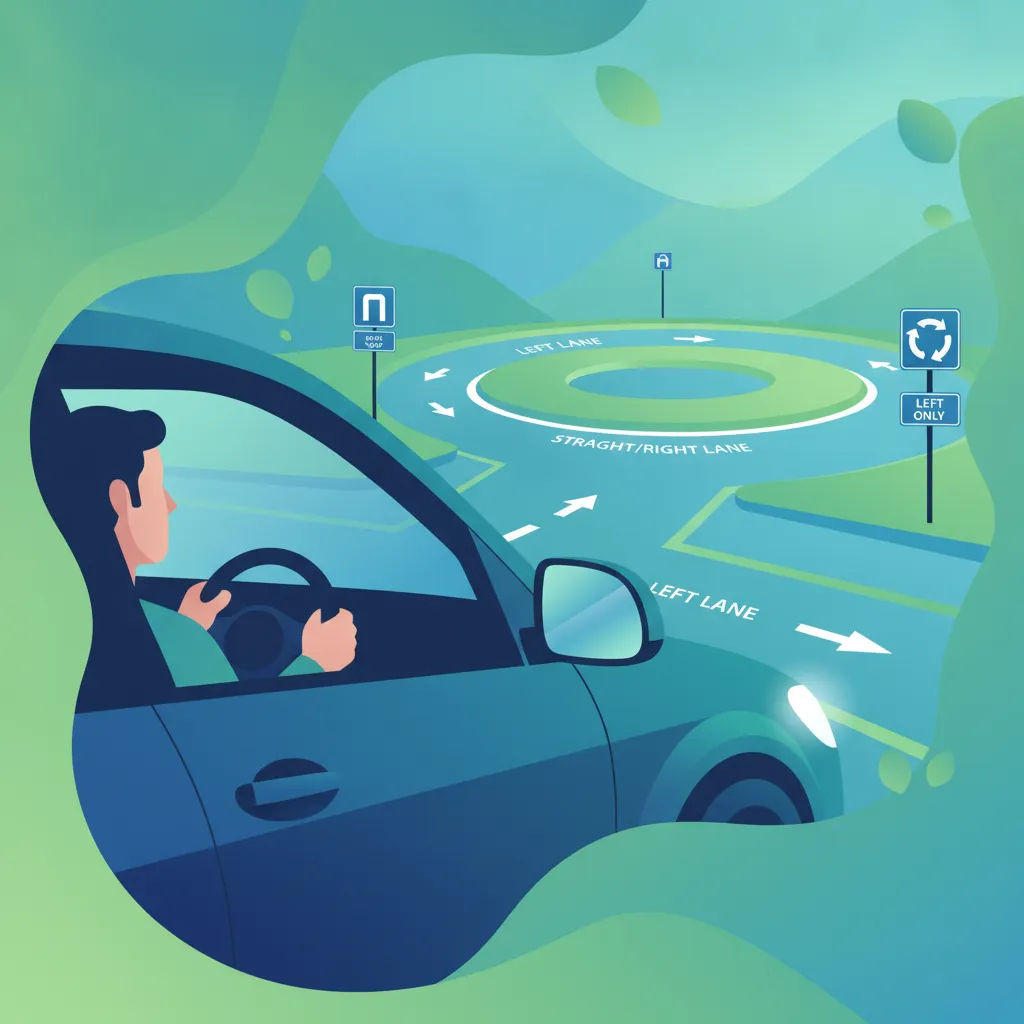
Executing safe turns requires early preparation, correct road positioning, and clear communication with other road users. This lesson focuses on the mandatory Mirror-Signal-Manoeuvre (MSM) routine used across Ireland for turning at cross junctions and navigating roundabouts. You will learn how to choose the correct lane early, adjust your speed, and complete your turn smoothly without cutting corners or blocking trailing vehicles.
Right-of-way rules establish a clear order of precedence when the paths of two or more vehicles cross. This lesson explains how traffic on a major road has priority over traffic emerging from a minor road, and the general rule of yielding to oncoming vehicles when turning right. You will develop a solid understanding of how to approach intersections defensively, assessing speed and distance to make safe decisions.
This lesson focuses on the safe approach and execution of turns at T-junctions, staggered intersections, and blind crossroads. It explains the critical mirror-signal-manoeuvre routine and how to select the best position for maximum visibility to cross-traffic. Motorcyclists will learn to identify potential hazards like vehicles pulling out suddenly or turning across their direct path.
This lesson details the sequential steps required to approach and exit junctions safely under the Irish driving rules. It teaches riders how to select the correct lane, utilize mirrors, apply early signals, and reduce speed appropriately. Effective observation strategies are highlighted to help riders identify crossing pedestrians or approaching side traffic.
Explore techniques for safely negotiating junctions where hedges, walls, or obstacles limit your view of oncoming traffic. Understand the practical steps for creeping forward at blind intersections to safely assess road conditions while following Irish driving theory safety standards.
This lesson focuses on the safe approach and execution of turns at T-junctions, staggered intersections, and blind crossroads. It explains the critical mirror-signal-manoeuvre routine and how to select the best position for maximum visibility to cross-traffic. Motorcyclists will learn to identify potential hazards like vehicles pulling out suddenly or turning across their direct path.

The length of a commercial passenger vehicle creates a wide rear-wheel track offset, requiring drivers to swing wide during tight turns. This lesson teaches cornering mechanics, mirror adjustment guidelines, and how to check blind spots for cyclists on the inside lane. Drivers will master intersection control, preventing collisions with stationary street furniture or curbs.

This lesson explains the location, depth, and angle of the severe blind spots surrounding a standard heavy goods vehicle. It provides step-by-step guidance on setting up primary side mirrors, wide-angle lenses, and close-proximity front-view mirrors to eliminate blind areas. Drivers will learn systematic visual checking routines to ensure complete situational awareness before initiating any maneuver, lane shift, or turn.
This lesson details the sequential steps required to approach and exit junctions safely under the Irish driving rules. It teaches riders how to select the correct lane, utilize mirrors, apply early signals, and reduce speed appropriately. Effective observation strategies are highlighted to help riders identify crossing pedestrians or approaching side traffic.
Driving at night presents severe challenges due to reduced visibility, driver fatigue, and headlight glare from oncoming vehicles. This lesson teaches you how to manage your headlights, use road edge markers to steer through dark curves, and look away from oncoming bright lights. You will learn to drive within the range of your headlights and remain highly alert for pedestrians or cyclists not wearing reflective gear.
Uncontrolled junctions represent a high-risk scenario because they lack physical signs, lines, or lights to dictate priority. This lesson covers the crucial 'priority to the right' principle, where you must yield to any traffic approaching from your right-hand side. You will learn the importance of reducing your speed, preparing to stop, and verifying the intentions of other drivers at these equal-status crossings.
Find clear answers to common questions learners have about Giving Way at Stop and Yield Signs. Learn how the lesson is structured, which driving theory objectives it supports, and how it fits into the overall learning path of units and curriculum progression in Ireland. These explanations help you understand key concepts, lesson flow, and exam focused study goals.
No. You only need to stop at a yield sign if there is traffic approaching on the major road that you would obstruct. If the way is completely clear, you may proceed without stopping, provided you have slowed down sufficiently to observe the road.
You must bring your vehicle to a complete, absolute halt behind the stop line. If there is no line, you should stop at the point where you have a clear view of the road you are entering without obstructing traffic.
At junctions with restricted visibility, creeping forward allows you to safely view the road once you have already performed your initial mandatory stop. This helps you identify oncoming vehicles before committing to the turn.
The test often presents visual scenarios of junctions asking you to identify the correct priority or the legal action required. You must choose between stopping, yielding, or proceeding based on the signs and markings present.
Use the practice question search tool to pinpoint specific topics, road signs, or rules you need to master for your official Driver Theory Test. Refine your study strategy and ensure comprehensive preparation for all aspects of the Irish driving exam. Start your focused revision now and build confidence for your learner permit test.