
This lesson focuses on the critical relationship between your moped tyres and road surface safety. You will learn how to maintain vehicle grip, monitor tyre health, and refine the delicate balance required for low-speed maneuvering.
Lesson content overview
For riders of Category AM mopeds and light two-wheelers, grip is the single most critical factor keeping you upright. Unlike cars, which distribute their weight across four wide tyres, a moped relies on two tiny contact patches, each roughly the size of a credit card. Because your safety margin is so narrow, a thorough understanding of tyre physics, maintenance, and low-speed control is essential to passing your Irish Driving Theory Test and riding safely on public roads.
This lesson explores how friction keeps your vehicle stable, how to maintain your tyres in compliance with Road Safety Authority (RSA) standards, and how to execute stable, low-speed maneuvers without losing traction.
Grip, or traction, is the frictional force generated between your tyre's rubber and the road surface. This force is what allows you to accelerate, decelerate, steer, and maintain stability. Without adequate grip, any control input—whether twisting the throttle or pulling the brake lever—can cause the wheels to slide, leading to a sudden loss of control.
To manage traction effectively, you must understand that a tyre's total grip is finite. This grip is divided into two main categories:
At any given moment, your tyre operates on a "grip budget." If you use 90% of your available grip for heavy braking (longitudinal), you only have 10% left for steering (lateral). Attempting to brake hard while simultaneously leaning into a sharp turn will exceed the total grip limit, causing the tyre to slide.
The amount of grip available depends heavily on the coefficient of friction between the rubber and the road surface. This is influenced by:
Tyre pressure—the measure of compressed air inside your tyre, typically expressed in kilopascals (kPa) or pounds per square inch (psi)—determines the shape and size of your tyre’s contact patch. Maintaining the exact tyre pressure specified by your vehicle's manufacturer is a legal and safety mandate under Irish road traffic regulations.
When a tyre is under-inflated, it lacks the structural support to maintain its shape under load. This leads to several dangerous consequences:
Over-inflation is equally hazardous. When a tyre is over-pressurized:
Check Tyres Cold: Always check tyre pressure before you start riding, or at least two hours after your last ride. Riding heats up the air inside, causing it to expand and give a falsely high pressure reading.
Use a Quality Pressure Gauge: Do not rely on visual inspections or "feeling" the tyre with your hand. Use a calibrated digital or analogue tyre pressure gauge.
Consult the Manufacturer’s Specifications: Find the recommended psi/kPa levels in your moped's owner's manual or on the safety placard located on the swingarm or under the seat.
Adjust for Load: If you are carrying a passenger or heavy luggage, you must increase the tyre pressure to the higher manufacturer-recommended limit for loaded operation to prevent handling degradation.
In dry conditions, a smooth tyre can provide a large contact patch. However, public roads are rarely perfectly dry, especially in Ireland. Tyre tread is designed specifically to handle wet conditions.
When riding on a wet road, a layer of water sits between the tyre and the asphalt. The grooves in your tyre tread act as drainage channels, pumping water away from the contact patch and allowing the rubber to make direct contact with the road.
If your tread depth is insufficient, the tyre cannot displace the water fast enough. A wedge of water builds up in front of the tyre, eventually lifting the rubber completely off the road surface. This phenomenon is known as hydroplaning (or aquaplaning).
The Danger of Hydroplaning: During hydroplaning, your tyre loses all physical contact with the road. Without contact, you cannot steer, accelerate, or brake. For two-wheeled riders, hydroplaning almost always results in an immediate crash because the vehicle loses its self-stabilizing forces.
Under Irish road traffic regulations, your tyres must meet strict legal standards to ensure road safety.
Regardless of the absolute legal minimum, safety experts strongly recommend replacing moped tyres well before they reach the legal limit. As tread depth drops below 2.0 mm, its ability to disperse water declines exponentially.
Regular physical inspections are essential to identify structural weaknesses before they lead to a tyre failure on the road. You should conduct a visual and tactile inspection of your tyres before every journey.
Pre-Ride Checklist: Make it a habit to roll your moped forward slowly before mounting, checking the entire circumference of both tyres for embedded debris, flat spots, or physical damage.
Controlling a Category AM moped at walking pace (under 10 km/h) requires a completely different set of physical skills than riding at cruising speeds. At higher speeds, the gyroscopic forces of the spinning wheels naturally help keep the vehicle upright. At low speeds, these forces are virtually non-existent, leaving the rider solely responsible for maintaining balance.
To maneuver smoothly in tight spaces—such as when navigating heavy Dublin traffic, performing U-turns, or turning into narrow junctions—you must master the coordination of your primary controls.
Avoid the Front Brake at Low Speeds: Applying the front brake while the handlebars are turned at low speed will immediately compress the front suspension and pull the moped to the side, leading to an instant low-side tip-over.
When cornering at speed, you and the moped lean together into the turn. However, at very low speeds, this technique will cause the vehicle to fall inward. Instead, you must use counter-balancing:
To solidify your understanding, let us analyze how these principles of grip, tyre condition, and vehicle control apply to real-world Irish driving environments.
You are riding your Category AM moped on a wet regional road in County Wicklow. The road surface has patches of damp leaves and worn asphalt.
You need to turn around on a narrow street in Cork city center.
You have packed a heavy bag onto the rear carrier rack of your moped for a weekend trip.
To ensure your safety on Irish roads and prepare for your Category AM theory test, remember this critical safety chain:
Proper Tyre Maintenance (Pressure & Tread)
  ➔ Optimal Contact Patch
  ➔ Maximum Available Grip
  ➔ Safe, Controlled Steering, Braking, and Cornering
  ➔ Accident Prevention
By performing regular inspections, maintaining correct pressures, respecting the legal limits of tyre wear, and mastering the delicate coordination of low-speed controls, you will maintain a high margin of safety under all riding conditions.
This lesson explains how tyre grip works as a finite resource shared between acceleration/braking and steering, emphasizing that exceeding this grip budget causes loss of control. Proper tyre maintenance—including correct pressure for optimal contact patch shape and adequate tread depth for water evacuation—directly determines safety margins, particularly on wet Irish roads where hydroplaning poses extreme danger to two-wheeled riders. Low-speed control requires mastering the coordination of throttle, clutch friction zone, and rear brake, with counter-balancing technique replacing normal cornering body position when navigating tight turns at walking pace. Regular pre-ride inspections for cuts, bulges, and wear patterns are essential, as tyre failures on two wheels almost always result in crashes.
A short set of high-value points that capture the most important learning from this lesson.
A tyre's total grip is a finite budget divided between longitudinal grip for acceleration/braking and lateral grip for cornering; using too much of one leaves insufficient capacity for the other
Tyre pressure directly controls contact patch shape: under-inflation causes uneven wear and heat buildup leading to blowout risk, while over-inflation reduces rubber-to-road contact and creates harsh, twitchy handling
Tread depth is critical for water evacuation on wet Irish roads; insufficient tread causes hydroplaning where the tyre completely loses road contact and control is impossible
At low speeds, gyroscopic forces are negligible, placing full responsibility for balance on the rider's coordinated use of throttle, clutch friction zone, and rear brake
Counter-balancing in slow turns means leaning the moped into the turn while keeping your body upright and shifted to the outside, opposite to normal cornering technique
Explore all units and lessons included in this driving theory course.
Tyre pressure must be checked when cold using a proper gauge and set to manufacturer specifications, adjusting upward for heavy loads
Hydroplaning eliminates all traction for steering, braking, and acceleration; wet roads can cut available grip by more than half
The rear brake is the primary stability tool at low speeds, while the front brake should be avoided with turned handlebars to prevent tip-over
Signs requiring immediate tyre replacement include cuts exposing internal plies, sidewall bulges, dry rot cracking, and uneven wear patterns
When cornering, always look where you want to go and let your body follow your line of sight rather than looking at the ground ahead
Assuming grip is unlimited and attempting to brake hard while leaned over in a corner, exceeding the tyre's total grip budget and causing a skid
Checking tyre pressure after riding rather than when cold, resulting in over-inflation to compensate for heat-expanded air
Using the front brake at low speeds when the handlebars are turned, which compresses the front suspension and causes the moped to tip over
Leaning the body into tight low-speed turns instead of the moped, which creates an inward tipping moment rather than stability
Riding at normal speeds on wet roads with worn tyres, not accounting for the exponentially reduced water dispersal capability below 2mm tread depth
Lesson content overview
A short set of high-value points that capture the most important learning from this lesson.
A tyre's total grip is a finite budget divided between longitudinal grip for acceleration/braking and lateral grip for cornering; using too much of one leaves insufficient capacity for the other
Tyre pressure directly controls contact patch shape: under-inflation causes uneven wear and heat buildup leading to blowout risk, while over-inflation reduces rubber-to-road contact and creates harsh, twitchy handling
Tread depth is critical for water evacuation on wet Irish roads; insufficient tread causes hydroplaning where the tyre completely loses road contact and control is impossible
At low speeds, gyroscopic forces are negligible, placing full responsibility for balance on the rider's coordinated use of throttle, clutch friction zone, and rear brake
Counter-balancing in slow turns means leaning the moped into the turn while keeping your body upright and shifted to the outside, opposite to normal cornering technique
Explore all units and lessons included in this driving theory course.
Tyre pressure must be checked when cold using a proper gauge and set to manufacturer specifications, adjusting upward for heavy loads
Hydroplaning eliminates all traction for steering, braking, and acceleration; wet roads can cut available grip by more than half
The rear brake is the primary stability tool at low speeds, while the front brake should be avoided with turned handlebars to prevent tip-over
Signs requiring immediate tyre replacement include cuts exposing internal plies, sidewall bulges, dry rot cracking, and uneven wear patterns
When cornering, always look where you want to go and let your body follow your line of sight rather than looking at the ground ahead
Assuming grip is unlimited and attempting to brake hard while leaned over in a corner, exceeding the tyre's total grip budget and causing a skid
Checking tyre pressure after riding rather than when cold, resulting in over-inflation to compensate for heat-expanded air
Using the front brake at low speeds when the handlebars are turned, which compresses the front suspension and causes the moped to tip over
Leaning the body into tight low-speed turns instead of the moped, which creates an inward tipping moment rather than stability
Riding at normal speeds on wet roads with worn tyres, not accounting for the exponentially reduced water dispersal capability below 2mm tread depth
Explore search topics learners often look for when studying Grip, Tyre Considerations and Low-Speed Control. These topics reflect common questions about road rules, driving situations, safety guidance, and lesson level theory preparation for learners in Ireland.
Browse additional driving theory lessons that cover connected traffic rules, road signs, and common driving situations related to this topic. Improve your understanding of how different rules interact across everyday traffic scenarios.
Understand the specific challenges posed by Irish weather conditions for Category AM vehicle riders. Learn how wet roads, surface risks, and reduced visibility affect your braking distance and overall control, ensuring you apply correct safety techniques when navigating in rain or fog.
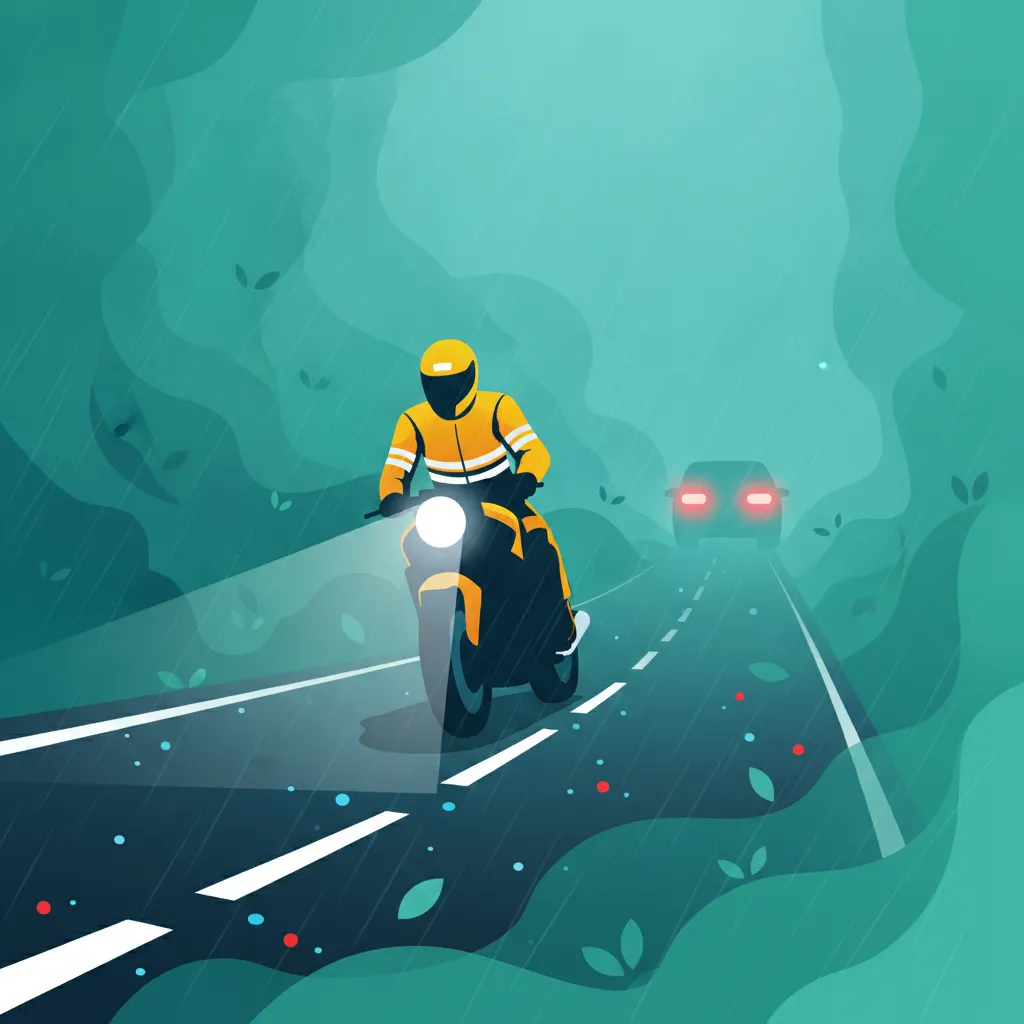
This lesson focuses on the critical techniques required to ride safely during severe rain or heavy fog in Ireland. It teaches riders how to handle aquaplaning risks, use headlights correctly, and significantly increase their following distances. Adapting speed to visibility ensures that riders can brake safely when road conditions deteriorate.
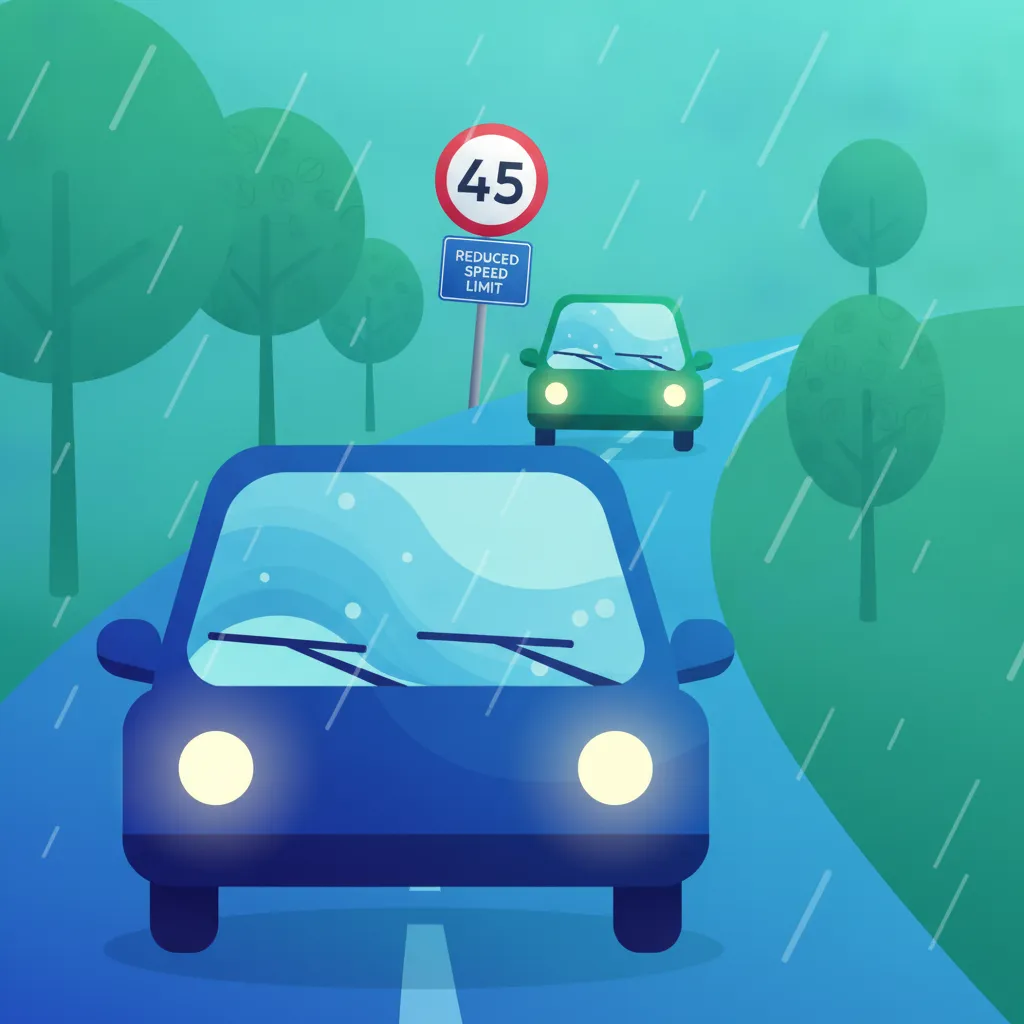
Adverse weather severely compromises tyre traction and forward visibility, demanding immediate speed reductions and extra space. This lesson focuses on the physics of aquaplaning in heavy rain, driving safely on black ice, and navigating thick fog using designated fog lamps. You will learn how to manage your windshield defoggers, adjust wipers, and handle high crosswinds that can destabilise your vehicle.
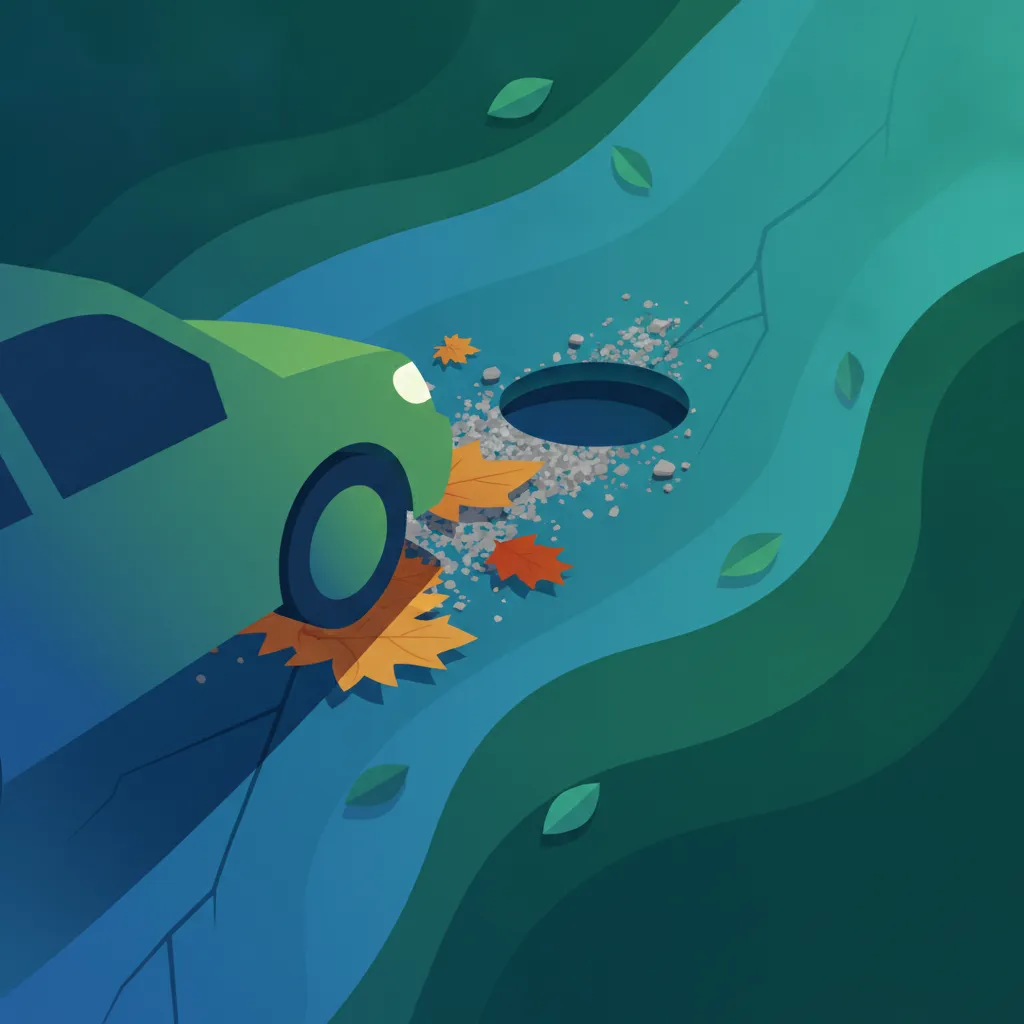
This lesson explores common surface hazards encountered on municipal and rural Irish roads, including loose gravel and wet leaves. It explains how these surface conditions rapidly reduce tyre traction and affect overall handling and braking control. Riders will learn visual scanning techniques to identify these hazards early and execute safe evasion maneuvers.

This lesson teaches riders how to actively identify and eliminate blind spots through proper mirror adjustment and physical shoulder checks. It explains the concept of a safety cushion, which represents the defensive space maintained around the moped at all times. Managing these zones ensures adequate reaction time and mitigates the impact of sudden braking.
This lesson emphasizes the critical importance of being highly visible to other road users under various lighting conditions. It reviews the legal requirements for front and rear lights on Category AM vehicles and the active use of reflective materials. Proper maintenance of lighting systems is discussed to ensure continuous operation during adverse weather.
This lesson explains how to modify riding techniques when navigating wet tarmac, focusing on the heightened risk of hydroplaning and reduced tire grip. It details the necessity of increasing following distances, avoiding painted road markings, and executing smoother control inputs. Riders will understand how surface water accumulates in ruts, presenting severe hazards during heavy rainstorms.

This lesson highlights the importance of smooth throttle adjustments for maintaining traction and stability on a moped. It teaches riders how to anticipate potential road hazards early, reducing the need for sudden emergency braking. Developing strong observation habits allows riders to adjust their speed smoothly and respond safely to traffic changes.

This lesson details the use of daytime running lights to raise a rider's profile during daylight hours on Irish roads. It discusses the installation guidelines, legal restrictions, and safety benefits of auxiliary lighting systems on mopeds. Special care must be taken to prevent dazzling oncoming traffic while ensuring the vehicle remains highly recognizable.
This lesson teaches riders how to manage extreme weather conditions such as high crosswinds, thick fog, and low sun glare. It details how wind forces can push a motorcycle off course and how to use minor body adjustments and lane placement to maintain stability. Riders will learn how to manage visibility limits in dense fog, utilizing specialized riding gear and reducing speeds safely.
Learn how to actively identify potential hazards on the road and maintain a proactive approach to vehicle control. This guide focuses on visual scanning and situational awareness to help you predict risks from other road users, pedestrians, and challenging road environments.
This lesson highlights the importance of smooth throttle adjustments for maintaining traction and stability on a moped. It teaches riders how to anticipate potential road hazards early, reducing the need for sudden emergency braking. Developing strong observation habits allows riders to adjust their speed smoothly and respond safely to traffic changes.
This lesson teaches riders how to actively identify and eliminate blind spots through proper mirror adjustment and physical shoulder checks. It explains the concept of a safety cushion, which represents the defensive space maintained around the moped at all times. Managing these zones ensures adequate reaction time and mitigates the impact of sudden braking.
This lesson explores common surface hazards encountered on municipal and rural Irish roads, including loose gravel and wet leaves. It explains how these surface conditions rapidly reduce tyre traction and affect overall handling and braking control. Riders will learn visual scanning techniques to identify these hazards early and execute safe evasion maneuvers.

This lesson provides actionable strategies for Category AM riders to remain visible, focusing on lane positioning and eye contact. It teaches how to avoid riding in the blind spots of larger vehicles and how to signal early and clearly. Cultivating a proactive attitude toward road visibility helps prevent collisions and builds mutual respect on Irish roads.

This lesson explains the extensive blind spots of heavy goods vehicles, buses, and other large trucks on Irish roads. It teaches Category AM riders how to maintain safe following distances and position themselves where truck drivers can see them. Proper space cushion management is emphasized to protect riders from the wind turbulence of passing trucks.
This lesson emphasizes the critical importance of being highly visible to other road users under various lighting conditions. It reviews the legal requirements for front and rear lights on Category AM vehicles and the active use of reflective materials. Proper maintenance of lighting systems is discussed to ensure continuous operation during adverse weather.
Find clear answers to common questions learners have about Grip, Tyre Considerations and Low-Speed Control. Learn how the lesson is structured, which driving theory objectives it supports, and how it fits into the overall learning path of units and curriculum progression in Ireland. These explanations help you understand key concepts, lesson flow, and exam focused study goals.
While the legal requirement for many vehicles is 1.6mm, for mopeds and small motorcycles, it is crucial that the tread pattern is clearly visible across the entire breadth of the tyre and around the entire circumference. Any bald or damaged tyre is illegal and dangerous.
Low-speed control is essential for navigating traffic jams, roundabouts, and junctions safely. Mastery of clutch control, throttle, and rear brake usage allows you to maintain balance without putting a foot down, keeping you stable and ready to react.
Under-inflated tyres increase rolling resistance and make the moped feel heavy or sluggish, while over-inflated tyres reduce the contact patch, leading to a loss of grip. Always maintain the manufacturer's recommended pressure to ensure optimal stability.
The test focuses on your responsibility as a rider to ensure your vehicle is roadworthy. You should know how to identify wear, cracks, or embedded objects that make a tyre unsafe for use on public roads.
Use the practice question search tool to pinpoint specific topics, road signs, or rules you need to master for your official Driver Theory Test. Refine your study strategy and ensure comprehensive preparation for all aspects of the Irish driving exam. Start your focused revision now and build confidence for your learner permit test.