
This lesson guides you through the essential road markings and lane usage rules for Category AM riders in Ireland. Understanding these markings is vital for maintaining safe road positioning and complying with traffic regulations during your theory test and daily riding.
Lesson content overview
Every road user in Ireland must understand that road markings painted on the tarmac carry the same legal weight as vertical road signs. For Category AM (moped and light quadricycle) riders, mastering road markings is not just a requirement for passing the Irish Driving Theory Test; it is a vital safety skill.
Because mopeds are limited to a maximum design speed of 45 km/h, your position on the road and your interaction with lanes must be deliberate and legally compliant. This lesson details the exact legal meanings, practical applications, and safety considerations of Irish road markings, ensuring you can navigate urban and rural roads safely and confidently.
Road markings are visual instructions designed to manage traffic flow, prevent conflicts, and protect vulnerable road users. In Ireland, the Road Safety Authority (RSA) divides road markings into three primary functional groups:
Understanding these markings allows you to read the road ahead, anticipate the actions of other drivers, and maintain a safe buffer zone around your moped.
The white lines painted down the centre of Irish roads dictate whether you are legally permitted to change lanes or cross into the oncoming traffic stream to overtake.
A continuous white line down the centre of the road indicates a strict legal boundary.
A solid white line painted along the centre of the road which separates opposing traffic flows. It signals that vehicles must remain on their side of the road and must not cross or straddle the line.
If you encounter a continuous white line, you must not drive across it or straddle it. This means you cannot cross the line to overtake slower-moving vehicles, such as tractors or other mopeds.
However, there are highly specific legal exceptions to this rule. You may cross a continuous white line only when:
Overtaking on a continuous white line is a common cause of head-on collisions in Ireland. As a Category AM rider, you must never attempt to squeeze past a vehicle within the same lane if a solid line is present, as this violates safe lane discipline.
A broken white line consists of short, intermittent dashes separated by equal gaps. This line separates opposing traffic streams or defines lanes travelling in the same direction.
You may cross a broken white line to change lanes or overtake, but only if it is safe to do so. Before crossing, you must perform your routine observation checks: Mirror, Signal, Mirror, Manoeuvre, and take a quick look over your shoulder (the "Lifesaver" check) to cover any blind spots.
Warning: A broken white line is not an open invitation to overtake. You must evaluate the speed of oncoming traffic, road curvature, and your moped's limited acceleration capacity before committing to any overtaking manoeuvre.
When the white dashes become noticeably longer and the gaps between them become much shorter, you are approaching a Warning Line. This indicates a hazard ahead, such as a blind summit, a sharp bend, or an upcoming continuous white line. You should treat a warning line with extreme caution and refrain from starting an overtaking manoeuvre.
The outer boundaries of the road and specialized buffer zones are marked to keep traffic aligned and stable.
Edge lines are painted along the side of the road to define the outer limit of the drivable carriageway.
Hatch markings are diagonal stripes painted inside a bordered area on the road surface. They are used to separate traffic lanes, guide traffic around hazards, or protect turning vehicles.
Urban environments feature dedicated lanes designed to optimize public transport efficiency and safeguard vulnerable road users. As a moped rider, you must understand where you are legally permitted to ride.
Bus lanes are designated to improve the transit times of public service vehicles. They are marked by a thick, continuous white line and the words "BUS LÁNA" or "BUS LANE" painted on the road surface.
No. In Ireland, mopeds and motorcycles are not legally permitted to use bus lanes during their hours of operation unless explicit local signage indicates otherwise. You must stay in the general traffic lane.
Some bus lanes operate 24 hours a day, while others operate only during peak traffic hours (e.g., 07:00 to 19:00). Outside these operational hours, any vehicle may use the lane, but you must check the regulatory information plates on the roadside to confirm the active times.
Cycle lanes are dedicated zones designed to protect cyclists from motorized traffic. They are marked by a bicycle symbol painted on the road surface and are split into two legal categories:
| Cycle Lane Type | Boundary Line | Legal Rule for Mopeds |
|---|---|---|
| Mandatory Cycle Lane | Continuous Solid White Line | Strictly Prohibited. You must never ride, park, or cross into this lane during its hours of operation. |
| Non-Mandatory Cycle Lane | Broken White Line | Avoid. You should not enter this lane unless it is unavoidable, and you must yield absolute priority to any cyclists present. |
Note: Some cycle lanes operate 24 hours a day, while others are time-restricted. Always assume a mandatory cycle lane is active unless roadside signage explicitly states otherwise.
Yellow box junctions are painted with criss-cross yellow lines. Their primary purpose is to keep intersections clear and prevent traffic gridlock, particularly in congested urban areas.
You must not enter a yellow box junction unless your exit road or lane is completely clear, allowing you to pass through the box without stopping.
There is only one exception to the yellow box rule: If you intend to turn right, you may enter the yellow box and wait inside it. This is permitted only if your turn is temporarily blocked by:
However, you must ensure that your exit road itself is clear. If the road you want to turn into is backed up with stationary traffic, you must not enter the yellow box.
Assess the Junction: As you approach, look past the yellow box to the lane you intend to enter. Is there space for your vehicle on the other side?
Wait Behind the Line: If the exit lane is blocked by stationary traffic, stop your moped before the first yellow line of the box. Do not let pressure from drivers behind force you into the box.
Proceed When Clear: Once traffic moves and a space opens up that can accommodate your moped on the far side, proceed smoothly through the box.
When approaching any junction, look down at the road surface to identify your legal obligations. These markings are frequently paired with vertical signs to reinforce safety.
In multi-lane approaches to roundabouts or junctions, white arrows are painted on the lane surfaces to designate the permitted direction of travel:
As a Category AM rider, you must choose the correct lane early. Changing lanes at the last second over solid division lines is highly dangerous and can cause sudden collisions with larger vehicles.
Yellow lines painted along the kerb or edge of the road regulate parking, stopping, and loading.
Road markings are made of thermoplastic paint which can become extremely hazardous under certain conditions, particularly for two-wheeled vehicles like mopeds.
When wet, the painted surface of road markings has significantly less grip than raw asphalt.
This lesson covers the essential road markings that govern lane usage and positioning for Category AM riders in Ireland, including the legal significance of continuous versus broken white centre lines and their specific exceptions. It clarifies the rules for special urban lanes—prohibiting moped use of bus lanes and mandatory cycle lanes during operating hours—and provides step-by-step guidance for negotiating yellow box junctions legally. The content also addresses stop lines, yield lines, parking restrictions, and directional arrows at junctions, emphasizing that wet painted markings present heightened danger for two-wheeled riders. Understanding these markings is critical for passing the Driver Theory Test and maintaining legal compliance on Irish roads.
A short set of high-value points that capture the most important learning from this lesson.
Road markings in Ireland carry the same legal authority as vertical road signs and must be obeyed accordingly
A continuous white line prohibits crossing except when turning right into a side road, avoiding an obstruction, or when directed by Gardaí
Broken white lines permit lane changes and overtaking only when it is safe to do so, following proper observation checks
Bus lanes and mandatory cycle lanes are strictly off-limits to Category AM riders during their hours of operation
Yellow box junctions must not be entered unless your exit road is completely clear, with the sole exception of waiting to turn right
Explore all units and lessons included in this driving theory course.
Warning lines have longer dashes and shorter gaps than regular broken lines, signaling an upcoming hazard
You may briefly use the hard shoulder on national roads to allow faster traffic to pass if safe, then return to the main lane
Double yellow lines mean 24-hour no parking; single yellow lines restrict parking during specific hours shown on nearby signs
Wet painted road markings are significantly more slippery than asphalt; avoid braking, accelerating, or leaning while crossing them
When turning right at a yellow box, you may wait inside only if blocked by oncoming traffic, not if the exit road is backed up
Assuming broken white lines give an automatic right to overtake without checking oncoming traffic and road conditions first
Entering a yellow box junction when the exit lane is blocked, even if only briefly, leading to fixed charge fines
Confusing stop lines (solid) with yield lines (broken) and either failing to stop completely or stopping unnecessarily
Attempting to ride in bus lanes during operational hours because traffic appears light or the lane looks convenient
Believing that non-mandatory cycle lanes are safe to use casually; riders should still avoid them unless unavoidable
Lesson content overview
A short set of high-value points that capture the most important learning from this lesson.
Road markings in Ireland carry the same legal authority as vertical road signs and must be obeyed accordingly
A continuous white line prohibits crossing except when turning right into a side road, avoiding an obstruction, or when directed by Gardaí
Broken white lines permit lane changes and overtaking only when it is safe to do so, following proper observation checks
Bus lanes and mandatory cycle lanes are strictly off-limits to Category AM riders during their hours of operation
Yellow box junctions must not be entered unless your exit road is completely clear, with the sole exception of waiting to turn right
Explore all units and lessons included in this driving theory course.
Warning lines have longer dashes and shorter gaps than regular broken lines, signaling an upcoming hazard
You may briefly use the hard shoulder on national roads to allow faster traffic to pass if safe, then return to the main lane
Double yellow lines mean 24-hour no parking; single yellow lines restrict parking during specific hours shown on nearby signs
Wet painted road markings are significantly more slippery than asphalt; avoid braking, accelerating, or leaning while crossing them
When turning right at a yellow box, you may wait inside only if blocked by oncoming traffic, not if the exit road is backed up
Assuming broken white lines give an automatic right to overtake without checking oncoming traffic and road conditions first
Entering a yellow box junction when the exit lane is blocked, even if only briefly, leading to fixed charge fines
Confusing stop lines (solid) with yield lines (broken) and either failing to stop completely or stopping unnecessarily
Attempting to ride in bus lanes during operational hours because traffic appears light or the lane looks convenient
Believing that non-mandatory cycle lanes are safe to use casually; riders should still avoid them unless unavoidable
Explore search topics learners often look for when studying Road Markings and Lane Usage. These topics reflect common questions about road rules, driving situations, safety guidance, and lesson level theory preparation for learners in Ireland.
Browse additional driving theory lessons that cover connected traffic rules, road signs, and common driving situations related to this topic. Improve your understanding of how different rules interact across everyday traffic scenarios.
Understand the legal hierarchy of road priority and how to safely negotiate complex junctions and roundabouts in Ireland. This guide explains how to identify priority signage and markings to ensure correct road positioning and safe interaction with other traffic participants in various urban and rural road settings.
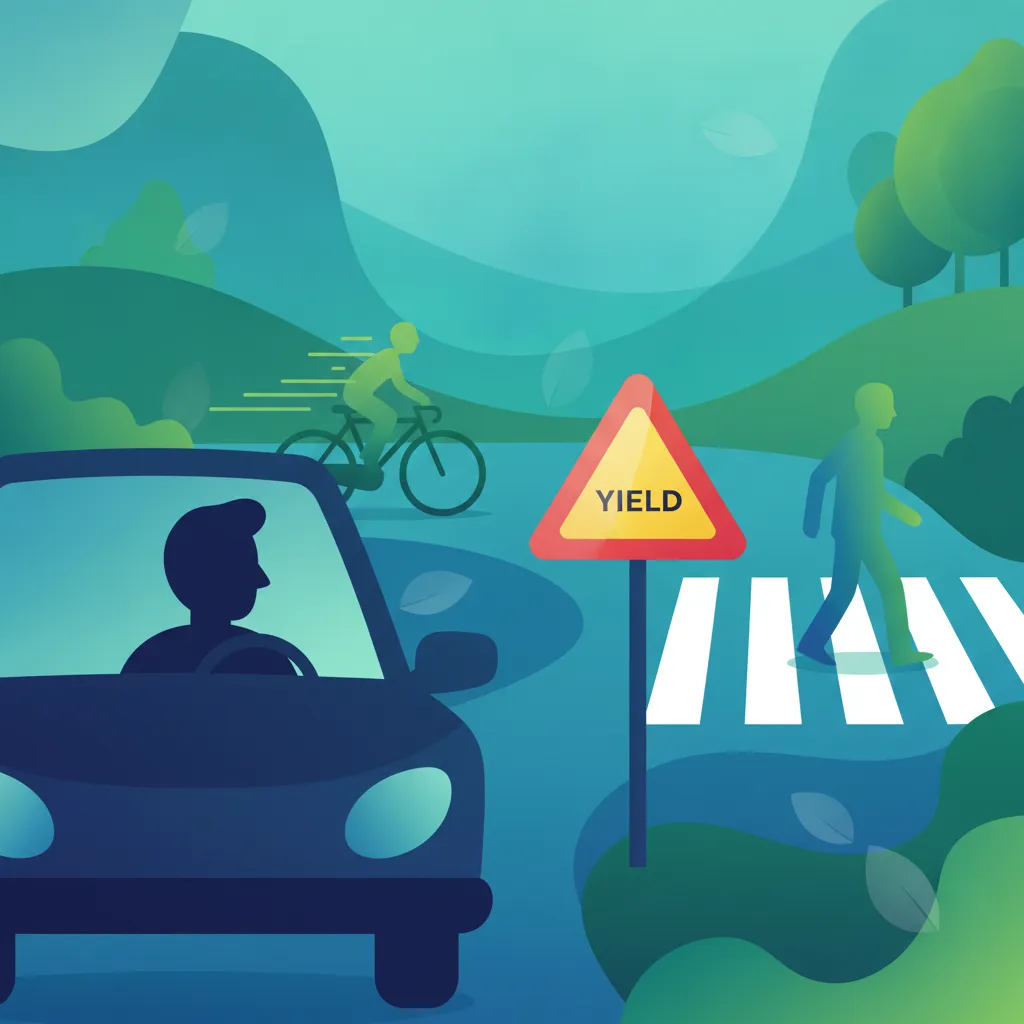
This lesson covers the absolute rules of priority that regulate junctions, roundabouts, and pedestrian crossings in Ireland. It teaches riders when they must yield, who has right-of-way, and how to read Stop and Yield signs correctly. Understanding these priority hierarchies prevents collisions and maintains orderly, predictable movement at busy junctions.

Uncontrolled junctions represent a high-risk scenario because they lack physical signs, lines, or lights to dictate priority. This lesson covers the crucial 'priority to the right' principle, where you must yield to any traffic approaching from your right-hand side. You will learn the importance of reducing your speed, preparing to stop, and verifying the intentions of other drivers at these equal-status crossings.
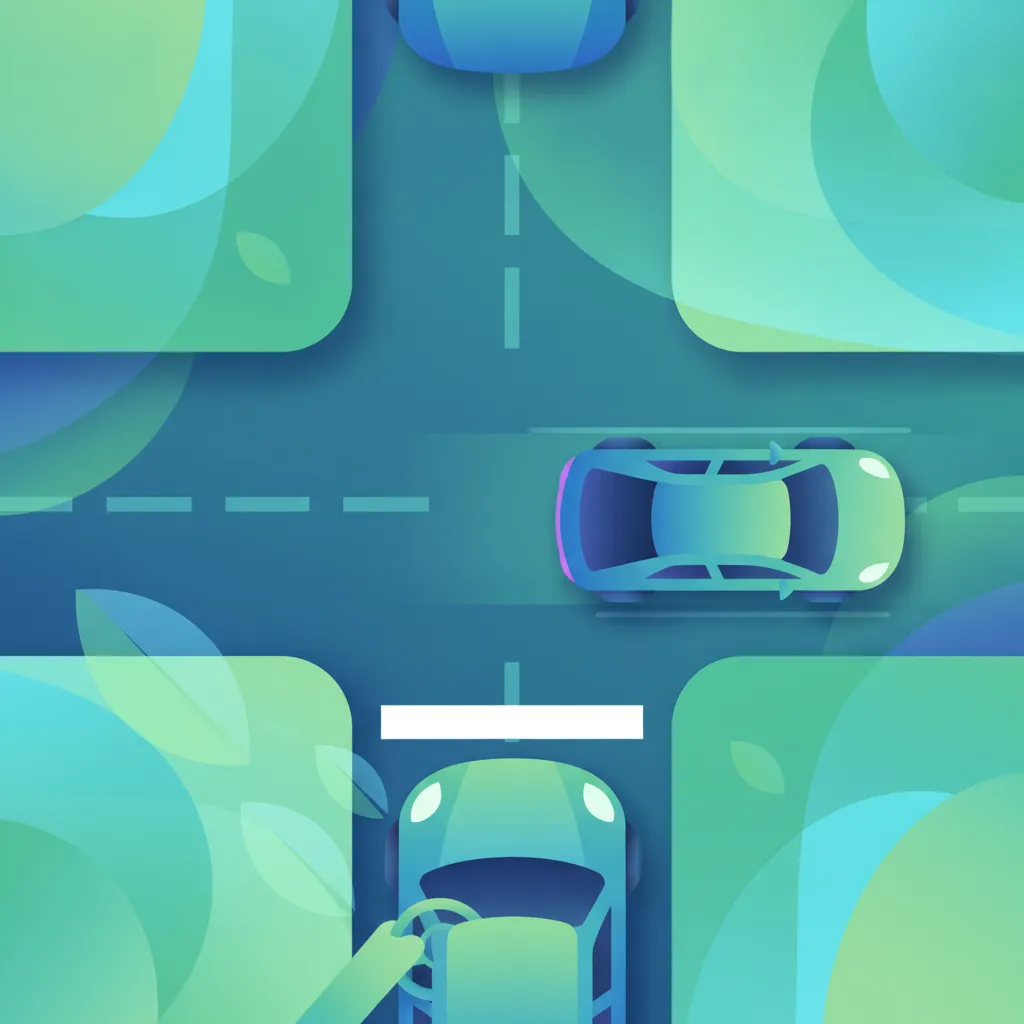
Right-of-way rules establish a clear order of precedence when the paths of two or more vehicles cross. This lesson explains how traffic on a major road has priority over traffic emerging from a minor road, and the general rule of yielding to oncoming vehicles when turning right. You will develop a solid understanding of how to approach intersections defensively, assessing speed and distance to make safe decisions.
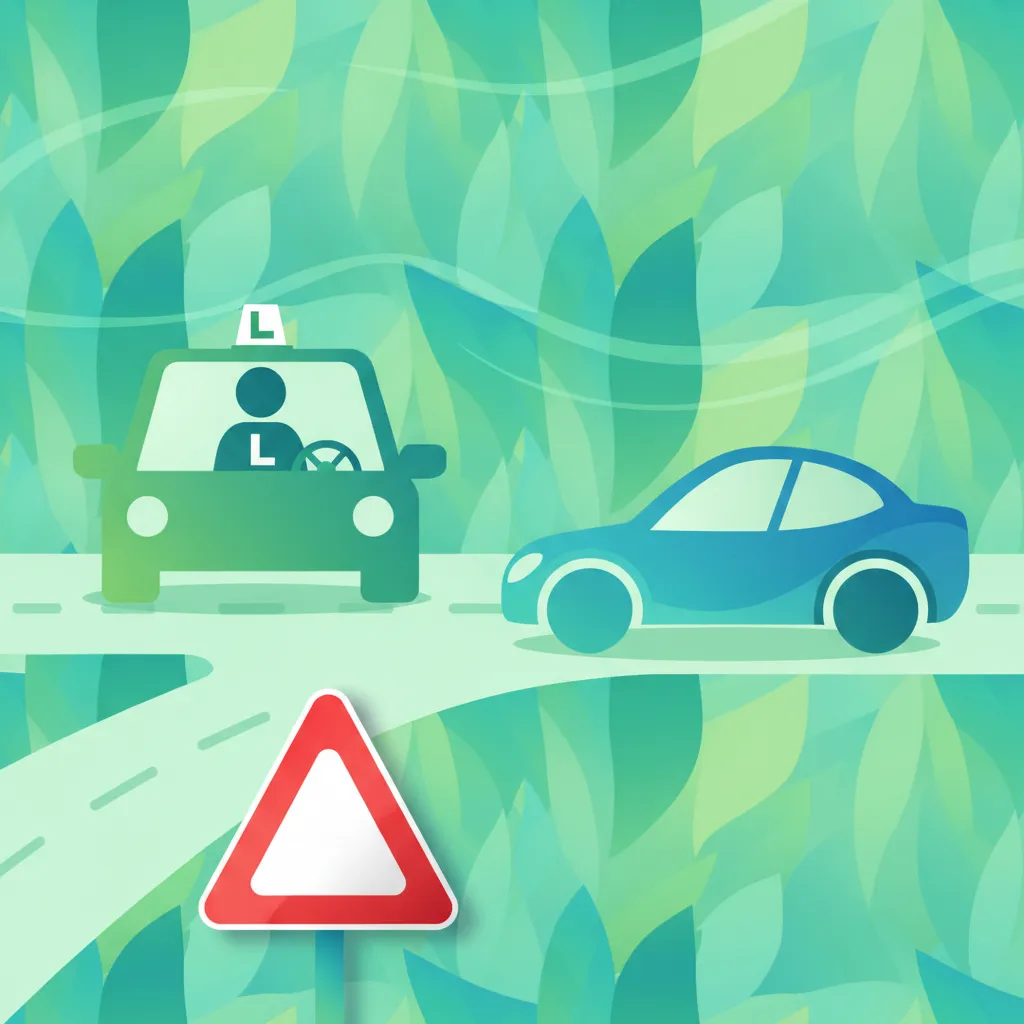
This lesson teaches the fundamental principles of priority and right-of-way at controlled and uncontrolled intersections across Ireland. It explains the legal obligations at yield signs, stop lines, and when meeting oncoming traffic turning across your lane. Motorcyclists will learn to carefully verify other drivers' intentions rather than assuming they will yield the correct right-of-way.

Navigating multi-lane roundabouts requires precise lane selection, continuous scanning, and timely signaling. This lesson teaches you the 'clock rule' for determining which lane to enter, how to yield to traffic already on the roundabout from your right, and when to activate your left indicator to exit. Mastering these procedures minimizes lane-drift accidents and ensures a seamless flow of traffic on busy roundabouts.
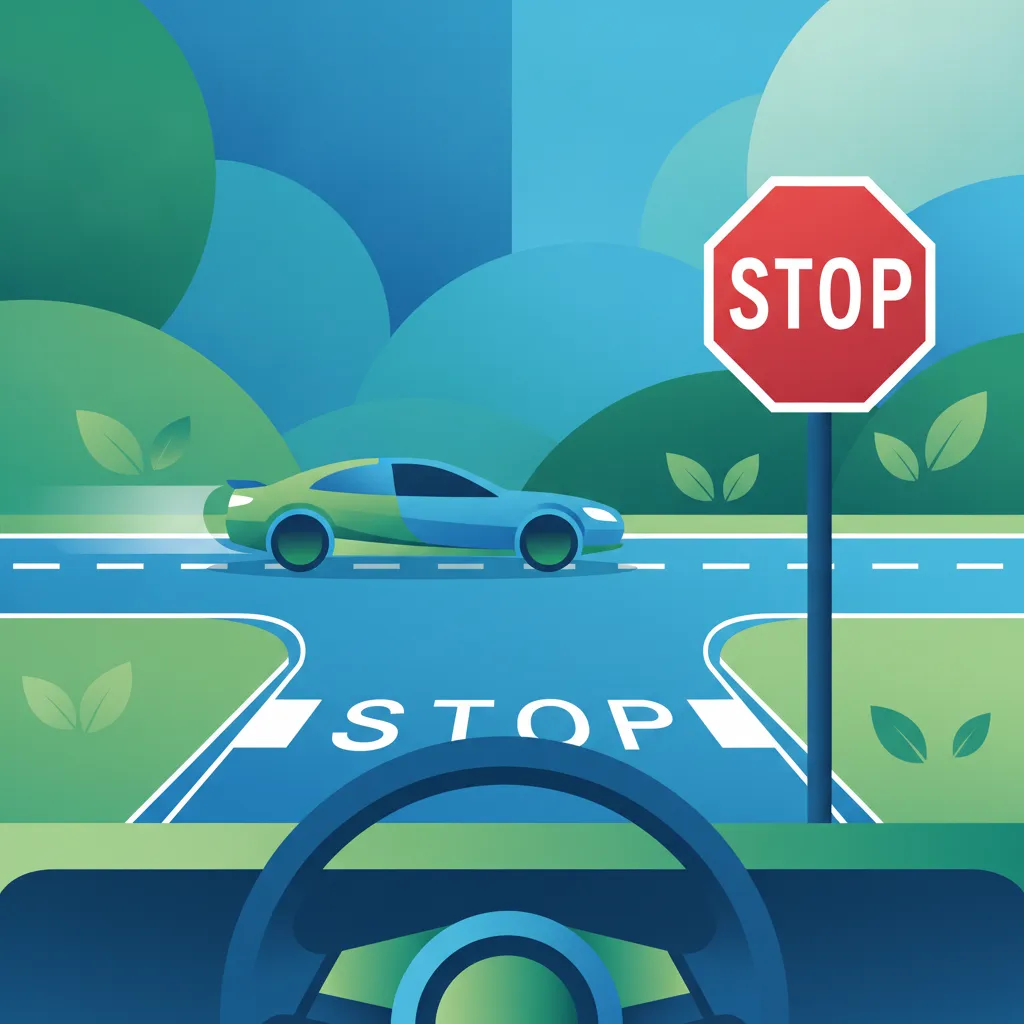
Stop and yield signs require drivers to surrender right-of-way to crossing traffic, but they command different physical actions. This lesson explains that a stop sign mandates a complete, absolute halt behind the line, whereas a yield sign requires you to slow down and stop only if other traffic is approaching. You will learn how to manage restricted visibility at junctions and how to creep forward safely when clear.
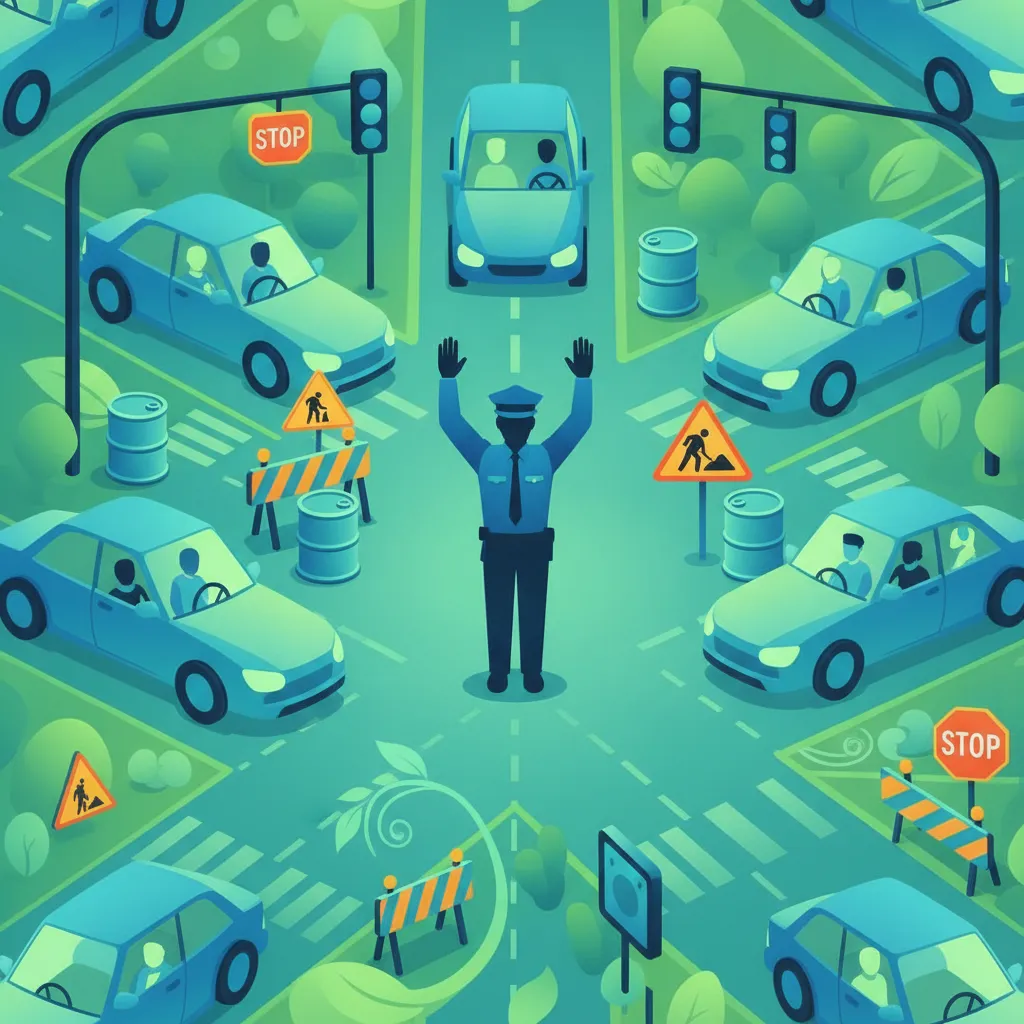
When traffic control is actively performed by a Garda, a school warden, or authorized marshals, their hand signals override all standard traffic lights and road signs. This lesson illustrates the common hand gestures used by officers to stop, release, or slow down traffic. You will learn your strict legal obligation to obey these manual commands, ensuring public safety during emergencies, events, or school crossings.
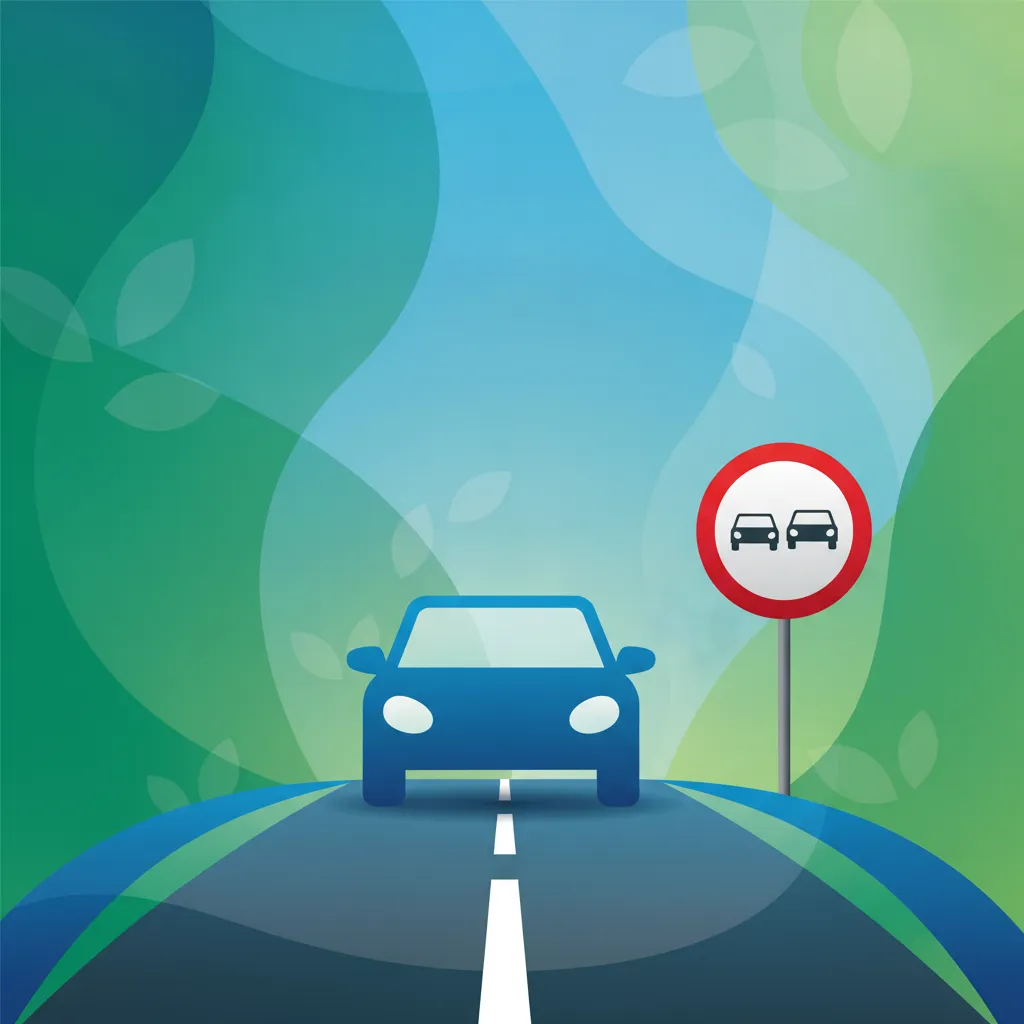
No-overtaking zones are marked in areas with restricted visibility, such as approaching bends, humps, or narrow bridges. This lesson details how continuous solid white lines legally prohibit passing, along with the very narrow exceptions allowed under Irish law. You will learn to identify these high-risk areas from visual markings, ensuring you never initiate a passing manoeuvre that puts oncoming traffic in immediate danger.
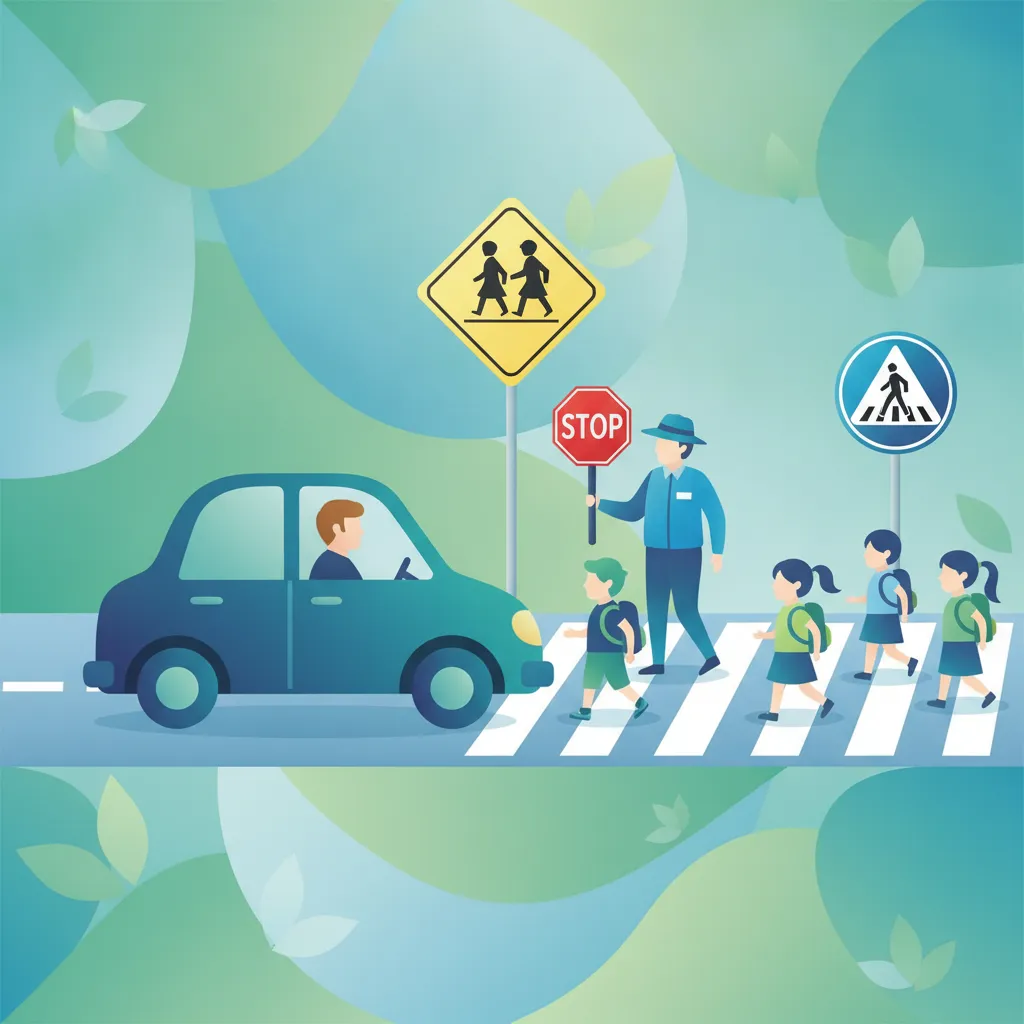
School zones and pedestrian crossings require high driver alertness and strict compliance with local speed limits in Ireland. This lesson details the legal rules of zebra and pelican crossings, explaining driver requirements when amber warning beacons are flashing. Drivers will study safety procedures for dropping off or picking up children, preventing common blind-spot accidents near schools.
This lesson provides a comprehensive guide to navigating single and multi-lane roundabouts safely in accordance with the Irish Rules of the Road. It covers correct lane selection on approach, signaling rules for exiting, and maintaining a steady path through traffic. Riders will learn to anticipate lane-changing mistakes made by other drivers and manage the unique banking angles of roundabouts.
Learn the specific regulations for navigating urban environments, including the use of bus lanes, cycle paths, and traffic light signals. This lesson clarifies the legal requirements for moped riders when interacting with public transport and cyclists to maintain safety and compliance with Irish Road Safety Authority standards.
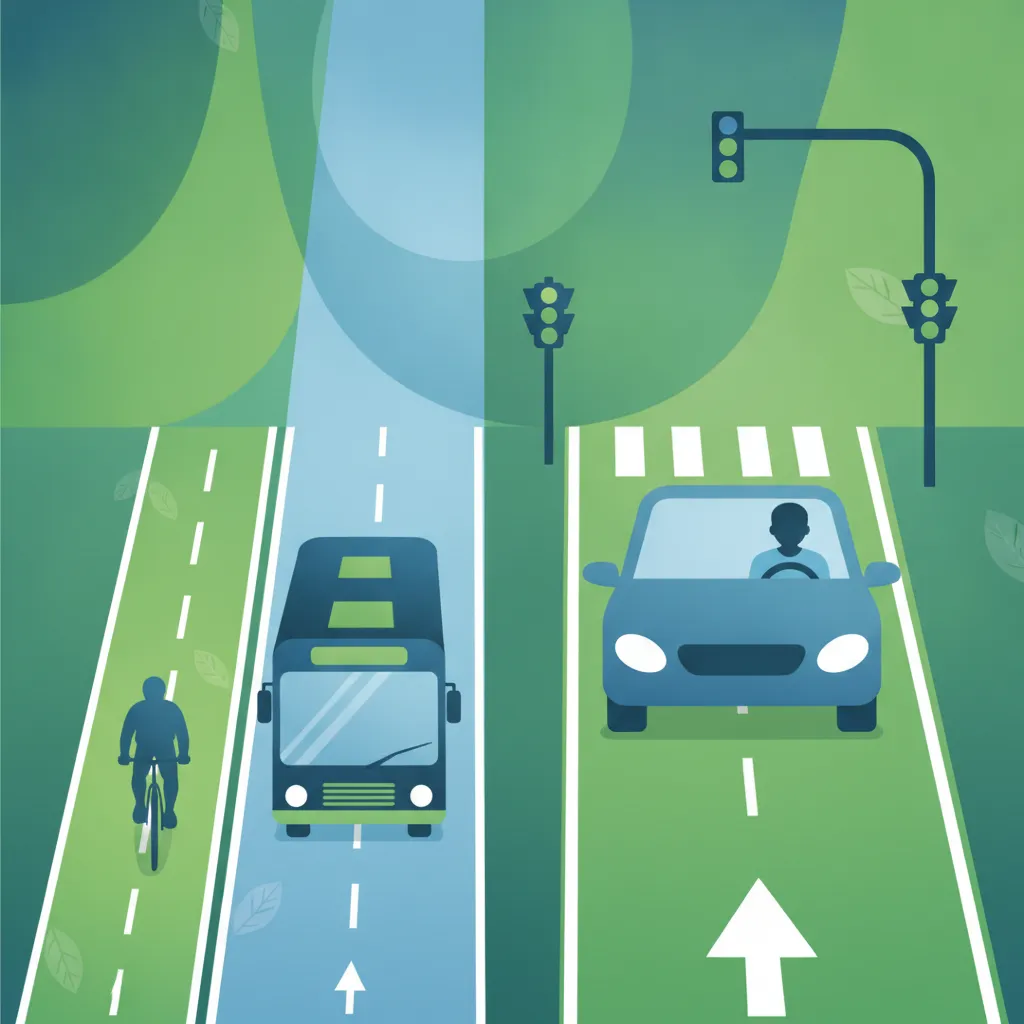
Bus lanes and cycle tracks are designed to encourage public transport and safe active travel in congested urban areas. This lesson explores the differences between with-flow and contra-flow bus lanes, detailing the restricted operating hours during which other vehicles are banned. You will understand when taxi drivers or emergency vehicles can use these lanes, and how to avoid costly traffic violations and safety risks.
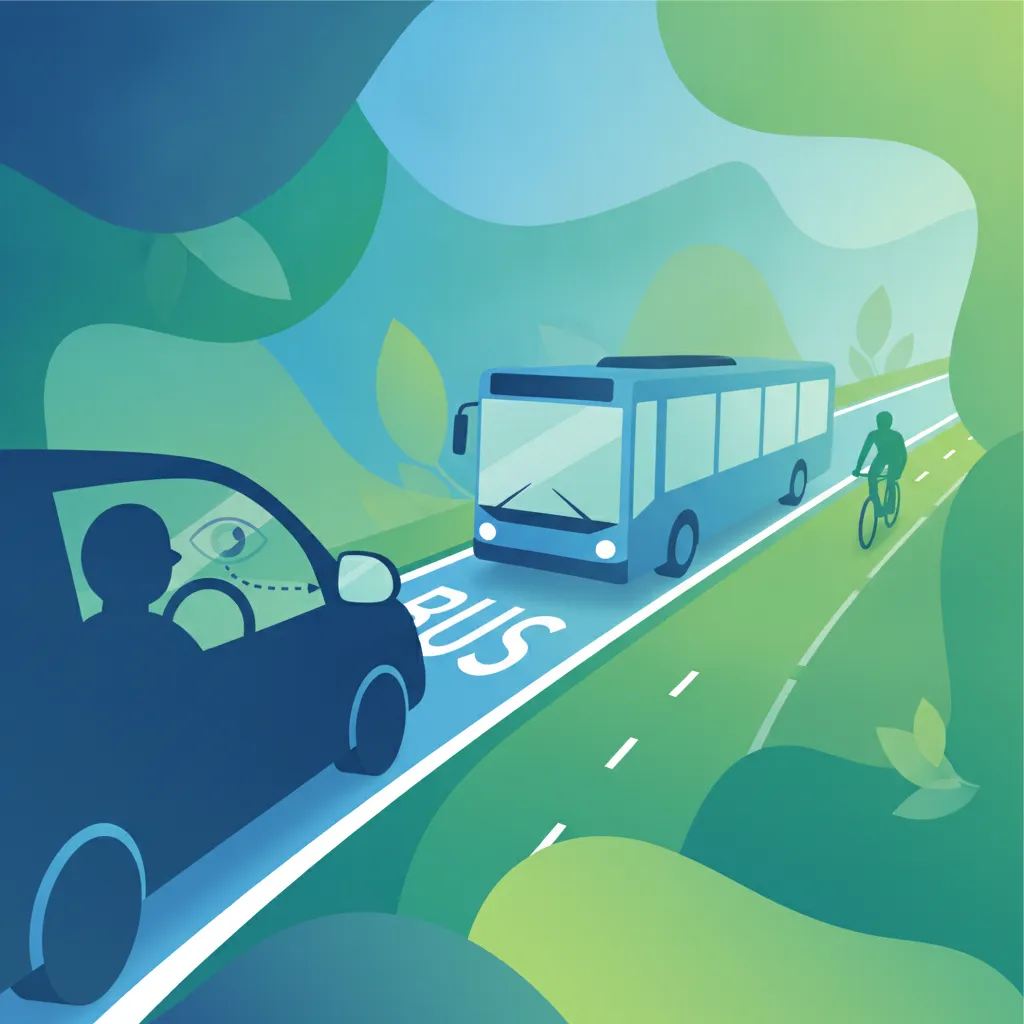
This lesson clarifies the legal regulations surrounding bus lanes and cycle lanes in Ireland, highlighting when motorcycles are permitted to enter them. It outlines how to cross these lanes safely when turning left, and how to scan for cyclists approaching from behind. Riders will learn to respect lane markings, observe signposted operational hours, and avoid blocking designated public transit lanes.
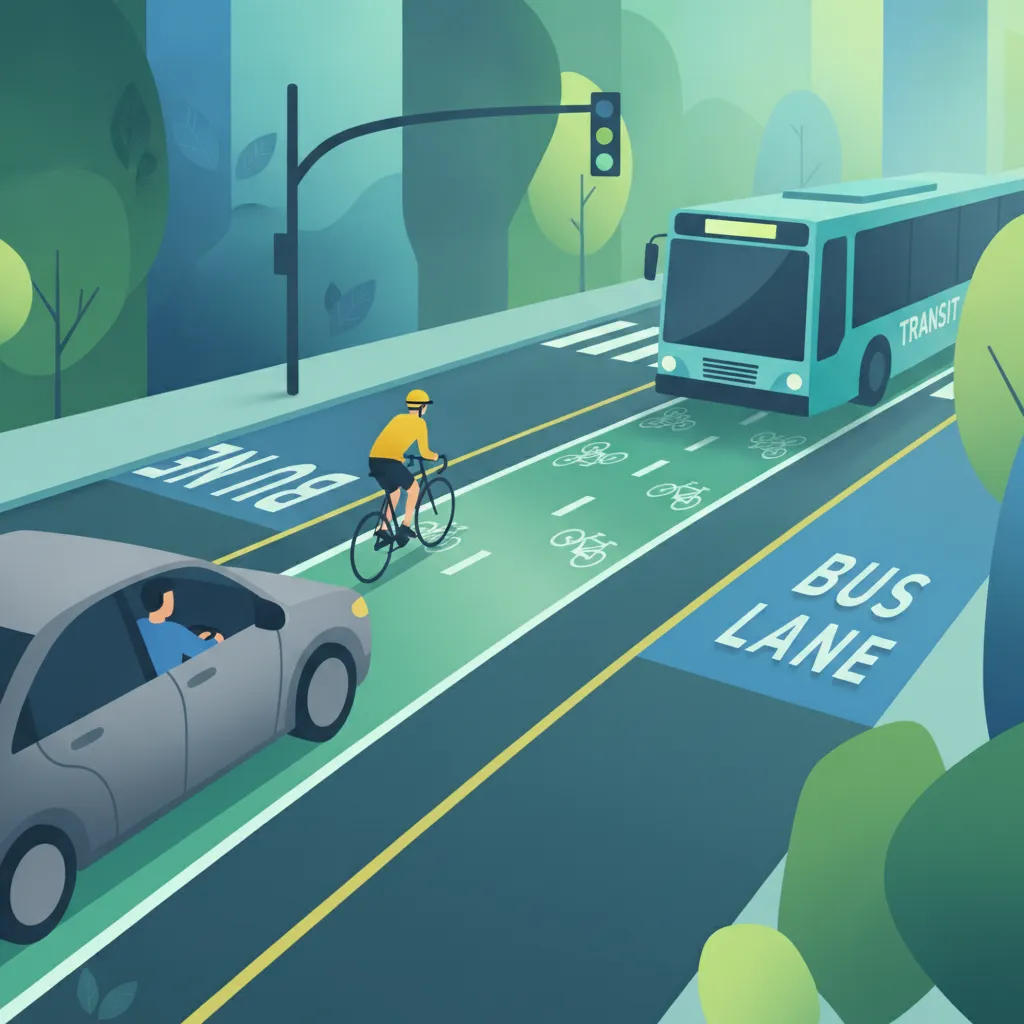
This lesson investigates the specific laws regulating bus and cycle lanes on Irish municipal streets. It clarifies the operational hours of restricted lanes and explains whether Category AM vehicles are allowed access. Understanding these boundaries ensures riders avoid severe penalty fines and share space safely with public transport and cyclists.
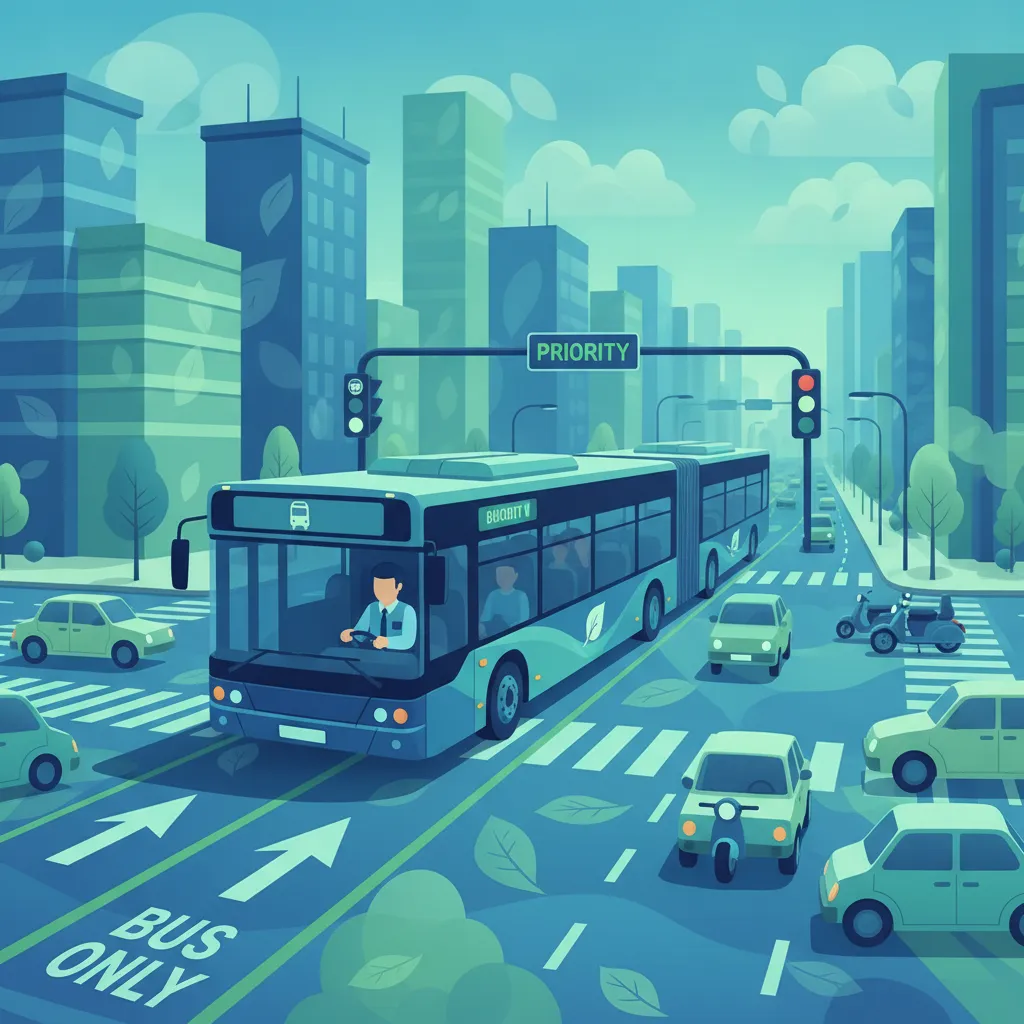
Driving large vehicles through dense city traffic requires outstanding lane discipline, spatial awareness, and consistent patience. This lesson teaches drivers how to utilize public bus corridors, manage tight yellow box intersections, and handle narrow city streets. It focuses on predicting traffic pattern shifts to maintain service timetables while minimizing fuel waste and driver stress.
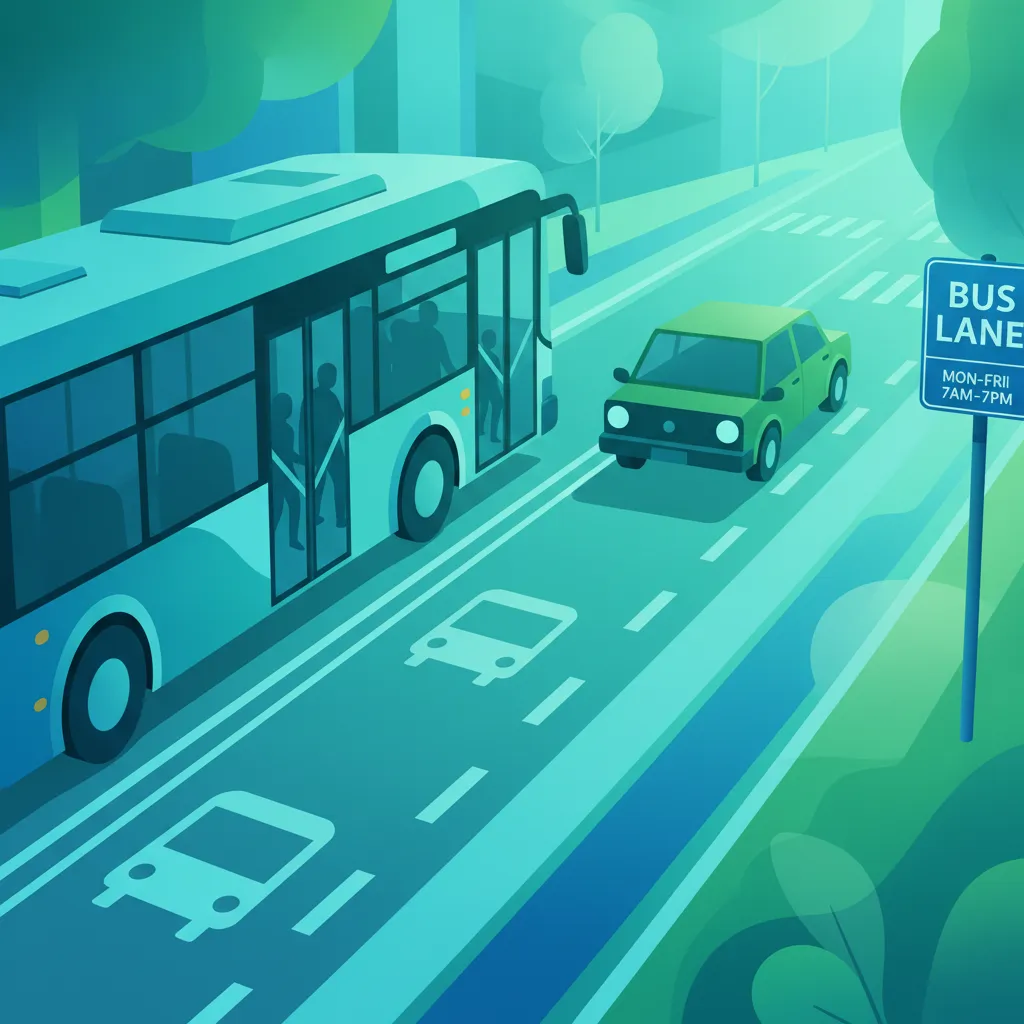
This lesson details the legal operations allowed within Irish bus lanes, including active hours, non-permitted traffic types, and exceptions. Drivers will learn safe approach trajectories for public transport stops, maintaining legal clearance, and navigating curbside hazards safely. The material highlights compliance with local bylaws to guarantee steady, uninterrupted traffic flow and passenger convenience.
Large passenger vehicles must maintain consistent lane positioning to prevent side-swipe incidents and sustain smooth urban traffic patterns. This lesson covers standard lane selection rules, safe overtaking procedures, and how to use designated public transit corridors correctly. Drivers will learn the importance of checking mirrors continuously and planning lane changes well in advance.
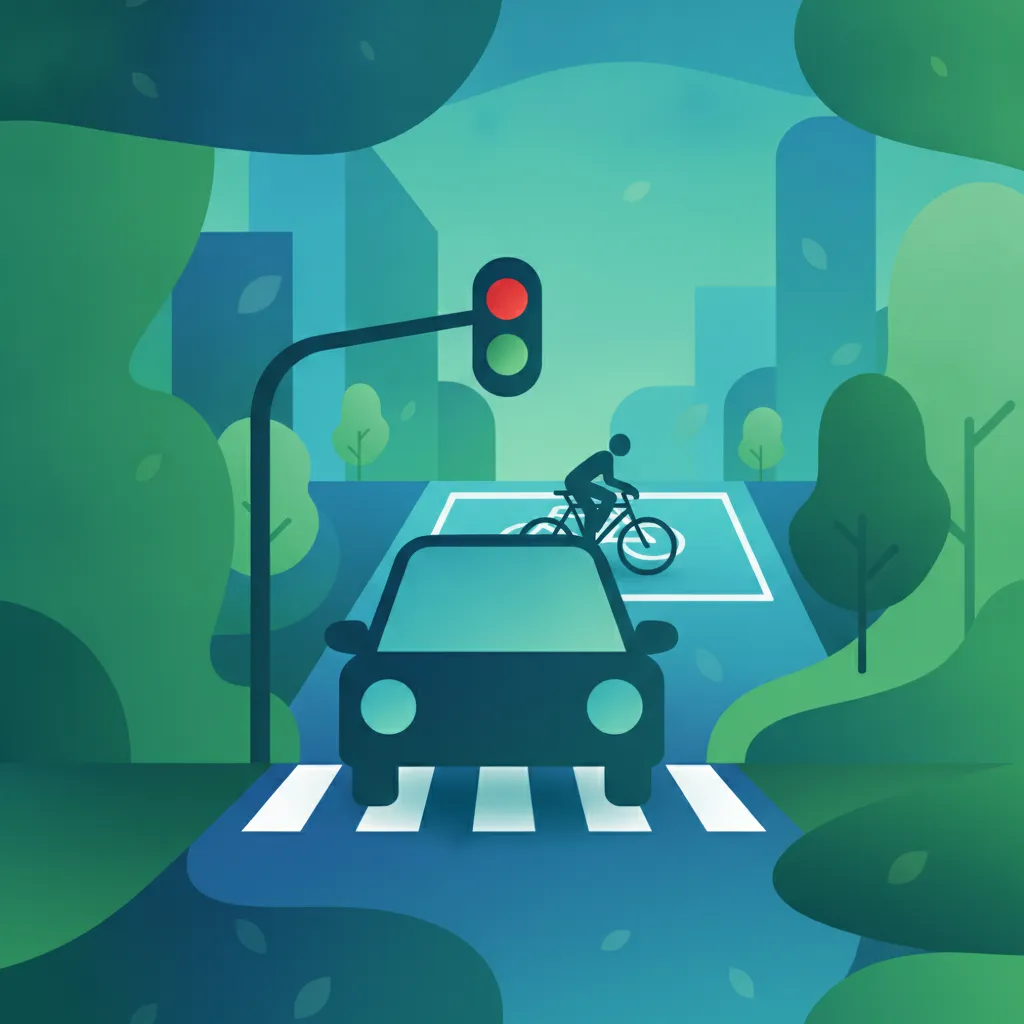
This lesson outlines the standard traffic light sequence in Ireland, detailing the exact legal requirements for red, amber, and green signals. It covers green arrow filters, flashing amber lights, and the specific cycle-friendly traffic signals encountered in urban areas. Recognizing these signals helps riders anticipate traffic patterns and execute safe maneuvers.
School zones and pedestrian crossings require high driver alertness and strict compliance with local speed limits in Ireland. This lesson details the legal rules of zebra and pelican crossings, explaining driver requirements when amber warning beacons are flashing. Drivers will study safety procedures for dropping off or picking up children, preventing common blind-spot accidents near schools.
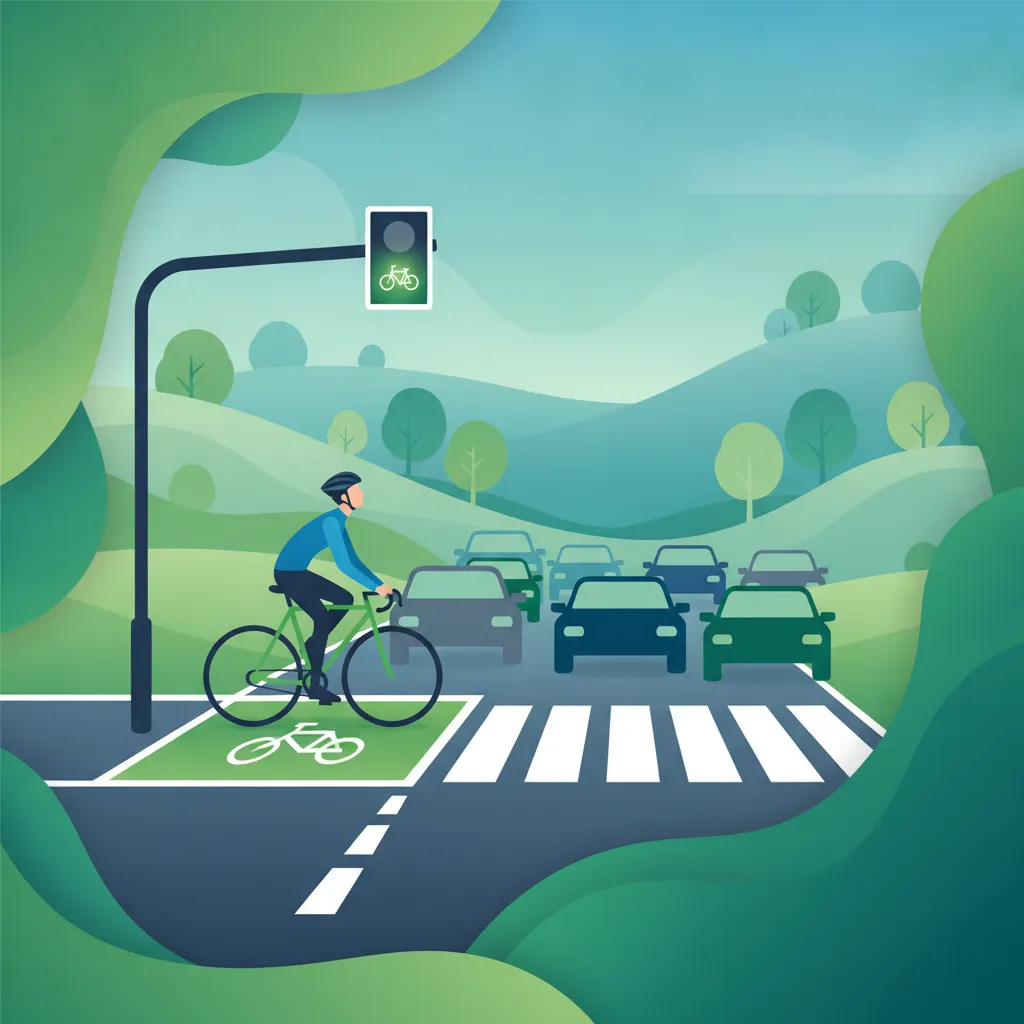
This lesson details the correct sequence and meaning of automated traffic light signals and specialized cycling indicators at Irish intersections. It explains the legal requirements associated with solid red, flashing amber, green filter arrows, and pedestrian crossing lights. Motorcyclists will learn to manage their speed when approaching lights to avoid emergency stops on slippery road surfaces.
Motorway transport requires consistent forward planning, strict speed restriction compliance, and clear mirror checks before exiting lanes. This lesson details the rules of joining and leaving motorways, navigating toll plazas safely, and managing breakdowns on the hard shoulder. Drivers will learn to balance high-speed travel with passenger stability, ensuring a comfortable, secure ride.
Find clear answers to common questions learners have about Road Markings and Lane Usage. Learn how the lesson is structured, which driving theory objectives it supports, and how it fits into the overall learning path of units and curriculum progression in Ireland. These explanations help you understand key concepts, lesson flow, and exam focused study goals.
In Ireland, you may only use a bus lane if road signs specifically indicate that motorcycles or mopeds are permitted. Always check for a sign showing a motorcycle symbol before entering the lane, as doing so illegally is a common penalty point offence.
A broken white line generally indicates that you may cross it if it is safe to do so. A continuous solid white line acts as a barrier that you must not cross or straddle, except to avoid an obstruction or for a specific safety reason.
You must not enter a yellow box junction unless your exit road is clear. You should only enter if you can clear the junction without stopping, ensuring you do not block the flow of traffic for other road users.
The theory test includes questions on safe lane discipline. Misunderstanding these markings can lead to incorrect answers regarding right-of-way and hazard prevention, which are key components of the RSA testing framework.
Use the practice question search tool to pinpoint specific topics, road signs, or rules you need to master for your official Driver Theory Test. Refine your study strategy and ensure comprehensive preparation for all aspects of the Irish driving exam. Start your focused revision now and build confidence for your learner permit test.