
This lesson guides you through the essential Mirror-Signal-Manoeuvre (MSM) routine required for navigating junctions and roundabouts safely. Mastering these techniques is a foundational step in your Category B training, ensuring you can handle intersections with the precision required for the official Irish Driver Theory Test.
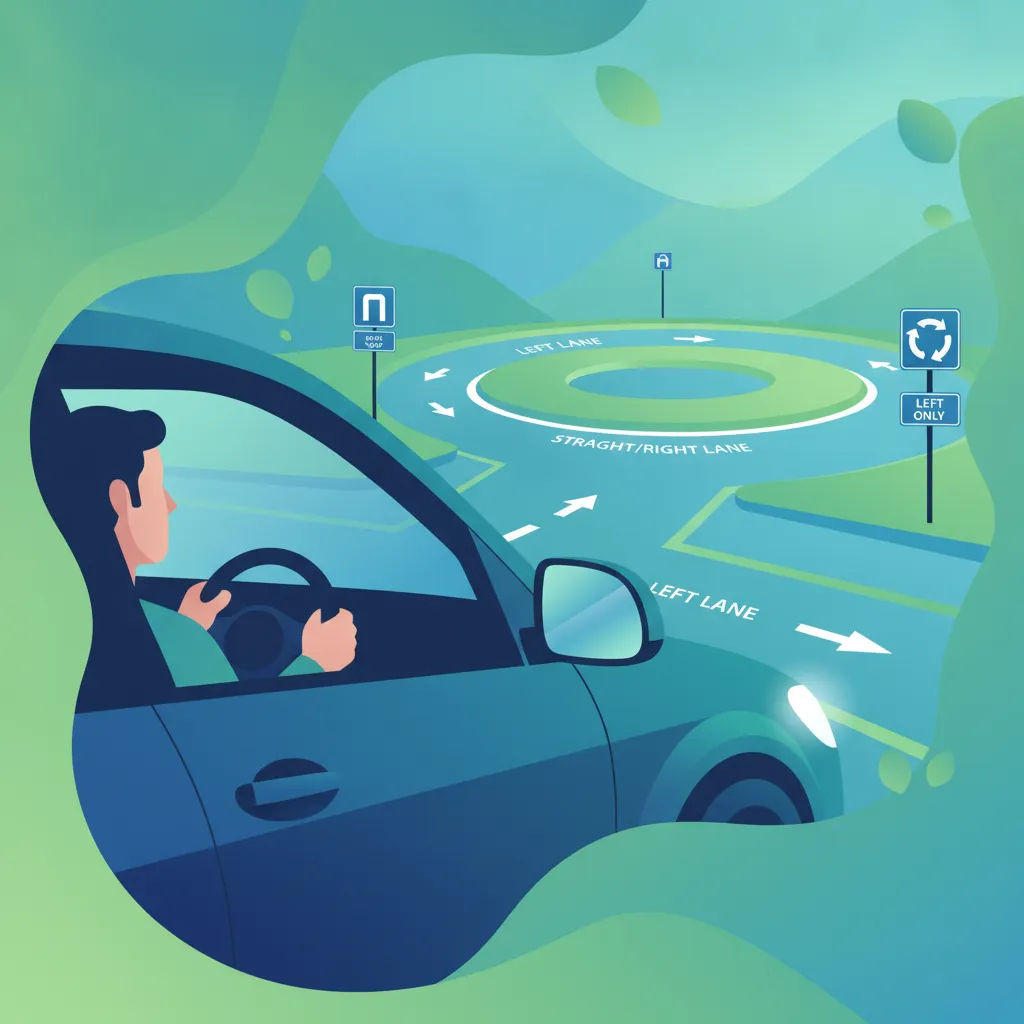
Lesson content overview
Mastering the art of executing safe, controlled, and predictable turns is a cornerstone of passing the Irish Driver Theory Test and becoming a responsible Category B licence holder. Intersections and roundabouts are high-risk zones where the paths of various road users cross. To navigate these areas safely, you must understand how to prepare early, choose the correct road positioning, communicate your intentions clearly, and control your speed.
This lesson details the mandatory driving routines, legal regulations, and best practices established by the Road Safety Authority (RSA) in Ireland.
At the heart of all turning movements in Ireland is the Mirror-Signal-Manoeuvre (MSM) routine. This systematic approach ensures that you never make an unexpected or hazardous movement. It must be performed before every turn, lane change, overtaking manoeuvre, and roundabout exit.
The mandatory defensive driving sequence requiring a driver to check mirrors, signal their intentions, and only then proceed with the physical adjustment of the vehicle's position, speed, and direction.
Before doing anything else, you must assess the traffic situation behind and beside you.
Once you have confirmed it is safe to proceed, you must signal your intention in good time.
The manoeuvre phase is itself broken down into three distinct sub-actions: Position, Speed, and Look/Execute.
Position: Move your vehicle into the correct lane or road position early. For a left turn, maintain a position about 1 metre from the kerb. For a right turn, position just left of the road's centre line (on two-way roads) or in the designated right-turn lane.
Speed: Smoothly reduce your speed by braking and shifting to an appropriate gear (typically 2nd gear for most standard 90-degree turns). This must be done before you start turning the steering wheel. Coasting with the clutch depressed or in neutral is illegal and dangerous, as it reduces your control over the vehicle.
Look and Execute: Observe the junction for hazards, oncoming traffic, and pedestrians. When a safe gap is identified, steer smoothly through the turn, maintaining your lane discipline.
Correct lane selection prevents last-minute, erratic lane changes, which are a major cause of side-impact collisions. You must read the road ahead, looking for road markings, gantry signs, and arrows painted on the tarmac.
Selecting your lane early is critical. If you find yourself in the wrong lane as you approach a junction, you must not make a sudden, dangerous lane change. Instead, you must stay in your current lane, follow its designated direction, and find a safe place further down the road to turn around. Crossing continuous solid white lines to change lanes near a junction is a serious traffic violation.
When turning left, you must not "swing wide" into the opposing lane before making the turn, nor should you "cut the corner" and clip the kerb or enter the oncoming lane of the side road. Keep your vehicle tight but safe, matching the radius of the kerb.
When turning right, steer around the imaginary centre point of the junction. Cutting diagonally across the junction risks a head-on collision with vehicles waiting at the stop line of the minor road.
Adjusting your speed appropriately is a legal mandate under Irish civil law duties of care. The posted speed limit is a limit, not a target. Sharp turns and junctions almost always require a substantial reduction in speed to maintain traction and allow adequate reaction time.
Never Coast Into a Turn: Coasting occurs when you press the clutch pedal down too early and hold it down, or place the gear lever in neutral while the vehicle is in motion. Coasting disconnects the engine from the wheels, removing engine braking, causing the vehicle to gather speed on downhill slopes, and reducing steering stability. Always brake to the correct speed, select the appropriate gear, and release the clutch before initiating the turn.
For a standard sharp left or right turn into a minor road, a safe target speed is usually between 15 km/h and 20 km/h. This speed allows you to stop safely if a pedestrian steps off the kerb or if an obstruction is suddenly revealed around the corner.
Roundabouts are designed to keep traffic moving smoothly, but they require high levels of concentration, strict lane discipline, and precise signalling.
When approaching a roundabout, you must give way to traffic already on the roundabout coming from your right.
The general rules for a standard four-arm roundabout are structured as follows:
| Intended Exit | Approach Lane | Approach Signal | Signalling While Circulating & Exiting |
|---|---|---|---|
| 1st Exit (Left/Straight) | Left-hand lane | Signal left on approach | Maintain left signal until exit is complete |
| 2nd Exit (Straight Ahead) | Left-hand lane (unless markings state otherwise) | No signal on approach | Signal left immediately after passing the exit before the one you want |
| 3rd Exit (Right/Turn Back) | Right-hand lane | Signal right on approach | Keep right signal on; switch to left signal after passing the exit before the one you want |
As you pass the exit immediately prior to your intended exit, perform a quick mirror check (interior and left wing mirror).
Apply your left turn indicator to inform other road users of your intention to leave the roundabout.
Maintain your lane position. Do not drift across lanes or cut across the paths of other vehicles circulating in the outer lane.
Cancel your signal once you have completed the exit.
Understanding the precise legal frameworks ensures compliance with the Road Traffic Act and helps you avoid penalty points during your driving test and future driving career.
In Ireland, you are legally required to signal your intention to turn or change course in good time. While the law specifies a minimum distance of 100 feet (approx. 30 metres) in normal conditions, you must adapt this based on road speed and visibility.
Modern passenger cars in the Republic of Ireland are increasingly equipped with advanced driver assistance systems, including TSR (Tilt and Turn Signal Indicator) systems. If your vehicle features a TSR system, you must ensure it is fully compliant with national vehicle standards and post-approval guidelines. The driver remains legally responsible for ensuring that all physical signals are active, clear, and timed correctly, regardless of automated steering-assist functions.
If you are forced to stop unexpectedly on or near a junction or roundabout entry due to a mechanical breakdown, puncture, or emergency, you must make your vehicle as visible as possible.
Hazard Warning Lights: You must activate your hazard warning lights if your stationary vehicle presents an obstruction or danger to other road users. This is a mandatory safety requirement under Irish traffic law. Do not use hazard lights as an excuse for illegal parking or obstruction.
When turning onto a dual carriageway or motorway, you will often use an slip road with an acceleration lane.
Errors at junctions and roundabouts are among the most common reasons for failing the Irish driving test. Be vigilant against these common errors:
The physics of turning change dramatically when environmental factors or vulnerable road users are introduced.
In wet, icy, or foggy conditions, your tyres have significantly less traction.
Always scan for cyclists, motorcyclists, and pedestrians before and during a turn.
This lesson covers the mandatory Mirror-Signal-Manoeuvre routine required for all turning manoeuvres in Ireland, breaking down each step into mirror checks, signalling requirements (approximately 30 metres before the turn), and the manoeuvre sub-steps of position, speed, and execution. It details correct lane selection at junctions, the critical importance of reducing speed before turning without coasting, and the specific priority rules for roundabouts including yielding to traffic from the right and the correct signalling sequence for each exit. The content also addresses merging onto high-speed roads using acceleration lanes, identifying vulnerable road users such as cyclists who may be in your blind spot during left turns, and common test failures including cutting corners, late lane changes, and failing to signal on roundabouts.
A short set of high-value points that capture the most important learning from this lesson.
The Mirror-Signal-Manoeuvre (MSM) routine must be applied before every turn, lane change, overtaking manoeuvre, and roundabout exit
Choose your lane early based on road markings and signs; sudden lane changes across solid lines are dangerous and illegal
Reduce speed and select the correct gear before turning; never coast with the clutch depressed as it removes engine braking and steering control
At roundabouts, always give way to traffic approaching from your right and signal left immediately after passing the exit before your intended one
Scan for cyclists on your inside before left turns and always yield to pedestrians who have already started crossing the side road
Explore all units and lessons included in this driving theory course.
Signal at least 30 metres (100 feet) before the turn in normal conditions, adjusting earlier in poor visibility or higher speeds
For standard 90-degree turns, aim to approach at 15-20 km/h to maintain control and allow reaction time for unexpected hazards
When turning right, steer around the imaginary centre point of the junction rather than cutting diagonally across the opposing lane
Use acceleration lanes to match the speed of main carriageway traffic and merge only when a 2-3 second gap is available
Coasting (driving in neutral or with clutch depressed) is a serious driving fault that reduces vehicle control and is illegal under Irish traffic law
Making late lane changes by deciding to turn at the last second and cutting across solid white lines or hatch markings near junctions
Failing to signal when exiting a roundabout, which prevents other drivers from knowing they can proceed and disrupts traffic flow
Approaching roundabouts at excessive speed, reducing the ability to scan for traffic on the right and increasing the risk of skidding
Cutting corners when turning left by clipping the kerb with rear wheels or entering the wrong side of the side road
Stopping unnecessarily at roundabout entries when the roundabout is clear, which confuses following drivers and risks rear-end collisions
Lesson content overview
A short set of high-value points that capture the most important learning from this lesson.
The Mirror-Signal-Manoeuvre (MSM) routine must be applied before every turn, lane change, overtaking manoeuvre, and roundabout exit
Choose your lane early based on road markings and signs; sudden lane changes across solid lines are dangerous and illegal
Reduce speed and select the correct gear before turning; never coast with the clutch depressed as it removes engine braking and steering control
At roundabouts, always give way to traffic approaching from your right and signal left immediately after passing the exit before your intended one
Scan for cyclists on your inside before left turns and always yield to pedestrians who have already started crossing the side road
Explore all units and lessons included in this driving theory course.
Signal at least 30 metres (100 feet) before the turn in normal conditions, adjusting earlier in poor visibility or higher speeds
For standard 90-degree turns, aim to approach at 15-20 km/h to maintain control and allow reaction time for unexpected hazards
When turning right, steer around the imaginary centre point of the junction rather than cutting diagonally across the opposing lane
Use acceleration lanes to match the speed of main carriageway traffic and merge only when a 2-3 second gap is available
Coasting (driving in neutral or with clutch depressed) is a serious driving fault that reduces vehicle control and is illegal under Irish traffic law
Making late lane changes by deciding to turn at the last second and cutting across solid white lines or hatch markings near junctions
Failing to signal when exiting a roundabout, which prevents other drivers from knowing they can proceed and disrupts traffic flow
Approaching roundabouts at excessive speed, reducing the ability to scan for traffic on the right and increasing the risk of skidding
Cutting corners when turning left by clipping the kerb with rear wheels or entering the wrong side of the side road
Stopping unnecessarily at roundabout entries when the roundabout is clear, which confuses following drivers and risks rear-end collisions
Explore search topics learners often look for when studying Safe Turning Techniques at Intersections and Roundabouts. These topics reflect common questions about road rules, driving situations, safety guidance, and lesson level theory preparation for learners in Ireland.
Browse additional driving theory lessons that cover connected traffic rules, road signs, and common driving situations related to this topic. Improve your understanding of how different rules interact across everyday traffic scenarios.
Understand the legal right of way and traffic priority at uncontrolled junctions and major intersections. This lesson details how to interpret road markings and signs to determine who has priority, helping you navigate junctions safely while following official Road Safety Authority guidelines for Irish road users.

Uncontrolled junctions represent a high-risk scenario because they lack physical signs, lines, or lights to dictate priority. This lesson covers the crucial 'priority to the right' principle, where you must yield to any traffic approaching from your right-hand side. You will learn the importance of reducing your speed, preparing to stop, and verifying the intentions of other drivers at these equal-status crossings.
This lesson covers the absolute rules of priority that regulate junctions, roundabouts, and pedestrian crossings in Ireland. It teaches riders when they must yield, who has right-of-way, and how to read Stop and Yield signs correctly. Understanding these priority hierarchies prevents collisions and maintains orderly, predictable movement at busy junctions.
This lesson teaches the fundamental principles of priority and right-of-way at controlled and uncontrolled intersections across Ireland. It explains the legal obligations at yield signs, stop lines, and when meeting oncoming traffic turning across your lane. Motorcyclists will learn to carefully verify other drivers' intentions rather than assuming they will yield the correct right-of-way.

Stop and yield signs require drivers to surrender right-of-way to crossing traffic, but they command different physical actions. This lesson explains that a stop sign mandates a complete, absolute halt behind the line, whereas a yield sign requires you to slow down and stop only if other traffic is approaching. You will learn how to manage restricted visibility at junctions and how to creep forward safely when clear.
Right-of-way rules establish a clear order of precedence when the paths of two or more vehicles cross. This lesson explains how traffic on a major road has priority over traffic emerging from a minor road, and the general rule of yielding to oncoming vehicles when turning right. You will develop a solid understanding of how to approach intersections defensively, assessing speed and distance to make safe decisions.
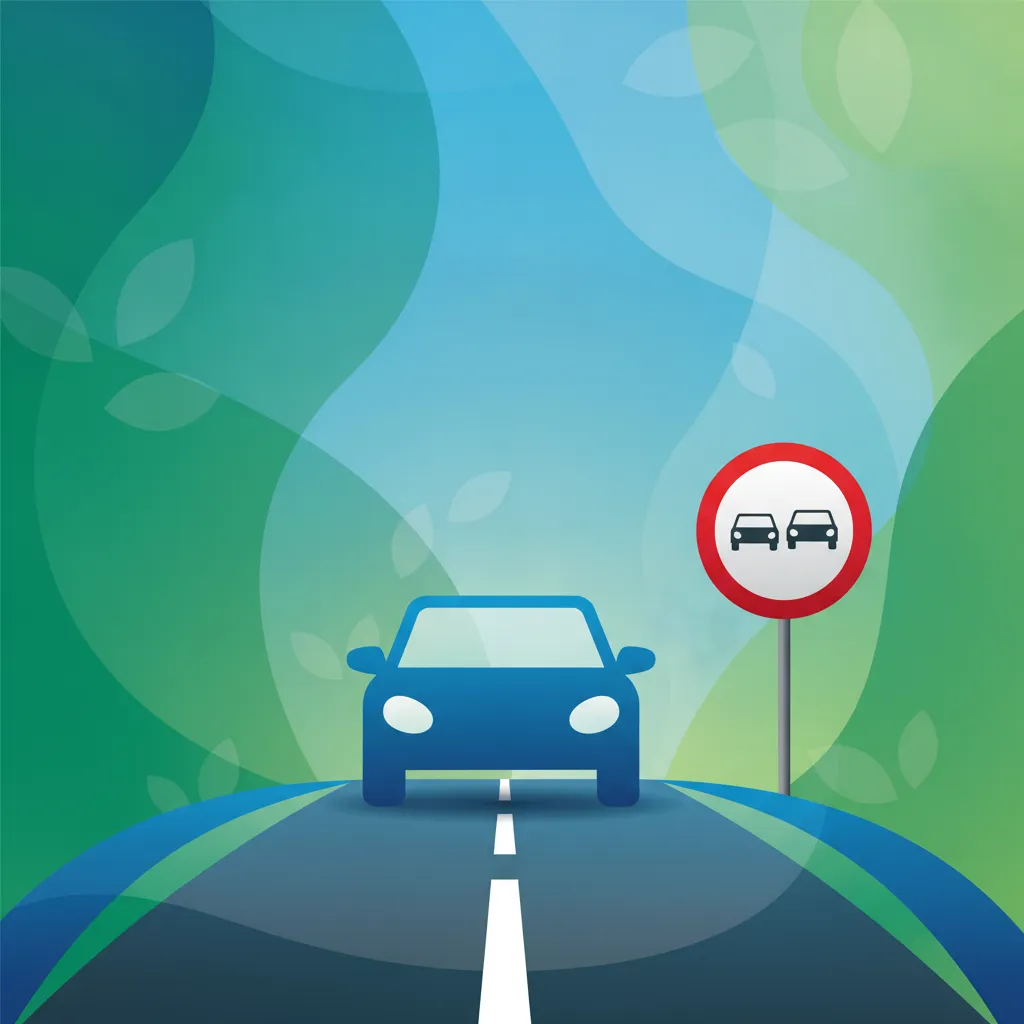
No-overtaking zones are marked in areas with restricted visibility, such as approaching bends, humps, or narrow bridges. This lesson details how continuous solid white lines legally prohibit passing, along with the very narrow exceptions allowed under Irish law. You will learn to identify these high-risk areas from visual markings, ensuring you never initiate a passing manoeuvre that puts oncoming traffic in immediate danger.
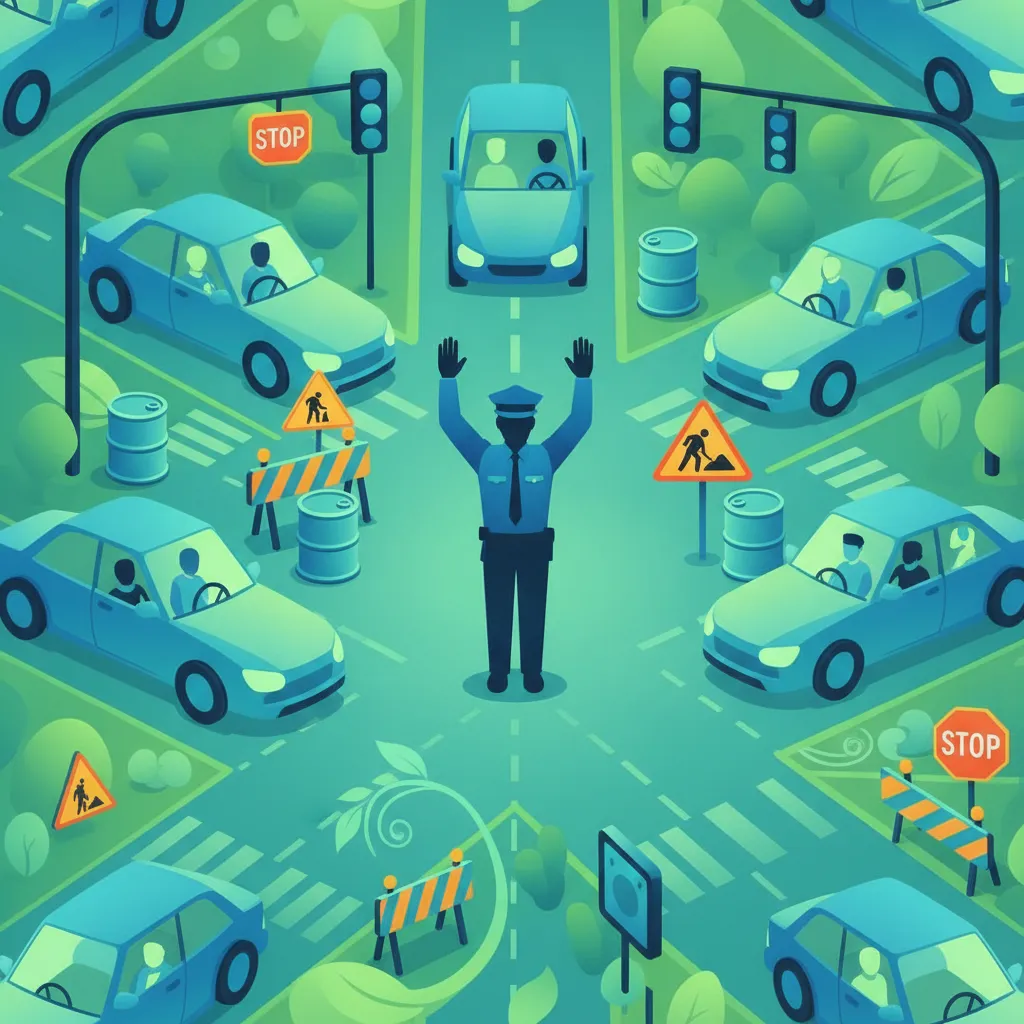
When traffic control is actively performed by a Garda, a school warden, or authorized marshals, their hand signals override all standard traffic lights and road signs. This lesson illustrates the common hand gestures used by officers to stop, release, or slow down traffic. You will learn your strict legal obligation to obey these manual commands, ensuring public safety during emergencies, events, or school crossings.

Navigating multi-lane roundabouts requires precise lane selection, continuous scanning, and timely signaling. This lesson teaches you the 'clock rule' for determining which lane to enter, how to yield to traffic already on the roundabout from your right, and when to activate your left indicator to exit. Mastering these procedures minimizes lane-drift accidents and ensures a seamless flow of traffic on busy roundabouts.

Irish driving theory demands that drivers keep to the left-hand side of the road unless overtaking or turning right. This lesson explains how to maintain consistent lane discipline on multi-lane roads, how to perform safe lane changes, and the dangers of drifting. You will learn the safety sequence of checking mirrors, checking blind spots, signalling, and smoothly executing a lane change without disrupting trailing traffic.

School zones and pedestrian crossings require high driver alertness and strict compliance with local speed limits in Ireland. This lesson details the legal rules of zebra and pelican crossings, explaining driver requirements when amber warning beacons are flashing. Drivers will study safety procedures for dropping off or picking up children, preventing common blind-spot accidents near schools.
Explore the common risks and hazards associated with multi-lane roundabouts and busy urban junctions. This guide focuses on identifying vulnerable road users, managing blind spots, and anticipating the actions of other drivers to ensure safe and predictable navigation in high-traffic Irish road environments.
Navigating multi-lane roundabouts requires precise lane selection, continuous scanning, and timely signaling. This lesson teaches you the 'clock rule' for determining which lane to enter, how to yield to traffic already on the roundabout from your right, and when to activate your left indicator to exit. Mastering these procedures minimizes lane-drift accidents and ensures a seamless flow of traffic on busy roundabouts.
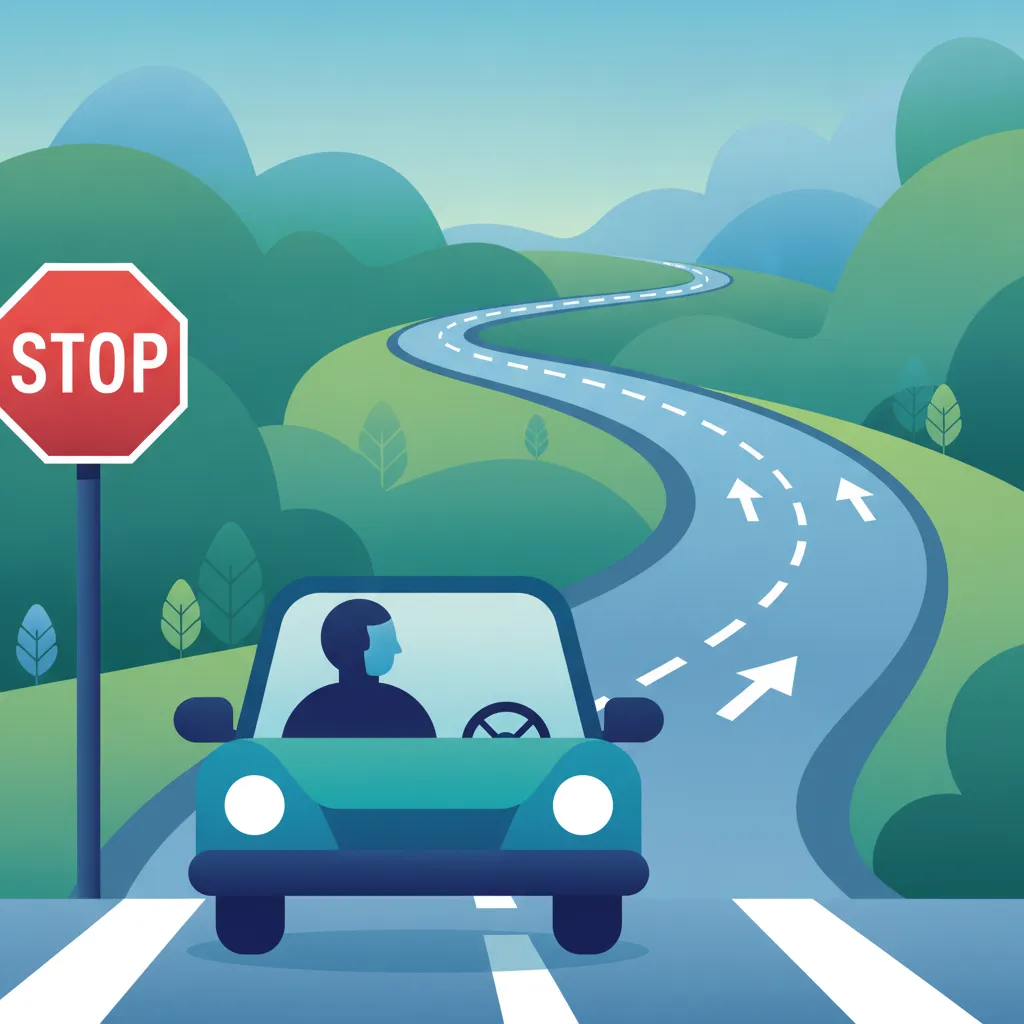
This lesson details the sequential steps required to approach and exit junctions safely under the Irish driving rules. It teaches riders how to select the correct lane, utilize mirrors, apply early signals, and reduce speed appropriately. Effective observation strategies are highlighted to help riders identify crossing pedestrians or approaching side traffic.

This lesson focuses on the safe approach and execution of turns at T-junctions, staggered intersections, and blind crossroads. It explains the critical mirror-signal-manoeuvre routine and how to select the best position for maximum visibility to cross-traffic. Motorcyclists will learn to identify potential hazards like vehicles pulling out suddenly or turning across their direct path.
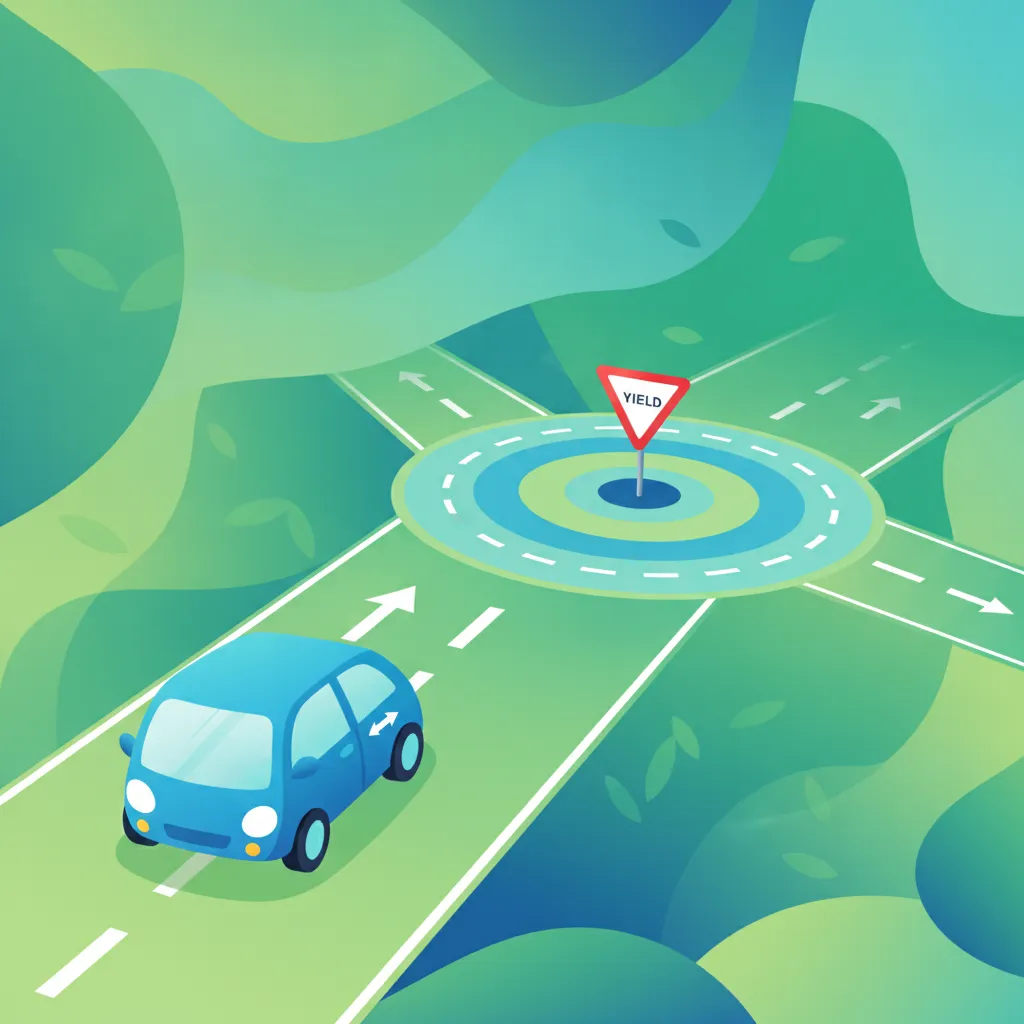
This lesson covers correct procedures for navigating roundabouts, which present significant risks for Category AM riders. It details lane selection rules, timely indicator signals for exiting, and the importance of checking blind spots before shifting lanes. Riders will learn to safely share the roundabout with large vehicles and vulnerable road users.
This lesson provides a comprehensive guide to navigating single and multi-lane roundabouts safely in accordance with the Irish Rules of the Road. It covers correct lane selection on approach, signaling rules for exiting, and maintaining a steady path through traffic. Riders will learn to anticipate lane-changing mistakes made by other drivers and manage the unique banking angles of roundabouts.

This lesson addresses the mechanical dynamics of turning long-wheelbase and articulated commercial vehicles at intersections, junctions, and roundabouts. It covers the necessity of deep cornering lines, early mirror checks, and correct signaling to warn vulnerable road users of wide turn maneuvers. Drivers will learn how to minimize rear cut-in and ensure the entire vehicle clears urban obstacles safely.
Uncontrolled junctions represent a high-risk scenario because they lack physical signs, lines, or lights to dictate priority. This lesson covers the crucial 'priority to the right' principle, where you must yield to any traffic approaching from your right-hand side. You will learn the importance of reducing your speed, preparing to stop, and verifying the intentions of other drivers at these equal-status crossings.

The length of a commercial passenger vehicle creates a wide rear-wheel track offset, requiring drivers to swing wide during tight turns. This lesson teaches cornering mechanics, mirror adjustment guidelines, and how to check blind spots for cyclists on the inside lane. Drivers will master intersection control, preventing collisions with stationary street furniture or curbs.
Proactive hazard perception involves constantly scanning the road ahead to identify potential dangers before they turn into actual emergencies. This lesson covers active scanning techniques, helping you look far ahead, check mirrors regularly, and identify subtle risk clues such as exhaust smoke from parked cars or children playing near kerbs. Anticipating these developments gives you the time to adjust speed and position safely.
Find clear answers to common questions learners have about Safe Turning Techniques at Intersections and Roundabouts. Learn how the lesson is structured, which driving theory objectives it supports, and how it fits into the overall learning path of units and curriculum progression in Ireland. These explanations help you understand key concepts, lesson flow, and exam focused study goals.
MSM stands for Mirror-Signal-Manoeuvre. It is a vital safety sequence that ensures you are aware of traffic behind you, communicate your intentions to others, and perform your turn safely. Following this routine is essential for passing the driving theory test and real-world safety.
You should position your vehicle as close to the centre line of the road as is safe, without crossing into the oncoming lane. Always check your mirrors and signal in good time to alert other drivers of your intention.
The most common mistake is choosing the incorrect lane before entering the roundabout. Always check road markings and signage well in advance to ensure you are in the correct lane for your intended exit.
No, you only need to stop if there is a Stop sign or a Stop line painted on the road. At Yield signs or uncontrolled junctions, you must slow down and be prepared to stop if the way is not clear.
Use the practice question search tool to pinpoint specific topics, road signs, or rules you need to master for your official Driver Theory Test. Refine your study strategy and ensure comprehensive preparation for all aspects of the Irish driving exam. Start your focused revision now and build confidence for your learner permit test.