This lesson guides you through the Essential Driver Training (EDT) program, which is the foundational pathway for all learner drivers in Ireland. You will learn about the role of your Approved Driving Instructor (ADI), the 12 mandatory modules, and how to effectively track your progress using your official logbook.

Lesson content overview
Navigating the path to a full Category B (passenger car) driving licence in Ireland requires a structured blend of theoretical knowledge and practical expertise. To bridge the gap between passing the Irish Driver Theory Test and passing the practical driving test, the Road Safety Authority (RSA) mandates a structured, high-quality training programme known as Essential Driver Training (EDT).
This comprehensive guide covers everything you need to know about the EDT framework, the role of your Approved Driving Instructor (ADI), the 12 mandatory modules, and how your progress is officially documented in your logbook.
The Essential Driver Training (EDT) programme is a statutory training curriculum designed to help learner drivers develop the fundamental physical skills, cognitive habits, and safety awareness required to drive responsibly on Irish roads.
The primary objective of the EDT is to reduce the disproportionately high collision rates among novice drivers. Rather than simply teaching learners how to pass the practical driving test, the programme focuses on long-term hazard perception, risk management, and vehicle control.
A statutory programme consisting of twelve mandatory structured lessons designed to teach foundational driving skills, safety concepts, and hazard awareness to Category B learner drivers in Ireland.
Completing the EDT is not optional; it is a strict legal requirement. All learner drivers who obtained their first Category B learner permit are required to complete the 12 EDT modules before they can book their practical driving test. Furthermore, under Irish law, you cannot sit your practical driving test until at least six months have passed since the effective date on your first learner permit.
All mandatory EDT lessons must be conducted and signed off by a registered Approved Driving Instructor (ADI). The RSA regulates and monitors ADIs to ensure that the quality of driver instruction across Ireland meets stringent safety and educational standards.
A professional driving instructor who has undergone rigorous training, background checks, and examinations, and is officially registered and qualified by the Road Safety Authority (RSA) to deliver driver training.
Only lessons logged by an active, licensed ADI are legally recognized. If you take lessons from an unregistered individual—such as a well-meaning family member or an unlicensed tutor—those hours will not count toward your official EDT logbook.
The EDT curriculum is divided into 12 distinct, progressive modules. Each lesson lasts at least one hour and focuses on a specific aspect of vehicle operation, road positioning, or hazard management.
This introductory lesson focuses on the cockpit drill, basic vehicle controls, and moving off and stopping safely. You will learn to coordinate the clutch, accelerator, and footbrake, and practice scanning your surroundings before changing position.
Reversing is a high-risk manoeuvre due to blind spots. This module teaches you how to maintain control of your car while backing up in a straight line or around a corner, emphasizing constant observation, the correct use of mirrors, and yielding to passing traffic.
Managing slopes requires precise clutch control and handbrake coordination. This lesson ensures you can move off smoothly on varying inclines without rolling backward or stalling, which is a common cause of test failures and minor collisions.
Understanding how long it takes to bring a vehicle to a complete stop is vital for safety. This module covers progressive braking techniques, calculating safe following distances, and performing controlled stops under different speed limits.
Navigating junctions and roundabouts requires a deep understanding of priority rules. You will practice approaching, negotiating, and exiting various junctions, applying the correct signals, and observing right-of-way rules.
Overtaking is one of the most dangerous driving actions. This module covers when it is safe, legal, and necessary to overtake, how to judge the speed and distance of oncoming vehicles, and how to safely return to your lane.
This module focuses on sharing the road. You will learn how to deal with oncoming traffic on narrow roads, how to yield correctly at yield signs, stop signs, and yellow box junctions, and how to safely pass stationary hazards.
Maintaining a correct lane position prevents side-impact collisions. You will learn the importance of staying in the left-hand lane under normal circumstances, how to use multi-lane roads, and how to execute safe lane changes using the Mirror-Signal-Mirror-Manoeuvre (MSMM) routine.
Building on Module 5, this lesson focuses on negotiating more complex intersections, such as staggered junctions, filter lights, and turns where visibility is severely restricted. You will learn how to position your car safely without cutting corners.
Speed must always be adjusted to match the road design, traffic flow, and environmental conditions. This module helps you recognise speed limit signs, manage your speed in built-up areas, and understand how speed increases both your stopping distance and the severity of potential impacts.
This module teaches you how to select the correct gear for your speed and road conditions, preventing unnecessary engine wear and maintaining maximum control. It covers both manual gearboxes (clutch-gear coordination) and automatic transmissions.
The final module focuses on precision handling. You will practice parallel parking, bay parking, turnabouts (three-point turns), and navigating narrow streets with parked cars on both sides, ensuring you maintain spatial awareness at all times.
As you progress through your 12 lessons, your learning journey must be documented in an official EDT Logbook.
Keep your physical logbook safe! If you lose your paper logbook, you may need to contact your previous ADI(s) to have your completed lessons re-verified and stamped, which can delay your ability to book a driving test.
You cannot practice driving on public roads alone; you must always be accompanied by an experienced driver, known in the EDT framework as a Sponsor.
Your Sponsor must hold a full Category B Irish driving licence for at least two continuous years. Your ADI will write specific notes in your logbook directed at your Sponsor, detailing what skills you need to practice between your official EDT lessons.
Pass your Theory Test: Obtain your official Category B Irish Learner Permit.
Select an ADI: Find a registered, RSA-approved driving instructor in your area.
Obtain your Logbook: Receive your official paper logbook during your first lesson.
Complete Modules 1–12: Work through each module with your ADI, practicing between sessions with your Sponsor.
Verify on MyEDT: Check the online portal to ensure all 12 modules have been uploaded by your instructor.
Observe the Six-Month Rule: Ensure at least six months have passed since your first learner permit was issued before booking your practical test.
Understanding the strict legal framework around the EDT can prevent costly mistakes and unnecessary delays.
Your EDT training is designed to expose you to a variety of road and environmental conditions. Safe drivers must adapt their techniques dynamically based on external factors:
Let's look at how specific EDT skills translate into real-world safe driving decisions.
Imagine you are stopped at a red light on a steep incline with a vehicle positioned closely behind you.
You are driving at 50 km/h in a residential zone when a ball rolls into the street ahead.
The knowledge you acquire while studying for your Irish Driver Theory Test is directly applied during your practical EDT lessons. For example, understanding road signs and markings is essential before you attempt Module 5 (Intersections and Roundabouts). Similarly, knowing the legal speed limits and emergency stopping distances is a prerequisite for Module 10 (Speed Management).
By mastering the theoretical rules of the road, you reduce your cognitive load during your practical lessons, allowing you to focus on physical vehicle control and hazard perception.
The Essential Driver Training programme is a mandatory 12-lesson curriculum for all first-time Category B learner permit holders in Ireland, designed to build foundational driving skills, hazard perception, and safety awareness before the practical test. Each lesson must be delivered by a registered Approved Driving Instructor and formally recorded in both a physical logbook and the RSA's MyEDT digital portal, with learners required to hold their permit for at least six months before booking their test. The 12 progressive modules cover essential skills from basic vehicle control and hill starts to complex junctions and parking, with the programme's primary goal being to reduce collision rates among novice drivers rather than simply passing the practical test. Common pitfalls include using unregistered instructors, incomplete digital uploads, driving unaccompanied, and failing to verify vehicle documentation requirements before lessons or the test.
A short set of high-value points that capture the most important learning from this lesson.
All Category B learner drivers must complete 12 mandatory EDT modules before booking their practical test
Lessons must be delivered by a registered RSA-approved ADI; lessons from unregistered instructors do not count toward your logbook
The 6-month rule requires you to hold your first learner permit for at least 6 months before taking the practical test
Your EDT progress must be recorded both in a physical logbook and digitally on the RSA's MyEDT portal
Theory knowledge from the Driver Theory Test directly supports performance in practical EDT modules
Explore all units and lessons included in this driving theory course.
Only RSA-registered ADIs can legally sign your logbook and upload modules to MyEDT
Your Sponsor must hold a full Category B licence for at least 2 continuous years
If you lose your physical logbook, you must contact previous ADIs to re-verify completed lessons, which can delay test booking
Learner drivers in Ireland are legally prohibited from driving on motorways
Progressive braking means gentle initial pressure, firm pressure increase, and gentle release just before stopping
Taking lessons from an unregistered instructor, resulting in hours that cannot be logged toward test eligibility
Failing to verify all 12 modules appear as completed on the MyEDT online portal before attempting to book the practical test
Driving unaccompanied or with an unqualified Sponsor, which is a serious road traffic offence with potential impoundment and fines
Arriving for a lesson or test with a vehicle missing valid L-plates, insurance, NCT, or motor tax disc
Assuming all 12 EDT hours alone make you test-ready without practicing skills between sessions with your Sponsor
Lesson content overview
A short set of high-value points that capture the most important learning from this lesson.
All Category B learner drivers must complete 12 mandatory EDT modules before booking their practical test
Lessons must be delivered by a registered RSA-approved ADI; lessons from unregistered instructors do not count toward your logbook
The 6-month rule requires you to hold your first learner permit for at least 6 months before taking the practical test
Your EDT progress must be recorded both in a physical logbook and digitally on the RSA's MyEDT portal
Theory knowledge from the Driver Theory Test directly supports performance in practical EDT modules
Explore all units and lessons included in this driving theory course.
Only RSA-registered ADIs can legally sign your logbook and upload modules to MyEDT
Your Sponsor must hold a full Category B licence for at least 2 continuous years
If you lose your physical logbook, you must contact previous ADIs to re-verify completed lessons, which can delay test booking
Learner drivers in Ireland are legally prohibited from driving on motorways
Progressive braking means gentle initial pressure, firm pressure increase, and gentle release just before stopping
Taking lessons from an unregistered instructor, resulting in hours that cannot be logged toward test eligibility
Failing to verify all 12 modules appear as completed on the MyEDT online portal before attempting to book the practical test
Driving unaccompanied or with an unqualified Sponsor, which is a serious road traffic offence with potential impoundment and fines
Arriving for a lesson or test with a vehicle missing valid L-plates, insurance, NCT, or motor tax disc
Assuming all 12 EDT hours alone make you test-ready without practicing skills between sessions with your Sponsor
Explore search topics learners often look for when studying Driver Training and Theory Test Overview. These topics reflect common questions about road rules, driving situations, safety guidance, and lesson level theory preparation for learners in Ireland.
Browse additional driving theory lessons that cover connected traffic rules, road signs, and common driving situations related to this topic. Improve your understanding of how different rules interact across everyday traffic scenarios.
Learn about the mandatory legal obligations for learner drivers in Ireland including vehicle documentation, insurance requirements, and the correct display of L-plates. Understand your role and the responsibilities of your accompanying sponsor to ensure full compliance with the Road Safety Authority regulations while operating a vehicle on public roads.
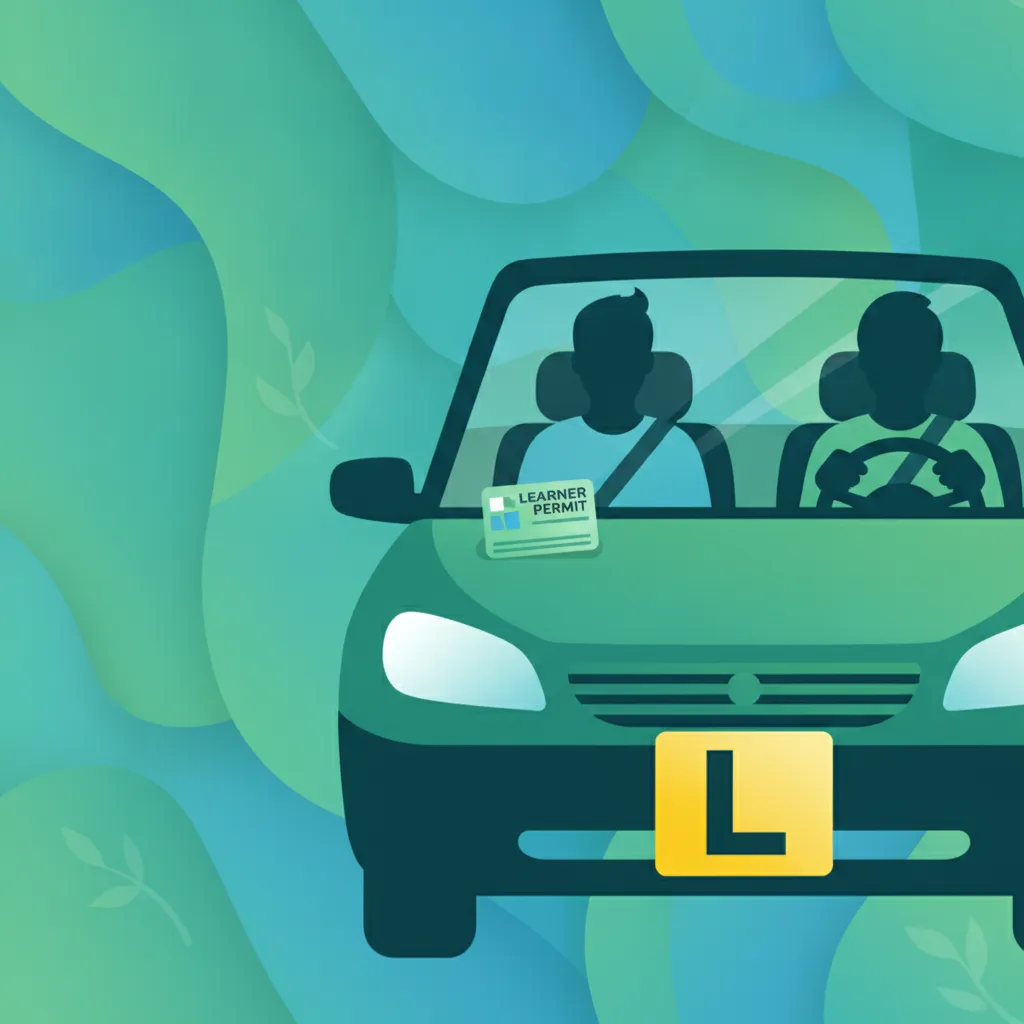
Learner drivers in Ireland must adhere to strict operational rules, including the compulsory display of red L-plates and driving under qualified supervision. This lesson outlines your specific duties as a learner, the legal definitions of an accompanying experienced driver, and the elevated safety margins you must maintain on the road. Failing to comply with these learner regulations carries serious legal penalties and delays your progression to a full driving licence.
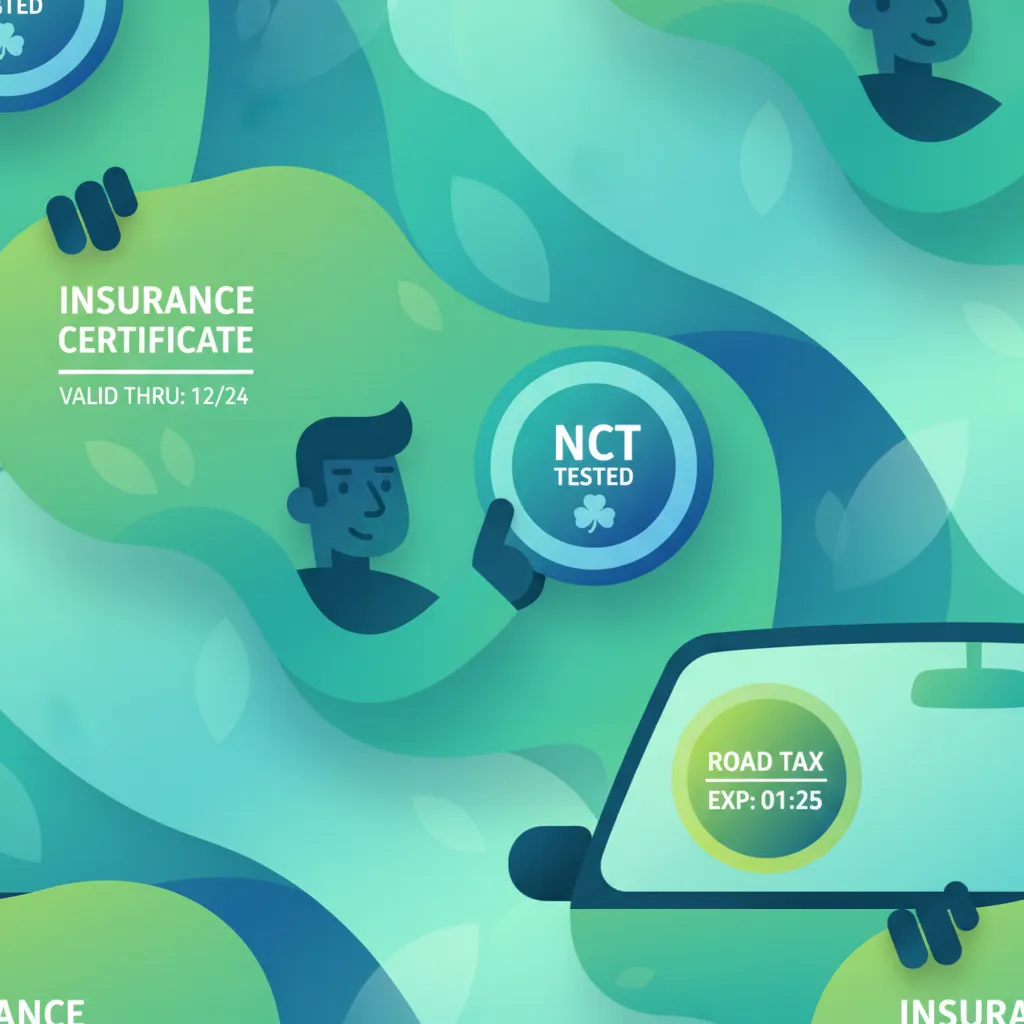
To legally drive in Ireland, your car must be insured, taxed, and certified as roadworthy through the National Car Test. This lesson details the types of motor insurance cover available, how to display your tax and insurance discs, and the schedule for mandatory NCT inspections. Keeping these documents up to date ensures your vehicle meets national safety and environmental standards, preventing heavy fines or vehicle seizure.

This lesson details the statutory rules governing learner permit holders, including compulsory safety gear and vehicle roadworthiness standards. Riders must understand the requirement for high-visibility clothing, functioning warning devices, and compliance with the official Rules of the Road. Safe riding habits are established by strictly adhering to these RSA standards.

This lesson covers the absolute legal requirement for professional drivers to keep, update, and display essential transit and driver paperwork. It details the role of the Driver Certificate of Professional Competence, vehicle registration documents, transport logs, and insurance certs. Drivers will learn how to present clear records to Irish Road Safety Authority officers and Gardai during compliance inspections.
This lesson details the legal requirements for motorcycle insurance under Irish law, emphasizing the absolute necessity of holding valid third-party cover. It outlines the rider's responsibility to maintain their motorcycle in a completely roadworthy condition, focusing on critical safety components like tyres, brakes, and lights. Learners will examine how mechanical failures and non-compliance with maintenance standards compromise legal eligibility and safety.
Develop essential skills for identifying and responding to potential traffic hazards on Irish roads. This guide explains the systematic approach to hazard anticipation including scanning techniques, road positioning, and defensive driving principles necessary for managing complex traffic situations and ensuring the safety of all vulnerable road users.
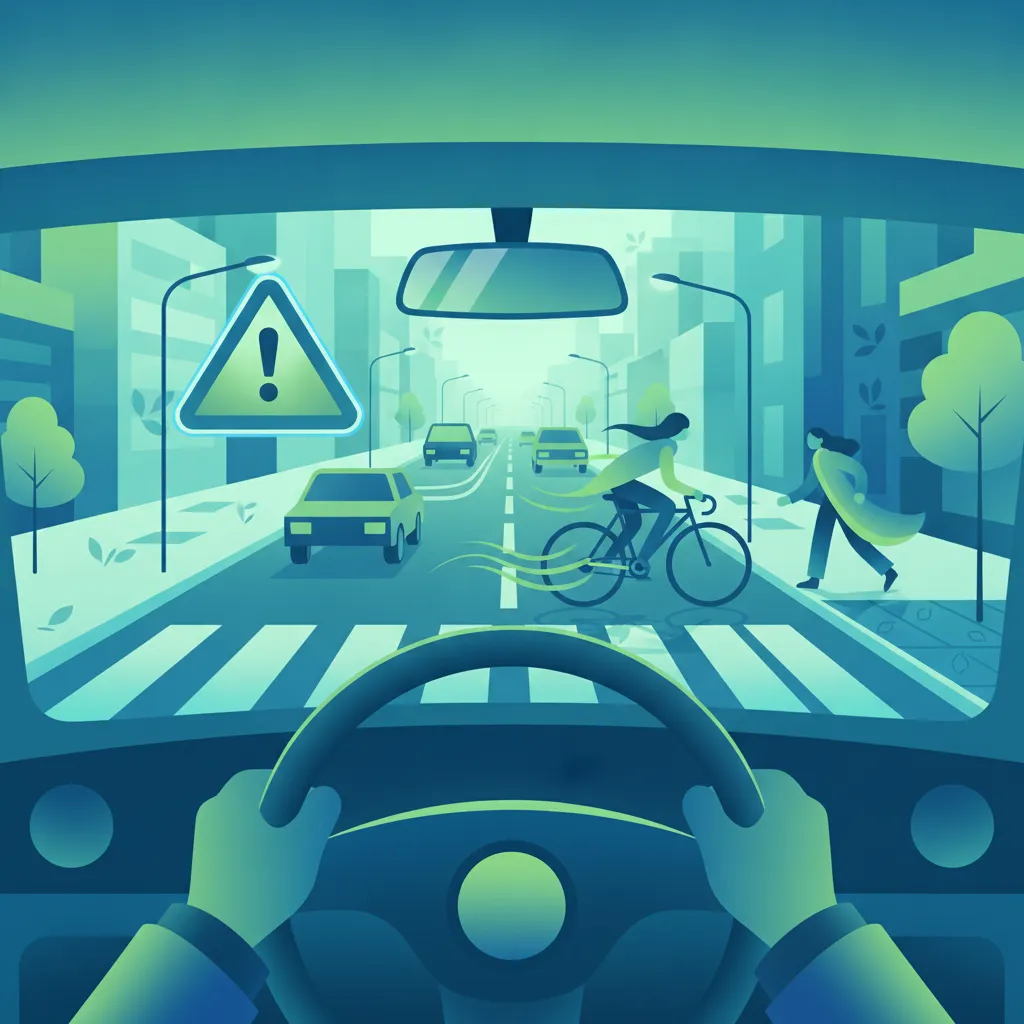
Proactive hazard perception involves constantly scanning the road ahead to identify potential dangers before they turn into actual emergencies. This lesson covers active scanning techniques, helping you look far ahead, check mirrors regularly, and identify subtle risk clues such as exhaust smoke from parked cars or children playing near kerbs. Anticipating these developments gives you the time to adjust speed and position safely.

Heavy vehicles require continuous visual scanning to identify small or slow-moving road users who may enter the path of travel. This lesson explores the typical behaviors of young children, elderly pedestrians, and visually impaired road users. Drivers will build strong hazard perception skills to anticipate sudden movements, ensuring they can brake safely and avoid serious accidents.

Warning signs in Ireland are typically diamond-shaped with yellow backgrounds and black symbols, indicating potential dangers on the road ahead. This lesson details signs for upcoming sharp bends, narrow roads, steep hills, pedestrian activity, and animal hazards. Learning to spot these warning indicators early allows you to reduce speed safely and adjust your vehicle positioning before encountering the hazard itself.

Irish rural roads are often narrow, winding, and bordered by high hedges, presenting unique hazards compared to urban streets. This lesson focuses on scanning for hidden hazards such as slow-moving farm machinery, mud on the road surface, and loose livestock. You will learn how to adjust your speed before entering blind bends, sound your horn at blind crests, and safely share the road with local agricultural traffic.

This lesson highlights the importance of smooth throttle adjustments for maintaining traction and stability on a moped. It teaches riders how to anticipate potential road hazards early, reducing the need for sudden emergency braking. Developing strong observation habits allows riders to adjust their speed smoothly and respond safely to traffic changes.

This lesson teaches how to cultivate a proactive defensive riding mindset, focusing on situational awareness and constant hazard scanning. It describes the system of motorcycle control, encouraging riders to anticipate potential mistakes from other drivers, pedestrians, and cyclists. Motorcyclists will learn to position themselves defensively, leaving clear escape routes in all driving environments.

This lesson outlines how motorcyclists should respond when permanent road signs are dirty, damaged, or hidden by overgrown trees and hedges. It introduces the temporary signage, warning cones, and detour markers commonly deployed at active roadwork zones in Ireland. Riders will learn to read the road ahead defensively, reducing speed when visual information is incomplete or compromised.

Maintaining an extensive buffer zone ahead of a large passenger vehicle is critical to ensuring enough space for emergency maneuvers. This lesson teaches the time-gap method, detailing how following distances must double on wet roads or increase with full passenger loads. It builds hazard anticipation skills, teaching drivers to read distant traffic cues and react early to hazards.
This lesson covers the strategic aspects of journey management, emphasizing the safety benefits of proactive route planning and weather checks. It teaches riders how to select safer roads, avoid high-congestion zones during rush hour, and schedule regular rest intervals. Motorcyclists will learn to pack essential tools, emergency contacts, and spare safety gear to remain prepared for any roadside situation.

Driving at night presents severe challenges due to reduced visibility, driver fatigue, and headlight glare from oncoming vehicles. This lesson teaches you how to manage your headlights, use road edge markers to steer through dark curves, and look away from oncoming bright lights. You will learn to drive within the range of your headlights and remain highly alert for pedestrians or cyclists not wearing reflective gear.
Find clear answers to common questions learners have about Driver Training and Theory Test Overview. Learn how the lesson is structured, which driving theory objectives it supports, and how it fits into the overall learning path of units and curriculum progression in Ireland. These explanations help you understand key concepts, lesson flow, and exam focused study goals.
Yes, if you received your first learner permit after April 2011, you must complete the 12 one-hour EDT sessions with an RSA-approved ADI to be eligible for your practical driving test.
You should contact the RSA immediately to report the loss. Your ADI can help verify your completed lessons, but it is vital to keep your logbook safe as it is the official record of your training.
No, the theory test and the EDT practical training are separate requirements. You must pass your theory test before you can book your practical driving test, but both are essential for your development as a safe driver.
No. To be credited for your EDT, the lessons must be delivered by a professional Approved Driving Instructor (ADI) who is registered with the Road Safety Authority.
Use the practice question search tool to pinpoint specific topics, road signs, or rules you need to master for your official Driver Theory Test. Refine your study strategy and ensure comprehensive preparation for all aspects of the Irish driving exam. Start your focused revision now and build confidence for your learner permit test.