
This lesson explores the essential physics of stopping your motorcycle, focusing on the correct application of front and rear brakes to maintain control. It is a critical part of our Category A course, helping you understand how speed, road surface, and weight distribution influence your safety on Irish roads.
Lesson content overview
Riding a motorcycle safely requires a deep understanding of physical forces, human reaction dynamics, and mechanical systems. Unlike driving a car, where braking requires simply pressing a single foot pedal, stopping a motorcycle is an active, highly skilled process. It demands the coordination of separate front and rear braking systems, an understanding of dynamic weight transfer, and constant adjustment for road surface friction.
In Ireland, where weather conditions can change rapidly and rural roads often present unexpected hazards like mud, loose chippings, or standing water, mastering braking principles is vital. This lesson covers the physics and techniques required to decelerate safely and efficiently, ensuring you are fully prepared for both your Category A, A1, or A2 theory exam and real-world riding.
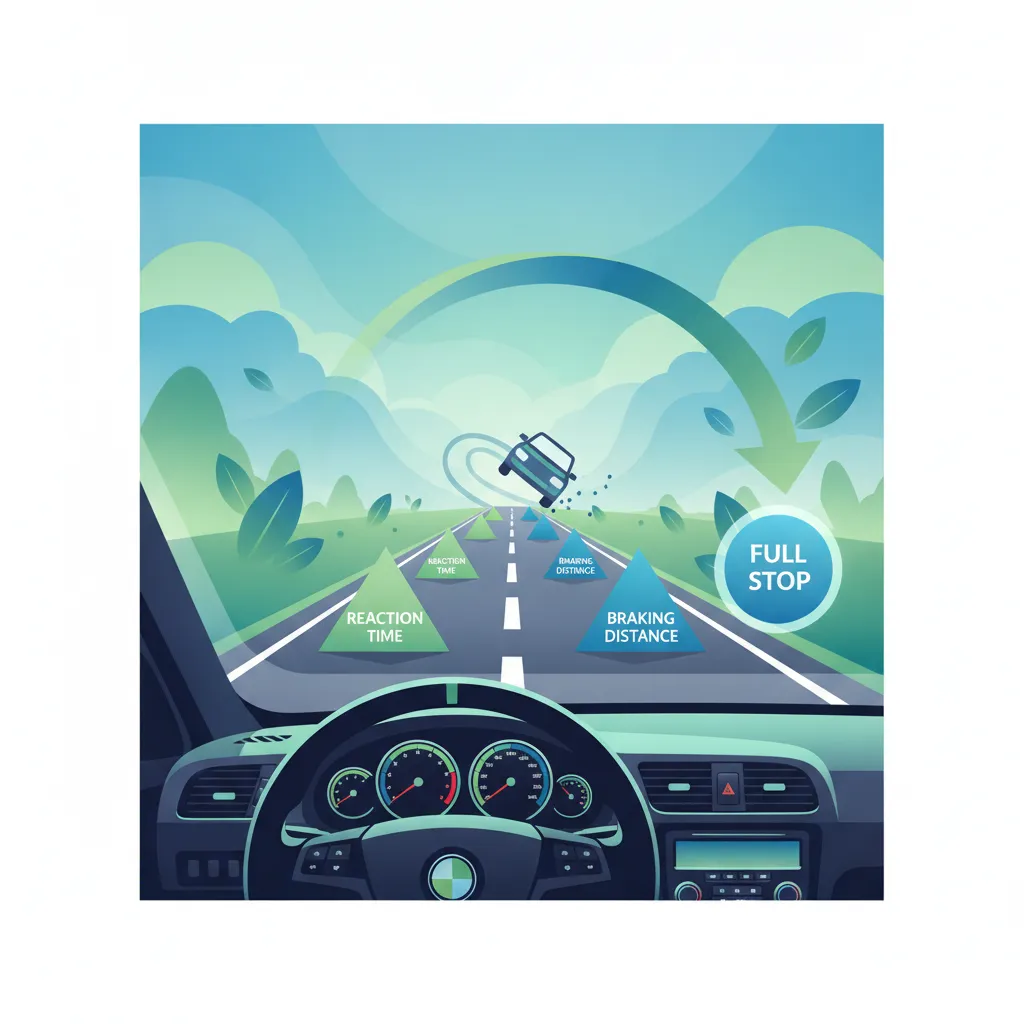
Total stopping distance is not just the distance your motorcycle travels after you squeeze the brake levers. It is a compound metric consisting of two distinct phases: Reaction Distance and Braking Distance.
Understanding this equation is critical for maintaining safe following distances and avoiding rear-end collisions.
Reaction distance is the distance your motorcycle travels from the moment your eyes perceive a hazard to the moment your hands and feet actually initiate braking. This phase is governed entirely by human physiology and cognitive processing.
The typical reaction process consists of three rapid sub-stages:
For an alert, well-rested rider, the average reaction time is approximately 0.75 to 1.0 seconds. At higher speeds, even a fraction of a second translates to a significant distance covered:
Any factor that impairs cognitive function—such as fatigue, dehydration, cold weather (which stiffens muscles and slows physical movement), minor distractions, or the consumption of alcohol or medications—can easily double or triple your reaction time.
Braking distance is the physical distance the motorcycle travels after you apply the brakes until it comes to a complete stop. This phase is governed by physics, mechanics, and environmental factors, including:
Many novice riders assume that doubling their speed simply doubles their braking distance. This is a dangerous misconception. In physics, the kinetic energy () of a moving object is calculated using the formula:
Where is the mass of the vehicle and is its velocity (speed). Because velocity is squared in this equation, any increase in speed results in an exponential increase in kinetic energy.
Since the purpose of your motorcycle's brakes is to convert this kinetic energy into thermal energy (heat) via friction, the brakes must work exponentially harder as speed increases.
The Squared Speed Rule: If you double your speed (e.g., from 50 km/h to 100 km/h), your kinetic energy increases by a factor of four (). Consequently, your physical braking distance will be four times longer, assuming all other factors like road grip and braking force remain constant.
Under dry, optimal conditions, the typical total stopping distances (reaction distance + braking distance) for a standard motorcycle are roughly estimated as follows:
In wet weather, these distances increase dramatically because wet road surfaces cut the coefficient of friction roughly in half.
To brake effectively, you must understand how weight shifts when a vehicle decelerates. When you apply the brakes, inertia causes the motorcycle's centre of mass to pitch forward. This action compresses the front forks and transfers the bulk of the vehicle's total weight onto the front tyre.
This weight shift has a massive impact on available traction:
Because of this dynamic weight transfer, your front brake is your primary stopping tool. Under normal, dry road conditions:
In emergency, high-deceleration stops, the weight transfer can be so extreme that the rear wheel retains almost no weight, meaning the front brake must supply up to 90% or more of the stopping force.
A common mistake among inexperienced riders is relying primarily on the rear brake out of fear of locking the front wheel. Because the rear wheel quickly loses traction during deceleration, applying heavy pressure to the rear brake will easily cause a rear-wheel lock-up. This results in a skid, causes the rear of the motorcycle to fishtail, and provides very little actual stopping power.
Conversely, grabbing the front brake too abruptly before the weight has had time to transfer forward can cause the front tyre to slide out immediately (a "low-side" crash) because the tyre contact patch was not yet loaded and ready to accept the braking force.
The maximum braking force you can apply is strictly limited by the friction between your tyres and the road surface. This grip level is scientifically described as the coefficient of friction (, pronounced 'mu').
The higher the coefficient of friction, the more braking force you can apply before the tyre loses traction and slides.
| Road Surface Condition | Typical Coefficient of Friction () | Impact on Braking Distance |
|---|---|---|
| Dry Asphalt / Tarmac | 0.7 – 0.9 | Optimal grip; shortest possible braking distances. |
| Wet Asphalt / Tarmac | 0.4 – 0.5 | Grip is halved; physical braking distances double. |
| Gravel / Loose Stones | 0.2 – 0.3 | Extremely low grip; high risk of immediate wheel lock-up. |
| Ice / Hard-Packed Snow | 0.1 or lower | Near-zero grip; braking distances can increase tenfold. |
Irish riders must be particularly cautious about localized surface hazards that drastically reduce friction:
An Anti-lock Braking System (ABS) is a computerized safety feature designed to prevent motorcycle wheels from locking up during heavy or emergency braking.
While ABS is a life-saving technology, it does not bypass the laws of physics:
To achieve the shortest possible stopping distance without losing control, you must practice progressive braking. This technique aligns your physical inputs with the dynamic transfer of weight described earlier.
Close the Throttle: Roll off the throttle smoothly to initiate engine braking, which begins the initial, gentle forward transfer of weight.
Upright the Motorcycle: Always ensure the motorcycle is upright and moving in a straight line before applying maximum braking force. Braking hard while leaned over severely reduces cornering traction.
Apply Initial Brake Pressure (Squeeze, Don't Grab): Gently apply both the front and rear brakes simultaneously. This initial light squeeze "sets" the front suspension by compressing the forks, expanding the front tyre's contact patch.
Progressively Increase Pressure: As the weight transfers forward and front tyre grip increases, smoothly and firmly increase pressure on the front brake lever.
Modulate the Rear Brake: As the rear wheel unloads, ease off or maintain light, steady pressure on the rear brake pedal to prevent a rear-wheel skid.
De-clutch and Steady: Pull in the clutch lever just before coming to a stop to prevent stalling the engine. Keep your eyes looking forward to maintain balance, and drop your left foot to the ground as you come to a complete stop, keeping your right foot on the rear brake to keep the brake light illuminated.
The Road Safety Authority (RSA) of Ireland emphasizes the importance of managing the space around your motorcycle. You must maintain a safe cushion of space to account for both reaction and braking distances.
Under dry, clear conditions, you should maintain a minimum gap of at least two seconds behind the vehicle in front of you.
To measure this:
Because wet tarmac cuts tyre grip in half and doubles your physical braking distance, you must double your safe following gap to at least four seconds in wet weather, heavy spray, or poor visibility.
Explore all units and lessons included in this driving theory course.
Lesson content overview
Explore all units and lessons included in this driving theory course.
Explore search topics learners often look for when studying Principles of Effective Braking and Stopping Distances. These topics reflect common questions about road rules, driving situations, safety guidance, and lesson level theory preparation for learners in Ireland.
Browse additional driving theory lessons that cover connected traffic rules, road signs, and common driving situations related to this topic. Improve your understanding of how different rules interact across everyday traffic scenarios.
Learn the principles of effective cornering, including correct body positioning, line selection, and managing grip levels on Irish road surfaces. Understand how to balance speed and stability when navigating rural bends to improve your overall motorcycle control and safety during daily riding.

This lesson explains how correct body position, lean angle, and speed selection combine to ensure safe and stable cornering on winding roads. It teaches the proper use of eye focus, looking through the turn toward the intended exit path to stabilize steering. Motorcyclists will learn to select appropriate entry lines and manage their throttle smoothly to maintain suspension stability.

This lesson explains the physics of cornering, focusing on lean angles, speed selection, and body positioning on a moped. It teaches riders how to assess road curves, adjust their speed prior to entering a turn, and handle slippery cambers. Mastering these cornering principles is essential for avoiding lose-of-control accidents on winding rural Irish roads.

This lesson explains how to choose the safest riding position within a traffic lane, considering the standard left-side driving rule in Ireland. It details the concept of dominant positioning to prevent other vehicles from crowding your space, while remaining visible to oncoming traffic. Riders will learn to adjust their track constantly to avoid road surface hazards, oil deposits, and wind currents.
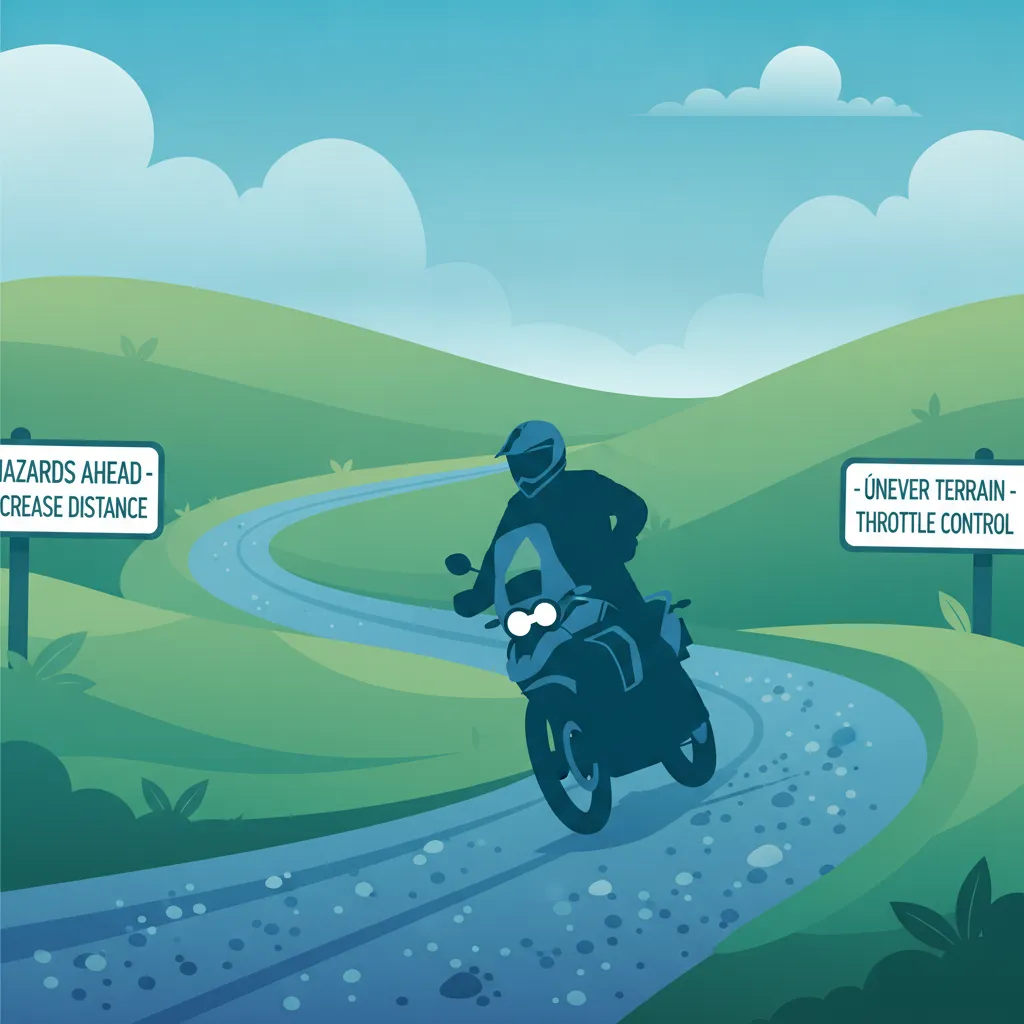
This lesson focuses on riding techniques suited for gravel, loose surfaces, and rural roads. Learners will understand how to maintain stability, adjust braking and cornering approaches, and anticipate hazards such as potholes and farm vehicles, following RSA guidance for safe riding in the Irish countryside.

This lesson details the mechanics of counter-steering, which is the primary physical input used to initiate turns at speeds above walking pace. It explains how pushing on the handlebar in the direction of the turn initiates a controlled lean, allowing rapid direction changes. Riders will also study low-speed balance techniques, clutch slip control, and the stabilizing effect of the rear brake.

This lesson provides a comprehensive guide to navigating single and multi-lane roundabouts safely in accordance with the Irish Rules of the Road. It covers correct lane selection on approach, signaling rules for exiting, and maintaining a steady path through traffic. Riders will learn to anticipate lane-changing mistakes made by other drivers and manage the unique banking angles of roundabouts.
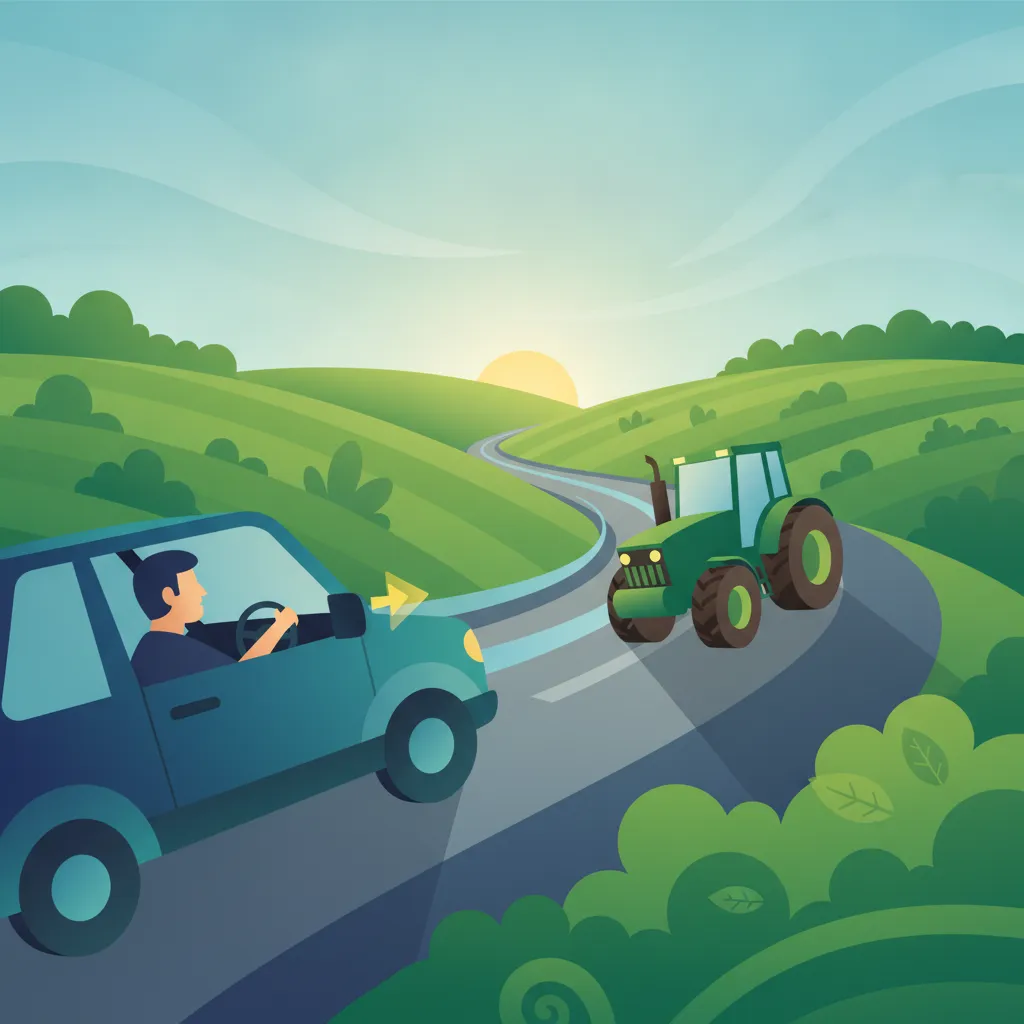
This lesson explains the sequential steps for executing safe overtaking manoeuvres on single and dual-carriageway roads in Ireland. It focuses on assessing speed differentials, establishing clear lines of sight, and evaluating oncoming traffic before committing. Riders will learn the correct signaling routine, safe abort procedures, and how to return smoothly to their lane without cutting in.

This lesson focuses on the safe approach and execution of turns at T-junctions, staggered intersections, and blind crossroads. It explains the critical mirror-signal-manoeuvre routine and how to select the best position for maximum visibility to cross-traffic. Motorcyclists will learn to identify potential hazards like vehicles pulling out suddenly or turning across their direct path.
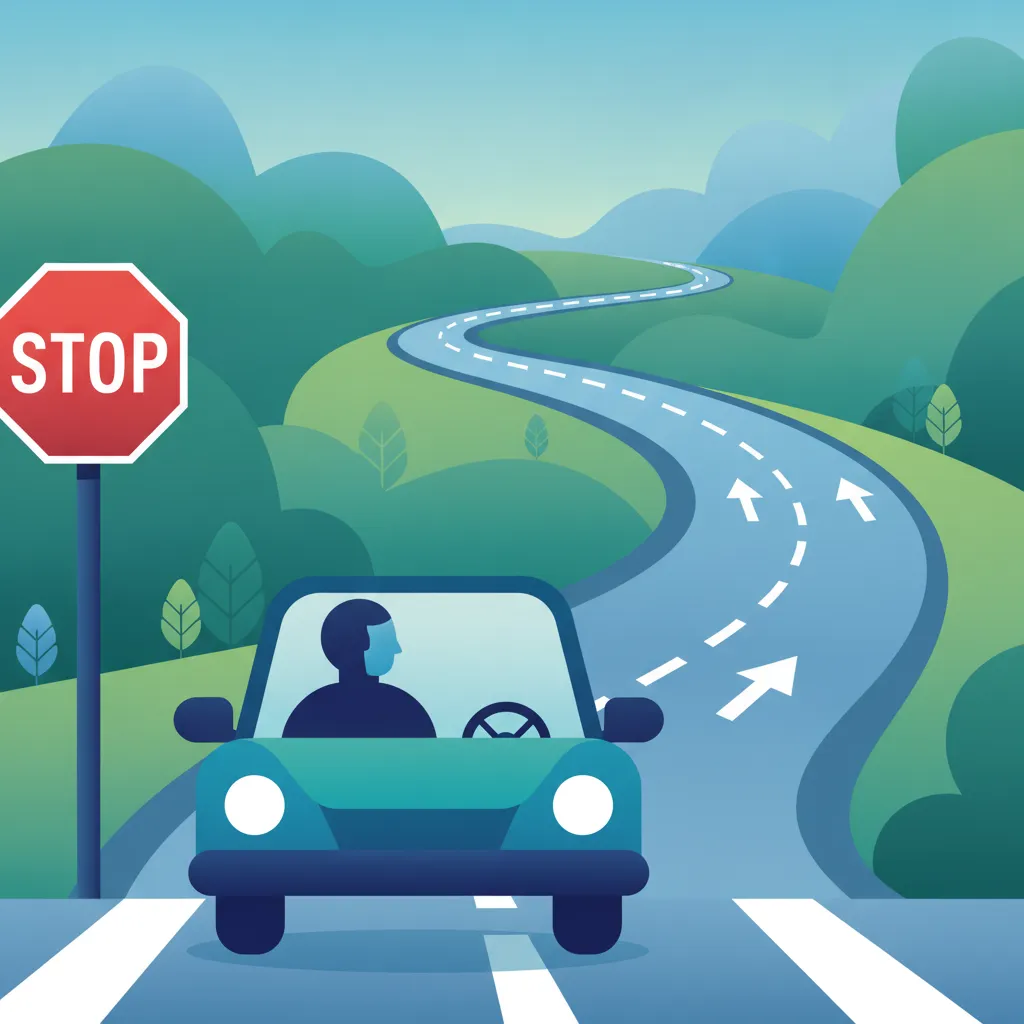
This lesson details the sequential steps required to approach and exit junctions safely under the Irish driving rules. It teaches riders how to select the correct lane, utilize mirrors, apply early signals, and reduce speed appropriately. Effective observation strategies are highlighted to help riders identify crossing pedestrians or approaching side traffic.
This lesson explains how to modify riding techniques when navigating wet tarmac, focusing on the heightened risk of hydroplaning and reduced tire grip. It details the necessity of increasing following distances, avoiding painted road markings, and executing smoother control inputs. Riders will understand how surface water accumulates in ruts, presenting severe hazards during heavy rainstorms.
Explore the core concepts of defensive riding and hazard perception on Irish roads. This guide covers how to anticipate dangerous road user behaviours, plan escape routes, and effectively manage the space around your motorcycle to minimize the risk of collisions in varying traffic conditions.

This lesson teaches how to cultivate a proactive defensive riding mindset, focusing on situational awareness and constant hazard scanning. It describes the system of motorcycle control, encouraging riders to anticipate potential mistakes from other drivers, pedestrians, and cyclists. Motorcyclists will learn to position themselves defensively, leaving clear escape routes in all driving environments.

This lesson analyzes the crucial role of rider attitude, mental focus, and psychological factors in preventing motorcycle collisions on Irish roads. It addresses how overconfidence, fatigue, and peer pressure can negatively impact a rider's decision-making process and elevate risk levels. Motorcyclists will explore strategies to maintain a defensive mindset, exercise patience, and practice active situational awareness under all traffic conditions.

This lesson outlines how motorcyclists should respond when permanent road signs are dirty, damaged, or hidden by overgrown trees and hedges. It introduces the temporary signage, warning cones, and detour markers commonly deployed at active roadwork zones in Ireland. Riders will learn to read the road ahead defensively, reducing speed when visual information is incomplete or compromised.
This lesson focuses on riding techniques suited for gravel, loose surfaces, and rural roads. Learners will understand how to maintain stability, adjust braking and cornering approaches, and anticipate hazards such as potholes and farm vehicles, following RSA guidance for safe riding in the Irish countryside.

This lesson covers the strategic aspects of journey management, emphasizing the safety benefits of proactive route planning and weather checks. It teaches riders how to select safer roads, avoid high-congestion zones during rush hour, and schedule regular rest intervals. Motorcyclists will learn to pack essential tools, emergency contacts, and spare safety gear to remain prepared for any roadside situation.

This lesson highlights the importance of smooth throttle adjustments for maintaining traction and stability on a moped. It teaches riders how to anticipate potential road hazards early, reducing the need for sudden emergency braking. Developing strong observation habits allows riders to adjust their speed smoothly and respond safely to traffic changes.

This lesson identifies prevalent risky behaviours among motorcyclists, including speeding, tailgating, and reckless riding under the influence of alcohol or drugs. Learners will understand the associated penalties, legal implications, and the impact of fatigue and peer pressure on decision-making, following RSA and Irish legal frameworks.

This lesson teaches riders how to create and preserve a protective safety envelope around their motorcycle under various traffic densities. It explains the two-second rule for dry conditions and how to expand this buffer zone in adverse weather or heavy traffic. Motorcyclists will learn to manage tailgaters by gradually increasing their following distance from the vehicle ahead to prevent sudden braking.

This lesson teaches riders how to actively identify and eliminate blind spots through proper mirror adjustment and physical shoulder checks. It explains the concept of a safety cushion, which represents the defensive space maintained around the moped at all times. Managing these zones ensures adequate reaction time and mitigates the impact of sudden braking.

This lesson teaches riders how to manage extreme weather conditions such as high crosswinds, thick fog, and low sun glare. It details how wind forces can push a motorcycle off course and how to use minor body adjustments and lane placement to maintain stability. Riders will learn how to manage visibility limits in dense fog, utilizing specialized riding gear and reducing speeds safely.
Find clear answers to common questions learners have about Principles of Effective Braking and Stopping Distances. Learn how the lesson is structured, which driving theory objectives it supports, and how it fits into the overall learning path of units and curriculum progression in Ireland. These explanations help you understand key concepts, lesson flow, and exam focused study goals.
Yes, for maximum control and efficiency, you should use both the front and rear brakes simultaneously. The front brake provides the majority of your stopping power, but the rear brake adds stability.
Loose gravel, wet leaves, or rain significantly reduce the grip your tyres have on the road. This increases the distance required to bring the motorcycle to a complete stop, so you must adjust your speed accordingly.
Anti-lock Braking Systems prevent the wheels from locking up during hard braking. This allows the rider to maintain steering control and prevents the bike from skidding, which is vital in emergency situations.
Yes, understanding the factors that affect stopping distances is a core part of the RSA theory test. You may face scenarios requiring you to estimate distances based on speed and environmental factors.
Use the practice question search tool to pinpoint specific topics, road signs, or rules you need to master for your official Driver Theory Test. Refine your study strategy and ensure comprehensive preparation for all aspects of the Irish driving exam. Start your focused revision now and build confidence for your learner permit test.