
This lesson guides you through identifying and responding to common surface hazards like wet leaves, potholes, and gravel that specifically affect Category AM mopeds. Understanding these risks is vital for maintaining stability and control on Irish roads, building upon your knowledge of vehicle dynamics and environmental conditions. Mastering these techniques will help you stay safe while riding and confidently answer hazard-perception questions on your theory test.

Lesson content overview
Mastering the Irish Category AM driving theory test requires more than just memorising speed limits and traffic signs. As an aspiring moped or light quadricycle rider, you must develop an acute understanding of how different road surface conditions directly affect your vehicle's stability, steering, and braking. Because Category AM vehicles are lightweight and have a small tyre footprint, they are highly sensitive to sudden changes in the road surface.
This lesson explores three of the most common and dangerous surface hazards encountered on municipal, suburban, and rural Irish roads: wet leaves, potholes, and loose gravel. We will examine the underlying physics of traction loss, discuss key defensive riding techniques, and outline your legal obligations under Irish road traffic law to adjust your riding style to prevailing conditions.
Before examining specific hazards, it is essential to understand how your vehicle stays connected to the road. This connection relies entirely on friction.
Tyre grip is the frictional force generated between the rubber of your tyre and the physical road surface. This force is what allows you to accelerate, steer, and come to a safe stop. The level of grip available is scientifically represented by the coefficient of friction.
When the coefficient of friction falls, the physical grip of the tyre cannot support normal cornering or braking forces. This results in traction loss, which can manifest as an unexpected skid, wheel slide, or complete loss of control.
Mopeds, light scooters, and quadricycles have a much smaller contact patch (the area of the tyre physically touching the ground at any given moment) compared to passenger cars.
Because your vehicle is lightweight, it does not exert the same downward force as a heavy motor car. A heavy vehicle can sometimes push through thin layers of debris to find grip on the tarmac underneath. A lightweight moped, however, is much more likely to "float" on top of loose gravel or wet leaves, causing immediate tyre slippage.
Furthermore, as a two-wheeled rider, your lateral stability is maintained entirely by momentum and steering balance. Any sudden loss of traction on either the front or rear wheel can cause the vehicle to capsize instantly.
In Ireland, damp climates and tree-lined roads mean that wet leaves are a frequent seasonal hazard. They are particularly dangerous in suburban residential estates, tree-lined regional lanes (R-roads), and rural areas.
Fallen leaves do not simply sit on the road; they undergo a chemical and physical transformation when damp.
Damp or decomposing foliage that blankets the road surface, creating a slick, organic film. The decaying leaves release natural tannins and moisture, creating a surface that is physically comparable to sheet ice.
This organic barrier prevents the tyre tread from clearing water and contacting the underlying asphalt.
To handle wet leaves safely, your hazard perception must be active. Look well ahead to identify tree-lined sections of road where leaves are likely to gather.
Reduce Speed Early: Always slow down before reaching the leaf-covered section of the road. Do not try to decelerate while on top of the leaves.
Maintain an Upright Position: Keep the moped completely upright. Avoid leaning the vehicle, as cornering forces require a higher coefficient of friction than is available on wet leaves.
Use Controls GENTLY: If you must adjust your speed, apply your brakes with progressive, light pressure. Never grab the brake levers or snap the throttle open.
Follow Clean Tracks: Where possible, align your path with the dry tyre tracks left by larger vehicles that have already cleared away the leaves.
The Golden Rule for Wet Leaves: Treat any leaf-covered road surface exactly as you would treat a sheet of black ice. Avoid all sudden inputs, and never brake hard while leaning.
Potholes are a common feature of Irish road infrastructure, particularly after winter periods of freezing and thawing (known as frost damage) and heavy rain.
A pothole that might cause a minor bump in a car can be catastrophic for a Category AM rider. Mopeds typically use smaller diameter wheels (often 10 to 12 inches) compared to motorcycles or cars.
Early visual scanning is your primary defence against potholes. Keep your eyes moving between the road immediately ahead and the road 12 seconds in the distance.
If you spot a pothole in time:
If striking the pothole is completely unavoidable (for example, if evading would push you into oncoming traffic or onto a pedestrian footpath):
Under Irish road traffic guidelines, local authorities (such as City or County Councils) are responsible for the maintenance of public roads. However, as a road user, you are legally obligated to adapt your speed to the visible road conditions. Striking a visible pothole because you were speeding or distracted can be deemed negligent riding.
Loose gravel and aggregate stones are frequently found on Irish roads. They are particularly common on rural lanes (L-roads), near construction sites, or on roads that have recently undergone "surface dressing" (often referred to as chip-and-seal maintenance).
Gravel behaves like a collection of tiny ball bearings beneath your tyres. Instead of the rubber of your tyre gripping the solid road, it rolls on top of the loose stones.
Riding on gravel requires a relaxed upper body and very gentle steering inputs. If you tense up and grip the handlebars too tightly, you will overcorrect every minor movement of the front wheel, which naturally wiggles as it finds its path through the stones.
The official Irish Rules of the Road make it clear that speed limits are maximums, not targets. You must always exercise your duty of care as a driver.
The Road Traffic Act mandates that you must drive at a speed that is safe for the current road, weather, and traffic conditions.
When riding on a low-friction surface like gravel or wet leaves, lock-ups occur very easily. Modern Category AM mopeds may be equipped with Combined Braking Systems (CBS) or, in rarer cases, Anti-lock Braking Systems (ABS). However, most budget or older mopeds do not have ABS.
If your front tyre locks on a loose surface, steering control is lost instantly, and the bike will fall to the side. If your rear tyre locks, the rear of the vehicle will begin to fish-tail or swing out. To prevent this, always apply progressive braking: start with a light squeeze to transfer weight to the front tyre, then gradually increase pressure as the tyre gains traction under the weight.
Surface hazards do not affect all road users equally. While a modern car with four wide tyres and electronic stability control might easily navigate a patch of gravel or wet leaves, two-wheeled riders face extreme risk.
When you spot a surface hazard ahead, follow this systematic procedure to ensure a safe transition or evasion.
Scan and Identify: Look 12 seconds ahead. Identify the hazard (wet leaves, pothole, gravel) early.
Assess Surroundings: Check your rear-view mirrors to understand where following traffic is positioned. Perform a quick shoulder check (the "lifesaver" look) to confirm your blind spots are clear.
Decelerate Smoothly: Ease off the throttle. If braking is required, do so while the road is still clean and the vehicle is upright. Reduce your speed to a safe walking pace if the hazard is severe.
Select the Safest Path: Determine if you can safely steer around the hazard without crossing solid white lines, entering oncoming lanes, or endangering cyclists. If you cannot steer around it, prepare to cross it straight.
Keep Control Inputs Neutral: When crossing the hazard, do not accelerate, do not brake, and do not steer sharply. Keep your body relaxed, hold a steady, neutral throttle, and let the vehicle roll smoothly across.
Re-assess and Resume: Once clear of the hazard, check your mirrors again, ensure your vehicle is stable, and gently accelerate back to a safe cruising speed.
Understanding these technical terms will help you comprehend the physical forces at play and prepare you for theoretical questions regarding vehicle control and road safety.
To solidify your understanding, let us review how these principles apply to real situations you will face on Irish roads.
Explore all units and lessons included in this driving theory course.
Lesson content overview
Explore all units and lessons included in this driving theory course.
Explore search topics learners often look for when studying Surface Risks: Wet Leaves, Potholes and Gravel. These topics reflect common questions about road rules, driving situations, safety guidance, and lesson level theory preparation for learners in Ireland.
Browse additional driving theory lessons that cover connected traffic rules, road signs, and common driving situations related to this topic. Improve your understanding of how different rules interact across everyday traffic scenarios.
Understand the relationship between tyre grip, road surface conditions, and effective braking distance for Category AM vehicles. This lesson details how to manage vehicle deceleration safely in various conditions to maintain stability and prevent tyre lock-up on Irish roads.
This lesson details the critical role of tyres in maintaining grip and vehicle stability on diverse road surfaces. It provides guidance on measuring tread depth, checking inflation levels, and identifying signs of tyre wear and damage. Additionally, it presents techniques for maintaining balance and executing tight, low-speed turns safely.

This lesson explains the physics of cornering, focusing on lean angles, speed selection, and body positioning on a moped. It teaches riders how to assess road curves, adjust their speed prior to entering a turn, and handle slippery cambers. Mastering these cornering principles is essential for avoiding lose-of-control accidents on winding rural Irish roads.
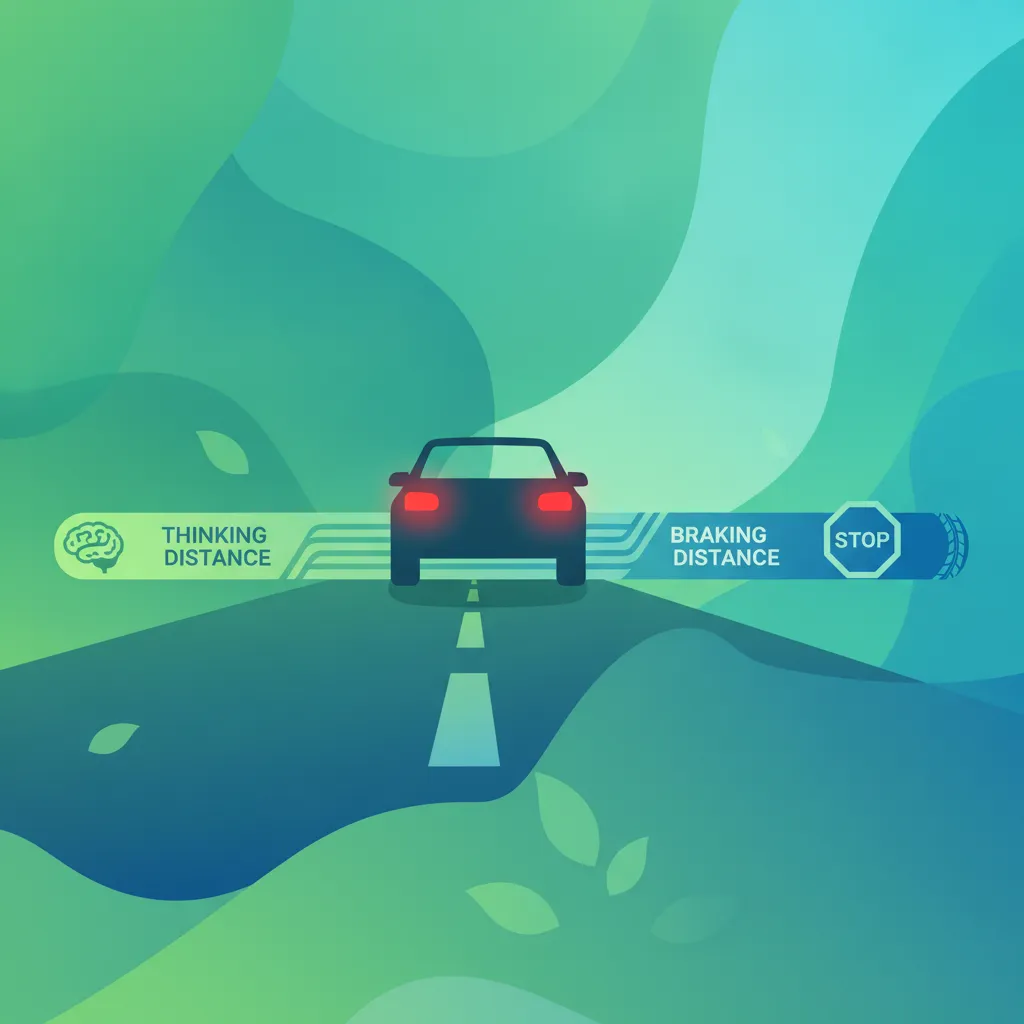
This lesson instructs riders on the correct application of the front and rear brakes to achieve smooth, controlled stopping. It explains how factors such as speed, reaction time, and tyre traction combine to determine total stopping distance. Learners will also study methods to prevent dangerous wheel lock-ups and skidding, especially in wet conditions.
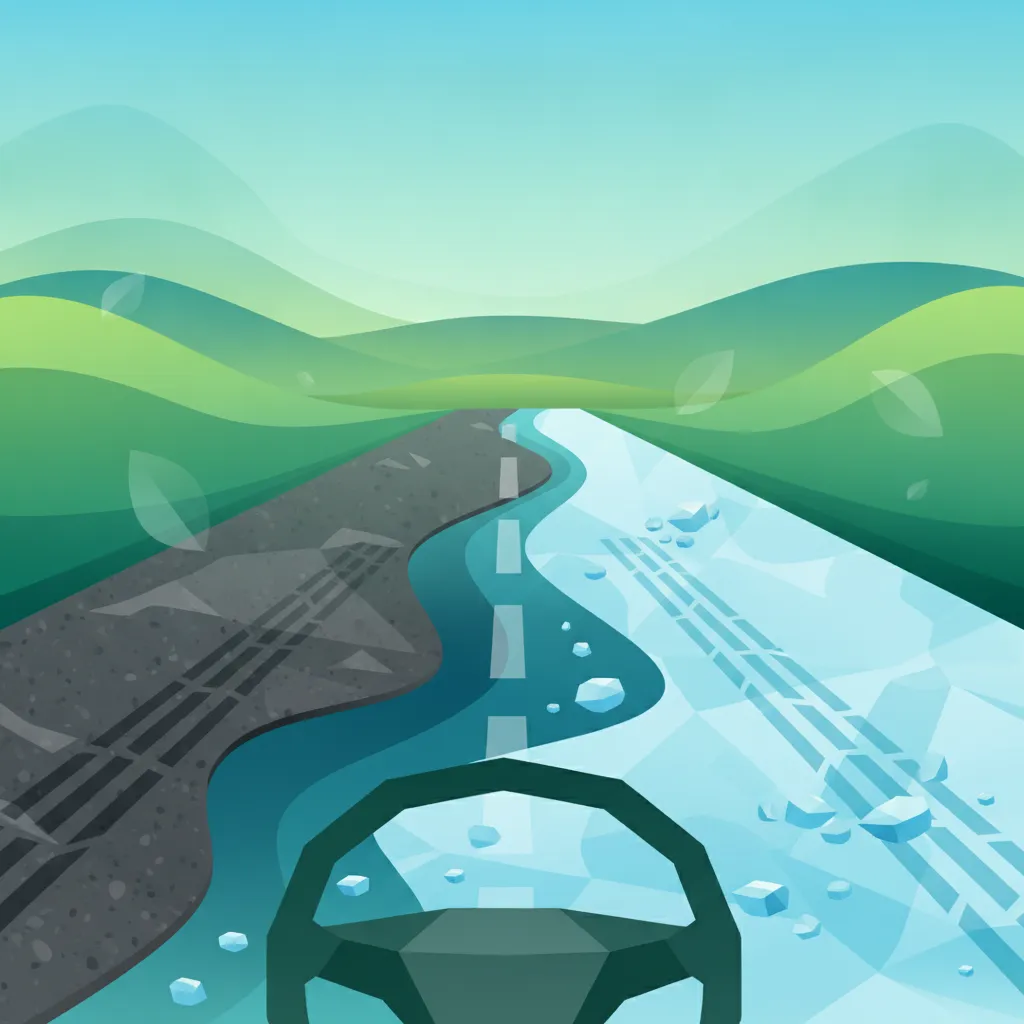
This lesson analyzes how tyre contact patches generate grip and how different road surfaces affect stability. It explains the dangers of diesel spills, loose gravel, fallen leaves, and cold tyres, which drastically reduce traction limits. Motorcyclists will learn to identify these surface hazards early and modify their throttle, braking, and lean inputs to prevent loss of control.

This lesson highlights the importance of smooth throttle adjustments for maintaining traction and stability on a moped. It teaches riders how to anticipate potential road hazards early, reducing the need for sudden emergency braking. Developing strong observation habits allows riders to adjust their speed smoothly and respond safely to traffic changes.
Develop essential visual scanning techniques for identifying hidden dangers on rural and urban roads. Learn how to apply the principles of defensive riding to anticipate surface irregularities and manage space cushions effectively to ensure safety in diverse traffic environments.

This lesson teaches how to cultivate a proactive defensive riding mindset, focusing on situational awareness and constant hazard scanning. It describes the system of motorcycle control, encouraging riders to anticipate potential mistakes from other drivers, pedestrians, and cyclists. Motorcyclists will learn to position themselves defensively, leaving clear escape routes in all driving environments.

This lesson teaches riders how to actively identify and eliminate blind spots through proper mirror adjustment and physical shoulder checks. It explains the concept of a safety cushion, which represents the defensive space maintained around the moped at all times. Managing these zones ensures adequate reaction time and mitigates the impact of sudden braking.

This lesson outlines how motorcyclists should respond when permanent road signs are dirty, damaged, or hidden by overgrown trees and hedges. It introduces the temporary signage, warning cones, and detour markers commonly deployed at active roadwork zones in Ireland. Riders will learn to read the road ahead defensively, reducing speed when visual information is incomplete or compromised.
This lesson covers the strategic aspects of journey management, emphasizing the safety benefits of proactive route planning and weather checks. It teaches riders how to select safer roads, avoid high-congestion zones during rush hour, and schedule regular rest intervals. Motorcyclists will learn to pack essential tools, emergency contacts, and spare safety gear to remain prepared for any roadside situation.

This lesson provides actionable strategies for Category AM riders to remain visible, focusing on lane positioning and eye contact. It teaches how to avoid riding in the blind spots of larger vehicles and how to signal early and clearly. Cultivating a proactive attitude toward road visibility helps prevent collisions and builds mutual respect on Irish roads.
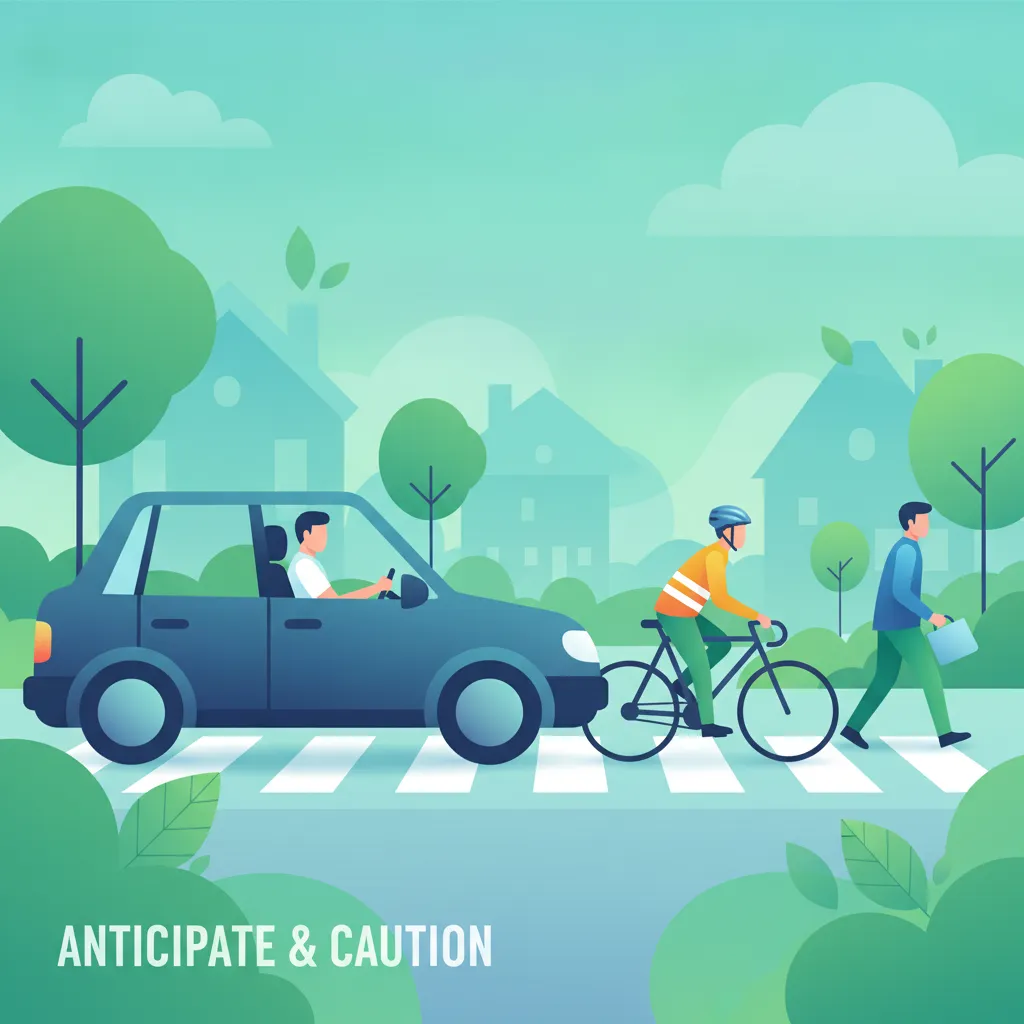
Safeguarding vulnerable road users requires more than simple obedience to traffic signs; it demands a defensive driving mindset. This lesson summarizes safe practices, including scanning far ahead in urban areas, keeping massive safety margins in wet weather, and executing thorough blind spot checks before reversing. By anticipating the unpredictable movements of others, you can prevent accidents and support a safe road culture.
Find clear answers to common questions learners have about Surface Risks: Wet Leaves, Potholes and Gravel. Learn how the lesson is structured, which driving theory objectives it supports, and how it fits into the overall learning path of units and curriculum progression in Ireland. These explanations help you understand key concepts, lesson flow, and exam focused study goals.
Wet leaves create a slick, low-friction surface similar to ice. Because moped tyres have a smaller contact patch with the road, even a thin layer of leaves can cause your wheels to slip instantly, making cornering or braking very difficult.
The safest method is to identify the pothole early through good observation and adjust your line to avoid it. If you cannot avoid it, reduce your speed before reaching it, keep your handlebars straight, and avoid heavy braking while directly over the defect.
Loose gravel acts like ball bearings between your tyres and the road surface, drastically reducing grip. This significantly increases your stopping distance compared to clean tarmac, so you must always increase your following distance and brake earlier.
Yes, you should be familiar with warning signs that indicate loose chippings or uneven road surfaces. Recognizing these signs early allows you to prepare your speed and posture before reaching the hazardous section.
Use the practice question search tool to pinpoint specific topics, road signs, or rules you need to master for your official Driver Theory Test. Refine your study strategy and ensure comprehensive preparation for all aspects of the Irish driving exam. Start your focused revision now and build confidence for your learner permit test.