
This lesson explores how the massive size and weight of passenger vehicles significantly influence braking dynamics and overall road safety. By understanding the physics of momentum and load distribution, you will learn to calculate safer stopping distances for your D or D1 category licence.
Lesson content overview
Operating a passenger-carrying vehicle, such as a bus or coach, requires an advanced understanding of physical laws. Under Category D and D1 licensing in Ireland, drivers are responsible not only for their own safety but also for the lives of dozens of passengers.
The sheer physical scale and mass of these vehicles introduce unique dynamic forces. A fully loaded double-decker coach behaves very differently during acceleration, cornering, and braking compared to a standard passenger car.
This lesson covers the relationships between vehicle mass, kinetic energy, braking mechanics, and the centre of gravity. Mastering these principles is a core requirement for passing the Irish Driver Theory Test and operating heavy passenger vehicles safely on public roads.
A vehicle's mass is the primary factor dictating how it behaves when moving, turning, or coming to a stop. In professional passenger transport, understanding the distinction between different weight ratings is a legal and operational necessity.
The maximum legally permitted total weight of the vehicle, including the chassis, body, fuel, driver, passengers, and luggage, as specified by the manufacturer and verified by official plating.
Inertia is the physical tendency of an object to resist changes to its state of motion. Under Newton’s first law, a moving bus wants to continue moving in a straight line at a constant speed. To slow down or stop, the vehicle must overcome this inertia using its braking system.
The greater the mass of the vehicle, the greater its inertia. An empty coach (unladen weight) responds relatively quickly to brake application. However, when that same coach is loaded to its maximum Gross Vehicle Weight (GVW) with fifty passengers and their luggage, its inertia increases dramatically.
Drivers must abandon the assumption that a vehicle's brakes will perform identically under different loads. As weight increases, the mechanical force required to decelerate the vehicle increases proportionally. If a driver fails to account for this added mass, the distance required to bring the vehicle to a safe stop will quickly exceed the available road space.
Many learner drivers believe that if you double your speed, your stopping distance simply doubles. In reality, the physics of a moving vehicle are governed by kinetic energy, which scales exponentially with speed.
The formula for kinetic energy () is:
This formula reveals two critical lessons for Category D drivers:
Because the braking system must convert all of this kinetic energy into thermal energy (heat) via friction, a modest increase in speed results in a massive increase in the stopping distance. For a heavy passenger vehicle, traveling even 10 km/h over the safe speed limit can mean the difference between a controlled stop and a catastrophic rear-end collision.
Heavy passenger vehicles do not use the simple hydraulic braking systems found in cars. Instead, they rely on complex compressed-air braking systems, often supplemented by auxiliary braking devices.
Air braking systems use compressed air to force the brake shoes or pads against the drums or discs. While highly reliable and capable of generating immense stopping force, air systems introduce a physical phenomenon known as brake lag.
When you press the brake pedal in an air-brake vehicle, there is a delay (typically around 0.4 to 0.8 seconds) while the compressed air travels through the pipes and valves to build up pressure in the brake chambers. At 80 km/h, a vehicle travels more than 22 metres per second. A half-second brake lag adds 11 metres to your total stopping distance before the brakes even begin to apply friction to the wheels.
Always factor air brake lag into your stopping distance calculations. Unlike a car, where brake application is virtually instantaneous, a coach or bus will continue to coast at full speed for a split second after you press the pedal.
To prevent the service brakes from overheating and failing—a dangerous condition known as brake fade—heavy vehicles are equipped with secondary systems called retarders.
Professional drivers must use retarders proactively, especially during long downhill descents (such as driving through hilly or mountainous regional roads in Ireland), to preserve the main service brakes for emergency stopping situations.
The physical dimensions of a bus—particularly its height—create a high Centre of Gravity (CoG). The CoG is the theoretical point where the entire weight of the vehicle is balanced.
A high CoG has a profound impact on vehicle stability, especially during deceleration and cornering:
To maintain optimal stability, drivers must actively manage how weight is distributed within the vehicle.
Total stopping distance is not a single measurement. It is the sum of two distinct phases: Reaction Distance and Braking Distance.
This is the distance the vehicle travels from the moment the driver perceives a hazard to the moment they physically apply the brake pedal. For an alert driver, average reaction time is approximately 0.7 to 1.0 second. Factors that increase reaction distance include:
This is the distance the vehicle travels after the brakes are applied until it comes to a complete rest. For a bus or coach, this is heavily influenced by:
While car drivers are often taught the "two-second rule" to maintain a safe following distance, heavy passenger vehicles require a much larger safety buffer.
In dry conditions, Category D drivers must maintain a minimum following distance of four seconds behind the vehicle ahead. This buffer provides the extra time needed to overcome air brake lag and the increased braking distance of a heavy vehicle.
In wet weather or poor road conditions, this following distance must be at least doubled to eight seconds, as wet tyres have significantly reduced grip on Irish tarmac.
Braking physics do not exist in a vacuum. A professional driver must constantly adapt their speed and following distance to match the ambient conditions.
Ireland’s climate means wet roads are a frequent hazard. Rain reduces the coefficient of friction between the tyre rubber and the road surface.
When driving a heavy vehicle downhill, gravity acts as an accelerating force, working against your brakes.
Select a Lower Gear Early: Before beginning the descent, select a lower gear to utilise engine braking. Never coast downhill in neutral or with the clutch depressed.
Engage the Retarder: Use the electromagnetic or hydraulic retarder to maintain a steady speed without friction wear.
Employ Snub Braking: If auxiliary brakes are insufficient, apply the service brakes firmly to reduce speed by 10-15 km/h, then release them completely to allow them to cool. Do not drag or lightly ride the brakes.
Maintaining safety requires avoiding common driving errors and ignoring persistent myths about heavy vehicle dynamics.
The Anti-lock Braking System (ABS) is a vital safety feature that prevents the wheels from locking up during emergency deceleration. However, ABS does not decrease your stopping distance.
The sole purpose of ABS is to allow the driver to maintain steering control during hard braking. If you drive too fast for the road conditions or tail the vehicle ahead, ABS will not prevent a collision.
Exceeding the certified carrying capacity of a bus is a major legal violation in Ireland. Overloading:
The parking brake (or handbrake) is designed solely to secure a stationary vehicle. Engaging the parking brake while the vehicle is in motion is highly dangerous. It applies force only to the rear wheels, which can cause them to lock instantly. On a wet or greasy road, this will cause the rear of the bus to swing out violently, leading to a complete loss of control.
Understanding these direct physical relationships will help you make safer, proactive decisions behind the wheel:
Explore all units and lessons included in this driving theory course.
Lesson content overview
Explore all units and lessons included in this driving theory course.
Explore search topics learners often look for when studying Vehicle Dimensions, Weight and Impact on Stopping Distance. These topics reflect common questions about road rules, driving situations, safety guidance, and lesson level theory preparation for learners in Ireland.
Browse additional driving theory lessons that cover connected traffic rules, road signs, and common driving situations related to this topic. Improve your understanding of how different rules interact across everyday traffic scenarios.
Understand the critical role of vehicle center of gravity and weight distribution in the handling of buses and coaches. This lesson details how to manage passenger seating and cargo placement to prevent vehicle instability and rollover risks during maneuvering and cornering on public roads according to Irish safety standards.
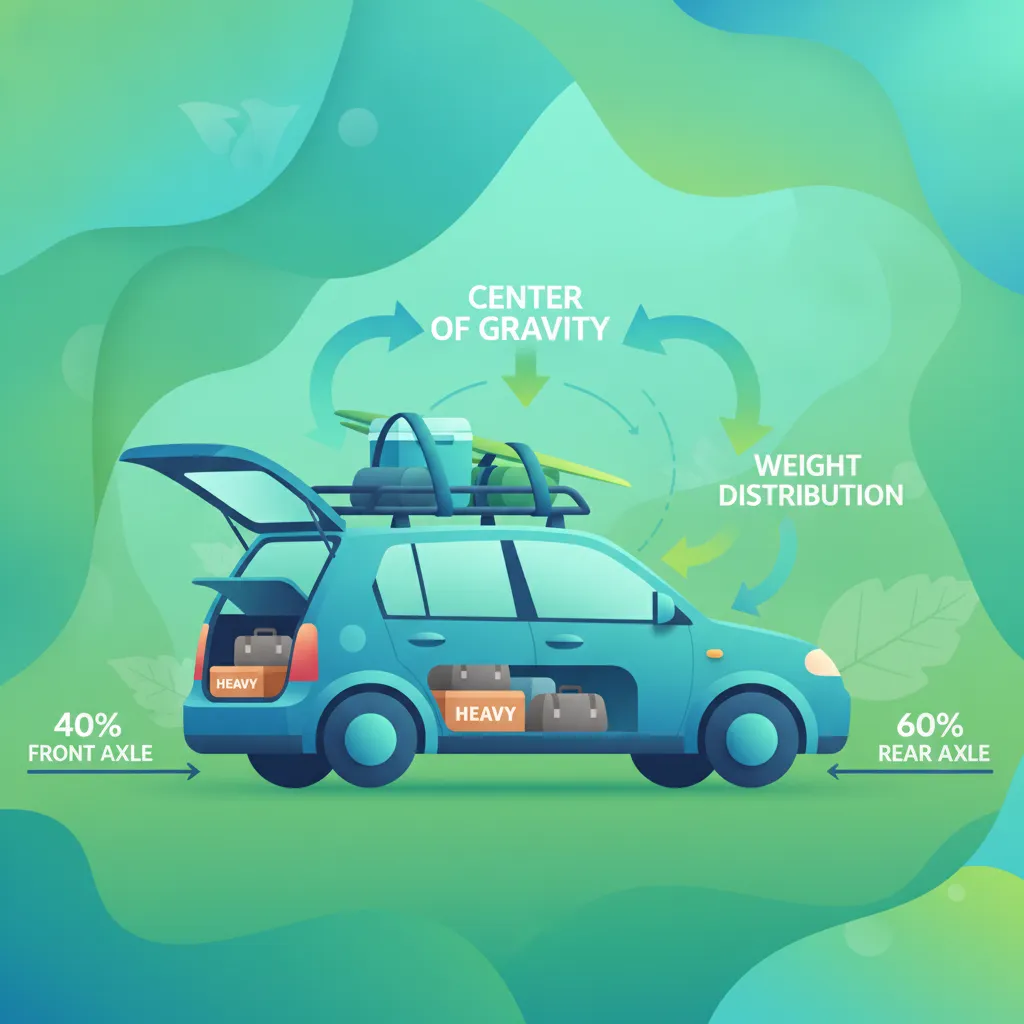
This lesson explains the physical principles of weight distribution and axle overloading on heavy commercial vehicles. It examines how a high centre of gravity increases tipping risks during cornering and alters overall braking effectiveness. Drivers will discover methods for positioning cargo to distribute weight evenly, ensuring optimal steering control and stable vehicle dynamics.

As passenger numbers change throughout a service shift, a heavy vehicle suspension, center of gravity, and steering responsiveness adapt dynamically. This lesson covers load balancing, the physical risks of overloading, and how uneven weight distribution compromises stability during turns. Drivers will learn to perform regular axle weight assessments to comply with Irish transport safety rules.

Carrying heavy loads or towing trailers significantly alters a car's handling, acceleration, and braking characteristics. This lesson outlines the physics of load distribution, explaining why you must secure cargo to prevent shifting and keep the vehicle's centre of gravity low. You will learn about legal roof rack weight limits, safe trailer coupling practices, and how to adjust your driving style when towing.
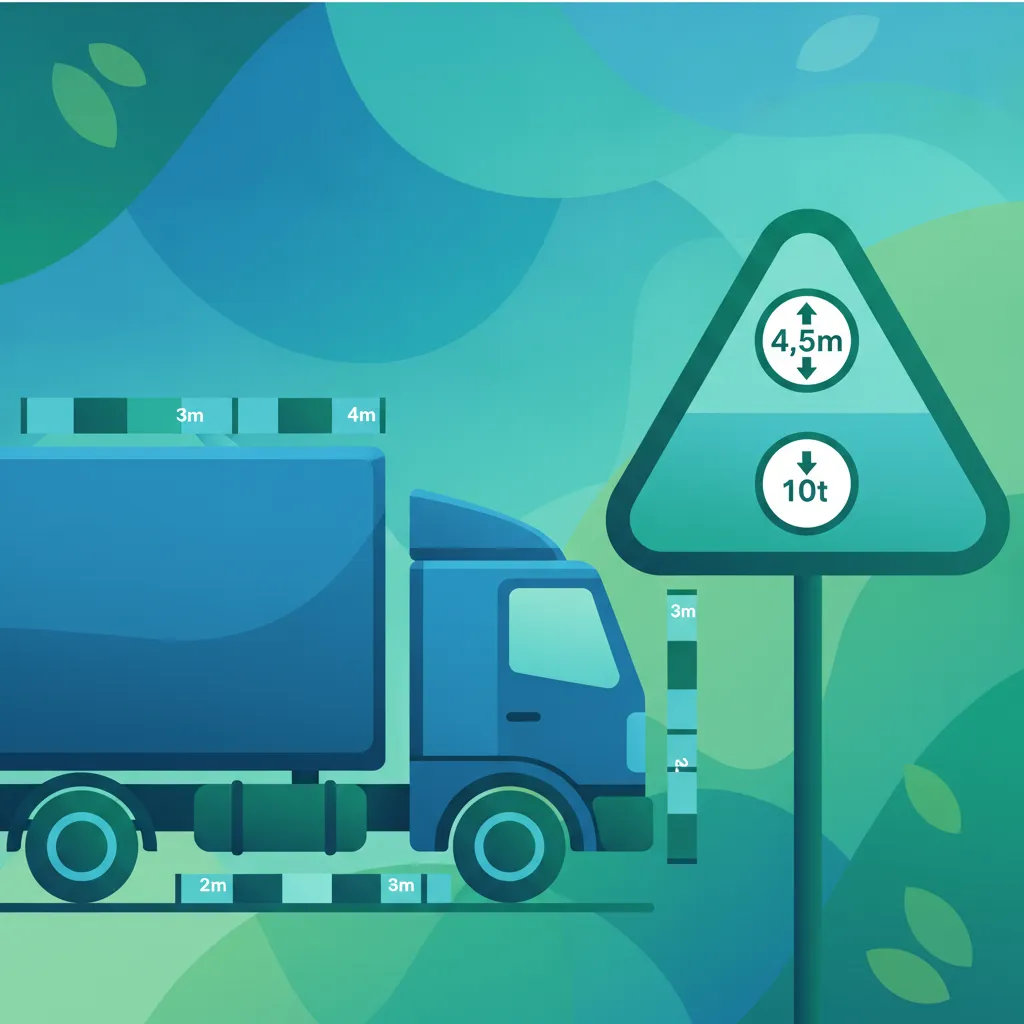
This lesson details the statutory limits on width, height, and length that apply to heavy goods vehicles under Irish transport laws. It explains the mathematical calculation of gross vehicle weight and maximum permissible axle loads to prevent infrastructure damage. Drivers will learn the practical significance of these numbers when passing low bridges or entering height-restricted tunnels.

This lesson investigates the relationship between heavy goods vehicle dimensions and the physical constraints of Irish road networks. It highlights how vehicle length and weight contribute to pavement wear and stress on aging bridges and tunnels. Drivers will analyze specific high-risk zones, such as narrow lanes and gauntlet points, where extreme spatial awareness is mandatory.

This lesson explores the safe operation of heavy transport vehicles during severe meteorological hazards typical of the Irish climate. It teaches techniques for adjusting speed and doubling following distances to prevent loss of steering traction and control on waterlogged or icy roadways. Drivers will understand how to manage lateral aerodynamic forces from crosswinds on high-sided goods vehicles.
This lesson explores the legal frameworks and structural limitations that govern maximum vehicle weights on specific bridges and underground routes. It explains local authority by-laws, city-centre heavy vehicle exclusion zones, and environmental restrictions across major urban centres in Ireland. Drivers will learn to identify safe alternative bypass routes when encountering weight-restrictive public structures.

This lesson reviews the legal definitions and safety guidelines for various categories of cargo, ranging from standard palletized goods to hazardous materials. It highlights the specific documentation, labelling, and safety equipment required by Irish and European laws for specialized transport. Drivers will learn their legal liabilities and the mandatory safety protocols corresponding to each load type.
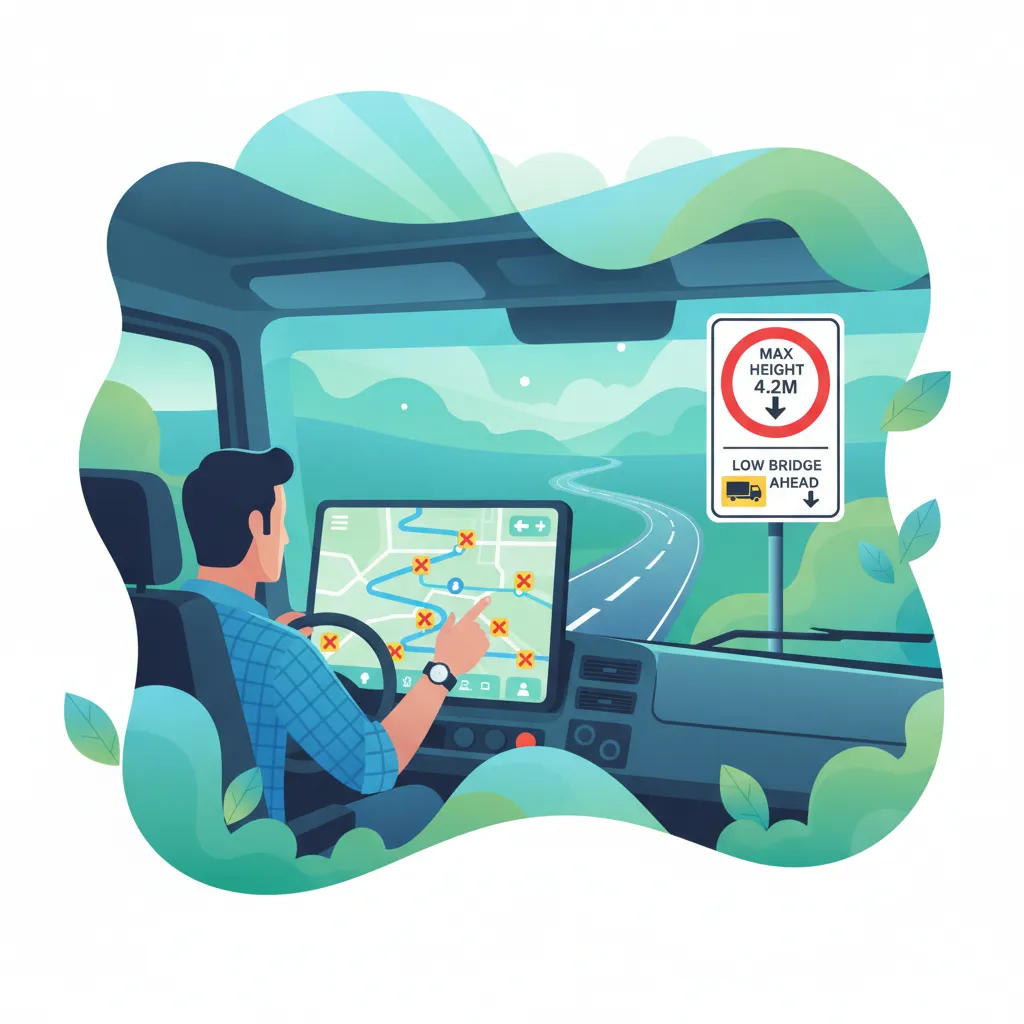
This lesson teaches professional drivers how to systematically map out travel routes that are compatible with heavy vehicle dimensions. It covers the limitations of consumer-grade GPS systems and emphasizes the use of specialized truck navigation systems that account for low bridges and load restrictions. Drivers will also learn to plan for congestion, access timing regulations, and proper entrance paths into commercial zones.
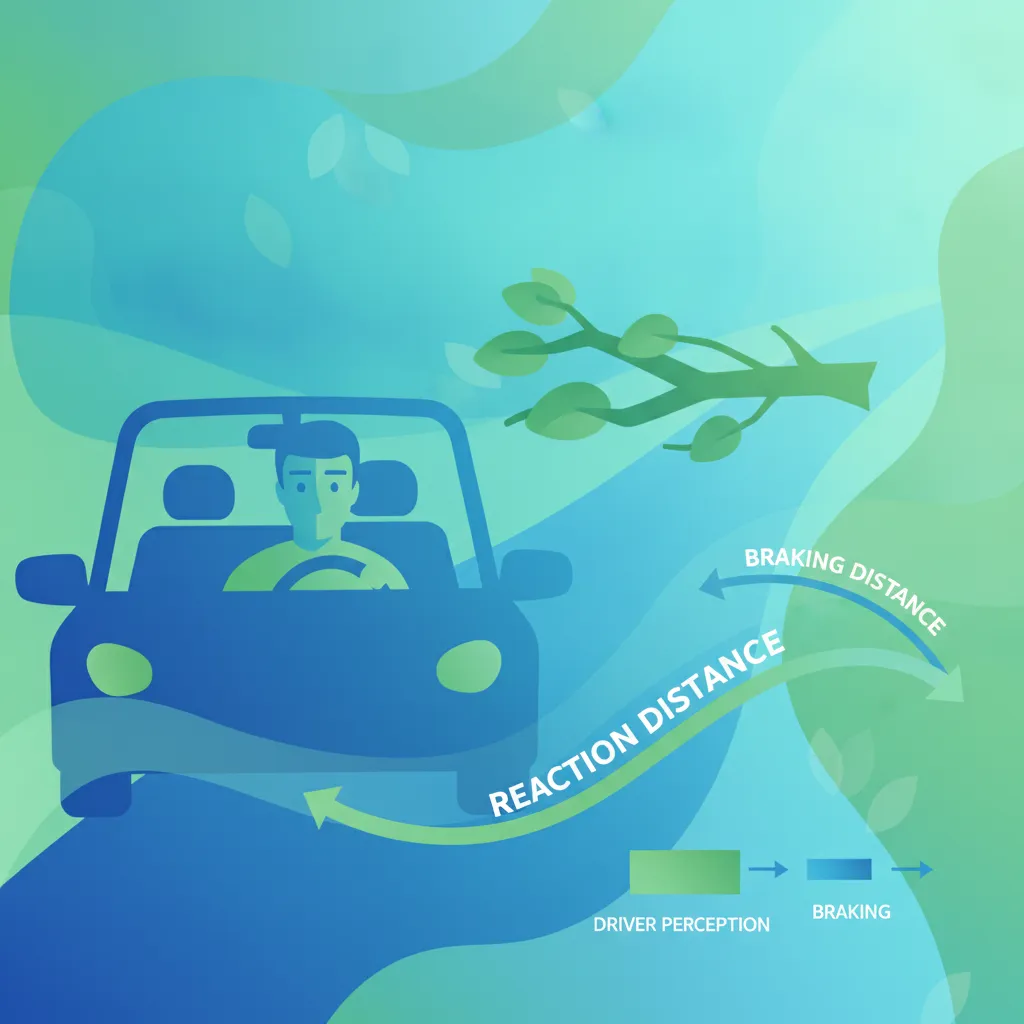
This lesson details how total stopping distance scales with vehicle mass, explaining the critical combination of perception-reaction delay and mechanical braking time. It covers the operation of main air-brake systems, auxiliary engine retarders, and trailer-coupling brake setups. Drivers will learn to maintain safe following distances and apply progressive braking patterns to avoid dangerous brake fade.
Explore the advanced mechanics of air braking systems and the impact of brake lag on total stopping distance. Learn professional techniques for managing heavy vehicle deceleration during emergencies and how to effectively utilize auxiliary braking systems to maintain control in challenging Irish traffic conditions and steep gradients.
This lesson details how total stopping distance scales with vehicle mass, explaining the critical combination of perception-reaction delay and mechanical braking time. It covers the operation of main air-brake systems, auxiliary engine retarders, and trailer-coupling brake setups. Drivers will learn to maintain safe following distances and apply progressive braking patterns to avoid dangerous brake fade.
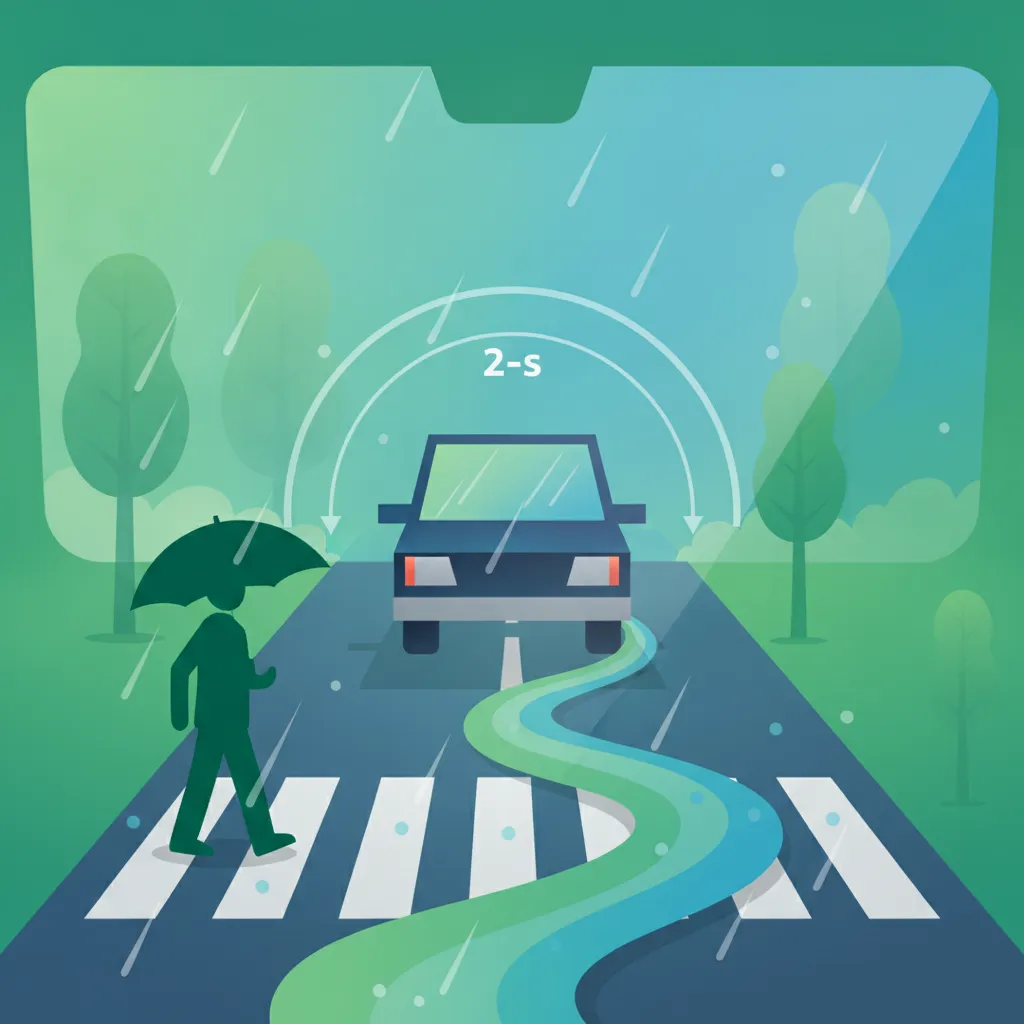
Maintaining an extensive buffer zone ahead of a large passenger vehicle is critical to ensuring enough space for emergency maneuvers. This lesson teaches the time-gap method, detailing how following distances must double on wet roads or increase with full passenger loads. It builds hazard anticipation skills, teaching drivers to read distant traffic cues and react early to hazards.

This lesson provides a comprehensive guide to reversing large vehicles and backing trailer setups safely into loading docks and industrial bays. It analyzes the mechanical physics of trailer articulation, steering inputs, and how to utilize modern backup cameras, mirrors, and assistants. Drivers will examine critical safety protocols, including visual checks and slow-speed controls, to avoid collisions with fixed objects.
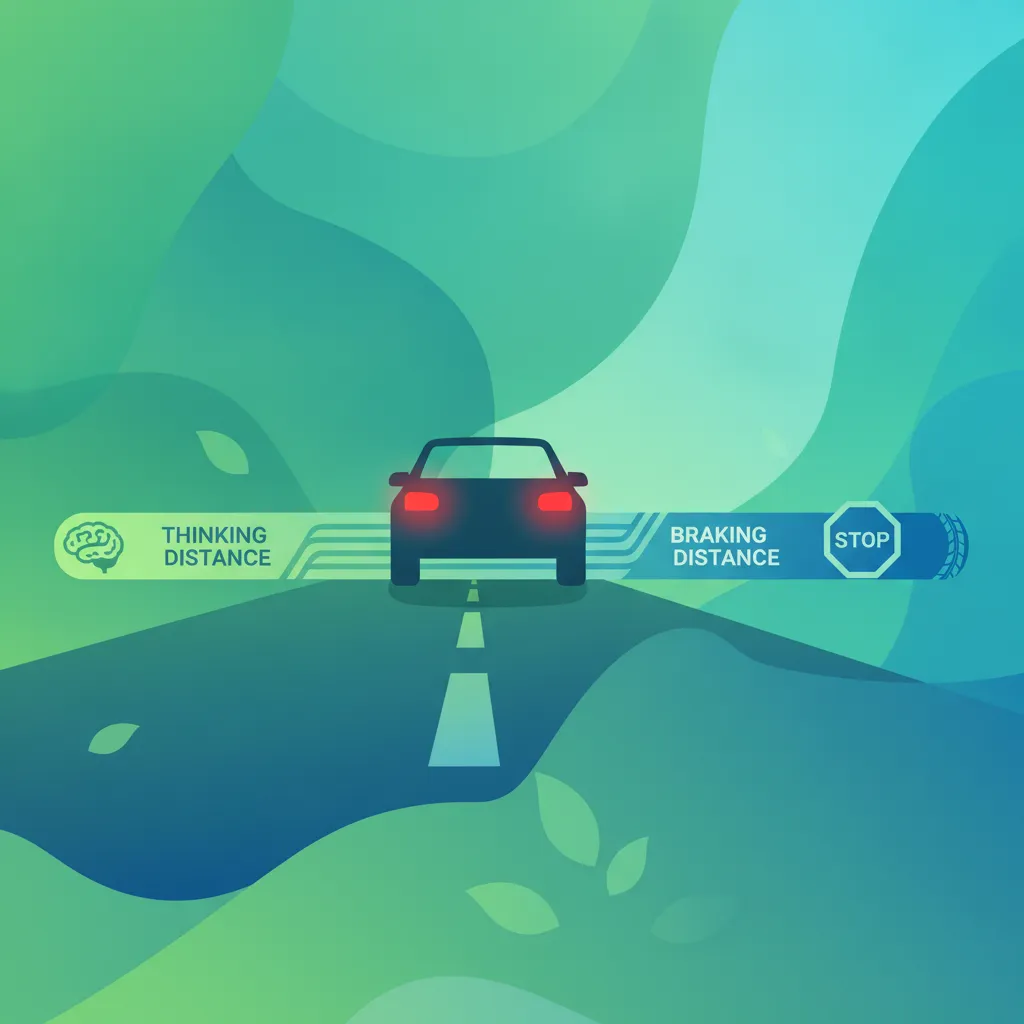
This lesson instructs riders on the correct application of the front and rear brakes to achieve smooth, controlled stopping. It explains how factors such as speed, reaction time, and tyre traction combine to determine total stopping distance. Learners will also study methods to prevent dangerous wheel lock-ups and skidding, especially in wet conditions.
Defensive driving prepares you to react safely when facing unexpected mechanical failures or immediate road hazards. This lesson explains how to execute an emergency stop using Anti-lock Braking Systems (ABS) and how to recover from front and rear-wheel skids on slippery roads. You will learn the importance of remaining calm, avoiding panic-steering, and applying controlled evasive actions to prevent collisions.
Reversing a large passenger vehicle is a high-risk maneuver that must be avoided whenever possible or performed with extreme caution. This lesson teaches correct mirror alignment, the use of rear cameras, and establishing clear hand signals with an external spotter. Drivers will study safety protocols for backing into passenger bays, ensuring all blind zones remain completely clear.

Securing passengers and luggage properly is essential to prevent injury during emergency braking, sudden steering inputs, or traffic collisions. This lesson provides instructions on passenger restraint systems, seatbelt laws in Ireland, and wheelchair ramp deployment processes. Drivers will study weight distribution guidelines for luggage compartments to protect the physical stability of the passenger vehicle.
Sudden or jerky vehicle movements can cause immediate discomfort or direct physical injuries to onboard passengers, particularly standing occupants. This lesson teaches progressive throttle control, gradual gear shifts, and smooth steering inputs that stabilize the heavy vehicle body. Drivers will master the technique of progressive braking to ensure comfortable, safe slowing actions at junctions.
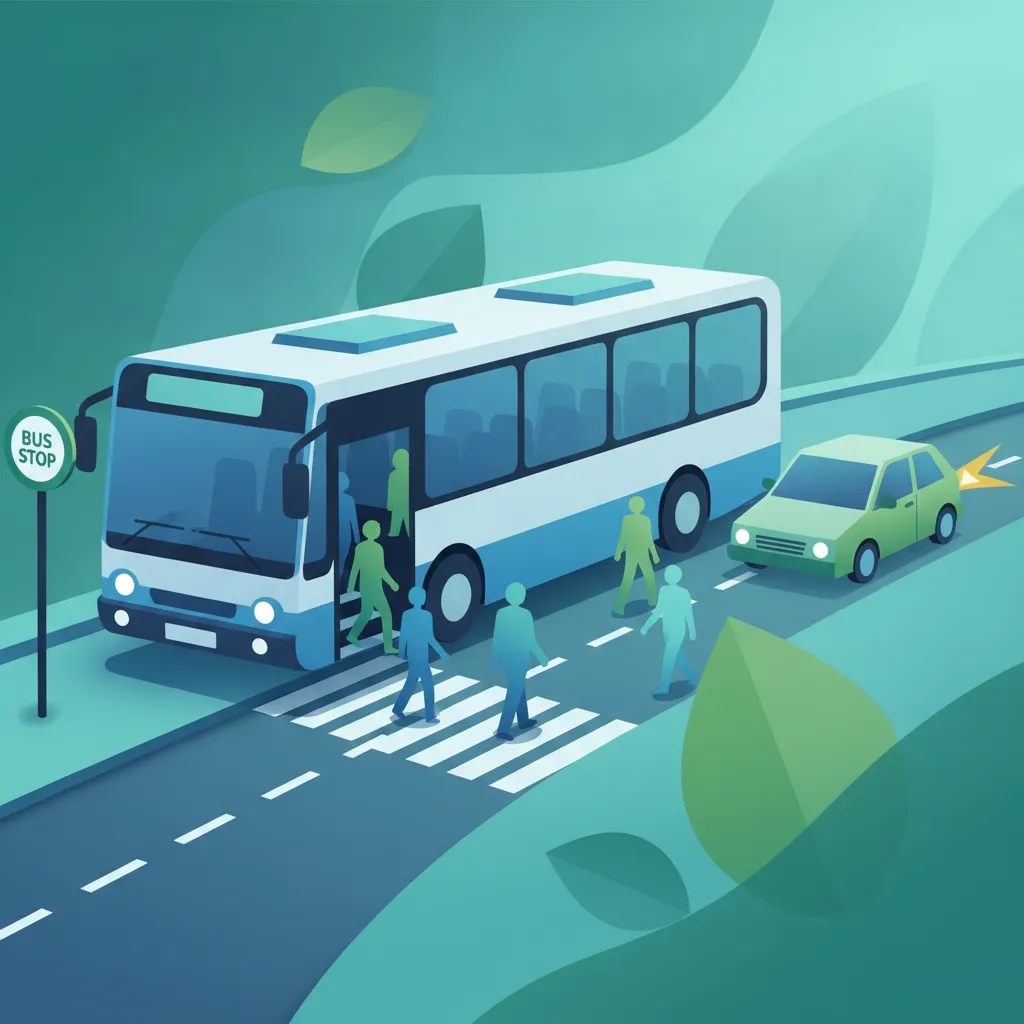
Approaching and exiting a public bus stop requires strategic signaling, careful speed management, and clean alignment with the passenger curb. This lesson teaches drivers how to read oncoming curb hazards, position the vehicle parallel to the curb, and leave safe exit clearances. Drivers will learn to safely integrate back into urban traffic flow while prioritizing passenger stability and comfort.

The length of a commercial passenger vehicle creates a wide rear-wheel track offset, requiring drivers to swing wide during tight turns. This lesson teaches cornering mechanics, mirror adjustment guidelines, and how to check blind spots for cyclists on the inside lane. Drivers will master intersection control, preventing collisions with stationary street furniture or curbs.
Find clear answers to common questions learners have about Vehicle Dimensions, Weight and Impact on Stopping Distance. Learn how the lesson is structured, which driving theory objectives it supports, and how it fits into the overall learning path of units and curriculum progression in Ireland. These explanations help you understand key concepts, lesson flow, and exam focused study goals.
A bus has significantly more mass and momentum. Because kinetic energy increases with weight, it requires more friction and distance to bring the vehicle to a complete stop compared to a lighter passenger car.
A full load of passengers significantly increases the total weight of the vehicle. This added mass increases the stopping distance, meaning you must increase your following distance as the vehicle becomes more loaded.
Yes, passenger vehicles are taller and have a higher center of gravity. During heavy braking, this can cause the chassis to become less stable; braking should be smooth and progressive to prevent passenger discomfort and potential loss of control.
While the Rules of the Road generally recommend keeping a safe distance based on speed and road conditions, for large vehicles, you should always allow a larger buffer zone than a standard car, especially in wet weather or heavy traffic.
Use the practice question search tool to pinpoint specific topics, road signs, or rules you need to master for your official Driver Theory Test. Refine your study strategy and ensure comprehensive preparation for all aspects of the Irish driving exam. Start your focused revision now and build confidence for your learner permit test.