
Reversing a large passenger vehicle is a high-risk activity that requires strict adherence to safety protocols to protect passengers and the public. This lesson provides essential training on proper mirror alignment, the use of rear cameras, and clear communication with a ground-based spotter to ensure safe manoeuvres in confined spaces.

Lesson content overview
Reversing a large passenger vehicle, such as a bus or coach, is one of the most demanding and high-risk maneuvers a professional driver will perform. Due to the sheer length, height, and width of Category D vehicles, rearward visibility is inherently restricted.
In Ireland, the Road Safety Authority (RSA) and professional transport guidelines emphasize a clear rule of thumb: avoid reversing whenever possible. If reversing is unavoidable, it must be executed with extreme caution, systematic preparation, and, where necessary, the assistance of a trained external guide or spotter.
This lesson details the safety protocols, blind spot management strategies, mirror and camera utilization techniques, and spotter communication frameworks required to pass the Irish Driver Theory Test and operate safely in real-world passenger transport environments.
A standard single-deck or double-deck passenger bus in Ireland can range from 10 to 15 metres in length. The driver sits at the absolute front of this massive structure, separated from the rear bumper by several rows of seats, passenger luggage, and structural pillars. This layout creates extensive physical blind zones that cannot be fully monitored through direct vision.
The area directly behind a Category D vehicle is a complete blind spot extending several metres outward. It can easily conceal pedestrians, cyclists, low-profile passenger cars, or terminal infrastructure.
Additionally, drivers must account for rear overhang swing (tail swing). Because the rear wheels of a bus act as the pivot point, turning the steering wheel while reversing causes the rear corners of the vehicle to swing out in the opposite direction. A sharp turn during a reverse maneuver can cause the rear side of the bus to strike adjacent vehicles, posts, or passengers standing on a platform.
Before starting any reversing maneuver, you must ensure that your visual aids are clean, undamaged, and perfectly adjusted to your driving posture.
The process of adjusting a vehicle’s primary, wide-angle, and close-proximity mirrors to minimize blind spots and maximize the driver’s field of view along the sides and rear of the vehicle.
Primary mirrors provide a 1:1 reflection, allowing you to accurately judge the distance and speed of objects behind you. They should be adjusted so that you can see the side of your bus in the inner edge of the mirror, with the horizon positioned roughly in the middle of the glass. This allows you to monitor the straight-line trajectory of the vehicle during a reverse.
Convex mirrors curve outward to provide a wider field of view, significantly reducing lateral blind spots. However, they distort distance, making objects appear smaller and further away than they actually are. Use these mirrors to detect movement or obstacles near the rear wheels and side panels, but do not rely on them solely to judge clearance.
These downward-facing mirrors are positioned above the passenger-side door and driver-side window. They allow you to monitor the immediate ground level next to the vehicle's wheels, helping you avoid scraping kerbs, damaging tyres, or striking low-lying obstacles.
Modern Category D vehicles are increasingly equipped with high-definition rear-view cameras. While these systems are invaluable for monitoring the direct path behind the bus, they have notable limitations:
Always treat a rear-view camera as a supportive aid, never as a replacement for systematic mirror sweeps and physical spotters.
When reversing in busy depots, tight urban environments, or areas with restricted visibility, engaging an external spotter (sometimes referred to as a shunter or guide) is highly recommended—and often mandatory under transit station bylaws in Ireland.
For a spotter to guide you safely, a strict protocol must be maintained:
The following signals are standard across professional transport operations in Ireland:
If at any point the spotter disappears from your mirror, or if their signals become confusing, bring the vehicle to an immediate, smooth stop. Do not resume reversing until you have re-established visual contact and clear communication.
Executing a safe reverse requires a structured, calm approach. Use this step-by-step procedure to ensure maximum control and safety.
Secure the Vehicle and Assess the Area: Apply the parking brake. If safe to do so, physically get out of the cab and walk around the vehicle (the "Walkaround Check") to inspect the path behind you for low-hanging branches, overhead wires, posts, or uneven ground.
Alert the Environment: Switch on your hazard warning lights to alert other road users and pedestrians of your intentions. If your vehicle is equipped with an audible reversing bleeper, ensure it is active (unless local night-time quiet-zone restrictions apply).
Conduct a 360-Degree Observation: Look forward, check both side mirrors, look over your shoulders, and check your camera feed. Pay special attention to vulnerable road users who may try to dart behind your vehicle.
Select Reverse and Control Speed: Engage reverse gear. Move the vehicle backward at a slow, controlled "walking pace" (typically 3 to 5 km/h). Use precise clutch control (in manual passenger vehicles) or minor brake/throttle adjustments (in automatic transmissions) to regulate speed.
Perform Continuous Scanning: Never look in just one mirror. Continuously sweep your eyes from the left mirror to the rear camera, to the right mirror, and back again, watching for tail swing and emerging hazards.
Complete the Maneuver and Secure: Once parked, apply the parking brake, shift into neutral, and switch off the hazard warning lights.
Reversing into enclosed terminal bays (such as Dublin's Busáras or regional Irish bus stations) introduces unique structural and pedestrian hazards.
Bus stations are active hubs where passengers carrying heavy luggage, children, and distracted commuters frequently cross vehicle pathways.
Your reversing strategy must adapt to changing driving conditions. Reduced visibility demands a corresponding reduction in speed and an increased reliance on external safety measures.
Rain, fog, snow, and ice alter both your visibility and the handling of your vehicle:
A fully loaded double-decker bus handles differently than an empty one. The increased weight shifts your centre of gravity and affects braking distances, even at low speeds. Additionally, a full passenger load can block your view through the internal rearview mirror (if equipped), requiring total reliance on external side mirrors and cameras.
Under the Irish Road Traffic Regulations, a driver must not reverse a vehicle on a public road unless the maneuver can be completed without endangering or obstructing other road users.
Want to verify your understanding of vehicle dimensions, maneuvering protocols, and passenger transport safety regulations? Explore these related guides and practice tools.
Reversing a Category D vehicle is inherently dangerous due to extensive blind zones and tail swing hazards created by the vehicle's length and pivot geometry. Safe reversing requires systematic mirror preparation (primary, convex, and kerb mirrors), physical walkaround checks, and engagement of an external spotter when visibility is restricted. The spotter must maintain continuous visibility and stand at least 5m from the vehicle path, using standardized hand signals for backward motion, turning, slowing, and emergency stops. Under Irish Road Traffic Regulations, drivers must never reverse on motorways and must yield right of way to all pedestrians and vehicles during any reversing maneuver.
A short set of high-value points that capture the most important learning from this lesson.
Always avoid reversing whenever possible; if unavoidable, follow strict safety protocols
Understand that Category D vehicles have extensive blind zones extending several metres behind the bus
Tail swing occurs during reversing turns as rear wheels act as the pivot point
Rear-view cameras supplement mirrors but must never replace systematic mirror sweeps and spotters
Continuous 360-degree observation is required throughout any reversing maneuver
Explore all units and lessons included in this driving theory course.
Three mirror types serve different purposes: primary (accurate distance), convex (wide view but distorted distance), and kerb (ground-level proximity)
Spotter must always remain visible in mirrors; if contact is lost, stop immediately
Standard emergency stop signal is an X shape with both arms overhead or a raised closed fist
Reversing speed should be walking pace (3-5 km/h) to allow maximum reaction time
Under Irish Road Traffic Regulations, reversing vehicles never have right of way
Relying solely on rear-view cameras and neglecting side mirror monitoring for tail swing
Failing to conduct a physical walkaround check before reversing, missing low obstacles
Positioning the spotter too close (less than 5m) or directly behind the vehicle path
Assuming convex mirrors show accurate distances when they actually make objects appear smaller and further away
Not adjusting mirrors properly so the bus side is visible at the inner mirror edge
Lesson content overview
A short set of high-value points that capture the most important learning from this lesson.
Always avoid reversing whenever possible; if unavoidable, follow strict safety protocols
Understand that Category D vehicles have extensive blind zones extending several metres behind the bus
Tail swing occurs during reversing turns as rear wheels act as the pivot point
Rear-view cameras supplement mirrors but must never replace systematic mirror sweeps and spotters
Continuous 360-degree observation is required throughout any reversing maneuver
Explore all units and lessons included in this driving theory course.
Three mirror types serve different purposes: primary (accurate distance), convex (wide view but distorted distance), and kerb (ground-level proximity)
Spotter must always remain visible in mirrors; if contact is lost, stop immediately
Standard emergency stop signal is an X shape with both arms overhead or a raised closed fist
Reversing speed should be walking pace (3-5 km/h) to allow maximum reaction time
Under Irish Road Traffic Regulations, reversing vehicles never have right of way
Relying solely on rear-view cameras and neglecting side mirror monitoring for tail swing
Failing to conduct a physical walkaround check before reversing, missing low obstacles
Positioning the spotter too close (less than 5m) or directly behind the vehicle path
Assuming convex mirrors show accurate distances when they actually make objects appear smaller and further away
Not adjusting mirrors properly so the bus side is visible at the inner mirror edge
Explore search topics learners often look for when studying Reversing Techniques and Spotter Use. These topics reflect common questions about road rules, driving situations, safety guidance, and lesson level theory preparation for learners in Ireland.
Browse additional driving theory lessons that cover connected traffic rules, road signs, and common driving situations related to this topic. Improve your understanding of how different rules interact across everyday traffic scenarios.
Learn the theory behind safely navigating large passenger vehicles through tight urban roads and narrow terminal areas. This lesson focuses on tail swing management, correct mirror positioning, and spatial awareness when driving Category D vehicles in restricted spaces according to Irish Rules of the Road.

Driving a coach through narrow urban streets or historic Irish town centers demands precise spatial judgment and low speed control. This lesson covers turning radii, rear tail-swing physics, and managing overhangs when navigating around tight, permanent obstacles. Drivers will learn to assess clearance gaps accurately, reducing damage risks to the vehicle exterior and public infrastructure.

Driving large vehicles through dense city traffic requires outstanding lane discipline, spatial awareness, and consistent patience. This lesson teaches drivers how to utilize public bus corridors, manage tight yellow box intersections, and handle narrow city streets. It focuses on predicting traffic pattern shifts to maintain service timetables while minimizing fuel waste and driver stress.
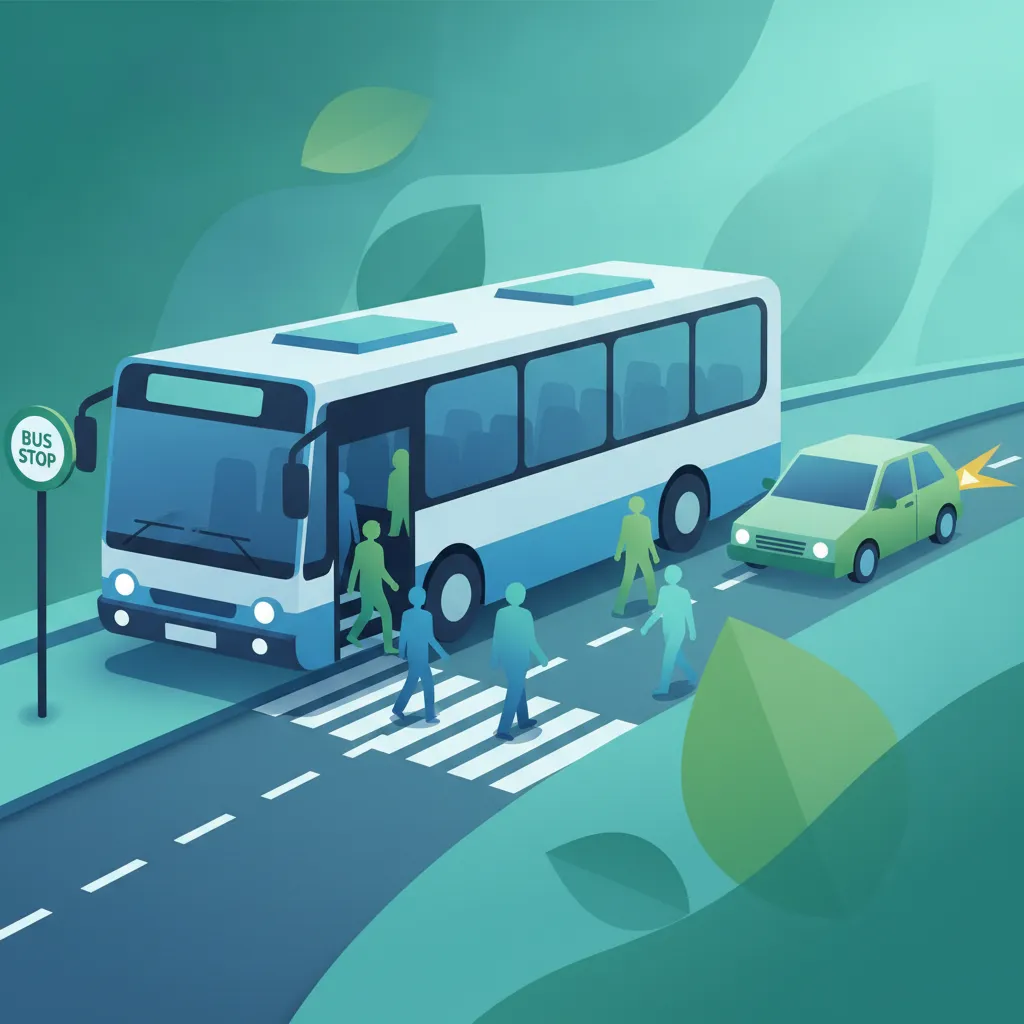
Approaching and exiting a public bus stop requires strategic signaling, careful speed management, and clean alignment with the passenger curb. This lesson teaches drivers how to read oncoming curb hazards, position the vehicle parallel to the curb, and leave safe exit clearances. Drivers will learn to safely integrate back into urban traffic flow while prioritizing passenger stability and comfort.

Sudden or jerky vehicle movements can cause immediate discomfort or direct physical injuries to onboard passengers, particularly standing occupants. This lesson teaches progressive throttle control, gradual gear shifts, and smooth steering inputs that stabilize the heavy vehicle body. Drivers will master the technique of progressive braking to ensure comfortable, safe slowing actions at junctions.

Motorcycles and bicycles are often hidden from view in the large blind spots of passenger buses and coaches during turns. This lesson covers safe lateral clearances when overtaking cyclists, recognizing advanced stop lines, and sharing narrow lanes. Drivers will understand how to signal clearly, giving riders enough room to navigate safely near busy public transit corridors.

This lesson addresses the unique environmental and logistical challenges faced during delivery stops in commercial town and city centers. It covers the legal frameworks governing municipal loading zones, double-parking hazards, and temporary pedestrian-only street restrictions. Drivers will acquire practical skills for managing traffic build-up, utilizing visual spotters, and securing the vehicle while unloading cargo.

The length of a commercial passenger vehicle creates a wide rear-wheel track offset, requiring drivers to swing wide during tight turns. This lesson teaches cornering mechanics, mirror adjustment guidelines, and how to check blind spots for cyclists on the inside lane. Drivers will master intersection control, preventing collisions with stationary street furniture or curbs.

This lesson addresses the mechanical dynamics of turning long-wheelbase and articulated commercial vehicles at intersections, junctions, and roundabouts. It covers the necessity of deep cornering lines, early mirror checks, and correct signaling to warn vulnerable road users of wide turn maneuvers. Drivers will learn how to minimize rear cut-in and ensure the entire vehicle clears urban obstacles safely.

Bus stops often intersect with designated bicycle lanes and busy walking pathways, creating high-risk conflict areas for drivers. This lesson trains drivers to check blind spots for oncoming cyclists before pulling into or exiting public stop bays. It emphasizes yielding right-of-way to passengers crossing the road, preventing collision risks in active urban transport hubs.
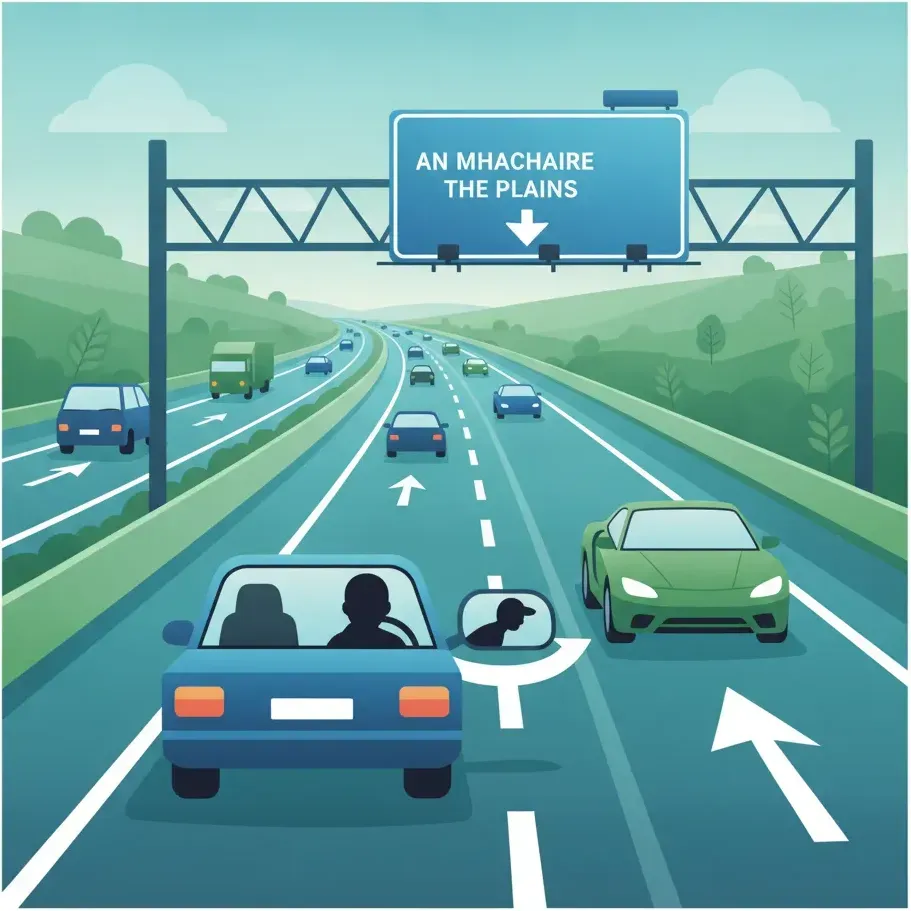
Merging a long, heavy passenger vehicle onto high-speed motorways requires matching the traffic speed within the limited length of slip lanes. This lesson covers signal timing, safe lane-merging gaps, and maintaining control during overtaking maneuvers on national routes. Drivers will learn to prioritize passenger comfort and vehicle stability, preventing sudden weight shifts during lane entries.
Explore the critical principles of maintaining correct lane discipline and managing extensive blind spots when operating buses or coaches. This lesson explains how to monitor surrounding traffic effectively and implement systematic observation routines to reduce the risk of collisions in heavy traffic or on dual carriageways.

Large passenger vehicles must maintain consistent lane positioning to prevent side-swipe incidents and sustain smooth urban traffic patterns. This lesson covers standard lane selection rules, safe overtaking procedures, and how to use designated public transit corridors correctly. Drivers will learn the importance of checking mirrors continuously and planning lane changes well in advance.
The length of a commercial passenger vehicle creates a wide rear-wheel track offset, requiring drivers to swing wide during tight turns. This lesson teaches cornering mechanics, mirror adjustment guidelines, and how to check blind spots for cyclists on the inside lane. Drivers will master intersection control, preventing collisions with stationary street furniture or curbs.

This lesson outlines the legal and safety requirements for maintaining proper lane discipline on multi-lane roads, roundabouts, and motorways in Ireland. It teaches drivers how to account for lane width, manage trailer off-tracking, and position the cab to prevent encroachment on neighboring lanes. Drivers will master safe lane-changing strategies, signaling protocols, and traffic merging techniques.

This lesson explains the location, depth, and angle of the severe blind spots surrounding a standard heavy goods vehicle. It provides step-by-step guidance on setting up primary side mirrors, wide-angle lenses, and close-proximity front-view mirrors to eliminate blind areas. Drivers will learn systematic visual checking routines to ensure complete situational awareness before initiating any maneuver, lane shift, or turn.

Irish driving theory demands that drivers keep to the left-hand side of the road unless overtaking or turning right. This lesson explains how to maintain consistent lane discipline on multi-lane roads, how to perform safe lane changes, and the dangers of drifting. You will learn the safety sequence of checking mirrors, checking blind spots, signalling, and smoothly executing a lane change without disrupting trailing traffic.
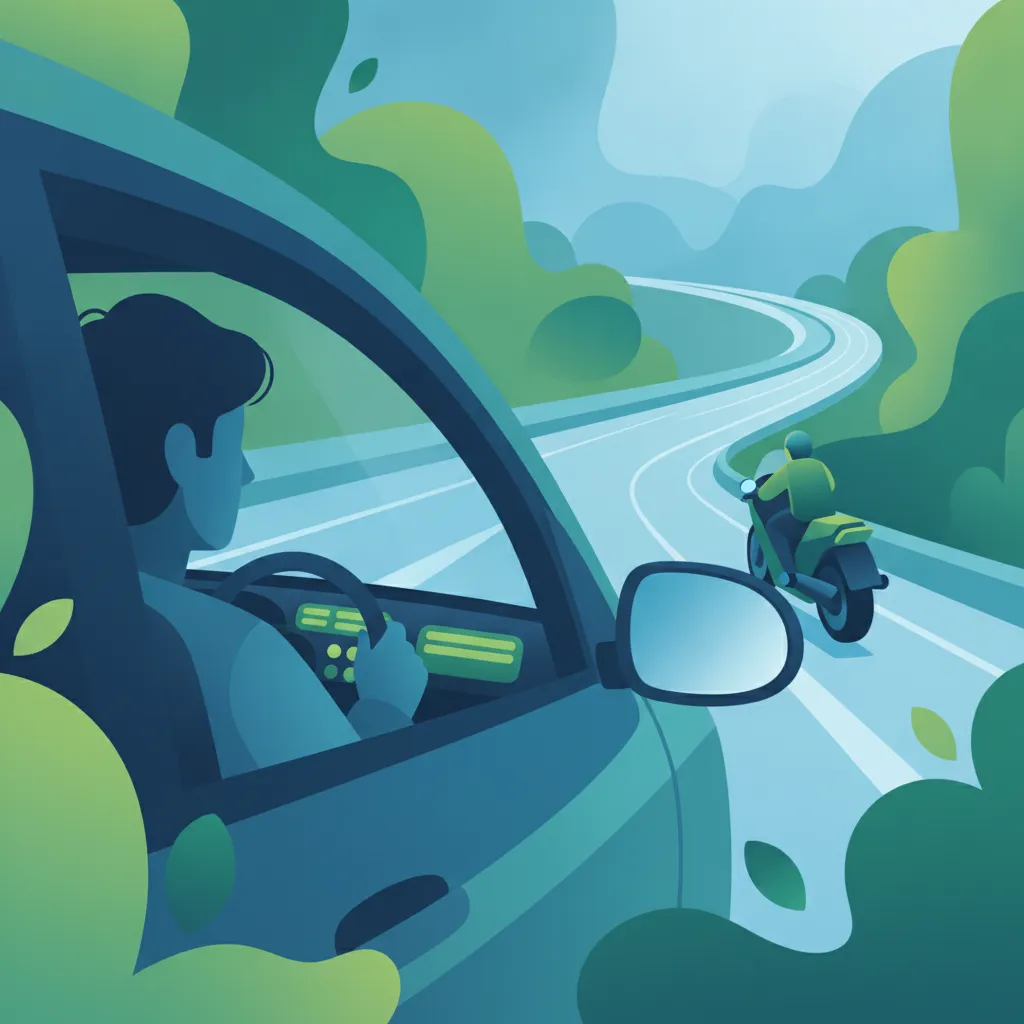
This lesson details the location of blind spots on passenger cars, commercial trucks, and buses, explaining how to avoid staying in these danger zones. It teaches the vital importance of the lifesaver glance or physical shoulder check before executing any lateral lane change or turn. Motorcyclists will learn how to monitor other drivers' mirrors to verify if their motorcycle is visible.

This lesson explains the extensive blind spots of heavy goods vehicles, buses, and other large trucks on Irish roads. It teaches Category AM riders how to maintain safe following distances and position themselves where truck drivers can see them. Proper space cushion management is emphasized to protect riders from the wind turbulence of passing trucks.

This lesson provides a comprehensive guide to reversing large vehicles and backing trailer setups safely into loading docks and industrial bays. It analyzes the mechanical physics of trailer articulation, steering inputs, and how to utilize modern backup cameras, mirrors, and assistants. Drivers will examine critical safety protocols, including visual checks and slow-speed controls, to avoid collisions with fixed objects.
Motorcycles and bicycles are often hidden from view in the large blind spots of passenger buses and coaches during turns. This lesson covers safe lateral clearances when overtaking cyclists, recognizing advanced stop lines, and sharing narrow lanes. Drivers will understand how to signal clearly, giving riders enough room to navigate safely near busy public transit corridors.
Merging a long, heavy passenger vehicle onto high-speed motorways requires matching the traffic speed within the limited length of slip lanes. This lesson covers signal timing, safe lane-merging gaps, and maintaining control during overtaking maneuvers on national routes. Drivers will learn to prioritize passenger comfort and vehicle stability, preventing sudden weight shifts during lane entries.
Find clear answers to common questions learners have about Reversing Techniques and Spotter Use. Learn how the lesson is structured, which driving theory objectives it supports, and how it fits into the overall learning path of units and curriculum progression in Ireland. These explanations help you understand key concepts, lesson flow, and exam focused study goals.
A spotter is essential whenever the driver's direct or indirect view via mirrors and cameras is obstructed, or when the reversing area is near pedestrians, structures, or other vehicles in a terminal or tight loading bay.
You must stop the vehicle immediately and wait until you re-establish a clear line of sight or communication with the spotter. Never continue a reverse manoeuvre if you cannot see the person guiding you.
No, Category D vehicles have much larger blind spots and different handling characteristics. The rules for buses require more rigorous reliance on external assistance, specific mirror setups, and potentially the use of rear-view monitoring systems mandated by safety standards.
The test often presents scenarios requiring you to identify the safest course of action, such as choosing to get out to check the area first, waiting for assistance, or identifying incorrect versus correct hand signals used by a guide.
Use the practice question search tool to pinpoint specific topics, road signs, or rules you need to master for your official Driver Theory Test. Refine your study strategy and ensure comprehensive preparation for all aspects of the Irish driving exam. Start your focused revision now and build confidence for your learner permit test.