
This lesson provides a critical overview of maneuvering and reversing large goods vehicles, a vital skill for both your Category C theory exam and professional practice. Building on your knowledge of vehicle dimensions and road space, you will learn to navigate the unique mechanical challenges of articulated setups safely. Mastering these techniques is essential for preventing low-speed collisions and demonstrating the competence required for a professional driving licence in Ireland.

Lesson content overview
Reversing is one of the most hazardous operations a professional heavy goods vehicle (HGV) driver will undertake. For Category C and Category CE drivers in Ireland, mastering the control of large rigid vehicles and complex trailer configurations is both a practical necessity and a core requirement for passing the Road Safety Authority (RSA) theory and practical examinations.
This lesson provides an in-depth analysis of the physics, visibility management, communication protocols, and legal frameworks essential for reversing large vehicles safely into loading docks, industrial bays, and tight urban spaces.
While forward driving requires acute spatial awareness and lane discipline, reversing demands an entirely different cognitive and physical skill set. When backing up a rigid Category C vehicle, you must manage significant rear overhangs, tail-swing, and massive blind spots. When a trailer is added (Category CE), the complexity increases exponentially due to the introduction of a pivot point.
Statistically, a high percentage of low-speed infrastructure damage and workplace injuries involve reversing goods vehicles. Because of this, Irish road safety standards and health and safety regulations place strict responsibility on the professional driver to ensure that every reversing manoeuvre is planned, controlled, and executed at minimal speed.
To reverse an articulated vehicle successfully, you must first master the mechanical principles of trailer articulation. Unlike a rigid vehicle, where the rear wheels follow the steering axle in a predictable line, an articulated trailer reacts indirectly to steering inputs through a physical pivot point.
The mechanical connection—typically a fifth-wheel coupling and kingpin on an articulated tractor unit, or a drawbar coupling on a rigid-trailer combination—that allows relative rotation between the towing vehicle and the trailer.
When you turn the steering wheel of the tractor unit while reversing, you change the angle of the prime mover relative to the trailer. The kingpin acts as the axis of this rotation.
To push a trailer in a specific direction, you must first steer the towing vehicle in the opposite direction to create an angle at the articulation point. Once that angle is established, you must "follow" the trailer by steering back in the direction of the trailer's turn to maintain control and prevent the angle from becoming too acute.
Understanding how steering inputs translate to trailer movement is critical to avoiding collisions with loading bay walls or parked vehicles.
For example, when reversing a trailer, if you want the rear of the trailer to move to the right, you must turn the steering wheel of the towing vehicle to the left. Once the trailer begins to turn to the right, you must quickly turn the steering wheel to the right to "follow" the trailer and stabilize the turn.
An extreme and dangerous state of negative articulation where the angle between the towing vehicle and the trailer becomes so acute (approaching or exceeding 90 degrees) that the tractor can no longer push the trailer backward, instead pushing it sideways.
Jack-knifing occurs when a driver overcompensates with steering inputs or fails to "follow" the trailer quickly enough. Once a vehicle has jack-knifed, continuing to reverse will cause severe damage to the tractor unit’s cab, the trailer’s drawbar or side panels, and the pneumatic and electrical connection lines (suzies).
How to Prevent Jack-Knifing:
Large goods vehicles have extensive blind spots (often referred to as "No Zones") directly behind the vehicle, along both sides, and immediately in front of the cab. When reversing, the blind spot behind the vehicle is absolute, meaning you cannot see objects or people directly behind your trailer through your physical windows.
Before beginning any reversing manoeuvre, your mirrors must be clean and correctly adjusted. You must utilize a systematic scanning routine:
While reversing, your eyes must never dwell on a single mirror for more than a second. Continually scan from left to right, checking your trailer angle, tyre clearances, and the position of any obstacles.
Modern HGVs are increasingly fitted with rear-view camera systems. While these systems are invaluable tools for detecting low-lying obstacles, columns, and pedestrians, they must be treated strictly as supplements to, not replacements for, your mirrors and direct visual checks.
Cameras have a limited field of view and can suffer from lens distortion, dirt, rain droplets, or glare from low sun or headlights.
If you are reversing without an assistant and your view is compromised in any way, you must employ the GOAL method: Get Out And Look.
Do not hesitate to secure your vehicle, step out of the cab, and physically inspect the area behind your trailer. Look for low-hanging overhead cables, ground debris, soft surfaces, or clearance hazards that are invisible from the driver's seat.
Reversing must always be conducted at an incredibly slow, controlled pace. High speed during reverse deprives you of the time needed to observe and correct minor trailer steering errors, leading to rapid jack-knifing or high-impact collisions.
Use Lowest Gear: Engage the lowest available reverse gear (R1) to utilise engine braking and maintain high engine torque at low road speeds.
Clutch Feathering (Manual Transmissions): In vehicles equipped with manual transmissions, carefully slip (feather) the clutch to move the vehicle at a slow, walking pace. Avoid fully engaging the clutch if it causes the vehicle to travel too fast for the conditions.
Precise Foot Brake Application: In automatic transmissions, use "creep" mode and control your speed exclusively with light, continuous pressure on the foot brake.
Avoid Sudden Braking: Sudden, jerky braking while reversing can cause cargo to shift inside the trailer, altering the vehicle’s centre of gravity and destabilising the manoeuvre.
When reversing in restricted spaces, loading bays, or areas with high pedestrian activity, using a trained assistant (spotter) is often a legal or site-specific safety requirement. However, a spotter is only effective if clear, unambiguous communication protocols are established before the vehicle begins to move.
The Golden Rule of Spotting: If you lose sight of your assistant in your mirrors for even a single second, you must stop the vehicle immediately. They may have tripped, walked into a blind spot, or encountered a hazard. Do not move again until visual contact is re-established.
Before reversing, agree on standard hand signals with your assistant. Ensure the assistant stands in a safe position where they have a clear view of the rear of your trailer and you have a clear, continuous view of them in your side mirrors.
In high-noise industrial environments or where visual distance is too great, two-way radios are preferred. When using radio communication:
Following a systematic checklist ensures that no safety protocols are skipped under the pressure of tight delivery schedules.
Pre-Check & Assessment: Bring the vehicle to a complete stop before the reversing zone. Engage the parking brake. Walk around the vehicle to check physical clearances, overhead obstructions, and ground conditions.
Spotter Coordination: If a spotter is available, brief them on your intended path of travel and confirm your hand or radio signals.
Secure the Cab & Environment: Roll down your side windows to hear external sounds or warnings. Switch off any distracting in-cab media. Turn on your hazard warning lights or auxiliary reversing beacons to alert others.
Select Gear & Release Brake: Select the lowest reverse gear. Confirm the area is still clear using all mirrors and camera systems. Gently release the parking brake.
Commence Reversing (Max 5 km/h): Begin moving at a slow walk. Apply small, deliberate steering inputs, steering in the opposite direction of where you want the trailer to go.
Continuous Scanning: Continuously scan your mirrors and camera display. Monitor your spotter's signals continuously.
Manoeuvre Completion: Stop smoothly once positioned correctly. Apply the parking brake, select neutral, and turn off the engine if leaving the cab or if the vehicle is parked at a loading dock. Verify your load is stable before opening rear cargo doors.
Professional Category C drivers must operate under strict legal guidelines when executing reversing manoeuvres, particularly on public roads or at commercial premises regulated by the Health and Safety Authority (HSA) and the Road Safety Authority (RSA).
Drivers of large goods vehicles must utilize a trained assistant (spotter) when reversing into loading docks, commercial warehouses, or tight industrial bays where direct rear visibility is completely obstructed. Under Irish workplace safety guidelines, both the transport operator and the site manager share a legal duty to ensure reversing manoeuvres are conducted safely, which includes providing competent guiding personnel when required.
While general road traffic legislation requires all manoeuvres to be conducted at a safe speed appropriate to the hazards, safety protocols on almost all industrial, commercial, and port facilities in Ireland mandate a maximum reversing speed of 5 km/h (approximately 3 mph). Reversing at speeds exceeding this threshold on site is a major safety violation and can lead to immediate site bans or charges of driving without due care and attention.
Under EU and Irish construction and use regulations, goods vehicles over 3.5 tonnes must be fitted with compliant mirrors (Classes II through VI) to minimise blind spots. If your vehicle is fitted with reversing cameras or proximity sensors, they must be fully functional. Operating a vehicle with damaged, dirty, or missing safety mirrors is a serious compliance failure and will result in a failed roadside inspection or annual roadworthiness test (CVRT).
Once a reversing manoeuvre is complete, the driver must secure the vehicle immediately. Under Irish load security and general safety guidelines, you must:
Professional driving requires adapting your technique to handle changing environmental variables. What works in a dry, well-lit yard during the day can be highly dangerous in wet, dark, or congested conditions.
Reversing a heavy vehicle uphill or downhill introduces significant gravity-related challenges:
When reversing in city centres, narrow streets, or retail delivery areas, you are highly likely to encounter Vulnerable Road Users (VRUs) such as pedestrians, children, and cyclists.
VRUs are often completely unaware of the blind spots surrounding an HGV. They may attempt to walk or cycle directly behind a reversing vehicle, assuming you can see them.
In these situations, you must make use of your vehicle’s acoustic reversing alarm (beeper) to warn those nearby. If pedestrians approach your vehicle's reversing path, stop immediately and do not resume movement until they have cleared the danger zone.
To fully master reversing, you must draw on knowledge covered in other parts of your Category C training:
Reversing large goods vehicles requires understanding the mechanical physics of trailer articulation, where steering the towing vehicle in the opposite direction of intended trailer movement creates the desired angle, then following the trailer to prevent jack-knifing. Drivers must maintain maximum speeds of 5 km/h on Irish commercial sites, utilize systematic mirror scanning with no single mirror dwelled on for more than a second, and treat backup cameras as supplements rather than replacements for visual checks. The GOAL method (Get Out And Look) is essential when visibility is compromised, and using a trained spotter with agreed hand signals is often a legal requirement in restricted loading bays under Irish workplace safety regulations. Key safety failures include oversteering, failing to monitor articulation angles continuously, and not securing the vehicle immediately after completing the manoeuvre.
A short set of high-value points that capture the most important learning from this lesson.
To reverse a trailer, steer in the opposite direction of where you want the rear of the trailer to go, then follow the trailer to maintain control
The articulation point (kingpin on articulated vehicles, drawbar on rigid-trailer combinations) is the pivot that determines how steering inputs translate to trailer movement
Jack-knifing is an extreme negative articulation where the angle between tractor and trailer exceeds safe limits, caused by oversteering or failing to follow the trailer
Professional reversing must never exceed 5 km/h on commercial sites in Ireland, governed by Health and Safety Authority guidelines
Backup cameras supplement mirrors but cannot replace them due to limited field of view, lens distortion, and vulnerability to dirt and glare
Explore all units and lessons included in this driving theory course.
Positive articulation means the trailer mirrors your steering corrections safely; negative articulation means the trailer swings uncontrollably opposite to your intent
The GOAL method (Get Out And Look) is mandatory if your view is compromised - never force a reverse without physical verification
If you lose sight of your spotter in your mirrors for even one second, stop immediately and do not move until visual contact is restored
On inclines, reverse uphill using clutch control to prevent stall, and reverse downhill using engine braking in lowest gear - never free-wheel in neutral
HGV mirrors include Classes II through VI: main mirrors, wide-angle mirrors, close-proximity mirrors, and front mirrors - all must be clean and functional
Steering too aggressively with full-lock inputs, causing the trailer to swing beyond correction and leading to jack-knifing
Relying on backup cameras as the primary reversing aid rather than treating them as supplements to mirrors and direct observation
Failing to brief the spotter on hand signals or reversing path before beginning the manoeuvre, leading to miscommunication
Not conducting a physical walk-around check before reversing, missing low obstacles, overhead cables, or soft ground invisible from the cab
Moving the vehicle too quickly to observe and correct minor trailer errors, which leaves no time for safe corrections
Lesson content overview
A short set of high-value points that capture the most important learning from this lesson.
To reverse a trailer, steer in the opposite direction of where you want the rear of the trailer to go, then follow the trailer to maintain control
The articulation point (kingpin on articulated vehicles, drawbar on rigid-trailer combinations) is the pivot that determines how steering inputs translate to trailer movement
Jack-knifing is an extreme negative articulation where the angle between tractor and trailer exceeds safe limits, caused by oversteering or failing to follow the trailer
Professional reversing must never exceed 5 km/h on commercial sites in Ireland, governed by Health and Safety Authority guidelines
Backup cameras supplement mirrors but cannot replace them due to limited field of view, lens distortion, and vulnerability to dirt and glare
Explore all units and lessons included in this driving theory course.
Positive articulation means the trailer mirrors your steering corrections safely; negative articulation means the trailer swings uncontrollably opposite to your intent
The GOAL method (Get Out And Look) is mandatory if your view is compromised - never force a reverse without physical verification
If you lose sight of your spotter in your mirrors for even one second, stop immediately and do not move until visual contact is restored
On inclines, reverse uphill using clutch control to prevent stall, and reverse downhill using engine braking in lowest gear - never free-wheel in neutral
HGV mirrors include Classes II through VI: main mirrors, wide-angle mirrors, close-proximity mirrors, and front mirrors - all must be clean and functional
Steering too aggressively with full-lock inputs, causing the trailer to swing beyond correction and leading to jack-knifing
Relying on backup cameras as the primary reversing aid rather than treating them as supplements to mirrors and direct observation
Failing to brief the spotter on hand signals or reversing path before beginning the manoeuvre, leading to miscommunication
Not conducting a physical walk-around check before reversing, missing low obstacles, overhead cables, or soft ground invisible from the cab
Moving the vehicle too quickly to observe and correct minor trailer errors, which leaves no time for safe corrections
Explore search topics learners often look for when studying Reversing Large Vehicles and Trailer Awareness. These topics reflect common questions about road rules, driving situations, safety guidance, and lesson level theory preparation for learners in Ireland.
Browse additional driving theory lessons that cover connected traffic rules, road signs, and common driving situations related to this topic. Improve your understanding of how different rules interact across everyday traffic scenarios.
Understand the specific challenges of navigating narrow urban streets and high-density traffic areas as a goods vehicle driver. This guide explains how to manage interactions with pedestrians, cyclists, and motorcyclists while executing deliveries in restricted zones according to Irish road safety standards.

This lesson addresses the unique environmental and logistical challenges faced during delivery stops in commercial town and city centers. It covers the legal frameworks governing municipal loading zones, double-parking hazards, and temporary pedestrian-only street restrictions. Drivers will acquire practical skills for managing traffic build-up, utilizing visual spotters, and securing the vehicle while unloading cargo.

Safeguarding vulnerable road users requires more than simple obedience to traffic signs; it demands a defensive driving mindset. This lesson summarizes safe practices, including scanning far ahead in urban areas, keeping massive safety margins in wet weather, and executing thorough blind spot checks before reversing. By anticipating the unpredictable movements of others, you can prevent accidents and support a safe road culture.

This lesson focuses on managing the interactions between commercial goods vehicles and non-motorized or lightweight commuters. It outlines defensive driving techniques to utilize when overtaking cyclists, navigating pedestrian crossings, or negotiating shared junctions in Irish cities. Drivers will examine common cyclist behaviors at roundabouts and understand how to maintain massive safety margins to protect lives.

Children often struggle to judge heavy vehicle speeds accurately, while elderly pedestrians may possess limited mobility or hearing impairments. This lesson addresses these unique risks, explaining how to adjust driving patterns in residential neighborhoods and near shopping districts. Drivers will learn to maintain a high safety margin, ensuring they can yield quickly to vulnerable road users.

Children, the elderly, and disabled individuals often require extra time and understanding when navigating road networks. This lesson outlines special safety hazards, such as children unexpectedly running into school zones, or senior citizens needing longer times to cross wide junctions. You will learn how to recognise visually impaired pedestrians by their white canes or guide dogs, and the absolute requirement to drive slowly and patiently.

Heavy vehicles require continuous visual scanning to identify small or slow-moving road users who may enter the path of travel. This lesson explores the typical behaviors of young children, elderly pedestrians, and visually impaired road users. Drivers will build strong hazard perception skills to anticipate sudden movements, ensuring they can brake safely and avoid serious accidents.

Motorcycles and bicycles are often hidden from view in the large blind spots of passenger buses and coaches during turns. This lesson covers safe lateral clearances when overtaking cyclists, recognizing advanced stop lines, and sharing narrow lanes. Drivers will understand how to signal clearly, giving riders enough room to navigate safely near busy public transit corridors.

This lesson explains the extensive blind spots of heavy goods vehicles, buses, and other large trucks on Irish roads. It teaches Category AM riders how to maintain safe following distances and position themselves where truck drivers can see them. Proper space cushion management is emphasized to protect riders from the wind turbulence of passing trucks.

Bus stops often intersect with designated bicycle lanes and busy walking pathways, creating high-risk conflict areas for drivers. This lesson trains drivers to check blind spots for oncoming cyclists before pulling into or exiting public stop bays. It emphasizes yielding right-of-way to passengers crossing the road, preventing collision risks in active urban transport hubs.

This lesson explains the location, depth, and angle of the severe blind spots surrounding a standard heavy goods vehicle. It provides step-by-step guidance on setting up primary side mirrors, wide-angle lenses, and close-proximity front-view mirrors to eliminate blind areas. Drivers will learn systematic visual checking routines to ensure complete situational awareness before initiating any maneuver, lane shift, or turn.
Explore the mechanical dynamics behind steering large vehicles, including articulation points and load stability during tight turns. This lesson covers the technical principles required to prevent jack-knifing and maintain control of articulated trailer combinations under varying road conditions in accordance with official Irish driving theory.
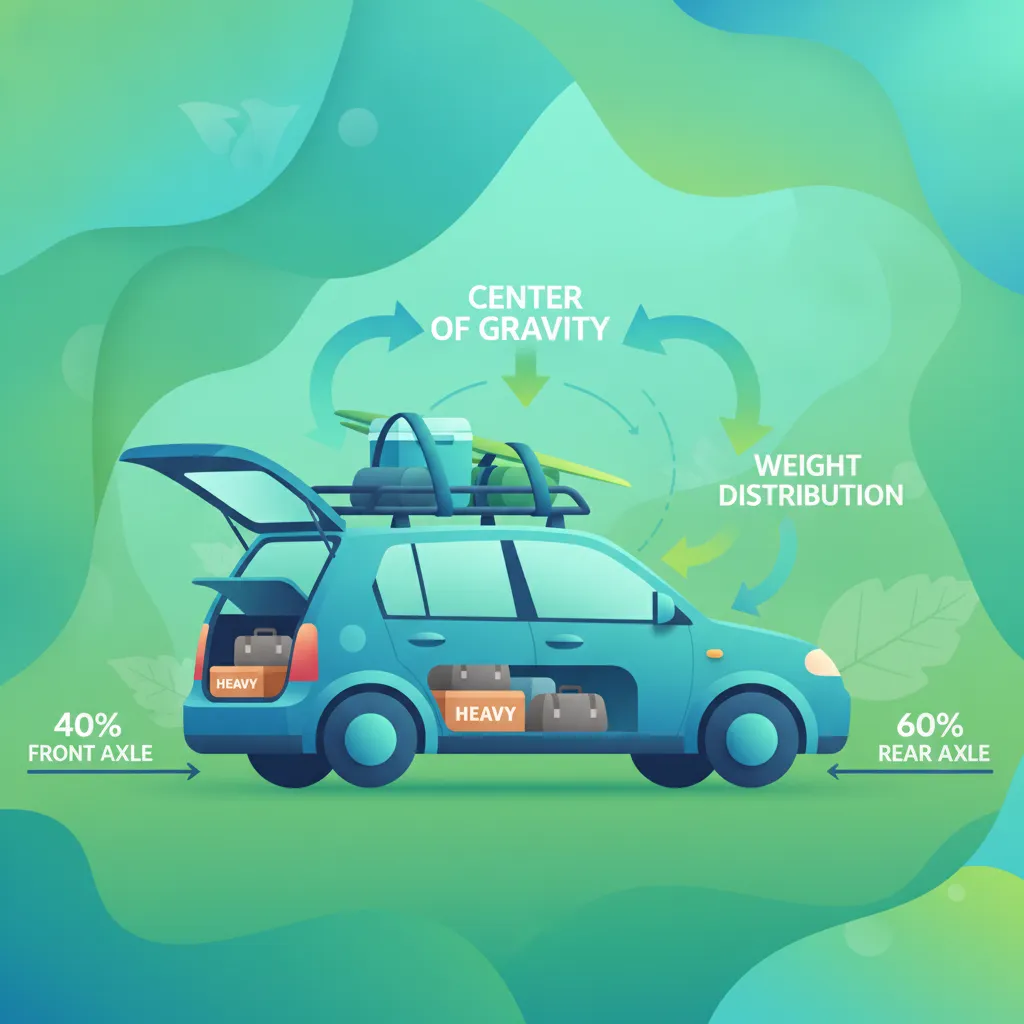
This lesson explains the physical principles of weight distribution and axle overloading on heavy commercial vehicles. It examines how a high centre of gravity increases tipping risks during cornering and alters overall braking effectiveness. Drivers will discover methods for positioning cargo to distribute weight evenly, ensuring optimal steering control and stable vehicle dynamics.

Carrying heavy loads or towing trailers significantly alters a car's handling, acceleration, and braking characteristics. This lesson outlines the physics of load distribution, explaining why you must secure cargo to prevent shifting and keep the vehicle's centre of gravity low. You will learn about legal roof rack weight limits, safe trailer coupling practices, and how to adjust your driving style when towing.

As passenger numbers change throughout a service shift, a heavy vehicle suspension, center of gravity, and steering responsiveness adapt dynamically. This lesson covers load balancing, the physical risks of overloading, and how uneven weight distribution compromises stability during turns. Drivers will learn to perform regular axle weight assessments to comply with Irish transport safety rules.
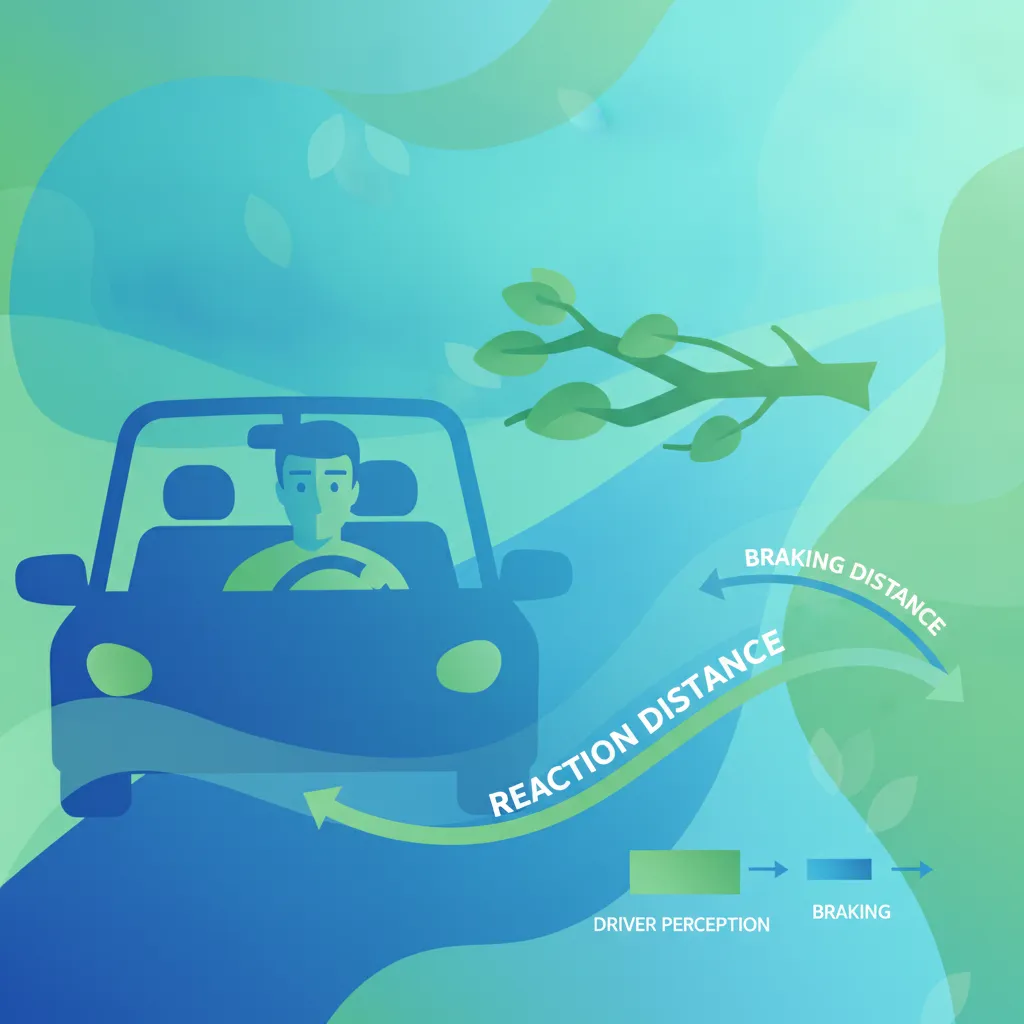
This lesson details how total stopping distance scales with vehicle mass, explaining the critical combination of perception-reaction delay and mechanical braking time. It covers the operation of main air-brake systems, auxiliary engine retarders, and trailer-coupling brake setups. Drivers will learn to maintain safe following distances and apply progressive braking patterns to avoid dangerous brake fade.

This lesson focuses on the physical mechanics of long-wheelbase and articulated vehicles when executing turns in restricted spaces. It explains concepts like swept path, rear overhang, and turning circles, which must be accounted for to prevent side-swiping collisions. Drivers will discover strategic route-planning techniques to avoid congested urban layouts and unsuitable rural corridors.

This lesson focuses on the technical skills required to navigate steep hills and prolonged descents without losing vehicle control. It explains the mechanics of engine braking, correct low-gear selection, and how gravity affects heavily loaded vehicles on downward slopes. Drivers will study safety techniques to prevent kinetic runaway situations and learn how to manage vehicle speed defensively.

The physical scale of a coach or bus generates significant momentum that demands extensive space to bring the vehicle to a safe stop. This lesson explains vehicle weight mechanics, the physics of kinetic energy, and how center of gravity affects chassis stability during stops. Drivers will learn to assess braking capacity, accounting for wet road conditions and high passenger counts.

This lesson addresses the mechanical dynamics of turning long-wheelbase and articulated commercial vehicles at intersections, junctions, and roundabouts. It covers the necessity of deep cornering lines, early mirror checks, and correct signaling to warn vulnerable road users of wide turn maneuvers. Drivers will learn how to minimize rear cut-in and ensure the entire vehicle clears urban obstacles safely.
This lesson explains the location, depth, and angle of the severe blind spots surrounding a standard heavy goods vehicle. It provides step-by-step guidance on setting up primary side mirrors, wide-angle lenses, and close-proximity front-view mirrors to eliminate blind areas. Drivers will learn systematic visual checking routines to ensure complete situational awareness before initiating any maneuver, lane shift, or turn.
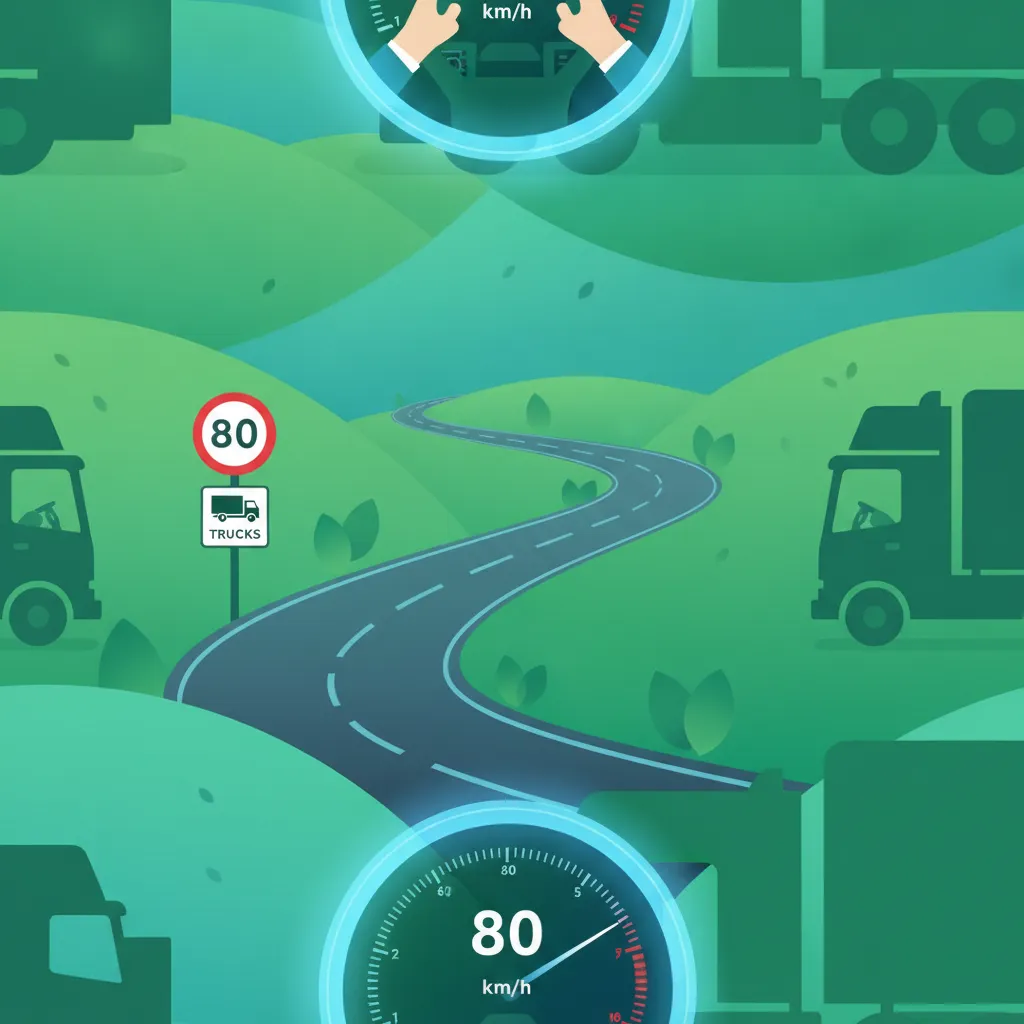
This lesson covers the legal statutory speed limits for goods vehicles on various road classes, including regional corridors and dual carriageways in Ireland. It focuses on how cargo mass and distribution alter the vehicle's safe maximum operational speed under dry, wet, or icy conditions. Drivers will also understand the purpose, function, and legal requirement of vehicle speed limiter systems.
Find clear answers to common questions learners have about Reversing Large Vehicles and Trailer Awareness. Learn how the lesson is structured, which driving theory objectives it supports, and how it fits into the overall learning path of units and curriculum progression in Ireland. These explanations help you understand key concepts, lesson flow, and exam focused study goals.
Trailer articulation creates a secondary pivot point that causes the trailer to move in the opposite direction of the steering input. For Category C drivers, this requires slow, controlled movements and constant monitoring of the trailer's position relative to the towing vehicle to avoid 'jack-knifing'.
No, while modern aids are helpful, the theory test emphasizes the need for 'all-round observation.' You must understand that cameras have blind spots and are only one tool in your safety arsenal, which must be supplemented by physical mirror checks and, where possible, a banksman.
The most common error is failing to account for the 'swing' of the vehicle's rear and sides, leading to collisions with fixed infrastructure. Drivers often focus too much on the rear of the trailer while neglecting the path of the front end as it pivots, which can easily strike nearby objects.
Uneven or slick road surfaces can cause the trailer to slide or move unpredictably, especially when performing slow-speed precision maneuvers. As a professional driver, you must assess the surface grip before attempting to back into a loading bay to ensure the vehicle remains under control.
Use the practice question search tool to pinpoint specific topics, road signs, or rules you need to master for your official Driver Theory Test. Refine your study strategy and ensure comprehensive preparation for all aspects of the Irish driving exam. Start your focused revision now and build confidence for your learner permit test.