
This lesson guides you through the precise maneuvers required to approach and exit bus stops safely in a large passenger vehicle. Mastering these techniques is critical for both the Irish Driver Theory Test and your daily professional driving responsibilities. It builds upon your understanding of vehicle dimensions from the previous unit, ensuring you can manage passenger exchange while maintaining traffic flow.
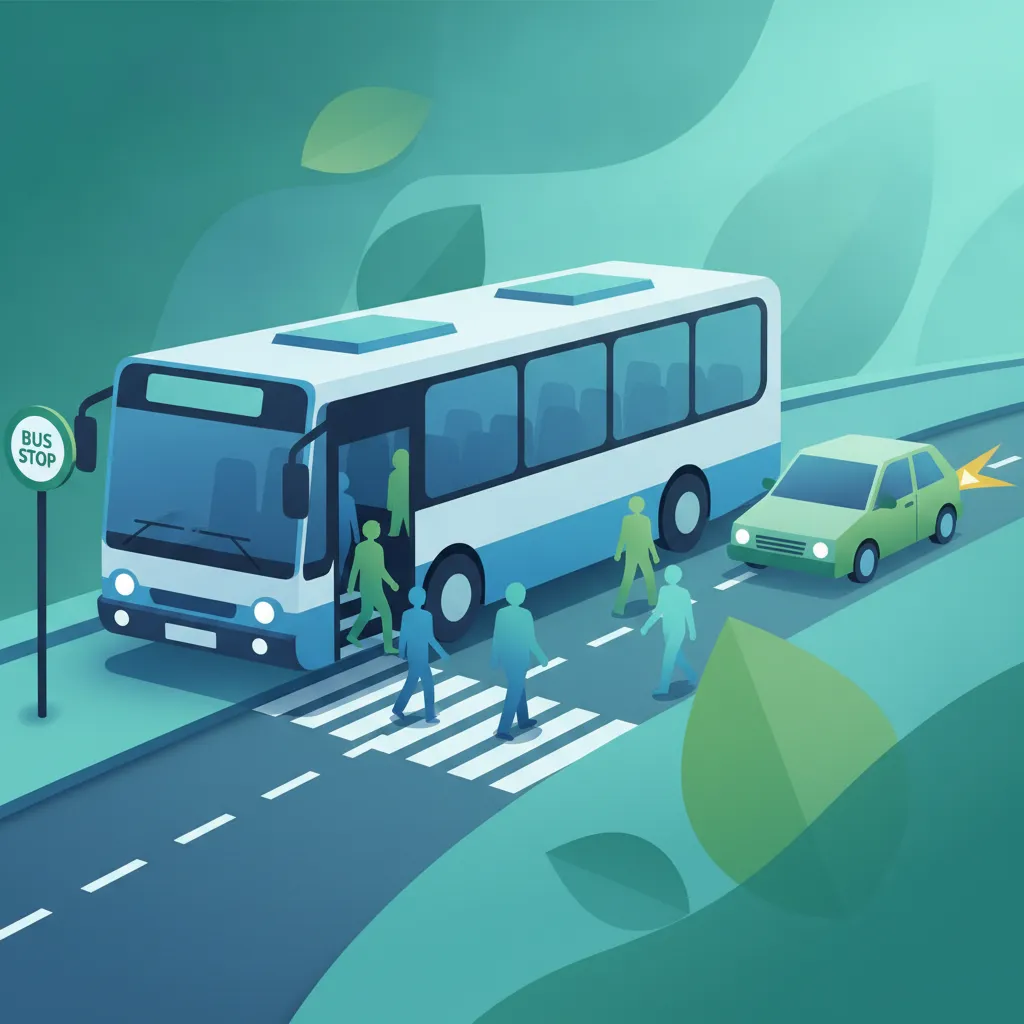
Lesson content overview
Operating a large passenger vehicle under an Irish Category D or D1 licence requires a level of precision, foresight, and care that far exceeds standard driving standards. Approaching, stopping at, and departing from public bus stops are among the most frequent and high-risk maneuvers a professional driver will perform.
These actions must be executed with a deep understanding of passenger safety, vehicle dynamics, and urban traffic interactions. Poor execution not only risks the physical safety of passengers but also disrupts the flow of traffic, damages public infrastructure, and can lead to severe penalties under Irish road transport regulations.
This lesson details the advanced techniques required to safely manage the transition from active traffic to a stationary position at a bus stop, and back into the flow of traffic, while prioritizing passenger comfort and regulatory compliance.
Every time a bus approaches or departs a bus stop, a complex interaction occurs between a heavy vehicle, surrounding road users, and vulnerable passengers. To manage these risks, professional drivers rely on the core principles of hazard anticipation, progressive speed control, and spatial awareness.
A bus stop is a dynamic hazard zone. Pedestrians may suddenly run toward the stop, cyclists may attempt to squeeze past the vehicle on the inside, and trailing motorists may make erratic overtaking decisions.
The active process of identifying, scanning for, and predicting potential dangers in the driving environment before they materialize into an emergency.
When approaching a bus stop, you must systematically scan the environment:
A typical Category D passenger vehicle can weigh between 10 to 18 tonnes when fully loaded. The kinetic energy generated by this mass is substantial. When you apply the brakes, this energy is transferred, and passengers who are standing, moving toward the doors, or preparing to alight are subjected to deceleration forces.
Passenger Instability Risk: Standing passengers or those walking down the aisle or stairs of a double-decker bus have a much higher center of gravity than seated passengers. Sudden, late, or harsh braking is the leading cause of non-collision passenger injuries in public transport.
To minimize this risk, you must employ progressive braking. This means applying light brake pressure early to settle the vehicle and alert passengers, gradually increasing pressure to slow down, and then easing off the pedal just as the bus comes to a complete halt to prevent a final jerk (often called "feathering" the brakes).
The approach to a bus stop must be structured, predictable, and highly visible to all other road users.
Identify and Scan: Locate the bus stop well in advance. Begin scanning for waiting passengers, cyclists, and pavement hazards. Check your interior mirror to assess passenger readiness and your exterior mirrors to evaluate surrounding traffic.
Signal Early: Activate your left-turn indicator at least 100 metres before the stop. This provides ample warning to following drivers, cyclists, and waiting passengers.
Manage Your Speed: Transition your foot from the accelerator to the brake progressively. Use engine braking and retarders where appropriate to smoothly reduce speed to a walking pace before reaching the stop.
Align the Vehicle: Gradually steer toward the kerb, using a wide-angle sweep to align the bus parallel to the passenger platform. Use your nearside and kerb-view mirrors to monitor clearance.
Bring to a Smooth Stop: Ease off the brake pedal slightly at the final moment of deceleration to eliminate the stopping jerk. Apply the handbrake (parking brake) immediately and select neutral.
Achieving the correct final position at a bus stop is critical for passenger accessibility, particularly for vulnerable users such as the elderly, wheelchair users, or parents with prams.
Your goal is to position the bus completely parallel to the kerb.
The technique of positioning a vehicle so that its entire side runs parallel to the kerb, maintaining a consistent and safe distance from front to rear.
You must stop close enough to the kerb to allow passengers to step directly and safely onto the bus, but far enough away to prevent the vehicle’s bodywork, mirrors, or tyres from making physical contact with the kerb or pavement hazards.
Once the vehicle is stationary, your primary responsibility shifts to managing passenger boarding and alighting.
Before opening the passenger doors, ensure the vehicle is completely secure. The handbrake must be engaged, and the gear selector must be in neutral. This prevents the vehicle from rolling if your foot slips off the brake pedal.
Many modern Category D vehicles feature "kneeling" suspension to lower the step height and manual or automatic wheelchair ramps.
Departing from a bus stop and merging back into the flow of urban traffic is a highly critical phase of driving. It requires precise timing, comprehensive visual checks, and smooth acceleration.
Secure the Cabin: Ensure all boarding passengers are safely behind the driver’s line or seated. Close the doors completely. Check that no bags, clothing, or passenger limbs are caught in the door seals.
Perform a Mirror Sweep: Conduct a 360-degree mirror check. Look at your interior mirror to confirm passengers are settled, your right-side mirror to assess traffic, and your left-side mirror to ensure no late-arriving passengers are running alongside the bus.
Signal Your Intention: Activate your right-turn indicator early. This signals to oncoming and trailing traffic that you intend to move out.
Check Your Blind Spot: Perform a physical lifesaver check over your right shoulder. Large buses have a significant blind spot just behind the driver’s cab that mirrors cannot fully cover.
Smoothly Merge: Release the handbrake, select the correct gear, and accelerate smoothly. Merge into the traffic lane when a safe gap appears, matching your speed to the flow of traffic to avoid causing trailing vehicles to brake sharply.
Under the Irish Rules of the Road, motorists are strongly encouraged to yield to public buses pulling out from designated stops. However, as a professional driver, you must never assume that other road users will yield to you.
Legal Responsibility on Departure: The legal onus remains on the bus driver to ensure the maneuver is safe. Pulling out into traffic and forcing an oncoming vehicle to brake or swerve is a serious driving violation and can lead to a charge of careless or dangerous driving.
Operating a Category D vehicle in complex urban environments means you will frequently encounter scenarios that challenge standard procedures. Understanding these edge cases is essential for the Irish Driver Theory Test.
Cyclists and pedestrians pose the greatest risk at bus stops.
To maintain a professional standard, you must avoid these frequent driving errors:
To ensure compliance with the Road Safety Authority (RSA) guidelines and Irish road traffic laws, memorize these core operational mandates:
This lesson covers the essential techniques for safely approaching and departing bus stops in a Category D vehicle under Irish road traffic rules. Drivers must signal well in advance, use progressive braking to protect passenger stability, and achieve precise parallel alignment with the kerb at safe clearance distances. The departure procedure requires comprehensive mirror checks and blind spot monitoring before merging back into traffic, with particular attention to cyclists and pedestrians who may be hidden from view. Weather conditions and vulnerable road users demand heightened awareness throughout all phases of the maneuver, and drivers must never assume other traffic will yield despite any encouraged courtesy provisions.
A short set of high-value points that capture the most important learning from this lesson.
Activate your left-turn indicator at least 100 metres before the bus stop to give following road users adequate warning time
Use progressive braking to smoothly decelerate the vehicle, protecting standing passengers from sudden deceleration forces that could cause injuries
Align the bus parallel to the kerb at approximately 20-30 centimetres clearance to ensure safe passenger boarding and prevent traffic obstruction
Perform a complete 360-degree mirror sweep and physical shoulder check before departing to identify cyclists, pedestrians, and vehicles in your blind spots
Never assume other traffic will yield to you; the legal responsibility to ensure safe departure remains with the bus driver
Explore all units and lessons included in this driving theory course.
The handbrake must be applied and the vehicle placed in neutral before opening passenger doors
Cyclists commonly attempt to pass buses on the left during approach and on the right during departure, creating squeeze hazards
Wet, icy, or foggy conditions require earlier signaling and extended speed reduction sequences
Passengers who have just alighted may cross directly in front of or behind the stationary bus, creating a lethal blind spot scenario
Leaving hazard lights on while moving is prohibited as it misleads other drivers about your turning intentions
Activating indicators only when beginning to turn, leaving insufficient reaction time for following cyclists and vehicles
Using harsh or sudden braking that throws standing passengers forward and causes non-collision injuries
Failing to achieve parallel alignment, resulting in either the rear obstructing traffic or doors being too far from the kerb
Not checking for pedestrians crossing immediately behind the bus before departure, which can result in serious collisions
Blocking adjacent bus bays by over-stopping, preventing other buses from accessing the platform
Lesson content overview
A short set of high-value points that capture the most important learning from this lesson.
Activate your left-turn indicator at least 100 metres before the bus stop to give following road users adequate warning time
Use progressive braking to smoothly decelerate the vehicle, protecting standing passengers from sudden deceleration forces that could cause injuries
Align the bus parallel to the kerb at approximately 20-30 centimetres clearance to ensure safe passenger boarding and prevent traffic obstruction
Perform a complete 360-degree mirror sweep and physical shoulder check before departing to identify cyclists, pedestrians, and vehicles in your blind spots
Never assume other traffic will yield to you; the legal responsibility to ensure safe departure remains with the bus driver
Explore all units and lessons included in this driving theory course.
The handbrake must be applied and the vehicle placed in neutral before opening passenger doors
Cyclists commonly attempt to pass buses on the left during approach and on the right during departure, creating squeeze hazards
Wet, icy, or foggy conditions require earlier signaling and extended speed reduction sequences
Passengers who have just alighted may cross directly in front of or behind the stationary bus, creating a lethal blind spot scenario
Leaving hazard lights on while moving is prohibited as it misleads other drivers about your turning intentions
Activating indicators only when beginning to turn, leaving insufficient reaction time for following cyclists and vehicles
Using harsh or sudden braking that throws standing passengers forward and causes non-collision injuries
Failing to achieve parallel alignment, resulting in either the rear obstructing traffic or doors being too far from the kerb
Not checking for pedestrians crossing immediately behind the bus before departure, which can result in serious collisions
Blocking adjacent bus bays by over-stopping, preventing other buses from accessing the platform
Explore search topics learners often look for when studying Bus Stop Approach and Departure Techniques. These topics reflect common questions about road rules, driving situations, safety guidance, and lesson level theory preparation for learners in Ireland.
Browse additional driving theory lessons that cover connected traffic rules, road signs, and common driving situations related to this topic. Improve your understanding of how different rules interact across everyday traffic scenarios.
Learn the essential theory behind maneuvering large passenger vehicles through complex urban environments. This guide explains how to integrate with city traffic, manage shared spaces with cyclists and pedestrians, and navigate narrow street systems while adhering to professional RSA driving standards for Category D drivers.
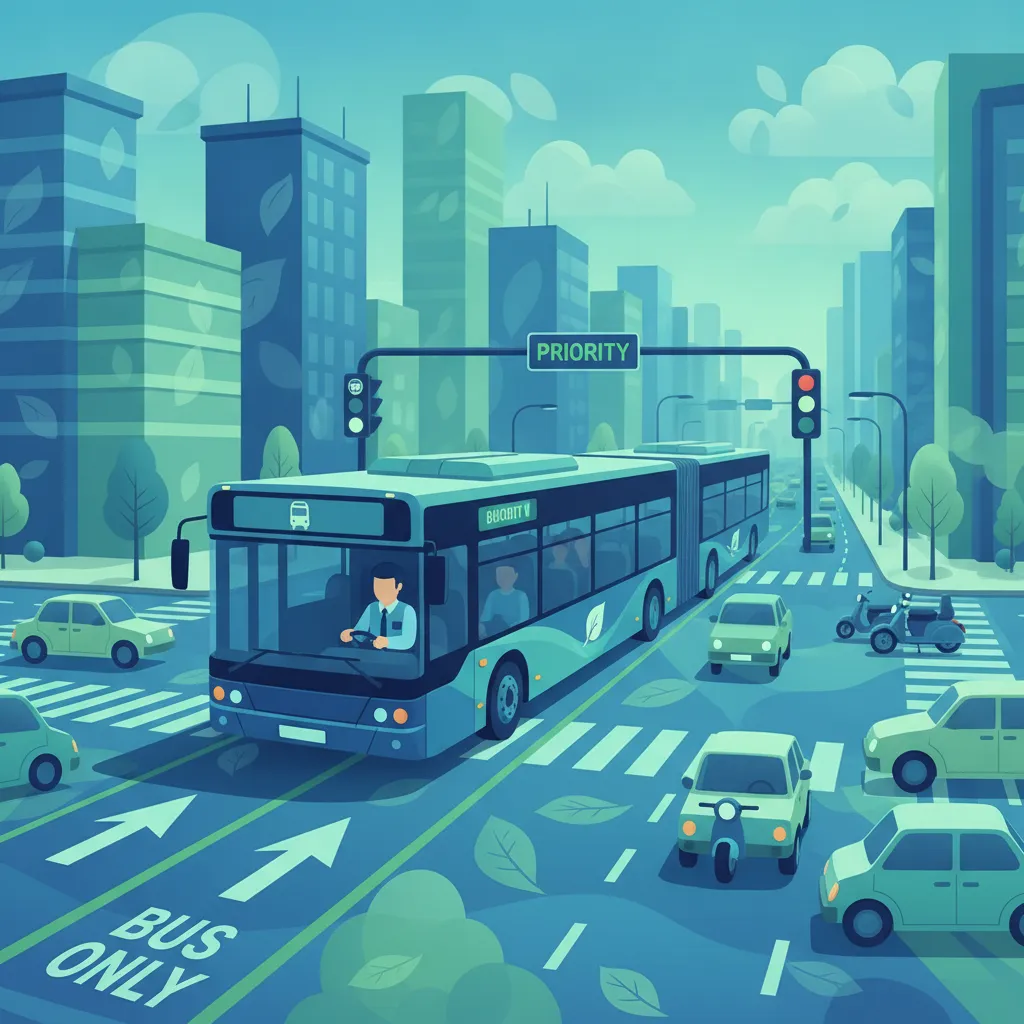
Driving large vehicles through dense city traffic requires outstanding lane discipline, spatial awareness, and consistent patience. This lesson teaches drivers how to utilize public bus corridors, manage tight yellow box intersections, and handle narrow city streets. It focuses on predicting traffic pattern shifts to maintain service timetables while minimizing fuel waste and driver stress.
Understand the theory behind safely sharing the road with pedestrians, cyclists, and motorcyclists. This lesson explores hazard anticipation, mirror management, and blind spot awareness to prevent accidents at bus stops and in school zones, helping you meet the core safety requirements of the Irish Driver Theory Test.

Bus stops often intersect with designated bicycle lanes and busy walking pathways, creating high-risk conflict areas for drivers. This lesson trains drivers to check blind spots for oncoming cyclists before pulling into or exiting public stop bays. It emphasizes yielding right-of-way to passengers crossing the road, preventing collision risks in active urban transport hubs.
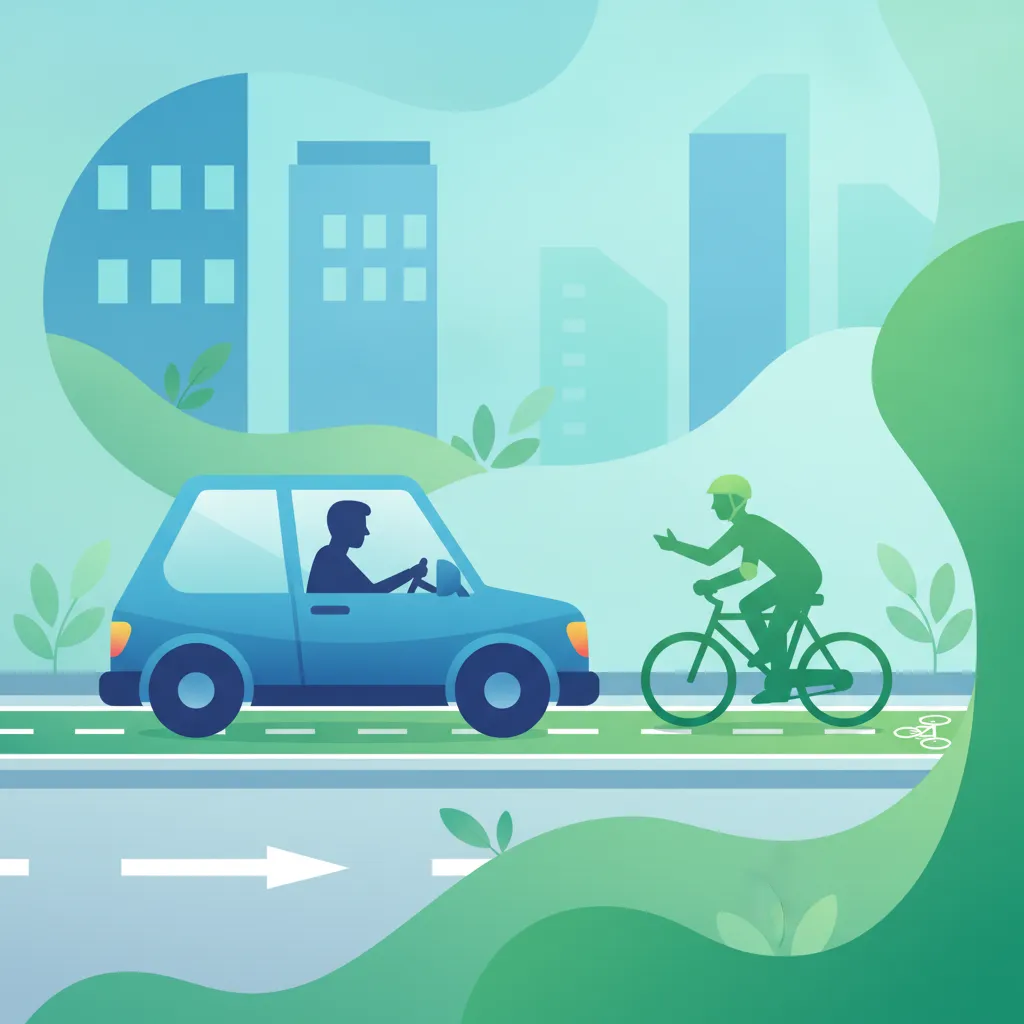
Cyclists share public roads under unique safety constraints, requiring drivers to keep wide clearances and anticipate sudden steering changes. This lesson covers the minimum safe passing distance of 1 to 1.5 metres, rules for driving near cycle tracks, and the danger of the 'dooring' hazard when parking. You will also learn to check your left-side blind spot before turning, preventing dangerous side-swipe collisions.
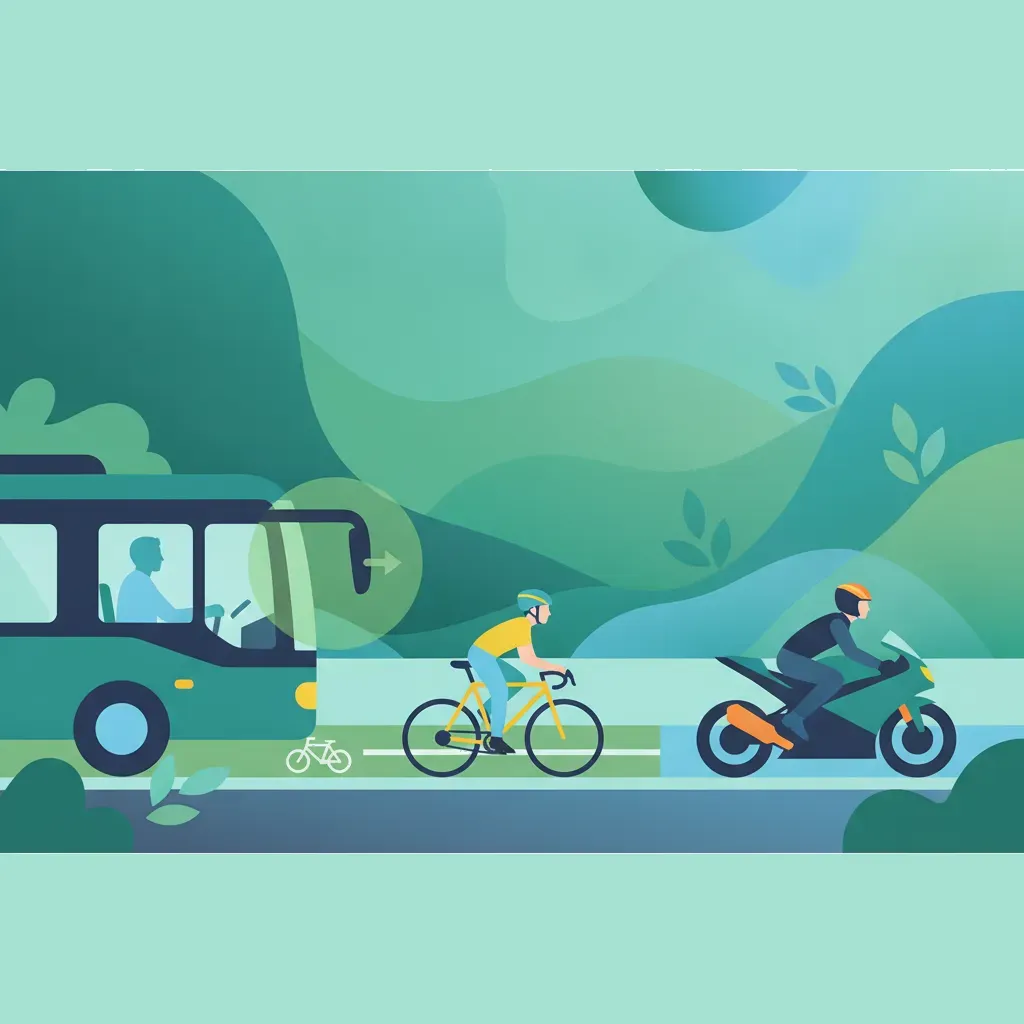
Motorcycles and bicycles are often hidden from view in the large blind spots of passenger buses and coaches during turns. This lesson covers safe lateral clearances when overtaking cyclists, recognizing advanced stop lines, and sharing narrow lanes. Drivers will understand how to signal clearly, giving riders enough room to navigate safely near busy public transit corridors.
This lesson focuses on managing the interactions between commercial goods vehicles and non-motorized or lightweight commuters. It outlines defensive driving techniques to utilize when overtaking cyclists, navigating pedestrian crossings, or negotiating shared junctions in Irish cities. Drivers will examine common cyclist behaviors at roundabouts and understand how to maintain massive safety margins to protect lives.
This lesson details how to approach zebra, pelican, and other pedestrian crossings safely, ensuring complete priority is given to walkers. It also covers the safe guidelines for overtaking cyclists and sharing lanes in busy urban centers without causing danger. Respecting these interactions is critical for maintaining overall safety and compliance with Irish road law.
This lesson covers the rules governing zebra, pelican, and toucan pedestrian crossings, focusing on driver obligations and rider safety. It details how to interact safely with cyclists, personal mobility devices, and pedestrians in busy urban sectors. Motorcyclists will learn to scan pavement edges, yield right-of-way, and maintain safe overtaking distances when passing slower road users.
Transporting passengers with mobility impairments, children, or elderly citizens requires specialised communication skills and physical driving adjustments. This lesson reviews safe boarding techniques, wheelchair-accessible vehicle setups, and best practices for supporting passengers with hidden disabilities. It highlights the importance of empathy, patience, and maintaining professional dignity during passenger transport.
Safeguarding vulnerable road users requires more than simple obedience to traffic signs; it demands a defensive driving mindset. This lesson summarizes safe practices, including scanning far ahead in urban areas, keeping massive safety margins in wet weather, and executing thorough blind spot checks before reversing. By anticipating the unpredictable movements of others, you can prevent accidents and support a safe road culture.

Children often struggle to judge heavy vehicle speeds accurately, while elderly pedestrians may possess limited mobility or hearing impairments. This lesson addresses these unique risks, explaining how to adjust driving patterns in residential neighborhoods and near shopping districts. Drivers will learn to maintain a high safety margin, ensuring they can yield quickly to vulnerable road users.
Heavy vehicles require continuous visual scanning to identify small or slow-moving road users who may enter the path of travel. This lesson explores the typical behaviors of young children, elderly pedestrians, and visually impaired road users. Drivers will build strong hazard perception skills to anticipate sudden movements, ensuring they can brake safely and avoid serious accidents.
Find clear answers to common questions learners have about Bus Stop Approach and Departure Techniques. Learn how the lesson is structured, which driving theory objectives it supports, and how it fits into the overall learning path of units and curriculum progression in Ireland. These explanations help you understand key concepts, lesson flow, and exam focused study goals.
You should signal well in advance to inform other road users of your intention to pull over. In a Category D vehicle, timing your signal correctly is crucial to allow traffic behind you to adjust, adhering to the Irish Rules of the Road.
The primary risk is failing to see smaller road users, such as cyclists or motorcyclists, who may be moving past your bus. Always perform thorough mirror checks and look over your shoulder to clear your blind spots before pulling out.
Yes, you should aim to align the bus parallel to the curb to ensure passengers can board and alight safely, especially those with limited mobility or wheelchair users who rely on ramps.
Because of the length of a bus, you need a larger gap in traffic to pull out safely compared to a car. Always wait for a clear and safe gap, ensuring you do not force other drivers to brake abruptly.
Use the practice question search tool to pinpoint specific topics, road signs, or rules you need to master for your official Driver Theory Test. Refine your study strategy and ensure comprehensive preparation for all aspects of the Irish driving exam. Start your focused revision now and build confidence for your learner permit test.