
This lesson focuses on the critical relationship between vehicle weight, passenger load, and safe stopping distances for buses and coaches. You will learn to apply the time-gap method effectively, ensuring you maintain a safe buffer zone to account for the unique handling dynamics of Category D vehicles in various Irish traffic conditions.
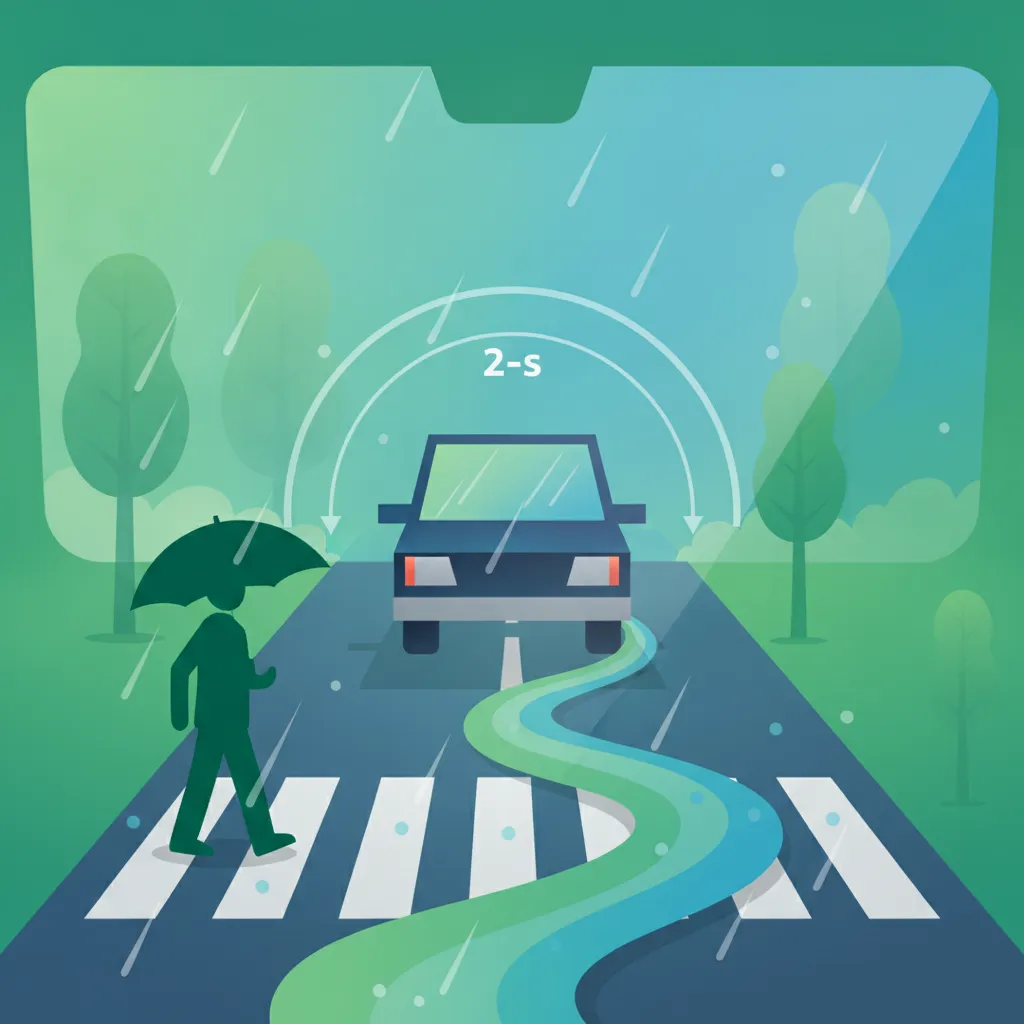
Lesson content overview
Operating a large passenger vehicle, such as a bus or coach under a Category D or D1 licence, requires an exceptional level of spatial awareness and defensive driving. Unlike passenger cars, large vehicles carry substantial mass, have a higher centre of gravity, and possess completely different braking dynamics.
When you are responsible for the safety of dozens of passengers on Irish roads, maintaining an extensive safety buffer ahead of your vehicle is not just a best practice—it is a legal and operational necessity. This lesson explores the critical principles of the time-gap method, the physics of stopping distances, the influence of passenger loads, and how to proactively anticipate hazards to ensure smooth, safe journeys.
Understanding how and why a bus stops is the foundation of safe driving. A vehicle's total stopping distance is never a fixed number; it is a dynamic value that changes based on speed, vehicle weight, road surface conditions, and driver alertness.
The total distance a vehicle travels from the moment the driver first perceives a hazard on the road to the moment the vehicle comes to a complete, stationary halt. It is calculated as: Reaction Distance + Braking Distance = Total Stopping Distance.
Total stopping distance is split into two distinct phases:
The physical mass of a Category D vehicle directly dictates its deceleration capabilities. Under the laws of physics, kinetic energy increases proportionally with mass and exponentially with speed ().
The physical modification of a vehicle’s braking and handling dynamics caused by an increase in total weight (mass) from passengers, luggage, or onboard cargo.
When a bus is fully loaded with passengers and their luggage, its total mass can easily increase by several tonnes. This added weight has several dangerous implications for braking:
Because it is incredibly difficult to accurately estimate physical distances in metres while driving, professional drivers use the Time-Gap Method. This technique relies on time intervals to establish a safe following distance, ensuring your safety buffer automatically scales with your road speed.
Select a fixed, stationary object ahead of the vehicle in front of you, such as a road sign, a lamppost, or a bridge shadow.
As soon as the rear bumper of the vehicle ahead passes that chosen object, begin counting: "One thousand and one, one thousand and two..."
Stop counting the moment the front bumper of your bus reaches the exact same stationary object.
Assess your count against the current road and vehicle conditions to determine if your following distance is safe or needs to be increased.
In perfect, dry weather conditions with an unladen or lightly loaded passenger vehicle, the absolute minimum safe following distance is 2 seconds.
At an urban speed of 50 km/h, a 2-second gap translates to approximately 28 metres of space. On national roads or motorways at 80 km/h, a 2-second gap extends to about 44 metres. This distance provides just enough space to react and bring the vehicle to a controlled stop if the vehicle ahead brakes normally. However, it leaves very little margin for error, driver distraction, or unexpected emergency stops by the vehicle in front.
Under the official Irish Rules of the Road, you must immediately adjust your following distance when conditions deteriorate or when your vehicle's weight increases. For Category D drivers, the safe gap must double to at least 4 seconds in any of the following circumstances:
In extreme winter weather, even a 4-second gap is insufficient. Ice, packed snow, and heavy frost severely compromise tyre traction.
On icy or snowy roads, stopping distances can increase by up to ten times the standard dry-weather distance. In these conditions, drivers should extend their following distance to 10 seconds or more, reduce their speed significantly, and avoid any sudden braking or steering inputs.
In low visibility, such as dense fog, heavy mist, or night-time driving on unlit rural routes, you must also increase your time gap. Use dipped headlights and rear fog lights if visibility is reduced to less than 100 metres, and use the extra time gap to compensate for your restricted visual range.
Tunnel Phobia and Tailgating: In enclosed environments like the Dublin Port Tunnel, drivers can suffer from spatial disorientation or "tunnel phobia." Avoid the temptation to tailgating to "feel" your way through the tunnel. Maintain a minimum gap of at least 4 seconds, keep a steady speed, and never slam on your brakes unless there is an absolute emergency.
Hazard anticipation is a proactive skill. Rather than simply reacting to events as they happen, professional Category D drivers actively read the road ahead, predict potential conflicts, and modify their speed and road position before a hazard materialises.
To anticipate hazards effectively, you must master the "high-aim steering" visual scanning technique:
[Spotting Hazard Early] ──> [Early Deceleration] ──> [Gentle, Controlled Stopping] ──> [Passenger Safety Preserved]
                                      vs.
[Reactive/Late Detection] ──> [Sudden Emergency Braking] ──> [Passenger Falls/Injuries] ──> [High Risk of Rear-End Collision]
As a large vehicle operator, you will frequently encounter scenarios requiring early anticipation:
Irish road safety legislation places a heavy legal burden on professional drivers to operate their vehicles with due care and attention. Failing to maintain a safe following distance or neglecting passenger safety can lead to severe penalties.
The Rules of the Road published by the Road Safety Authority (RSA) state that you must always drive at a speed and distance that allows you to stop safely in an emergency.
For Category D passenger vehicles, tailgating is classified as dangerous driving or careless driving, which carry penalty points, heavy fines, and potential court appearances. In the event of a rear-end collision where your bus strikes the vehicle ahead, the law almost always holds the following driver (you) responsible for failing to maintain a sufficient safety buffer.
Even experienced drivers can fall victim to dangerous habits. Here are the most common violations and errors:
Why are these rules so strict for buses?
By masterfully applying the time-gap method and practicing continuous hazard anticipation, you ensure a smooth, professional, and compliant journey that keeps your passengers, your vehicle, and other road users safe.
To deepen your understanding of safe vehicle control, passenger comfort, and advanced vehicle dynamics, please explore our related resources.
Explore all units and lessons included in this driving theory course.
Lesson content overview
Explore all units and lessons included in this driving theory course.
Explore search topics learners often look for when studying Following Distance and Hazard Anticipation. These topics reflect common questions about road rules, driving situations, safety guidance, and lesson level theory preparation for learners in Ireland.
Browse additional driving theory lessons that cover connected traffic rules, road signs, and common driving situations related to this topic. Improve your understanding of how different rules interact across everyday traffic scenarios.
Learn the essential techniques for controlling a heavy passenger vehicle in tight urban environments. This guide explains how to manage blind spots, safe turning practices, and the use of spotters to ensure passenger safety and vehicle control while navigating narrow streets and challenging terminal locations on Irish roads.

Driving a coach through narrow urban streets or historic Irish town centers demands precise spatial judgment and low speed control. This lesson covers turning radii, rear tail-swing physics, and managing overhangs when navigating around tight, permanent obstacles. Drivers will learn to assess clearance gaps accurately, reducing damage risks to the vehicle exterior and public infrastructure.

Driving large vehicles through dense city traffic requires outstanding lane discipline, spatial awareness, and consistent patience. This lesson teaches drivers how to utilize public bus corridors, manage tight yellow box intersections, and handle narrow city streets. It focuses on predicting traffic pattern shifts to maintain service timetables while minimizing fuel waste and driver stress.

Motorcycles and bicycles are often hidden from view in the large blind spots of passenger buses and coaches during turns. This lesson covers safe lateral clearances when overtaking cyclists, recognizing advanced stop lines, and sharing narrow lanes. Drivers will understand how to signal clearly, giving riders enough room to navigate safely near busy public transit corridors.
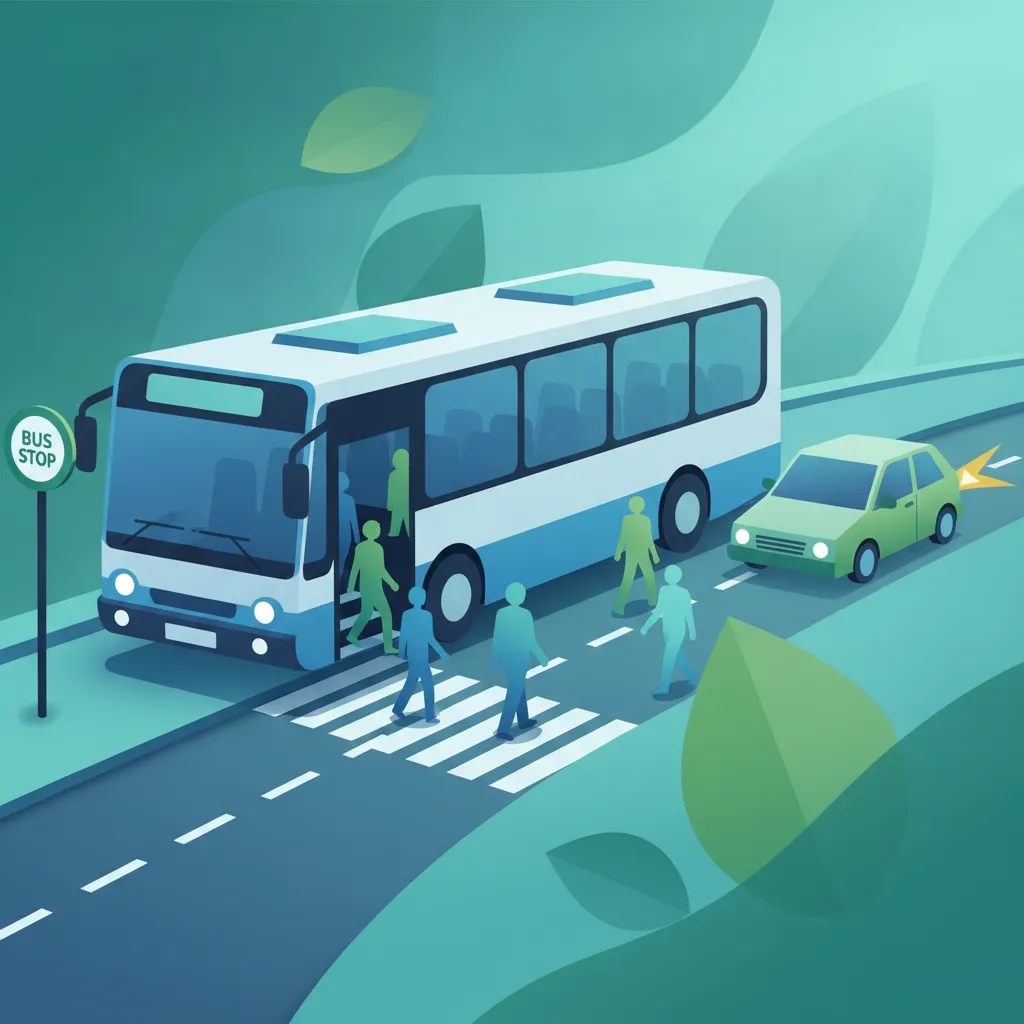
Approaching and exiting a public bus stop requires strategic signaling, careful speed management, and clean alignment with the passenger curb. This lesson teaches drivers how to read oncoming curb hazards, position the vehicle parallel to the curb, and leave safe exit clearances. Drivers will learn to safely integrate back into urban traffic flow while prioritizing passenger stability and comfort.

Sudden or jerky vehicle movements can cause immediate discomfort or direct physical injuries to onboard passengers, particularly standing occupants. This lesson teaches progressive throttle control, gradual gear shifts, and smooth steering inputs that stabilize the heavy vehicle body. Drivers will master the technique of progressive braking to ensure comfortable, safe slowing actions at junctions.

The length of a commercial passenger vehicle creates a wide rear-wheel track offset, requiring drivers to swing wide during tight turns. This lesson teaches cornering mechanics, mirror adjustment guidelines, and how to check blind spots for cyclists on the inside lane. Drivers will master intersection control, preventing collisions with stationary street furniture or curbs.
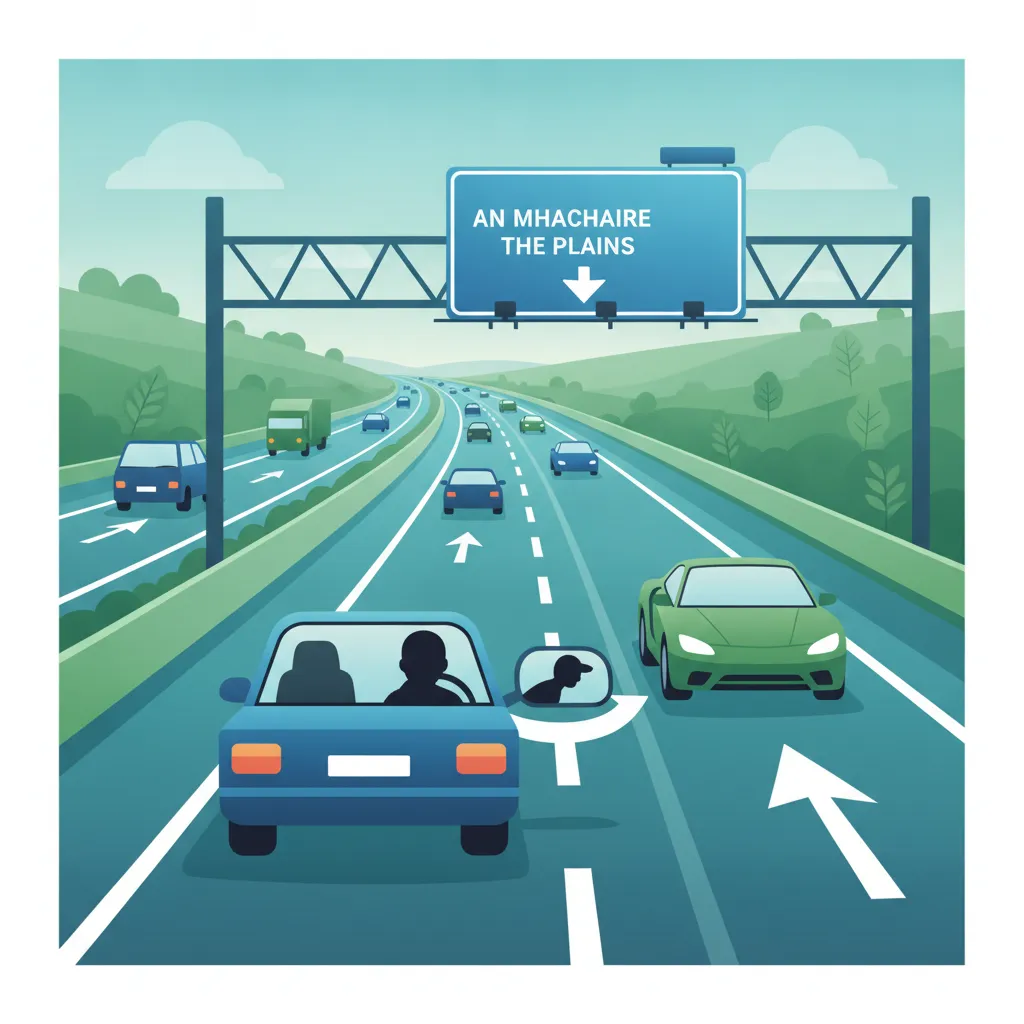
Merging a long, heavy passenger vehicle onto high-speed motorways requires matching the traffic speed within the limited length of slip lanes. This lesson covers signal timing, safe lane-merging gaps, and maintaining control during overtaking maneuvers on national routes. Drivers will learn to prioritize passenger comfort and vehicle stability, preventing sudden weight shifts during lane entries.
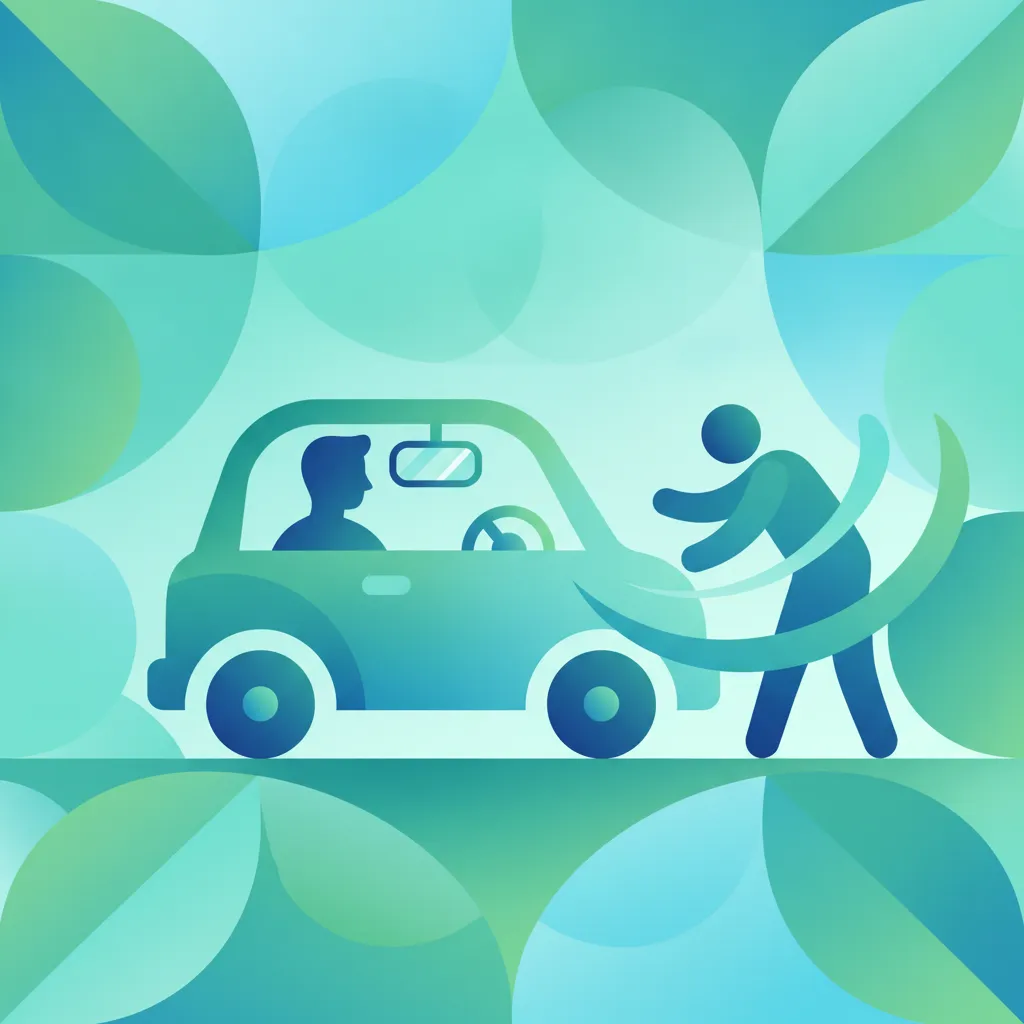
Reversing a large passenger vehicle is a high-risk maneuver that must be avoided whenever possible or performed with extreme caution. This lesson teaches correct mirror alignment, the use of rear cameras, and establishing clear hand signals with an external spotter. Drivers will study safety protocols for backing into passenger bays, ensuring all blind zones remain completely clear.

Motorway transport requires consistent forward planning, strict speed restriction compliance, and clear mirror checks before exiting lanes. This lesson details the rules of joining and leaving motorways, navigating toll plazas safely, and managing breakdowns on the hard shoulder. Drivers will learn to balance high-speed travel with passenger stability, ensuring a comfortable, secure ride.
Large passenger vehicles must maintain consistent lane positioning to prevent side-swipe incidents and sustain smooth urban traffic patterns. This lesson covers standard lane selection rules, safe overtaking procedures, and how to use designated public transit corridors correctly. Drivers will learn the importance of checking mirrors continuously and planning lane changes well in advance.
Understand the professional requirements for responding to roadside emergencies and executing safe passenger evacuations. This theory lesson details the correct protocols for managing vehicle breakdowns, passenger safety during critical incidents, and maintaining composure to protect passengers and other road users in alignment with Irish road safety standards.

Evacuating a coach or bus requires quick, decisive leadership, structured directions, and full use of onboard emergency exits. This lesson details the exact location and operation of emergency glass-breakers, roof hatches, and manual door release systems. Drivers will study crowd management techniques to prevent panic, ensuring all passengers gather at a safe distance from the vehicle.

When emergencies strike, a passenger driver must remain perfectly calm and execute structured emergency procedures to protect human life. This lesson outlines safety protocols for roadside breakdowns, engine fire isolation, and handling acute passenger medical emergencies. Drivers will learn how to secure the accident scene and report incidents to emergency services as required by Irish law.

Passenger boarding and exiting periods represent a highly critical operational window where slip and fall injuries frequently occur. This lesson outlines safe door opening procedures, the deployment of mechanical boarding steps, and proper handrail holding instructions. Drivers will learn to supervise passenger flow, ensuring passengers clear the immediate exit area before the bus begins moving.

Maintaining cabin discipline is critical for preventing driver distractions and ensuring passenger transit remains completely safe and comfortable. This lesson teaches conflict resolution, proactive de-escalation techniques, and the roles of specialized escorts on school or medical transport. Drivers will learn to assess security threats on board and apply the appropriate response protocols under Irish laws.

Standing passengers face heightened safety risks due to sudden changes in bus velocity, turning forces, or abrupt stops. This lesson covers maximum standing capacity regulations, correct passenger distribution, and the importance of active handrail utilization. Drivers will learn how to adjust their braking and acceleration patterns to prevent slips, trips, and falls among standing occupants.

Clear and concise driver-to-passenger communication improves travel safety, maintains order, and fosters a positive public transit experience. This lesson outlines correct signal timing, clear vocal announcements, and the legal placement of bilingual Irish and English signs inside vehicles. It trains drivers in effective emergency broadcasting and provides guidelines on delivering routine operational delays calmly.
Find clear answers to common questions learners have about Following Distance and Hazard Anticipation. Learn how the lesson is structured, which driving theory objectives it supports, and how it fits into the overall learning path of units and curriculum progression in Ireland. These explanations help you understand key concepts, lesson flow, and exam focused study goals.
A bus or coach has significantly greater weight and a higher centre of gravity, which drastically increases the distance required to come to a complete stop. Maintaining a larger gap provides the necessary time to react and apply the brakes progressively, ensuring the safety and comfort of your passengers.
The heavier the vehicle, the longer it takes to stop. When your bus is at maximum passenger capacity, the kinetic energy of the vehicle is much higher, meaning you must increase your following distance further to compensate for the additional weight.
The two-second rule is a minimum for cars in ideal conditions. For Category D vehicles, you should always aim for a much larger time gap, often at least four seconds, to allow for the vehicle's size and the responsibility of transporting passengers.
In adverse weather, you must at least double your following distance. Wet roads reduce tyre grip, and combined with the mass of a passenger vehicle, your stopping distance will increase significantly compared to dry road conditions.
Use the practice question search tool to pinpoint specific topics, road signs, or rules you need to master for your official Driver Theory Test. Refine your study strategy and ensure comprehensive preparation for all aspects of the Irish driving exam. Start your focused revision now and build confidence for your learner permit test.