
This lesson focuses on the vital protocols for managing passenger boarding and alighting safely in Category D passenger vehicles. Mastering these procedures is essential for preventing common injuries and meeting the high safety standards required by the Road Safety Authority for professional drivers in Ireland.

Lesson content overview
In passenger transport, the periods when passengers board and exit a vehicle represent some of the most critical operational windows. Statistically, more non-collision passenger injuries occur during boarding and alighting than at any other time during a journey. Slips, trips, and falls on steps, platforms, and curbs can lead to severe injuries, legal liabilities, and operational delays.
For professional drivers preparing for the Irish Driver Theory Test Category D Passenger Vehicles, mastering these procedures is a legal and ethical necessity. Under the Irish Rules of the Road and Road Safety Authority (RSA) guidelines, the driver has a duty of care to ensure that every passenger enters and exits the bus or coach safely, regardless of age, mobility level, or prevailing environmental conditions.
As a Category D or D1 licence holder, your role extends beyond steering and braking; you are the supervisor of your vehicle’s passenger compartment. Supervised passenger flow is the active management of passenger movement during boarding and alighting to prevent uncontrolled crowding, slips, and collisions.
The active management and monitoring by the driver of the movement of passengers entering or exiting the vehicle, ensuring an orderly, safe, and controlled process.
Uncontrolled passenger flow often leads to bottlenecks, pushing, and a heightened risk of falls. By establishing authority and clear communication, you ensure that passengers move in an orderly, single-file manner.
Operating the passenger doors is a primary safety task. Under Irish traffic law, doors must remain securely closed at all times when the vehicle is in motion. They must only be opened once the vehicle has come to a complete stop at a safe, designated location.
Crucial Safety Rule: Never open the doors while the vehicle is still coasting to a stop, even at very low speeds. Doing so invites passengers to step off prematurely, which can lead to them being drawn under the wheels of the moving bus.
Before activating the door controls, you must perform a comprehensive sweep of your mirrors. The nearside (left) mirror is of paramount importance. In urban Irish environments, cyclists frequently filter on the left-hand side of stationary or slowing buses.
Opening a door directly into the path of an oncoming cyclist, pedestrian, or e-scooter rider can result in catastrophic injuries.
Bring the vehicle to a complete stop parallel to the curb, ensuring the exit area is clear of obstacles like street furniture, lamp posts, or deep puddles.
Apply the handbrake (parking brake) and place the transmission in neutral to prevent accidental vehicle creep.
Perform a thorough mirror check, focusing heavily on the nearside mirror and the interior passenger mirror.
Activate the door controls only when you are certain there are no cyclists filtering on the left and no pedestrians are standing too close to the path of the outward-swinging doors.
Modern passenger vehicles are equipped with various mechanical aids designed to bridge the gap between the vehicle floor and the ground. These include retractable steps, kneeling suspension systems, and fold-out or telescopic wheelchair ramps.
Retractable steps provide an intermediate footstep for high-floor coaches. Many modern city buses feature an Electronically Controlled Air Suspension (ECAS) system, commonly known as a "kneeling" bus, which lowers the nearside of the vehicle toward the curb.
Ensure the bus is stopped close to and parallel with the curb to minimize the gap distance.
Activate the kneeling system or deploy the retractable step before opening the passenger doors fully, or immediately upon opening them, depending on the vehicle's interlock system.
Visually confirm that the step or ramp has fully extended and is resting securely on stable, level ground before allowing passengers to step onto it.
Instruct passengers to wait until the mechanism has completely stopped moving before they attempt to step on or off.
If you are operating in an area with uneven ground, soft verges, or high curbs, check that the mechanical steps will not strike the curb or become wedged. Activating steps on unstable ground can cause the mechanism to slip when loaded, leading to passenger falls.
Handrails are the primary physical support system for passengers navigating the entry and exit areas of a bus. Legally, all public service passenger vehicles must be fitted with high-visibility handrails near entryways and along the interior aisles.
While many passengers use handrails instinctively, others—such as distracted commuters, parents carrying children, or passengers carrying shopping bags—may fail to do so. As a professional driver, you must encourage handrail usage.
Once boarding or alighting is complete, you must ensure that all passengers have cleared the immediate exit area before the vehicle begins to move. This zone, often referred to as the "clearance area," is a common site for serious run-over accidents.
The immediate zone on the pavement or roadway surrounding the passenger doors where exiting passengers step down and move away from the vehicle.
Passengers who have just alighted may walk alongside the bus, stand close to the wheels to adjust their luggage, or attempt to cross the road directly in front of or behind the bus.
Never assume that because the passenger doors are closed, it is safe to drive away. You must visually verify that the clearance area is entirely empty.
In Ireland, the operation of passenger-carrying vehicles is governed by strict statutory rules. The Road Safety Authority (RSA) and the An Garda Síochána enforce these laws to protect passenger and public safety.
Environmental factors significantly increase the hazards associated with boarding and alighting. Professional drivers must adapt their procedures based on weather, light, and location type.
Rain, sleet, snow, and ice make steps and platforms highly slippery.
At night or during heavy fog, identifying hazards around the doors becomes much more difficult.
The nature of the bus stop itself changes the risk profile:
| Stop Location | Primary Hazards | Driver Mitigation Strategy |
|---|---|---|
| Urban Bus Stops | High volume of cyclists, heavy pedestrian crowding, tight space due to parked vehicles. | Stop close and parallel to the curb to block cyclists from squeezing past the doors. Check mirrors continuously. |
| Rural Road Stops | Lack of raised curbs, uneven grass verges, soft ground, lack of street lighting, high-speed passing traffic. | Select a stopping point with stable ground. Use the vehicle’s hazard warning lights if stopping on a high-speed road. Advise passengers to step carefully onto the uneven ground. |
Reviewing common errors helps drivers understand what not to do during daily operations.
Safe boarding and alighting procedures require a combination of technical vehicle control, absolute patience, and constant environmental awareness. By systematically adhering to safe door-opening steps, ensuring mechanical aids are fully deployed, demanding handrail usage, and carefully checking the clearance area, Category D drivers can prevent injuries and maintain the highest professional standards of safety on Irish roads.
This lesson covers the critical safety procedures for managing passenger boarding and alighting on Category D vehicles in Ireland, emphasizing that statistically most non-collision passenger injuries occur during these operational windows. Learners must master supervised passenger flow management, proper door-opening sequences requiring complete vehicle stops and mirror checks, deployment of mechanical aids like kneeling suspension and retractable steps, and the legal duty of care that extends until passengers reach safe ground. The content also addresses adverse weather adaptations, urban versus rural stop hazards, and highlights common violations such as premature movement and inadequate accessibility deployment. These procedures are directly relevant to the Irish Driver Theory Test for professional passenger vehicle drivers.
A short set of high-value points that capture the most important learning from this lesson.
Supervised passenger flow means the driver actively manages and monitors all passenger movement during boarding and alighting to prevent slips, falls, and collisions.
Doors must only be opened when the vehicle is completely stationary with the parking brake applied; never open doors while the bus is still coasting even at very low speeds.
A thorough nearside mirror check is mandatory before opening doors to detect cyclists filtering on the left, a major hazard in Irish urban environments.
Mechanical boarding aids such as kneeling suspension and retractable steps must be fully deployed and confirmed stable before passengers attempt to use them.
The clearance area must be visually verified completely empty via mirrors before moving away, as passengers may be hidden beneath doors or near wheels.
Explore all units and lessons included in this driving theory course.
The Stationary Vehicle Rule: doors open only when fully stopped, secured, and aligned parallel to a safe landing area.
Three Points of Contact: passengers should maintain two feet and one hand, or two hands and one foot, when navigating steps.
Driver duty of care extends until each passenger has safely stepped onto the footpath or stable ground, not merely off the vehicle.
On wet, icy, or uneven ground, allow extra boarding time and confirm mechanical aids are resting on stable, level surfaces.
Night operations require functioning stepwell and exterior boarding lights; open the cab window if reflections obscure mirror visibility.
Inching forward prematurely while doors are closing or the last passenger is still stepping onto the curb, which is a severe safety violation.
Opening doors on curves or bends where the rear or center doors do not align with a safe landing area.
Failing to deploy kneeling systems or ramps for elderly or disabled passengers, creating an unsafe step-down height.
Neglecting the nearside mirror sweep immediately before door activation, leading to dooring incidents with cyclists or pedestrians.
Assuming the clearance area is clear simply because the doors are closed without visually verifying via mirrors.
Lesson content overview
A short set of high-value points that capture the most important learning from this lesson.
Supervised passenger flow means the driver actively manages and monitors all passenger movement during boarding and alighting to prevent slips, falls, and collisions.
Doors must only be opened when the vehicle is completely stationary with the parking brake applied; never open doors while the bus is still coasting even at very low speeds.
A thorough nearside mirror check is mandatory before opening doors to detect cyclists filtering on the left, a major hazard in Irish urban environments.
Mechanical boarding aids such as kneeling suspension and retractable steps must be fully deployed and confirmed stable before passengers attempt to use them.
The clearance area must be visually verified completely empty via mirrors before moving away, as passengers may be hidden beneath doors or near wheels.
Explore all units and lessons included in this driving theory course.
The Stationary Vehicle Rule: doors open only when fully stopped, secured, and aligned parallel to a safe landing area.
Three Points of Contact: passengers should maintain two feet and one hand, or two hands and one foot, when navigating steps.
Driver duty of care extends until each passenger has safely stepped onto the footpath or stable ground, not merely off the vehicle.
On wet, icy, or uneven ground, allow extra boarding time and confirm mechanical aids are resting on stable, level surfaces.
Night operations require functioning stepwell and exterior boarding lights; open the cab window if reflections obscure mirror visibility.
Inching forward prematurely while doors are closing or the last passenger is still stepping onto the curb, which is a severe safety violation.
Opening doors on curves or bends where the rear or center doors do not align with a safe landing area.
Failing to deploy kneeling systems or ramps for elderly or disabled passengers, creating an unsafe step-down height.
Neglecting the nearside mirror sweep immediately before door activation, leading to dooring incidents with cyclists or pedestrians.
Assuming the clearance area is clear simply because the doors are closed without visually verifying via mirrors.
Explore search topics learners often look for when studying Safe Boarding and Alighting Procedures. These topics reflect common questions about road rules, driving situations, safety guidance, and lesson level theory preparation for learners in Ireland.
Browse additional driving theory lessons that cover connected traffic rules, road signs, and common driving situations related to this topic. Improve your understanding of how different rules interact across everyday traffic scenarios.
Learn the specific rules for handling passenger flow in busy urban areas, including interacting with cyclists and pedestrians near bus stops. This lesson explains how to monitor the clearance area and maintain professional safety standards to prevent conflict and improve safety for all road users in high-density traffic.

Bus stops often intersect with designated bicycle lanes and busy walking pathways, creating high-risk conflict areas for drivers. This lesson trains drivers to check blind spots for oncoming cyclists before pulling into or exiting public stop bays. It emphasizes yielding right-of-way to passengers crossing the road, preventing collision risks in active urban transport hubs.

Motorcycles and bicycles are often hidden from view in the large blind spots of passenger buses and coaches during turns. This lesson covers safe lateral clearances when overtaking cyclists, recognizing advanced stop lines, and sharing narrow lanes. Drivers will understand how to signal clearly, giving riders enough room to navigate safely near busy public transit corridors.
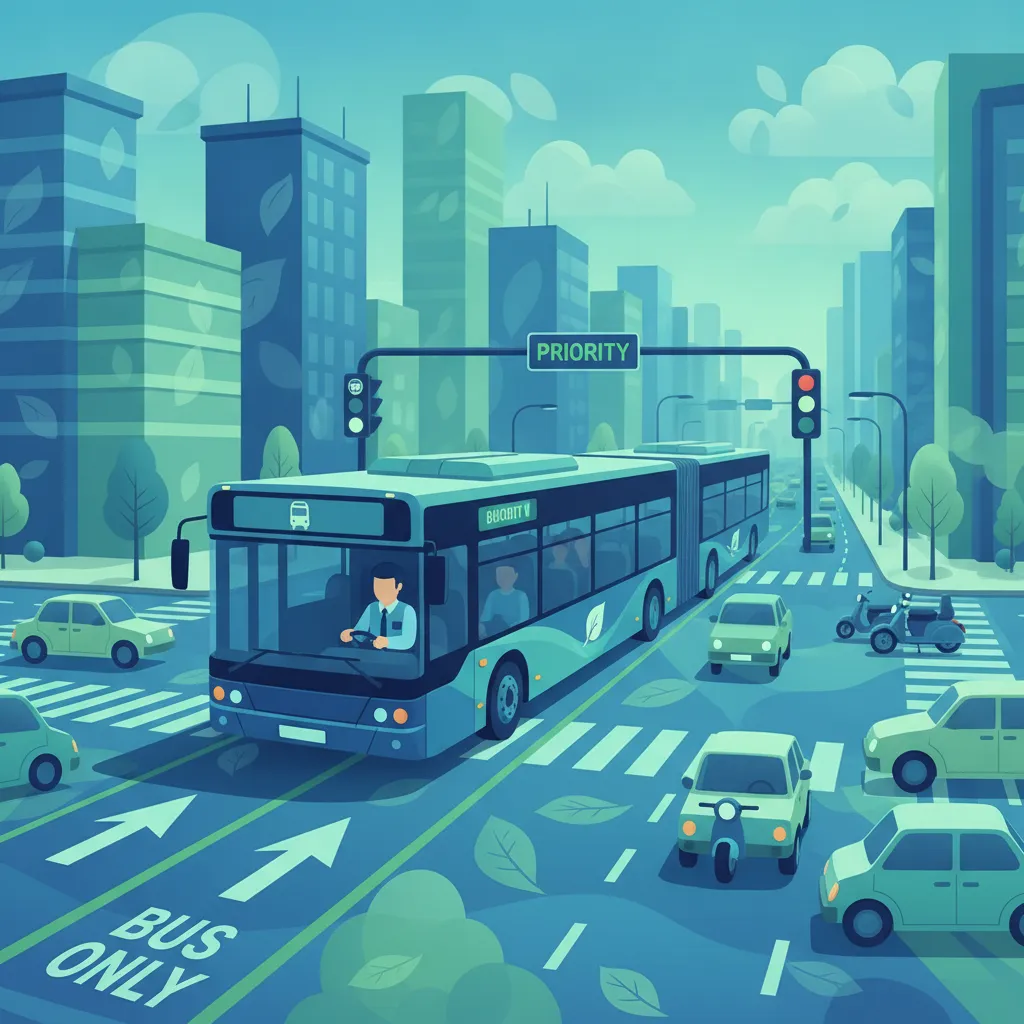
Driving large vehicles through dense city traffic requires outstanding lane discipline, spatial awareness, and consistent patience. This lesson teaches drivers how to utilize public bus corridors, manage tight yellow box intersections, and handle narrow city streets. It focuses on predicting traffic pattern shifts to maintain service timetables while minimizing fuel waste and driver stress.
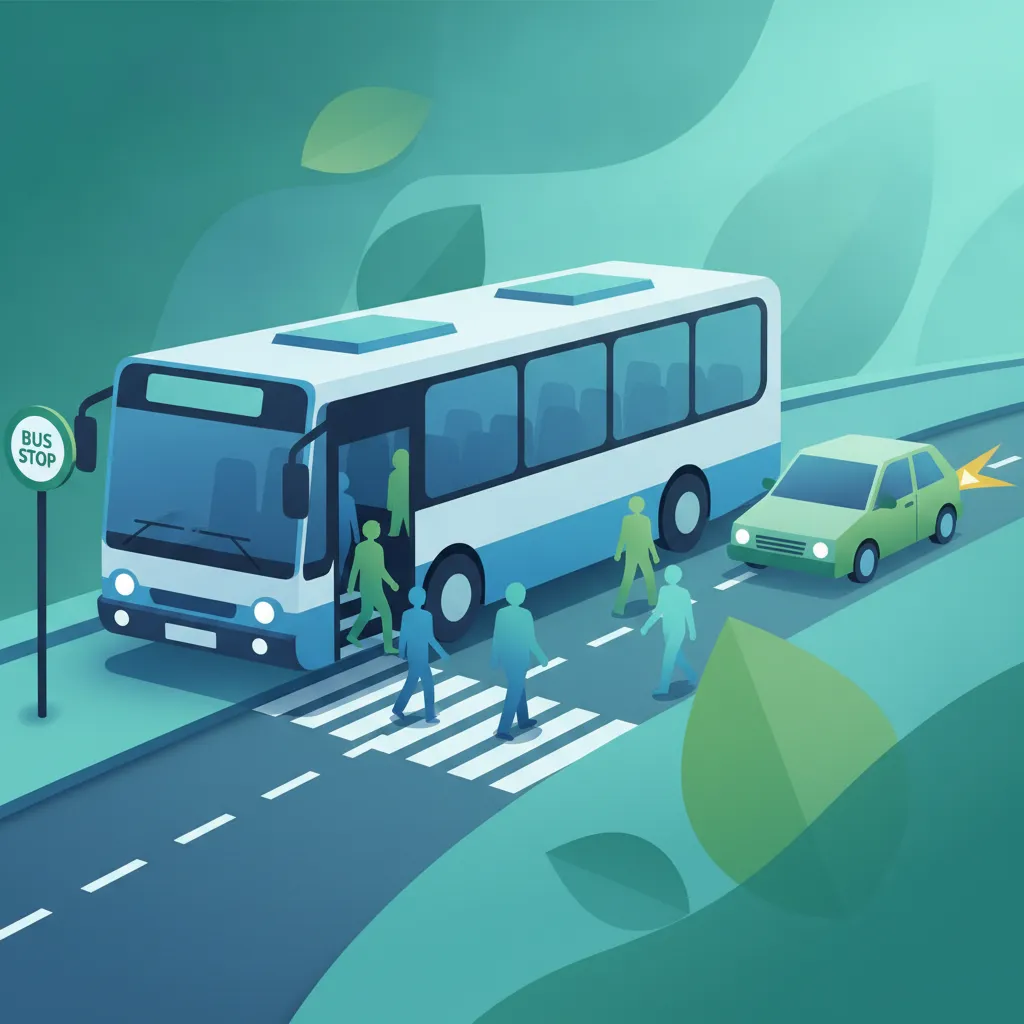
Approaching and exiting a public bus stop requires strategic signaling, careful speed management, and clean alignment with the passenger curb. This lesson teaches drivers how to read oncoming curb hazards, position the vehicle parallel to the curb, and leave safe exit clearances. Drivers will learn to safely integrate back into urban traffic flow while prioritizing passenger stability and comfort.
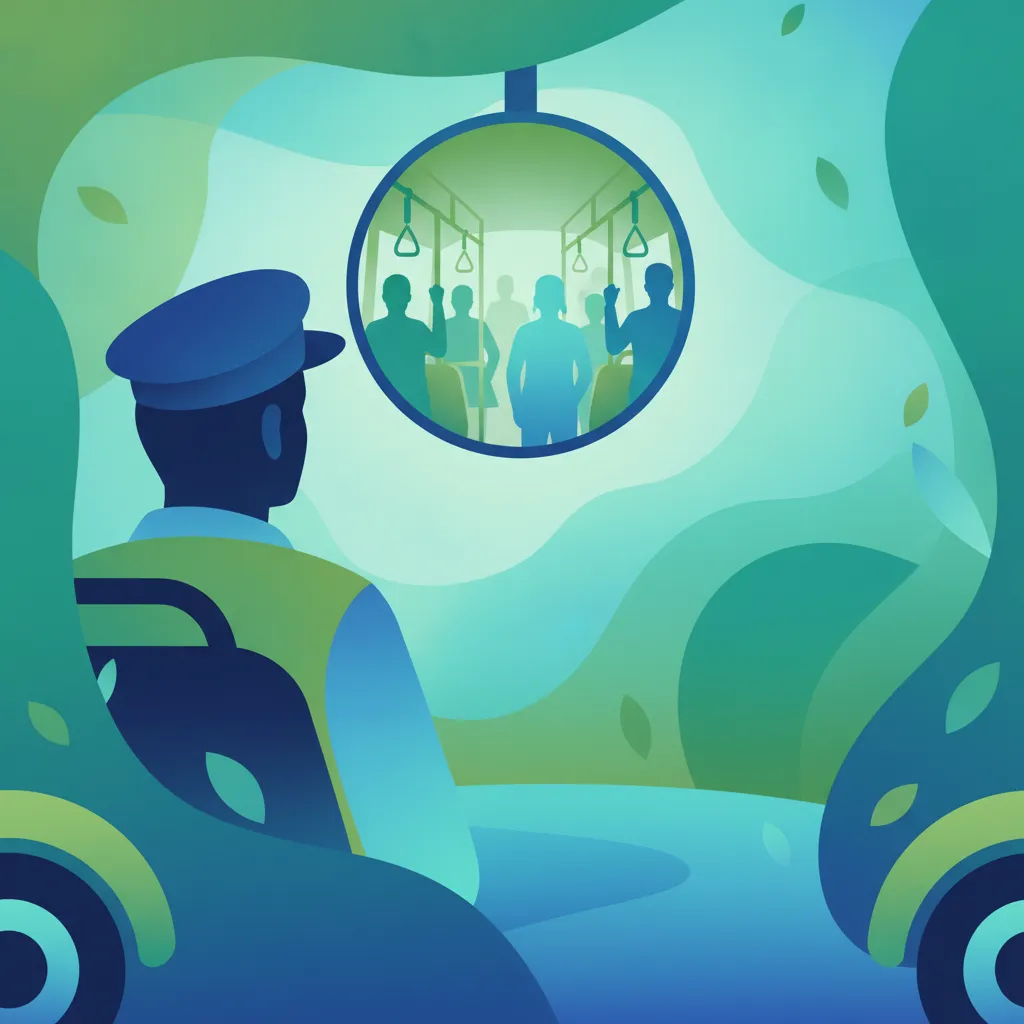
Standing passengers face heightened safety risks due to sudden changes in bus velocity, turning forces, or abrupt stops. This lesson covers maximum standing capacity regulations, correct passenger distribution, and the importance of active handrail utilization. Drivers will learn how to adjust their braking and acceleration patterns to prevent slips, trips, and falls among standing occupants.

Maintaining cabin discipline is critical for preventing driver distractions and ensuring passenger transit remains completely safe and comfortable. This lesson teaches conflict resolution, proactive de-escalation techniques, and the roles of specialized escorts on school or medical transport. Drivers will learn to assess security threats on board and apply the appropriate response protocols under Irish laws.
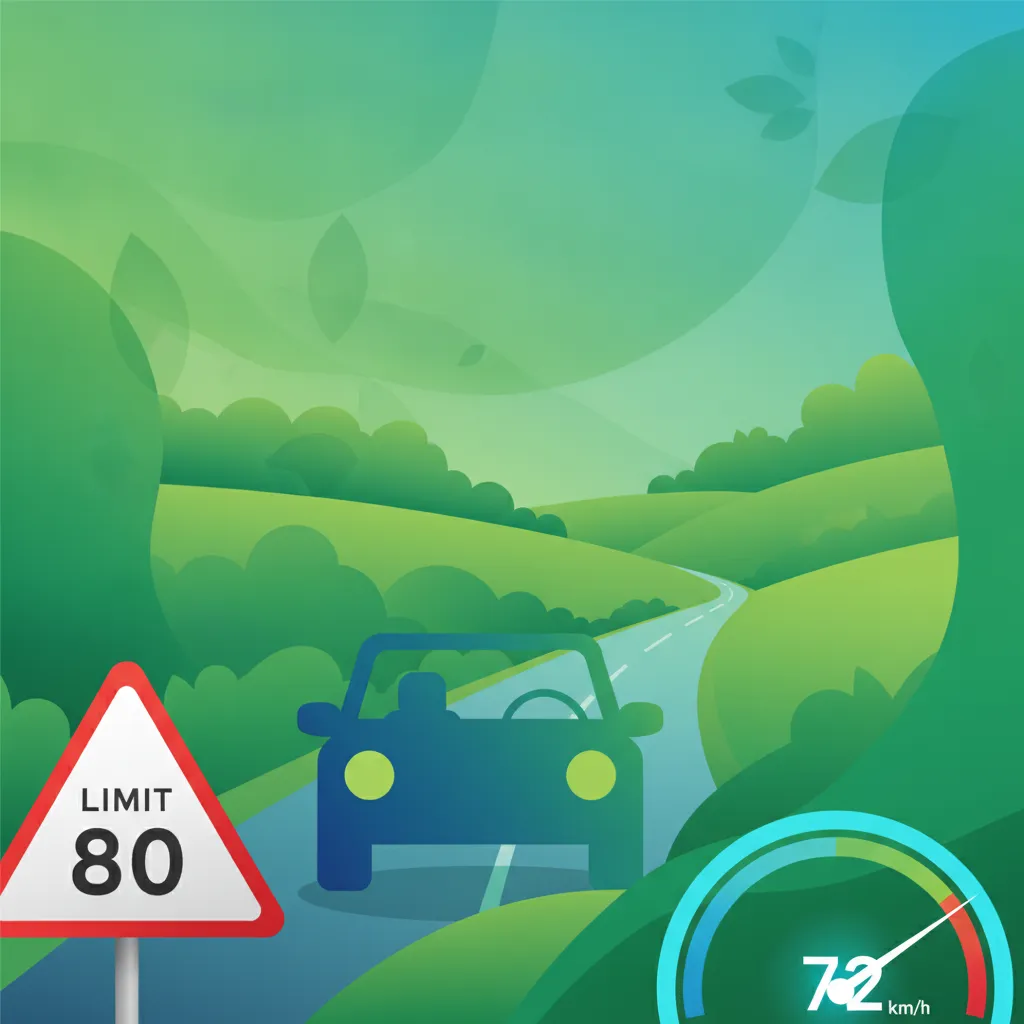
Speed management requires adjusting vehicle velocity to suit current weather, passenger load, and the specific limits of Irish roads. This lesson details speed restrictions for buses and minibuses on motorways, national routes, and built-up areas throughout Ireland. It highlights the driver obligation to prioritize passenger safety over schedule delays by maintaining appropriate speeds.
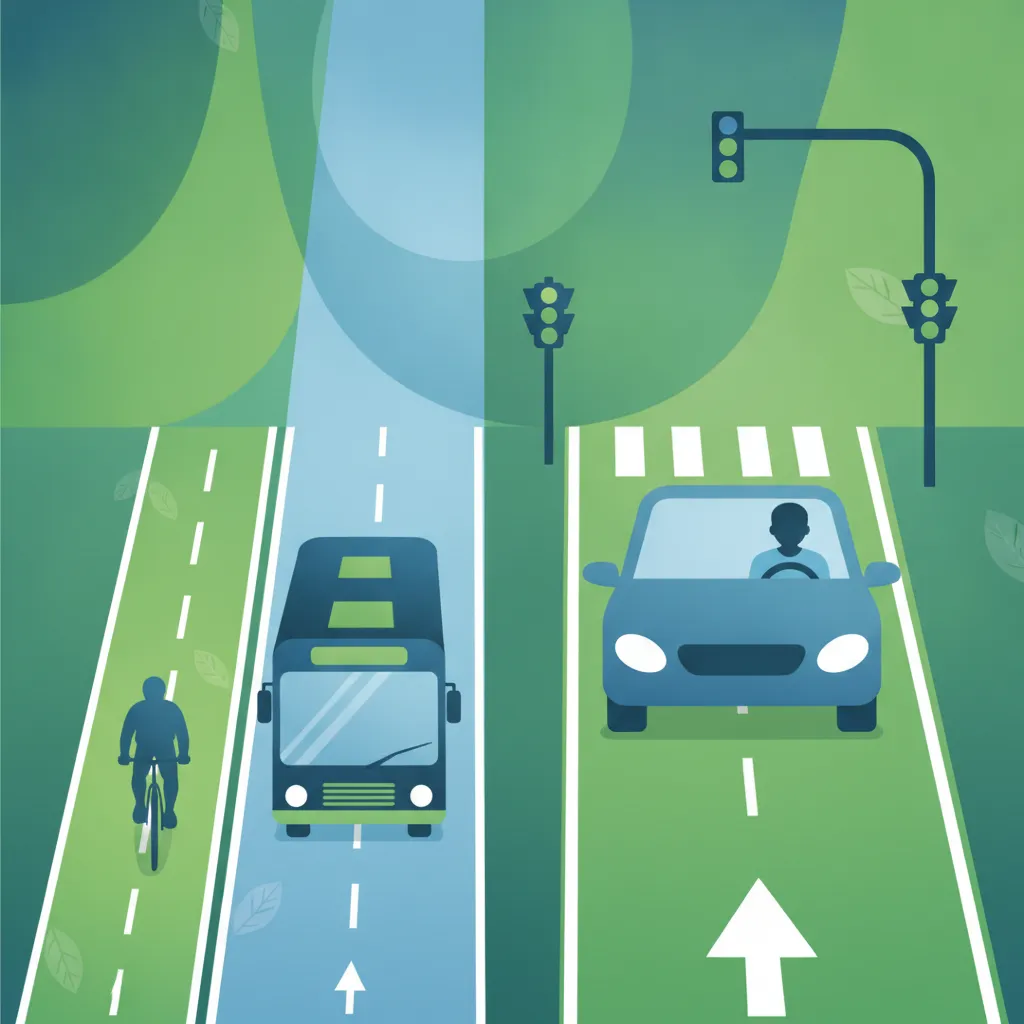
Bus lanes and cycle tracks are designed to encourage public transport and safe active travel in congested urban areas. This lesson explores the differences between with-flow and contra-flow bus lanes, detailing the restricted operating hours during which other vehicles are banned. You will understand when taxi drivers or emergency vehicles can use these lanes, and how to avoid costly traffic violations and safety risks.
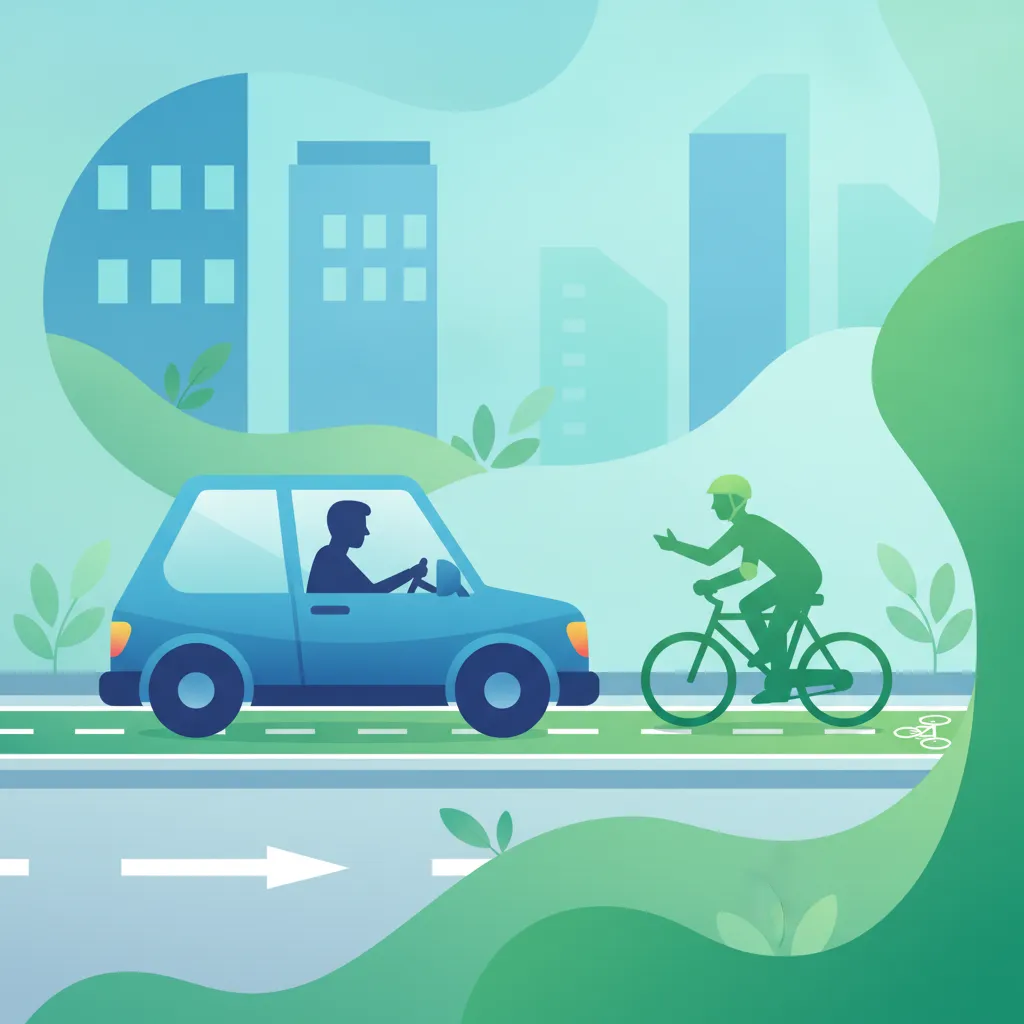
Cyclists share public roads under unique safety constraints, requiring drivers to keep wide clearances and anticipate sudden steering changes. This lesson covers the minimum safe passing distance of 1 to 1.5 metres, rules for driving near cycle tracks, and the danger of the 'dooring' hazard when parking. You will also learn to check your left-side blind spot before turning, preventing dangerous side-swipe collisions.
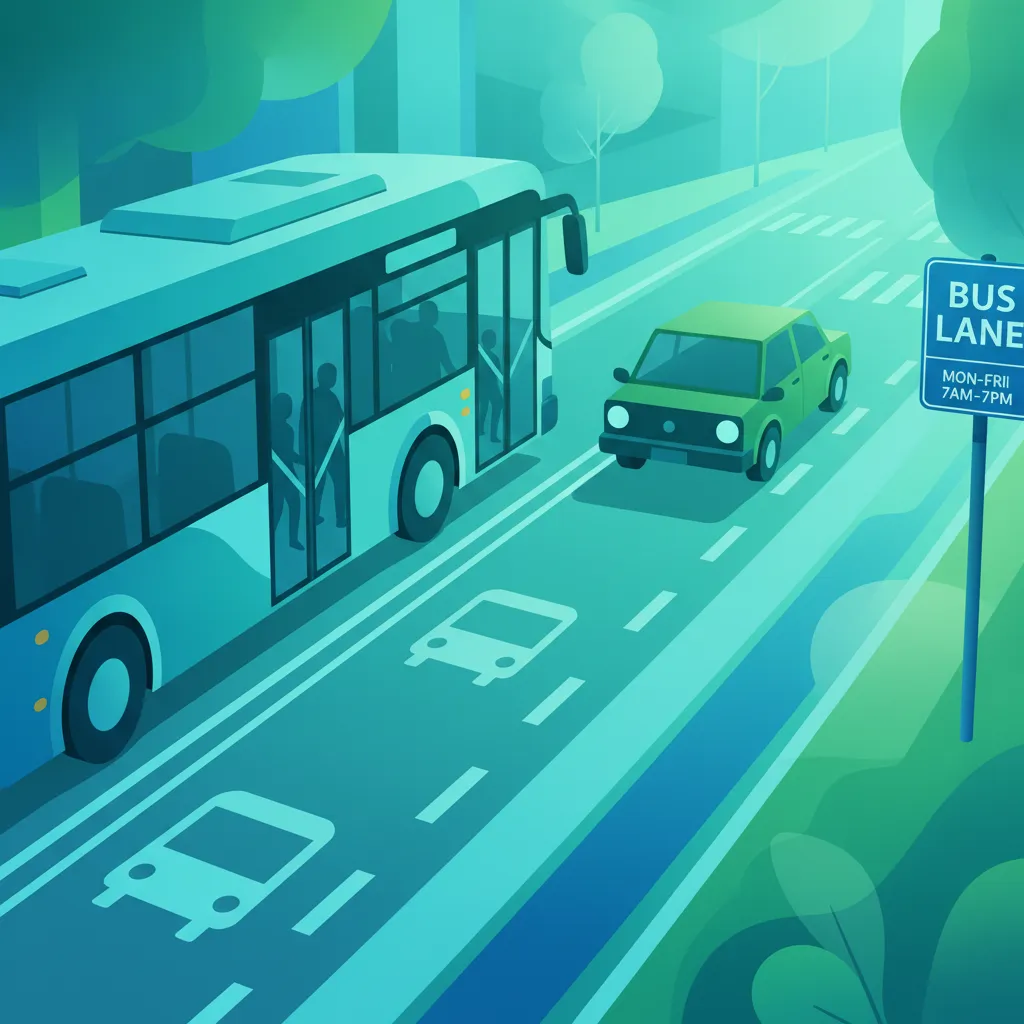
This lesson details the legal operations allowed within Irish bus lanes, including active hours, non-permitted traffic types, and exceptions. Drivers will learn safe approach trajectories for public transport stops, maintaining legal clearance, and navigating curbside hazards safely. The material highlights compliance with local bylaws to guarantee steady, uninterrupted traffic flow and passenger convenience.
Understand the theory behind safe vehicle positioning, reversing techniques, and effective use of mirrors for large passenger vehicles. This guide covers the responsibilities of a driver when navigating restricted spaces and managing blind spots to ensure passenger and public safety according to Irish road safety standards.
Reversing a large passenger vehicle is a high-risk maneuver that must be avoided whenever possible or performed with extreme caution. This lesson teaches correct mirror alignment, the use of rear cameras, and establishing clear hand signals with an external spotter. Drivers will study safety protocols for backing into passenger bays, ensuring all blind zones remain completely clear.

This lesson provides a comprehensive guide to reversing large vehicles and backing trailer setups safely into loading docks and industrial bays. It analyzes the mechanical physics of trailer articulation, steering inputs, and how to utilize modern backup cameras, mirrors, and assistants. Drivers will examine critical safety protocols, including visual checks and slow-speed controls, to avoid collisions with fixed objects.

The length of a commercial passenger vehicle creates a wide rear-wheel track offset, requiring drivers to swing wide during tight turns. This lesson teaches cornering mechanics, mirror adjustment guidelines, and how to check blind spots for cyclists on the inside lane. Drivers will master intersection control, preventing collisions with stationary street furniture or curbs.
Reversing is a high-risk manoeuvre due to the large blind spots located directly behind and to the sides of your passenger car. This lesson covers the mandatory safety sequence, highlighting the need to perform a full physical lookabout before shifting gears. You will learn how to balance the clutch for slow speed control, use mirrors and reversing sensors as aids, and monitor for approaching pedestrians.

This lesson explains the location, depth, and angle of the severe blind spots surrounding a standard heavy goods vehicle. It provides step-by-step guidance on setting up primary side mirrors, wide-angle lenses, and close-proximity front-view mirrors to eliminate blind areas. Drivers will learn systematic visual checking routines to ensure complete situational awareness before initiating any maneuver, lane shift, or turn.

Driving a coach through narrow urban streets or historic Irish town centers demands precise spatial judgment and low speed control. This lesson covers turning radii, rear tail-swing physics, and managing overhangs when navigating around tight, permanent obstacles. Drivers will learn to assess clearance gaps accurately, reducing damage risks to the vehicle exterior and public infrastructure.

This lesson addresses the mechanical dynamics of turning long-wheelbase and articulated commercial vehicles at intersections, junctions, and roundabouts. It covers the necessity of deep cornering lines, early mirror checks, and correct signaling to warn vulnerable road users of wide turn maneuvers. Drivers will learn how to minimize rear cut-in and ensure the entire vehicle clears urban obstacles safely.

This lesson explains the extensive blind spots of heavy goods vehicles, buses, and other large trucks on Irish roads. It teaches Category AM riders how to maintain safe following distances and position themselves where truck drivers can see them. Proper space cushion management is emphasized to protect riders from the wind turbulence of passing trucks.
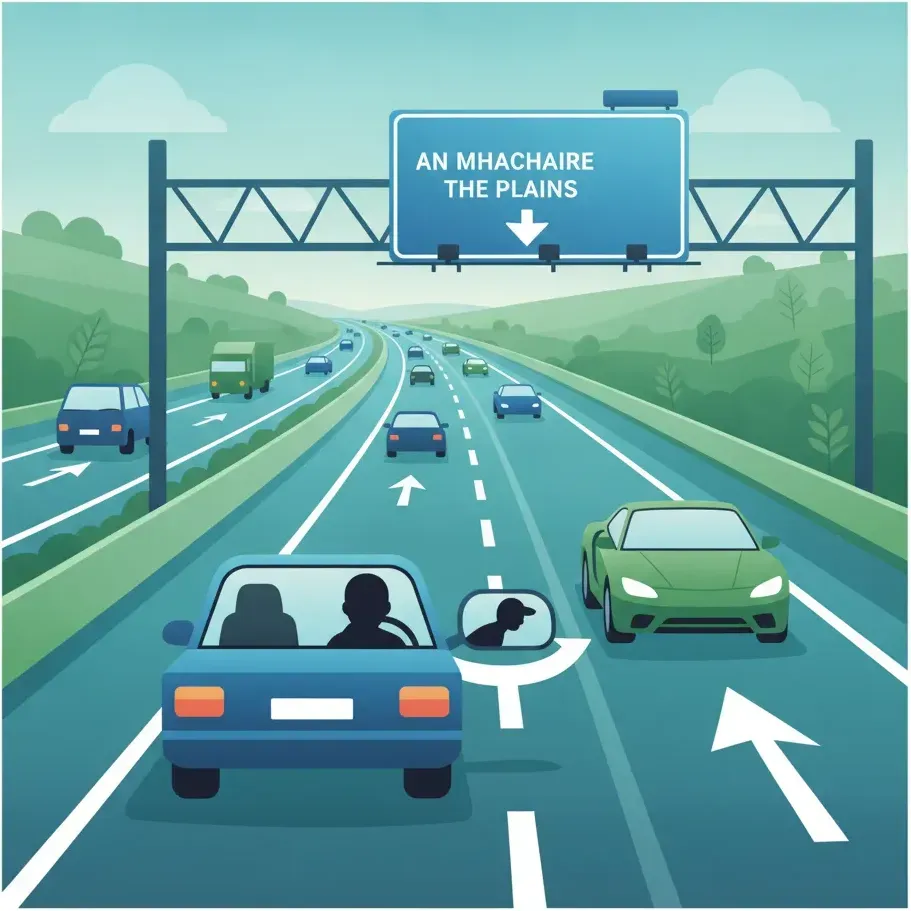
Merging a long, heavy passenger vehicle onto high-speed motorways requires matching the traffic speed within the limited length of slip lanes. This lesson covers signal timing, safe lane-merging gaps, and maintaining control during overtaking maneuvers on national routes. Drivers will learn to prioritize passenger comfort and vehicle stability, preventing sudden weight shifts during lane entries.
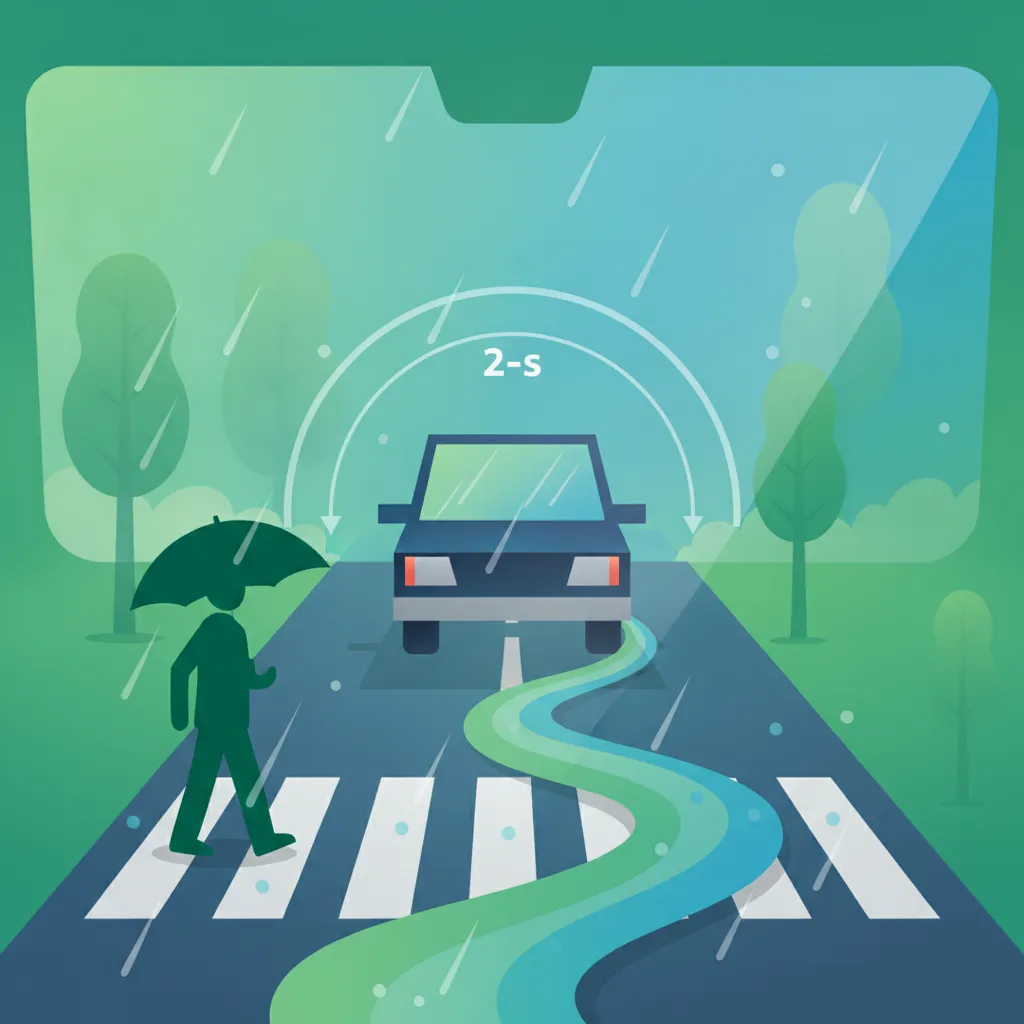
Maintaining an extensive buffer zone ahead of a large passenger vehicle is critical to ensuring enough space for emergency maneuvers. This lesson teaches the time-gap method, detailing how following distances must double on wet roads or increase with full passenger loads. It builds hazard anticipation skills, teaching drivers to read distant traffic cues and react early to hazards.
Find clear answers to common questions learners have about Safe Boarding and Alighting Procedures. Learn how the lesson is structured, which driving theory objectives it supports, and how it fits into the overall learning path of units and curriculum progression in Ireland. These explanations help you understand key concepts, lesson flow, and exam focused study goals.
The area immediately around the doors is where most passenger injuries occur, such as slips, trips, or falls. Drivers must ensure passengers are clear of the vehicle before releasing the brakes, as premature movement is a common cause of accidents and exam failure.
Always use your mirrors and direct line of sight to confirm no passengers are lingering on the steps or in the doorway. Ensure all luggage is clear of the door path and that any elderly or disabled passengers have successfully navigated away from the vehicle's immediate path.
The test often uses situational questions asking you to identify the safest sequence of actions when boarding or alighting, especially when dealing with mobility-impaired passengers. You must show you prioritize safety over rapid boarding.
Yes, they must be deployed fully and safely. Drivers are responsible for ensuring that the area is clear of obstacles before activation, as per RSA guidelines, and that the steps are retracted completely before the vehicle moves.
Use the practice question search tool to pinpoint specific topics, road signs, or rules you need to master for your official Driver Theory Test. Refine your study strategy and ensure comprehensive preparation for all aspects of the Irish driving exam. Start your focused revision now and build confidence for your learner permit test.